Hello.
Welcome to Sleep Stories with Steph,
A romantic bedtime podcast guaranteed to help you drift off into a calm,
Relaxing sleep.
Come with me as we travel back to a time long ago where Helen Huntingdon is sacrificing everything she knows in order to protect her son.
But before we begin let us take a moment to focus on where we are now.
Take a deep breath in through your nose then let it out on a long sigh.
It is time to relax and really let go.
Feel your shoulders melt away from your ears as you sink into the support beneath you.
Feel the pressure seep away from your cheeks as your breath drops into a natural rhythm.
There is nothing you need to be doing right now and nowhere you need to go.
We are together and it is time for sleep.
The Tenant of Wildfelm Hall by Read and abridged by Stephanie Poppins Chapter 53 Conclusion Upon little Arthur's cry there was such evidence of joyous though suppressed excitement in the utterance especially in that tremulous oh art that it threw me almost off my guard.
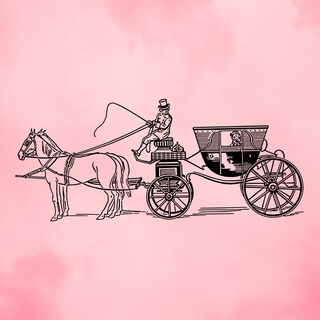
The carriage stopped immediately and I looked up and met the eye of a pale grave elderly lady surveying me from the open window.
She bowed and so did I then she withdrew her head while Arthur screamed to the footman to let him out.
A hand was silently pulled forth from the carriage window.
I knew that hand though a black glove concealed its delicate whiteness.
I pressed it in my own ardently for a moment but instantly recollecting myself I dropped it and it was immediately withdrawn.
Were you coming to see us or only passing by asked the low voice of its owner who I felt was attentively surveying my countenance from behind the thick black veil.
I came to see the place faltered I.
The place?
Do you remember me sir?
Said Arthur.
Yes farewell my little man altered though you are.
Am I not grown?
Grown three inches upon my word.
Arthur said his mother tell him to come in go on Richard.
There was a touch of sadness as well as coldness in her voice but I knew not what to ascribe it.
The carriage drove on and entered the gates before us.
My little companion led me up the park discoursing merrily all the way.
Arrived at the hall door I paused on the steps and looked around waiting to recover my composure.
Helen eyed me as I entered with a kind of gentle serious scrutiny.
Here's Rachel sir said Arthur the only truly happy one amongst us.
Directing my attention to that worthy individual who had just entered to take her mistress's things.
When Helen was divested of her lugubrious bonnet and veil her heavy winter cloak etc.
I was particularly glad to see her beautiful black hair unstinted still and unconcealed in its glossy luxuriance.
The mass left off her widow's cap in honor of uncle's marriage observed Arthur reading my looks with a child's mingle simplicity.
And quickness of observation.
Then he withdrew to the recess one of the great bay windows where he quietly amused himself with his dog.
While mrs.
Maxwell gravely discussed with me the interesting topics of the weather the season and the roads.
I considered her presence very useful as a check upon my natural impulses.
An antidote to those emotions of tumultuous excitement.
Which would otherwise have carried me away against my reason and my will.
But just then I felt the restraint almost intolerable.
And I had the greatest difficulty in forcing myself to attend to her remarks.
And answer them with orderly politeness.
For I was sensible Helen was standing within a few feet of me beside the fire.
I did not look at her but I felt her eye was upon me and from one hasty furtive glance I thought her cheek was slightly flushed and her fingers as she played with her watch chain were agitated with that restless trembling motion which betokens high excitement.
Tell me said she availing herself of the first pause in the attempted conversation between her aunt and me.
How are you all at Lindenhope?
Nothing has happened since I left you?
I believe not.
Nobody dead?
Nobody married?
No or expecting to marry?
She dropped her voice so low in the last sentence that no one could have caught the concluding words but myself and at the same time turned her eyes upon me with a dawning smile most sweetly melancholy and a look of timid though keen enquiry that made my cheeks tingle with inexpressible emotions.
I believe not I answered certainly not.
And you really did not mean to call?
I feared to intrude.
To intrude cried she with impatient gesture what but as if suddenly recollecting her aunt's presence she checked herself.
Why aunt this man is my brother's close friend and was my own intimate acquaintance for a few short months at least and he professed a great attachment to my boy.
When he passes the house so many scores of miles from his home he declines to look in for fear of intruding.
Mr Markham is over modest observed Mrs Maxwell.
Over ceremonious rather said her niece well it's no matter.
Then turning from me she seated herself in a chair beside the table and pulling a book to her by the cover began to turn over the leaves in an energetic kind of abstraction.
If I had known said I that you would have honoured me by remembering me as an intimate acquaintance.
I most likely should not have denied myself the pleasure of calling upon you.
But I thought you had forgotten me long ago.
You judge of others by yourself muttered she without raising her eyes.
There was a pause of which Arthur thought he might venture to avail himself to introduce his handsome young setter.
Mrs Maxwell then withdrew to take off her things.
Helen immediately pushed the book from her and after silently surveying her son she dismissed the former from the room under the pretense of wishing him to fetch his last new book to show me.
And in half a minute or less my hostess impatiently rose and taking her former station on the rug beside me exclaimed.
Gilbert what is the matter with you?
Why are you so changed?
It is a very indiscreet question I know.
Perhaps a very rude one.
Don't answer it if you think so but I hate mysteries and concealments.
I am not changed Helen.
Unfortunately I am as keen and as passionate as ever.
It is not I.
It is circumstances that are changed.
What circumstances do tell me?
Her cheek was blanched with a very anguish of anxiety.
Could it be with a fear that I had rashly pledged my faith to another?
I'll tell you at once said I.
I will confess I came here for the purpose of seeing you but I did not know this estate was yours until enlightened on the subject of your inheritance by the conversation of two fellow passengers in the last stage of my journey.
If my aunt and I had not just been returning from our morning drive said she I should have seen and heard no more of you.
I thought it would be better for both we should not meet replied I as calmly as I could but not daring to speak above my breath from conscious inability to steady my voice and not daring to look in her face lest my firmness should forsake me altogether.
I thought an interview would only disturb your peace and madden me but I'm glad now of this opportunity of seeing you once more and knowing you have not forgotten me and of assuring you that I shall never cease to remember you.
There was a moment's pause and Mrs.
Huntingdon moved away.
Then she broke the silence herself by suddenly turning towards me and observing.
You might have had such an opportunity before as far as I mean regarding assuring me of your kindly recollections and yourself of mine if you had written to me.
I would have done so but I did not know your address and I did not like to ask your brother because I thought he would object to my writing.
Your silence naturally led me to conclude myself forgotten.
Did you expect me to write to you then?
No,
Helen.
Mrs.
Huntingdon,
Said I blushing at the implied imputation.
Certainly not but if you'd sent me a message through your brother or even asked him about me now and then.
I did ask about you frequently.
I was not going to do more.
So long as you continue to restrict yourself to a few polite inquiries about my health,
She smiled.
Your brother never told me you'd mentioned my name.
Did you ever ask him?
No,
For I saw he did not wish to be questioned about you or afford the slightest encouragement.
Helen did not reply.
And he was perfectly right,
Added I.
I rose in advance to take leave with an almost heroic resolution but pride was at the bottom of it or it could not have carried me through.
Are you going already?
Said she,
Taking the hand I offered and not immediately letting it go.
Why should I stay any longer?
Wait till Arthur comes at least.
Only too glad to obey I stood and leant against the opposite side of the window.
You told me you were not changed,
Said my companion.
You are,
Very much so.
No,
Mrs.
Huntington,
I only ought to be.
Do you mean to maintain you still have the same regard for me that you had when we last met?
I have but it would be wrong to talk of it now.
It was wrong to talk of it then,
Gilbert.
It would not now unless to do so would be to violate the truth.
I was too much agitated to speak but without waiting for an answer she turned away,
Her glistening eye and crimson cheek,
And threw up the window and looked out,
Whether to calm her own excited feelings or leave her embarrassment.
She plucked then that beautiful half-blown Christmas rose that grew upon the little shrub without,
Just peeping from the snow,
That had hid the two no doubt defended it from the frost and was now melting away in the sun.
Then she said,
This rose is not so fragrant as a summer flower but it has stood through hardships none of them could bear.
The cold rain of winter has sufficed to nourish it and its faint sun to warm it.
The bleak winds have not blanched it or broken its stem and the keen frost has not blighted it.
Look,
Gilbert,
It is still fresh and blooming as a flower can be with the cold snow even now on its petals.
Will you take it?
I held out my hand.
I dared not speak lest my emotions should overmaster me.
She laid the rose upon my palm but I scarcely closed my fingers upon it so deeply was I absorbed in thinking what might be the meaning of her words.
Misconstruing this hesitation into indifference or reluctance even to accept her gift,
Helen suddenly snatched it from my hand.
Threw it out on the snow,
Shut down the window and withdrew to the fire.
Helen,
What means this?
I cried,
Electrified at the startling change in her demeanour.
You did not understand my gift,
Said she,
Or what is worse you despised it.
I'm sorry I gave it to you but since I did make such a mistake the only remedy I could think of was to take it away.
You misunderstood me cruelly,
I replied,
And in a minute I had opened the window again,
Leaped out,
Picked up the flower,
Brought it in and presented it to her,
Imploring her to give it me again.
Then I would keep it forever for her sake and prize it more highly than anything in the world I possessed.
And will this content you,
Said she,
As she took it in her hand.
It shall,
I answered.
Then take it.
I pressed it earnestly to my lips and put it in my bosom,
Mrs Huntingdon looking on with a half-sarcastic smile.
Now are you going,
Said she.
I will,
If I must.
You are changed,
Persisted she.
You are grown either very proud or very indifferent.
I am neither,
Helen,
Mrs Huntingdon,
If you could see my heart.
You must be one,
If not both.
And why,
Mrs Huntingdon,
Why not Helen as before?
Helen then,
Dear Helen,
I murmured.
I was in an agony of mingled love,
Hope,
Delight,
Uncertainty and suspense.
The rose I gave you was an emblem of my heart,
Said she.
Would you take it away and leave me here alone?
Would you give me your hand too,
If I asked it?
Have I not said enough,
She answered with a most enchanting smile.
I snatched her hand and would have fervently kissed it.
But suddenly I checked myself and said,
Have you considered the consequences?
Hardly,
For I should not have offered myself to one too proud to take me.
Stupid blockhead that I was,
I trembled to clasp her in my arms,
But dared not believe in so much joy,
And yet restrained myself to say,
But if you should repent,
It would be your fault,
She replied.
I never shall,
Unless you bitterly disappoint me.
If you have not sufficient confidence in my affection to believe this,
Then let me alone.
My darling angel,
My own Helen,
Cried I,
Now passionately kissing the hand I still retained,
And throwing my left arm around her.
You never shall repent,
If it depend on me alone.
But have you thought of your aunt?
My aunt must not know of it yet,
Said she.
She would think it a rash,
Wild step,
Because she could not imagine how well I know you,
But she must know you herself and learn to like you.
You must leave us now,
After lunch,
And come back again in the spring,
And make a longer stay,
And cultivate her acquaintance.
And then you will be mine,
Said I,
Printing a kiss upon her lips.
And another,
And another,
For I was as daring and impetuous now as I had been backward and constrained before.
No,
In another year,
Replied she,
Gently disengaging herself from my embrace,
But still fondly clasping my hand.
Another year!
Oh,
Helen,
I could not wait so long.
Where is your fidelity?
I mean I could not endure the misery of so long a separation.
It would not be a separation,
We will write every day.
My spirit shall always be with you,
And sometimes you shall see me with your bodily eye.
But your friends will disapprove.
They will not greatly disapprove,
Dear Gilbert,
Said she,
Earnestly kissing my hand.
They cannot,
When they know you.
Or if they could,
They would not be true friends,
And I should not care for their estrangement.
Now are you satisfied?
She looked up in my face with a smile of ineffable tenderness.
Can I be otherwise with your love?
And you do love me,
Helen,
Said I,
Not doubting the fact,
But wishing to hear it confirmed by her own acknowledgement.
If you loved as I do,
She earnestly replied,
You would not have so nearly lost me.
These scruples of false delicacy and pride would never thus have troubled you,
And you would have seen the greatest worldly distinction and discrepancies of rank,
Birth and fortune are as dust in the balance compared with the unity of accordant thoughts and feelings,
And truly loving,
Sympathising hearts and souls.
But this is too much happiness,
Said I,
Embracing her again.
I have not deserved it,
Helen.
I dare not believe in such felicity.
And the longer I have to wait,
The greater will be my dread that something will intervene to snatch you from me.
And think,
A thousand things may happen in a year.
I shall be in one long fever of restless terror and impatience all the time.
And besides,
Winter is such a dreary season.
I thought so too,
Replied she gravely.
I would not be married in winter,
In December at least,
She added.
For in that month had occurred both the ill-starred marriage that had bound her to her former husband,
And the terrible death that had released her.
And therefore,
I said another year in spring.
Next spring.
No,
No,
Next autumn perhaps.
Summer then.
The close of summer.
There now,
Be satisfied.
While she was speaking,
Arthur re-entered the room.
Good boy for keeping out so long.
Mama,
I couldn't find the book in either of the places you told me to look for it.
But Rachel got it for me at last.
Look,
Mr Markham,
A natural history with all kind of birds and beasts in it,
And the reading as nice as the pictures.
In great good humour,
I sat down to examine the book,
And drew the little fellow between my knees.
Had he come a minute before,
I should have received him less graciously.
But now I affectionately stroked his curling locks,
And even kissed his ivory forehead.
He was my own Helen's son,
And therefore mine,
As such I have ever since regarded him.
We were married in summer,
On a glorious August morning.
It took the whole eight months,
And all Helen's kindness and goodness to boot,
To overcome my mother's prejudices against my bride-elect,
And to reconcile her to the idea of me leaving Linden Carr and living so far away.
Yet she was gratified at her son's good fortune on the day of the wedding.
After all,
And proudly attributed it all to his own superior merits and endowments.
I bequeathed the farm to Fergus,
With better hopes of its prosperity than I should have led,
A year ago,
Under similar circumstances.
For he had lately fallen in love with the local vicar's daughter,
A lady whose superiority had roused his latent virtues,
And stimulated him to the most surprising exertions,
Not only to gain her affection and esteem,
And to obtain a fortune sufficient to enable him to aspire to her hand,
But to render himself worthy of her in his own eyes,
As well as in those of her parents.
As for myself,
I need not tell you how happily my Helen and I have lived and loved together,
And how blessed we still are in each other's society,
And in the promising young scions that are growing up around us.
We are now looking forward to the advent of you and Rose,
For the time of your annual visit draws nigh,
When you must leave your dusty,
Smoky,
Noisy,
Toiling,
Striving city,
For a season of invigorating relaxation,
And social retirement with us.
Till then,
Farewell.
Signed,
Gilbert Markham.
Stanningly,
June the 10th,
1847.