At the appropriate times,
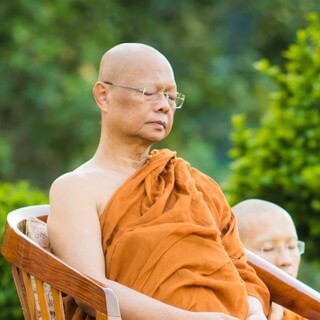
We practice developing samadhi,
Concentration by sitting meditation.
Before we sit,
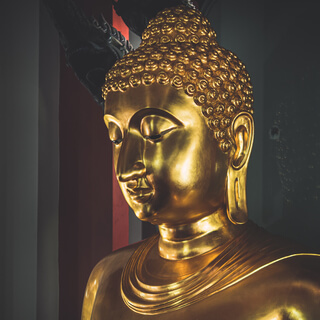
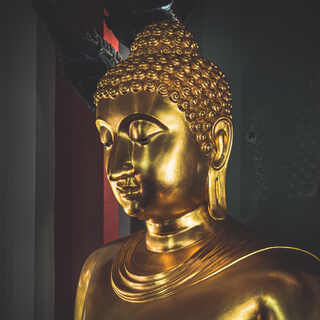
We can reflect on the goodness and virtues of the Buddha first.
We can chant Namo Tassa three times,
Then chant Buddham saranam gacchami,
Dhammam saranam gacchami,
Sangham saranam gacchami.
This is taking refuge in the triple gem.
There are some senior monks who will meditate with this verse,
Buddham saranam gacchami,
Dhammam and Sangham,
And their minds become peaceful.
If we haven't learnt about this before,
It may sound strange.
We only know of the meditation word,
Buddho.
But there are some great monks who would meditate on Vidya Charana Sampanno,
Some on Samma Samputto.
These are all the virtues of the Buddha.
In summary,
They are the great virtues of the Buddha,
His great virtue of compassion,
The virtue of wisdom,
The virtue of purity.
And we can use it as a meditation recitation.
Or we can recollect following the virtues of the Buddha by using our perceptions that we're able to remember.
Our mind gets peaceful,
Rapture arises,
It is samadhi,
Concentration.
This is developing the recollection of the virtues of the Buddha as an object of the mind.
Whatever work we do that is as a sacrifice for others' benefit,
To do it for one's whole life is not easy.
We will get tired,
Feel some discouragement,
Or retreat from it.
But we struggle to try to do it.
It is hard and difficult to do the work of helping others without wanting anything in return.
But if we are a father or a mother,
Then we struggle for the benefit of our children.
We nurture our child from when they are little,
Till they are older,
And send them to study in school,
Until the time they finish studying.
And if we have two or three children,
Then there's no more time left in our life.
So the Buddha sees us as his children.
He sees all the living beings in the universe like his own children.
He will come to teach and assist us to be free from suffering.
And for this he had to build his Barami,
Spiritual perfections.
For parents to bring up their children in only one lifetime is done with difficulty.
But the Buddha had to build his Barami for countless lifetimes.
To bring all living beings to be free from the cycle of samsara,
Repeated birth and death,
Is not easy at all.
There is one story that you may have read on the news,
And I want to see how you feel about this news.
The story is about one family that wanted to have a child to continue their family lineage,
Which is normal for us humans.
The wife was pregnant,
And both the husband and wife were so delighted about this.
Nothing would give them more delight than this.
But later on,
Out of nowhere,
The wife felt dizzy and unwell.
After getting examined,
She had a problem with her brain.
There was something wrong with the blood vessels in the brain,
And the blood had leaked into it.
This is called khandha-mara,
The bodily form as an obstruction,
Coming to harm us.
The child in the womb,
The mother and father,
Likely had the karma that they had done together.
This is if we're talking about it in terms of karma.
It was a collective karma from having caused harm.
And ultimately the doctor concluded that she had to have surgery on her brain.
After finishing the surgery,
A nerve had been cut,
And the blood was leaking.
It was beyond the ability of the doctor to treat,
And also about karma.
The mother was in a coma,
Bedridden,
And in a vegetative state.
She couldn't speak or communicate.
And now it was up to the husband and the doctor on what to do.
The child in the womb was still small,
And the mother was in this state.
If they took out the child,
It may cause a problem to the mother's health.
Or maybe the child would be born disabled or deficient.
Many things could happen.
It was hard to know how to proceed for the father.
He couldn't consult with his wife because she was in a coma,
Knowing nothing,
And couldn't talk.
She had no feeling or response,
So he could only talk with the doctor.
The doctor advised according to his medical knowledge on what was best to do.
And so how would the doctor advise?
If they saved the mother's life,
Then the little child must die.
As for the father,
He couldn't stop worrying about what to do,
Because it was a hard and difficult choice.
If it was us in this situation,
What would we do?
Would we focus on saving the child,
Or the mother?
Would we leave it to karma,
Because we aren't able to consult with anyone?
Or if this person consulted with the monks,
How would they advise?
If we decide to abort the child,
In Buddhism,
Would it be bad karma and wrong to do?
But if he didn't abort the child,
Then his wife may lose her life.
If they abort the child,
The wife may survive,
But the child in the womb would die.
So how would monks advise?
This is worth thinking about,
And we can discuss it amongst ourselves.
If this happened to us,
What would we do?
We can think about it in terms of Vinaya,
The monks' rules,
In terms of goodwill and compassion,
In terms of Buddhism,
In terms of love to the wife who is a loved one.
One may think that if their wife is still alive,
Then even if the child died,
The wife who survived could have other kids,
If the wife gets better.
But in regards to the concern of a mother,
How would they feel,
If the small child whom they loved in their womb had to die?
We have the chant in the Parinirmetta Sutta,
And we have chanted it before,
And may have only felt it on a surface level.
How do we understand the love of a mother to her child?
In truth,
How is there love?
Someone who isn't a mother would find it hard to understand.
We will make our minds have metta,
Goodwill,
Loving-kindness,
To all living beings,
Just like how a mother nurtures the child in her womb.
We will have metta to all the living beings,
Above,
Below,
Higher to us,
Lower to us,
Far and near,
Just like a mother loves and nurtures her child.
This is not an ordinary metta.
Metta is the power of someone who has barami,
The strength of jhana,
Mental absorptions.
The strength of their cultivation of metta is very high.
So we have been told to chant this,
So may we also contemplate and practice it like this.
In the beginning we aren't able to do it,
But we keep trying to do it,
Until we have samadhi.
So we are training in samadhi.
We recollect the virtues of the Buddha,
With the word bhutto,
Watching the breath,
And the mind is peaceful and still.
When we let go of the sense of self more,
Then the mind will get better.
And there is a question of why,
If there is no self,
Do we need to let it go?
We have to let it go,
Because the mind is still deluded,
And it is taken as a self.
It's all taken as a self.
When there is sense contact,
Then there is a feeling arising,
And it's all taken as a self.
So it must be let go of,
Because it's the cause for suffering to arise.
So to love others,
Like the child in our womb,
We have to train the heart to have true coolness.
And so we come back to this story again.
The husband,
Because of loving his wife,
Decided to take out the child,
To abort it,
Which was okay by the law there,
And which the doctor had advised him to do in this situation.
When the husband had talked to the monks,
They said he couldn't do it.
The child was already considered born,
So the monks couldn't give advice.
The child was considered born already,
So for a monk to advise to abort the child in the womb,
The monk would be a purajika,
And cease being a monk.
But because the husband loved his wife a lot,
He saw it as necessary.
He hadn't yet seen the face of his child,
So likely had little attachment to the child.
So what could be done?
He had told the doctor of his decision.
And it so happened that the wife,
Who was bedridden in a vegetative state,
But likely the child in the womb,
Was able to know what was happening.
There was a current of the mind that was telling it that it would be killed.
And wanting to live,
Then sending a current from its mind to the mother,
Or it was that the mother and child's minds were connected.
The mother,
Who was in a coma,
Instantly had tears flowing.
So even being in a vegetative state,
But through the mind and consciousness that loved the child,
Being connected together,
She had great concern for the child,
And cried.
Tears flowing,
Her eyes red.
And the husband knew that the wife didn't want him to do that.
After rethinking about it,
Going back and forth,
And through the love to the wife and love to the child,
He then decided to not go through with it.
He wouldn't abort the child.
He would look after the child well.
The strength of the husband came from the strength of the wife that could communicate her suffering.
So he looked after and took care of his wife well,
So that the child in the womb would be safe.
Until it was time when the child was ready to be born.
And when the child was being born,
The child cried out.
And it was amazing that when the child was born and crying,
The mother who was in a vegetative state heard this.
She could have the feeling,
Coming from sound contact,
That the child that was given birth to was safe.
Which was the hope of the mother for a long time.
And what happened?
It was a great energy that awoke all the cells and nerves in the mother's body that were knocked out,
To recover instantly.
From being in a vegetative state,
She could come back to being normal.
This was from the great energy of metta and love.
The mother of this child could recover from sickness,
Which is amazing.
It shows that there is a lot of energy in our body which hasn't been used.
But when the mother heard her child crying,
The mind gathered in samadhi,
And the great power of metta could lead her to be cured from her sickness.
This is the love of a mother.
She already didn't want her own life,
She just wanted her child to be safe.
And this was the cause that the mother could also recover and be safe.
So we can see the love to nurture a child in the womb is great.
May we think and contemplate that when we were in the womb,
Our mother looked after us very well.
So a father and mother have a great energy that can make one recover.
It's amazing.
May we contemplate it.
And so that we meditate with Buddho,
We recollect the virtues of the Buddha that have no equal,
Which is greater than our parents.
Our parents have great virtues already,
But the Buddha sees us as his children,
Willing to be born and willing to die for us.
When we think of that virtue,
Then we'll have a lot of merit,
A lot of barami.
So we chant every day.
Even not coming to the monastery,
We can chant Ittipisobhagavarahamsama three times a day,
Nine times to 108 times.
Then we will have even more barami.
Our heart will be joyous and uplifted.
It will be a deva,
A deity.
The body is a human and the mind that is a deva arises.
And then we will see even more the virtues of our parents.
May we take this to contemplate.
May you grow in dhamma.
May you grow in blessings.