Hello and welcome to Vibrant Lives podcast five minute food facts series.
I'm your host,
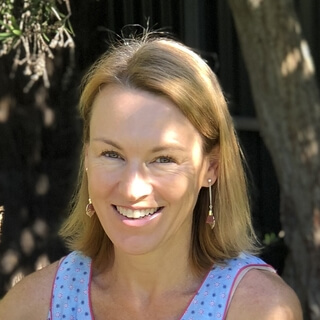
Amanda Hayes.
I'm a lawyer to nutrition scientist.
My five minute food fact podcasts are short episodes about nutrition related topics where I'll talk about why we need a certain food or nutrient,
How much to consume,
If there are any risks associated with it,
And any other useful information to help you make healthy food choices.
The health and nutrition space can be a confusing one.
We all know that.
And finding trustworthy sources of information is not always straightforward.
So my aim is to help you do that and present you with reliable information in a concise and easy to understand way.
The content of my five minute food facts series is for information purposes only,
And it's never a substitute for advice from your own health professionals.
Today,
Let's take a look at the blue zones.
So the concept of the blue zones has been around since 2000.
And I expect many of you have actually heard of the blue zones and have a pretty good idea about what they are.
Essentially,
They're places where people live to a ripe old age in states of relatively good health.
So that sounds pretty good.
How do they do it?
So briefly,
The concept and classification of the blue zones came about through a National Geographic expedition led by Dan Buettner to investigate communities around the world that live longer and better understand what common factors enhance longevity in those populations.
The five areas identified as blue zones were Barbaggio region of Sardinia,
Italy,
Okinawa in Japan,
Loma Linda in California,
Nicoya Peninsula in Costa Rica and Ikaria,
One of the Greek islands.
Scientific research into the blue zones identified or distilled nine features common across those blue zones and coined those the power nine.
So in this episode,
I want to share with you what those common features are.
And I think it's interesting to know about them because scientists believe that we have more control over how long we live than we think.
Some studies suggest how long we live is about 25% dictated by our genes.
And of course,
We can't change that.
And the other 75% is determined by our lifestyle and choices we make.
So that's that's good news.
Personally,
I'm a fan of the blue zones literature because a lot of the principles are firmly based in common sense and generations of wisdom.
By following the blue zones principles,
You're not being asked to eat in a restrictive way or do difficult things like calorie count or run marathons.
There's nothing weird or extreme in the blue zones principles.
And as you hear,
There is a focus on community.
And that can be too easily lost in our modern,
Fast paced tech reliant lives.
So today let's learn about the blue zones and how you can incorporate some of the lifestyle habits into your own life.
So here we go.
The nine power principles or the power nine.
First of all,
Move naturally.
Incorporate movement into your daily life.
That is sustained,
Moderate exercise like walking every day or gardening.
So we're not talking about running hill repeats or doing Ironman triathlons.
I will add here that it's well established that as we age,
Strength based activity is important,
Too,
As this helps maintain our balance and reduce falls risk.
Haruhachi Byuu.
This is a Japanese practice that means stop eating when you feel 80% full.
This one's interesting because none of the centenarians interviewed for the blue zones research had ever been on a diet and none had ever been obese.
So in addition to making you feel miserable,
Diets are notorious for not working in the long term.
So being able to develop a skill of eating in moderation should serve you well.
I'm personally really interested in this one.
So here are some tips to stop eating when you're 80% full.
Serve your meal.
And if there are any leftovers,
Store them straight away so you don't come back and have second helping,
Or at least it's more difficult to do that.
Use smaller plates and glasses,
Especially for alcohol.
And research shows that we actually eat and drink less when we do this very simple practice.
Eat slowly so our body can sense the hormonal and neurochemical cues that tell us when we're no longer hungry.
And finally,
When you eat,
Just eat.
Focus on what you're eating.
Don't be distracted by the television or your tablet,
Which can easily lead to mindless overeating.
So they're fairly simple practices.
The next one is plant slant,
And they say avoid meat and processed foods.
In most of the blue zones,
Processed foods was not an option,
So they were actually easy to avoid.
And I'll come back to that point a bit later on.
So a diet made up of plenty of plant food and legumes is good for you because of the high dietary fibre content.
And as most of us know,
Dietary fibre is excellent for our gut and brain health.
In the blue zones,
With the exception of Loma Linda,
Small amounts of meat were eaten.
Meat was just not the star of the meal,
And it was not eaten every day.
My take on this,
The blue zones principle says to avoid meat.
But if you're not a vegetarian or a vegan,
I don't think you need to totally avoid good quality unprocessed meat.
And for some groups of people,
Like women in perimenopause,
Protein becomes more important and meat is a good source of it.
Grapes of life,
Drink red wine in moderation.
If I had to rank the nine principles,
I'd say this is the least compelling.
The relationship between alcohol consumption,
Longevity and health is a complex one,
And it's by no means scientifically established that moderate alcohol consumption is better than abstaining.
What I will note,
And this is really vital to this particular principle,
Is that the amounts of alcohol consumed in blue zones is very small.
Purpose now.
Know why you get up in the morning.
In other words,
Know your purpose in life.
This has been linked to reduce risk of chronic diseases like dementia and stroke.
Your purpose is often that thing in your life in which you achieve a flow state.
It could be your hobby or your job,
And it can be something simple like recording a podcast.
So ask yourself,
Why do I get up in the morning?
This principle is called Ikigai in Japan,
And there are so many websites and books about it.
If you're interested in learning more about this.
Next,
Downshift.
Take time to relieve stress and slow down.
The link to longevity here is likely that stress can lead to inflammation and long term stress,
Therefore to chronic inflammation.
Inflammation is a disease trigger,
So relieving stress may help keep inflammation in check.
Belong.
Healthy centenarians in the blue zones had faith.
They participated in religious communities,
And this made them less likely to suffer from cardiovascular disease,
Depression and other chronic diseases.
Researchers think this may be because church,
Mosque,
Etc.
Goers are less likely to engage in harmful behaviours like drugs,
And they're often forced to self reflect during services.
And also they have a sense of connection with others in their place of worship.
If organised religion is not your vibe,
You could try a spiritual practice like Buddhism.
There are many Buddhist communities around the world,
And they are very welcoming places.
Put your loved ones first.
The most successful centenarians in the blue zones were found to put their families first.
How this contributes to longevity is through love.
By giving a lot of love,
They received it in return from their children,
Grandchildren and sometimes great grandchildren.
So they were engaged and not lonely in their old age.
I really liked reading this,
But it made me sad,
Too,
As caring for children and the elderly is undervalued in many societies,
And carers and or stay at home parents often feel invisible.
Next,
Right tribe.
Be surrounded by those with blue zones values.
The way I would frame this is surround yourself with people you care about and who care about you like friends and family,
People that have similar values and good lifestyle habits,
As those are actually found to be contagious.
So that was my very brief outline of the power nine principles.
And just a little comment.
Where are they now?
Unfortunately,
Many of the ways of life that made the blue zone so healthy have been influenced by globalisation and in Okinawa,
For example,
The traditional lifestyle that enhance longevity is being eschewed by younger generations.
Life expectancy is falling and obesity rates are now above the national average.
Not everyone gets excited about the blue zones,
And some people criticise the data relating to age,
Saying it's unreliable.
From my point of view,
We're talking about years here,
Not decades.
And I'm inclined to think that there is great value in ancestral wisdom.
And the nine practices are all things that are good for you.
The longevity enhancing power I expect comes from the synergistic combination of all of those principles.
So that's the blue zones in a nutshell.
Thank you for tuning in.
I hope you found something useful or interesting in today's episode.
Eat well,
Move well,
Think well,
Live vibrantly.