Bonjour,
Hello,
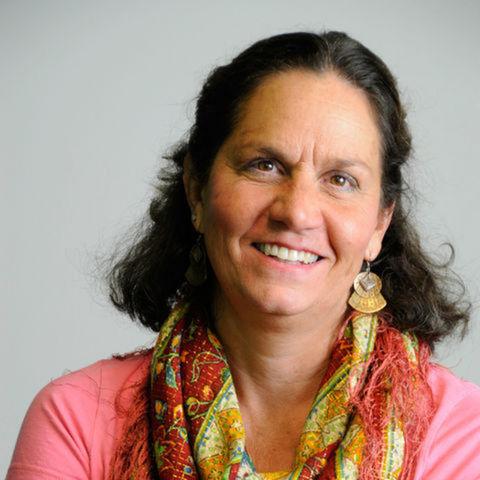
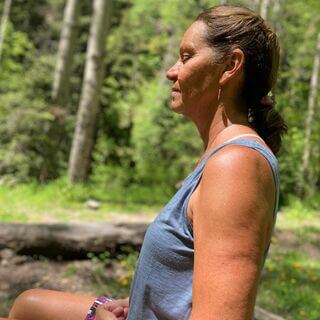
I am Anne-Marie Emanuele,
A mindfulness and meditation guide with Mindful Frontiers.
I will guide you on a relaxing afternoon and evening visit to the Mediterranean island of Corsica,
Or La Course in French,
Via its natural scents and sensations.
As we begin,
I invite you to settle your nervous system by bringing your attention to your body and the breath.
Begin with a few deeper than usual breaths,
In and out,
In and out.
As you lie comfortably,
Begin to notice your body cuddled in the comfy covers of your bed.
Feel the heaviness of your body and allow all the limbs to let go.
I invite you to scan for any areas of tension and bring unconditional kindness to those areas.
Choose a breath anchor that is easy to follow,
Such as the belly,
The chest,
Or the upper lip.
Notice the in and out breath as if it were a floating cloud,
And your body,
Cradled by the softness of your comfy covers,
Is rocked to sleep by the rhythm of the breath.
As you settle into this peaceful atmosphere,
Allow yourself to enter a sensual adventure in Île de Beauté.
Corsica is a beautiful island off the coast of the French Côte d'Azur,
And one of the 18 regions of France.
Historically,
It is known as the birthplace of Napoleon Bonaparte and Pasquale Paoli.
Corsica has a complex history of being influenced by various political powers and invaded by seafaring cultures.
It was under the control of the Italian Republic of Genoa until 1755,
Briefly declared independent as the Corsican Republic under the leadership of Pasquale Paoli,
And was ceded to France in 1768.
Corsica is known as the Isle of Beauty,
Île de Beauté,
And is an unforgettable combination of sea and mountains,
Or mare e monti in the Corsican language.
From aqua blue Mediterranean beaches to alpine mountains forested in pine,
Chestnut,
And oak,
Corsica is a land of contrasts and kaleidoscopic views.
It is said that the Isle of Corsica has to be earned.
More rugged than Sardinia,
Wilder than the Balearic Islands,
More secret than Sicily,
It is given only to those who respect it.
Traveling around Corsica on its notoriously winding roads,
One encounters breathtaking views and enjoys the mesmerizing perfume of its flora through the seasons.
More than 2,
500 species of plants grow in Corsica,
With many species endemic to this region.
175 species are found in regional natural reserves called Le Parc National Régional de Corse.
The maquis,
Or maquia,
Holds the most characteristic vegetation of the Mediterranean region.
The maquis' dense characteristics make it perfect for concealing,
And Corsican bandits were known to hide in the vegetation from their enemies.
It is formed by evergreen shrubs and bushes,
Which are always green.
Corsica is covered almost half by the maquis,
And its vegetation,
Dense and tight like nowhere else,
Forms a mass two to five meters high that is difficult to penetrate.
Its plants have adapted perfectly to the heat with their small,
Leathery leaves that offer only a limited surface area for evaporation.
When the maquis is carpeted in multi-colored flowers in spring,
Its scents are swept by the winds and carried far beyond the beaches.
Even Napoleon claimed he could recognize his native island by its perfume alone.
Higher up in elevation,
Corsican forests are largely composed of larichio pine,
Home oak,
Maritime pine,
Beech,
Chestnut,
And cork oak.
Larichio pines are coniferous evergreen trees that can grow up to 50 meters high with a straight trunk of gray flaky bark and long,
Dark needles.
The chestnut tree,
Châtaignier,
Holds a special place in the hearts of the Corsican people.
Over millennia,
Its fruit has provided life-giving flower from which many regional delicacies are created.
Additionally,
Its flowers are a favorite of Corsican bees for the pungent and deeply comforting autumn honey.
Le miel de châtaignier encompasses all of the rich history of Corsica in each sticky teaspoon.
No other honey is quite like it.
Other characteristic Mediterranean plants are cypresses,
Olive trees,
Oleanders,
Plane trees,
Mimosas,
And date palms.
Lemon,
Clementine,
Fig trees,
Olive,
Peach,
And almond trees are popular cultivated species.
The typical plants that make up the Maquis are lavender,
Mastic,
Rock roses,
Myrtle,
Rosemary,
And strawberry trees.
Let's tour some of the island's most popular flora.
The arbousier,
Arbutus,
Or strawberry tree,
Is a bushy tree with small,
White,
Bell-shaped flowers that cover the Maquis in early fall and turn into bright red strawberry-like fruit.
These fruits,
Called arbous,
Are small,
Edible,
Red-orange berry balls that can be used in jelly and jam.
Le lentisque.
The mastic tree or shrub hardly needs water and is very resistant to heat waves.
Pistachia lentiscus does not produce pistachios.
It is called a mastic tree because of its fragrant sap.
The name lentisque comes from the Latin lentus,
Which means viscous.
Myrtle,
Myrtle,
A heady-scented small shrub with oily leaves,
Is ever-present in the Maquis.
In winter,
It produces small,
Blue-black berries used in Corsican gastronomy.
The foliage flavors grilled meats,
And berries make a liqueur.
Reaching up to three meters,
The myrtle is found mainly on plains and near the sea.
Le romarin,
Rosemary,
Blooms from late spring into fall.
Rosemary is an herb with pale flowers and evergreen leaves.
It gives off a distinct scent and is used in cooking and making scented perfumes,
Soaps,
And candles.
Rosemary is native to the Mediterranean region where evidence of its use by humans dates back at least 7,
000 years.
Y mortale,
Also known as curry plant,
Is a low shrub with silver leaves topped with clusters of yellow flowers in early summer.
It has a strong,
Spicy perfume from the leaves and the flowers.
The plant has many medicinal properties and is used in aromatherapy and as an insect deterrent.
The name immortale comes from the Latin word immortales,
Which commonly means eternal.
The name of this flower refers to its ability to retain its color and fragrance long after it has been picked and dried.
Immortelle essential oil,
Obtained by steam distillation,
Has many healing properties including decongestant,
Anti-allergic,
And anti-inflammatory.
Asphodel,
Or taravello in Corsican,
Covers Corsica in spring.
Growing on barren,
Sandy,
And rocky soil,
The flowers brighten up the landscape with their little pinkish,
Star-shaped flowers sprouting from their stiff branches like gawky candelabra.
Lavande,
Lavender.
The species of lavender found in Corsica is sometimes called butterfly lavender because of its large,
Wing-like petals that project out from the top of the bloom.
It is a wild subspecies of lavender with the Latin name Lavendula Stoetias.
Very unique,
Its earthy and rocky fragrance is different from the fragrance of fine French lavender used in perfumes.
Siste de Crete,
Cretan rock roses,
Is a spreading,
Bushy shrub with evergreen foliage.
The siste is endemic to the Maquis.
Its pink flowers have sunny,
Yellow centers that attract pollinators from spring to summer.
There is also a variety that produces white flowers.
Unlike more common wild roses,
The siste does not have thorns.
Olive trees have grown in Corsica since antiquity,
Seen as mystic trees throughout the Mediterranean,
Some dating back thousands of years.
In Corsica,
Olive oil is a central ingredient in its regional cuisine.
In the fall,
One will see bright orange nets under olive trees to harvest the ripe fruit.
They will be collected and taken to the nearby Olive Press Collective to produce its prized golden green culinary oil.
Châtaigniers,
Or chestnut trees,
Blossom in May and June,
And chestnuts are harvested to produce flour dried in ground for use in local cuisine and pastries.
Sweet-scented flowers' aroma can be especially noticeable on warm,
Sunny days when they release their unusual scent into the air to attract bees.
Le genèvrier,
Caved juniper,
Is a prickly juniper that is native across the Mediterranean regions,
Growing on a variety of rocky sites from sea level.
Collected in October to November,
The pulpy juniper berries,
A little sweet despite their characteristic pungency,
Are used to flavor meat dishes or to prepare brandies.
In the past,
Juniper berries were candied in sugar,
Which were then made into lozenges called Saint-Roch-de-Ragée.
The backcountry of Corsica is best enjoyed on foot.
An immense trail system called the GR20 traverses the entire island from north to south.
Many backcountry enthusiasts plan a vacation around this trail that is not for the untrained hiker.
Luckily,
It also includes shorter paths projecting into the Maquis that anyone can enjoy.
So let's take a little walk together through the Maquis.
Imagine yourself walking along one of the thousands of backcountry trails in the Corsican hillsides.
The warm sun on your shoulders,
The rhythmic waves of the Mediterranean Sea,
A comforting background soundscape in the distance,
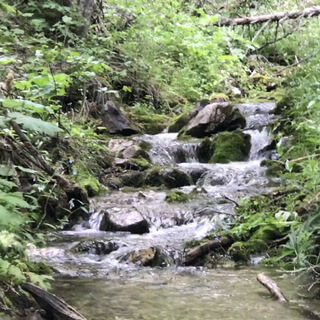
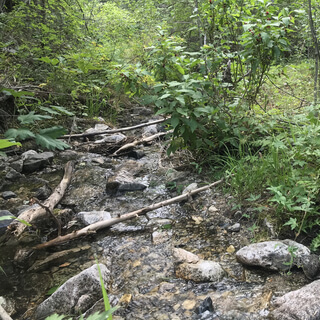
A fresh mountain stream rippling nearby,
And all your senses alive with the heady aroma of the Maquis.
On one breeze,
The relaxing scent of wild lavender enters your consciousness,
Then the bright tingle of pine,
And then the royal scent of all,
Immortel.
The smell of this plant,
Emblematic of the Corsican Maquis,
Kidnaps your imagination and lulls you into your environment.
Picking just a few stems and placing them in the pocket of your backpack,
You notice the bright and musky scent on your fingers.
Along the path,
We come upon a shepherd's cabin made from native rock,
Where we take a brief pause from the hot summer sun.
Breathing in the damp coolness,
We are reminded of the long history contained in these solid walls.
Les Bergers-Cors embodies the very essence of the island's pastoral life.
Proud guardians of traditions,
These highly respected figures are at the heart of Corsican culture.
In true symbiosis with nature,
These shepherds manage their flock with a deep respect for the environment.
Their daily life,
Punctuated by the seasons,
Requires rigor and devotion.
Thriving along a Corsican country road,
It is not uncommon for traffic to be stopped to allow a flock of sheep to cross the road and reach their next pasture.
Further ahead,
Continuing on this peaceful path in the Maquis,
We reach our destination for the afternoon,
The Fongou River.
What a wild jewel.
The majestic mountains above a valley carved into volcanic rock accentuate breathtaking views of the pristine Fongou River that flows over 24 kilometers.
Pausing to absorb this kaleidoscope,
You hear the soothing sound of the river that originates in some of the highest mountains of the island at the foot of the mythical summit of Capu Tapunatu,
Culminating at 2,
335 meters,
7,
600 feet.
The translucent green-blue water contrasts with the pinkish-gray granite rocks that form the Fongou's canyon.
Peaceful and refreshing in summer,
The water becomes tumultuous and torrential when heavy thunderstorms hit the region.
Within a 30-minute to an hour's walk along the river,
We find a secluded pool to take a dip and lounge on the hot rocks,
Enchanted by the crystal-clear water,
So soft your hair will feel newly washed.
Gazing beneath the water's surface,
You notice a multitude of colored stones,
Or galé,
Which are so soft they feel like polished gems.
Let's settle here to spend the afternoon relaxing and losing oneself in nature.
As evening approaches,
An owl is heard.
Completing today's exploration of Corsica,
L'Ile de Beauté.
Drifting off to sleep,
May you feel fully engulfed by gratitude for the opportunity to travel through the Maquis and relax on the shore of the Fongou River.
All your senses were awakened and your body enjoyed a deeply relaxing swim.
Sweet dreams.
Bonne nuit et à bientôt.
Bonjour,
Hello.
I am Anne-Marie Emanuele,
A mindfulness and meditation guide with Mindful Frontiers.
I will guide you on a relaxing afternoon and evening visit to the Mediterranean island of Corsica,
Or La Course in French,
Via its natural scents and sensations.
As we begin,
I invite you to settle your nervous system by bringing your attention to your body and the breath.
Begin with a few deeper than usual breaths,
In and out,
In and out.
As you lie comfortably,
Begin to notice your body cuddled in the comfy covers of your bed.
Feel the heaviness of your body and allow all the limbs to let go.
I invite you to scan for any areas of tension and bring unconditional kindness to those areas.
Choose a breath anchor that is easy to follow,
Such as the belly,
The chest,
Or the upper lip.
Notice the in and out breath as if it were a floating cloud,
And your body,
Cradled by the softness of your comfy covers,
Is rocked to sleep by the rhythm of the breath.
As you settle into this peaceful atmosphere,
Allow yourself to enter a sensual adventure in Ile de Beauté.
Corsica is a beautiful island off the coast of the French Côte d'Azur,
And one of the 18 regions of France.
Historically,
It is known as the birthplace of Napoleon Bonaparte and Pasquale Paoli.
Corsica has a complex history of being influenced by various political powers and invaded by seafaring cultures.
It was under the control of the Italian Republic of Genoa until 1755,
Briefly declared independent as the Corsican Republic,
Under the leadership of Pasquale Paoli,
And was ceded to France in 1768.
Corsica is known as the Isle of Beauty,
Ile de Beauté,
And is an unforgettable combination of sea and mountains,
Or mare e monti in the Corsican language.
From aqua blue Mediterranean beaches,
To alpine mountains forested in pine,
Chestnut,
And oak,
Corsica is a land of contrasts and kaleidoscopic views.
It is said that the Isle of Corsica has to be earned.
More rugged than Sardinia,
Wilder than the Balearic Islands,
More secret than Sicily,
It is given only to those who respect it.
Traveling around Corsica on its notoriously winding roads,
One encounters breathtaking views and enjoys the mesmerizing perfume of its flora through the seasons.
More than 2,
500 species of plants grow in Corsica,
With many species endemic to this region.
175 species are found in regional natural reserves called Le Parc National Régional de Corse.
The maquis,
Or maquia,
Holds the most characteristic vegetation of the Mediterranean region.
The maquis' dense characteristics make it perfect for concealing,
And Corsican bandits were known to hide in the vegetation from their enemies.
It is formed by evergreen shrubs and bushes,
Which are always green.
Corsica is covered almost half by the maquis,
And its vegetation,
Dense and tight like nowhere else,
Forms a mass two to five meters high that is difficult to penetrate.
Its plants have adapted perfectly to the heat with their small,
Leathery leaves that offer only a limited surface area for evaporation.
When the maquis is carpeted in multicolored flowers in spring,
Its scents are swept by the winds and carried far beyond the beaches.
Even Napoleon claimed he could recognize his native island by its perfume alone.
Higher up in elevation,
Corsican forests are largely composed of larichio pine,
Home oak,
Maritime pine,
Beech,
Chestnut,
And cork oak.
Larichio pines are coniferous evergreen trees that can grow up to 50 meters high with a straight trunk of gray flaky bark and long dark needles.
The chestnut tree,
Châtigny,
Holds a special place in the hearts of the Corsican people.
Over millennia,
Its fruit has provided life-giving flower from which many regional delicacies are created.
Additionally,
Its flowers are a favorite of Corsican bees for the pungent and deeply comforting autumn honey.
Le miel de châtigny encompasses all of the rich history of Corsica in each sticky teaspoon.
No other honey is quite like it.
Other characteristic Mediterranean plants are cypresses,
Olive trees,
Oleanders,
Plane trees,
Mimosas,
And date palms.
Lemon,
Clementine,
Fig trees,
Olive,
Peach,
And almond trees are popular cultivated species.
The typical plants that make up the maquis are lavender,
Mastic,
Rock roses,
Myrtle,
Rosemary,
And strawberry trees.
Let's tour some of the island's most popular flora.
The arbousier,
Arbutus,
Or strawberry tree,
Is a bushy tree with small white bell-shaped flowers that cover the maquis in early fall and turn into bright red strawberry-like fruit.
These fruits,
Called arbous,
Are small,
Edible,
Red-orange berry balls that can be used in jelly and jam.
Le lentisque.
The mastic tree or shrub hardly needs water and is very resistant to heat waves.
Pistachia lentiscus does not produce pistachios.
It is called a mastic tree because of its fragrant sap.
The name lentisque comes from the Latin lentus,
Which means viscous.
Myrtle,
Myrtle,
A heady-scented small shrub with oily leaves,
Is ever-present in the maquis.
In winter,
It produces small blue-black berries used in Corsican gastronomy.
The foliage flavors grilled meats and berries make a liqueur.
Reaching up to three meters,
The myrtle is found mainly on plains and near the sea.
Le romarin,
Rosemary,
Blooms from late spring into fall.
Rosemary is an herb with pale flowers and evergreen leaves.
It gives off a distinct scent and is used in cooking and making scented perfumes,
Soaps,
And candles.
Rosemary is native to the Mediterranean region where evidence of its use by humans dates back at least 7,
000 years.
Immortelle,
Also known as curry plant,
Is a low shrub with silver leaves topped with clusters of yellow flowers in early summer.
It has a strong spicy perfume from the leaves and the flowers.
The plant has many medicinal properties and is used in aromatherapy and as an insect deterrent.
The name Immortelle comes from the Latin word immortalis,
Which commonly means eternal.
The name of this flower refers to its ability to retain its color and fragrance long after it has been picked and dried.
Immortelle essential oil,
Obtained by steam distillation,
Has many healing properties including decongestant,
Anti-allergic,
And anti-inflammatory.
Asphodel,
Or taravello in Corsican,
Covers Corsica in spring.
Growing on barren,
Sandy,
And rocky soil,
The flowers brighten up the landscape with their little pinkish,
Star-shaped flowers sprouting from their stiff branches like gawky candelabra.
Lavande,
Lavender.
The species of lavender found in Corsica is sometimes called butterfly lavender because of its large wing-like petals that project out from the top of the bloom.
It is a wild subspecies of lavender with the Latin name Lavendula Stoetias.
Very unique,
Its earthy and rocky fragrance is different from the fragrance of fine French lavender used in raffines.
Siste de crête,
Cretan rock roses,
Is a spreading bushy shrub with evergreen foliage.
The siste is endemic to the Maquis.
Its pink flowers have sunny yellow centers that attract pollinators from spring to summer.
There is also a variety that produces white flowers.
Unlike more common wild roses,
The siste does not have thorns.
Olive trees have grown in Corsica since antiquity,
Seen as mystic trees throughout the Mediterranean,
Some dating back thousands of years.
In Corsica,
Olive oil is a central ingredient in its regional cuisine.
In the fall,
One will see bright orange nets under olive trees to harvest the ripe fruit.
They will be collected and taken to the nearby olive press collective to produce its prized golden green culinary oil.
Châtaigniers,
Or chestnut trees,
Blossom in May and June,
And chestnuts are harvested to produce flour,
Dried and ground for use in local cuisine and pastries.
Sweet-scented flowers' aroma can be especially noticeable on warm sunny days when they release their unusual scent into the air to attract bees.
Le genèvrier,
Caved juniper,
Is a prickly juniper that is native across the Mediterranean regions,
Growing on a variety of rocky sites from sea level.
Collected in October to November,
The pulpy juniper berries,
A little sweet despite their characteristic pungency,
Are used to flavor meat dishes or to prepare brandies.
In the past,
Juniper berries were candied in sugar,
Which were then made into lozenges called Saint-Roch-de-Ragée.
The backcountry of Corsica is best enjoyed on foot.
An immense trail system called the GR20 traverses the entire island from north to south.
Many backcountry enthusiasts plan a vacation around this trail that is not for the untrained hiker.
Luckily,
It also includes shorter paths projecting into the maquis that anyone can enjoy.
So let's take a little walk together through the maquis.
Imagine yourself walking along one of the thousands of backcountry trails in the Corsican hillsides.
The warm sun on your shoulders,
The rhythmic waves of the Mediterranean Sea,
A comforting background soundscape in the distance,
A fresh mountain stream rippling nearby,
And all your senses alive with the heady aroma of the maquis.
On one breeze,
The relaxing scent of wild lavender enters your consciousness,
Then the bright tingle of pine,
And then the royal scent of all,
Immortal.
The smell of this plant,
Emblematic of the Corsican maquis,
Kidnaps your imagination and lulls you into your environment.
Picking just a few stems and placing them in the pocket of your backpack,
You notice the bright and musky scent on your fingers.
Along the path,
We come upon a shepherd's cabin made from native rock,
Where we take a brief pause from the hot summer sun.
Breathing in the damp coolness,
We are reminded of the long history contained in these solid walls.
Les Bergers-Cors embodies the very essence of the island's pastoral life.
Proud guardians of traditions,
These highly respected figures are at the heart of Corsican culture.
In true symbiosis with nature,
These shepherds manage their flock with a deep respect for the environment.
Their daily life,
Punctuated by the seasons,
Requires rigor and devotion.
Thriving along a Corsican country road,
It is not uncommon for traffic to be stopped to allow a flock of sheep to cross the road and reach their next pasture.
Further ahead,
Continuing on this peaceful path in the maquis,
We reach our destination for the afternoon,
The Fongou River.
What a wild jewel!
The majestic mountains above a valley,
Carved into volcanic rock,
Accentuate breathtaking views of the pristine Fongou River that flows over 24 kilometers.
Pausing to absorb this kaleidoscope,
You hear the soothing sound of the river that originates in some of the highest mountains of the island,
At the foot of the mythical summit of Capu Tapunatu,
Culminating at 2,
335 meters,
7,
600 feet.
The translucent green-blue water contrasts with the pinkish-gray granite rocks that form the canyon.
Peaceful and refreshing in summer,
The water becomes tumultuous and torrential when heavy thunderstorms hit the region.
Within a 30-minute to an hour's walk along the river,
We find a secluded pool to take a dip and lounge on the hot rocks,
Enchanted by the crystal-clear water,
So soft your hair will feel newly washed.
Gazing beneath the water's surface,
You notice a multitude of colored stones,
Or galets,
Which are so soft they feel like polished gems.
Let's settle here to spend the afternoon relaxing and losing oneself in nature.
As evening approaches,
An owl is heard,
Completing today's exploration of Corsica,
L'Ile de Beauté.
Drifting off to sleep,
May you feel fully engulfed by gratitude for the opportunity to travel through the Maquis and relax on the shore of the Fangu River.
All your senses were awakened,
And your body enjoyed a deeply relaxing swim.
Sweet dreams.
Bonne nuit et à bientôt.