Welcome to In the Deep.
I'm your host,
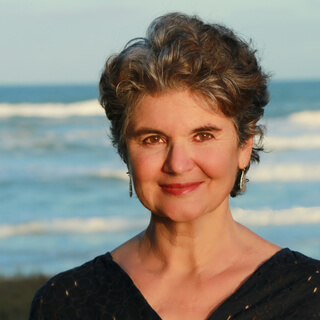
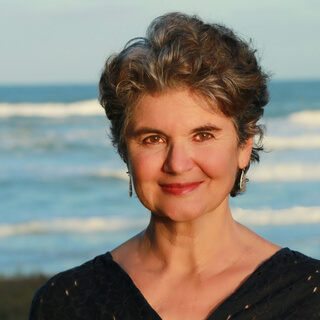
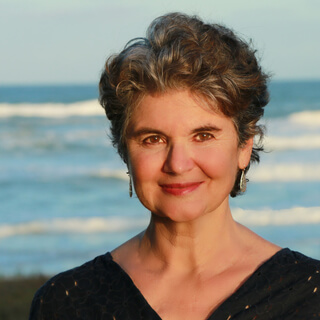
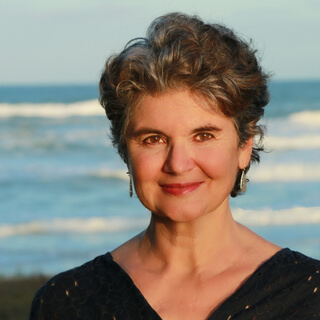
Catherine Ingram.
My guest today is Christopher Plowman,
CEO of Insight Timer,
And along with his brother,
Nico,
Its co-owner.
The brothers acquired Insight Timer in April of 2015 when it had about 100,
000 users,
Certainly a respectably sized group.
But in the past two and a half years under Christopher's leadership,
Insight Timer has grown to approximately three million registered users with 1600 presenters sharing talks,
Guided meditations,
And music.
Insight Timer is now attracting an additional 10,
000 users per day and is the highest rated free meditation app in the world.
Christopher is a somewhat reluctant interviewee in that he wants Insight Timer to be about the teachers and the community rather than about himself.
But I wanted to know who was this innovator and what were his values in life as well as in business.
In speaking with him,
I was particularly surprised and delighted by his incisive critique of technology and social media despite or maybe because of his longtime success in building tech companies over the past 20 years.
I was also impressed with his commitment to creating both a conscious as well as a profitable company,
A vision which also includes a sharing economy in that his team is launching creative ways for the teachers and presenters on Insight Timer to have revenue even though the app and most of its content is offered for free.
Our conversation took place on Skype in November 2017.
Christopher,
Welcome.
Thank you,
Catherine.
It's lovely to be here.
Yes,
Indeed.
You in Paris and me in your home country,
Australia.
All right,
I wanted to begin with mentioning something that I find very useful.
Joanna Macy,
One of the great elders of our time,
A great Dharma teacher and eco-philosopher,
She says that we are living in three epics,
Three stories converging all at once.
The first story is business as usual,
Whereby you look at the news and it sort of more or less gives a sense of consistency about the world and there's the new technologies or there's the earthquake or there's the political dramas and scandals and so on,
Celebrity gossip,
Etc.
There's a certain way in which it gives a kind of almost a lulling sense that things are just carrying on,
Business as usual.
The second story,
As she identifies it,
Is she calls the great unraveling,
Which is the understanding and the view that things are kind of falling apart on a lot of levels.
The crises that are happening right now,
The tipping points that are happening in terms of climate chaos and many other environmental breakdowns are just ongoing and are kind of roaring along in an exponential way,
Not in a linear way.
And then the third story that's happening is what she calls the great turning and that is that there's an awakening happening that there's a kind of due to the crisis or whatever,
I guess it's its moment in time,
That a lot of people are looking at these matters and having to find,
First of all,
Deep in themselves,
Some sort of quiet and an awakening awareness and perhaps forcing a world community response,
Which of course,
You know,
You're very involved in.
So I would love to hear your thoughts and particularly your thoughts as a father in this time,
Whereby we each in a sense are living,
Especially people who are privileged,
Are living all three of these stories,
Business as usual,
The great unraveling,
The great turning,
The great unraveling and the great turning.
Wow.
So that's a lot for me to process on a Monday morning.
Look,
I guess the first thing that came to mind,
I mean,
You threw in the father bit,
Which always gets me at a different level,
I guess,
Which makes it possibly more interesting.
I mean,
You know,
It's that great idea,
Isn't it?
That great change is always preceded by great chaos.
And I often ask myself whether or not the everyday news,
Which kind of isn't really a reflection of what's going on,
It's a reflection of what media barons want to tell us,
Just allowed to be cynical,
I guess,
Would be the best reflection of that.
I often ask myself whether the second part of your question,
Right,
Which is that we've got this sort of catastrophic change going on right now.
Is it so?
Right?
Is it the case that things are reaching a level of entropy,
Right,
Which we just can't put back together?
Or is it just that we're experiencing that?
And so we feel that but if you went back 100 years or 200 years and looked at the industrial revolution or the time preceding the Renaissance,
Did people feel that way as well?
I don't know the answer to that question.
And as a father,
I often wonder,
You know,
Are my kids going to grow up happily or not?
I definitely think that you couldn't answer your question without considering the impact of technology,
Which is,
I think,
And I'm talking about current technology,
Obviously technology applies to all parts of history.
The wheel was technology,
Of course,
At some point.
I was actually at dinner in Venice two nights ago,
And I looked around the restaurant and every single person in the restaurant was looking at their mobile phone.
I was in Venice a few years ago,
And there were so many people using selfie sticks,
And you know how crowded it gets around in the San Marco Square.
There were so many people with selfie sticks that you were having to dodge them because you get poked in the eye.
The selfie stick,
I don't like the selfie stick,
But I kind of get it.
It's narcissistic,
In a way,
But it's the presentation of one's life in the best possible light for social media.
And okay,
Take it for what it is.
But what's really,
Really worrying is when you get two people or four people or six people sitting who've gone to the efforts to go out to dinner,
And you know,
It was a nice restaurant,
And the wine was expensive,
And you know,
It was a lovely view,
And we're sitting in Venice,
And there's gondolas floating past,
And there's a guy singing some Italian song,
And everyone's oblivious to it,
Right?
Everyone just isn't interested in the people they're with or their surroundings.
And this happened in Paris.
My wife has lots of French cousins,
And so we had a lunch in Paris,
I think,
Last week and the weekend before,
And all of the kids came,
And they ranged in age from sort of six through to 16,
Maybe 14 of them.
And every one of the kids that came to the table,
And every one of the kids over the age of 10 was also buried in their mobile phones,
Right?
And they hadn't seen each other for a long time,
They all love each other.
They're all excited to see each other.
They had lunch,
And then of course,
When lunch happens,
They all sit on the phone buried in some sort of artificial world.
It infuriated me,
You know,
I should meditate more.
I was so upset.
I really was very upset because my kids don't have mobile phones.
Otto's 10,
And I won't let him have one yet.
I've told him when he's 13.
And my daughter,
And by the way,
I'm certainly not drawing comparisons between my kids and other kids.
It's just a different approach,
I guess.
But my daughter Lucille was there,
She's six,
And she had some pickup sticks,
Which she'd just given her.
And so she was very upset,
And she was like,
I'm sorry,
I'm sorry,
She was walking around to each person on the table,
Asking them to have a game of pickup sticks with her.
And just sort of being completely ignored,
Really.
And it made me very sad,
Actually.
But I just think that if we're going to talk about,
You know,
Where are we at right now,
Is great change coming,
Hasn't started.
I think to separate out social media and technology is very difficult to do.
I'm not sure.
Technology has been beneficial in some ways,
Of course.
For instance,
With what you're doing,
You know,
People around the world are meditating together,
People who are starting to feel part of a community,
Who are in places where it's maybe more isolated,
They don't have any other access to community.
And they're feeling this incredible sense of worldwide community,
And also an encouragement in this kind of deepening.
And that's an incredible use of technology.
But to your point,
Especially for the young people,
There's an addiction that's happening,
And a way that they're getting used to a very mediated reality.
They don't actually experience through the senses and through a sense of wonder and through their own imaginations.
Everything is basically,
You know,
Dripped in,
Like,
Forced.
Yes.
And sorry to interrupt you,
But actually,
I think it's worse than that because I remember my childhood,
I think the big problem with telephone now,
The mobile phone,
Is it enables children to avoid uncomfortable situations,
It enables them to avoid embarrassing moments,
Small moments of humiliation,
Which are obviously all character building.
It stunts their emotional development because they don't,
They can avoid experiencing uncomfortable moments.
And also they miss out on the flip side of that,
Which is the great connecting moments and the moments of growth.
Sure.
And the relationship to nature.
I mean,
There's another,
Do you know the phrase nature deficit disorder?
I do not,
But I like it.
And some people are proposing that that is,
That explains a lot of the kind of behavior that children are experiencing so much now in school,
So much ADD and so much,
You know,
Well,
Often children are pathologized actually,
Just for,
Because they're probably all pent up,
You know,
That they just need to run outside and,
You know,
Climb a tree or build a fort or something,
You know,
Just,
But they.
.
.
Yeah,
Well,
See,
I mean,
You mentioned addiction.
And again,
I mean,
I'm just,
I could do this on any weekend over the last three years.
I'm just picking the last weekend.
We just happened to Venice because we wanted to go away and have some time as a family.
And what I noticed is sort of every hour or so,
So we have what's called minutes in our house,
Right?
Where the kids are allowed to have on the weekend,
They have a little bit of a little bit of a break,
But they have,
On the weekend,
They get 30 minutes of screen time.
And it's called their minutes.
And of course,
The whole way through the day,
Until there's confirmation from myself about when those minutes will be permitted,
There's anxiety,
Right?
So we're sitting in a gondola and we're actually just,
We had just gone past the house and written some piece of music.
We'd been past Marco Polo's house.
And to me,
My jaw was just,
You know,
On the floor,
Because this is just amazing that these people actually lived where we were.
And of course,
Otto and Lucille are just constantly saying,
Papa,
Can we have our minutes when we get home?
Right?
And I wanted to talk about that because there's a big part of me as a father who's very angry actually at,
I think the dishonesty of,
I think it's important that we actually constructively name companies here,
Not to point fingers,
But I think that there is a huge dishonesty coming out of Facebook,
Actually.
I think that there's a high level of awareness in those,
In that company,
Particularly,
But others as well,
That not only are their products highly addictive for impressionable young minds,
But that they are actively employing scientists and designers and thinkers and coders and developers to create experiences within their platform that release the dopamine that gets a young teenager or a young child addicted to their products.
Right?
There's that great picture.
I don't know which decade,
I'm going to say the 80s,
But I could be wrong,
Where the seven or nine heads of the big tobacco companies all stood up and raised their right or left hand.
And in unison,
One by one said,
I believe nicotine is not addictive.
And they went down the path.
And of course,
It's now been categorically shown that they all lied.
And I believe that there is,
And I'm not the first person to draw comparison between big tobacco and big tech.
But I firmly believe that the people who have made billions of dollars building these social networks were and are aware that their products are addictive and they need to be held accountable for this.
I was trying to think of what the next sentence is,
But that's,
I'm very angry about that because the thing that I perhaps find most galling,
Jesus,
It's going to be hard to say this without really coming across as being very angry.
Go for it.
Go for it.
I think someone needs to start talking about this and they have started talking about it,
But these companies are so powerful and so influential that it's very difficult to have these conversations and be heard.
But I think the thing that I find most distasteful,
Which is hard considering the accusation I've just made about them being sort of knowingly aware of the addictive nature of their products,
Is there's also a level of hypocrisy in these companies,
Because not only did they intentionally build addictive products to monetize very impressionable young minds,
But they do something else as well.
And I'm not necessarily suggesting that it's a tactical move or that it's intentional,
But the other thing they do,
And there's a guy called Professor Scott Galloway.
He's my favorite thinker at the moment.
He's kind of a marketing guy.
He's just written a book called The Four,
Which talks about the power of Amazon,
Facebook,
Apple,
And Google.
And I'm not throwing all four of these companies in.
I'm particularly talking about social networks at the moment.
But what they do,
And he's the one who sort of brought this to my attention,
He's much more articulate than I am,
Is they wrap their brands in this sort of.
.
.
They adopt sort of popular initiatives,
Like we're trying to connect people,
We believe in equality.
They adopt very contemporary,
Modern,
And popular campaigns as part of their brands.
And they do that very successfully.
And I believe genuinely that they believe in those causes.
But what they do by adopting these causes and integrating them into their brands is they make it very hard for,
Say,
Someone like me to stand up and say,
Hey,
I'm going to be a hard for,
Say,
Someone like me to stand up and say,
Well,
Actually,
There's something very rotten at the core of your company.
Because they've sort of built these brand buffers,
Which is,
Look,
Where we embrace diversity,
We embrace equality,
We embrace all of these things.
And they do do those things.
But at the very core of their product is something that's actually really damaging the minds of our kids.
Well,
Also,
Christopher,
There's a correlation between depression and a lot of time spent on social media,
Especially for young people.
There's a very well established now correlation.
Yes,
There are exactly there absolutely is.
It's very hard to say this again,
Because it it sounds so confronting.
But there is a correlation now between increased levels of suicide amongst teenage girls and social media usage.
Now,
Of course,
I'm not suggesting that they're directly related.
But the fact is,
You know,
The data is there.
And I think it needs to be explored.
And I'd also like to say something as well,
Because I think it's always important to look at topics like this with an sort of an open,
Compassionate,
Yes,
Heart,
If you like.
I'm not I'm not suggesting that any individuals in those companies set out to do something like this,
Right.
And I think this is where money becomes involved,
Right.
What I think happens often,
When companies get big is obviously,
You know,
You have shareholders and stakeholders and stock prices and all these sorts of things.
And suddenly,
The beast needs to be fed.
Yes.
And it takes someone of a very strong character,
Who's suddenly worth 75 billion US dollars to actually make decisions in the interests of the planet,
Rather than financial means,
Right?
What's happening now,
Of course,
Is,
You know,
Facebook is sending people,
Senior people in the company off to Washington to talk about how they care and how,
You know,
They need to make changes and so on.
But it just doesn't really feel like they're really sincerely standing up and saying,
Yeah,
We have a real problem here.
Absolutely.
No,
It's kind of compassion,
Light.
Yes,
I agree.
It's a bit co opted.
And I mean,
I see that in a lot of companies across the board.
I'm interested in terms of how have you faced those temptations?
I have a sense that you've had a great transition from a sort of business as usual to more to the great turning at this point in your life.
You know,
I guess the question for you is going to be,
Can you sustain a highly profitable company that's successful and really hold to your values of the greater good?
Well,
See,
I think,
You know,
I'd love to just say,
Oh,
Yes,
Of course,
I can.
I think the jury's out on that.
It's funny,
Because my son Otto,
And I on the weekend,
We're talking about courage.
And he said to me,
How do you know if you're,
If you have courage,
He doesn't use the word courageous gets.
He's mostly French speaking,
But he says,
How do you know?
He says,
Are you a new Do you have courage?
Papa was his question.
And I,
I thought about it.
And of course,
We just been through the one of the Doge palaces of something,
Which is the Merck with Venice,
And there's,
You know,
Warriors and,
You know,
Military and all that sort of stuff.
And I said,
Look,
And I look,
There are plenty of people who demonstrate courage every day,
People who go through remission and people who go through heartbreak and people who go through loss.
But I said,
I'm not sure you can ever really measure your courage until you've actually put your life on the line.
Right?
People who've actually fought for freedom,
Or people who've been willing to give up that which they hold most dear for an up deal.
Right?
And so I said,
I don't know,
Actually,
If I'm courageous,
Because I don't think I've ever really truly been tested.
And,
Of course,
Everyone likes to think that they would be courageous and times like that.
But I look at those photos,
I mean,
I'm an Australian,
And I look at the photos of those 16,
17,
18 year olds that went off to war and the First World War,
My grandfather was one of them before both world wars.
I know.
And I frankly,
I don't think I have,
I don't think I would have had the courage,
To be honest,
Perhaps back in those days,
Because honor and integrity were much stronger elements in one's character,
They were,
They were given more weighting,
Perhaps than they are today.
That's very interesting.
I think that's true.
Yeah,
I think that there was something about those generations were just reared in that kind of nobility in a way,
You know.
Well,
They measured themselves against their values,
Not their value.
Yes.
Right.
I think what happens today is we measure success based on money and glitz and Instagram followers.
You know,
I'm kind of feel a bit nostalgic this way,
But I kind of used to like the idea that you didn't do something simply because it just wasn't done.
Right.
Nowadays,
That principle just doesn't exist.
It's like,
Well,
I can do whatever I want,
Freedom of speech,
You know,
Don't tell me how to behave,
Which kind of feels like a regular refrain from people nowadays.
Back in those days,
It was there were things that people didn't do simply because it wasn't right.
Right.
I'm not sure we have concepts.
I'm not sure we have right and wrong anymore,
You know.
And so my answer,
It's a very long winded answer.
I apologize,
Catherine,
But my answer to your question is how do I know that insight time is not going to sort of fall victim to greed and how do I know that we're going to continue to do what's right?
The honest answer is I don't.
I certainly hope when I'm faced with those decisions,
I'm not going to be the one to be the one to make the right decisions.
But I haven't been faced with them yet.
You know,
Insight time up until this point has been based on my experience with other companies.
The universe really seems to be supporting insight time at the moment.
The universe seems to like what we're trying to do.
So it was easy to raise funding.
It was easy to find a really great team of people to help me build it.
The community is now growing at sort of 10,
000 users a day.
And we don't do any advertising.
We don't do any marketing.
We do none of that.
So it's kind of like,
I suspect in a way,
I'm not comparing us to the scale of Facebook,
But I suspect Mark Zuckerberg had a similar starting point with Facebook.
Right?
He launched this thing and it just went crazy and people loved it.
It's great that you have the benefit of seeing the possibilities of going off the rails as that company has and as so many other similar ones have,
That you can learn from those mistakes that they made.
Well,
I just know how painful it can be.
Right?
One of our investors is a guy called Bo Xao,
Who's a very dear friend of mine,
Who made lots of money when he was younger,
Sold a company to eBay and launched Matrix Partners in China,
Which has very big investments in very big Chinese internet companies,
Has now decided that he actually wants to use his acquired wealth to help people like me to build conscious companies.
Right?
So he set up a hundred million dollar accelerator fund.
If anyone's out there and you've got an idea that wants to change the world,
Then contact Bo.
And he and I have talked about this a lot because I was kind of like,
Well,
Look,
What defines whether or not a company is conscious?
Right?
And to me,
It comes down to the word competition because there's clean competition and clean competition is super,
Super important,
Right?
To be the best you can be,
You have to measure.
Right?
And so having a yard stick and having sort of friendly,
Constructive competition about building the best meditation app.
First of all,
It's a great attractor for young talent and hungry people and smart people.
Um,
The problem is when competitive becomes anti-competitive.
And to me,
Anti-competitive is being a strong competitive company says we want to be the best we can be,
Period.
Anti-competitive adds an additional component to that sentence,
Which is,
But at the expense of everyone else,
Right?
Which means it's not good enough for us to build a great app.
We actually have to make sure that everyone else doesn't build a great app.
Right.
Um,
And that kind of to me is if we're going to actually,
And I don't mean in slight time,
I mean,
If as a people,
And as a,
And as a collection of companies,
If we're going to get there,
We have to start defining the difference between clean competition and anti-competitive behavior.
Um,
You mentioned it to me the other week when you talked about extraction.
Yeah.
And I've spent so much time in the last four days thinking about this word,
Catherine,
Thank you for that.
But,
You know,
There are people that contribute and add and build and construct,
And there are companies that do the same.
And then there are others that extract,
Right?
They're sort of like the Borg of star,
Star Trek,
Right?
Where they just assimilate and suck the life out of everything.
Like,
Um,
Like Mordor in Lord of the Rings.
Yeah,
Exactly right.
And I think for me,
If we're going to provide a new definition of the word competition,
Um,
The best thing I could come up with as I was sitting in a gondola over the weekend was it's like,
Well,
Am I constructing or am I extracting?
Yeah.
Um,
And that for me is something that I'm going to work on over the next six to 12 months to try and define that.
Yeah.
Um,
I want to jump in here.
I just want to,
I just want to throw something out because the word competition for me,
There's a kind of rattle with it because it generally is understood to mean that you're in some sort of parry with another person or company or group or whatever in which you're trying to best them.
I wonder if there's another way to hold this very term.
Like what keeps coming to me is just simply excellence,
That the commitment is to excellence.
Well,
Let's take the Olympics.
I don't know why this has just popped into my head.
I'm not a great sportsman.
Never really was,
But higher,
Faster,
Whatever it is free.
I mean,
Look at competition in its best form,
Right?
Athletes really competing on a global platform to be the best they can be.
Um,
You know,
I mean,
The Olympics is a competition,
But you know,
There is a negative connotation with competition.
I agree with you,
Right?
There's also,
Unfortunately,
A negative connotation with the word profit.
I mean,
It's not a good word,
Profit.
Profit for me is wealth.
Now wealth is actually,
You know,
Wealth is determined by what you do with your profit,
Right?
Um,
If you share your wealth and you use your wealth for good,
Then profits are fantastic objective,
Right?
It's a,
It's a,
It's a great thing to aspire to.
Um,
But it too has been commandeered,
Unfortunately,
By people with,
You know,
Perhaps not the right intentions,
Um,
Competition,
Profit,
And I'm going to try and think of others,
But these all are kind of dirty words now.
Um,
And this is really what Nick and I,
I mean,
When Nick and I bought Insight Timer,
What we decided we had to do.
So we first of all started out thinking,
Is it possible to build a company that's both conscious and commercial,
Right?
Can you,
Can you desire to build a big,
Profitable,
Strong company and maintain your conscious objectives?
Is that possible?
That was our first question.
And so we kind of looked at,
Um,
Conscious pursuits and commercial pursuits,
Right?
Because kind of they're both at the,
At the moment they're at opposite ends of the scale,
Right?
So conscious pursuits,
Unfortunately,
Usually end up turning into hobbies,
Right?
Because they have no financial infrastructure.
They've got no support.
They can't expand and build and grow.
Obviously they can if you've got lots of volunteers and so on,
But eventually volunteers need to go and,
You know,
Pay for their kids' education,
All those sorts of things.
Um,
And they also conscious pursuits or,
You know,
And not for profit pursuits depend on the generosity of others,
Right?
So they're not necessarily independent.
Um,
And independence is key,
We think.
Then the second on the other end of the spectrum is,
Is,
Uh,
Commercial pursuits,
Right?
That have no conscious infrastructure either.
Um,
And these enterprises tend not to be great for society either,
Right?
Bankers that extract huge amounts of money,
Um,
Um,
You know,
Mining companies that extract huge amounts of resources,
Um,
Where companies exist,
I can't stand it when people say,
Well,
We have a fiduciary duty to our shareholders.
And that becomes the sort of the justification for everything.
It's like bullshit,
Excuse my language.
Yes,
You've got a duty to shareholders,
But you also have many other duties,
Right?
To your kids,
To the planet,
Yeah.
Right.
So stop,
Stop using fiduciary duty as this backstop or this justification for all of your actions.
And in the end,
Actually,
Catherine,
We decided that it's not a case of can you actually do both these things together?
We have to do both these things together because you can't have these two entities that are mutually exclusive.
We have to bring them into center,
Right?
We actually have to build commercial enterprises that have a conscious infrastructure and vice versa.
Um,
And if we do that,
We kind of feel like we're going to go back to yesteryear,
Right?
Where people say,
I'm not going to do that because it's not right.
Right.
People who have,
It's kind of full circle.
And you know,
I wanted to mention to you that there you are in France,
You no doubt know that core means heart,
Which is the,
Which is the root of courageous or of courage.
And,
Uh,
So I,
I sense in you that that's really,
That you do have great courage,
And that you are on track,
That as long as your intention stays true,
Uh,
And you're going to have plenty of people around you to remind you,
No doubt,
Um,
That you'll,
You'll be fine and your company will be beautiful.
And it'll help a lot of people as it is already.
Look,
It's very kind of you,
Catherine,
Um,
To say that,
Um,
I hope one day that we can make that claim.
As I said,
I think we're not there yet.
I don't think we've demonstrated courage yet,
Because as I've said,
I don't think we've been challenged yet.
Let's have a chat again in two years time about whether we stayed the course and we've done things.
Well,
I think one thing I've definitely learned in the last few years,
Um,
I wouldn't like to give you a list of the impression that I haven't at one stage in my life being uniquely commercial.
I was,
I spent many years building startups and companies,
And my sole objective was to try and make lots of money.
And I would look at every single one of them,
Single idea that experience in a way makes you more bulletproof for that temptation.
Now it's been,
Yes,
Because what's,
What's been very interesting is that once we stopped chasing the money,
Um,
Once we actually started trying to do something that,
Um,
Where money wasn't the core objective,
It felt like the universe,
As I said,
Just started stepping up and supporting us.
Um,
My Buddhist teachers,
Buddhist teachers used to say the Dharma takes care of those who take care of the Dharma.
Well,
There you go.
See,
There you,
You did more eloquently than I have.
I'm happy to share it.
This has been in the deep for the entire list of my podcasts and schedule,
Please visit Katherine Ingram.
Com.
And if you'd like to tune into insight timer,
Please visit insight timer.
Com or download the app in all the usual ways till next time.