Our whole immune system is designed to be challenged.
You've got to let kids crawl out in the mud and ingest that mud and that's bacteria and stuff to develop that internal immune system in your gut.
Kids have got to be able to run and jump to develop their long bones.
And so what we're doing is breeding if we're not careful,
And it's the evidence is starting to show with diseases and those sorts of consequences,
We're developing a maladapted species.
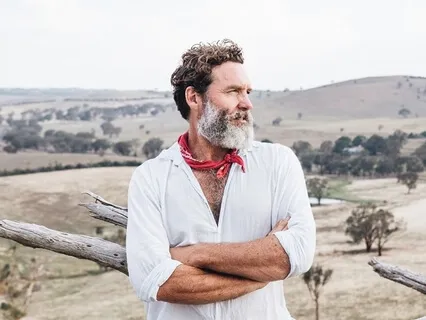
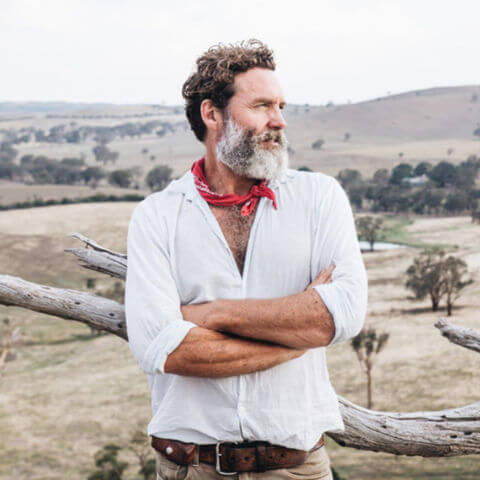
That was Charlie Massey,
And you're listening to The Regenerative Journey with Charlie Arnott.
We acknowledge the traditional custodians of country throughout Australia and internationally and their continuing connection to culture,
Community,
Land,
Sea and sky.
And we pay our respects to elders past,
Present and future.
G'day,
I'm your host,
Charlie Arnott.
And in this podcast series,
I'll be uncovering the world of regenerative agriculture,
Its people,
Practices and principles,
And empowering you to apply their learnings and experience to your business and life.
I'm an eighth generational Australian farmer who transitioned my family farm from industrial methods to holistic regenerative practices.
Join me as I dive deep into the regenerative journeys of other farmers,
Chefs,
Health practitioners and anyone else who's up for yarn and find out why and how they transition to a more regenerative way of life.
Welcome to The Regenerative Journey with Charlie Arnott.
G'day,
We're back with part two of the Charlie Massey interview.
In this interview,
We talk about human health,
Mental health,
Regenerative farming certification,
The perfect farmer's job description,
And a number of many other things,
Complex adaptive systems,
Working with nature and finding one's purpose.
I hope you enjoy this part two episode of Charlie Massey.
Now,
What was my next question,
Charlie?
Oh,
No.
Do you want to do the adaptive systems?
Yeah,
Let's do that.
Well,
It's fresh.
I think this is important.
And I didn't really think of it and I really wasn't written anywhere.
I had to dig it out of a lot of good scientific ecological literature.
And so it wasn't until I went to uni in the late 2000s and maybe I'm a slow learner and other people were aware of it,
I wasn't.
When the computer era came in,
That in many ways led to what's called systems thinking,
Thinking,
Starting to analyse and get a handle on how these complex systems like computers and big business operations and supply chains,
How that complexity worked.
And then people realise,
Hang on,
Nature and a landscape,
A catchment,
The planet is actually a complex system.
And then they realise that if it's healthy,
It's adaptive.
It's what's called a complex adaptive system.
So if you push in here and disturb within it,
It's got all sorts of solutions from its past history,
Which can be millions of years if you're talking about nature,
That will find a solution.
So I ended up having to,
I've done a bit of teaching to university students since I left them a PhD and I was teaching masters and third years at ANU and I had to teach,
Didn't have to,
I thought it was important,
Did a couple of lectures on complex adaptive systems.
So I had to go right into it.
And there's about 12 traits,
I'm not going to bore you with them.
Obviously biodiversity is important,
All that sort of stuff.
But one of them is.
.
.
We'll go there if you think it's going to help those.
No,
I don't think we need to.
But one of the key properties is what are called emergent properties.
And that's the name they've given to these past historical or present elements within the system that will emerge when it needs to adapt.
The solutions lie within.
So sometimes they call these systems complex emergent systems,
Not just complex adaptive systems.
I mean,
If you think about the World Wide Web as it was evolving,
It's a complex adaptive system.
Someone invents an internet,
People invent 100 things that you can then start doing with it.
Facebook emerges,
Da da da da da.
It's the same,
It's a human system,
But it's a complex adaptive system.
Nature is very much that.
And so industrial farming takes out those emergent solutions,
Simplifies it down to the basics.
And so it can't react to a pest attack.
You haven't got the deep roots and the ground is bared,
So you get erosion or salt rises because we've chopped down the trees that kept the water table lower to stop it.
You know,
Those sorts of things.
And so our role is to,
I see,
It's a strange way of putting it,
But I see my role is to try and restore the complex adaptive systems around here to much greater resilience and diversity by rebuilding those emergent properties in them.
And I guess it's as much about the diversity that exists within that and the solutions,
As you say,
That are sitting there waiting for the opportunity and they're almost recruited at the right time,
Aren't they?
They're waiting there.
You know,
In the example,
And David Marsh had sort of really been mentoring me about this and demonstrating it,
And I've seen it 100% at home is,
You know,
Old cropping paddocks left not sown to anything.
And then,
You know,
Some years later,
There's species turning up because they need to be there at that point in time.
We've sort of opened a window for them to then step into and do a job,
You know,
In that landscape.
They're emerging back and they may not have been there for 50,
100 years.
And I don't know what they've been doing,
Just waiting for.
.
.
Yep,
Just giving them a chance.
Well,
Waiting for me to stop being a dickhead,
Really.
That's right.
And that's what a weed is.
I mean,
A weed is sort of your primary invader.
You take a bushfire in Australia,
The first things in are the wattles because they're pumping nitrogen in to kick the whole process.
So a weed is punching through compacted soil to try and get deeper nutrients further down,
Your thistles and all that sort of stuff.
If you've got too many thistles all the time,
It's because they haven't done their job yet and you're creating a system that's too simple.
So these emergent properties are crucial.
What industrial agriculture does,
Really,
Is simplify the whole thing down so it can't function properly.
And as you say,
Once we step back,
Take the handcuffs off,
Nature will have the solutions.
I mean,
And you can help it along through ecological grazing or multi-species covers to get the soil biology going really quickly,
Et cetera,
Et cetera,
And deep rooted trees.
But eventually she'll work out.
Not always,
Because without going into complex ecological theory,
There is really good research under what's called resilience theory that says if you've got a healthy landscape here and you degrade it too far,
It'll go to a stage that it's almost impossible to get it back up to where it was.
Yeah,
Right.
And you've taken it to a lower basin level and only through exceptional sort of inputs can you move it.
So you've got to,
And I'm thinking about deeply eroded creeks,
Dry land salinity,
That sort of stuff.
It's going to take a long while to turn some of that,
If ever.
And once you've eroded a creek,
You know,
You drive around Australia,
You see eroded creeks everywhere.
There's no such thing in 1770.
It's a white European settler made effect.
And once you've cut through that water course,
It's very hard to restore that original water cycle function in that area.
Often not without mechanical,
You know,
Intervention,
Isn't it?
Yeah,
High energy input.
That's right.
Which is causing its own problems in other directions.
Yeah.
That's right.
The,
I had another cracking thing to say there,
But I can't remember what I was going to say now.
Oh,
That's right.
The,
Well,
I think it's interesting that over the last 230 years,
We have,
Australian farmers have managed to create the most effective drainage system we possibly could have installed in the landscape,
Haven't we?
Like through our management,
We've,
We're essentially just,
It's almost like we don't want the water to stay there.
We're just going,
Yep,
No,
We're going to send you down there and we're going to get that one even deeper.
And I'm going to make my pipes,
You know,
It's almost like we're setting up this great system.
Let's call it a drain system.
Drain.
Because that,
The landscape is,
When it's healthily functioning,
Tries to capture and hold as much water as it can.
We've done the opposite.
Yeah,
You're absolutely right.
Totally.
Yeah.
And it's,
You know,
The whole Murray-Darling issue,
Yeah,
Let's not go there,
But where you've got giant corporations damming most of the water at the top.
But that's,
That's a human muddle of politics and all the rest of it and with devastating consequences.
It's interesting,
You know,
Sometimes here when you,
When one talks about,
You know,
Retaining water in the landscape by,
You know,
Whether it's dams or it's,
It might be,
You know,
Probably ideally pasture and restoring some habitat and,
And,
And sort of landscape function.
So it actually doesn't just take off down the thing.
You often have,
You know,
Find people saying,
Oh,
What about the rivers?
You know,
We,
The rivers will starve,
The river will be no rivers.
I say,
Yes,
There will be rivers,
But it just means that the water that's in the river probably took 20 years to get there as opposed to two minutes.
Yeah.
You know,
It's a,
It's a whole different way of thinking about function.
I mean,
I don't think many,
I certainly didn't think about farming until,
You know,
I started my journey.
The word function didn't,
Didn't,
There was no word function in my vocabulary about landscape.
Well,
Join the club,
I think,
With most of us trained under the industrial model.
And it's a really critical point you're raising because picking up on ecologists,
And Alan Savvy outlined it in his teaching,
And he's early book on holistic management,
But it's there in a lot of the ecology,
That you can really look at it the way a landscape functions by looking at the full biogeophysical functions,
Which is obviously the solar energy,
The solar function is paramount because you've got to have more,
You've got to have green plants to capture that carbon dioxide,
Turn it into sugars,
Which feeds the plants,
Which feeds the soil biology.
And if it's really functioning well,
It's going to lay down long-term carbon.
So that's critical.
And therefore,
From that comes a healthy water cycle because a healthy soil is about 50% air space,
It's going to store a huge amount of water in combination with the carbon.
And that impacts on the soil mineral cycle because once you get all those sugars in the soil and your biology is working,
They're the guys that go and access all your nutrients and plenty of examples.
For example,
Your root fungus,
Your ectomycrahasal root fungus.
In a healthy soil,
You look at a cubic metre,
They're micro feeding tubes.
They have a partnership with plants.
Plants give them the sugars,
They go off and source the food for the plants,
Nice symbiotic bargain.
But in a cubic metre of healthy soil,
They might have 25,
000 kilometres of these micro tubes.
It's a bit.
Well compare that to an industrial soil.
You've poisoned all the fungus and almost all the other desirable biology.
Or torn it up.
Or torn it up,
But it's not there.
And so you've got these drug addict plants waiting for their fertiliser dose and those 25,
000 kilometres of tubes aren't working away to get zillions of nutrients and micronutrients and minerals into the food.
And that impacts directly on why.
We haven't got to the health side yet.
That impacts on why modern industrial food is causing all these diseases,
Both through what's not in it,
Because the biology is not there,
But it's also what negative things are in it,
Which is some of the chemicals and particularly bad ones like glyphosate that we now know is wreaking havoc on human health.
Let's talk about that.
That's the point.
That's a nice non-controversial one.
Is that what you're saying?
It was a nice subtle segue to that.
No,
I think it's really important to talk about because I was on a podcast interview with some guys.
One was in LA and one was in Q8 the other day and one was a doctor and one's a psychologist.
I think he was a psychiatrist.
Sorry,
Arlie's,
If I've forgotten which one you were.
And we talked about this,
About food and it wasn't that I was talking gobbledygook,
But I think what was apparent was the,
I guess,
The appreciation of the fact that yes,
It's one thing to be growing nutrient dense food that is good for you,
That is contributing to your health.
It's another to have that food,
Which is not often nutrient dense if it's got chemical on it,
But it's the choice you make in buying your food and food being grown with chemical.
It's that old thing about we shouldn't be going to a shop and going,
Can you show me the organic food?
It should be show me where the food is and make sure you don't show me any of that chemical food.
It's a whole sort of a labeling and.
.
.
Keep flipping around.
Totally flipping around.
So let's go there because I think we need to talk about it.
It's a significant thing and I think a lot of people don't think about it and if they did,
I don't think it's too many steps between that epiphany and doing something about it.
It's fundamental.
Look,
Busy working mothers,
Fathers,
No one teaches them this and it's fundamental.
Nor farmers,
I guess,
That's a whole other conversation around how to get there in the first place.
I grew up in the 50s,
So you had to have a healthy vegetable garden and we used to milk a jersey.
I tried to milk a jersey when our kids were young to give them that rich food but it got harder and harder as they cost price pressure.
I always try and take it back to the big picture to start with.
So as a human species,
A modern human,
Homo sapiens sapiens,
The misnamed doubly wise.
.
.
There it is again.
There it is again.
We basically co-evolved on the African savannahs for a million years.
We'll go back longer if you want to go to earlier hominid types,
But the modern human.
So the average woman hunter gatherer goes off.
Most Indigenous women in hunter gatherer societies can identify at least 500 food and medicine or plants in their landscape.
It's a pretty good rule of thumb.
Australian Indigenous Aboriginal is no different.
And the men went off hunting.
So they were after meat.
But while we're evolving,
The women were giving us a huge variety from those 500 different food and medicine or plants of nutrients and micronutrients and phytochemicals,
The men weren't just giving us meat.
They were giving us meat to those animals in that savannah landscape and browsing shrubs.
And we now know that in shrubs,
This comes from the wonderful work of Professor Fred Prevenza at Utah State Uni who I've worked with,
A lovely man,
Written a great book called Nourishment.
We know from his work that shrubs in an Australian and American African landscape,
Because they're all long related and co-evolved,
There are tens of thousands of phytochemicals in them.
Phenols,
Terpenes,
Tannins,
All that sort of stuff,
Which got into that meat because those animals were browsing it.
And those animals have the wisdom to detect if they need a tannin to kill a worm in their gut or if they're short of this mineral or that.
Tannins have that too,
But we've lost it by and large.
And so those early stage humans evolving in that savannah,
Our bodies,
Our whole systems,
Our functional and immune and nutritional systems,
Our gut systems are evolved to detecting and if possible sourcing when it's short that huge range of minerals,
Nutrients,
Micronutrients,
Et cetera,
Et cetera.
So then now contrast that with what industrial agriculture has done.
By poisoning the soil biology and simplifying to a few specially bred,
Often genetically modified foods,
We've stripped out – I couldn't put an estimate of the percentage,
But it must be in the high 90s of all those valuable health,
Nutrient,
Phytochemical and others that our whole immune and functioning systems adapted for.
And so that's number one cause of a lot of the modern diseases.
Number two is the junk food that we serve up in lieu of healthy organic ground stuff.
And I'm talking about a certain capital letter beginning with M type food.
Empty food.
Empty food,
Et cetera.
But also a beast making food and full of salt and sugars.
And then thirdly,
We now find devastating evidence that the world's most widely used herbicide,
Lifasate Rounder,
Is in almost all modern foods if not all and it only takes the most minute amounts in the past per million to wreak havoc in our gut.
Now the crux of all this is where our food ends up and it ends up in our second big brain,
The gut.
And the microbiome,
All those zillions of micro creatures you can only see under a microscope,
They're the integral guys and they're being totally disturbed by this crap that's served up because the whole system in that gut isn't adapted to all this.
And wonderful scientists like Zach Bush and many others now are bringing in the evidence that shows that there's this combination of factors.
What's not in our food,
The crap food that's being served up with fats and sugars and stuff and simplified proteins,
Et cetera,
And the poisons now.
And let's chuck in antibiotics and a few other things.
Which glyphosate basically is,
Isn't it?
Well,
That's true.
Yeah.
So I mean all this is why.
I mean it's no accident that within about 10 or 15 years behind the exponential rise of the modern industrial agricultural chemicals and practices,
Only in a delayed fashion by 10 or 15 years,
There's the same exponential rise in all the modern health disease.
It's almost parallel curve.
Obesity,
ADH,
Autism,
Cancer,
The whole box and dice.
I mean why has it suddenly happened post 1960s and 70s?
I mean the answer is staring us in the face.
And why,
And there's also,
We're not getting much better at treating,
Are we?
In terms of the health.
I mean we are,
Apparently we can call ourselves sapiens sapiens.
We're supposed to be doubly smart.
We still haven't sort of worked out cures.
We still haven't worked out,
We haven't been able to really combat the health thing,
Which is interesting in itself,
Isn't it?
The illnesses are there.
There's,
My view is it's a wonderful business model that we are a part of,
We're contributing to.
We're more this sort of the output of or the consequence of.
The food is crap,
It's poisoning us,
And the system that we generally rely on to reverse that doesn't actually reverse it.
It often keeps us in a state of illness.
That's right,
And it's making a lot of money for a lot of people.
Whereas a simple solution,
I mean you and I know,
You've only got to go out to your home grown vegies and they taste totally different to the crap that's served up in the supermarket.
And that's because of the nutrients and the phytochemicals and all those sort of,
And the minerals that are in there.
And it's sort of a no brainer.
And that's aside from the mental health aspects of growing it and not being captured by the system and the endless round of trying to doctor up crap food and make it tasty for your family sort of thing.
So it's sort of an up ending of all our established industrial world views,
Isn't it?
But the solutions are simple.
Grow and eat healthy food and get out into nature as much as you can because there's a mental health aspect here as well.
Let's talk about that.
Do I need to even prompt you with a question?
Well,
No.
Just talk,
Charles.
I don't think you need prompting.
It's a sad statistic in Australia and I think America also,
The highest suicide rate is amongst male farmers in society.
Why is that?
And so this is recent great research to show,
Well,
I'll go back a step before I answer that question.
There's a wonderful book and it's getting late in the day now,
Charlie,
But called Last Child in the Woods.
I just can't remember the author,
But it's a beautiful book.
We'll track it down.
Yeah.
It's a beautiful book about the importance of nature to humanity.
Even,
For example,
Not just getting children out to play in nature.
Sorry,
Is it a new book,
A newish book?
No,
It's been around for a while.
It's a famous book.
Yeah,
Great.
Beautifully researched.
Even to the fact that patients in hospital that can gaze out on trees and nature have a much greater healing rate than patients in blank walls.
That's without looking at the impact of nature on children and playing.
We're designed,
Because we evolved in nature,
We're evolved for it,
For our mental health,
Physiological health.
And the statistics,
I forget them exactly now,
By research agencies in Australia like Planet Ark and some of the other environmental groups.
But there's something like for every child in Australia under 10,
Only about one in four has ever climbed a tree or a rock.
No,
That's under six,
Sorry.
Only one in four these days has ever climbed a tree or a rock.
And similar statistics under 10 for time spent outside.
And then you look at the modern suburb developments,
The reduction of the backyard and greenery to just brick venereal buildings with no outdoor space.
So this divorcement from nature.
And then you've got to look at what the modern devices are doing,
The time that kids spend in front of the devices.
So what we're doing in this modern industrial society in Australia is highly urbanised,
Is we are increasingly setting our kids on a path,
Divorcing them from the food they're evolved for and divorcing them from the environment they're evolved for.
I'm wondering why we've got huge incidences of mental health,
Et cetera,
Et cetera.
And so that brings me to this study by Professor Jackie Skurma out at Canberra University,
Who's been doing really thorough surveys of farming.
And there's some very stark results emerging over the last few years as the deeper and bigger this survey gets that shows that the mental health of regenerative farmers who style themselves that in the survey is astoundingly better than your traditional farmers.
And I just wonder when I think about the suicide,
It's not just debt related.
Imagine spending all your time poisoning your landscape and ploughing the crap out of it and not enjoying nature.
I'm saying holies and now,
But to me,
I'd be bereft if I didn't.
Just before we came in here,
I was looking at two mountain yellow robins sitting out here just starting to get their territory set up for this year's mating and going for a walk.
We try and go for a walk every day for health's sake and admiring the latest wallaby or wallaroo or whatever.
I mean,
To live without that,
To me,
You might as well chuck you in prison.
That's what we're deliberately divorcing ourselves from.
A lot of people in the urban area see more of nature deliberately than farmers sitting in their big tractors looking at their computer screen and calibrating the spraying machines and ploughing the crap out of a landscape and spraying it to death.
And many urban people going for their walk through parkland.
So we're a crazy species in many ways.
And a lot of farmers don't even eat the food they're growing.
That's also,
I think,
A bit crazy.
I only dawned on me the other day and I'm glad I never did try and bake a loaf of bread out of the wheat I used to grow because it probably would have killed me.
Yeah,
I mean,
There's a lot of ironies involved,
Aren't there?
I mean,
One of the great innovative farming pair I work with and have written about in Di Hagedy in Western Australia who evolved this extraordinary new cropping scheme that has application enormously worldwide.
Basically growing equivalent yields with 90% reduction in industrial costs and their costs just by using natural ingredients around the grain when they sow.
And they had some people out the other day,
One of whom was sort of gluten intolerant.
And they ate,
Hagedy's now supplied their beautiful grain to bakers in Perth,
Et cetera.
That's right.
And this person ate- Dirty,
Dirty,
Through dirty clean food,
Are they doing it through them?
I'm not sure.
Yeah,
Sure.
Yeah,
That's fantastic.
One of the visitors ate one of their loaves because they had no alternative and she had no reaction at all because the gluten intolerance had been sort of knocked out of it because it was full of nutrients and proper chemicals and stuff.
It's like going to Italy.
It's not just my experience last year.
And I was allergic to wheat.
That's all I knew when I was a kid.
I was allergic to wheat,
Which is probably essentially gluten.
Maybe back then they didn't know it was gluten and they said,
You're not good on wheat.
And mum used to send me off to birthday parties with my own cake and it was absolutely horrible.
I still remember it was filthy.
I don't think they knew about making them with almonds.
I don't know what she made.
She used to make it with dog shit or something.
I don't know.
Sorry,
Mum,
But it was terrible.
Anyway,
I'd go to parties and swap it for the good cake,
Of course.
So I have had a sort of a reaction or I certainly am better off,
Still even to this day,
Better without wheat.
So in Italy,
I can't tell you how much past I ate because I could,
You know,
I can eat pasta now,
Of course,
In Australia.
But there's absolutely,
I totally agree,
Something about it over there.
I could and I didn't get enormous either.
I didn't have the problem.
So something in that.
Absolutely.
Just back to the sort of,
I guess,
Touching on parenting,
I'm fascinated with parenting.
I'm by no means the world's best parent.
I do have a thing and I know I bang on about it a lot,
But I think about it every day is our job as parents is to prepare our children to leave us.
And back to your comments,
Charlie,
About climbing trees and rocks.
You know,
There's sort of,
I guess it's a parent's conscious choice to be living in the suburbs where there's no trees or rocks and things and that's fine.
But also,
In some ways it's an unconscious choice.
They've chosen to do it,
But it's not necessarily in light of activities for their children.
But when,
You know,
I think and I find it,
I hear and I see,
You know,
Parents who do then have a child who's looking at a tree wants to climb it.
It's like,
No,
I can't do that.
You might fall out.
But you might,
You know,
It's like,
Let the kid fall out and work it out themselves.
Absolutely right.
Yeah.
No.
And look,
You can understand that you can't blame people job wise and family security where they live,
But there are really excellent programs now to get kids out onto nature from the suburbs.
But you're quite right,
Preparing our children to leave us.
I mean,
One of the great ways for a child to learn self-confidence is to test its boundaries and that is,
There's a consequence if you don't climb that tree or rock properly.
And if we don't learn to take risks,
We're just going to become,
Follow the leader automatons.
And that's exactly,
Exactly right.
And to introduce them to nature,
You know,
To go out into nature and experience it is just fundamental and take risks.
You've got to.
And you know,
In the world of biodynamics,
You know,
First seven years of life is about understanding yourself and developing one's sense of self and relationship with nature.
And that's,
You know,
That's the,
That's one of the fundamental,
I guess,
Roles and nowadays challenges of children to,
To by the age seven,
Having had enough connection with nature,
You know,
And we were lucky.
We were in it every day,
You know.
But for a lot of kids,
You know,
Who don't have that opportunity,
I guess in some ways,
Not to sound too hard ass about it,
But they're not,
They're not given the opportunity to,
To actually develop one of their core,
Core functions or their sort of core centring of themselves,
A grounding in being human,
You know,
Which is,
Which is again,
A bit sad because it's not of their choice.
No,
Look,
There's other consequences of increasing divorcement from nature.
There's a wonderful human evolutionary thinker,
Lieberman,
Who's written about this,
That all our systems are designed to be challenged if they're going to develop properly.
So the more you restrict children from long distance vision out on an open landscape and they're focused on a TV or a device in front of them,
Increasing short sightedness develops.
And so increasing numbers of children at that age having glasses.
Our whole immune system is designed to be challenged.
You've got to let kids crawl out in the mud and ingest that mud and that's bacteria and stuff to develop that internal immune system in your gut.
Kids have got to be able to run and jump to develop their long bones.
And so what we're doing is breeding,
If we're not careful,
And it's the evidence that's starting to show with diseases and those sorts of consequences,
We're developing a maladapted species because we're not challenged in allowing them to be challenged in a natural way.
Now,
That's hugely important.
There's another point I'd make too.
I was privileged to become good friends because we did our PhDs together with a remarkable Indigenous woman.
She's from the Torres Strait Island called Kerry Arabina.
She became Professor of Indigenous Health at Melbourne Uni for a while but then realised that her lateral creative brilliant thinking didn't suit that more restricted regime.
But she founded a program called A Thousand Days for Indigenous people.
And that's the time from preconception right through to the child's second birthday.
And that sets their life up to nutrition and those other things we've been talking about in that period.
Wow,
That's cool.
That applies,
That A Thousand Days scenario applies to all humans.
And if you're feeding them junk food and then,
You know,
I know the running and jumping and challenging occurs later but certainly not challenging your gut microbiome early.
So if we compromise our natural feeding and environments and daylight and all the rest of it in that period,
It can have consequences for life.
So it's a really important concept.
And back to Zach Bush and very,
Very related to that,
His work with biome and the way that our natural environment,
The tree we,
You know,
We cuddle and the grass we roll in and the dirt we ingest essentially and the air we breathe,
You know,
Can trigger,
You know,
The expression of our genes.
It's a fascinating concept.
We also,
You know,
As a farmer,
I went to uni and it was a genotype and a phenotype and that's,
You know,
The genotype is this and it's pretty much set and the phenotype is does it drink this water or that and,
You know,
Does it get that much grass and get this fat or that skinny?
Like to me it was pretty black and white.
And then this whole concept of epigenetics that it actually,
They actually are connected.
That's right.
That's some well leading molecular geneticists.
I used to chair a company of them once for a while and way out of my league,
I didn't understand what they were talking about.
But some of the cutting edge there,
They talk about the holo-biome,
Which is the holo genome that when you boil it down,
It all comes back to the microbial world and its DNA.
And that's really a challenging thing to get your head around.
But this microbiome world in our guts and elsewhere,
It's an exciting field.
And I remember,
I think I spent time with Zach Bush,
We were talking about it.
He said,
You know,
If you go for a walk through forest,
For example,
In the air are the micro particles that that forest has breathed.
We breathe them in,
Get into our gut,
We incorporate that into our own genome.
So we are indivisibly with nature.
So if you're going to put yourself into maladjusted,
Unpleasant natural environment,
That has consequences.
You're absorbing it,
Literally.
So when people talk about,
Yeah,
Absolutely.
So when people talk about I'm at one with nature,
It actually has profound meaning when you think that we,
By the environment we live and walk,
Interact with,
Can actually are actually incorporating and becoming part of it as one.
I want to stay there.
And I had another quick question about the biome.
And it's now escaped me.
It was something the other day Zach was talking about,
Was fur on tomatoes.
I listened to it today,
Actually,
Fur on tomatoes,
Absorption of that.
It's gone,
Doesn't matter.
It will come back to me.
It's fascinating stuff though,
Isn't it?
It blows the mind to think that,
Oh,
That's where it was.
So he mentioned this in Melbourne in March,
That there's a fungus that is in our brain,
Is in our body,
And has been shown that when a person has degeneration of neurons and sort of brain function,
Essentially Alzheimer's,
That the fungus is there or appears.
I don't know if it's always been there or just sort of turns up because it's needed.
It's recruited.
And it's mycelium actually recreate the neural pathways for that part of the brain to start functioning again.
It actually starts repairing the damaged neurons.
It's almost like you don't have an arm,
You get a machine arm.
This thing,
This fungus actually recreates that pathway to aid the function of the brain.
I mean,
That is just incredible.
And I think the bigger picture here is our arrogance hitherto towards nature and reductionist thinking and simplifying things so we can control is the opposite of there's this huge expansive world out there.
We haven't touched a fraction of it yet.
And yet we arrogant humans think we know all about it.
But I think a basic rule of thumb is the healthier you can live in a healthier way,
You're going to empower these yet undiscovered and possibly never known systems.
Nature's taken millions of years to evolve.
So if you're going to get into philosophy,
To me that the overall importance of regen agriculture is developing that healthy food for healthy people in a healthy environment is sort of empowering all these unknowns in so many unanticipated indivisible ways.
And if we go against that,
We're really rolling the dice against not just our health,
But the planet.
I want to jump back to farming.
Not that we've gone off farming,
But I just wanted to tell me,
Charlie,
What would be if you were to write the job description of a farmer who is doing what's that one?
It's a yellow robin.
Just a big poo.
It's amazing,
Isn't it?
What we're looking at is a mountain yellow robin out the window.
They never lived here.
They're quite as mice.
They hop around us when we veggie gardening to get worms almost out of your hand.
They only lived in the mountains until the 03 bushfires,
Which burned a lot of habitat.
And they've ended up here in our garden and through our bush and all our gardens here.
So they're full time here now.
They're the most gorgeous companions.
And I guess they find their way to these sanctuaries,
Don't they?
Well,
They do.
And in that case,
It was a disaster,
But they've remained.
But what we're now finding with working with Screening Australia,
Good birdos and stuff,
Is that because of the horrendous clearing that our state government,
Both New South Wales and Queensland,
Are empowering through redneck politics,
The devastation of the woodlands and stuff is that Australia's most endangered species now are the woodland birds.
And we're now getting permanent residency of some of those at-risk birds now because of nearly 25 per cent of our place we've put aside for regeneration.
So farmers can play a big role in even those sorts of things.
And to me,
That's exciting.
But these yellow robins just express that a bit.
You know,
There's something to be said,
I think,
For the vibe.
It's like the castle.
What is it?
What is it?
It's the vibe.
It is the vibe of the attitude and of the,
What is it?
It's the philosophy.
It's just the intention and the resonance,
The frequency of thinking that animals pick up on.
I think there's a lot to be said for,
Yes,
There are areas and if habitats are recreated and rehabilitated,
Birds will find their way there.
And there's the physical,
I guess,
Attraction of animals to a space that's being healed and so on.
What I really believe is also like a,
You know,
Call it energetic attraction.
They pick up on like,
Oh,
These are nice people.
You know,
Yeah,
They planted trees,
But this would be a nice place to hang out,
You know,
As an example.
I don't discount that.
And we're not just talking about animals,
We're talking about plants.
Totally.
Yeah.
They want to be here.
There's a great story that Hamish and I only sort of discovered of someone who attended one of our biodynamic workshops last year.
Told a story that in her area up on the mid coast or north coast of New South Wales,
A truck had overturned and had cattle,
Quite a few cattle and some had to be put down,
Some died and then some escaped.
And there was maybe four or half a dozen escaped.
And they were found in the backyard of someone who's using biodynamics about 10 kilometres away.
And the backyard was like two acres.
So it wasn't as though,
I mean,
They had pretty much had the whole of the northern rivers to escape to.
They would be detecting things in nature that said this is healthy.
It could have been something invisible,
Could have been energy,
Could have been lots of things.
Yeah,
There's so much we don't know.
And I think,
Isn't that fantastic?
We don't know at all.
I love it.
Yeah.
I love the fact that we don't and I hope we don't ever sign off on that one.
I was just about to ask,
Before the beautiful yellow alpine wren,
Mountain wren?
Mountain yellow robin.
A robin.
I need my twitches book on me.
Interrupted us there and I'm glad it did.
What would you write on the job description of a farmer that you would like to see,
You know,
Taking over your land,
Taking over next door?
What are some of the roles and responsibilities that you would have on that job description?
Well,
The first one is being kind to other people.
Well,
Not the first one,
But it's up there.
I mean,
You want someone that walks the talk,
Not just in regard to the landscape,
But to other humans.
I would require that they have the humility to respect that complex adaptive systems can never be fully understood and all we can do is work within the parameters to empower them.
I mean,
This is not the sort of job description you're going to write,
But this is… No,
I'm going to write it.
…get into the guts of it.
No,
I'm actually quite serious.
I mean,
This is the sort of stuff that needs to be more documentary and acknowledged as an overarching philosophy for a job as a farmer.
I think it's really important stuff.
And that everything you do should be aimed at healing the landscape function,
Which empowers the whole system to work better.
That every,
Your utmost attempt should be to eliminate all human-made chemicals.
Only use natural ones and that your treatment of animals should be gentle and understand their psychology.
I mean,
There's a whole.
You could go on about 10 pages,
But it's basically if you're going to regenerate landscapes,
It involves a whole lot of thinking that goes with that,
Which is basically about care and love of the land,
Animals and people.
If you want to get it to its basics,
Philosophical level.
I like it.
We'll get together and write that one day.
Okay.
No,
I'm dead set serious because I think it's just one of those things that I think almost needs to be acknowledged and this is the attitude because it's quite often,
I believe,
Where people come unstuck in jobs and they might have a really clearly defined job description,
But it's the things that aren't said.
It's the unwritten ground rules that aren't actually identified and there are too many assumptions made around the attitude or the philosophy of a business that aren't identified upfront and then things happen that aren't conducive to good relationships or business management.
Yeah,
And a lot of it's education,
Training,
Paradigm.
I mean,
I wrote about in a book about turning up to clients when I used to visit them when I stood and within the house backyard there's a healthy veggie garden,
But then you go out to hop in the ute to go out to the sheep yards and the big machinery was there and huge piles of chemical drums behind the shed and stuff and I called it the veggie garden paradox.
They grew their veggies for themselves and family and yet regarded the landscape out there as some sort of industrial inert substance.
Yeah,
Interesting.
We'll develop that one.
My brain is slowing,
I'm sorry.
Oh,
No,
No,
Don't be sorry at all.
We should.
We've been punching on the fork.
I'll just finish that story.
Ah,
See,
It just kicked in.
He just put another carbon rod in the projector.
I'm giving a warning.
I'm running out.
The empty lights flashing.
I mean,
I remember driving to clients who had wonderful lovely sheep which they looked after and then you'd walk back to the house or get your ute and here is dogs on chains that had dug trenches one and a half foot deep off the end of the chain.
It told me they'd hardly ever been let off the chain.
I mean,
We compartmentalise our thinking and such an interesting thing,
The paradigm and the mental compartmentalisation,
Isn't it?
Not totally and I think it's one of the most important things.
Let's jump to I did put the call out this morning to people who might have some questions for Charles and one was that of certification,
Your view on certification of regenerative food essentially is the question and should it be certified?
If it's so,
What would some of the premonits be?
You know,
I'm just trying to think when it was.
In the last 18 months,
I had the privilege after my book came out in America of working with Patagonia which is a wonderful company.
I used to be a mountain climber so one of my heroes then was Yvon Chouinard who founded Patagonia and we actually ended up staying with my wife and I with the Chouinards and then I worked with their headquarters,
Et cetera.
They just founded a new food division which I spent a day working with,
Getting to know and they were just rewriting a description of the food they wanted to put because the term organics had already been captured by the Wellmarts and the big companies.
You can draw up your certification certificates and stuff but the big end of town and the big powers can usually subvert it and capture it themselves.
So I'm not answering your question but any human-designed system like certification can be captured.
I mean we grow healthy meat but at this stage we haven't got the energy or the time to specifically market our own brand but we – I can just see big problems with an over prescriptive certification system rather than the good old farmers markets where there's the personal guarantee that it is grown healthily and the landscape is regenerative,
Et cetera.
Look,
I don't really know enough to get into that depth but I thought that Patagonian example was really interesting that they had to completely abandon what had been quite useful but was eventually captured by the big end of town.
So it's going to be an ongoing issue of how you actually – I think personal relationships but I know if you're trying to develop a major international brand,
Say for your wool fibre or certain foods,
You've got to have guarantees of its provenance and all that but it's not a simple field.
Not simple.
Someone asked me the other day and I simply said it should be more about the outputs,
Not the inputs and it should be as simple as is it chemical free or chemical status so how healthy is it or how unhealthy is it and also nutrient density.
You can pretty much guarantee if it's free chemical and it's nutrient dense,
If you went back to that farm they're going to be practising regenerative principles there anyway.
So without sort of having to tick boxes and people avoid things and things getting tied up by the wrong people,
Just the outcomes might be a good place to look.
Look,
There's some very good instrumentation already coming into place.
It's going to blow out of the water.
I can imagine if you've got these instruments that can measure a lot of now phytochemicals and minerals and all the rest of it,
Imagine going down some of the big supermarket shelves,
You wouldn't get many beeps coming out of your machine.
It'd be pretty well a lot of zeros.
That's a bit beeped.
They mightn't be allowed to beep.
They might just have to flash green or red.
That's right.
Might be in a big alarm like a Geiger counter.
Charlie,
Something I meant to ask you earlier but it's taken me an hour and 40 minutes to ask you,
When I drove down here today,
I had no conception of the state of the Monero at the moment.
I hadn't been here in summer.
In some ways I'm glad I didn't but sometimes I wish I had just to really appreciate that and understand it.
Still doesn't look good.
However,
When I turned around the corner and drove up Severn Park,
It looked fantastic.
What is it that – why isn't it that some people,
Some farmers who see evidence of very somewhat subjectively but you can't say,
Oh,
You get more rain than me or those that see it and it's hard to deny that there are very big differences that if they were to implement would be of benefit in many ways,
Why don't they change?
Yeah,
Good question.
Psychologists call it cognitive dissonance where our brains will rationalise something away,
Paradigm blindness that you will come up with a reason,
Oh,
Will they get more rain or have they done this or done that.
So what's happened is we've just gone through the worst drought I've managed in nearly 50 years.
So we started making selling decisions early.
Some of that good KLR marketing stuff says put money in the money bank and grass in the grass bank when you can at the right time.
Then as it got worse and worse we just – I didn't want to lose all our breeders and some of our young stuff so we've been adjusting all this year and only just brought the years back now as we've just had four or five inches of rain.
So we were able to keep our cover even though it wasn't 100 per cent because we had shocking winds that blasted some of the finer material.
But all the perennials,
It's largely covered.
So when we got – it was about 60,
70mm the other day in only 24 hours.
This is maybe why some people don't see it.
They stay inside enjoying the rain.
But my wife,
Yona and I deliberately got out at about the 20mm mark or a bit less and went for a drive and to see what was happening.
So where our ground had been covered and not grazed big,
And I'm talking about a lot of the Monero,
Actual dirt was blowing.
I thought there had been people ploughing around here.
Well,
Yeah,
That's right.
It looks like it's been ploughed.
So our country,
There was no water running,
No water lying on the surface.
But not far away,
Without pointing sticks,
At somewhere between the 15 and the 20mm level,
It's just pouring off in sheets.
So their dams,
Yeah,
They're full.
It's great.
But they're full of mud and crap.
And our dams,
Out of about 15 dams,
There's only two with any half full on the steepest country and the rest of them haven't got a cupful in them.
So – because it's all gone in.
Because we had the cover,
We had the deeper roots,
And it wasn't compacted.
And that was because having sold down,
We then got most of the rest of the stock off the country altogether.
And it's ironic that farmers beg and pray and hope that it's going to rain because it's dry and they need the water,
Because you do when you're a farmer.
And then it finally arrives and then it doesn't stay very long.
It's sort of like,
You know,
It's – Yeah,
It's that paradigm thing.
I wrote about it in a book,
Driving home one day on the Monero,
A couple of farms that remain nameless,
But same country side by side nearly.
And it was a really big rain.
It was a six-inch rain,
Which is big for the Monero.
And so I got home at about the two-inch mark.
I'd been in town.
So I got the details later at that time of day.
We weren't far away from these properties.
We were into regenerative grazing by then.
Anyway,
I tipped out the rain gauge at the two-inch mark.
And I'd passed a place down the road that had been belted in the drought,
And it was sheeting water at two inches.
That place not far away,
That same country,
At six-inch mark,
The water was only just starting to run.
So I guess my conclusion was,
Here we are in one of the highest continents on earth,
Dry district,
Where rain is your secret.
One person tripled their effective rainfall in that 24 hours compared to the other just through management.
And we went about,
We need more rain.
And it just tripled it.
So to me,
It's sort of no-brainer stuff.
Maybe people like to think,
Oh,
Those people,
They go to church more or something.
Yeah,
I think it's that paradigm thing.
It's like,
It really is a very confounding issue.
It's fascinating.
And not to be a smart arse,
It's just,
I guess I was doing the same thing.
Yeah,
I've been and done it myself.
Totally.
Totally.
I was pretty silly.
Conscience of the time.
And I had another question about urban application in lots of talk about broad-scale grazing and that sort of thing.
How can you suggest people might implement some of the things we've been talking about from,
I'm thinking more sort of the food side of things,
Implementing some practices or at least supporting those practices in urban areas?
Number of ways.
Let's have a look at this one.
Studies being done in America are going to be equivalent in Australia.
If you analyse the amount of water,
Fertiliser and chemical,
Water onto the urban garden lawn,
In America it's equivalent about the fifth biggest crop.
It's similar in Australia.
Imagine if you turned that over to a combination of growing healthy vegetables and some biodiversity plants for your honey eaters and other birds.
The impact would be enormous,
Both for the environment but for the human health.
And so that's just one example.
I'm not saying that people shouldn't be proud of their garden,
But let's rethink a concept that's come out of lush green Europe that we think is beautiful.
A beautiful,
Diverse,
Healthy vegetable garden and some native flowers full of honey eaters and stuff is another view of beauty.
But the other way that would be crucial is if supporting the urban garden in places like Melbourne,
Series and places like that.
You learn a lot.
You can buy wonderful food and then you can go home and apply that in your own backyard where your lawn might have been,
For example.
Supporting schemes like box schemes,
Food Connect in Brisbane.
There's other examples that I think are going to start developing into whole catchment and region supplies.
So if you want to look after your family,
Try and source.
What I'm getting to is if you want to support regenerative farmers,
If you can't do it yourself or you can't grow it yourself,
Get in and support farmers markets,
Those box schemes,
Those sorts of things.
Get involved in your community in planting green belts and native patches to change the environment and start involving your children.
Schemes like Stephanie Alexander's food schemes in some of the cities,
Once kids grow their own greens,
They start eating them.
You try and put green in front of a four,
Five,
Six-year-old.
I mean,
They turn up their noses at the drop of a hat.
So there's all sorts of psychological ways of doing it.
There are some good schemes in Melbourne where they teach an ecological literacy approach from kindergarten right through to year six.
So we need more and more of that.
To me,
If we're going to deal with the core curriculum courses,
Maths,
English and a language and science and stuff,
But how about natural ecology as being the other fifth fundamental core or whatever?
Maybe they should just call it longevity.
That's right.
The longevity subject.
And health.
And health.
Well,
This is all part of it.
The result of health happiness is longevity.
Just very quickly,
I can't remember who I was talking to about this,
But they were involved in a scheme in Sydney and they had some,
I won't say special needs kids,
Because I don't exactly know what the definition of one is,
But they were ADHD and they had learning disability,
Let's just say,
Learning challenges.
And they put them in a garden and they taught them how to grow food and they taught them how to cook it.
And they said the behaviour changed.
The kids would never have eaten broccoli ever in their life.
Not because they didn't have access to it,
Because they said,
Oh,
This is bloody green rubbish.
They grew it,
They ate it.
So there's happiness factor,
There's achievement,
There's purpose.
And the behaviour change,
Like literally their behaviour,
They weren't running out the door,
They weren't screaming at the teachers and so on.
They were,
It was incredible just through,
This is over time,
Not just after one day,
But there was an nutritional benefit and there was a,
I guess it was a sense of purpose and a connection with nature.
Well,
That's right.
Don't discount that getting their hands dirty in the soil and interacting with nature as well.
Yeah.
Charlie,
I think we'd better wrap it up there.
I've got so many more questions when I save it for another time.
We,
I can't tell you how much I enjoyed the chit chat.
Don't see you off for enough.
It's prize first.
Yeah,
It has been good fun.
And I'm going to have to split this one in this,
This mammoth one.
You know,
You,
You,
You've done something,
You've,
You actually broke David Marsh's record.
He loves the yarn doesn't he?
He's great.
And he's a good yarn and a lot of wisdom there.
That's why I didn't want to,
I didn't want to stop as I haven't wanted to stop today,
But we must now,
Charlie,
Thank you so much for your time.
And we'll do it again another time when,
And we can talk about projects and your,
You know,
Whatever you're doing for the rest of the,
For the next,
I don't know,
40 years,
You reckon?
That'd be good.
Yeah,
Hang around.
I wouldn't put your money on it.
Hang around.
Whether the earth will live that long is the issue.
All jokes aside,
We haven't got on to the Anthropocene stuff,
But that's another time.
That's another time.
Struth.
Thank you,
Charles.
I really enjoyed that.
Yeah,
Much appreciated.
Good on you.
Thanks,
Mate.
Well,
There you go.
I can't tell you how much I enjoyed that nearly two hour session with Charlie Massey down in his office.
He hadn't had much sleep the night before.
He'd had an unsettled sleep,
I believe.
So he pushed on through.
He said he was getting foggy,
But my God,
He was as clear as a bell.
And someone else who's as clear as a bell is Sarah Wilson.
She's our next guest.
Next week's episode of the Regenerative Journey.
Sarah,
I guess,
Shot to fame really with her publication,
I Quit Sugar,
And was a very well respected journalist before then.
She's released a number of books and we'll be talking all about that next week with Sarah Wilson.
This podcast is produced by Rhys Jones at Jager Media.
If you enjoyed this episode,
Please feel free to subscribe,
Share,
Rate and review.
For more episode information,
Please head over to www.
Charliernet.
Com.
Au.
Thanks for watching.