No matter how bad things appear,
You're always looking for the nugget of gold or the seed of the future that's going to come out of whatever the event is.
And when you start looking in the world,
Looking at the world that way,
You see just so many seeds of the future begging to be germinated.
And then,
You know,
As time moves on,
You see more and more people germinating all sorts of different seeds.
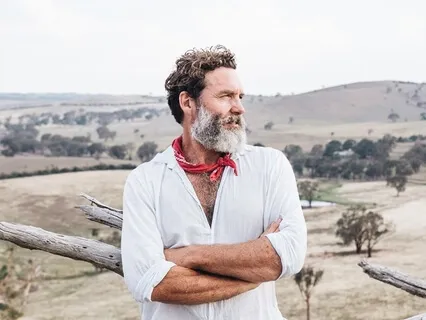
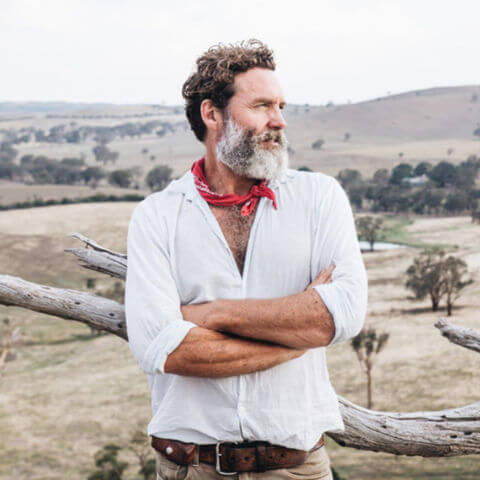
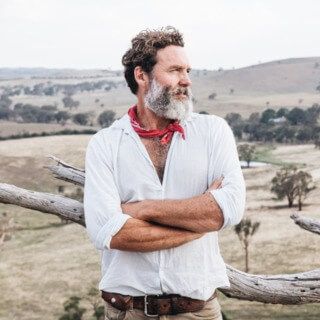
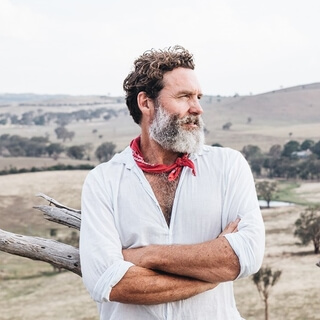
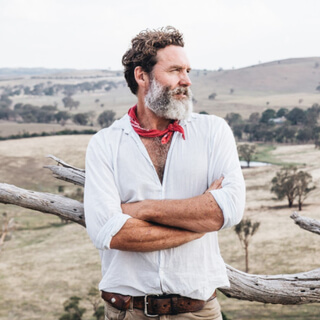
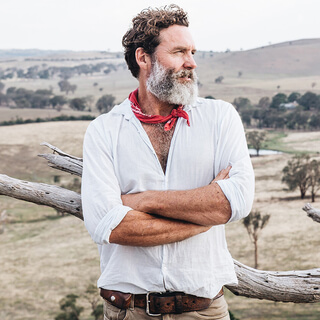
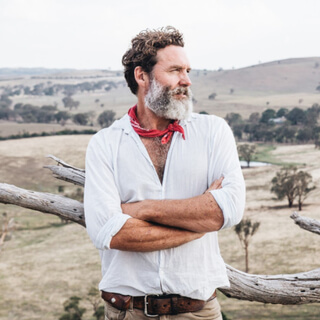
That was Hamish Mackay and you're listening to The Regenerative Journey.
We acknowledge the traditional custodians of country throughout Australia and internationally and their continuing connection to culture,
Community,
Land,
Sea and sky.
And we pay our respects to elders past,
Present and future.
G'day,
I'm your host Charlie Arnott and in this podcast series I'll be uncovering the world of regenerative agriculture,
Its people,
Practices and principles and empowering you to apply their learnings and experience to your business and life.
I'm an eighth generational Australian farmer who transitioned my family farm from industrial methods to holistic regenerative practices.
Join me as I dive deep into the regenerative journeys of other farmers,
Chefs,
Health practitioners and anyone else who's up for yarn and find out why and how they transition to a more regenerative way of life.
Welcome to The Regenerative Journey with Charlie Arnott.
G'day,
Super excited to be releasing this week now an interview I did with Hamish Mackay a few months ago now.
For those who don't know,
Hamish and I have been running biodynamic workshops together for some years now and I met Hamish 15 or so years ago as part of my regenerative journey doing a holistic farm management course and as a result of being involved in that group of farmers meeting Hamish and what Hamish brought to my life was a sense of my place in nature and my farm and my purpose and has probably since then a significant role as a mentor.
So in this interview we went all over the place,
We talked about the impact of COVID on the world,
We talked about one sense of purpose,
We talked about nutrition,
We talked about mental health,
We talked about the adoption or the adaption of regenerative practices,
The state of regenerative farming in the world at this point in time and weaved that all into Hamish's own regenerative journey.
So without further ado I hope you enjoy as much as I did this interview with Hamish Mackay.
Hamish take two.
I'm joined by Hamish Mackay on the regenerative journey.
I need to understand your regenerative journey Hamish but first just to set the scene a bit we're sitting in the Hanamino garden.
We've just spent half an hour trying to find a shelter spot.
We hope that we can maintain the no wind content.
What you're looking at is part of our garden I guess after a very challenging summer it's come good and we might hint along the way as to what we did to make it come good apart from the rain,
The life-saving rain.
Hamish so you might hear the odd bird noise and cat wandering in the background god knows what.
Hamish let's start the beginning of your regenerative journey.
Where did that all begin?
Okay well first thank you very much and congratulations on a Landcare Award.
Well deserved and from what I've seen you've been putting it to great use around the country and basically speaking about regenerative agriculture out of your own experience and that's where it's really,
That's where it catches fire.
So my journey I called Braidwood Home.
It'll be alright.
Oh she's moving.
I called Braidwood Home.
We had a sheep and cattle probably a family probably there.
I'm a younger brother so my older brother ran the family farm.
He's actually been my major mentor through the whole of my life.
He notices things,
Pays attention to them and points me in the direction I need to go and sometimes he keeps me in the butt too but it's all good stuff.
We all need one of them.
So and yeah we had a good education as Andrew says.
It took two bales of wool to put him through a year at Geelong Grammar at school so it's just an indication his son was going to cost 112 bales of wool.
So agriculture has taken in terms of trade a major hit over the generation so to speak and I had that education and it was fantastic but nothing made sense.
All these bits of information,
History or maths or science or what have you,
And I just left school totally confident that whatever it was in my life I'd meet it and get on with it.
So I went to university.
I travelled first all over Australia.
That was fantastic.
Not in the regenerative agriculture space at all in those days,
Just a young lad travelling.
University economics didn't make sense.
Again my brother rang me a year or so ago and said the latest fashionable economist of current times was saying exactly the same as I said when I left university in 1988.
I can't remember what it was but I travelled on overseas working,
Sort of backpacking sort of work.
Came back to Australia,
Went back to the farm where I worked out what to do next and Andrew had invited Alex Podolinski to our farm and Alex was the sort of go-to for biodynamics in those days,
Back in the 70s and as soon as I heard him speaking I knew that's what I'd been waiting for.
So for me it was a fairly cut and dry.
I'm just travelling through life waiting for it to happen.
It happened,
I got on with it.
So I didn't go and work with him immediately.
I was drawn into the wool business.
We changed economic wool producers,
Changed the way wool was sold.
So I saw how difficult it is to change agriculture.
It takes 20 to 30 years,
It takes a generation.
Then I got moved to Sydney and then I joined the Demeter Bakery which was the first sort of wholemeal stone ground biodynamic bakery in the country.
If you go back to the 1970s all brown bread was basically white bread dyed,
Unless you got warg bread from back streets of Marrickville.
Good boarding school brown bread.
So along with the whole Whitlam experience in one sense that generation of us all thought all we had to do was show people something worked and everyone would do it but actually change doesn't quite happen like that.
Whitlam tried to do too much too fast,
We tried to do too much too fast and ran into the same problems.
So that's a little bit why I do what I do now because it takes time to change and you have to let the change unfold in its own time.
So you've got to be putting it out there and putting it out there and putting it out there and it's like with your children.
You know often you put it out there,
You put it out there,
You do what you can,
Nothing seems to happen and suddenly they wake up at 35 or whatever and do an amazing thing.
Can I just jump in there,
Two reasons Hamish,
Let's try this without the socks on.
Just running with it,
Excuse me,
There we go,
Socks off.
I wonder whether that's going to make any difference to that little bit of background.
We've got some poplars in the background,
You probably can't see them.
I'm not sure if that's any better,
It might be a little better.
But I think we're not in the wind anymore so let's get rid of the purple socks and the other thing too I have to say and I totally agree with what you just said there Hamish because I remember when I was at school,
Boarding school,
Mum would drag me to nurseries and antique shops and I just couldn't have thought of a worse thing to do and the interesting thing is probably in my 30s I started having a real interest in old you know furniture and trinkets and things and also and I just can't,
I love trees and gardening.
So yeah so you know what goes around comes around and it's a wonderful way that we develop our personalities and our interests over time.
So yeah,
Totally agree.
So one of the things there is that you know I call my little side of the business Biodinomics 2024 because for the last 30 or 40 years 2024 is the date I have in destiny that Australia's agriculture will be totally different.
I'm not saying it'll all be biodynamic but it'll be what we now call regenerative and I think the publication of Charlie Massey's book The Call of the Reit Warbler I believe history will show the publication of that book will be marked as the turning point from one generation of agriculture to a new generation of agriculture.
So I feel we're on track time wise and this is where when Alex Bodlin he introduced me to Biodinomics and spiritual science it all just made sense of everything I'd learned at school.
So nothing was wasted it was just like putting the jigsaw together and you see a totally different picture and it's just exciting because no matter how bad things appear you're always looking for the nugget of gold or the seed of the future that's going to come out of whatever the event is and when you start looking in the world looking at the world that way you see just so many things so many seeds of the future begging to be germinated.
And then as time moves on you see more and more people germinating all sorts of different seeds and so Charlie Massey's book is in a way if you just look at biodynamics or permaculture or natural sequence farming you've got all these little groups but actually what Charlie's done is actually presented the big picture and when you start to see all these different groups all these little tributaries and suddenly we've got a stream and suddenly we've got a river and suddenly we've got an ocean of change yeah and that's where we're up to and we're right on that turning point and the critical thing about the turning point is that that's the other side of where we can go or fail is suddenly everyone wants to change but the skill base isn't there.
So my mission for the last 30 years is to make sure in every region every shire there's someone who knows about biodynamics so if through whatever environmental emergency or what have you there are people who know what to do in other words to apply biodynamics is extraordinarily easy for a lot of people to get their head around it is the opposite and I don't have any issue with that it is it is hard work yeah you try and get your head around what really all about the actual doing of it collecting cow shit putting in cow horns burying and stirring and putting it out no no difficulty so if we get to a really hard challenging environmental place if we've got people all around the country so I don't know what to do we can we can spread the spread the practice very quickly so that's that's where I look at it as a as a sort of it's environmental security for the country if we don't have such a sort of negative viewpoint and we don't have some sort of environmental emergency then the people who are doing biodynamics will be producing a quality food that the consumers love for the taste and so it'll be a premium product and their their costs will be significantly lower than anyone else so to me no environmental emergency there'll be a gravitation to quality and if there's an environmental emergency we'll have the capacities to address that that emergency that's really what I've been doing from the bakery point of view back in the 70s and 80s part of what was the limitation there part from our own limitations was that there weren't enough people growing enough produce to expand the business to have bigger better biodynamic bakeries you need bigger better biodynamic farms so that's why the first thing before we start to go back down the consumer end and tell the consumers the benefits of good food you first got to have the farmers growing yeah so there's a whole and all of these things are starting to flow you know it's really exciting this there are people now looking for quality food and there are people growing quality food and it's still a trickle in that sense but I'm relaxed we just keep trickles coming and it'll greatly turn into a stream and it'll be more interesting stream so we're on track and I'm just getting back to your your journey what was a bit of a turning point for you what was that what was the moment you went from a conventional upbringing or the career path to you know it was it was that day Alex Polinski came he showed us our farm through something we knew he showed it to us through totally different eyes yeah and it that sort of what is familiar is also then something new and that's really exciting because then it's what I start to see in it that is the leading point as I say that led me to the Demeter Bakery where we're trying to get this the idealism was quite strong in those days and as I say my brother was back at the farm doing that end of it so I was sort of out out there clever so what was it about Alex going to the farm what did he highlight what did he what did he what light did he shine on your farm or you that really got you thinking of something in this just in a practical physical sense we walked around the farm with a shovel in our hands and dug holes and had a look at the soil yeah we'd never actually I knew from from work with Peter Hutchins and people at the CSIRO that there was a sort of statistical balance you needed to have the same weight of life under the soil as on top of the soil but that was a that was a an interesting sort of phenomenon abstract concept but we've never actually gone and looked at actually what the soil looks like and who's living there and they can get out of sort of thing so just that whole starting to investigate under the soil you know I'm talking about 1972 which this was you know right outside the spectrum in those days there were there were people in the Henry Doubleday society you know that was a sort and there was I think the Soil Association there were there were these sort of odd bods out of out of the 20s 30s 40s who were sort of quite way ahead of their time but they'd sort of that's where they'd got to this I couldn't relate to them but Alex was a practicing farmer at a dairy farm in Victoria and producing high quality milk being economic and again this is the beginning of the 70s the 60s saw the first wave the 60s saw this first wave of of people exiting agriculture when when Britain went into the then common market that changed all our markets because again people probably forget that we used to pay more for our butter in Sydney than we paid paid for Australian butter in London so same with mutton and whatever so we were we were in the sort of gold standard days so all these dairy farms up and down the east coast everything was small scale family farms producing lots of dairy lots of stuff that all was very important for our terms of trade Britain joined the common market and that was the beginning of a whole change in the financial structuring of agriculture and the 60s saw the first wave of people leaving the dairy industry so in Australia or what in Australia and what happened then some some just quietly left because actually if you look at more deeply they were farmers by family they just take on the family farm or they came back from the second world war and they got assaulted the second block and grew this or that but when the pressure came on they weren't really farmers at heart yeah yeah didn't have the passion or the and the ones that were farmers at heart were the people that found their way to people like Potolinski because no matter how wacky it sounded if this was a way they could survive as being a dairy farmer they would do anything yeah and so this is still happening today there are farmers who are there because of family history not because it's in their blood in their destiny to be a farmer it's just that's where they place them and it's comfortable enough to keep doing it to keep doing it when it gets too uncomfortable they either walk away or get sold up or you know end up doing something else which usually they're much happier doing and you end up with then people coming out of the city who coming the reverse way they are real farmers at heart but they've actually come through the city starting point it's an interesting point Hamish in being involved with some organisations that are helping to train farmers current farmers to look at their business look at themselves look at their family situation and and and you know I guess trying to find a not necessarily a balance between work and family but just to acknowledge that you are a family working in a business and my experience has been that quite a few farmers through that process of standing back and looking at the situation really identifying their values and what they want to do and try and put aside the legacy of having had the farm or being a sixth generation farmer quite a few of them actually come to the understanding that they don't actually want to be a farmer but and they and then and then there's a whole sort of there's a conflict of you know what is that if I'm not a farmer who am I and what will dad say and what am I what legacy will I leave if I'm not leaving a farm and and it's a really challenging situation for people to be in a good one I think ultimately but it's going to be really a real challenge for them and their families and the legacy that they would like to leave leave well one of the one of the sort of aspects of working with Biodeomic which is founded on spiritual science and just to say spiritual science is using a scientific methodology the conventional scientific methodology but applying it to things that aren't sort of immediately visible yeah and so within our lexicon there's a we live at a time when there's a changing there's been a change in the zeitgeist in the ruling time spirit so to speak so if we recognize that and work with that we can end up with a different place to give you an example the previous time spirit was a being a form yeah so we have all these forms of government church family business it's all top down and bloodline stuff and since the 20th century all of those old forms are disintegrating and new new dynamics are arising and so it's less likely now that people will sort of incarnate into a family because they're a farmer and they want to be a farmer they'll be more incarnating because they're looking for a body that'll actually be healthy enough for them to do what they want to do and so that might sound quite abstract to a lot of people and I totally understand that but if you that's where the work comes to try and understand that and then you start to see there are we had a we had a person at a workshop and he was laughing because he had 12 year old 12 year old daughter and she wouldn't swear and he tried to pay her 20 dollars to swear whatever and that's all fun but I look at that situation there's a guy they're living right out in the boondocks you know in a really clean environment you know in terms of wi-fi and and just sort of the social crap that go part of city life so to speak so I start to see these kids in these families that are very special people and so to me I watch those and see where they're with what they're bringing to humanity so to speak whereas the kids being born in cities in the middle of wi-fi and it's a real challenge to actually be able to fulfill their destiny so back to the meeting with Alex Polanski for me that was a destiny it was what I've been waiting for as soon as I met it I knew that was the that was the fire that was the starting gun for my life so to speak other people that we had a lady at a workshop just recently and she's on a path of search she's going to all these different groups trying to find whether it's yoga or whether it's this or whether it's that and that's a totally valid path too you know the point is that she will get to where she needs to be and just my my message to her relax and keep keep stepping forward um be as awake as you can to when something something appears that got your name on it then pick that up and go with it.
Hamish just on that and I guess people children finding their destiny and identifying you know potentially the differences in in opportunity to do that between children growing up in an urban area you know and I and I guess I define that in you know in one simple way as being less attached to nature potentially versus children who are growing up in the country where they're pretty much in nature every day how can those children in those urban areas um you know whether it's a destiny thing or it's just a um a happiness thing you know how how can children and more importantly I guess parents um who are essentially in charge of those children and their upbringing you know how can they um create you know we'll get more in touch with nature.
Well um first of all I'd like to say this is not about being judgmental this is this is a phase of humanity we've in a way we've got to leave nature so that we can actually um appreciate the lack of nature and then go back and find nature again.
Yeah that's a different thing of just just being born into a beautiful place living there and whatever and then dying and what have you but we now live in a time when we've actually got to um lose everything and then find it again.
So to answer your question it can be as simple as making sure children are given access to good good tasting food and you'll be amazed how alert small children are to taste differences and it's in my generation was eat your potatoes and you know you sit at the table until you've finished eating your potatoes but if you pay it small attention you might find it's not the potatoes it's actually just how those potatoes are grown or where they came from it was the issue that in my generation we weren't really aware of a potato is a potato is a potato but actually when you start to taste the difference between a bio-dynamic potato and a chemical potato maybe the children actually have a finer sense of taste than we're giving them credit for so that's just a very simple thing to make sure we can provide them good tasting food and this is now a major major problem because the way our economy has evolved the people down the bottom end of the spectrum find it very difficult to be able to afford food that I'm talking about it's not impossible about 20 years ago and I can't quote the research but they worked out the people who were interested in buying organic produce were right across the socio-economic spectrum it wasn't just wealthy people but the people down the bottom end of the pile they knew that a good organic apple would actually be more nourishing and more filling than to chemical one so the organic one might be more expensive but their net food bill they could actually manage and again I think that's part of what's evolving people are becoming more aware of value and that then isn't just something we inherit we actually have to decide it for ourselves and that's that's what's going to make the future and I watch I watch for sort of these sort of sparrows in the spring but in America I heard on the radio the other day there are 20 million women who knit cool yeah but the really interesting thing is half of them are under 20 that is really interesting to me because what it seems to be flagging from what I could gather from the talk they were giving is that they're starting to look for something that has a value you can go to bw whatever it is and buy something cheap but it actually has no value on one level you know whereas if you knit something or you're given something that was knitted for you there's a different relationship all around so whether I've got the right message or not that's what I'm listening for and it's happening right across the spectrum there's all sorts of things that are happening people are joining choirs or you know they're over listening to CDs they actually want to get out there and sync sort of thing and so how does that relate I mean I totally agree because there's a there's a you know we are we are beings that want to create stuff we want to leave a legacy we want to feel purposeful in our lives how how to how can farmers apply that to their farming situation their property their landscape well again I think it's a very important thing to have a landscape well again each one will come into the spectrum in their through their own path like your description of going to a talk on making profit out of drought it was sort of so outrageous you went to went to the comedy show yeah and suddenly you're on a whole new path so everyone has their own version of that sort of turning point as I say it was Alex Portlinski coming to the show and in a way my soul was inherently looking for it yeah in a way your soul was didn't think you were going to find it there that's wrong yeah but actually you found something that was life changing and it happens my observation happens everyone has their moment it can be through illness through illness of their their child I mean Graham Seid Neutrotech you know that daughter getting sick he made a he made a spiritual commitment between him and his spiritual being God however he described it but he made a commitment about the healing of his daughter and he stuck to the commitment he's created an amazing business and an amazing source of education and yeah inspiration and I'm also very clear that I'm grappling with how do we how do we bring what Bionemics stands for into the world and you know that has all the challenges of you know being regarded as wacky and alter but it's it's that's my challenge you know Graham Seid has brought he's brought another another element which is equally important yeah so that's where we have to then collaborate I don't see where in competition there are some people that can't get their head around Bionemics go buy Neutrotech stuff sure it's a it's a step towards the future so the regenerative agriculture movement what is wonderful about it is there are all now all these different threads that are all starting to become manifest as a fabric yeah and the important thing is that you find the thread that you relate to and the group that you relate to and get on with that if we start to become like politicians and just argue against each other for the sake of arguing against each other and all that sort of stuff and people are over all that yeah and one of the American sort of organic gurus whose name escapes me right now but he made this observation he said you know we all back in the 60s thought this would work and if we did it everyone would do it if we showed how to do it we would do it it didn't happen that way and then he said what happened the organic movement basically turned in on itself and started arguing amongst ourselves who was and it was probably a waste of space we should have been just hunkering down and getting on with their own stuff and sharing what we all could share and that in the Bionemic movement is what I'm I'm really that's our next phase is to move more from using the preparations to actually how we how we operate socially how we share our differences because we speak about diversity but then we've got to practice diversity so that we're not all going to agree on all things there are going to be people doing things that I don't agree with or I wouldn't do or but the fact that other people are doing it is is fine as far as I'm that's their choice the only person that really can start to make judgments about how you farm is your consumer your customer yeah they have they have a valid they have a valid point in saying I want my food growing this way or that way that's totally right but in when I teach Bionamics what what way you you apply it whether you use a flow form or a stirring machine or whatever that's your call I have no opinion about that I can have opinion what I would do but so long as you're using the preparations and starting on that journey of learning what they are how they work that's what we have in common but you've ultimately have to live the consequences of your decision so that's not a decision I can be involved in and that was another thing my brother sort of pointed out that farmers are basically the last cohort in the world that actually have to stand at the marketplace and in the economic sense live and die on their choices yeah nearly everyone else is on a salary yeah these big corporate companies that work in you know billions still the guy at the top is on a salary and if the if the business tanks he's he's still walking away the hefty salary if not a bonus on top yeah farmers can't do it yeah the price they've got to decide on the on the moment do they sell their wool or not sell it or their beef or people what have you so people what have you so that's a skill that has been lost yeah and that that sense of individuality which is to me why there's a high suicide rate in the agricultural sense because you're pushed into a corner and there's no one to turn to you're you're it and your family and everyone else is is living the consequence of your decision that's it's a pretty heavy responsibility and we're not schooled in that responsibility anymore it's all you know I went to a dentist and he retired and so I went to another dentist and I got into what I call the new generation of dentists and they would have put me on a plan and all this sort of regular stuff and that's not me you know I so I found myself another old dentist but the problem is that he'll retire before I when I still need him so I'm trying to scratch my head how do I find my way to a dentist is actually not a prescriptive dentist yeah and it's the same with farmers like we do workshops and some people their way of thinking is prescriptive and so they want a prescription which is I understand but in the end they've got to stand back to the prescription and start to make decisions themselves well it's just very in line with the way we teach our workshops isn't it Hamish we you know we we say here are practices you have a business a current business and these are potential future practices you can you could apply the important thing is to adapt them to your business in whatever way whether it's a timing thing or you know a budget thing or a whatever so it's it's not it's not descriptive it's not you have to adopt this it's it's an adaption process isn't it and that's coming back to you know children's city as I said the knowledge of what good food tastes like is probably the best thing you can teach your town children and where do they go they got to go to a good restaurant find out where the good restaurants are take them to like get food from farmers market yeah the farmers markets I think the farmers markets is is the Australian sort of way to go because people are inherently social yeah and I had a I had a mate you know I went to visit him and his wife had gone to Vietnam some shopping with her her friends yeah and I had to laugh first of all that you know we were sent over to shoot them now our wives are going over there shopping and what's why go there shopping you see if you go to a supermarket here it's in a plastic bag it's got a price they're even doing away with the checkout chip yeah wherever there you go to the market every every tomato every lettuce is a negotiation with someone on the other side yeah so you have an ego to ego experience which actually enhances your humanity yeah because that's what we are because if you just go to a checkout and grab all the stuff on the shelf it's efficient but it's a different soul experience yeah and some people some people looking for soul experience is not just physical substance so we go off to Asia where it's a whole cultural experience yeah so we need to bring cultural experience back into our culture and the farmers markets is where it's one of the places that it really is some prospering so to speak and farmers love a yarn you know and they'll tell you all sorts of funny stuff and I'll tell you how they how they grew it and and I guess that you know people buying that food should be asking better questions I think they should it's about you know how did you grow where are you from and get a sense of the love if there is and and I trust that there has been love put into that into that sort of food that's the sort of food we need to eat because that that that's the stuff it tastes tastes a whole lot better Hamish let's get to bushfires we're sort of you know not in the midst of it right now thankfully what what's you know how does what's your thinking around you know the bushfires maybe how they came to be and and where biodynamics might fit into not and not just bushfires but Australian agriculture it's sort of it's sort of spot in there well after the Canberra bushfires a decade or so ago Bill Gammage who's an historian at the ANU sort of the picture I gather he looked at that as an historian and said well the first nations people here wouldn't have ever survived something like that so what what actually was the situation so he went back to early white diaries and what he found was that they all basically described a landscape that was like an English country gentleman's parkland you know there wasn't any dead timber lying around it was quite clear some trees were planted over there on the high country others were on the low country it was a very ordered landscape and so he he sort of drew together all these these sort of observations and he's put into a book called The Biggest Estate on Earth which is an academics book it's very interesting a lot of details in it and worth a read and then Bruce Pascoe's written Dark Emu which is another version more of a story of how indigenous people looked after the landscape so we came here like art said you know organic matter 30 percent 40 percent human hovel the Hume highway was was traceable because the the the tracks that the the wagons left were so deep that it was easy to follow you know and the land between Lake George and Lake Bathurst just to the northeast of Canberra and was called rotten because the horses would sink to their fat locks in really yeah it's like concrete now yeah so we have to look at it in context that we've come in and we've destroyed all that organic matter and there's a wonderful book called The Diary of a Welsh Swagman and this guy came to Australia in the 18 1860 or thereabouts for 25 years he was he kept a diary all his life he came here when he was nearly 60 from he was an award-winning Welsh farmer and a Welsh poet and he was a swaggy working on farms around Castlemanum called Castlemanum Victoria so one of the few people who came here as an experienced farmer and he came for two reasons he said one is to get away from his wife and the other was to see actually what was going on over here so he spent 25 years walking around all that country and his I mean if I can summarize the book basically he was saying that the white people took six to 12 years to trash the land you know they came to this highly fertile country and just put sheep and cattle on and and took and took and took and he said they're not putting anything back you know and so coming back to the bushfires we've we've completely in a way let the land go for management and our landscapes now a bit like teenagers going through puberty it's chaos yeah there's no order to it and so bushfires become part of the outcome because the land was managed using fire now the land manages us let us speak yeah so then we're in reaction not response now within that this is where I you know I keep my eye open and hopes but after the Victorian bushfires three things three bits of anecdotal evidence came back that tweaked my interest one is near Healesville the neighbor of one of the biodynamic farms after it was all over he said to his neighbor you know that's interesting when you put that stuff out didn't burn no he has no idea about biodynamics or whatever but he knew this guy was doing something different so but he also could see that where that stuff went out didn't burn so that breaks my interest there was another situation over near Kingslake Kinglake where the fire came up the hill got to the fence of the biodynamic people and stopped so that's also interesting and another one where the fire went through a vineyard and about 80 percent of the vineyard survived yeah so these are things that are things that I hope will get researched there is what I call scoping anecdotal evidence that should because all research is all based on the question get the question right and what I anticipate research will show is that the plants in a biodynamic environment are more mineral dense that's why they're harder to digest but you need you eat less of it yeah because it's more mineral dense the only small mineral dense is not going to it's not as flammable there aren't yeah it's more mineral in it less air and in these latest bushfires up the north coast of new south wales um you're talking to one or two fireys who I'm sort of know socially they're saying the trees are the trees in these bushfires are behaving totally differently they're collapsing much earlier yeah so to me that connects into are those mineral dents as they were yeah you're right and so are they because the soil isn't as healthy yeah yeah so the trees so the whole system is not as healthy so when something does go wrong um it's like if our immune system is weak we can catch something that we're now we wouldn't normally catch yeah yeah so we're catching bushfires that actually um a generation ago we may not have caught in this catch a bushfire so yeah yeah would it also stand to reason that um you know the the the the with the with the healthier soil um the plants are potentially more active and green so they're less prone to burn as well just because they're the moisture content of the soil and well a fire a fire the friend over braidwood he said um you know he's into um sort of um peter andrews and we we have natural sequence farm natural sequence farming and he said we can name him okay well that martin roids who has who has country over there um he was telling me that the fire skimmed across his pasture because he had he had grass yeah it wasn't green but it was ground cover but he said you know in the neighborhood there was the soil caught fire yeah because you see you've got all this dead root matter that isn't being digested by the microbes in the soil it's just growing that ends up like cardboard so that actually caught fire under the soil yeah so that should be a wake-up call um to the whole agricultural scene but actually we need to pay attention to what's under the soil if we want to actually help um deal with bushfire what's it that's a fascinating way to put it because you know i think there's a wonderful opportunity for australia australians farmers and even non-farmers to contribute to um the management of bushland and farmland that um for the future that will um reduce and mitigate the chance of bushfire but just to focus yeah most people will go what species need to be replanted or what management above ground needs to be done but it's a great point that really it's going to start like most things in the world in life starts with the soil you know get the soil right and then we can manage things above ground whether that's different species or you know whatever grazing or animals involved but to start with the health of the soil um that's that's again what we need to you know talk to politicians about in terms of its legislation that needs to be changed or it's it's the local land services of the government bodies to to focus on um not just um short-term education or short-term funding but longer-term initiatives which focus on soil health you know and the outcome will be potentially less fire prone better food better communities and just on the on that soil and and um bernie von pine was one of the sort of early early organic growers from the darling downs area in queenland and some people might remember back in 89 that was the first of the biological farmers of australia held some field days around around the countryside and hundreds of people turned up you know they're expecting a couple hundred people but 600,
000 people came yeah and bernie was one of those those elders that brought that about sort of thing but i remember we were talking about this and he said you know the the dew fall is influenced by the aquifers if we actually suck out the aquifers we get less dew and that was just again one of those observations that sort of stuck as it went in to to um because dew even in drought you'll get some dew and if you've got a soil that's open erated humic then that little bit of moisture that's coming down the earth's breathing in is enough to keep the life in the soil going it mightn't produce vibrant plants pushing out of the ground but it'll keep everything um in a healthy dormant state so when you get some serious rain it's all it's all there ready to ready to sprout again whereas if you've got a dead soil and it rains it's all got to start from scratch and again on that point you know with dead soil it's it's usually dead because um it's exposed you know overgrazing whether it's been plowed and so on is another thing but um the result of rain falling on that sort of soil is it just goes sideways there's erosion you're not collecting water and the you know as i keep saying the best place for water to be used is where it lands yeah in situ for that plant that is hopefully being left and not overgrazed for it to punch out some solar panels and start start and there's just a difference between the way um peter andrews sees it the way i see it because i see it like that he's trying to stop the week create and what he's doing is brilliant you know but i i'd take i contribute another slice to it yeah and that comes back to each individual farmer has to balance how how they manage all these different stories yeah and that's that's exciting because everyone then has an individual operation yeah that has a different mix of all these different approaches and again the milan institute um is doing fantastic work on the political realm you know i'm for me the political space is not where i where i have any interest because at one stage one stage my father was the chairman of the new south wales board of the amps in the economic realm my uncle was the chief justice of new south wales and his cousin was the foreign minister so i knew three people at the top of all three spectrum or all three areas and um i'm not saying they didn't achieve amazing things but the limitations of being at the top were extraordinary everyone thinks you get to the top and you can change the world but i observed these guys at the top um it was as hard work changing it from the top as it was from the bottom so i sort of resolved that my job is to change it from the from the grassroots up so to speak getting more farmers doing it yeah but i totally what the milan institute is doing is incredibly important too because we're getting to a stage where the politicians are sort of becoming open to it yeah yeah so i guess they have to there's so much stuff going on it's hard for them to well well they're resistant to it like it's um see because you know i don't want to go too far down that but it's becoming more and more clear that the politicians are owned by someone else yeah and it's that they're serving that yeah and that's the that's the challenge and we've just got to pick up the positive and that's what i say you know milan creek is picking up the positive and going with that hey miss let's talk um one of your favorite topics nutrition and mental health what's the um a summit's obvious you know there's lots of threads to join them what do you what how do you how do you what what what do you think about all that well that could be a whole nother podcast series in a day well um i worked in england with an organization called the black son trust and that was a medical practice it had a an artistic therapy and dimension and had a bakery in a garden so i was in the bakery and cafe garden park and the lead doctor said there that all mental illness has a physiological basis yeah so i'm a very simple picture that's not sort of academically true but if you one of the things that i remember that depression often is related to a liver that isn't functioning properly yeah this is very simplistic but i'll give you the image so what now happens with mental health is they put these patients into a a chemistry laboratory to work out what their liver is short of and then introduce that through tablets or injections or what have you so that they actually bring the back the liver into balance and then they can be out on the street again and that's all good until you realize that actually the outcome of that is the liver is going to get weaker because you're not actually stimulating the liver to produce whatever that chemical is yeah so the doctors were saying to us in the food and garden you know the practical in you won't see any effect if you if you're successful with giving people better food and whatever you won't see the result because as soon as we see any benefit we'll drop the medication so their job from their perspectives their job was to drop the medications but they could only drop the medications as we could pick it up with the nutrition yeah so that comes back to biodynamic food essentially is harder to digest because when we digest food we actually uncreate it you have to pull it all apart and if it's if it's put together pretty solidly you've got to work hard to to pull it apart but that working hard strengthens your organ yeah so again it comes back to the way the food is growing is is very important and i guess that also links to processed food is generally sort of highly processed and broken down and so it's easy to digest which isn't helping our organs to become stronger and it's and that's empty that is an appropriate place for medicine because if you're sick and weak say then you need to be given a medicine that is broken down so you can actually pick up and build up your strength again so you move from the medicine back to the food at the pace you can do it so in a medicinal sort of managed by a physician your doctor that's a different story to just eating food that's slop yeah yeah because then you've got it's under under management so to speak the process and you have a phrase that um about what you eat pass through that oh yeah there are phrases that we sleep through so to speak and how many times do you hear someone say you are what you eat yeah it's it's so obvious that it just passes through your brain yeah you can be totally asleep but actually try reversing it and when i was working the bakery in sydney in glebe um if i was ever feeling pretty crappy um my nose would take me out the bakery down the glebe point right into the hamburger joint yeah that's where my nose would nest when i was when i was feeling rubbishy my nose would take me to the hamburger joint so over over a period of a few years i i ran this trial on myself and so i'd buy a hamburger and you know go back and half an hour later an hour later i'd be feeling much worse yeah in the in the first 20 minutes i'd feel great but um you were satisfied it satisfied something but then it actually didn't nourish so another time i'd you know feel crappy i'd go down i'd go into the hamburger joint and then i sort of pick myself up by the scruff of the neck and then walk back out of the hamburger shop and take myself up to the green grocer shop buy an apple or something yeah and the apple was never as good as the hamburger but an hour or so later i was feeling a lot better so you know it's sort of when you're feeling rubbishy you're more likely to eat rubbishy food so you actually eat what you are um so that comes back to what can we do as children in the city is actually um make them very attentive in a practical sense um of taste and quality and when they're feeling crappy make sure you give them something um substantial rather than just um give in to giving them a lolly or things you know a quick fix because ultimately the quick fix will will snowball into a long fix short short short term um um yeah you're you're it's a short term uh for a lot long-term pain though you're just you're just delaying the inevitable and again yeah we put the preparations the short preparations go out in the afternoon when the earth's breathing in the silica ones the atmospheric ones in the morning when the earth's breathing out but you see that's a reflection of our own physiology our liver stores sugar from three o'clock in the afternoon to three o'clock in the morning sort of and from three o'clock in the morning to three o'clock in the afternoon and gives out sugar yeah and so when you've got small children particularly who are still acclimatizing to an earthly body um that's not always working as it might so you get children who get cranky sometime mid-afternoon well instead of trying to run the discipline path you can actually start to run the nutrition path and make sure that you give them a bit of fruit or something that is that is sort of providing a bit of sugar to give the give the liver a boost yeah so that and you'll find if you can if you can find your way into the nutritional rhythms and give children an appropriate food and appropriate time um that's really helpful and as i say all kids are the same they'll all go for the lolly yeah and it's one of those strange things that lolly's the the very worst foods or treat i know how do we get away from that it's like a broccoli milkshake is something they should be loving that should be the trees and it's just one of the one of the one of the quirky bits of being human that bad things are the truth and in a certain sense going back to my own childhood i could probably i could probably with reasonable accuracy not total sort of you know my grandmother would be able to produce something that wasn't rubbishy um but it was a treat yeah and i think that's there's more of a consciousness around that i think that you know there's lots of especially moms and you know women who are potentially more aware of this because you know that they they're nurturers and so they're a bit more aware of this and there are lots of good recipes and books out there and websites and stuff um and it's not hard to find where people are um like alex alex stewart for instance on low tox life you know she's got some great recipes um in her book and online so on where you can still children can still have treats but they're good treats and and in those you know opportunities you have to um to change the way they think and what and and and something i always go back to is what is what is what is normal what should be or could be or needs to be the new normal you know it should be normal for kids to have a treat which is a nutritious yummy thing as opposed to a lolly or something and it's you know it should be you know normal for farmers to be considering their environment their ecology and i'd love it if it was normal for farmers to be using biodynamics that'd be that'd be a wonderful thing because i can't see any any any downside to that just if i can pick up on that there was about five years ago time gets away might have been 10 years ago but there was a whole rash of programs on tv about the um the food police you know they'd come in on to there's a television program they'd come in pull all your stuff out of your kitchen cupboards and put on the sink on the table and look at how terrible it was you know sort of and and there's another one getting teenagers to clean their rooms and do chores around the house and then the counterparts of that on sundays they'd go for a walk or a bike ride as a family all that sort of trying to sort of portray that and one of them was um they got a family in manchester who was just you know your supermarket shopping family uh two teenage daughters and they matched with a family down in devon which is the new agey sort of hippie organic part of england and um they got them to swap uh lifestyles yeah so the people in devon had to buy all their food from the supermarket were they still living in their own home they're still living their own home but they had to buy all their food from the supermarket yeah and the people in manchester or birmingham whichever it was had to they got a they got an organic box scheme and everything had to be um organic yeah cooked accordingly and um it was quite amazing because first of all the birmingham manchester ones the two teenage daughters as soon as a box of food arrived your raw your carrots lettuce potatoes whatever arrived they got interested what do we do with this stuff yeah so they actually engaged in the kitchen um and they you know the mother by the midweek you know all sort of women's pains and whatever headaches had all gone she was feeling fantastic you know they were all healthier happier at the end of the week and they actually saved money they could buy two extra bottles of wine on the same budget that they'd always had yeah yeah and they felt a whole lot better they were eating together even with the two extra bottles of wine i felt better yeah so um and then they looked at the the bunch in devon and now the social fabric of their family fell apart totally you know they started getting sick and grumpy and and um you know they couldn't wait till the end of the week to actually junk the experiment yeah and they ended up spending i think an extra 25 pounds on their food on their food bill yeah yeah so but you see those programs disappeared and this is the big problem bring it back well this is the big problem actually who's running the government because those things don't it's like food labeling you know labeling the amount of sugar in products and all this sort of stuff there's so much um you just watch what people buy in the supermarket trolley yeah and the amount of stuff that really everyone's a loser on yeah and and that's a good point i mean the there's a lot of criticism what you always see criticism about organic food costs a lot more well maybe it does but what you we've got to look at the whole shopping trolley not just the organic component or the fruit and veg components like what other crap are you buying that the and the medical bills that come with it well that's right yeah so there's the indirect sort of costs and there's a of of ill health and then there's a direct cost of buying processed food which someone would be oh it's a lot cheaper well yeah well if it is cheaper you need a whole lot more of it to be satisfied and it's just doing you no good at all and it takes away that engagement with as as you know rudolph steiner talks about the internal cultivation your your your your your relationship with food in the kitchen as a in terms of its preparation i mean what ripping up a packet of food and pouring it in a bowl and putting some milk on it there's just no engagement there at all yeah but uh christos miliatos is a mate of mine is in the medical sort of circuit he um was telling me a character he knows who is an it person he's not in agriculture or what have you but he's he's started at diabetes yeah and so being it he did his google search dr google search and um you know did it in a certain amount of detail and he came to the conclusion that just he moved himself to unprocessed food not organic just unprocessed food is a starting point and diabetes sort of departed so um yeah just just doing something simple like going to unprocessed foods can be massive that was just one guy yeah we all have to do our own research we all have our own body we all are responsible for doing our own research and too many of us self-included leave it to other people yeah so um yeah that's we will eventually we've all got to stand up for what we stand for before we leave honey should been um we're coming to the end here and talking i'm getting quite hungry thinking about that bacon in the fridge and the veggies in the garden down there um just to make a note that you know this podcast is is is been um made possible this first series by lanka australia who we did mention um there before so i just want to acknowledge that and you know there in itself is a wonderful network for um you know helping farmers understand and apply the new normal that we're talking about and it's not necessarily your australia's mission to talk about nutrition but there are you know there are links that i think there's opportunity to explore you know they they was involved with one of their previous campaigns um uh farm to fork you know which is about identifying the benefits of food so it's not not it's not that it's not on their radar and i think you know um a lot of lanka groups have climbed a lot of trees which is wonderful i think if there's an opportunity for land care as a network on ground to start engaging uh around a bit more around nutrition you know that it's not just about trees it's about the soil and it's about the foods that's been produced and we want farmers to actually be happy to eat the food they're producing look i think um yeah as land care has got sort of identified with trees yeah and that's that's great but actually it's land care it's the whole of the land not just trees and we got a grant back on back in the day for planting 15 000 trees it wasn't a land care grant but it was we were informed by the whole land care experience as to how to use the grant so to speak so you know land care is an amazing thing but as you say it's not it's the soil nutrition um and the other wonderful potential of land care is the whole collaboration thing yeah yeah and collaboration implies diversity and diversity implies sometimes difficult relationships you know we have great differences and so we've actually got to develop the skill to actually celebrate difference and collaborate so we end up with something there's actually in total the land care is diverse and we've got people growing all sorts of different things well it's just like biodiversity isn't it we're looking for biodiversity underground in terms of our biota and the fungus and the bacteria and the virus and all sort of things but it's also the the diversity of biology um above ground in the communities that we're we're engaged in and some of the stuff that biodynamics works you know as our basic assumption or the tools of trade is still in the scientific realm sort of heresy and all very out there but you see if you if you follow the work of kepler and kapertikos and galileo and all that bunch back in what 15 1600s it was only in 1948 or there about the catholic church sort of took them off the heresy list you know so um these things depending who's controlling the the the the levers of power um sometimes they're way behind where the action and where the where the people are the belief system yes there were steps along the way and i can't remember them all but you know until until the mid 1800s from the catholic church's point of view all that stuff was heresy yeah but now we take that for granted the kapernakan world view and what have you whether that's you know right or wrong it's a separate question but so what we're working with in quite a lot of the sort of um scientific realm they have as much problem with what we're talking about and i understand it because it's it's something that we haven't actually been brought up with yeah and that's the time we're going through and it's nothing new there was always the heretics so to speak um and the heretics weren't always right either yeah so that's why even though in the binomic spectrum we're trying to um lay out a different way of looking at things we also have to be fairly modest that we're not always right either and that's why we need collaboration um and that's why i find the most exciting thing working with you because you work as a whole diverse what i call it this morning you're a sort of um we have to find a new word for this but it's a regenerative social entrepreneur yeah helping make all this happen yeah because um it's very difficult if you're the farmer you really can't be away from the farm for very long you need to be actually because you lose you lose those you lose those sensory those subtle sensory markers that are that are really key to making sure you're ahead of the action so you're ahead of it rather than reacting and that requires presence yeah well um Hamish um Hamish that's very good point to leave on thank you for your presence here today we've just had a wonderful week together in Victoria um lots of really interesting good stuff down there people who haven't had much interest in or well experience with it with biodynamics um getting on board understanding it really enjoying it um and that's what we're going to keep on doing so um just a little little plug for what Hamish and I do we run we facilitate and organize um biodynamic workshops two-day introduction biodynamics workshops we've run advanced biodynamics workshops before um running our plan is to run a few um a few um different ones as well we ran the um projective projective geometry here last year um so check out um my website um for details on those those things and you know it's such good fun getting out you know to other different parts of Australia and you know getting to know those landscapes and and introducing biodynamics to those people in those landscapes and and it's really um it's really exciting stuff and I'm very clear like I teach biodynamics yeah as a as a form of agriculture that is based on spiritual science but I teach so that but it's very important for the farmers to go and do a permaculture course um you know a natural sequence farming course yeah England's work you know I teach one thread it's very important that all the farmers and gardeners uh study different threads and then weave their own fabric if I start to teach across the spectrum everyone go home confused so I teach one thing you know Peter Andrews teaches another that's the way it should be as far as the diversity um and then each individual goes home and pulls all these threads together into their particular fabric I think the good news is and then just to finish on is that I guess to clarify that is that biodynamics you know has been my experience and it's definitely my understanding is can be applied in any situation so one can be doing permaculture you know and doing their their you know landscape and their property plans one can be um you know getting stuck into natural sequence farming um even people who are high-tech chemical um I really encourage them to add the preparations because then they'll see something will change that can help them figure out how they can reduce their chemicals so in my school of biodynamics the way I like to try is whatever you're doing whatever you're doing add the biodynamic preparations and then follow the results yeah and for some people things happen magic and quick other people it's a slow slow graft yeah but that's again where we need to also to come together as community and share experiences and share what's worked and what hasn't worked because that's the real that's where the real learning happens practice and sharing practice and sharing practice and sharing that's how we'll grow it well Hamish thank you for sharing your wealth of knowledge and wisdom um I trust everyone got a glimpse of uh of Hamish's regenerative journey um I'm getting hungry the wind's getting up a bit and I've got to go to Sydney you've got to get to Sydney and uh thanks Hamish that was wonderful thank you Charlie and again congratulations I think um it was a it was an award well earned and well used that's a bob hawk um uh lanker Australia award um and thank you to lanker Australia and uh um for uh affording that to there'll be a new one there'll be a new uh um holder of that award in 2020 later this year um if if that happens I hope you have a really good carrot onto them yeah that's right and I'll be and I'll be there to support them whoever that person is so um uh looking forward to that thanks Hamish great stuff thanks Charlie thank you everyone there you go um sitting there in the garden Hannah Minow speaking with Hamish Mackay not sure I enjoy anything more to be honest um lovely fella and um has been a wonderful mentor for me and continues to be and I trust that this interview the interview you just heard with Hamish inspires you to at least look at look at biodynamics in a different way and even come along to one of our workshops we will be rolling out quite a few in autumn 2021 and spring again so jump on my website charlianit.
Com.
Au check out the dates and get yourself to one of our courses um I don't think you'll regret it now talking about not no regrets next week's interview is with Chris Eggert a fellow I went to university with lovely lovely guy one of my favorite interviews with Chris such a humble man um on a family farm dairy farm at Warhope and I can't tell you how much I learned and how transformative his journey has been since university um through to um where he is now he and anyway you'll just have to wait the next week to listen to it all some of the practices that he has created and he's implementing he's adapted to his farm and his dairy and the quality of his milk is absolutely outstanding um he's a real sleeper it's Chris Eggert because he knows a lot of stuff and I think we need to get that out there so look forward to that next week Chris Eggert.
This episode has been brought to you by the magical world of biodynamics earth planets the cosmos and beyond biodynamics the healing tincture of nature's song distills and imbues direct from the source giving back the soil enriching life force a dance of the divine through light space and time bringing back to balance you the landscape and world combined this podcast is produced by Rhys Jones at Jäger Media if you enjoyed this episode please feel free to subscribe share rate and review for more episode information please head over to www.
Charliernet.
Com.
Au you