You know,
It's not just climate change,
It's our resource use,
It's the soils,
All these different key elements of our biodiversity which are so under the pump right now that going back to normal is just,
It's a suicide mission.
We need to think differently.
That was Damon Gamow and you're listening to The Regenerative Journey.
G'day,
I'm your host Charlie Arnott and in this podcast series I'll be uncovering the world of regenerative agriculture,
Its people,
Practices and principles and empowering you to apply their learnings and experience to your business and life.
I'm an eighth generational Australian farmer who transitioned my family farm from industrial methods to holistic regenerative practices.
Join me as I dive deep into the regenerative journeys of other farmers,
Chefs,
Health practitioners and anyone else who's up for a yarn and find out why and how they transition to a more regenerative way of life.
Welcome to The Regenerative Journey with Charlie Arnott.
G'day,
Welcome to the show.
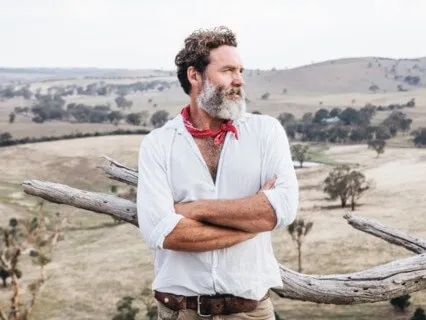
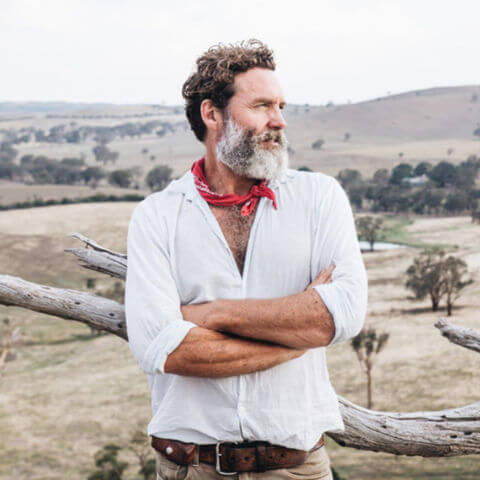
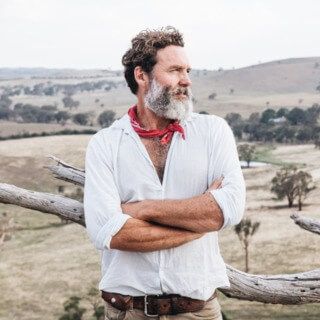
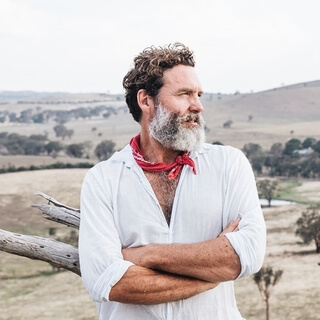
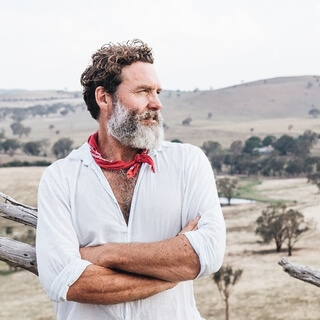
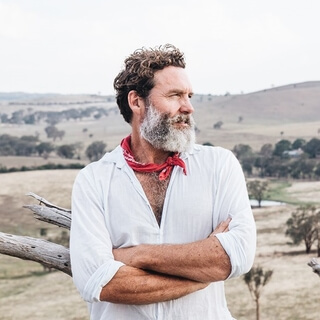
This week we have a fascinating chat with Damon Gamow,
The man that brought you that sugar film and the compelling documentary of 2019,
2040 where he very absolutely successfully gives us hope about the future and identifies and highlights the technologies,
The behaviours and the initiatives that are happening in the world right now that we can get involved in action to make the world of 2040 a much better place.
If you haven't seen it already,
Go and do that.
We also chat about COVID-19 and the current state of the world and where he sees that going and what's on the other side of this pandemic.
We talk about regenerative agriculture,
About renewable energy,
About seaweed.
We do it all here on the beautiful grounds of the farm at Byron Bay and it's not to be missed,
We talk about his own regenerative journey,
The pivotal events in his life,
What he was doing before,
His new career,
His new trajectory and why he started his own regenerative journey not that many years ago.
I trust you enjoy this fascinating chat with Damon Gamow.
Wait for that plane to go,
Oh it's the highway.
It's the one plane in two weeks that's flown over and it's doing it right now.
It's just come straight out of London.
It's the last plane out of London.
Damon Gamow,
Welcome to the show,
The regenerative journey.
Lovely to have you here.
I've been very excited since you agreed five minutes ago to come on the show and we're sitting in the beautiful,
How are you?
Man I'm actually quite well.
Yeah I must admit that after some a little bit of anxiety early on in this sort of as we speak we're kind of what six weeks into the COVID chapter and early on I sort of,
I don't know,
I was a little bit anxious but I feel like I've settled in a little bit and had a lot of lovely home time with the family and I think feel very fortunate that I haven't had to travel as much and I think it's been a positive experience for us and I know not everyone has had that but it has been a good experience for our family.
I want to get to more of that later in the interview.
Hold that thought.
We're sitting here at the farm at Boran Bay.
We're outside.
We are according to my agricultural measurements 1.
5 meters away from each other.
The cameras often lie and I chose this spot because he's got very very long arms.
He's like a gorilla this guy.
We're sitting here at the farm because it's a beautiful spot.
Yeah you've chosen very well mate and I don't know this is it.
This is just lovely.
It's very tranquil.
You might hear some background ambient noises and that's all part of the the regen that you're talking about here Charlie and I'm very grateful to be here.
Thanks for having me.
And I hope you're not too,
There was a bit of wind and so we've improvised with some tea cozies on our mics.
I think they're doing a cracking job.
You've got the chicken.
I have got a chicken.
I might have spotted a couple of nits flying around which might try and hijack my beard but that's all right.
That was on my son's head the other day so it must have been on mine before that if it's got nits in it.
And I've got a cow.
One more burning question I have before we kick off,
Just two more serious things.
When you played Greg Chapel in How's That a few years ago,
That moe you were sporting,
Was that yours?
How dare you.
I was just checking.
I know how it works in showbiz.
Oh no that was that was all me.
That was all you.
I was very proud of that.
Wasn't from the props department.
No I mean I think there might have been a bit of colouring added to it sometimes in the morning.
Just a bit of highlighting.
Yeah but I'm glad you've asked that Charlie because that was a really,
I really idolised Greg Chapel as a youngster that era and it was one of those rare acting jobs you get.
They don't come along very often where you feel oh this is fun and you've got to spend a bit of time with Greg and talk to him about really interesting stories which we can get to if you want to but just how he stayed focused on the field like because he was actually doing meditation before anyone else was around the world so he was doing it in the 70s and he had these really interesting processes before he'd face a ball that he'd you know try and find someone in the crowd and find someone in a red dress for example and that would just take his focus right away from the next delivery give himself a break and then he'd come in and focus again so it was really interesting hearing all those insights way ahead of his time in terms of that sports psychology element.
And that was all part of your research digging deep?
Well I like to do that even on the take when we were doing the performance I'd say look excuse me director I just need a moment I just need to find someone in the crew in a red dress and then when you tell me you are the Joel Garner and I'll then focus on you when you call action.
I like that.
Well look I hope we can find I hope you well I hope you don't need to do that today to be so to be so stressed out you need to meditate on a red dress because there are none around here today I tell you there's none there's a few pigs over there and a few a few ibis.
Figgits on the chicken.
Now let's get on to let's get on to the the journey.
This this podcast I just have to not not have to I want to I want to just kick off by thanking Landcare Australia for the generous supporting of this podcast it was a as part of winning an award the Bulborb Landcare Award a couple years ago they've generously helped support this this podcast and this series so I just want to make sure that we have that acknowledgement up front because without them I wouldn't be sitting here with Damon chatting and and and having the having the having the wonderful experience we're having at the farm right now.
If it gets back to them that all you were talking about was Greg Chappell's moustache will they take the award away from you?
I think it's well look I was gonna say I hope it's too late it may not be the next recipient it's every two years it's it's absolutely honored to to receive that and I guess the the one holds that mantle for two years so September this year um or no November I think it's the Landcare conference in Sydney at Piermont and they will announce the next the winner so I'll hand on the baton to a very worthy recipient so I've got a few years a few years a few months of good behavior in front of me.
Not that I'd ever ever say anything bad about Landcare Australia I've been they've been part of my life for 30 years now um in in bits and pieces we must get on to the the the.
We're going to lose people I might have already paused or moved on to a different podcast by now.
They've probably gone Joe Rogan is so much better um this is called the regenerative journey um Damon because what I love to do is dig deep deep deep I can't even talk too many copies this morning is dig deep into the lives of my guests to really understand um where and how and why more importantly their regenerative journey started so before we do that can you give me a give our listeners and our viewers um a bit of a rundown on you know life before whatever you define the point of a pivot or was it a tension event or epiphany what what were you doing before that that sort of led up to a point where you know because I know you've had a few you've had a few um at least one major um uh changing trajectory tell us about before that.
So grew up in Adelaide born and raised in Adelaide uh predominantly with my mother just grew up my mum saw my dad only occasionally a pretty sort of solid childhood in that sense um mum really interesting character um but just um you know did this sort of the full single mum heroic effort to raise me um sent me to a private boys school um which had its issues um especially as I got older uh finished there decided that maybe I wanted to be a journalist I studied that for a while then I thought I might want to be a lawyer and then that lasted about two months and then I decided to be an actor really and I think a lot of that when I look back was um that I was seeking validation a lot of ways I think I didn't have a happy childhood so I found a real comfort in pretending to be someone else and then getting lauded and often getting accolades for that like it's a very you know it's a pretty vain industry in the sense that you're often you know getting clapped on stage or you're getting picked up and fed you're getting looked after there's a sort of within our culture there's a sort of a false idolizing sometimes of that particular culture by some people um that's celebrity culture I sort of got swept up in that for a while and thought that that's what I wanted to do and um I guess when I went to NIDA which is the acting school in Sydney and finished there and it was very lucky straight away I got some really interesting jobs and one was called The Tracker uh with with a director named Rofta here who'd done Bad Boy Bubby and some other films and we went out basically uh David Goldpooler was the lead actor in that and and I was 23 at the time and we went out to a place called Arcarola which was about six hours north of Adelaide this beautiful mountain range and shot this film which was set in the 20s and it sort of followed the based on the journals of some policemen in the 20s that used to go out with these hunting parties with the aboriginals and they'd sort of you know get rid of some of the aboriginal people out there and so that was quite a fascinating process that was the first job I ever did and it was done with such grace and integrity and the film did very well internationally and we went to the Venice Film Festival all these lovely things happened I thought wow this is great this is the career I want to do and then I very quickly came back to earth in the sense that the majority of the jobs that you do aren't done with that kind of integrity that you know often it's it is an underbelly or it's that kind of job and you know that just the more I did those I just they just weren't resonating with me and I I was really torn I didn't know what else to do but I just thought I'm not enjoying this I'm stuck on set and every now and again a job would come along like The Tracker I did one called Balibo which is about the these Timorese the Aussie journalists that went over there in the 70s and I played Greg Chap Greg Chaple Greg Shackleton and he I got to know his wife Shirley very well who's been a huge activist for Timor issues and read his diaries and you know had his watch and recreated his footsteps in the weeks before his death so again that was a very felt like a noble job to be representing another human being but then you've got to juxtapose that with just paying the bills and doing all the commercials and all that and I just got to a point where I thought you know what this this is just too infuriating and I I went over to America and I thought great I'll give Hollywood a go and I did a show called How I Met Your Mother I did a couple of other American films and I just that was I just I finally reached this point that I'd been craving I got there I went oh man there's just there's just no substance all the cliches you hear it's just there was no depth to it it wasn't rewarding in the way that I thought it was going to be and so I it coincided with moving to London at the time I chased this girl over there and I we had a pretty ugly breakup and I was in London at three in the morning one night and just um just she just patched another guy in front of me at a nightclub as you do you know it's kind of the rite of passage good stuff was it was it purple was it a purple nightclub yeah pretty much it was it was a cavernous it was I remember it was underground it was just it just ticked all the boxes yeah yeah and um I just sat on the stairs outside London just the pain the angst of just going this is not it I what am I doing I'm just not doing the things I want to be doing and when are you going to bloody wake up to yourself and start choosing things that you do want to do so that sort of was the first schism point I guess where I just started thinking differently and exploring things and reading books that I hadn't really read before and starting to investigate a different side you might say a more spiritual side or just starting to learn more about myself and what makes me tick what are these patterns of behavior that I've developed over the years that I've downloaded from my parents what are the ones that aren't serving me as well as I'd like them to serve me so I just started doing a bit of reprogramming there a bit of different work did a few things with my mum to try and sort of we'd had a very intense relationship because obviously it was just her and I growing up so just had to untangle a few things there just you know went to Peru and did the whole ayahuasca thing and and drank from the the cup and all those things I just tried everything just to see and work out who I was and in that time I also met my now wife Zoe who was a very very different person to me she sort of didn't partake in a lot of the things that I had held to be important and at that time I really spent a lot of effort cultivating this persona of myself as this you know rolly smoking velvet jacket wearing actoring lothario guy and just loved the first three months of a relationship and then ran for the hills you know so very good at the honeymoon period so yeah after that I just everything changed basically my entire life changed and a lot of friends that even see footage or photos of me can't believe that person that was back then and I think I was just very confused I was very addled with my own thoughts and they were very self-destructive thoughts and I had high levels of anxiety and I really had no faith or belief in myself at all and so it was easy to hide behind acting because you're often telling other people's stories.
Can I just ask a question do you think people many some go into acting as a result of I guess a way of maybe not the right word dealing with their childhood or as a result of their childhood you know there's sort of as you sort of alluded to before it was sort of like a a way to escape something or a way to be someone that something else that you weren't or 100 yeah and look any you know I say this with all the love and the heart because of some of my best best friends are actors but but none of them are very stable you know there's always a complexity to an actor and even the best ones you think of the best actors you can think of they're pretty nuts you know all of them and it just often comes with that sort of trauma or trying to run away from something or escape it that it also makes you a better actor to be honest it's very rare that to meet someone that's just quite stable and has their shit together they're not that interesting to watch do you know what I mean but it's the torture do you think of Joaquin Phoenix or something like you watch him because you go what's going on like the layers and the complexity and the depth of pain and all sorts of that's what makes him so magnificent so and it's funny because even at night they sort of talk they try and beat that out of you they try and you know talk about you being so middle class and like let's get right back to your trauma and you do these exercises where you're walking around trying to channel and dig into your deep pain and when your dad did this you know it's it's it's a I don't know it it's it has benefits there are great things to it but I also think it's a deeply flawed profession and the fact that we laud it so much and we let people that are genuinely doing amazing things like trying to help the planet or whatever we just don't have any accolades or award ceremonies for those people is always been baffling to me that look who we're actually worshipping and if people actually got to know some of these people they'd think wow yeah there's there's some complexities there this they're not these people that we're idolizing in fact it's that idol that idolatry is actually causing pain for them and I had that I had an experience where I won this Trotfest competition the short film and I had to go back as a judge and it was just I won't name those but really top shelf actors were on the judging panel there was about eight of us and they were sort of international Oscar winning and it was really raining and we had to sort of spend time in this room to make do the judging for about an hour afterwards and that was the first time I just remember looking at these people that I'd looked up to for 15 years and thought wow that's they're deeply insecure they're even though they've got all these awards and they've from the outside you think god how much more do you need but it doesn't fill that void they were still searching and still bickering about someone or complain I thought oh man this is not it like so I just kept getting these little signs of saying I don't think this is for you mate like it might be for someone else and that's fine but you've actually got things you want to say when are you going to say them like why you keep hiding behind these other characters so I just kept looking at them and then I got the the catalyst for that was I was in hospital I got really sick and I had this blood infection and I was in this ward with three other 85 year olds or three 85 year olds and that was me and lee ate at you and I just it was one of those crazy weeks where I got to know them you know they didn't sleep very well I'd get up and help them tonight we all told stories it was a really beautiful week and I sat up at two in the morning one morning and I thought you were in this hospital bed and you were 85 with these people are you proud of yourself did you actually do the things you wanted to do mate like or did you just always hide behind the actor veneer and and too scared to do that and that was a big moment I sort of wrote this thing out and went no that would just break me if I just got to that point and I never ever jumped off the cliff and took the risk so it was only a couple of weeks later that I started to make this trot which is the first time I'd actually made something of my own and then that got in and it won that and then everything and then that led to sugar film and that led so I'd see that as the big moment of like just having a stern talking to myself and realizing that you know I wasn't happy what I was doing and that now I just I feel like my life has completely changed in the last 12 years and it feels like two different lives to be honest and I couldn't be happier now I couldn't be more fulfilled with what I do and feel incredibly lucky and grateful to have made that discovery and wish that for everyone I hope everyone gets to understand that that we are so controlled by the story we tell ourselves as we as we can get to that that we've told a story of the greater the larger narrative around how we live and operate and as we're seeing as we talk now in the middle of COVID that all those illusory forms and structures have just sort of suddenly dissolved and we've seen how fragile our system is that I think it's the same with our own thoughts and our own stories we tell ourselves that they are not anywhere near as strong as we think they are sometimes and if we can start to observe them and spot them and actually reframe them we can fundamentally change our lives.
I was going to jump to to COVID later but we're on it now so let's stay there how how how has it changed what are you doing differently now that you weren't before like and and and are you going to continue those changes once this is over because I'm sure it will be in some form?
Yeah I mean the big change for us has been I feel the last especially because I've been releasing 2040 which is for those that don't know this documentary I made we released it in Australia last May but then it's been sort of touring in different countries around the world and we're supposed to release it in America in the next few weeks so there's been so much travel with that and you know guest speaking and doing all sorts that I just just sort of burnt myself out a little bit I sort of you know two or three flights a week and being away from the family we've got a seven month old baby so it's just been quite a revelation to stop you know and actually be at home and not go around so that's been a huge change for us and has had ripple effects on my relationship with my eldest daughter who's six and my wife of course to have more support around like quite transformational for us as a family so I'm lucky that we've got that capacity and we can have that time and I feel very grateful for that but we've certainly used it I think for the betterment of us and our little unit and this you know things I'm doing in terms of the lectures or talks I might have done a lot of them are online now and I think I can do this moving forward I don't need to go back and actually be there face to face with everything I can do this better moving forward so I don't think I actually won't I can say it categorically I'm not going to go back to what I was doing there'll be things I have to do but I will do it differently but I've also found that we've almost been busier in a lot of ways with the work we're doing because I do feel that this is a moment this is a this is a rare moment where the door is slightly ajar and for anyone that's sort of been thinking about systemic ideas or the planet in general or even artists I'd say this is the moment we've all been waiting for it's like suddenly we've hit stop on the system and all the machinations and everything that's gone is on pause in this pause moment as I said it before it's like it's the chrysalis it's the it's the caterpillar going into the cocoon and and before it becomes a butterfly it becomes this amorphous goop like state with with no structure to it and I feel like sort of a lot of our systems and waves of operator in that state right now now of course we're going to go back and and and use a lot of the things we've been doing before but we do have an opportunity to change some things quite fundamentally and I and I do think a lot of things won't go back to what they were and we've seen some quite radical things come through whether it's Spain introducing a universal basic income which was a radical idea only two months ago we've got Amsterdam have just implored in this donut economics which we show in 2040 which is where UK economist called Kate Rayworth they've decided to implement that full-time in their in their city of Amsterdam which then doesn't rely constantly on exponential growth it actually factors in ecological and social boundaries that look after us so you know would that have happened with Covid?
Probably not but I just think this is an opportunity so we've been busier in a lot of ways because how do you now start lobbing out those ideas this is the time to have a chat about that and food's a great example how do we build more resilience into our food system because we've seen how fragile it is how do we actually localize that decentralize that so we can actually have more produce healthy produce grown in our own country we can be supplying communities everyone's got their own sense of independence as opposed to relying on a centralized source which is going to be threatened as we move forward there's going to be more pandemics there's going to be more climate shocks like the bushfires that is the reality now so how do we actually prepare for this and I think in a lot of ways this has been a dress rehearsal and they're going to get worse and we're lucky in a way that this particular strain is is I mean I say benign lightly but it's it's not as bad as it could be I mean there are people talking about avian bird flu's that have a 60 percent mortality rate that's catastrophic so this has been a wonderful chance for us to go okay moving forward how do we handle this differently let's listen to science that kind of looks after us sometimes let's make decisions based on that data and I think there's countries like Taiwan that have done it perfectly as soon as they got wind of this the politicians stepped back it didn't become politicized they had a group that moved forward of experts that made the decisions they set up a media arm that broadcast to every tv and radio station every hour clear concise messaging they've had two deaths and they've got 25 million people in their country amazing so there are lessons to be learned and yeah I just but I know that I hope more people think of this as an opportunity but I don't think a lot of people just want to get back to what it was let's go come on and now let's just wrap that economy up and try and catch up and catch up and you know as you know as I know that's the that's not we can't do that for the planet you know it's not just climate change it's a it's our resource use it's the soils all these different key elements of our biodiversity which are so under the pump right now that going back to normal is just it's a suicide mission and so I just we need to think differently jumping to the next question.
Jumping to regenerative agriculture regenerative farming sustainable farming conservation farming where do you think that do you think there is at this point in time given the COVID situation an opportunity for for farmers to jump into it or those that are currently doing it where is there been a pivot for those for that for that industry?
I mean you'd probably know that most farmers I've spoken to that have switched practices it's come off the back of some kind of crisis or a turning point in their own lives and you know there's a lovely quote by this guy William Davies he says that to experience a crisis is to inhabit a world that is temporarily up for grabs so I think that this is the time that people are you know at least thinking about it looking at different ways and especially around that resilience element of we need to value local food production much more than we have been and we need to bring farmers into that conversation and empower them because it's not just this industry it's whether it's manufacturing whether it's our energy we can't be outsourcing everything overseas anymore we just can't we just don't the system isn't robust and it's not built for it's a 20th century model that's trying to deal with 21st century problems so we have to adapt and I would say that regenerative agriculture is well even though it's a very ancient practice it's absolutely the most exciting biological technology that's emerging in this century with such as you know cascading benefits so it's not just the healthy foods it's the water which of course we need to hold it because the climate's getting hotter and the hotter air holds more moisture so we're going to get more intense rainfall so how do we hold that water well we don't build more dams we put it in the land I love that talk we're both at that Walter D'Aene talked about with the you know 100 drops if you condensed all the rainfall in Australia to 100 drops two get caught in a dam 36 are in transpiration and then 50 run off or evaporate so building doubling our dams only catches four of those drops let's hold that water in the landscape so I'm excited I did something with Charlie Massey the other day and he was saying that he thinks that we've we've we've we've passed the pioneer stage that we're into that next phase and that was just lovely to hear him say that because I've been feeling that and certainly on our 2040 journey that's a section where people get really excited and they're like oh we did a chat the other day with Southern Cross University that are now offering a Bachelor of Science with a major in Regen Ag it's the first in the world like yeah that's terrific and and the questions that came from that course and the amount of people that were on that chat you know or I did a farm visit down with Martin Royds with you and just to see how many people were there asking questions and you did this stuff you can't help but get excited when you see that and you see these hardened farmers and you see the look in their eye when they're like what or they're seeing how he's managing the water or like you know I'm only new to this but I can see the enthusiasm and that gives me hope you know.
And where does where do you think the the topics of agriculture and food transect you know it's it's it's much more topical now because a lot of farmers don't think about the fact they're actually growing food they're commodity grow you know commodity farmers a lot of people who eat the food don't know where it's come from so what you know what what's what's your sense of the focus or the emphasis on on how those two are now connected?
I still think there's work to do but I think that especially the younger generation that there's sort of technologies emerging that are I think going to be quite transformative in the terms of the minute you'll be able to measure the proper health of that soil and the life in the soil you know you can do it now with supply chains and fish and things like that and you can look at you know Korea sorry Taiwan are doing an experiment where you can see what vaccinations and animals had that you've eaten that's interesting and it's a blockchain you scan your phone but the minute you can see the vitamin and mineral quality of your foods and how healthy the soil is I mean that is complete gain change if farmers start getting paid not by weight but by vitamin and mineral quality that just revolutionizes everything so I'm I'm excited about that because I think the story isn't quite there around that connection between people don't understand the difference between a carrot that's grown in a chemical fallow paddock versus the regen farming so say how do we get that more and more into the mainstream I think it's coming but I think that'll be a game changer when enough people get that and understand that that healthy food and all those microorganisms are the same and how they interact with your own gut microbe and all the microorganisms around your body I think we'll start to see people really shift away from this sort of Frankenstein kind of lab-grown meat story which to be honest I just I just it just doesn't resonate with me we did a story with impossible meats and film them and you know the giveaway for me was on the lab door it said no food allowed in the lab I was like no shit like there's no food in there mate that's right and um and we've done that experiment you know my first film was sugar film I saw the impacts of what fast food and processed food and these things let's not kid ourselves they're processed food and all the life in that soil that goes into the grass that then goes into the foods if you want to eat you know not eat meat or goes into the animal that's the same stuff that's keeping us healthy you take that cycle out you're going to have deleterious effects so we just need to make that clearer for people I was reading interesting interesting article the other day on sustainable dish diane rogers and diana rogers and she was highlighting that this this this pandemic is is actually highlighted that people yeah people want there's a photo of a in a supermarket and all the meat and not promoting meat necessarily but I'm saying all the meat all the fresh food was gone and all of the processed stuff wasn't it was sort of and it really emphasized not just from the consumer's point of view but also from a supply chain point of view that there is as Joel Salton says once you take once you once you pull the curtain back there's nothing behind it you know there's there's because those the processed foods are relying on so many parts to to to to to actually work whether it's the processing of the food it's the it's the it's the diesel that's burnt to grow the crops it's the gmo it's whatever but with fresh nutritionally dense food there's a whole lot behind it but it's so simple yeah that's right and this sort of therapy that we don't you know we're not going to have enough food to feed 10 billion people on the planet it's just nonsense it's just that no one talks about the inefficiencies of our system you know and that we could do it easily and we could do it organically or regeneratively but we just you know it just requires a complete shift in our mental thinking and a paradigm let's let's jump to 2040 i know it's been it's been very intense well not just last 12 months since its release but obviously a few years worth of filming but i want to just go there quickly because it's one of the quotes that i've i've read that you as you were sort of explaining as to you know why you did it was that it's a it was an exercise in fact-based dreaming can we just go there because i think that's a really um it's a nice place to go from here onwards in terms of our this pandemic we're in and sort of the the attitude we take yeah i mean i think that the as much as climate change and some of these other environmental issues have been we've just tried to use science to convince people with these things and i think it's been a human problem largely and i think it's been a crisis of imagination that we we have evolved to tell stories and yet we think that graphs and logic and data are the thing that's going to move us and i don't think that's going to move us and especially now when we're inundated with so many different statistics and graphs and whatnot that we've got to get people at the heart level and we've got to communicate to them in ways that of things that they really value which is their security their health their communities and maybe the future of their kids you know and i think we've just got lost trying to do all these other things and especially use the fear narrative and wake people up and all the psychologists i spoke to when i was making this film said that you know we've got this thing called a window of tolerance there's only so much that we can take and if you're making documentaries maybe in the early 2000s late 90s that shock value was quite powerful because we weren't saturated every night on the news or with this constant dystopian story about the planet and what's going on and another tweet from trump and like it's just chaos right now so people actually can't after a busy day at work go and sit down at a cinema take the kids and go let's go watch a film about the reefs dying like it's just so it's so hard to do that it's important but the psychology is not marrying up so i just thought there was room um to still pose the problem but put the problem in the framework of a solution so then instead of having a film where you've just got 89 minutes of how bad things are and there's three minutes at the end saying hey but if you use this and buy this you'll be fine it's like now let's flip that right around we can still talk about the problem but that can be five or ten minutes let's talk about the great things that people are doing and use that as a motivator and again there's a lovely quote by roman williams and he said that to be truly radical truly radical is to make hope possible rather than despair convincing and we've done the convincing so well we all get it in fact it's paralyzing us we're shutting off it's too hard it's too existential can't ever think about it so i thought can we bring people in by actually showing them that life could be better on the other side of this our communities could be stronger we could have more money less materials we're going to be happier with that like we can share stuff quieter skies less traffic like all these things are possible that will enhance our life and these same things will fix a lot of our ecological problems so it's just to just try to reframe that and it's been really lovely to see the response especially from kids like it's been extraordinary how well the children have responded to that and got excited about their future and thought you know what i might be an engineer i want to learn about how to make these seaweed things out at sea or i want to do microgrids and they'd send me a little like they've done these little miniature microgrids they've built with mini solar panels wow that's cool because you're starting to kick start their imagination you're going to get them dreaming and get them excited so yeah there's a long way to go there's lots of people doing this stuff but i just think it's uh we've got some really solid evidence now that that that it works and people have followed through not only by seeing the film but contributing and helping bring to life a lot of the solutions that we've depicted in the film well one of them was is the seaweed or what what what did you come up with it was not a weed because it's actually really see what does it see sea queen sea queen we love it um that's been quite a bit of a bit of a phenomena hasn't it like what what you did in terms of the identifying the opportunities that that's really created um some amazing developments in that space yeah i think it's one of those solutions that people just thought how do we i mean especially seaweed we've all got an impression of what seaweed is but when you actually see what it's capable of and that it's it's again it's right on the front lines of all the impacts of global warming our oceans are absorbing about 90 of the heat so a lot of the kelp's been wiped out because of those warming oceans especially down in tassie they've lost about 95 of their kelp right along the west coast of wa they've lost their kelp which affects the fishing industries as well because the fish lay their eggs in there it's a habitat for the fish so this professor we met in massachusetts had just come up with this really interesting idea of recycling some of the cooler nutrient-laden waters from the deeper ocean bring it up higher levels to cool that top surface level and he puts his platform there that regroups regrows the kelp on there so the idea is that you could grow these giant forests of kelp out at sea not use more land have these forests aren't prone to fire all sorts of things they alkalize the water they create these habitats for the fish the seaweed itself can be used for bioplastics and all sorts of things but it also is a huge sequester of carbon so that the seaweed can grow about half a meter a day and up to 50 meters long so the idea is that you would then harvest a lot of these seaweeds and as soon as you sink it below a thousand meters the weight of that ocean will store it as carbon on the ocean floor potentially for millennium so it's an incredibly exciting opportunity there's no best interest yet it's not politicized it's just a very clean idea so we set up this sort of crowd fund off the back of that to launch the first platform in tassie and again just you know people giving caring 10 15 dollar donations here and their kids giving me five dollars from their lunch money and then antrepid foundation match fund that so we're up to 750 grand and that's now being built in tassie with university of tasmania so that's because people were given hope and a solution they got excited about and they felt motivated to take action so now we're about to do another one in devon in the uk uh we're working with tim flannery and some others they're doing the first sort of global seaweed symposium to bring all the best engineers and ocean experts together to say how do we scale this up properly are there any unforeseen consequences of this what do we do once we harvest the seaweed you put it in one giant trench or do you disperse it around the ocean all these decisions and questions that we need to ask and i feel like it's probably what would have happened in the 60s around you know wind turbines or solar panels that there would have been these initial chats about these things that could really transform the planet so i'm very excited to be able to chart that for the rest of my life and see what happens to it because i do think there'll be a huge seaweed industry and they'll be localized because it just especially as the climate kicks in and we get more damage to our land crops in some areas we can't provide that food especially not just in australia but other countries to have an alternative food source in the oceans fish seaweed all the crustaceans the light i mean it's a no-brainer let's just do it for that reason but again you get all these other bonus these benefits well in in the history of farming um you know centuries ago the the farmers back then knew the benefits of seaweed you know in scotland they used to drag it up onto their paddocks and plow it in did they you know that was because they knew it was nutrient dense all those all those minerals and it broke down easily so we're sort of it's not exactly what we're talking about but in terms of it being a resource that is that is renewable as it were and being of value you know because and obviously back then they were still growing food and and essentially taking nutrients out so they found a way sustainably to replace those nutrients you know so yeah i remember reading um and in the research this journal of one of the first explorers across america and he walked from the east coast over to the west and he said he got up sort of near oregon and he stood on this coast and he wrote how that he could just see literally 40 or 50 kilometers out to sea was the sea with this huge belt of it but the life he said there were sea lions everywhere and birds and fish hopping out of the water and dolphins it was just this thriving like a forest like a forest on land with all this ecosystem that's what we're capable of returning that and i you know we pose a we pose the idea in the film imagine the tourism of diving through that wow you know and and being able to scuba through these underwater forests with all this marine life in there like again so many benefits to doing this that it's just like and we just need to shift our thinking let's talk about um i could talk about politics do we want to talk about politics is there anything you'd like to say about politics whether it's about the corr- the covid or you know um i don't know it's not necessarily a topic i want to go but is this is there anything any tips you can give people about how to how they might wade their way through the political climate whether that be this one or the you know the future global politics don't feel obliged i mean is that all i'd say is that where we can make change oh is that where change it is look it's broken i think in a lot of you know we're seeing what we're seeing i think is that if we're not if we're not careful and these kind of shocks keep happening especially with climate stuff that as people get fearful they will vote for more authoritarian leaders they will vote for securing the borders building walls protecting what they've got and i think that's a slippery slope so we have to change the narrative on that and tell stories that excite people and as i was saying before show them a very different world that it can be much better and we can actually be better off we don't have to retreat into fear and i think politicians right across the world for the last 25 years have used that i mean you think of when i was growing up you know being a politician was setting a bold vision for your region or saying this is what we're going now it's about protection and and demonizing a particular race or vilifying something else and using that leverage of fear to actually get your votes and i just i just don't like that i think that's that's not a direction it's not a world i want my children to live in i understand why they're doing it but particularly in this country we have a very tightly linked political system with our extractive industries and you know explore that in the film i did a lot of research into that and we have one of the most tightly controlled media landscapes in the world you know i think we're in the top five now we have all of our commercial television owners have links to extractive industries we've got our number one radio show talkback host who has very much interest in keeping the status quo we have one company that sells about 60 of our newspapers or distributes them every day so there is a narrative there but talk about storytelling it's very hard for people to understand or see these solutions or and i don't blame them they're just being told they're being pumped a certain story and they have been for a long time so it's not about vilifying people or ostracizing them i think it's about understanding that meeting them where they're at and then opening them up to say hey you know it could be different because i think that sort of us against them activist aggressive thing it's just done like everyone's tired of that we're already putting tight little individual bubbles through social media we've got to find a way to re-humanize and connect and actually find the common ground with each other and say yeah we might not agree on everything but how about this should be considered this or and it comes back to the healthy food and the kids we all have those things in common we've just got all these trigger words now we've politicized so many things that should never have been politicized i mean climate change is a classic one like you know if we just listen to the science that we've done before we do in this moment right now we suddenly defer to the doctors and we make a decision but we know there's so much politics investing interest in there that it's just convoluted the whole space and and that's a great shame.
Damon it's one one thing one topic i guess i'm always fascinated to ask my guests about is mentoring and mentors did you have a mentor or mentors and are they important to to you were they important and you know what what sort of what and why were they important?
Yeah it's a great question i think i um not in terms of the filmmaking space i always felt frustrated like i'd watch documentaries i love documentaries but they'd often be the same and they'd often have a formula that was quite reverent and there'd be a guest in front of a dusty bookshelf and it was a talking head and i always used to watch them why why can't we just shake that up a bit like why can't we use speakers differently and use creativity to tell stories and bring in a much broader group of the community because i think doco has often played a kind of a unique crowd especially if you go to the festivals or if you're just watching on your own on on on on netflix or something but the power of storytelling and filmmaking can be a shared experience it's a community town hall event and that's what i tried to do with sugar and 2040 we didn't want to go down that streaming route it was like no we want to show this in the binger of town hall and we want to show this at wherever it might be and have a whole group of people come and watch this and have a great conversation for an hour afterwards so i think that's where film is incredibly powerful and we used to do that people used to go watch the news together every night at the cinema and holler and shout and cheer and it's a shared experience so i felt a little bit there was no one particularly in that space that was a mentor and i felt a bit nervous because of that initially i thought gee am i just going way out on a limb here and even some die-hard sort of doco people don't like my films they think it's not they're not documentaries you know why is that well because they're not they're not verite they're not um you know observational they're not reverent and they're not they don't have philip glass through them and fair enough no worries but i don't want if you've got a story to tell i don't want it to play to a very minute group of people i want people who have never seen a documentary to see and that's what happened with sugar i'd i'd be stopped at you know the gold coast shopping center and someone go man i've never seen i never really watched i hate them but i saw your film it's bloody great and that's that's a win for me because like that's how we like especially these topics we've got to get them out we've got to make them broad they can't just be the people in the know or this sort of intellectual sort of elitist i mean i just know we're done with all that so i think my mentors are probably people that um i i i respect for sort of trying to take risks and and go into uncomfortable places i've found often that um certain academics i really respect so with 2040 i had a very close relationship with paul hawken and still do we're doing a series now together and in a lot of ways he's just just the way he approaches it there's the softness the gentleness the the dreaming element let's build something new all that stuff has been a heavy influence on me and i feel very very grateful for for his um the the role he's played in my life um and i probably had a similar one in sugar too so i i often find someone that i sort of trust and i can bounce questions off um because i do take it seriously i think if you're going to put anything out any content or information out now we have such a polluted toxic information environment i think it's more polluted than our ecological environment that i want to make sure that we are telling the truth and and that we're doing it properly and even 2040 i think we had probably more than a hundred different academics look at the versions of that cut stuff which was infuriating because everyone had their own say and they wanted a different future but i felt like what was true was that no one sort of said okay that science is too dodgy or that like it was robust and was like right i feel confident that's going out there especially when you're positing a different future you could sort of go any any which way so that fact-based training was really important it's a dream but it was grounded in absolute reality that this is possible and potentially scalable um but yeah i think mentors are vital and i think um we we we've sort of lost a lot of that because we are isolated now we live in our own little bubbles of self-advertising and promotion that we have lost a lot of community and i think that covert is showing that you know that we are we are reconnecting certainly my community we suddenly got whatsapp groups around our street of people i haven't really met and suddenly we're interacting in ways that we hadn't before so yeah i just think a lot of elements of the previous system um need a bit of a shake-up because i don't think they were bringing out the best in us just getting back to your both the documentaries damon i think the the wonderful thing one of the wonderful things about them is that they both initiated change in people's thinking and behaviors which is um which was you know monumentally important they didn't as you said they didn't just come out and go oh i'm feeling depressed and i've got to tell people how bad the world is or how bad something is you actually gave them a reason to to have hope and to actually do something and and and actions to to actually go on with you know whether whether it be their diet and their health with sugar and also in you know environmentally um uh with with 2040 so well done for not being a doco where people go oh that was nice yeah and then they're onto the next netflix doco you know it actually and and one of the i think one of the unique things that you did was that you had an online platform where people could actually then go and then make some decisions or answer some questions and actually help them lead them to a particular action or series or behaviors that would then um almost amplify what they got from the movie yeah i i think that's so important that that often you know you be the same you watch a film sometimes you think wow i feel so motivated right now i feel so frustrated or angry i need to do something and if there's nowhere to go five minutes later the the inertia of our system means that you're back on social media or on twitter or instagram and suddenly all that's dissipated that energy so i just thought it was so important in that moment to capture people you've got this one little moment when the doors open get them to go the website and if they just make one change or do something that impacts them then that's a win so um yeah i don't think i'd ever make something now without that element i've just we've got so many lessons from it and so many benefits that i sort of call it it's a difference between passive or active content and i think it's really important to to steer someone if you're going to open them up and and and show them something new then you've got to help them a little bit and say here's some things you can do otherwise you just leave them you know completely perplexed so um yeah and and that's i've only been able to do that because we've had extraordinary support from some wonderful people and wonderful organizations that have allowed us to do that so i feel very grateful there um but people are ready for it you know this sort of social impact documentary space is really exciting it's really new and a lot of different organizations are realizing now that they can use film as a bit of a lightning rod they can put on events and they can actually you can tell their story better than they can tell it themselves or it's just another aspect to amplify what they're doing so i think we're going to see a lot more of it moving forward and because there's some wonderful success stories out there now talking about moving forward um lovely segue uh what's what's in the pipeline for you in the future anything you can tell anything you can't tell us but you can no i think i can tell some of it so the uh there's not many people are gonna watch it no there's a couple of sort of major projects which i'm quite so there's lots of going on but i the ones i'm very excited about as i said is this um so paul hawkins just uh writing a new book called regeneration it's sort of like project drawdown but it's the next version of of solutions and some lots of different things in food and ag in there really exciting so um rather than do a film on that we thought let's actually do flesh it out in more detail so it's going to be a six-part series but sort of an hour on each thing so an hour on oceans an hour on ag or whatnot and there's just some really exciting wonderful people that have already said yes to it so i think it's going to um have a very big reach which will be great and we're going to do a similar thing where we just marry up the content to direct points of action so people can get involved um yeah and there's a couple other little films that um i'm just yeah just mulling over at the moment because i think it's um i'm really interested in this the systemic element and how we look at things systemically and show people what's going on and how we we pivot to something new how do we move from this largely competitive rivalrous extractive system that we've created that's sort of reached its limit now and how do we pivot to one that's more interconnected and symbiotic it's probably the greatest challenge of our generation really and if we don't do it i think we all know what's going to happen so um i feel like that's a space that i'm really curious because obviously all these problems whether it's the soil damage or climate change or the ocean acidification they all stem from a broken system in the way we're doing things so that's actually addressing something right at the core um so i think i'll work on that space as well uh in the coming years uh any great books good books films docos you've read you're reading you're watching at the moment that you know inspiring you you'd uh you'd recommend i've just started reading reading the living mountain by nan shepherd you know that book um she was um born 1891 and she sort of explored this scottish scottish highlands these mountains and um it's regarded by somebody was the sort of the best nature book the best book about nature ever written just her descriptions of the landscape just walking through the mountain stuff are just beautiful so i'm really enjoying that um as something very different um and um i've got another book i've just read the future we choose which is by um christiano figueres it's a sort of again it's a book about the importance of dreaming and sort of proposing a better world as we move forward that's sort of sitting on the mantelpiece and there's another one i'm thinking of what i just can't think sort of like to just drift between a few different books at the same time i'm sure you're the same and then you get pulled into onto your phone and you're like oh i just wasted 20 minutes reading time by looking at inane comments all the way up so um but no it's you know my daughter velbert she's just um sick she's really starting to take an interest in some of this stuff so i'm really enjoying explaining that to her and even the sort of the home school we've been doing at the moment has been very nature focused and obviously getting outside and using nature to describe things and i really enjoy that and just to see her thirst for that knowledge really gets me excited because that that's it isn't it that's the generation that if we can get them to deeply connect with the magic of nature and what it is and i showed you this film the other day called fantastic fungi if you've seen it it's um a film about paul stammets and all how the mycorrhizal works and they've used beautiful animations to show the pathways between trees and connecting nutrients and carbon and just we we walked to the beach the other day through this bush track and my daughter said hey dad is there mycelium under my feet right now i just i just felt so happy that my six-year-old said mycelium so you know i think we just don't ask you to spell it don't ask me but um but that's it isn't it like if we can get them to really connect with that magic then it it is reverence i think we we we we sort of look for this these ideologies about religion and worship and stuff and the more i explore nature and see the magic and the soil i think it's all there for us we don't need to worship anything that isn't real all the magic's under our feet and the sooner you start to investigate that world it just blows your mind and um it's there for us just waiting patiently calmly you know chris milliotis um is a wonderful man and and very smart cookie he one of his favorite one of my favorite quotes of his is that um the answer to the current crisis i'm sort of paraphrasing is the um the um is is the food that we choose to eat and what's beneath our feet and that simply that for me sums it up yeah wonderfully and you said a word there before damon reverence which is one of my favorite words so underutilized because that for me sums up you know the not the attitude we should have but it's just just a such a wonderful approach to anything we do isn't it it is mate and i you know you've been this space for a long time and probably some of your listeners have as well but i'm very new to the sort of the region ag world and i remember it was the reverence that got me that i was it was about three years ago and went on to my first couple of farms and just to see the life that had returned to those paddocks and the diversity and the animals and the birds and the platypus swimming in the clear river that was it for me i thought this is where i want my food this is where all our food should come from and i did i really fell in love with nature in those moments standing in those paddocks and i want my children to do the same and i know that other people would feel the same because i was very much entrenched in in the other world and i'm a classic example of that but if i can make that change and see and actually feel it and experience it and stand amongst it it's very hard to turn back isn't it it's it's it's like taking the red pill or the blue pill so once you're down there it's like no i'm not going back now if you made not a not a sequel but if you made that sugar film now do you think you would have would it be a bit you know would it be different yeah what would you add in there or take out and no right or wrong i'm just sort of interested as to how one one's i would definitely have a probably a section where where i really spelt out to people the difference between processed food and real food so i would look at sort of mass-produced food and probably do an experiment go into the lab show that soil under the under the microscope and then show the soil of a regen field and all the microorganisms and make that through fun animation make that connection about the benefits of eating that type of food and how it interacts with our own systems and organisms i just didn't know that at the time i sort of had an inkling of it and on the surface but i think now's the time to really make that connection to people um and the false economy too of like sometimes yeah that it is a little bit more expensive but it's more expensive to not do that in terms of your bills and the costs and the lifestyle and the way you're going to live it's worth paying that little bit more now um because of the benefits you get and i can i can experience that now i've lived it that i feel more confident saying that but at the time i was very new i mean i'd still it was such a shock that sugar film did well and i sort of spent the next two years basically being a foodie and talking and i had no interest really i really especially sugar i just thought it'd be a fun story to tell because it was so you know willy wonka kind of matters but suddenly i was talking to the royal college of medicine in london about sugar and fructose metabolism in the liver and i was like this is not my bag and i really burnt myself out i got to a point even now i can't even look at the social media pages or we've got other people running that for the sugar but i can't even go near it so um yeah i learned some lessons there but yeah of course you do things differently i was younger it was the first film i ever made and i didn't know anywhere near as much as i know now um if you i'm stealing it i'm stealing a question from tim ferris who i i enjoy um listening to his podcast if you if there was a billboard that we could put on the highway out here on the on the on the is that pacific highway out here yeah in boron bay um which you can hear i must apologize for any background roaring uh there's people inside at home where are they driving to is it essential i don't know you're starting to sound because this is essential this podcast and us being here is essential it's an essential service this is if the police turned up and said oh you don't get their ruler out and go what are you doing here we are entertaining the hogs and the ibis exactly and the world when this comes out um if there was a billboard that we could construct we had there and it didn't cost a cent not that it matters too much but and you could say something on there what would you say oh wow that is a very tight question um i don't know exclamation whatever sometimes i think about the complexity of trying to you know invent a new system and what do we do and how do we interact with each other and what does that look like and sometimes if i distill it right down i think it's just about being kind so it would probably be something like be kind like don't overthink this we actually do get on and i think right now the fact that we are social distancing and we've shut our shops and the streets around you shows that we do care deeply about each other we do value and we've developed these systems and these ways of operating and these sort of communication devices that really drive us apart and don't let us be kind and i just i think it's a lot simpler than we think and if we all just were nicer to each other and listened that we transform a lot of things and i know that sounds really cliche and i wish i had a smarter answer but i think sometimes we do over complicate things and cliches and cliches for a reason which is also a cliche i was so meta then but yeah probably be kind people drive past it and go what the f be kind is it a new kind of energy bar or something but it'll be something along those lines it'll get people thinking just living with that humankind then they go why yeah who who too i think i don't know i i i'd love to have more time to think about that but that's my spontaneous i'm not gonna give you i'm not gonna give any more time this will go down history as you are you're not gonna be asked to never again i hope g if you are please don't come up with a better answer yeah how many people i reckon tim farris would have had some pretty good answers on your show though he's had some cracking yeah yeah summer questions summer statements yeah um i think it's fat it's it's and i there you go i think you you might have won i think you might have won won the award for the most cliche no just the most poignant the most um appropriate not that is inappropriate or appropriate but just but think how transformative it would be if we just were kind to each other yeah like a sitting on my channel you're like just oh yeah maybe he's got something in there for me to learn from yeah i'm gonna let him have that opinion but it's hard because we've developed a system that's comp competitive like we're almost pitted against each other and that's what people don't see is that it pushes up people that are very good at not being kind in fact they get rewarded for not being kind they often get into positions of power because they're very good at showing no empathy you just got to win at all costs step all over people and then you will succeed the illusion of success so we've designed deeply flawed design that says if you're a real prick you can you can probably lead a country or or run a run a corporation that's not a system no you know there's a quote that i love it's and it goes something like this it's more of a statement i don't even know who's said it but you know people are mean when they're scared spot on you know and if you think about that yeah and go instead of being reciprocate the anger um is to is is to show uh empathy yeah you know and compassion and go wow what what a what a life that person must be having to be in that situation 100 that that's a film i want to make one day and i i went through that experience myself in my own development did a couple courses my mum and stuff and you'd get you know it'll be over a weekend and the people coming in on a friday you think oh wow like that person wow there's no way i could connect with that person but on the sunday when you've got to know that person they're standing up in front of the room and you hear their story you're bloody in tears over them because you think of course they're carrying themselves like that this has happened to them they've lost it and all of us have that story but we don't give ourselves that moment we sort of quickly judge or react but you know if you stop and talk to anyone everyone's got a pretty horrific in some kind of trauma in some way that's affecting how they're making the decisions um but again we just don't value that or we don't set up a system to allow that we set up a system that encourages you to pretend and to put on this facade of yourself and promote this this image that's not you it's a shop front and you get more likes and you get more followers if you act that up better if you're really authentic and just that no one's going to follow you so we've got to look at that because that's that's that's changing how who we are and how we what we value out of each other and that's a broken system just on that um i did a course many years ago with my wife not we didn't know each other time called landmark right yes i've had friends do that yeah and similar similar thing you watch transformations and you watch people in front of your eyes do that and you can all even though you think oh they're they're different vocation background whatever you can see is you can see reflected in their story your own and it's really helpful it's a socretin foreign it is mate and i i would say you know of course there's exceptions that we have sociopaths amongst us there's no doubt about that but the majority of us a huge majority of us are those people with that trauma going inside and we don't stop to consider that and yet we are led by those sociopaths as i said before they're put into positions of power and they get to make the rules so we are a huge majority i think of altruists that are led by a very small group of sociopaths and and that's why we've got to change it up you know and and again this this this this highlights that these moments where we stop and we're not playing that game suddenly we've paused you know we are we are doing better there are community things that are changing or the way we're interacting because we're not having to play this game and i think it exposes that these moments so i hope we take lots of lessons from i'm certainly taking lessons from it and i i would feel very sad if we sort of six months from now we're just it was all back to what it was and there's a real possibility that's going to happen and that's okay but it will be disappointing well i'm disappointed that we have to wrap it up that's been wonderful i know we've you've got stuff to do and um our listeners are probably going yep that's it i've been please they're not still there with us mate they left it about the greg chapel moustache moment but if they are thank you for sticking around yeah totally thank you all listeners damon thank you so much um fascinating stuff we could talk or i could certainly talk or day about this sort of stuff um and let's do it again let's do it again sometime i reckon let's get a few others under the belt and um and regroup love it mate congrats on what you're doing it's great well no i straight back at you thanks don't hug from a distance no kissing well there we have it what a lovely fella what an inspiring conversation we had there at the farm at Byron bay um always a pleasure to spend some time with damon especially with such insight into potentially what what could be on the other side of this pandemic the crisis the the covid19 situation that we're in currently as we as we were recording that um and and the good news is he's actually done the homework already uh through the film 2040 where um as as we talk about he's already identified what we can be doing right now with the technologies and the innovations so that was uh again another inspiring conversation uh i trust i'll catch up with damon again uh in the next series but for the next interview the next next episode of the regenerative journey we're going to be speaking with Sarah Schmuder fantastic interview so enjoyed spending time with Sarah she's been in the land care movement for 15 years that's half of the if it's if its entire life it's 31 years of life here in Australia in the world we talk about her growing up in in the country how that influenced her thinking her behavior what it was like to be a publican at an outback pub her role in the community and the importance of community to her from a social and cultural point of view the importance of connection to nature you know the the the potential of using natural capital of farms and properties we we we went pretty deep about um her her experience with the bushfires uh late last year um her favorite podcast and we also talk about her definition of regenerative agriculture which is which was really interesting because it's a it's a topic or it's a it's a conversation that has no end and there's certainly no parameters around what the definition is of regenerative agriculture so i really enjoyed speaking with Sarah about that and she's also one of the administrators of the fantastic face good face good face group page um regenerative agriculture group if you're not on that page and you're interested in that space then get on there and now don't forget to subscribe to comment to share to listen and all those wonderful things um really just to uh well for your own information but also to help help spread the words help spread the news and um i guess the higher up on the rankings our little podcast gets the more people might get to hear it and the uh the wider this news can be spread um looking forward to uh to to uh speaking with you next time for more episode information please head over to www.
Charleyharnett.
Com.
Au this podcast is produced by Rhys Jones at Jager Media and as the recipient of the Bob Hawke Land Care Award Charlie would like to thank Land Care Australia for their support in the creation of this first series of the regenerative journey you