Welcome to Becoming Whole podcast.
I am your host,
Clare Bradshaw,
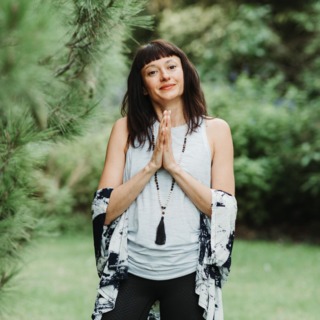
A life coach and a yoga and meditation teacher.
Join me as I explore with my guests what it means to live a life of wholeness and connectedness.
A life where all parts of ourselves,
Our body,
Mind and spirit come together into alignment.
Where we're truly living into our own personal values and the fullest expression of who we are.
So if you're a seeker,
A feeler and someone wanting more from your precious life then tune in every fortnight and let's grow together.
Hello and welcome to episode number 37 of the Becoming Whole podcast with Clare and today I have a really exciting episode for you.
I interviewed Octavio Salvado who is the co-founder and co-owner and principal teacher at the practice in Canggu,
Bali.
He's an incredible teacher and a teacher's teacher and he shares the teachings of Hatha Tantric Yoga,
A spiritual science that's designed to awaken us to our highest potential.
Octavio teaches lineage-based yoga,
Handed down from teacher to student for thousands of years in an unbroken chain of personal transmission.
Octavio says,
I believe that when practiced correctly and with the right guidance and attitude,
The potential for yoga to deeply transform all aspects of our lives is limitless.
I so love this.
I mean Octavio really,
Really does walk the talk with the teachings and I first met him about three years ago when I practiced his classes in Canggu and Bali and was totally blown away by how I felt during the classes and afterwards.
His knowledge and the way that it guides his classes is masterful and I found that they truly deliver to his message to assist in awakening.
I felt more connected and more aware following his classes.
So last month I had the absolute privilege of attending Octavio's Hatha Tantric 50-hour training as I continue my further studies and it's helped me to understand the teachings from a fully embodied and felt experience.
And of course,
While I was there,
I couldn't pass on the opportunity to interview Octavio.
So if you're a yogi and you're interested in delving into the deepest spiritual teachings,
Then this episode is a must listen for you.
Before we get to the episode though,
I've got a few things to let you know.
I'm an advocate and an avid watcher of the documentaries on FMTV,
Which is,
If you're not familiar with it,
It's like Netflix for Health and Wellness.
And they're releasing Transcendence,
Which is a doco series that explores the current state of our physical,
Emotional,
And mental health in a captivating way.
It contains research and interviews with top doctors and thought leaders.
And they have five videos that they're tackling topics like the gut and immune system,
Autoimmune disease,
How to work with stress and anxiety,
Overcoming self-limiting beliefs and uncovering your true passion and more.
So what I'll do is I'll pop the link in the show notes if that interests you.
So you can sign up for the free video series and it's going to be released on July the 1st.
And I personally absolutely love this video series and it really coincides with the type of thing that I work with clients on.
So if you're interested in learning more about some of these topics and delving into kind of,
You know,
How things look in your own life,
Then this is an amazing place to start off and best of all is free.
Also,
If you find that your days,
Weeks and months go by in a bit of a daze,
Or if you find that you are easily agitated by people and situations in your day to day,
Then it could be time to begin a mindful morning practice.
If this is you,
Then I have something that could help you.
I've created a sacred mornings pack that includes a yoga class from me,
A breathing meditation and journal prompts to help you begin your morning practice.
I know personally that showing up to myself from a centered place every morning by spending some time to calm my mind,
Moving my body and creating some space has had a profound impact on how I feel throughout the day.
So if this is of interest to you or someone that you know,
I'll pop the link in the show notes so that you can download your free pack and let me know how you go.
I love to hear how people are progressing,
How they feel as they undertake new practices that best support them.
You can find me best on Instagram,
So that's underscore Claire Bradshaw underscore.
That's my handle and yeah,
Let me know how you go.
All right,
Let's get straight to the episode now.
Hey,
Octavio,
So great to have you on the show.
Hello,
Hello,
Great to be on the show.
Thanks for having me.
Awesome.
So let's get stuck into talking about Tantra.
So Tantra's had.
.
.
Straight in.
Straight in,
Let's just go there.
All right.
So Tantra has had a bit of a bad rap and I'd love you to explain or just go into what Tantra is and what it is.
Oh man,
That's a long ass conversation,
Claire.
Let's see if we can distill it into a few essentials.
All right,
So Tantra,
Like I mentioned to you a couple of days ago,
It's my own teacher's advice.
My teacher said to me to practice being more tolerant and more accepting and try to be a little bit less of a yoga vigilante.
So I'm just going to kind of focus on what Tantra is rather than maybe.
.
.
I'm sure it's going to go there for sure.
We're going to talk about that at some point,
But let me just talk about what Tantra is and then we'll refine it down a little bit.
So Tantra is a couple of things.
Tantra is first and foremost,
It is an extremely life-affirming philosophy that essentially sees and recognizes the world as sacred,
As an expression of the divine,
And all of life as pieces of the divine,
Nothing excluded.
And then on the other hand,
So that's the first part.
The second part of Tantra is a very precise set of methods and practices that allow us to embody the essence of the worldview,
To really experience the philosophy in a personal way,
Not in a conceptual or academic way,
But in an embodied way,
To really live the philosophy.
And those two things,
They share the common goal of dissolving any walls or any parameters that are existing between the spiritual and the mundane aspects of our life.
So I think there's this idea that there's life and that's about 22.
5 hours out of the day,
And then 90 minutes of the day is our spiritual practice.
And then when we step off the mat,
It's just back into life.
And Tantra says,
Whoa,
Whoa,
Whoa,
Whoa,
Whoa,
What about the other 22 and a half hours?
Can't we find a way to make them sacred and bring the highest potential that exists within any given situation forward so we can experience the highest potential that exists within ourself.
So that's really Tantra.
Tantra is a way of inviting the best of ourself into every situation and finding the best of every situation in every situation.
Yeah.
So it's not like yoga is something that you do for an hour per day and then life just happens.
It's the weaving.
Exactly.
Yeah.
And so that's one of the actual definitions of Tantra,
Means to weave,
Really to weave the essence of our practice into everyday life so there is no separation.
That's one of my favorite definitions of Tantra.
There's a couple more which are really cool.
Tantra means to expand and pra,
One of the meanings is beyond limits,
Limitless.
So limitless expansion.
So how can I expand my capacity in every single aspect of my life?
My capacity as a father,
As a husband,
As a yogi,
As a business owner,
As a friend,
As a meditator,
As a everything.
Yeah.
You know,
Like keep looking for those ways that we can bring more of the soul's genius into everything that we do.
So that's such a great definition of Tantra and then I'll just mention one more because it might segue into what I said I wouldn't talk about.
Let's see.
The other translation of pra,
The end part of Tantra means to protect in the same way that mantra is sort of like a mind.
Man comes from manas,
Root word for mind and pra,
To protect the mind,
Is mantra.
Whereas Tantra is to expand in a protected way and what offers expansion through Tantra,
Its protection is the science,
Is the precise methodology.
And that's what I love about Tantra that,
You know,
If we practice,
You know,
These asanas in this way and add that breath with this kriya and this mantra,
We will get that result 100% of the time.
If we're practicing it consciously and with awareness and there's no,
You know,
Major external factors that are blocking the flow of that energy,
The momentum of that energy,
Then we can bank on that result.
It's a bankable system that's been time tested and proven for thousands and thousands of years.
Yeah.
So it has that scientific basis to it.
It's not this kind of,
You know,
Spiritual thing that feels almost unobtainable.
It has a structure.
It has a process.
Yeah,
Absolutely.
Everything from the,
Everything from every syllable of every mantra to every minute sub-move within an asana has something that we can correlate to like a Western understanding of science.
It's just,
You know,
We just need to marry these two together.
And I think more and more that's what's happening with this sort of this leap in quantum sciences and,
You know,
Healthcare professionals and,
You know,
Western doctors starting to get a little bit more interested in the Eastern side of things.
And certainly,
You know,
The East is getting very,
Very interested in the Western side of things.
So I feel like there is this,
There is this weaving.
Yeah.
Which is really exciting.
Yeah,
Exactly.
It's so,
So amazing.
And as a result,
A lot more people are starting to come on board because they're now seeing the scientific evidence that backs it up for the people who need that.
Exactly.
Like all of the brain science studies on what happens to the frontal cortex when people meditate.
And it's just some,
You know,
Really,
Really extraordinary information that's coming out these days.
So that's exciting.
So good.
So let's talk about like the other side.
I know you didn't want to talk about it,
But let's just go there just real quick.
And so,
You know,
Tantra,
You know,
Has,
You know,
Had this reputation,
You know,
The sexual positions and all of that.
Can you talk a little bit to that?
And something you mentioned in our training was this incredible temple that you went to.
I'd love you to explain that as well.
Yeah,
It's so interesting.
You know,
It's,
Um,
And it just speaks volumes to,
Um,
To this,
This conversation around what,
What Tantra is and what it isn't.
It's the,
The Sri Vijaya temples in Kajuraho in central,
North central India,
Which was a stronghold for Sri Vijaya Tantra,
Which is what we're teaching and practicing here.
And these temples are notable because of the,
The,
Um,
The erotic carvings that surround the,
The,
The,
The,
The external walls of the temples.
And it's,
You know,
There's a lot of,
Um,
A lot of super erotic borderline sort of pornographic stuff on the outer walls.
Um,
Interestingly,
If you climb off the temple platform and go sort of around the back onto the,
The big block of concrete,
It's stone that's sitting on,
You see carvings of war.
And,
Um,
You know,
As we sort of go up,
Um,
Higher and higher into the temple complex,
Um,
On the outside even,
Uh,
Things take on less of a material form.
Like all of the carvings disappear and they become geometric patterns,
Which is really,
Really interesting.
Um,
But essentially the,
Um,
Even the,
The,
The temple guides,
Like the,
The,
The sanctioned tourist guides at these temples are telling visitors that these temples belong to a medieval sex cult.
And the reason that these carvings of these people in sexual positions is on the,
Is on the temples is,
Uh,
Because this is what they were up to at the time.
This is what Tantra is.
So,
Um,
We can kind of as Westerners be forgiven if even the Indian,
Um,
Uh,
Sort of tourist guides are misinforming the masses,
Um,
Because the,
You know,
The lineage understanding of these temples is that,
You know,
What,
What those walls,
Those outer walls represent is what's called the,
The tri-lokia Mohana.
And we can see this in the image of the Sri Chakra or the Sri Yantra as those four outer gates.
And the,
The tri-lokia Mohana means the seduction of the material world or the seduction of the,
The peripheral world.
Um,
And so all of the things that keep us so engaged with material life that we even forget to go inside and look what's actually within the temple.
We forget to look within because we're so enchanted by power and by sex and by pleasure and,
Um,
You know,
Wealth and image and beauty,
All of these things are really skillfully presented on those outer walls.
And so what we have is like,
You know,
The,
The,
The 90% of tourists that go there,
You know,
Might not ever go into the inner sanctum or if they do,
They,
Uh,
They just go in there and it's dark and weird and there's no sexual positions on the wall.
So they just come back out and keep taking photos of the interesting.
So they stay on the outside.
They stay on the outside.
So it's a perfect kind of almost representation.
It's the perfect living metaphor.
It's like so smart.
And so instead of going into the,
Into the darkness,
Into the deep,
Um,
Or the inner,
The inner chambers,
We just keep on circulating around the periphery of life without ever getting deep.
And,
Uh,
Another cool part about those temples is that the inside is dark.
The inside is a little bit eerie almost.
And that is because,
Um,
You know,
Within those temples,
They are designed to hold fire.
And so once the inner fire is lit,
That is when we see and receive what's really on the inside.
And usually that will be,
Um,
Expressed through a beautiful,
You know,
Uh,
Deity diamond eyes or a big Yantra on the wall or a,
Or a crystal Shiva Lingam representing pure consciousness or,
You know,
Something just extraordinary,
Something beautiful to represent that part of ourself that is beautiful and is extraordinary and is pure consciousness that is only accessible on the inside.
Once we've stopped obsessing about all of the stuff on the outside and you know,
The Tantricas didn't say deny that.
They just said without the knowledge and the connection to that,
That inner shreedness,
That inner auspiciousness that the outside becomes a distraction.
It's only when we're deeply connected to the inner that we can fully celebrate the outer.
Yeah.
Amazing.
Amazing.
And like it really,
When you explained that on the training,
It was like,
Wow,
That is just such a great way to visualize it and really get,
You know,
Capture the essence of what you were talking about.
So I feel it was brilliant.
Yeah.
And great.
And so you just,
You just touched on it.
So,
You know,
When we enter in and then,
You know,
We get the fire.
So talk about how that then relates to the classes that you run at the practice and the actual physical and,
You know,
The,
The,
The asana mixed with the pranayama,
The mantra infused through the class and then,
You know,
Ultimately then leading to the meditation.
How does this practice,
You know,
Work and how does it take us to this place?
I know that's quite a big question.
It's quite a big question.
I'll start by saying,
Uh,
What's really,
Really cool is that,
You know,
The very first words of the Rig Veda,
Um,
Which is the oldest,
Um,
Texts on the planet,
I believe certainly the oldest spiritual texts,
Um,
You know,
For 5,
000 years old,
The first words,
And they don't mess around with first words.
It's like,
If,
If you get that space in the text,
Then you,
You know,
It's,
It's got some weight to it.
It's got some value.
Yeah,
It goes straight in there.
Yeah,
Exactly.
So the first words are om agnimule,
Which means,
Um,
Om agnimule,
It means I meditate on the fire.
It's the fire that allows me to move to the front of the cube,
Which is a,
You know,
The fire allows me to expand and move forwards.
And so what we're doing here,
Um,
Is honoring a stream within Sri Vijaya that looks at the internal cultivation of fire.
It's like an internal expression of the external fire worship that's done in a traditional Havan Kund or,
You know,
Agni Hotra,
This sort of thing where there's the priest and there's the,
Um,
The,
The dooni or the fire pit and then there's the,
The wood that goes in and the gi that goes in and the mantras that go into the fire.
So that is one way of purifying karma.
And then,
And that,
That's an extremely valid way to do it.
And then there's another way that we can do it,
Where we take that ritual inside and we become the priest or we become the priestess and we use specific methods to cultivate what's called Bhuta Agni,
Which means the fire that consumes the ghosts of the past or the fire that consumes our karma.
And there's precise methodology for that.
And,
You know,
Unfortunately it's,
It's methodology that,
That most people today aren't aware of or,
Or interested in practicing because it's not sexy.
It's not fancy.
It's not fun.
Um,
And it's not something that you can Google.
It's not something that you can even read in a book.
It's in some of the key,
You know,
Tantric texts like the,
The,
The Hatha Yoga Pradipika and some of these,
But in very kind of vague ways.
Um,
You know,
The,
The,
The moon and the sun must merge to birth the fire,
Like this kind of cryptic talk.
So,
Um,
If we,
If we're not connected to a,
A living traditional lineage that really understands the,
The encrypted meaning of these,
Uh,
These,
These codes,
Then there's no way we're going to get the practices.
And that's such a shame because this is really what Hatha Yoga is about.
Ha and Tha.
You know,
We know that,
Most of us know that,
Sun and moon.
But then you bring those two words together,
Hatha,
And it means to strike or to force.
And so what we're doing is we're,
We're infusing or we're striking Pranashakti,
The sun,
With Manashakti,
The moon,
In,
Into,
Um,
In towards the navel where there is a pre-existing digestive fire called Jatara Agni.
And through this alchemical fusion of two pranic forces or two energetic forces within the body,
We,
Um,
We expand that fire's reach into the deeper layers of our psyche,
To the subtle body,
To the chakras,
To the nadis.
And we start to liberate,
Um,
Karmic bonds that have been there for,
You know,
Potentially lifetimes and lifetimes,
These programs that keep us stuck and keep us limited and keep us afraid and keep us,
You know,
Tripping over ourselves and stop us from thriving and living a,
Just a juicy,
Extraordinary,
Um,
Fully alive existence.
So this is the fire that yoga is all about,
But it's precise.
It doesn't happen through turning up the thermostat in a room.
It doesn't happen through,
You know,
Pumping the body through,
You know,
Vinyasa after vinyasa and heating the muscles.
It's a,
It's an internal,
Um,
Psychic,
Subtle heat that's born of prana,
Born of mind.
Yeah.
Beautiful.
And you know,
When you're talking about karma and you're talking about,
You know,
This kind of burning up of karma,
How,
You know,
And,
You know,
In terms of your own experience,
How has that shown up through turning up,
Doing the practices on a daily basis?
How has then that come up in your life for you then to recognize that that's what's been happening?
Um,
You know,
I think,
Um,
Life in itself is a fire ceremony.
You know,
Life in itself is a fire ceremony that will dish out to us our karma at the,
Um,
Prescribed rate.
And what we're doing through practice is we are taking up the role of the priest or the priestess and we are speeding up the common process and bringing more of our stuff into the light more quickly.
And again,
This comes back to the conversation around the protection offered through the methodology.
And the first stage of,
Of,
Of this path is,
Um,
It's called moon practice or Chandra sadhana.
And this is all about stabilizing the mind,
Making the mind more grounded and more stable.
And that's a precise set of methods and their methods,
Which aren't usually focused on so much these days.
It includes holding poses for a long time,
Focusing on the exhalation,
Typically forward folds and twists.
So not very exciting poses,
But they are poses to slow down the peripheral aspects of the mind,
The manas,
The chitta,
Start to dissolve that,
A humkara piece,
The ego,
And,
You know,
Allows our discernment and that part of the mind that is,
You know,
Awake and aware to get really,
Really crystal clear and,
And,
And focused so that when we get to these latest stages of practice and we start cultivating this fire that brings our stuff up,
We are able to mentally deal with that,
Emotionally deal with that so that we don't fly off the handle as,
As soon as we're presented with some kind of obstacle,
Either in practice or life,
Because if we speed up things,
It's going to come at us from everywhere,
Not just on the map.
It's also going to speed up karma in all dimensions.
And so we need to bring our big game to that.
And the way we do that is by stable mind,
Meditate.
So,
You know,
One of the key messages that we,
We,
We have here is yoga is meditation.
Asana is preparation.
If you,
You know,
Want to really experience that the full depths of this practice,
Meditation,
That's the key.
Yeah.
Must meditate.
We're going to start the fire.
We've got to be able to meet it and deal with it without falling to pieces.
Yeah.
Yeah.
For sure.
You see,
So I,
The training that I did with Ashtanga in,
In,
In India,
I've never done Ashtanga before and my body wasn't going to prep for it either.
So I did,
I threw myself into a fire essentially.
And,
You know,
The practice is incredibly strong,
You know,
It was a two hour practice every morning and I found that after one week,
My stuff was coming up pretty quick.
Yeah.
And,
But it was,
It actually came up in a really beautiful way,
You know,
And it was memories from the past of what I'd said to someone or what someone had said to me.
And it was presented in a beautiful way.
So it wasn't an ego kind of like,
Oh,
You did that,
You're bad or did it.
It was just,
It was just presented as an awareness and it was,
It was a beautiful thing.
And so I experienced,
That was the start.
Yes.
When I started to realize,
Wow,
You know,
This,
This practice of breath with holding postures mixed with,
You know,
An hour of pranayama a day,
An hour of meditation a day,
Things started to come to the surface.
Yeah.
And it was just,
It was amazing,
But I can see the absolute benefit of starting with the moon because without that,
It,
You know,
Without that stability,
Without that structure,
It's like a house,
You know,
You have to build the foundations before building anything on top.
So,
And I love that about the practice because it is that kind of step by step.
Yes.
Having said that,
It's not uncommon and nor is it problematic to start with a really physical practice.
Myself,
It was certainly that way to an extent and certainly a lot of the,
The greatest yogis that I know,
They started very,
Very physically very strong practices.
And I think that can be beneficial to start to shift some of the peripheral karma,
Some of the maybe stuff that we've accumulated over the previous weeks,
The previous months,
The previous years.
And that's great.
And then it gets to a point where those kinds of practices have burned up all of the karma that they can.
At that point,
As we have become more refined,
We must then refine our practices and take it to that subtle level.
And it doesn't mean that we stopped doing asana,
But maybe it means we start doing a little bit less asana or we hold the poses,
We do less asana,
Hold the poses for longer.
And we start infusing the postures with bandha,
With mudra,
With mantra as a way to keep the transformative essence of practice moving.
But now we're transforming subtle and supple layers.
The big dynamic asana practices,
They transform quite a dense,
Dense karma,
We could say.
And then the subtle practices are designed to transform the subtle stuff at those deeper levels.
So as we,
I think it's great for people just to get a foot in the door,
Just to start and just get moving.
Transform a little bit,
Get moving,
But then be ready as we go deeper into it to have this moment where it's like,
Okay,
Now I need,
As I go deeper,
Now I need to start mastering my mind.
Now I need to get supple,
Experience my prana more and more and more,
Master that,
And then cultivate the fire.
Yeah,
That makes sense.
Yeah,
Because I definitely experienced,
I think it was,
Yeah,
Those kind of denser layers that,
You know,
Things started to move and to shift.
And from that and various other things that happened,
That was like,
Wow,
This practice is so powerful.
Absolutely.
And starting to see yourself almost from afar without being involved in the mind chatter around it.
Yeah,
Absolutely.
Yeah,
Very,
Very powerful.
Okay,
So let's talk about the chakras.
Again,
Another huge subject.
We've already talked about this stuff for like five hours.
Actually,
The training went for 50 hours.
Right,
Exactly.
At least 50 hours we could talk.
Yeah,
So,
You know,
I've personally worked with the chakra system for a number of years and it's really helped me,
I think from a,
From a psycho-spiritual perspective and then using asana and panayama to help with that.
Can you explain,
So there may be people on the,
You know,
Listening to this podcast and they've never heard of a chakra.
It's like,
What is a chakra?
And,
You know,
How would it be a benefit in my day-to-day life to know more about this?
Okay,
So as we were talking about at the very,
Very beginning,
There's nothing mystical in the science of yoga.
There's ways that we can understand it through our own Western lens.
When we,
One of the ways that we can talk about the chakras is as universal forces that govern and guide everything in creation.
The yogis understood that there are nine fundamental forces in nature that keep everything connected and these forces can be found in everything,
Whether they are tangible things like a piece of wood or subtle expressions of life like time.
That everything is simply a combination of these nine forces.
For example,
The first force,
Which we can connect to the first chakra,
Is the force of gravity.
So we know about gravity on a universal level,
But it also works on an individual subtle level.
And that force,
It has a pooling point at the base of the spine.
That pooling point is determined through geometry.
So the geometry of the energetic pathways moving into the spine at that level and the frequency that that geometry creates,
Creates this field of awakened prana that has the quality of gravity.
That's why we speak about the first chakra as being that grounding force.
Another force in nature is covalence.
This is the second force.
This is when geometry or energy or energetic lines come together at 60 degree angles.
So at this level of the spine,
There are six energetic pathways coming in at 60 degree angles,
Creating this energetic field that has a vibrational resonance that in science we would call covalence or cohesion,
Which is the force that creates temporary bonds between individual units.
So it's like the energy of the first chakra,
It creates individual things,
Like an individual atom or an individual person.
And then through vibrational resonance set by the second chakra,
Those two things come together to share in a relationship.
Then at the level of the third chakra,
We have the universal force of combustion,
Which liberates those units from their covalent bond.
Think about putting a Bunsen burner under a test tube with water and the steam that comes up out the top as the hydrogen and the oxygen get liberated from one another.
It's the covalence of the second chakra that keeps those two atoms together,
The two hydrogens and the one oxygen.
So everything that we talk about in terms of the chakras can be understood scientifically.
Now they can also be understood psychologically.
And this is something that my teacher,
Yoga Rupa,
Talks about extensively,
Is this developmental understanding of the chakras that when we're born,
We come into this life and between the ages of say birth and one or 1.
5,
We are purely governed by this drive of survival.
And this also speaks to this energy of I am one single unit.
It's just me here and I've got to survive.
So we're kind of running on that.
You hear a young child crying and it really often sounds like a cry for life or death.
They don't know if they're going to get fed or not.
They don't know where the hell they are.
And then at around age,
Maybe one and a half,
Something like that,
The survival mechanism,
It softens because we start to understand that we're not going to be taken care of.
Someone's looking after us,
Putting clothes on us,
Keeping us warm,
Keeping us fed.
And so the development moves towards looking at the things that we like and the things that we don't like.
And so we start to develop this relationship with the external world.
And now this is that covalence thing where we start to draw towards us the things that we don't like.
We start to draw towards us the things that we want and repel the things that we don't want.
And if you look at the tantrum that a three-year-old will throw,
It's not the same tantrum that a three month old child will throw.
One is founded in a fear of survival and one is usually just a complaint that I'm not getting what I want.
So true.
So that's the developmental difference.
This is the second chakra.
And then depending on the culture,
Maybe around three or something like that,
The third stage kicks in.
And this is really when we start to establish a very strong sense of personal identity and we start really caring what other people think of us.
And that starts to inform our own impression of ourself.
So this is really the formulation of what they call in terms of the glaciers,
The asymmeter,
Or the false identity,
Which we do just from gathering the information from what's around us and forming it into this kind of like,
Well,
I guess I'm this person's child.
I'm in this culture.
I live in this family.
We have this much money.
I guess this is who I am.
When we start to try and claim some self control and some power over our own choices,
Our identity.
And what Yoga Rupa says is that this stage lasts from three or four years old,
Up until 10,
Up until 20,
Up until 30,
Up until 40,
50.
And that unless we take control of our lives and our minds and our actions,
That we will just continue to perpetuate the behavior of these lower three chakras,
Which really relate to the reptilian part of the mind.
It's circles around,
It's like circling around the outer temple complex.
It's like the same thing.
It's the same thing.
We just keep on looking for that same stuff,
Pleasure and power and stuff.
But we're looking in the wrong places.
Exactly.
So the idea is that if we want to move out of that cycle,
Move from the darkness to the light,
Then we must practice.
Sometimes we will have a life altering experience,
Maybe a birth or a death or something that rocks our worldview and it shifts consciousness and prana up into the heart center,
One of the higher centers for a temporary amount of time.
It might be a minute,
It might be a day,
It might be a month or a year.
But if we haven't done the practices to stabilize this awakened energy there,
Then the gravity of the lower three centers,
Just the momentum of the lower mind will just pull out energy,
Our awareness back into that cycle around the outer walls of the temple.
So we may have almost like an awakening through the heart but then drop back down into the same cycles.
Absolutely.
And I'm probably going to piss a few people off by saying this,
But that's one of the things about working with plant medicine and things like that.
It can give you a great glimpse,
But it's not going to stabilize Kundalini in the higher centers.
You have to earn that.
You have to.
Otherwise,
Yeah,
You get the glimpse and that's great.
But eventually the gravity of your karma is just going to pull you back down into old patterns.
So for sure,
Do it,
Get the glimpse,
But meditation is better.
Then do the work.
Do the work.
Yes.
There's no quick fix.
No shortcuts to Samadhi.
That is for sure.
Yeah,
For sure,
For sure.
And so then through the practices,
Then we start to shift some of this stuff.
And then once we have grounded,
Stabilized,
And then we start to shift this stuff,
Then what happens from that?
Then,
You know,
Once we have cultivated fire in one way or another,
Whether it's through Tantric Hatha Yoga,
Whether it's through external fire ritual,
Or whether it's through like Jnana Yoga,
Which is cultivating the fire of pure intelligence,
And we just do deep level introspection on our own minds and light up the darkness in that way,
Then energy,
Consciousness,
Awakened Kundalini can move up.
Through that center channel,
Because now there's less tamas,
There's less weight,
Weighing it down.
I mean,
That's why Kundalini is coiled.
It's not asleep.
We're squashing it.
We're squashing it with the weight of our tamas,
The weight of our forgetfulness.
Once we liberate some of that weight,
She naturally just spirals up the spine,
Pierces the heart.
She's got space to breathe.
Get off me!
Yeah.
We're sitting on Kundalini.
So true.
So true.
I love how you explain things because what I found on the training was that,
You know,
I touched all of these pieces,
But I didn't really fully grasp it.
And I didn't understand how all the pieces of the puzzle came together.
And you have this amazing map of being able to explain these really complex,
You know,
Well,
Seemingly complex things,
And you're able to distill it into a way that really makes sense and really makes it accessible.
So thank you so much.
Thank my teachers for that.
That's them.
Yeah,
But it's coming through you as well.
So something that I ask everyone towards the end of a podcast interview is,
This podcast is called Becoming Whole.
What does Becoming Whole mean to you?
Oh man,
That's tantra.
That's another way of saying tantra.
That's what it is,
Becoming Whole.
It's bringing the spark of our soul into everything that we do.
That's tantra.
That's wholeness.
Yeah.
Beautiful.
Beautiful.
Well,
Thank you so much,
Octavio.
It's been,
I've had the most amazing week doing your training and then also this podcast interview.
So thank you so much.
My absolute pleasure.
It's been great to have you here and an honor to be on your show.
Fantastic.
And I will put all of the links to the practice and Octavio's details on Facebook.
Yeah,
For sure.
Yeah,
That was really cool.
And yeah,
Thanks so much.
Pleasure.
And there you have it.
Thank you so much for listening and I do hope that you enjoyed this episode and gained some new insights.
If you're enjoying this podcast,
Please do share it with friends you think may benefit from the message.
And if you'd like to rate the show and give it a review on iTunes,
Not only would I be so happy,
But this will also help increase the show's visibility so that more people can benefit from the messages.
I would love to connect with you.
So you can find me on Instagram.
My handle is underscore Claire with an I and an E Bradshaw underscore.
I so totally can't wait to connect with you soon.
Have a beautiful day.