Hello and welcome to the CalmCast,
A time to feel calm and think clearly.
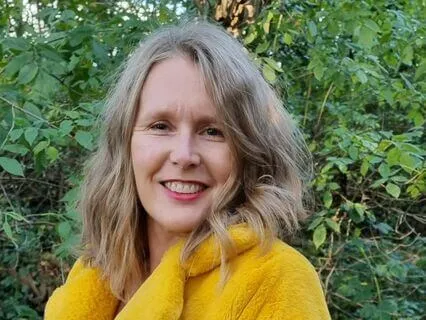
I'm Claire Downham,
The Queen of Calm,
A Transformational Life Coach.
I was a burnt out head teacher who finally made the journey to calm after years of trying,
And I want to prevent you from having to do the same.
The CalmCast is a series of short explorations gently guiding you back to your natural state,
Which is calm and clarity.
Just listen like you would listen to music,
With an open mind and curiosity.
There's nothing else to do.
Now let's relax into today's episode.
So today we're exploring creativity and I'm really going to be pointing a lot in the same direction that I've been pointing to recently around creativity being our natural state,
Being our natural way of being in the world.
And that really,
As with everything,
When we're having this Three Principles conversation,
We're looking to see what is getting in the way.
What is preventing creativity?
What in our psychology is telling us that we can't or shouldn't or,
You know,
Whatever other stories that we have.
And my relationship with creativity has been interesting because as a young person,
I definitely remember thinking that I wasn't creative,
That I was,
Because I wasn't arty.
And I think for me,
That's what that meant.
It meant arty.
Creativity,
Creativity was artiness,
The ability to paint and draw and make things.
And I didn't see myself in that way.
And it really has been only maybe in the last 10 years that I've seen that everything that I do,
Particularly since I started my own business,
I started to see,
Oh,
You know,
You can't not be creative.
And that's really cool to see.
You cannot prevent yourself from creating,
Really.
Now,
What you do create will depend on your state of mind.
You know,
You can create a mess in a relationship.
You can create an argument.
You can create things that you don't want quite easily.
But I think that ability to create exciting,
New,
Wonderful things that take us further on the path in our lives that we want to go on are all,
Are available to all of us when we can see them.
And again,
Like I've been doing a lot recently,
You know,
With this area where I'm exploring around productivity at the moment,
We're going to look first of all to the evidence that creativity is innate.
And that is in our,
Again,
As I mentioned before,
It's in our little people,
You know,
In those small children who given a pile of pieces of paper and a,
You know,
A few paints or felt tips or crayons or whatever you might give a small child,
Will create.
And they create so fluidly and freely and flowingly because they don't have a story about there's a right way to do something.
I remember that,
I remember when my daughter started nursery,
They said to me,
She won't,
She won't put pen to paper.
She won't write anything.
And I was puzzled by this because she had,
You know,
She's a teacher's child.
She'd been brought up in a very literate environment.
She'd been surrounded by reading books.
She was a pretty fluent reader by the time she started nursery at sort of three,
Four years old.
She was pretty good at reading and had a good sight of vocabulary,
Was very capable,
But wouldn't,
Wouldn't write until one day she did.
And it looked damn near the same as the writing that she'd seen in a book.
So it was like already,
Unfortunately,
She'd picked up some kind of idea about writing having to look a certain way.
You know,
It looks like this in a book.
So when I do it,
I've got to make it look the same.
Whereas my son was very different.
He'd been brought up in a very similar way,
Lots of books,
Lots of stories,
Lots of reading,
Lots of encouragement around literacy.
But he did what he scribbled,
Like he did proper,
What we call emergent writing.
He wasn't bothered about looking right or being,
Or meaning,
Have meaning for other people.
He would draw all these,
You know,
Write all these amazing scribbles and then he'd tell you exactly what it said,
Word for word.
It might be slightly different each time he told you,
But he would be able to tell you that this is what he'd written about.
And it was just a load of scribbles.
And so he somehow hadn't picked up there's a right way to do it.
And that's really the difference between us as adults being in this creative space and not.
It's that we think there's a right way to do it.
And I see this so often with so many of my clients,
Especially those who have businesses,
Where it looks like they must make it look a certain way in order to be right.
That there is a right way to create,
That there is a wrong thing you could say,
You know,
On a recording like this,
Which,
You know,
For me,
These are one and done.
You know,
Unless somebody sets off an explosive next to me or there's a very loud noise.
In terms of what I say,
These sessions are one and done.
They're whatever occurs to me to say in the moment and there's no sense of,
I can get it wrong,
Because I'm exploring something.
There is no getting it wrong,
Is there?
And I think for a lot of us,
Being able to step into that space where we can explore what we would like to put into the world,
But without the rules,
Without it being right or wrong,
Without it being judged by,
Without the thoughts of judgment from others,
Without the thoughts of perfectionism,
Which,
You know,
I've already been speaking about.
Without all of that,
We can just turn up and give it a go.
Just try something,
Do something.
And there is no right way.
So it's back to that old equation,
That,
Not old equation,
I don't know how old the equation is,
It comes from a book called The Inner Game of Tennis,
I understand,
Although I think it's been around for longer than that,
Where we say,
You know,
Performance,
Or let's say creativity,
Don't have to say performance,
Performance could be,
Let's say creativity,
Equals potential for creativity,
Minus interference.
So when we look to the young children who are innately creative,
Innately doing things,
Innately creating things all the time,
You know,
No matter what space you put them in,
They will create.
And then we look at ourselves and see that we don't behave like that anymore.
It's the interference,
What's interfering for you?
And really through bringing some awareness to that,
We can start to see the,
The chink of light around our creativity.
We can start to see,
Oh,
Hang on a minute,
There's this thinking I have that says,
You can't do that because you're going to look stupid.
There's this thinking that says,
You can't do that because your neighbor's going to judge you as looking stupid.
You can't do that because your family are on your Facebook,
So you can't put anything out there because people are going to judge.
And what I see happens there is that we do have the creative spark,
Like the spark is there,
The spark is never out,
It's always lit.
So the creative spark says,
Here's an idea,
Something for you to try,
Something that you could do,
Something that you could share with the world.
And then there is the noise,
And the noise says,
The noise in your head,
The interference says,
No,
You can't.
And so,
So many of our creative,
So much of our creative potential goes to the grave,
Doesn't it?
Literally,
Never comes out.
It never gets released.
And,
You know,
Not only do we have the ideas and we don't put them into the world,
But I think we have less ideas,
While ever we're living in this intellectual space,
While ever we're in our heads,
Trying to find,
You know,
Trying to find the right way to do things,
Rather than just the way that we're inspired to do.
And that equation that I shared just really does encapsulate it beautifully.
And so all we're doing in this conversation is bringing some awareness to that,
Like,
What is it,
What,
What in your world,
What in your head is getting in the way of you doing those things that you feel inspired to do?
Where you can see your creativity becoming alive and then squashed by your thinking.
And you'll know it's happening because when we have one of those creative ideas,
It usually comes with a lovely feeling,
A feeling of calm,
A feeling of peace,
A feeling of just,
You know,
Like a right,
A feeling of rightness,
Let's call it that.
And then it gets squashed.
And the squashing feels awful,
Just like it would if you were being squashed physically.
It can feel like a foot on your chest,
Can't it?
It can feel,
Have you seen that cartoon where there's a close-up of a foot on somebody's head?
And when you,
When they zoom out,
You can see that actually the person's hand is inside the boot,
And it's the person's own hand that's on their head.
It's just like that,
Isn't it?
It's just like that.
And all we're doing here is bringing an awareness to the types of thinking that we have that stop us putting out into the world the wonderful things that we have inside us that are wanting to come to life,
The lovely creative ideas and things.
And once we have the awareness of them,
I was talking to a client earlier,
Yesterday actually,
I was talking to a client and we were talking about how it's like,
You know when,
I don't know what it's like in other countries,
But when the train pulls up on the platform in the UK,
The guard gets out of one door,
They turn a key and they open it.
Obviously the rest of time you can't open the doors because that would be dangerous,
The train would be moving.
And they put their head out of the train like this,
And you know,
They look along the platform both ways.
And I asked a train guard the other day,
Why do you do that?
Why do you look out?
And she said,
We're just checking that the train is on the platform okay.
And I was like,
Oh that's really cool,
I didn't know that.
And then once they've done that,
They put their head back inside and they turn a key and that allows all the buttons for the doors to open up,
To light up and then you can press open.
And when we bring awareness to these trains of thought that take us away from our creative potential,
That's all we're doing really.
We're opening up,
We're switching on some lights,
That allow us to press a button and step off that train of thought at any station.
And bearing in mind in our trains of thought,
The stations are seconds apart from each other.
And that's what it does,
It opens up the opportunity to step back,
To pause,
To get off the train of thought and to then follow our creative drive,
Our creative potential.
So I hope you found that helpful,
I hope you found this exploration of creativity useful.
If you are interested in finding out more,
Then I have three courses now on Insight Timer,
But the most,
The one that links to all this stuff is called From Stress to Success and that is all about productivity,
Creativity,
Overcoming perfectionism etc.
So I'd love to see you on that and of course lots of lives always coming up,
So check out my profile and you'll find more about that too.
So lots of love and have a beautiful day,
Thank you.
Thank you so much for listening.
There's nothing to do now but bring some awareness to how this is working out in your life.
Listen regularly to experience longer and longer periods of calm.
This has been the Calmcast with Clare Downam,
Queen of Calm.
Take care and keep listening.