How can you be more creative?
That's what we're gonna explore today on The Wise Effort Show.
Welcome back,
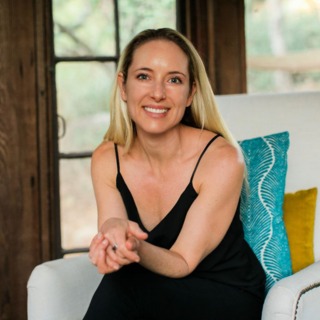
I'm Dr.
Diana Hill.
I'm a clinical psychologist,
And these days I'm really interested in creativity.
I love getting creative on this podcast.
I bring a lot of creativity into my retreats.
If you come with me to Costa Rica in April,
You will experience that for yourself.
And I love supporting my clients in being more creative,
And I want you to be more creative.
I think it's actually one of our most essential skills.
And you likely feel it,
Right?
You may feel an energy or even an urgency deep down inside to create something.
It could be big,
Like the book that you want to write,
If you could just get over thinking that you're a bad writer,
Or it could be small,
Like hauling out that box of paints that you've kept in the closet unwrapped.
The first question that Jenny Nash,
The book coach that I interviewed a while back,
Asked me when I told her that I was writing a book was,
Why do you want to write this book?
She asked this of every author that she meets.
And she said that the most common answer is not,
I want notoriety,
Or I want to make a lot of money,
Or I want a handbook on architecture I can give my clients.
It's some version of,
I don't want to die before I do this thing I've always wanted to do.
Creative expression is literally about life and death.
We want to raise our voice.
We want to claim our story.
We want to speak out.
Maybe you want to express your innermost beliefs and yearnings.
It is literally a shout into the void.
It's big.
And that may be one of the reasons why we struggle with creative expression.
We avoid it because we're afraid we're not going to do a good enough job,
Or we attach to our product so much that it gets in the way of us really being free to experiment.
Creative expression spans beyond paintbrushes and musical notes and dance.
It's what's going to drive any new idea for you,
And it's what's going to solve any complex problem for you.
You need to be creative.
So much so that in 2023,
The World Economic Forum listed creative expression as number two on the top 10 skills for future workers,
Right below analytical thinking and right above resilience.
Many of us engage in unwise effort when it comes to creative expression.
We play small,
We hold back,
We don't touch that guitar in the back of our attics,
Not because we don't value it,
But because we've blocked ourselves from doing it.
So today I want to talk about six things that will help you get unblocked so that you can do what you evolved to do to be creative,
And so that you can apply that creativity to whatever domain that you feel stuck in,
Or so that you can just claim your story,
Use your voice.
So the first tip on how to become more creative is to create a context that supports your creativity.
Many of us grew up in environments that devalue creative pursuits.
They're put in the category of afterschool electives,
Just like PE and life skills,
You know,
The things that don't really matter,
Except they really do matter.
And we put our art departments in the basement,
We don't fund them,
We don't pay comedians or photographers or teachers,
Despite the fact that they open our eyes,
They make our hearts sing,
Right?
They inspire us,
They shift our perspectives.
If you want to hear a super creative person,
Go back and listen to the episode I did with Sarah Hamlin,
My cousin,
Who is doing all sorts of creative stuff on the daily show that is having an impact in shifting people's minds.
So you need to develop your own context that is going to support your creativity,
Right?
For me,
A lot of my best ideas come when I'm running.
I run the same road by my house for years.
It's flat,
It has a view of the ocean,
The fog below,
And I feel like my head gets as clear and wide and expansive when I'm running as the air around me.
And this shouldn't be a surprise.
We know that your biology impacts your creativity.
When you are physically active,
There is more blood flowing to your brain,
More brain-derived neurotrophic factor that is a fertilizer for your brain cells,
And people are more creative when they are in outdoor spaces.
There was a study at Stanford comparing people that walked around the city,
Around Palo Alto,
Versus research participants that walked in the nature areas around campus,
And folks that walked around campus scored higher on creativity measures.
Just bringing nature inside can benefit your creativity.
There's been research that's shown just having a plant in your office can boost your reaction time,
It lowers your stress levels,
It helps you feel more present.
So up your creativity context by moving your body,
Being in nature,
Maybe bringing nature in.
I'm gonna have Katie Bowman on the show next week,
And she's gonna blow your mind about movement and offers us this movement pyramid where actually at the base of the pyramid,
Like the thing that we need to be doing most,
Is active rest,
Which means moving your body even while you are working.
Another way to shape your context to help boost your creativity is actually allow it to be a little bit of a mess.
I know this is frightening for those of you that hate clutter,
And for those of you that are a little cluttered,
You're probably a little bit more creative too.
I've seen so many clients get bogged down,
They'll spend like hours organizing their desk before they will record a podcast,
And then they run out of time.
Or they'll clean out their whole fridge and then not have time to try out that new recipe.
If you look at many creative thinkers,
People like Albert Einstein,
Mark Twain,
They had cluttered workspaces.
And some of the cluttered people that you know in your life,
I bet you you would associate them with being a little bit creative.
There's research to support this.
Researchers set up two identical rooms.
One was messy and the other was clean.
And then they had the research participants do different tasks in those rooms.
The participants that were in the messy rooms came up with more creative uses for ping pong balls than those that were in the clean rooms.
They were more likely to do outside of the box thinking.
But the participants that were in the orderly rooms actually were more conventional and made healthier choices.
So they were more likely to choose eating an apple over chocolate.
Take home message.
If you wanna make good,
Healthy,
Conventional choices for yourself,
Clean up your space.
If you wanna think outside of the box,
Let it be a little messy.
You should see my floor when I'm recording a podcast.
There's notes everywhere,
Papers everywhere,
Tons of books.
I just feel like battering with them by my side.
There's plenty of coffee cups and yes,
Chocolate wrappers.
Final context that will support you in being creative is you need to have a context that is psychologically safe to open up.
We heard about this from Sarah,
Where she talked about the writer's room at The Daily Show.
When somebody throws out a bad joke,
They just let it drop to the floor.
They don't boo them.
They don't have time to boo them because they need to get a sketch out that afternoon.
So they create a very safe environment for people to just throw stuff out there.
And you need to have that environment too.
You need a place where you can drum as loud as you wanna drum without your neighbors knocking on your door,
Right?
Or you need spaces to move your body where you don't feel criticized by other people or maybe to put your ideas on paper where it's not gonna be judged by your team.
Consider that for yourself.
What contexts are psychologically safe for you to create?
Places where you can just be yourself,
You can throw paint on the wall,
Whatever it is,
Shout into the void.
Okay,
So tip number one,
Create a context for you to be creative by moving your body,
Adding in some nature,
Making your room a little bit messy or finding spaces that are psychologically safe for you to create.
Tip number two,
Let it be bad.
I think some of the best lessons in life come from Beatles songs,
You know,
Like,
Can't Buy Me Love or Let It Be,
But also from children's books.
And when my kids were little,
I used to read them this children's book,
We're Going on a Bear Hunt,
Which has great illustrations.
And the line that's repeated throughout the book is,
We're going on a bear hunt,
I think we're gonna find one,
Can't go over it,
You can't go under it,
You gotta go through it.
And then they go through all of these scenarios,
Like squishy,
Squashy mud and tall grass and a big storm,
And they go through all of them.
So here is the,
I guess,
The good and bad news about creativity.
There's a lot of discomfort that comes in being creative.
And there's gonna be an initial phase where there's a lot of bad ideas,
Where it's gonna be squishy and muddy and not so pretty,
Or maybe even scary.
You can't go over it,
You can't go under it,
You gotta go through it.
Because if you shut yourself down by judging an idea that's not stellar or avoiding doing things that feel awkward or think that you failed because your first draft isn't good,
You're gonna block yourself from creative flow.
When you are in the woods,
You can't find your way out,
That is not the time to bail,
Right?
You gotta go through it.
The best creative adventures I actually have found come from those wrong turns and those stuck spots and those mistakes,
And the spinoffs from like the bad ideas.
So don't give up before the breakthrough happens,
You gotta go through it.
And three questions that you can ask yourself to support you in this are,
What feelings are you willing to open up to in the creative process?
If you need some support in how to sit with an uncomfortable feeling,
I have a skill building episode for you on that.
What thoughts can you make space for?
Just like that drop of ink in a glass versus a drop of ink in the ocean,
The more space you make for those thoughts just to come and go,
You kind of expect them and let them be,
The more likely you're gonna be able to continue to go through it.
And then third,
What identity do you need to loosen up around a bit?
So let it be bad,
That's your second tip.
The third tip to help you be more creative has to do with mind wandering.
Let your mind wander.
And I know you may be thinking,
Wait a minute,
Diana,
I do all these mindfulness skills,
There's that paper by Killingsworth that is a wandering mind,
Is an unhappy mind,
Shouldn't we be putting our mind on a leash and bring our attention to the here and now?
And I would say,
Yes,
Absolutely,
Absolutely,
If you tend to have ruminative thoughts and worry thoughts.
But the one place where it's really not helpful to control your attention is when it comes to creativity.
You actually need some mind wandering time.
Maybe that's why it works so well for me to come up with creative ideas when I'm running or sometimes in that liminal space,
Like when I'm waking up in the morning or I'm falling asleep at night,
I keep a notebook by my bed because I get really good ideas in that mind wandering space.
Sarah Hamlin,
The comedy writer at The Daily Show says she gets them in the shower.
So what's happening in that mind wandering space is that creativity is actually one of these unique moments where you need to have two operating systems of your brain collaborating and working together.
And they're usually two opposing operating systems of your brain.
One system is your default mode network,
Which is that mind wandering aspect of your brain.
You need to kind of go out into the edges and explore.
And then the other system is the cognitive control network,
More of that executive functioning,
Which is kind of finding the solutions.
When those two systems come together,
You're gonna have the most creative product.
And creativity really is defined by scholars as both a product as well as a process.
So that's why you need to let your mind wander a little bit and really do some intentional mind wandering time.
That means leaving your phone at home when you go on a run sometimes,
Or one of my favorites is to just be in silence when I'm going to pick up my kids from school just to let my mind wander a little bit.
Number four,
To help you become more creative,
You're gonna need to create with others.
One of the things that holds us back in our creative expression is that we think that we need to do it all alone.
We say things like my ideas need to be original or my thoughts unique.
And the reality is is that most ideas are a collaboration of many minds and spaces coming together.
This podcast,
Many of the ideas that I have are bringing other people's ideas into the space and then me expressing it in my unique way.
So you have a unique way of expressing things and you need to allow your mind to extend beyond your own brain to the brains of others.
Andy Murphy Paul,
Who I interviewed a while back,
The author of Extended Mind,
Talks about extending our mind to thinking with others in three ways.
We can think with experts,
We can think with peers,
And we can think with groups.
So I do a lot of thinking with experts on the Wise Effort Podcast.
You've done a lot of thinking with experts by listening to the Wise Effort Podcast.
And when we exchange these ideas with experts,
We can actually build on them.
A while back,
A Van Gogh exhibit came to Santa Barbara and right outside the Van Gogh exhibit was another exhibit,
Which was a display of Japanese Yukio prints.
And I love the prints,
They were really beautiful,
But they caught my eye and everything's intentional in a museum,
Right?
So I decided to figure out,
Why are these Japanese prints right next to the Van Gogh museum?
And what I learned was that Van Gogh drew a lot of inspiration from these Japanese expert printmakers.
He loved their vibrant colors that were really just like straight out of the tube.
And you can see those vibrant colors in things like his sunflowers.
He loved the flat perspective that they had,
And you can see that flat perspective.
If you ever see his painting of the bedroom,
It's sort of tilted,
Really flattens the room.
And he also loved the natural scenes of everyday life,
How the Japanese prints really showed an appreciation for this natural world.
That's all over the place with Van Gogh's work,
His flowers,
His trees,
Those landscapes with the beautiful bales of hay,
Right?
So even Van Gogh,
I mean,
We think of Van Gogh as being the most creative of all creative artists,
Was thinking with experts.
So I want you to think with experts too.
You can even model some of your ideas off of their work,
Pull out the first few lines of a poem and use it as a stem to write from,
Or take a class from someone who really excels at what you want to learn.
I love masterclass for that.
Or mimic your favorite music style,
Your dance.
I do this all the time when I'm at a wedding or like an opportunity to dance.
I'll look for who's the best dancer on the dance floor and I'll kind of,
You know,
Do what they're doing,
Groove the way they're grooving.
It's a compliment to them and it makes me a better dancer.
Another way you can create with others is to think with peers.
We know that peer feedback is really helpful for us improving.
I did a whole episode on feedback if you want to go listen to that.
But there's actually some research that like even in graduate school,
When they looked at graduate students' intellectual growth,
It was better predicted by their engagement with their peers than faculty advisors.
Their ability to generate hypotheses and design experiments,
Analyze their data,
Is better if they were interacting with colleagues.
So this is true for you too.
I want you to come up with a creative cohort of people,
Like people that are idea generators or doing cool stuff and get in on it.
Talk to them,
Create with them.
And that's also related to this idea of thinking in groups.
Our creativity is boosted in groups.
When we share with other people,
We form this bigger brain together and there's lots of ways you can create in groups.
One way to do it is to create some shared artifacts,
Which is sort of like using a Google document where a lot of people are working on it on the same time or maybe like a big poster board at work where a lot of people can contribute their ideas too.
I just was at Trader Joe's the other day and I love,
I have a big pushpin board at the back of the store where people put up shopping lists and now it's this whole board full of shopping lists.
And I was waiting for the bathroom,
Reading this board and thinking,
Oh my gosh,
I'm getting such good ideas from all the people that have come through Trader Joe's,
Right?
So we think with others.
Don't hesitate to create some form of collaboration in your thinking.
Alrighty,
So we've talked about creating contexts that support your creativity,
Letting it be bad,
Letting your mind wander,
Creating with others.
And now number five is sifting for the gold.
This is what,
This comes from Sarah.
She used this line,
Sifting for the gold.
She said that she takes an hour of footage with like a dozen jokes and then she edits it down to just three minutes or maybe one punchline.
And then she'll pester the video editors to find the shot with like 10% more disgust or 20% less surprise,
Right?
She's sifting out all the extraneous stuff and that turns her comedy sketches from good to great.
If you are a writer or a musician or a landscape artist,
You do the same thing.
My friend Isa who works on houses,
She has no hesitation in like knocking down a wall,
Pulling out plants,
Simplifying her plans if it means that your eye is gonna have a better place to rest.
So thinking about subtraction as a good solution,
We often wanna add on,
But subtraction,
Sifting,
Sifting for the gold is often what's needed to make your creative piece stand out.
I'm probably already gonna subtract like 50% of what I've said on this podcast so far.
Sarah talked about this as a camera operator where she talked about how she would see the whole view,
But then part of it would catch her eye,
Like maybe it's the clouds and the bridge and then she'd use her camera just to highlight those parts,
Right?
She put on time-lapse through the clouds where she'd zoom in on the bridge.
Start to use your own wisdom to find the parts of your creative work that are the best,
Sift them out.
And then you can also rely on those groups,
Those others,
Those experts and peers and groups to help you sift as well.
Ultimately,
Number six,
It's gonna require you to let it all go.
One creative thing that I do every few months is I go out with the Mandala Mamas and we go out into a natural space.
Maybe it's low tide at the beach or it's a cliff,
Or maybe we hike up a trail a bit and find a meadow,
But we bring these big baskets full of flowers and shells and natural artifacts.
And we create this mandala together.
We put on awesome music and we just go to town.
We're building off of each other's ideas.
Mandala means circle in Sanskrit and it's this repeating pattern.
And in some traditions,
Mandalas represent this journey of finding a sacred space within.
So these beautiful patterns that all go in a circle to a center.
And then when we're all done,
We walk away and the ocean comes,
Washes it away.
The wind blows it away.
Maybe a hiker will stumble upon it,
But it's all impermanent.
And that's the nature of creativity,
Right?
That ultimately to fully express yourself,
You're gonna need to let go.
You're gonna need to let go of your attachment to being funny or a good artist or the perfect parent so that you can become who you really are,
Which I believe is a conduit,
A conduit of really good energy.
So to be truly creative is to free yourself from yourself and enter into that grace that comes with being part of something bigger.
Maybe you don't choose how or when it comes to you,
But you honor it when it does and you let it go.
You let it be free.
So that's my hope for you in developing more creativity in your life,
In your own version,
Whatever it is,
Of shouting into the void,
That you create some creative context for yourself,
Some spaces that are psychologically safe and full of nature and allow some movement and are a little bit messy,
That you let it be bad.
You can't go over it.
You can't go under it.
You gotta go through it,
That you let your mind wander a little bit and go to the edges of what's possible,
A little bit of fantasy.
You create with others,
You create with experts and your peers and in groups,
And then ultimately you sift for the gold in what you've created and you let it all go.
You let it all be free.
All right,
I wanna see what you create.
I created this for you.
What are you gonna create for me?
Most importantly,
Enjoy the process.
Thank you so much for listening to this episode of the Wise Effort podcast.
Wise Effort is about you taking your energy and putting it in the places that matter most to you.
And when you do so,
You'll get to savor the good of your life along the way.
This podcast is for informational and entertainment purposes only,
And it's not meant to be a substitute for mental health.