Welcome back to The Wise Effort Show.
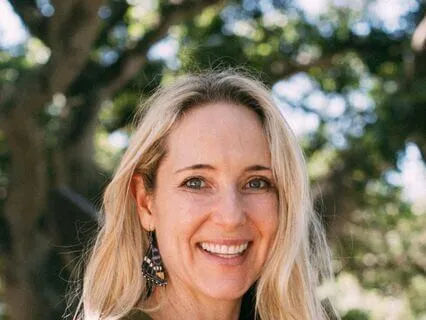
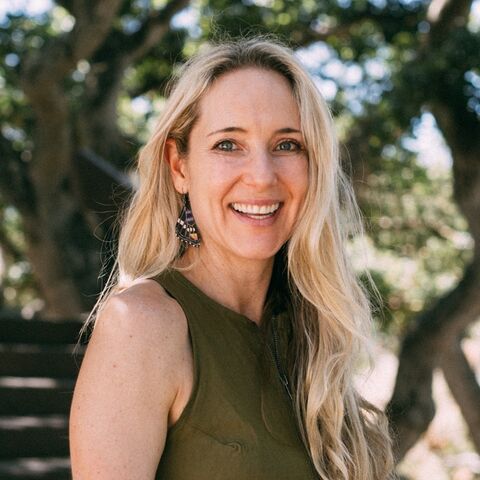
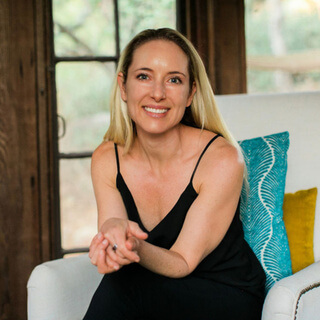
I'm Dr.
Diana Hill,
Clinical psychologist,
Author of the book Wise Effort,
How to Focus Your Energy on What Matters Most,
And today we are talking about generosity.
So the University of Notre Dame defines generosity as giving good things to others freely and abundantly.
I used to have these rocks in my office that were engraved with the words from the Buddhist Paramitas,
And Paramitas are considered the perfections of the heart.
When you are becoming a Bodhisattva,
An awakened one,
You practice these Paramitas to open your heart.
And depending on what school of Buddhism you follow,
Whether it's Theravada Buddhism or Mahayana Buddhism,
There's either six or ten Paramitas,
But they always start with the first one,
Which is generosity.
So I grew up with quite generous parents,
And they often had people staying at our house.
They still often have people staying at their house.
They would be sort of like a teacher that's going through a divorce and needed a place to stay for a couple of weeks,
Or sometimes my dad would have friends from India as they were coming to do a talking tour.
And once they had a violinist come in.
I was in high school and struggling with my eating disorder.
I could barely keep anything down for long.
My mom was probably at her with me at this point.
And this woman,
Nina,
Came.
Now Nina was a first chair violinist,
And my parents were putting her up for whatever reason.
I remember her playing at the top of the stairs and being mesmerized by her grace and her beauty and her elegance.
I think she was a Russian.
And she had this million dollar violin,
Like literally a violin that was worth a million dollars.
And as a teenager,
I was just blown away by her.
And she's living with us and she learns about me and my struggles.
And she disclosed to me that she too used to struggle with bulimia.
At one point she turned to my mom and said,
Let me take her.
Let me take her for the summer and see what we can do.
So off I went with this professional violinist.
This woman taught me a morning practice.
Every morning we'd meet and she would have us journal a little bit and read a little bit and meditate a little bit.
She would pray and then we'd go for a run together along the creek.
And in the afternoon,
She'd play music.
It felt like Heidi,
You know that book Heidi,
When Heidi gets transformed by being in the mountains and just gets healthy again,
Like has that experience of health.
That's what I experienced.
And it was this phenomenal gift,
Generous gift that I imagine at some point she was given by somebody else and also a gift that traveled back to my parents giving her a place to stay.
And my parents are generous because so many people have been generous with them.
Generosity is a flow like that and it's happening all the time.
So in today's podcast,
I want to talk about generosity as a source of energy,
The science of generosity,
Practices that you can engage in to increase your generosity and how to engage in this flow because it is a flow that we humans depend on for our survival.
And there are times when we could use a lot more generosity coming our way.
But also you being generous heals you as much as it does heal the other person.
So traditional teachings of Buddhism describe three levels of generosity.
There's material giving,
Which is offering food or shelter,
Money to help others,
Physical needs.
And then there's a dharma giving.
There's the offering of teachings and wisdom and understanding.
Nina was giving me dharma.
She was giving me a morning practice and I actually follow pretty closely that morning practice now.
I still follow it this many years later,
30 years later,
Right?
And when I'm off it,
I get off.
The third type of generosity is fearlessness giving.
And this is offering safety,
Offering protection,
Offering compassion to those that are in fear or distress.
I can still remember my very first client that I ever had who came in to therapy with me who was raped.
And she was my first long term client as a trainee.
And at the time I was learning something called prolonged exposure,
Which is a cognitive behavioral approach to working with rape where a person tells their story in detail and you as a therapist help them tell it in even more detail over and over again so that they are exposing themselves to the dark parts that they've been avoiding.
It's like opening up a closet that has black mold in it and giving it some air.
And in this therapy,
I was practicing fearlessness giving.
To be there for them as they opened up and went into the dark corners of their heart and their memory.
This violinist was giving that to me,
Fearlessness giving.
She didn't know what she was getting with this teenager to put her on a plane and take her to Colorado.
And she was fearless in it.
There's evolutionary roots in our caring.
There's a whole slew of neurotransmitters and hormones and neural networks that are dedicated to us caring for each other.
We evolved to caregive and it's an evolutionary adaptation that strengthens our group survival.
If we're caring for each other,
We're much better able to survive as a community,
As a group.
But I was reading through some of this research on generosity and was so interested to find that generosity can also shape our sexual selections.
So men,
When they're in the presence of potential mates,
Like at a fundraiser,
They give more to the charity.
This is good for you fundraising folks.
Put some single guys in there.
Make it a dating game and people are more likely to give.
And a study of undergraduate college students found that pro-social men were rated as more physically and sexually attractive,
More socially desirable,
And more desirable as dates than non-pro-social men.
So if you're acting in a pro-social way,
In a generous way,
You're going to seem more attractive.
And a recent study that found that the more altruistic you are,
The more likely you are to have more partners and more frequent sex within your relationships.
This aligns with that data I talked about a while ago around if you do more housework as a man,
You end up having more sex as well.
Being generous is super attractive and there's evolutionary roots to this.
Humans evolved to be generous and generosity is really good for your physical health and your mental health.
I have a friend who is a therapist who just underwent a double mastectomy and I was calling in to check on her and she said how grateful she is that she gets to see clients during this time.
How her clinical work is a break for her.
If you are sick,
You get more benefits from giving than receiving.
In a study with patients of end-stage renal disease,
Those who gave more social support to friends and family were significantly less likely to die over a year-long period than those who received the social support.
I didn't have to tell you all that science for you to know that.
You know it.
You feel it.
But we are not always generous.
Sometimes we get a little greedy.
And as soon as somebody wants something of ours,
We're like,
That's mine.
We had this clothing exchange amongst my friends,
Which I highly recommend.
It's a great practice in generosity where a group of five friends all brought their clothes that were like cute clothes,
But you just never wear them.
You know those pants that in theory are cute,
But you have not worn them in the past two years because they just don't fit right on your body or they're not quite your style.
And we had this group that has a variety of shapes and sizes,
And we brought them in.
Some of them still had tags on them,
Right?
And we laid them all out and had a clothing exchange.
It was so much fun.
But here's what I also noticed.
I also noticed that as soon as somebody wanted something of mine,
All of a sudden I started questioning.
I was like,
Oh,
Was that good?
Should I have let that go?
You know,
I got that kind of clingy greedy.
Clingy greediness can get in the way of our generosity.
So the best ways to increase your generosity is first to have gratitude,
To see that you already have everything that you need.
You actually have an abundance of what you need.
You have so much of what you need that you are overflowing,
That you can give it away.
And when you realize that,
That your closet is packed to the gills,
And you remember that,
I don't need those pants.
I can give them to my friend who needs a pair of pull-ons.
These are a pair of pull-ons I haven't worn for two years.
And they look great on her.
So folks that are more grateful are more likely to give.
And I want you to dial up your gratitude.
I want you to see all that you have.
I want you to see your abundance of gifts right here,
Right now,
All the things that you are grateful for so that you would be willing to give your shirt off your own back.
When we were at Deer Park Monastery this past summer,
My son at the end of our retreat came and had this precious little tiny bag with a little tiny stone in it that he held in his hands.
And he was so excited to show me that one of the monks had given him a gift.
And he said,
You know,
This monk,
He gave this to me.
This monk had visited this very special Bodhisattva,
Who is the Hugging Bodhisattva.
And people line up and wait in line for hours to meet the Hugging Bodhisattva.
And it's supposed to be like the most healing hug you ever received.
It's like has these health benefits and people are healed by the Hugging Bodhisattva.
Well,
Apparently this monk had gone and visited the Hugging Bodhisattva and the Hugging Bodhisattva had given him this little bag with this little rock in it and had blessed it and gave it to this monk.
And this monk had been traveling around.
He was now at Deer Park Monastery and was hosting these kids for the summer and gave it to my son.
Generosity.
Monks are only allowed to have $40.
They can't have more than that.
They've shaved their heads.
They wear brown robes.
They eat from one bowl.
And in the morning,
They wake up and they touch their head to remember they have everything that they need.
So practice gratitude for what you have and you will be more generous.
You'll be like that Hugging Bodhisattva that has lots of hugs to give or the monk that gives away everything they have or my little son that gives me his Reese's Buttercups every Halloween.
The second thing that increases your generosity is empathy.
Now,
There was a research study that had participants sit in an fMRI and watch somebody be injected with a syringe.
And the more that they showed neural resonance when watching this hand being pierced by a syringe,
The more likely they were to give money to strangers when they were outside of the fMRI.
The more that you are open to feeling other people's pain,
The more likely you are to be generous to move from just empathy,
Which is feeling pain to compassion,
Which is doing something to alleviate pain.
And another study,
People who donated a kidney to a stranger.
These are like people that take massive acts of generosity,
You know,
Talk about fearlessness.
They showed a larger right amygdala and a stronger response to fearful faces.
They are biologically more attuned to suffering.
So we can increase our generosity by increasing our compassion.
Don't look away.
Look at look towards and you don't get submerged to it.
You know,
Compassion doesn't mean you're like underwater,
Just like feeling every single person's pain and like totally tumbled by it.
But rather to open your heart a little bit.
I was just on an interview with Tammy Simon on Sounds True,
And we talked about flexibility of the heart.
Can you have a flexible heart,
An open heart that you can allow some of that pain in so that you can send some generosity out so we can grow our generosity by practicing gratitude?
I'm full.
My cup is full.
It overfloweth.
Therefore,
I can give you my pants.
Right.
We can practice generosity through increasing our empathy and compassion.
What's it like to be you?
The third way we can increase generosity is by experiencing awe.
Dacher Keltner has written a lot and done a lot of studies on awe,
But I love this study.
It's probably in California because it's eucalyptus trees,
Which we have a lot of here.
They had participants go stand outside and look up at a eucalyptus tree for one minute or look at a building for one minute.
And then after they did that,
A researcher walked by and accidentally dropped a few pens,
Right?
If you stood under the tall eucalyptus tree,
You're likely to pick up more pens than if you looked at a building.
These experiences of awe activate a bigger sense of meaning,
A sense of like,
I don't have to be so greedy and needy,
Right?
I'm needless.
I'm needless because I'm taken care of just like this eucalyptus tree is.
So I can give,
I can help.
I've got all the time in the world.
We know about generosity is that people are less generous,
Less likely to help,
Less prosocial when they feel squeezed for time.
And nature just slows time down for us.
If you catch me out on a run along the beach,
I am like the kindest human on the planet.
Catch me trying to run into Trader Joe's and back to get a few things before I go pick up my kids.
I'm like,
Stay out of my way,
Right?
So we have to remember to give ourselves the space to experience awe and that will facilitate your generosity.
So we have gratitude.
We have compassion.
We have awe.
These are all things that you can actively work on.
You can put into practice to increase your generosity.
And the fourth thing is when we recognize that our giving is a flow.
You've been on both sides of generosity.
There have been people in your life who have done tremendous generous acts for you without expecting anything in return.
You know,
That person that came to your house when you had a newborn and just like took out the trash and cleaned your cupboards and did it with a smile.
They were so happy to be there to do that for you.
And the times when you did that for somebody else,
You helped out a stranger,
You gave money to something,
You gave your time to something.
It's a flow.
Your well-being impacts my well-being.
My well-being impacts the next person's well-being and it eventually impacts all of us.
So we remember that.
We are not attached to the gift,
To the giver,
Or to the receiver.
We are just offering that energy out.
We all have a hugging Bodhisattva inside of us.
A hug that when you are embracing someone,
You are both giving and receiving at the same time.
We inter-are.
What I would encourage you to do is to practice more empathy,
Practice more gratitude,
Practice more awe,
Practice seeing interconnection.
And if you are in a relationship,
Practice giving to the other person that which they would love to receive.
Because if you're giving it away,
It means you have it in abundance.
Thank you so much for listening to this episode of the Wise Effort Podcast.
Wise Effort is about you taking your energy and putting it in the places that matter most to you.
And when you do so,
You'll get to savor the good of your life along the way.
I would like to thank my team,
My partner in all things,
Including the producer of this podcast,
Craig,
Ashley Hyatt,
The podcast manager,
And thank you to Bangold at Bell and Branch for our music.
This podcast is for informational and entertainment purposes only,
And it's not meant to be a substitute for mental health.