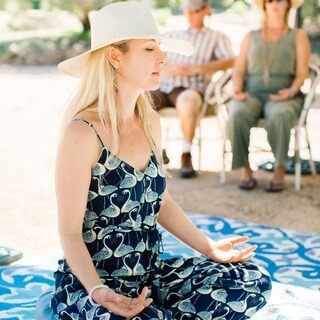
How can we make movement a joyful act?
Something that takes care of all of our body parts and helps us live out our values.
That's what we're going to explore today with Katie Bowman,
Live from Costa Rica,
On Your Life in Process.
When we think about movement,
We often think about running or cycling or gym workouts,
And we overlook the fact that all day long we're positioning and moving our bodies in ways that impact our muscles,
Our joints,
Even our cells,
And certainly our well-being,
Even when we're at rest.
And Katie Bowman,
Who is a friend of mine,
We've been supporting each other for a number of years now,
Has a different perspective on movement,
Nutritious movement.
And I am very excited to talk with her on the podcast today,
Especially because we are both in Costa Rica.
I was texting with her last week,
And she said,
Hey,
I'm there too.
So we met up.
We came to Blue Spirit,
Where I'm leading a retreat,
And we did an episode in person with a live audience.
You can watch it on YouTube,
And I would highly recommend you do that because she shows us a few things about movement.
I'll also be posting some of the moves she talks about on Instagram.
And you'll get a sense in this interview why she is the person that I've interviewed the most on the podcast.
Katie has a trademark humor to her.
She has a skill at explaining and exploring biomechanical concepts for non-scientific readers,
But then at the same time,
It's all based in science.
And she's opening our eyes to movement and alignment choices that we're making all day long and empowering us to improve those choices for better health and richer experiences.
I can't wait for you to listen to this episode with Katie Bowman,
Live from Costa Rica.
Hi,
I'm Dr.
Diana Hill,
And I like to see myself as your psychological flexibility guide.
If you want more,
Please join me for More Life in Process.
It's a membership where for $5 a month,
$50 for the year,
You get extras.
You can download PDFs of your daily practice.
You can download meditations,
Including meditations I did on the beach in Costa Rica.
And you also support the show.
So go to yourlifeinprocess.
Com to sign up.
I also want to tell you about a few events that I have coming up in May.
On Friday,
May 12th,
I'm going to be online at Inside LA with Alyssa Eppel and Trudi Goodman.
We're going to be talking about wanting things to be different than they are,
Integrating Buddhism,
Modern psychology,
And stress science to thrive amidst adversity.
On May 21st,
I'm going to be at Yoga Soup,
Teaching online and in-person workshop on ACT.
And you can also pick up your ACT Daily card deck there,
And I'll sign it for you.
And then May 23rd,
I'm going to be at Cottage Health offering psychiatric ground rounds for health professionals for an hour and a half CE event.
I hope to see you all there.
Good.
Yay.
So,
We'll get started.
Welcome.
Hi.
Hi.
It's nice to see you all.
Thanks for letting me crash your retreat.
Yeah.
I'm kind of a retreat crasher.
You're kind of a retreat crasher.
Yeah.
But that's okay.
We had a scheduled interview for Tuesday at 11 that now is free.
Via Zoom.
Via Zoom.
Like to do something live with people.
It's so exciting.
Yeah.
I just happen to be here.
Well,
We're going to talk a little bit more about you and the book that you just came up with that I was going to be interviewing Katie about.
But I want to tell you just a little bit about who Katie is and why she's allowed to crash our retreat.
There's two retreat crashers.
The other one was Debra from All,
And she was allowed to crash.
Yeah.
She can crash any retreat.
She's allowed to crash this retreat.
But so,
Katie is a biomechanist,
And she studies the science of movement.
She's written nine books now.
This is her ninth book.
Everything from dynamic aging to whole body barefoot,
Right?
To Move Your DNA,
Which she is really well known for.
The last time that I interviewed her,
It was about her book Grow Wild,
Which is my favorite.
Grow Wild is about all these different containers,
Like clothing or food or culture,
That impact how we move and how we can grow our kids in a way that supports movement,
Movement of all body parts.
Katie also is a mom,
And she's been living down here in Costa Rica for four months.
So I'm curious about that and lessons you've learned about movement from being here.
This is the fourth time that I've interviewed her.
So she is now officially the most interviewed person in my life.
You beat out Stephen Hayes.
I've interviewed him three times.
So you're my most interviewed person,
And it's just really over the years we've become friends and supporters of each other's work.
Movement and psychological flexibility work so well together.
There's a lot of research on ACT supporting physical movement and all the psychological barriers that get in the way of us moving all of our body parts.
So I think one place to start,
Even though if you can go back and listen to the other episode,
It's really great.
The one where we talk about Grow Wild and the different containers of movement.
But I think one place is just getting us all on the same page about nutritious movement because that's what you're best known for,
This concept of nutritious movement,
What that means.
And then we'll launch into maybe some movement with our body parts and learn some ways to keep us moving,
Hopefully.
More nutritiously.
More nutritiously.
Yeah.
So nutritious movement is the umbrella over,
I would say,
All of my work,
Which can take on different perspectives of movement.
But it's this idea that in the same way dietary nutrition is more than just get enough food.
I mean,
Certainly at one level,
Get enough food,
Right?
Make sure you're eating enough,
Enough calories.
Calories are a nutrient.
But then you can further dial it in to say,
Well,
There are macronutrients and there are micronutrients.
And as more is understood about what food,
The role food has in living things like humans,
The more we see it is pretty nuanced.
It's not just the food,
It's what's inside of the food.
And then as I like to point out,
It's not just what's inside of the food,
It's the movements that it takes to get the food.
So there are micronutrients and macronutrients in movement as well.
So right now we're a pretty sedentary culture.
And the general message around movement has been just get enough,
Sort of like in the same way,
Just get enough food.
It's like,
Well,
Then these other concepts emerge like cross-training.
It's like,
Well,
If you only move one particular way over and over and over again,
It can create mechanical scenarios in your body where it leads to injury or illness.
And so it's taking that framework of diet,
Food diet,
And putting it onto movement to say you want to get enough,
But you also want to get the right amounts for you of the different types of movement and different types of movement really come down to be on the cellular level,
Which is what Move Your DNA was about.
It's like,
Yes,
You're moving your whole body,
But the effects of movement are systemic,
But they are also local.
And a lot of us have sedentary spots within otherwise active bodies and how to just nourish yourself well through movement by figuring out what your movement diet looks like and figure out if you're eating a lot of a particular movement,
But you need to eat a certain amount of another type of movement,
How to just how to look at movement in that way to make sure it's nourishing you in the way that you want.
And we also get we all get different things out of movement.
So we might not all need the same movement diet,
But to look at it in that way to help you invest your time wisely in the movement,
Because I do think we struggle with getting enough movement because of time.
Time seems to be the limiting factor.
So we're always picking and choosing based on our value system,
As I've learned from you,
We have this internal value system.
And so how to look at it beyond fitness,
Beyond exercise and look at it in a more nuanced way so that we can make sure that we are moving in the way that's making us as well as possible.
So in Rethink Your Position,
You have this line where people ask you all the time,
Which movement should I do or which body part should I move?
What are those macro or micro movements I should be doing?
And you gave this analogy of a dentist where someone asked the dentist,
Which,
You know,
It's sort of like asking a dentist,
Which tooth do you want to floss?
And the dentist will say,
Which teeth do you want to keep?
And this idea around,
You know,
Sort of if you don't move it,
You'll lose it.
But more like if you care for it,
If you take care of it,
Then you get to have it,
You know,
Longer term.
And that's really what your book is focusing on is caring for all these different parts of our bodies,
Especially the ones that we forget about.
And this week,
We've been doing yoga and movement every single morning with Luca Kupri from Yoga Soup.
And it's been amazing.
Like you can get into a position and you're like,
I totally forgot about this area of my back that has not been moved because I'm always in one position.
When people arrived,
A lot of people arrived saying,
I have a back issue,
I have a hip issue,
I have a foot issue.
And I'm kind of was kind of worried about coming here because I know that we're going to be doing movement.
So how do you address like a place to start for people that that want to move more or want to move more body parts?
What are what are the teeth we should floss first?
I know that's you know,
I know.
But yeah,
But how do you address that?
I think that it's most helpful on an individual level to ask yourself what you want out of movement first.
So in general,
I think a lot of us are motivated externally by the magazine headlines by the book headlines,
Including mine,
You know,
That are have this idea of move for health's sake.
Health is very nebulous of a concept,
Though.
And it's not necessarily everyone's value system to be as healthy as possible.
Certainly,
I don't think that there's anyone who's like actively or at least awarely shunning health.
It's just that it's not necessarily in alignment with these other things that we prioritize more,
Which is one of the reasons it gets moved down so low.
Yes,
I know.
I have a long list of things that I'm supposed to do for my health,
But I don't get to all of them every single day because when I really take a look at what's important to me,
There are things that come in above it.
So that's where the stack your life came in.
It's like,
Well,
How do I how do I fit in the things?
How do I fit in all the things that are important to me at the same time,
Which is you can listen to another podcast for us to go into that.
But if you were to ask yourself,
Like,
What would you really like to do with your body that you're unable to do right now?
And it could be a pose,
Like something like a single exercise.
I really feel like every time I come in my yoga class to this move,
I can't access to it and that's a bummer for me.
Or I just am really excited by what would open up on the other side of this move.
Or maybe it's like I've always wanted to go across the monkey bars.
There's these longings.
So you have to pay attention a little while before answering this question to be like when I see other people do this,
That looks really exciting to me.
I've read about people who've,
You know,
Done a 20 mile walk or hiked the Appalachian Trail,
Like whatever it is.
Or maybe it's like I wish on a deeper level,
Like I wish I could play with my kids without pain.
Like I feel like just getting to the floor,
I see them down there.
I'm so fatigued with my body.
Like I just can't engage with these people,
My children or my friends socially in the way that I want to.
Figure out what those,
Maybe two or three of them are for you.
And then pick the one that you think is the most important.
And then you're going to let the teeth that you're going to floss flow from that thing that you would like to do.
Because then you're being intrinsically motivated.
Now movement is really relative to you and this thing that you would like to do or the way that you would like to feel versus health.
So we could,
For example,
Like maybe later on walk through a couple people,
Like I've identified this.
What would now my three steps be now that I have identified this?
Like I'm willing to walk a couple people through that so people could see the principle of deducing it in action.
But that would be the way that I would recommend going about it.
And I'm going to change my position.
Yeah,
I just changed mine too.
So I think that that is so aligned with everything that we're talking about here in terms of ACT.
This is why I love Katie because she's already practicing ACT even though maybe you use different language for it.
But the concept of identifying your values and then making it right in the here and now,
Like the values are really closely linked to the behavior that you're doing.
Because when it's something off in the future,
You had a podcast about the Guardian article,
11 minutes of walking every day has all these health benefits.
We can read that in an article.
But when we're not living it in the here and now and feeling the intrinsic reward of this is what why movement makes me feel like I'm living in the way that I want to live,
All the benefits right here and right now,
Our brain does not register it.
Our brain doesn't like long term rewards.
It's not designed to.
I mean,
Evolutionarily,
It's supposed to just figure out what's most beneficial for our survival right now.
So identifying your values,
And I like that,
What is it?
How do you want to be moving in your life?
And then those help define which things you would bring more into in your life.
You start with Yes,
I want to have people come up and ask questions.
But I want to just do a few foundational stuff from your book.
One is which so I get I got this version.
Yeah,
Which is the binder version when it when she wrote it because I was I did an endorsement for it.
But Katie,
She's so you're so thoughtful.
She sends all these like little goodies in her binder with her book.
And one of the goodies that she sent is this little paper that has these little tiny stickers on it.
And it has a little head with an arrow up and an arrow back.
And maybe you can tell us about these stickers what they're for and whoever comes up and asks a question is going to get one of these.
Oh,
Take me back to grade school.
Yeah,
There's stickers,
Which is extrinsically motivating,
But then you'll use it for intrinsic motivation.
So yeah,
What are these stickers about?
So the these are head ramping stickers.
So I'm a big fan of noticing the difference between this idea of willpower,
That you're supposed to muster overriding basically everything else that's happening around you.
This fly loves me.
In there's there's willpower,
And there's times where that's necessary.
But then there's also modifying your environment to make the changes that you want to do easier for you to choose.
Right.
So for example,
My house doesn't have a lot of seats in it.
It's got things more like this,
Fewer things like couches and chairs,
Because I want to move more,
I want to sit less.
I want to sit less in one particular shape over and over again.
So I just make it so that the options are all supporting this change that I'd like to see in myself.
We use tech.
Tech has had this,
I think,
Unintended consequence of a particular shape.
You can see it.
Right.
And especially if you've been around for more than 30 years,
You can see how quickly the shape is spreading to the point where if you go into a space,
You'll just see so many bodies curved forward,
Looking down at any break in the day.
If there's ever a downtime,
Like it's right to this shape.
You can say it's right to the tech,
But the way I look at it as a biomechanist,
It's right to this shape.
We're going to the shape again and again.
Now your tech does not operate because of that shape.
Right.
It works just as fine with your body in a different shape.
And so I created these stickers to go on your tech so that they are modifying your environment with a reminder and something,
An instructional reminder in a symbol form that says,
Oh,
You're looking at this.
Bring your head back.
Bring your head up.
And it just goes right on the screen of your phone.
It can go on the screen of your laptop.
Yeah,
Right.
There you go.
As they were passing the stickers,
I watched every single person go,
Oh!
We're so simple.
I mean,
Our software is fairly,
I mean,
It's complex,
But it's old,
You know?
And like it just takes such little bits to make a shift.
And visual reminder environmental modifiers are huge.
So yeah,
That's what it's for.
And the head ramp.
Oh,
Sorry.
Yeah,
Teach us the head ramp.
So what are we doing with the head ramp?
What are we?
Well,
Let me get,
Do I have a phone?
Yes,
I have a phone.
So just about the posture,
And it's not just a phone,
It's a reading posture.
It's a knitting posture.
It can be a driving.
It's like,
It's become really a ubiquitous posture.
In the same way,
Sitting at that 90 degree hip and knee has become ubiquitous.
So is this,
It's now called tech neck,
But it used to be called dowager's hump,
Right?
So it used to be a position,
It's been rebranded.
It used to be a position that was associated with advanced age and some of the changes that come with tissue that has existed for a longer period of time,
Right?
So it's a upper spine curls forward,
So hyper kyphosis,
And then the head is looking forward a little bit and that creates hyper lordosis.
So you've got too much of the upper back and too much curve in the neck.
And so it is,
I've got my phone out in front of me.
It's the idea of taking your head and pulling it back and up towards the ceiling at the same time,
Which lengthens the back of the neck and reduces the thoracic and the cervical curve both at the same time.
The move is simple.
The descriptions of it as long and cumbersome,
But it's just doing this,
Right?
It's backing up and lifting up with your head without lifting your chest.
We want to keep the chest down and make sure that the motion is only coming from the head and that will give you greater pull.
Yeah.
I think it was you,
Katie,
That told me that our head is like the weight of a bowling ball about so maybe it was.
It's a common thing.
Yeah,
Your head's heavy.
Yeah,
Your head's heavy.
So if you can imagine holding a bowling ball out in front of you with your arms straight versus holding your bowling ball close to your body,
You can think about the strain on your body,
Right?
So imagine that's on your neck too,
That weight is just held better as well.
And it's not,
I mean,
Yes,
It's on your neck,
But think more anatomically.
It's on your spine.
Yeah.
It's on the discs in your neck,
Right?
It's on these pieces because most people,
They're more familiar with injuries to their spine that's in their neck region versus like the throat and other things too.
Although breathing and swallowing is another one of the reasons that I go into in the book of why it's important to adjust your head.
Right.
So that's one thing we can just start doing on a regular basis.
This is why Katie is also a psychologist because she already is aware of environmental cues and the importance of environmental cues to remind us of something.
Because we just go back into our old pattern behavior and when we have a reminder,
Like a little sticker on our phone,
But here's the thing,
You will habituate to that sticker.
So then you got to move it around or you get a Mickey Mouse sticker or you get something else to have it be fresh to remind you to do that with the head ramp.
I need new colors.
Is that what you're saying?
I need to add ears?
I need to update my analog?
Yeah.
So you also mentioned when you said,
Okay,
This is my,
When you pull your head back,
Don't compensate by boosting your chest up.
And there's a whole section in your book around shoulders and rib cage,
Which are related to our,
Obviously everything is related to everything within our body.
And I have the tendency when I put my arms up above me,
Like I'm going to hang from something or I'm in a yoga class and I'm doing a lunge to also put my chest out because I look so much taller and better when my chest is out and my arms are up.
What's happening there when I'm lifting my chest up and why is that not necessarily the best alignment for our bodies?
Well,
And it's sometimes,
I mean,
It can be because that's the way you want to pose to look.
It can also be because your shoulder motion stops here and you've been told to put your arms overhead.
And so if you want to meet the guidelines that are provided,
The only way for you to do that is to continue to lift your hands with your rib cage,
But then that compresses the lower back.
So it is also just recognizing what your ranges of motion are and to be like,
Oh,
Maybe if my arms stop here,
That's as high as I can get them.
And then separate from doing,
You know,
If you're doing a warrior,
You guys are,
You've been doing yoga,
Right?
I think this time,
So the idea of there's a lot of things that are overhead,
Um,
Just to be aware of like,
Oh,
I didn't realize that the last,
And for some people who are here,
It starts a lot sooner.
If you're halfway,
I'm just doing this for the audio folks,
Some people aren't watching us.
So if your arms are about,
You know,
Whatever,
Straight out in front of you,
90 degrees in front of you or 70 degrees,
Instead of getting them all the way above your head.
Right.
Yeah.
It's just,
Um,
This happens again and again where our ranges of motion are a lot smaller than we think,
Because if the cue is get your hands overhead,
We've got multiple parts to make that happen.
If the cue is get your hands over your head from your shoulders,
That's a different statement,
Right?
Um,
And then we have other ways of going,
Well,
I can come,
I can get my arms overhead if I roll them in.
And so what happens is you end up having,
Um,
Sometimes even a regular movement practice and you don't realize that there are parts of you that aren't moving fully because the guide,
The directives for movement are very general.
And you would,
You know,
I think it would be,
You would,
You would quickly become fatigued by trying to manage all of those pieces a hundred percent of the time.
But my call is for taking yourself into the lab or laboratory sometimes to actually take a good look about to what parts are moving and which part aren't.
So then you can engage in general movement without micromanaging all of those parts,
But it keeps,
Um,
These spots that aren't moving from being completely off your radar.
We want to bring some of your body's needs on your radar that might not be there because otherwise maybe you are moving regularly,
But you're not moving in the way that you think.
So the rib cage is really important because the rib cage is,
The mechanics of the rib cage really are depending on,
They're dependent on position,
Which isn't to say that you can only breathe or your lungs only operate in a single position.
It's just that when you habitually have stiffness,
You as a result,
Aren't able to access things like full lung deployment or full shoulder deployment.
And so we've got a lot of vitals going on in the thoracic spine and also the thoracic spine for the more immediate.
When you move your rib cage in lieu of the shoulders,
A lot of times it's the lower back that pays a consequence.
And a big part of the book is we've got this going on in two spots,
Shoulder stiffness,
Like when we want to lift our arms up overhead and we really go for it,
But taking the rib cage with us is also when we want to go deep into say a lunge and the hip doesn't actually go all the way back,
But the pelvis has to tip forward.
It's the low back.
The low back is always hinging.
It's hinging in lieu of a stiff shoulder and a stiff hip.
And so by learning how to stabilize the rib cage,
What it does,
It's going to make your movements,
Especially when you're doing them like in a class,
They don't look as big or grand,
But they are actually moving you more.
Yeah.
Okay.
Katie,
Give us a rib cage movement.
What could we do to help stabilize our rib cage or something that just like you did with the head,
Something we could do on a pretty regular basis if we think this is an issue for us that are,
You know,
Yeah.
Well,
How about just learning to move the rib cage?
Like this is where dancers get a lot of time spent moving the rib cage.
The idea that the rib cage,
Not the shoulders come with,
But not moving the shoulders on their own,
But that the rib cage itself slides right to left.
This just reminded me of eighth grade when I was in that dance class where we had to do just the ribs.
Just the ribs.
Yeah.
And so you might,
And I encourage people to do it against a wall because a lot of times you do it already with the ribs thrusted because you're more mobile with the ribs out in front of you because you've adapted to having your ribs forward.
So if you put your rib cage,
Your middle back against a wall with your hips also against the wall,
And then try to slide right to left,
You're going to see if there's tension in the lower waist and in between right above the waistband,
But connected to the bottom of the rib cage.
People often get sore if you put your hands in there.
Feels like there's bones in there,
But there's not.
It's just really stiff muscles called the quadratus lumborum.
Okay.
They get stiff.
So just sliding your rib cage from side to side just to mobilize your waist a little bit,
And then you can lift your chest,
Lift the rib cage forward out in front of you,
And then put it back down.
Because if you're not aware that it's lifted,
It's not going to necessarily occur to you how to make that correction.
So we go through like,
Well,
What does a rib cage do?
What can a rib cage do?
And then you put it all together,
Right and left,
Up and back.
You can make a circle with it in both directions.
And you're trying to keep your pelvis still.
And you see like,
You might find that I drive with my arm on the console,
Right?
So you get this sort of chronic slide to one side.
A lot of us slide better in that direction because we've spent hours in this position,
But we don't go as well in the opposite direction.
So it's just fun.
And you start noticing,
Wow,
We're used to thinking of good form and attention to form in class when we're working out.
When we have an instructor reminding us to pay attention to your body,
You can do that 100% of the time.
Okay,
Let's do it in another place that causes people a lot of pain,
Which is the chair.
You want to get in the chair?
Yeah,
I want to get in the chair.
So Katie and I were on the floor,
And we can talk about the benefits of being on the floor.
But sometimes we are in chairs or we're in our airplane.
Let's scoot up a little bit.
We're in airplane seats for long periods of time.
And we want to be able to sit in a way that's not going to harm us.
Good,
How are you doing?
I'm good.
Yeah,
What's going on?
I will do this in airplane seats sometimes,
Just get up and crouch in it,
Just to speak when my kids are next to me,
Not when other people are next to me.
Just to move around differently for a second.
It's a stretch.
It's a brief exercise.
It's a reprieve.
So Katie is,
For those that are listening,
Katie is perching like a bird on the edge of her,
Like a squat position on the edge of her chair.
Yeah.
Yeah.
Good.
Yeah.
There's a lot of ways to use a chair.
Yeah.
Sorry,
You're in the dress.
This is where the dress becomes problematic.
This is good.
Okay.
No,
I'm good.
And this is actually my preferred chair position.
So one foot's bent onto the chair,
Sitting on one foot,
And then the other foot,
And the leg is kind of crossed up and over.
So you're kind of like crossing your legs,
Except for one foot is behind you on the chair.
That's kind of nice.
And it's great when you're in a dress.
Yeah.
Yeah,
That's kind of nice.
So chairs,
Why are chairs a problem?
What are they doing to our bodies?
Why should we have more different seating arrangements?
You mentioned very few furniture in your house,
Not very much furniture in my house.
Chairs,
So chairs by themselves,
The position of the chair,
No problem.
It's the volume,
Right?
There's no bad or wrong position with the body.
You come with so many parts to be able to be in so many positions.
The issue is that we don't cycle through a lot of positions.
We habituate,
Is that right?
Did I use that right?
Yeah.
I mean,
I'm a psychologist now,
So I got to make sure I use the right language.
Doctor of phobia.
We just,
Or thinking biologically,
We just tend to do the thing that we're used to doing again and again and again.
It's easier for us to do as we did.
It's just inertia,
Right?
It's less energy expenditure to change.
So when you are going to change,
Unless there's some big external occurrence that creates a pressure,
The pressure has to come from you,
Willpower,
Or you modifying your environment.
Like I said,
I reduced the number of chairs in my house.
Then I also just learned to use chairs differently.
Chairs are everywhere,
As you've probably noticed.
In this case,
When you can't modify the world,
Or at least the places where you spend a lot of your time,
And you can modify how you use them.
A simple modification of a chair is there's this.
So what's happening?
What would happen if you're on a chair or if you're listening to this in a chair,
The back of that chair disappeared?
Where would you go?
Probably fell backwards.
So this is what's called passive sitting.
It's where the chair is doing a lot of the work to hold you up.
And simply pulling yourself away from the chair and holding yourself up uses more energy,
Uses more muscle,
Is more exercise,
Is more movement.
It's not big where you can see it,
But it's constant.
And the volume of it you can see is potentially great,
Right?
Because it's minutes or hours.
And you'll find yourself doing what after time?
Resting,
Like we do.
We are wired both for lots of movement and for avoiding it anytime possible.
So that's the paradox that we're dealing with.
So you just bring yourself up and away from it,
Or scoot forward,
Or shift your leg position.
Cross one leg over,
Cross the other leg over,
Let one leg.
.
.
Should I demonstrate all of them?
Try sitting on one side of your chair where your other leg is off and your other leg is back.
This is not that different than a lunge you do when you're exercising.
So I've scooted myself so that only my right cheek,
Butt cheek is supported by the chair,
The left is off to the side.
They're sort of low profile.
I mean,
If you are in a business meeting,
You might be squeaky,
Might be moving around.
But if you are in charge of office culture,
You could put up a sign to say,
Sitting still not required in this meeting.
As long as what you're doing isn't.
.
.
You're not doing jumping jacks in the front of the room.
Please feel free to shift position,
Stand when you need to.
And that's the way that you make sure there's not invisible barriers to movement that have been set.
There's tons of those that we're dealing with.
So when I interviewed you last time,
You confronted me.
I did.
You asked me,
Well,
Do you have on your website that you offer walking meetings?
Oh,
That's right.
And I said,
No.
And then right after,
I put it up on my website that it is available to do walking meetings with me for people that want to come and walk.
And I do have a few clients,
And sometimes they are my favorites because it means I get to walk,
That will take me up on that.
And we'll go.
.
.
Sometimes we'll just walk down my little lane and back at the beginning of our session.
Sometimes we'll do the whole session.
I live pretty close to a trailhead,
So we can walk to the trailhead and be in that Parma Park and then walk back.
And it's really interesting to see how different the session is when I'm doing a walking meeting versus a sitting meeting.
And sometimes sitting meetings are.
.
.
I really need to be in the sitting meeting with,
You know,
If we're working on something like trauma,
Or we just need to be up close with each other and talking.
Another thing that I do a lot of is since I.
.
.
About half of my sessions I do hybrid therapy are on Zoom or on a screen.
I am sitting on the floor when I'm with my computer on the chair.
And that way I can be in lots of different positions.
Like Katie and I were in,
I can have my legs out wide.
I can have my legs out front.
I can cross my legs.
And that 50 minutes,
I've moved my legs a lot in a lot of different positions,
Which makes it not hurt after a period of time.
And I also move my eyes.
You can look above the screen,
And people think that you're looking at them for just a little bit of an eye break,
And then you can come back down again.
So all those things are important.
Okay,
So we've demonstrated some chair sitting.
One of the things that I think is the biggest barrier.
.
.
So here we're talking about psychological flexibility,
Right?
And this relates to your culture container.
Is that,
Say we want to start doing some of these things in our office place,
Or we want to set up our house in a different way.
Some of the barriers are actually really internal ones.
What will other people think of me?
I'm kind of,
You know,
I was on,
Even just on the airplane out here,
I wanted to get up and walk down the aisle a couple of times.
You probably all saw me coming down and back a few times.
I delivered chocolates to you all.
And that is just,
There's this little bit of like,
It's me and the two year olds that are walking the aisle of the airplane.
And it's because I don't want to sit for five hours.
It makes my body hurt.
And I don't want to arrive hurting.
What have you experienced?
You moved down to Costa Rica.
You have your family here for a few months.
What have you experienced about sort of that culture container of expectations around movement and being a little bit of a healthy deviant?
Let's pull our Gerasimo stuff.
Being a little bit of a healthy deviant in terms of movement.
And how do you navigate that for yourself?
And we can be in a different position.
How do you use a show?
Yeah,
No,
This is good.
We have to have the audience ask questions too,
But yeah.
Yeah.
So for me,
I'd mentioned inertia briefly.
Like inertia is a concept that really helps me overall.
So inertia is this idea that whatever we,
The state that we're in,
We just tend to remain in that state because it takes a lot of energy to shift.
And when we talk about inertia,
It's always about resistance.
Like it's like,
Oh,
And so people have begun to understand inertia as something that keeps you from doing the thing that you want to do.
But inertia works in the other way as well.
Where inertia,
Because it's a tendency to keep on doing the same thing you're doing is when you establish the new pattern,
Inertia works in your favor.
So inertia is not a negative.
Inertia is just a thing that is a law of the universe that we all have to deal with.
So by doing something regularly,
That's why things like do something for 30 days,
Do something every day for a week.
What happens is it ingrains a pattern and then your body is just rolling.
And it's just easier for it to stay on that than drop off to something else.
I practice discomfort regularly.
Practicing discomfort.
What is that?
I what?
Did I get the secret word?
She did the secret.
It's the secret word of our whole workshop.
But she really does.
She doesn't sleep with a pillow,
Folks.
Right.
No pillow.
Right.
I know it's not uncomfortable for you anymore.
Well,
That's the thing.
Yeah,
That's the thing about it.
And I and I selectively pick things that I know are uncomfortable more because of society and practice and not they're not ultimately dangerous or harmful for my body.
Right.
Like I'm picking things where I've gotten really accustomed to extra things that our society has kind of normalized.
But I don't necessarily think like I don't necessarily think that they're something that my body needs,
Something that my mind needs.
So coming to a place where I mean,
So there's a whole other psychological thing that we could talk about with me and speaking Spanish,
Because I grew up in a and I did a whole podcast episode about it on my own podcast that people can go listen to.
But I grew up in a primarily Spanish speaking community and I could not speak Spanish.
And I can already feel myself wanting to cry right now.
And it was it just created a lot of feelings of shame in me that I couldn't communicate.
Also,
That I couldn't express myself,
But that I don't know.
I don't there's more there's a lot of things to it.
But so I knew that that was something that I needed to deal with.
And also,
I also just thought that I wanted to be a human that spoke Spanish in this world for many other reasons,
Too.
And I wanted my children to be able to communicate with a broader group of humans on this planet.
And I also wanted to make sure that my children were fluent in more than just their culture,
Especially the culture at this time.
I wanted them to really,
As we've become so we're rich in so many ways and things.
I wanted them to just be able to see that there was a broader experience.
And so this was the place that met all of these particular needs.
And so we are in this uncomfortable thing together.
And of course,
Once you do the uncomfortable thing,
You pop out the other side.
You're like,
That's amazing.
It's amazing.
It's hard and it's great.
So there's research on that.
They call it behavioral stretching,
Which is basically getting out of your comfort zone.
And they've done interventions where just for two weeks,
They asked people.
This is research at Stanford.
They asked people to do something outside of their comfort zone.
And the other control group is just right about what they did for the day.
And people that do something outside of their comfort zone for two weeks have so many benefits in terms of mental health benefits.
Outlook,
Positive outlook,
Mood,
And especially two things that showed up with that research,
One was especially folks that were worse off mental health wise before they did behavioral stretch.
So there's actually something about like when you when you really don't want to do it.
And when you're feeling really bad,
That's actually when it's going to benefit you the most to get out of your comfort zone,
Whether that's physically or psychologically,
Right,
You know,
Behavior.
And then the other thing that showed up in that research was when they were doing it for someone else,
When you're stepping out of the comfort zone,
Not just for you,
But for your kids,
Too.
And I heard that in there,
Like,
Not only do you want this for yourself,
But you're thinking about your family and the benefits for them.
And when we do that,
It gives us it strengthens us.
It builds bravery and courage and then helps us continue to continue to grow.
So,
Yeah,
Doing things that are uncomfortable on a regular basis,
Whether that's psychologically uncomfortable or physically uncomfortable,
Keeps us strong.
And then there was also the physical,
Right?
Part of part of what I'm talking about,
Too,
Is where we are right now in Central America,
At least in the spaces that we are in,
Because I've been everywhere.
Part of part of the elements of a sedentary culture where I'm from in the United States is the infrastructure and the systems are all created to reduce movement.
And so when you go to a place that doesn't have that infrastructure in place,
The movement becomes more of an environmental reaction,
Not it takes you out of that willpower place.
So the idea of of walking everywhere,
Things that things that you're like trying to create in the spaces that you live,
But where you are or where I am the outlier,
Again,
The healthy deviant.
And also for me professionally to see a large group of people who are doing the things naturally.
And but for different reasons,
Right?
You know,
Like people aren't seeking wellness.
It's almost an inconvenience.
It can almost be a health detractor for people who are in a place where they don't have the choice.
Right.
So to really understand,
Like the privilege and choice that comes with taking more walks and taking care of yourself,
Health,
You know,
In your getting your Instacart delivered.
Oh,
Just just so many things.
And and to even pursue to even have like the the.
I'm not dealing with meeting so many of my primary needs where I can start toying with the idea of moving more for my health and making these choices where there's a group of people doing exactly the same things that I'm doing out of necessity and knowing that those are also two different scenarios.
They might be the same scenario physically,
But there's a difference in how people feel about it.
So,
For example,
Like my neighbor who lives in very humble dwellings,
Doesn't speak a word of English,
Which has been so wonderful to to basically fall in love with my 60 year old neighbor woman.
And we're like best friends.
And she's like,
I have no friends,
But you like you're my best.
And I love her.
To see the amount of physical work and labor she does out of necessity,
She thinks it's hilarious,
This idea of moving for her health.
It's totally like it doesn't even register because she moves a ton and health isn't the place that it's landed her necessarily.
So it's really good to have that contrast and to really deepen my understanding of of what's going on in the world right now.
Like,
I definitely think you'll see more of me writing about the difference between movement.
You've already seen the difference between movement,
Physical activity and exercise and the difference between physical activity and exercise.
Labor is going to have to be a new category of looking at what that is by definitional basis.
And and they know,
Like research wise,
The people who make out better with movement for wellness are really people who are doing leisure time movement.
And so it's a new avenue to explore.
Yeah.
OK,
So my back is starting to hurt from sitting in this chair a little bit.
So I would like to stand up,
Katie.
OK.
And I think it might be helpful for us to talk about when we're standing in line or we're waiting for something.
This is how I usually like to stand.
I'm not standing in place,
But I'm checking.
One leg up on a chair.
One of the things I will say about my mom,
I mentioned this on the other podcast.
I know,
I love it.
But my mom,
What is the takeaway you've had?
What's the takeaway from Katie you had,
Mom?
Your mom's here?
This is my mama.
Oh,
Hi.
Mama Sita.
I love this story.
She grew up in a family of three.
Oh,
Hi.
Mama Sita.
I love this story.
She grew up in Peru and she speaks Spanish.
I forgot.
OK.
About shopping carts and handles.
Oh,
To not push the,
Not lean into the shopping cart.
You know,
You see people resting on a shopping cart.
You know,
Not to lean into it.
And going up and down stairs.
Yeah,
Not to use handrails or to walk upstairs,
Use your legs,
Use your muscles,
Use your body.
I love that.
I have a lot of that.
But I have a lot of questions.
That's great.
My sons are great.
Yeah,
So we're standing and how can we stand around or how can we be in a position with our body so that we're carrying our loads in a way that is nutritious?
Sure.
So simply getting out of a chair to stand is going to be more,
It's like the next level.
It's an invitation to stand up,
People.
Yeah,
And you're welcome to stand.
You're always welcome to stand.
Or sit.
Or lie down.
Yeah.
Just getting out of the chair means that you're carrying more of your body weight,
Which is why a chair is usually more restful than standing.
It's why leaning back against the chair is like we're always trying to strip it away.
So when you stand,
The easiest way for you to stand on your body would be a passive way of standing.
So usually when you're standing,
That means that your hips go forward.
Because then if you really let your hips go forward and just kind of relax into that space,
You can be held passively by the tissues in the front of your abdomen and thighs.
So when people stand for a long time,
They start standing,
Hips shifted forward.
You can feel the pressure on the front of the foot usually.
Another way is to put all of your weight on a single leg so then the other leg doesn't have to work.
That's what's happening.
When we shift positions,
We're giving different parts rest.
I see horses.
There's so many horses where we are that just end up in our yard.
And when horses have to stand for a very long period of time,
Especially when they're tethered and don't have the option to really change their position or move,
They'll put all of their weight on their back,
A single leg,
And they'll just pick this other leg up.
And then they do the same thing.
So this is just knowledge about why you're doing some of the things you're doing.
This is a strategy to be able to be in your body more comfortably longer,
Fidgeting.
That being said,
You also have control over where you load your body and which places you're putting your weight on.
So if your strategy for dealing with the work of standing has been,
Like me,
Putting all of your weight on your right leg,
Turning your foot out,
Turning this thigh out,
This shape gets etched into your tissues.
So I don't have a lot of weight on my left leg,
Which means this left leg might be a little weaker than my right leg.
I also,
Because of the way I jut my hip,
I'm asking certain tissues to bear more of my weight.
So a good way to work yourself uniformly would be to look down at your feet and get them both pointing forward and about the width of your pelvis,
And then making sure your right and left leg are carrying equal weight.
So you're making sure that you're being really mindful about in this moment,
I'm going to use this time standing in line as a mini-workshop,
As a mini-yoga session,
However you want to think about it.
A mini-mindful check-in.
And then you're also going to back your weight up so that you're not putting all your weight on the front of the foot.
And if you have injuries in your knee or your hip or your feet,
This is where you learn how to control how you're holding those parts all the time.
Because people don't stand all the time because it would be like,
My low back kills me when I stand for a long time,
Or this part of my foot is really hurting me.
So learn how to shift your weight in a way where your structure is carrying your body weight best.
So we have feet,
Weight back in the heels,
And then last piece is the rib cage.
If your ribs are really out in front of you,
There's a lot of compression here in your lower back.
Lifting a chest pushes the back of the rib cage towards the top of the pelvis,
Which compresses the lumbar spine.
That's here.
So the idea of once you back your hips up,
Dropping your rib cage,
Which opens,
It's sort of opposite than you'd think.
Dropping your rib cage opens,
Decompresses the lower back.
And then what do you do with your head?
You already learned.
You ramp it up.
So just making those small shifts,
Just distributing your weight over your entire body well,
It's not that different than equal standing pose.
It's this idea of mountain pose.
It's just where you're mindfully placing all of your parts.
You can do it again all the time.
And it's almost like a little brief meditation in a moment of stress.
I'm hurrying around,
I've been waiting in lines,
It's the holidays and I have to do all these things.
It's like,
Oh no,
You can take a moment.
You can bring back the feeling of this retreat right now,
Wherever you are,
By just going,
Oh,
I have an option over my position right now and taking that,
Making that choice.
And maybe to choice to sit down,
Right?
It's not always to stand like,
Oh,
Please,
Or sit down right now.
Questions.
I think it's a good time to ask some questions.
And I know Ali had one.
The youth of our group here.
Who's Ali the youth?
Ali right here.
Hi.
And she's going to ask a question.
Yeah,
Why don't you go ahead,
Share what you want to ask Ali.
Yeah,
So I'm in the process of designing a new house for myself,
Things that we want to put into it.
And I was wondering if you had any suggestions on different items or different spaces that would promote different types of movement.
Like last year,
We moved our coffee table out of our living room.
And we liked that,
But it wasn't quite enough.
So I just went with it.
And do you have kids,
Ali?
Not yet.
I do not have kids yet.
But,
And I'm thinking about it.
And this house will hopefully be a place where we'll raise kids.
And we want space in the house for our kids to move.
Also.
If I was to add a single thing to every home,
It would be a place to hang.
Hang from your hands.
It's such a simple,
Inexpensive addition.
And if you end up having kids,
It's fantastic for them.
But if you don't,
That's fine too,
Because it's also fantastic for you.
We just do not have a lot of opportunity to hang from our arms.
And we think of our arms as,
They're so small.
But the act of hanging,
When you think about it,
Like you're grasping something with your hands.
And through everything that attaches to that hand,
You're pulling up the rest of your body.
It's a big,
It's a big move.
It's akin to standing on a single foot and asking that foot and leg to hold the rest of your body.
So when you take steps with your legs,
It's the same thing as brachiating with your arms.
Even though it's tension instead of compression,
It's a big move.
That,
For a small period of time,
Hits a wild number of parts that go beyond the musculoskeletal.
It gets into the lungs.
It gets into the pelvis and the pelvic floor.
Which means it's in your organs as well.
We,
When our children were smaller,
We built,
I say we,
My husband built,
I just requested.
So my work was very small.
A brachiation ladder,
A place for them on their own terms to sort of explore.
So they weren't climbing higher,
But they could just explore using their arms as much as they were using their legs when it occurred to them.
Because it is a reflex that we come with,
Grasping and hanging of a reflex.
It's something that we're born with.
That was pretty elaborate and spacious and it was still worth it.
And it's gone now because they don't need it any longer.
In our new,
We live in a tiny house now,
500 square foot for four people.
And they're just rock holds that are placed across the beam that is the floor of the loft above.
And I can't tell you,
The greatest thing I ever saw was,
You know,
We had a,
We are big on community and community gatherings.
And we had a big community gathering outside,
Of course.
But there was a line of like 14 children in this house,
Walking up,
Waiting their line just to get a chance to go on the rock holds.
They're all sort of different shaped across.
I'll go on a rock hold 80 times in a day.
Just,
I get done with work,
I get done cooking or whatever before I go to bed.
It just becomes a flow and it's low profile,
Right?
In that case,
It's tiny.
It's inexpensive as long as you know that you're attaching it to a place that works,
Right?
So there's a little bit of expertise.
But you could,
I think,
Source the expertise for,
Again,
Not very much.
I mean,
If you have good friends,
Nothing at all.
Hands down,
Hands up,
However you want to think about it,
The best investment in infrastructure design,
And it's not even permanent.
Like,
You can take it out and repaint if you don't want it.
So that would be a thing that I would say will take you pretty far.
Other than that,
There's not too much.
I mean,
I like a little texture.
Like,
We try to have a little bit of texture in our space.
So it could just be a cobblestone strip somewhere just to get something interesting for the feet.
But yeah,
That would be my suggestion.
We have two things that hang from our playroom and then we can swap out what we put on them.
Habituation.
If you have the rings there,
The kids will play with the rings for like a month and then they'll be like,
I'm over the rings.
So then you put in the bar or you put in the hammock or you put in all,
You know,
You can kind of swap in different objects.
And it is,
Again,
Whenever kids come to our house to play,
That is the first thing that they want to get on.
We also put a lot of games inside of our house.
So we had a ping pong table in our living room for a while.
We have a mini hoop in our playroom.
And just having spaces to put in new movement options for kids to choose makes a big difference.
That they,
You know,
You bring in the spike ball thing and then they'll play with that for a little bit and you rotate.
So,
Yeah,
I would say have some open space that you can move things in and out of and be creative with.
Not having everything be so fixed in your house that you're forced to go to that fixed location.
Yeah.
And just to riff on that,
Another thing that we did is completely change,
Like rearrange things.
Like every season or like maybe we would skip up one season.
I never kept,
Like we've got like Bosu balls and two by fours and like little things.
And you can find a bunch of them just on the website.
There's just photos of all the things and you just take them away after a while.
You don't have to sell them or get rid of them,
But just move them out,
Put them in the garage.
And then in the nighttime,
Like a movement fairy,
Like you just replace things.
And then everyone's excited about this thing that they haven't seen.
Just like,
You know,
You pull out your clothes.
You're like,
I haven't seen this dress in like years.
And like all of a sudden it's revitalized.
You can get by on that.
And I used to swap the kids our room,
Our sleeping space all of the time.
And I just found that they were reinvigorated by being in their home.
You know,
Like I really do think we're humans are randomness.
Like there's routine,
But routine in randomness is our most engaged state.
It's really hard to be disengaged when things are changing around you.
And so that's why I let people like to travel,
But not everyone can travel.
And you can also not wait for travel.
Just be thinking about your house as a canvas that you are excited to step around on.
And yeah,
The more malleable,
The better.
More malleable,
The better.
Okay.
Somebody in pain.
Someone in pain and maybe at other end of the spectrum from the 20 something to the 70 something.
Yeah.
Yeah.
Okay.
Mom,
You want to go,
You want to ask first and then maybe Amy,
You can ask.
Yeah,
Go ahead.
So we all have physical aches and pains.
Sure.
Me too.
Yeah,
This is regarding feet.
So I'm 73.
I've spent all of my life in shoes.
I know how deep are,
I know your shoes.
And that's pretty much all the fat padding on the bottom of my feet.
It's very painful to walk on uneven territory.
And I also have arthritis in my feet.
It's painful to not have shoes.
So I try to avoid not having shoes.
Sure.
That's my question.
Do I need to be barefoot?
Do I need to be barefoot is the question.
Yeah.
Well,
I think.
Yeah,
Why would we even want to be barefoot?
I think what we need are as supple and a strong feet as we can get.
That's the need.
Being barefoot is an easy place for many to just fit it in,
To work on foot strength and mobility,
Right?
They can,
They just take their shoes off and they can go and play around and do some things.
And the side effect of that will be foot strength and mobility.
If you were at a place where your feet hurt and that doesn't work for you,
Then your way of getting strong and supple feet might look different.
Yours will be more inside.
And so I have a book,
Simple Steps to Foot Pain Relief,
Which really was a,
I wrote it really for my family members who deal with foot pain,
Who would not be going outside and being barefoot anytime soon.
So you don't really see a lot of barefoot.
There's whole body barefoot,
The book,
And then there's Simple Steps to Foot Pain Relief,
Which was dealing more with where I think people would be,
Feel best about getting that foot mobility,
Which is exercises and controlled texture within their own home.
So yes,
You do not need to be barefoot,
But you would work on strong and supple feet in a slightly different way.
And then you would also look at like,
Did you want to say something?
Give us one exercise for our feet.
I'm so like,
I want to know what to do.
Right.
Okay.
So I'll stand up.
So one exercise to strengthen one of the largest muscles in the feet is to lift just the big toes by themselves while you're standing.
So not all the toes together,
But just the big toes.
You should see Katie's big toes.
They're like flags.
They're on the ceiling.
Yeah,
They're like flags waving.
And then the rest of her toes are spread like hands.
So two things are happening right now.
One,
You are strengthening the muscle that lifts the toes,
But you're also taking all of the other toe muscles and you're actively pushing them down at the same time.
And if you do this,
You can feel it.
Yes,
Kind of cramp through the arch.
And then you can relax it and scrunch and relax and scrunch and relax.
And then another thing you can do just for mobilizing would be to stand on one foot and tuck your other toes.
Now you're on hardwood floor,
So I would do this on a blanket behind you.
And you want to watch that the ankle doesn't roll out to the side,
But instead pull the ankle over.
So we're on the top of the foot.
The foot behind us is on the top of the foot,
And you feel a stretch through the top of the foot.
Through the top of the foot,
Maybe even on the front of the ankle.
So you can do all these inside.
Yeah,
There's a whole host of exercises that get you that same effect.
If you want to do like super advanced,
Sometimes Eddie at Yoga Soup does down dog,
But with our toes facing down.
Mm-hmm.
Wow,
That's a lot.
Yeah,
Everyone hates it,
But it's doing that.
And then you can do it like,
These are like piano toes.
Piano toes.
Where you pick them up one at a time.
Put them back one at a time.
So just something else to do when you're in line.
Barefoot.
No,
You're not going to do this when you're in line barefoot.
Katie,
We have time for one more question,
And Amy over here had a question for us.
So I have chronic hip pain,
And so consequently,
Because I have strong hip pain,
I'll use this side of the side.
And I've had MRIs and I've had all kinds of stuff,
And they're like,
No,
You did this fine.
And I stretch it,
And this hip flexor is a lot looser than this one.
Again,
It's the same thing,
But it's cleaner.
Mm-hmm.
And it's just frustrating,
Because I do stuff,
Pilates and you know,
Like walking,
And I just,
I don't know how to fix it.
Fix it.
Right.
So I have found that getting down into the,
So a lot of what I do is like getting into the nitty gritty of what movements actually are,
Because I think,
So an example would be,
You walk.
Let's say that you're like,
I have like,
I take 13,
000,
23,
000 steps a day,
Whatever it is,
And you know,
Like that your leg is swinging back and forth when you walk.
That's what it feels like to some people,
But because I'm a biomechanist,
What I do is I analyze where movement is actually coming from.
So I will see that a lot of people,
Like I'll film walking,
And I've gone through the whole thing of filming and recording with all the balls that you see,
You know,
Where that captures motion,
That when people are swinging their leg back and forth,
They're really swinging their pelvis back and forth,
That their hip joint didn't move at all.
Instead,
Every single step was a lumbar extension step.
The leg is going back and forth,
But it's not moving at the hip joint.
So even though someone's like,
I use my hip all the time,
I can get in there and be like,
Your hip joint is not moving at all.
So I want you to do this stretch,
But I want you to do the stretch holding your pelvis in exactly this spot,
Because when you do the strap stretch,
You think you're lifting your leg,
But instead your pelvis came with you.
It's a low back stretch now,
Not a hip stretch.
Or another one would be,
Look,
My leg is straight.
I can tell because my kneecap is right here.
So here's my degrees of hip extension,
And here's my degrees of hip flexion.
And then I'll be like,
Well,
Look at you.
Back and forth.
Yeah,
Yeah,
Sorry.
I forgot the audio.
Sorry,
Sorry,
Listeners.
I should have been thinking of you too.
That your thigh is actually twisted.
So from behind,
I'm turning around,
Showing you my backside.
That for a lot of people when they stand,
Can you see where my knee joint is now compared to now?
That's a straight hip.
This is an internally rotated hip.
And a lot of people go through all of their exercises,
Their Pilates,
Their yoga,
Their fitness,
Their walking,
And they don't realize that their thigh bone is off axis by 30 to 45 degrees.
And the stretches that they're doing aren't even hitting the muscles that they think they're hitting,
Because they don't have a deep enough framework for assessing their own position.
So I'm going to jump in.
I did a Move Your DNA workshop in Ventura,
And what they did is they took a Sharpie,
And they put a Sharpie along those two lines that show the back.
The hamstring tendon,
Yeah.
The backs of your knees.
And we put those two lines,
Like a Sharpie,
And then we looked in a mirror to see when are they lined up versus when are they off to the side.
And that was really helpful for me to kind of find out how to get my legs not doing that thing.
Well,
Again,
It's sort of like relationships.
Our body parts move together,
But they also can move independently.
And a lot of times many of our body parts have lost the ability to move independently.
They're over-coupled is the mechanical speak.
It's like a codependent relationship.
So things are going together,
And they really need to be going their own separate ways.
So arms and ribcage overhead is your humerus,
Your upper arm bone,
Being over-coupled with the ribcage.
Most of our thigh bones are over-coupled to our hips.
They're over-coupled to our feet.
And so what happens is you could have,
Like if you've ever looked at your feet in the mirror,
And you see like you've got one slightly pronated ankle,
That's telling a story about how everything is coupled above it.
And what I really like to do is help people break down those over-couplings so they can get more of the movements they think they're getting when they're doing their exercise.
So that would be my advice,
Would be to have someone get in there to really take a close look to see how your hip is actually moving because you might not be moving your hip as much as you think you are.
So,
Katie's book,
Rethink Your Position,
Goes through body part by body part.
So it starts with your head,
Then it goes into your chest and your ribs.
It's going to talk about your hips and your legs and your feet.
And then in the book,
She has pictures that show her in this is the position before and this is the position after.
So you can do that,
And then you can do the short little two-minute exercises when you're standing in line at the grocery store,
When you're reading to your kids at night,
Whatever it is that you could stack your life with so that you are in these positions,
These nutritious positions,
While you're moving in your life.
And then you can floss the teeth that you want to keep.
But I wanted to close,
Katie,
With you reading something from your book.
And I have to reference my giant binder.
Thank you,
Allie and Helena and Amy.
You're all going to get a sticker for being so brave to talk on a podcast.
But oftentimes when I read people's books,
When they send me their books,
I always like to read the end first because I think by the time they're done writing the book,
They're so much better at writing.
And they have all their eyes together and all their thoughts together,
And they're like,
This is what I'm launching you all with out into the world.
You've finished my book.
This is what I want you to remember.
And so I read the end of Katie's book first.
And this is a passage.
I'm going to show you where to start.
So it's not like too long.
This is a passage I'd love for you to read.
And maybe all of us could just close our eyes and get into a position to receive,
Get into a position to practice some of the things that we just learned.
So we can ramp our necks.
We can drop our rib cage a little bit.
We can find the edge of our seat so that we're using our own bodies to support us.
And let's start there.
Yeah,
It's sort of a page and a half.
So relax in and enjoy this passage from Katie Bowman.
In spite of our personal movement hurdles,
A change in perception is powerful and personal changes can grow beyond ourselves.
I now belong to a dynamic family.
I worked to grow a personal movement culture and then a dynamic family culture,
Even though I didn't start in one.
That transformation began years before when a fellow middle schooler took the time to run a mile alongside me and began to change my mind about movement.
When it comes to moving your body,
The most important ingredient for success might be your mind.
Your mind governs whether you do small exercises that help unkink your neck or your knees so you can take a walk,
Which,
By the way,
Your mind also decides whether or not to do.
Your mind decides whether you join a movement class or reach out to friends to take a weekly walk with you.
Your mind decides to organize a community soccer game,
Sign up for the free guided hike at your nature center,
And whether you will actively transport yourself all or partway to work or school.
Your mind notices that knee is tweaking again,
And your mind reminds you of the simple exercises that make all the rest possible.
The shin bones connected to the thigh bone,
Sure,
But it's also connected to your family,
Your community,
Your planet.
It is all connected.
Each calf stretch is not just a stretch.
It's also a course correction for our individual sedentarism.
Every time you choose to move the parts of your body and your body as a whole,
You are also shifting ever so slightly the collective culture of which your body is a part.
I've mentioned inertia before as part of our problem with sedentarism because inertia is specifically the tendency for us to continue in the same state.
And if we're still,
It's so much easier for us to continue being still.
But changing our state is possible.
We can go from mostly sedentary to mostly active.
It just requires effort.
The bad news,
The effort to change is different from the effort to keep going.
It's much harder.
The good news,
Once you make that effort,
Your movement keeps you moving.
Inertia,
Our tendency to continue to do as we are doing,
Can be part of our solution to sedentarism.
Rethinking our positions repositions how we think,
Which begins a cycle of thinking and repositioning,
Thinking and repositioning.
The end.
Thank you,
Katie.
There's one more,
But we'll end there.
Thank you so much.
This is such a treat,
Folks.
You can see why I would want to talk to her so many times over and over again.
And the good thing,
She's very prolific.
So she's already going to write the next book about living in Costa Rica.
And it's yeah,
It's on its way.
So we'll just meet again in a year in Costa Rica.
Exactly.
Seems like it's like every year at this time.
Hopefully it lives two years.
Okay,
Two years out.
And go back and listen to the other one,
Because it's actually a completely different episode than this one.
But this is very,
Very much a big treat to have her here and honor and delight to be with you.
Yeah.
Thanks for having me again.
I appreciate talking to you always.
It was nice to meet and see all of you in real person,
Live,
Real live audience.
Okay.
She's off with her dog and her husband to go back home to her family.
Thank you.
Thank you so much for listening to this episode of Your Life in Process.
When you enter Your Life in Process,
When you become psychologically flexible,
You become free.
Please join me as a member at yourlifeinprocess.
Com.
And if you like this episode or think it would be helpful to somebody,
Please leave a review over at podchaser.
Com or call me at 805-457-2776.
Email me at podcast at yourlifeinprocess.
Com.
I want to thank my team,
Craig,
Ashley Hyatt,
Elaine Schmelken,
And thank you to Ben Gold at Bell and Branch for his original music.
This podcast is for informational and entertainment purposes only,
And it's not meant to be a substitute for mental health treatment.