Hello and welcome to this sleepy little story about a village junk shop.
My name is Fran and I'm so pleased to have you here with me.
Now before we go rummaging for forgotten treasures,
Let's just take a moment to settle in with a brief meditation to get you ready for sleep.
Find a comfortable position.
Let your body rest heavily wherever you are.
On your bed,
On the sofa,
Wherever you feel most at ease.
Close your eyes gently.
Take a deep breath in through your nose.
Hold it for three counts.
And exhale slowly through your mouth.
Let go of anything that's still clinging from your day.
Again breathe in and out.
Let your shoulders drop.
Let your hands relax completely.
And rest here.
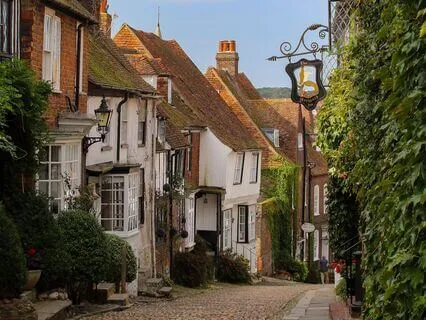
Now picture a sleepy village in the early afternoon.
The streets are quiet except for the occasional bicycle bell.
The sky a soft pale blue with wisps of cloud drifting lazily overhead.
The air carries the scent of damp moss growing on old stone walls.
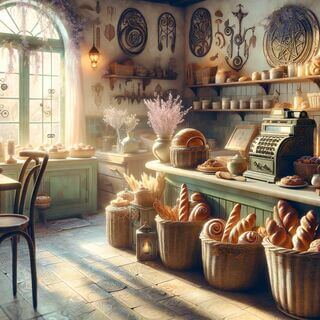
Warm brick heated by the sun and the distant aroma of fresh bread from the village bakery.
Somewhere nearby a kettle whistles behind a half-open shop door.
And you can hear the faint murmur of conversation from the cafe across the street.
That's the direction you're heading.
Let's go in.
It started as one of those slow open-ended afternoons that seemed to stretch out like a cat basking in the sunshine.
You'd taken the number 47 bus into the village.
The one that rattles along the country lanes and stops wherever someone raises their hand.
There wasn't any real reason for the trip.
Just one of those restless days where you feel like stretching your legs somewhere that isn't home for a change.
The main street was mostly empty,
Apart from a few people sitting at the outdoor tables of Mabel's cafe,
Their teacups clinking gently against saucers as they chatted in low voices.
An elderly man in a flat cap sat on an old stone bench by the war memorial,
Breaking up a crusty roll for the pigeons that gathered hopefully at his feet.
One particularly bold pigeon had perched on the bench beside him,
Cocking its head as if it could understand what he was saying.
You wandered past the bakery,
Where the windows were still fogged from the morning's baking.
The florist next door to it had propped open her green-painted door,
And trails of ivy spilled from wooden crates stacked outside.
As you walked,
Following no particular path,
A comforting smell drew you onward.
Is it lemon oil on old wood?
The scent led you to a narrow shop squeezed between the post office and a house with lace-net curtains.
The shop front was painted a faded powder blue that might have once been a bold cornflower hue but now looked softly worn,
Like denim washed too many times.
Someone had written bits and bobs in curling script on a wooden sign that hung slightly crooked beside the door.
Below it,
A smaller placard announced,
Postcards,
Ten pence each,
In simpler block letters.
The door stood propped open with one of those heavy antique irons.
When you pushed the door wider,
It creaked on hinges that needed oil,
And a small brass bell above jingled with the sound like distant church bells.
Just a moment,
Called a voice from somewhere in the depths of the shop,
Followed by the sound of something being carefully set down.
Inside,
The air was warm and still,
Holding the accumulated scents of decades,
Mothballs,
Oiled leather,
And old paper,
With undertones of lavender from a small ceramic bowl of dried flowers sitting on the glass counter.
Dust moats danced in the strips of sunlight that slanted through the front window,
Where a large tabby cat had arranged itself among a display of vintage jewellery.
There we are,
Said the voice,
And a woman emerged from behind a tower of stacked suitcases,
Each one tied with a different colour ribbon.
She was perhaps sixty,
With short white hair that curled at the edges,
And reading glasses perched on her nose.
Her cardigan was peppered with dust smudges and little ends of thread,
And she wiped her hands on her apron before extending one toward you.
I'm Margaret,
She said with a warm smile that creased the corners of her eyes.
Don't mind the mess,
I've been sorting through an estate collection all morning.
Fascinating what people keep,
Isn't it?
Have a good look around,
I'll be right here if you need anything.
Just wrestling with a particularly stubborn jewellery box lock.
You nodded,
And stepped deeper into the shop,
Immediately feeling like you'd wandered into someone's beloved cluttered attic.
The space was smaller than it first appeared,
But every inch was purposefully used.
Shelves lined the walls from floor to ceiling,
Sagging slightly under the weight of their contents.
Chipped but pretty teacups in mismatched patterns.
Tarnished silver candlesticks that still held traces of old wax.
Wooden toys with paint worn smooth by small hands.
And board games from decades past.
The sort that came with cardboard spinners held together with brass rivets,
And dice that had gone yellow with age.
A coat rack stood near the window,
Hung with garments that smelled faintly of the attic air.
A navy pea coat with anchor buttons.
A tweed jacket with leather elbow patches.
Burgundy scarves so soft it might have been cashmere.
Underneath the front window,
An old wireless radio played something scratchy and instrumental.
Too quiet to identify,
But comforting in the way that distant music always is,
Like overhearing someone humming in another room.
Your gaze eventually settled on the back corner,
Where a round table with a faded green cloth held several long,
Shallow boxes.
Each box was carefully labelled in the same neat handwriting.
Travel and scenic.
Holiday greetings.
Floral and garden.
Humorous.
And simply blank cards,
Various.
You pulled over a three-legged milking stool that had been tucked under a shelf,
And settled down at the table.
The boxes were well organised,
Though the postcards within had the comfortable disorder of things that had been frequently handled and admired.
You began with travel and scenic,
Letting your fingers brush against the smooth edges of the cards.
Some were glossy.
Others had that matte texture of older printing.
A few showed signs of their age.
Corners bent,
Edges softened,
Surfaces slightly faded where they'd been stored in sunlight.
The first one you lifted showed the Grand Canyon in all its rust-coloured majesty.
The photograph taken from what must have been the South Rim viewpoint.
The edges were yellowing slightly.
And when you turned it over,
You found writing in careful blue ballpoint ink.
June 15,
1987.
Dear Edna,
Well,
You are absolutely right.
It really is even bigger than it looks on television.
Frank and I are both sunburnt despite the SPF 15,
But we're happy as clams.
The motel we're staying at actually has its own ice machine right there in the hallway,
Which feels very fancy.
Tomorrow we're driving to the Painted Desert.
I'll send another card from there.
All my love,
Ruth.
You found yourself smiling as you set it aside.
Picturing Ruth and Frank squinting into the desert sun.
Ruth's careful penmanship as she sat at a small motel table with a view of the parking lot.
The next card showed a lighthouse perched on rocky cliffs in Maine,
Dramatic waves frozen mid-crash against the rocks below.
The back revealed a different story.
Day four of our romantic getaway.
Got food poisoning on the second night.
Never,
Ever trust a seafood buffet,
No matter how good the lobster looks.
Bob's been a saint,
Bringing me ginger ale and crackers.
Still,
When I can keep my eyes open long enough,
The view from our B&B window really is spectacular.
Wish you were here,
But not really because then you'd be sick too.
XOXO,
Janet.
P.
S.
The lighthouse keeper's wife makes the most incredible blueberry scones.
You chuckled quietly,
Imagining poor Janet trying to appreciate the rugged Maine coast between bouts of nausea.
As you continued through the box,
Each card revealed its own small story.
There were postcards from Paris showing the Eiffel Tower at night.
A writing on the back in enthusiastic but shaky handwriting.
Climbed to the second level today.
My knees are killing me,
But it was worth every step.
A card from Rome featured the Colosseum with a message that simply read,
Marcus would have loved this.
Miss you,
Dear.
One from Brighton showed the famous pier with its message written in a child's careful capitals.
Dear Grandma,
We saw seagulls and I fed one a chip and Dad said I shouldn't,
But it was funny.
Love,
Alice.
You could almost see small Alice,
Probably seven or eight,
Solemnly composing her message while her parents packed up their beach things.
A postcard from Sydney featured the Opera House at sunset,
Its message more businesslike.
The conference is going well,
The hotel room overlooks the harbour which helps make up for being away from home for so long.
Flying back Thursday.
See you soon,
David.
Some postcards were more whimsical.
Blackpool Tower with actual glitter glued to the edges,
Now mostly fallen away but leaving a faint sparkle in the creases.
One from the Lake District showed a photograph of sheep in a stone-walled field.
The back reading,
Walk twelve miles today through the most beautiful countryside.
My boots are filthy and I've never been happier.
The sheep here are ridiculously fluffy.
M.
Others were more mysterious.
A card showing a generic sunset over a lake,
With just the words I'm sorry written in black ink.
No address,
No signature,
No date.
You found yourself holding this one a little longer,
Wondering about the story it didn't tell.
From the holiday greetings box,
You pulled cards with vintage Christmas scenes.
Snow-covered cottages,
Victorian children building snowmen,
Father Christmas in his traditional red coat.
Most were unused but one showed signs of having been carefully stored away.
Christmas 1962,
For our first Christmas as husband and wife.
All my love always,
Tommy.
The card showed a simple nativity scene,
Peaceful and traditional.
The blank cards box held treasures of a different sort.
These were postcards chosen for their images alone.
Heavy card stock with embossed edges.
Professional photography,
Artistic illustrations.
A sepia photograph of a small boy in shorts holding a fishing rod,
Standing beside a country stream.
A watercolour painting of red poppies in a field,
The artist's signature just visible in the corner.
A whimsical illustration of a cow wearing sunglasses and a sun hat sitting in a beach chair.
Each one was a small work of art,
Waiting for someone to find the perfect words for its back.
The shop grew quieter as you sat there,
The sounds of the street outside fading to a gentle murmur.
Margaret had returned to her work behind the counter,
And you could hear the occasional soft click of tools against metal as she worked on her stubborn jewellery box.
The cat in the window had moved now,
Stretched out fully in a patch of afternoon sun that had moved across the sill.
The radio continued its gentle soundtrack.
You thought you might have recognised it from an old film,
Something romantic and a bit sad.
Time seemed to slow and stretch.
You found yourself reading each postcard carefully,
Imagining the hands that had written them,
The places they'd been,
The people who had received them.
Some made you smile,
Others made you pause thoughtfully.
A few,
Particularly the ones with no message at all,
Made you feel a gentle sadness for stories left untold.
You marvelled at the stamps and postmarks of all shapes,
Sizes and dates,
Imagining each postcard on its journey in a postman's bicycle bag,
Or among thousands of other letters in a train carriage.
After what felt like an hour but might have been less,
You realised you'd unconsciously created a small pile beside your elbow.
Seven postcards in total.
Four that had been written on,
Three that were blank.
There was no particular logic to your selection.
Just a collection of cards that had spoken to something in you.
The Grand Canyon card from Ruth.
The Lighthouse card from sick but determined Janet.
A blank card with a photograph of an old stone bridge over a quietly flowing river.
Another with a cheery cottage illustration,
And an old poem in a West Country dialect spelled out in block letters.
You gathered them up and approached the counter,
Where Margaret looked up from her jewellery box with a satisfied expression.
Success,
She announced.
The mechanism was just stuck with old grime.
These old pieces just need a gentle touch,
You know.
Now then,
She said,
Focusing on your small collection.
That's a lovely selection you've made.
She examined each card briefly.
These ones all came from the same estate sale,
Actually.
A gentleman from the next village over,
Mr Henshaw.
His daughter said he kept everything in perfect order,
All sorted by date and destination.
Apparently he travelled quite a bit when he was younger,
And then later he just collected them.
Sometimes he'd buy them from other shops like this one,
Or from church jumble sales.
I think he enjoyed the stories they told.
Margaret's hands moved efficiently as she spoke,
Wrapping your postcards in brown paper that had been saved from some other purchase.
She tied the bundle with white string,
Her fingers making neat loops as she secured the bow.
You know,
She said as she handed the package across the counter,
There's a proper electric kettle in the back room,
And I always keep a tin of decent biscuits.
You're welcome to sit and have a cup while you look through more of the boxes.
I find people often discover things they didn't know they were looking for when they take their time.
The offer was genuinely tempting.
You could picture yourself settled in whatever cosy back room Margaret had arranged.
A cup of tea warming your hands while you explored more of Mr.
Henshaw's carefully preserved collection.
But your feet were beginning to ache in your walking shoes,
And there was something appealing about the idea of taking these particular postcards home,
Of reading them again in your own chair,
In your own time,
Without the pressure of discovery.
It's very kind you said tucking the bundle into your coat pocket where it settled with a satisfying weight.
I think I'll save that pleasure for another visit.
Margaret smiled,
A kind of smile that suggested she understood completely.
They'll be here,
She said,
Though I should warn you,
Mr.
Henshaw's collection fills six more boxes,
You might need to plan for a longer visit next time.
As you stepped back onto the street,
The light had shifted into that golden hour that makes even the most mundane village street look like a painting.
The sun sat lower in the sky,
Casting longer shadows and turning the stone buildings warm amber.
The man with the pigeons had gone,
Leaving only a few scattered crumbs and the memory of his patient kindness.
The cafe across the street was preparing to close,
With the last customers lingering over their final cups of tea.
You began walking slowly back toward the bus stop,
One hand resting on the package in your pocket.
The brown paper crackled gently with each step,
A sound that belonged to lazy Sunday afternoons and carefully preserved treasures.
Already you were imagining where you might place these postcards.
One on the fridge door perhaps to be read while waiting for the kettle to boil,
Another repurposed as a bookmark,
To be rediscovered weeks later like a note from a friend.
Maybe you'd even send one of the blank cards to someone,
Continuing the circle of small connections that postcards were meant to create.
The number 47 bus rounded the corner just as you reached the stop,
Its engine puttering quietly.
As you settled into a seat by the window,
Watching the village recede into the countryside,
You thought about Mr Henshaw and his carefully organised collection.
About Ruth and Frank squinting into the Grand Canyon sun.
About little Alice feeding chips to seagulls despite her father's protests.
About Margaret patiently coaxing old jewellery boxes back to life in her cluttered shop.
All these small stories,
Preserved on pieces of card that had travelled from hand to hand,
Place to place,
Carrying with them fragments of ordinary lives,
Lived fully.
As you rest now,
Think of that little junk shop,
Still sitting quietly on its corner street,
Its blue paint catching the last light of afternoon.
Margaret is probably still there,
Working through more boxes from Mr Henshaw's estate,
The radio playing softly while the tabby cat dreams in the window.
The postcards remain in their neat boxes,
Each one holding its small story,
Waiting for the next curious wanderer to discover them.
Think of the weight of your own small collection,
The cool touch of the old cardstock,
The ink faded just enough to suggest time's gentle passage.
In our lives,
It's easy to overlook these small objects that carry stories,
But they're everywhere,
Folded into the corners of ordinary days,
Waiting for us to slow down enough to notice them.
The postcards you chose today will find places in your life,
Becoming part of your own story,
Even as they preserve the stories of others.
Ruth's enthusiasm,
Janet's resilience,
Alice's joy,
All these moments,
Captured and shared,
Remind us that every day contains small adventures worth recording,
Worth remembering,
And worth passing on.
Now close your eyes,
Rest.
These postcards have travelled far to reach you,
And tomorrow you'll wake up and continue your own journey.
Sweet dreams.