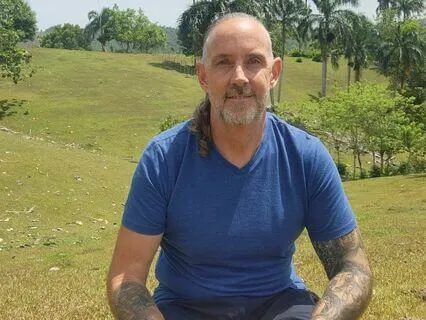
Welcome to Life Lessons and Laughter with your host,
Glenn Ambrose.
Hello.
Happy day or evening or sometimes I think I should have a different greeting,
You know.
But I record these so God only knows if it's morning,
Evening,
Whatever.
I guess you guys usually watch them in the evening because I stream them on Mondays at 6,
But then you listen to them all kinds of different times.
So whatever time it is for you,
Happy that.
So yeah,
So today I'm going to discuss emotional attachment,
Which is something that we all have to deal with.
We all have to interact with that because,
You know,
A lot of things that I teach are how to handle situations appropriately,
Practically,
To how to shift perspectives,
To interact with life easier,
Things like that.
But it's implementing these things that is the most important.
You know,
Listen to a podcast is easy.
It's just another form of distraction.
It's wonderful.
And it can even help you navigate your way around staying stuck,
You know.
It's just because listening to podcasts or reading books or watching videos or whatever you do,
If they're positive messages,
Then you're going to experience positive feedback.
Like you're doing something good because you are.
You're exposing yourself to something good.
But if you don't implement it,
That's just a bandaid on a broken leg.
So it doesn't actually change anything.
It's the implementation that's important,
You know,
Otherwise just kind of.
It's a nice form of distraction.
So when it comes to implementing things,
It's it's important.
I guess I think most people are aware of this.
It's just how how to navigate it.
So,
You know,
It's harder to implement things.
The more emotionally attached you are,
The more emotionally invested you are in the situation or the person.
Or the people or whatever.
So it's or the animal,
You could be emotionally invested in your dog.
And it's hard to train your dog.
It's hard to do what's honestly,
It's hard to do what's best for your dog,
Because you love your dog so much as all this emotion.
See,
You know,
Same with your children,
Same with your career.
As you know,
Oftentimes,
If people have their own business,
And even if it's not your business,
But you really love your career,
If you love something,
That's an emotional attachment.
So emotion clouds our vision.
It's it pulls us away from the logic,
The intellect,
You know,
It's,
It's two separate parts of us,
The the emotional part of us,
And the logic part of us.
You know,
This is shown in the the feminine and masculine energies,
You know,
Men are more often lean in the direction of the logical thinking,
Where women more often lean in the direction of the emotional thinking.
Now,
We have the ability to do both.
We all do.
And emotions are a wonderful thing.
You know,
I mean,
Can you imagine going through life without love?
That's,
You know,
Feeling love,
Or feeling the ups and downs of things.
It's,
I mean,
It's a beautiful thing.
So our,
Our emotions are wonderful.
They give us warnings.
And,
You know,
They give us warnings,
If I just get this hen outside my window,
And I'm deciding whether I need to go shoot away,
Or if it's going to be quiet,
I was distracting me.
So.
So yeah,
Emotions are very valuable.
They're,
They're,
They're wonderful.
They really bring enjoyment into life.
You know,
Enjoyment is feeling emotion,
Like,
How would you know you're enjoying something if you didn't feel good inside?
Right?
So like emotion,
Kind of brings life to our life,
It brings feeling and into our life.
And,
You know,
In a lot of ways,
It really makes it worth it.
So emotions are beautiful,
Wonderful,
Wonderful things,
But they are horrible at making decisions because they're not logical.
Like they don't,
It's,
You know,
Like I said,
In the opening,
It's,
It's,
It's basically two different ways of functioning.
Okay,
So emotions are wonderful for for feeling life and getting lost in life and,
And,
And,
Like,
Really,
Living,
You know,
When you're when you're in the moment,
And you're really enjoying something,
Enjoyment is a version of emotion.
So it's,
And like I said,
Love and all this stuff that like life would be so bland without it.
It's,
It's,
We need it.
It's beautiful.
But it's really bad at making decisions.
It's not a decision making technique.
You know,
Like,
My father explained to me years ago,
How he made decisions.
And the reason I'm bringing this up is because he sprinkled some emotion into it,
Which is nice.
You know,
He says that,
Basically,
He does his due diligence,
He does his research.
And that's logic,
Right?
So as he's doing his research,
Then sometimes,
One,
You know,
If he has two options,
We're going to keep it simple.
Then one option becomes glaringly obvious that that he should take that option.
Well,
Then he does.
But if during his research,
He kind of does a bunch of research,
And it's close to 5050,
Maybe 6040,
Whatever,
5050,
Right around there.
Then what he does is he throws an emotion in a particular way.
It's,
You know,
In this particular situation,
When you're making a decision like that,
If it's really close,
After you do your research,
Then it's like,
Well,
What do I want?
What do I just want?
What do I prefer?
What feels right?
What feels better?
What seems right?
Oh,
Okay,
This one.
Well,
I'm going to do that.
So you so he just does that,
Whatever one feels better,
If it's close after doing the research,
Right?
Because his theory is like,
No,
No regrets,
You know,
You'd make the best decision you can with the information you have at that moment.
And you live with it.
You know,
There's no sense in regretting anything.
So so like,
If,
Like,
Let's say it's close to 5050,
And you make the wrong choice,
Well,
So what,
You might experience a small amount of negative feedback,
But you did most of the research,
It can't,
It's not going to be all bad.
Right.
So so that's,
You know,
That's one way to bring in a little bit of emotion.
When you're,
But it's,
It's mainly making decisions based on your logic.
And that is where this podcast is going to go.
Basically,
I'm gonna mute my phone here.
So when,
You know,
I'm talking specifically about emotional attachment.
So most situations,
This is not that difficult to do.
Right?
You well.
Sometimes it still is.
But we have to use our logic,
It gets more difficult when we're emotionally attached to someone or something.
So what,
Basically,
The answer here is,
And I'll expand on it.
But basically,
The answer is,
This is what I kind of consider a spiritual law.
Dynamics are dynamics,
Okay,
They don't change based on the circumstance.
They don't base,
They don't change,
Dynamics don't change.
Spiritual law doesn't change.
It's just a law.
It's just the way things work.
Okay.
So that doesn't change based on your circumstance.
So how we bring that into this conversation is the best way is to disconnect yourself from that emotional attachment.
You know,
You can do that by pretending a friend of yours came up and asked you the same problem and said,
Hey,
How would you deal with this?
Well,
If you're talking about other people,
Not you,
And yourself,
That's a good way to detach from the,
The emotions.
And look at it more factually,
Because you're not emotionally invested in your friend's life.
Yeah,
Well,
You know what I mean?
Not as emotionally invested.
Usually,
We can give advice to our friends a lot better than we can give advice to ourselves.
Why?
Because we're emotionally attached.
That's why.
So,
You know,
Pretending it's somebody else,
Or,
You know,
Somehow,
We have to get rid of this emotional attachment.
And sometimes it's difficult,
A lot of times talking it out with people is helpful.
You know,
Getting that outside perspective,
This is a lot of what I do as a life coach,
I help people to see things clearly,
Because I'm not emotionally invested in their life.
I mean,
Of course,
I desire their life to go well,
But I'm not,
I don't have a bunch of emotions swirling around it.
So I can see it clearly.
This is what we need to do.
Because if we allow our emotions to guide our decision making,
Or how we handle things,
It's not going to go well.
You know,
This is,
I mean,
There's countless examples of this,
Like a lot of times parents parent from guilt.
You can't parent from guilt,
Because that that affects your decision making capabilities.
That's an that's emotional.
So what happens is if you're if you have guilt inside of you,
That about your parenting,
And you allow that to come into your parenting skills,
The kids are going to ask for something.
And you're going to logically intellectually understand that your answer should be no.
And then the guilt is going to come up and trigger your emotions.
And then the emotions are going to say things like,
Well,
Maybe this time,
I mean,
You know,
Really,
They have been through a rough time.
So,
You know,
Yeah,
This time,
We'll just say yes.
And what you're doing is you're,
You're setting them up.
So you're setting them up for failure.
If the if the answer is supposed to be no,
And you change it to a yes,
Because of your emotions,
It's going to cause problems.
You know,
I had to like one of the ways that I navigated this,
And I know I've told this story before,
But I don't know if I've told it in this particular way.
It's the way I navigated it is like,
When I grew up,
My father was very structured.
It was basically,
You know,
And I'm sure there are variables that I don't understand.
Or I should say,
I don't remember.
I was a kid,
You know,
This is just my perspective.
I'm sure my father wasn't 100% like this.
But it was very structured.
And basically,
The answers were always yes,
Or the answers were always no,
There was a great deal of consistency,
Which is good in a lot of ways.
But there,
But it,
It didn't,
It didn't feel like there was any leeway for,
For,
I don't know,
Life,
The flow of life or something.
So when I became a father,
I was,
I saw the value in consistency,
Because I had experienced it.
But I also saw the rigidness that I wanted to loosen up on.
So I wanted,
You know,
Most of us want to parent differently,
Or at least somewhat differently.
So I didn't want the answer to be no all the time,
When my son asked me to get a candy bar or a matchbox car at,
At the grocery store,
Or whatever,
You know.
So I wanted to leave a little flexibility in there.
So every once in a while,
This kid could get something and it could make his day and he could get all excited.
Right?
Now,
Most of the time,
I don't think that that's necessary.
Like,
I don't,
I don't think you have to reward a kid for going to the grocery store.
It's just part of life.
So I didn't want to use it like that.
I just figured every once in a while,
A special treat is nice.
Let's do a special treat.
That's nice.
Right.
So that was my intention.
So I'm like,
Okay,
How am I going to do this?
I said,
Well,
How am I going to know whether I say yes or no,
If I don't have a,
The answer there,
And I,
And I don't want to lead with emotion,
Because then the answer will probably always be yes,
Because I want him to be happy and he wants something.
So I want to give it to him.
That's emotional.
Right?
So.
So I was like,
Okay,
Well,
I'll center myself,
I'll just center myself.
And I'll just think about it for a moment.
And I'll make a conscious choice.
Maybe I'll consider things like,
Has he gotten something the last several times?
Has it been a while since he's got gotten something?
Does he want food?
Are we going to eat right after this?
You know,
Just factual little pieces of information.
And,
And I'll just be like,
You know,
I'll make a decision based off that.
Something like that.
And if I don't really have any information like that,
I'll just when I'm centered,
I can do things by intuition.
Just what seems right.
That's different than emotional.
Okay,
I don't.
You know,
I don't,
I don't know,
I was just talking about this.
I don't know if I did a podcast on it,
Or not.
But there's a big difference between intuition and emotions.
Like,
You know,
When I say what feels right,
I'm talking about intuition,
What seems right when I'm centered.
And I'm like,
If I put my attention on on a question,
Like,
Should I do this?
Or should I do that a lot of times I can get an intuitive hit that one of them kind of seems right.
And one of them seems wrong.
Maybe seems is a good word to use.
Because it's not so much a feeling.
But yeah,
It's a body knowingness as opposed to an emotional feeling.
And it's not an intellectual thing.
So but I won't go too far down that road.
So I might get an intuitive hit,
Or I might make the end,
Choose the answer out of,
You know,
Facts surrounding the situation.
So once I,
I'll make my decision that way.
And that way,
I sometimes the answer will be yes.
And sometimes the answer will be no.
So there's the flexibility of life.
That's how life is.
It's,
It's not all one way all the time.
It's flexible,
It flows.
There are surprises in life,
Right?
So I wanted to include that.
I didn't want to be so strict to not include any fluctuation or flow.
So I make the decision,
And then I stand in that decision.
And I never once I once I say yes or no,
I never changed that.
So that was basically my process.
Now,
Of course,
As soon as I started doing this with my son,
He did what all children do,
Tries to get what he wants.
That's what kids do.
Nothing new.
And it's going to be happening for many years.
Kids try to get what they want.
So they try to manipulate,
Push whatever the heck they can do to try to get what they want.
So and they know you love them.
So they're not really worried about backlash.
What are you going to do,
You know?
So my son starts going,
Please,
I say no this,
You know,
If I say yes,
Everything's fine.
But if I say no,
Please,
Please,
Please,
Please.
And I stopped and I,
I explained to him,
I says,
Well,
I can't I said no.
So I can't say yes now.
I can't say yes now.
And he says,
Well,
Sure,
You can.
You can just change your mind.
I says no,
Because think about what's going to happen if I change my mind.
I thought about it.
I didn't just give you any I didn't just say no,
Just to be a jerk without thinking about it.
I thought about it.
And I gave you a thoughtful answer.
And that thoughtful answer is no.
So if I change my mind,
At this point,
It is no longer about the candy bar.
What it's about is me changing my mind.
So what's going to happen is if,
If I say no,
And then you say,
Please,
Please,
Please.
And then I go,
Okay,
You can have it.
What that means is I'm teaching you to push me.
I'm teaching you to ignore my no and keep pleading.
And if you do that,
You will get what you want.
And what that does is that sets me up for the next 15 years.
Or 60 years of you going,
Please,
Please,
Can I please,
Please?
No,
Please.
Can I please?
No,
Please.
Like,
And I'm not going through that for the next 15 years.
It's not going to happen.
So once I give you my answer,
Now it's about me keeping my word.
It's not about the candy bar anymore.
It's just about you understanding that when I say something,
I mean what I say.
And it's the answer is not going to change no matter how much pleading you do.
You know,
And he was young and he understood it.
Now he tried pleading a few times here and there,
But very little,
Very little.
And in fact,
You know,
When we're in the store with other kids,
His friends,
Um,
They would be like,
You know,
Please,
Can we please,
Please?
And,
And I'd be like,
I'd think about it.
I'd say no.
And they go,
Please,
Please.
And my son would be like,
Don't even bother.
He's not going to change his mind.
Once he says no,
The answer is no.
And the kids were like,
What?
Like,
What do you mean?
This is what you do.
You keep pleading and then they change their mind.
Not with my dad,
You know,
So it was cool.
But do you see how that that's logical?
Like you have to be in control of yourself and you have to think this stuff through to be able to implement that.
If I just allowed my emotions to control the situation,
There would be no logic to it.
And I would cave.
Why?
Because I love my son.
There was times when,
When like,
You know,
It kind of seemed like he really wanted something more than normal,
But I was like,
It's not about that.
He's going to live whether he gets this or whether he doesn't get this.
And yeah,
He's a little bit let down.
It's okay.
He's going to have to learn to get let down in life.
He's not just going to get handed everything that he wants.
It's okay.
He'll survive.
You know,
That's logical thinking.
That's not,
Oh,
My God,
He feels bad.
Oh,
Well,
Then,
Well,
I better give it to him.
That's emotional thinking.
And that is not a good way to raise children.
It's not a good way to do anything.
It's not a good way to have a relationship with a partner.
It's not a good way to treat your parents.
It's not a good way to it's not a good way to do anything.
We have to live consciously.
It's about consciously choosing what you want to do with logical reasons and then doing it.
Not just letting your emotions sway you around.
You know,
Like I said,
Emotions have their place,
But it's not in decision making.
It's not in deciding what to do in life situation.
So you have to disconnect that emotion,
Pull back,
Use your logical thinking,
No matter what it takes to do that,
Talk it out with with a friend or,
You know,
And pay attention to people you're talking it out with.
That's the other thing,
You know,
Like,
Especially when you're first learning this,
It's like you want our emotions are so powerful,
We want to say yes,
Or we,
You know,
Like,
Let's say,
You know,
We'll use a case like enabling,
Right?
That's more for adult children,
Or sometimes even parents,
Or friends of parents.
Or a person that we're in a relationship with or something,
We know they want something.
And like,
In this,
Our emotions want to give it to them just because we care about them.
And we know that they want it.
So if you're looking for any excuse to try to say yes,
That ain't gonna work.
That's still being driven by your emotions.
So if you go to your friends,
And you go,
You know,
Well,
I'll talk,
I'll talk to three friends about it.
And you talk to three friends,
And two of them say,
Oh,
Yes,
It's not a big deal.
Just give it to them.
And one friend says,
No,
You probably shouldn't because of this,
This,
This and this.
And you go,
Well,
Two friends said that I should.
And one said,
Friend said that I shouldn't.
So I'm going to go with the two friends.
No,
You're missing the point.
This isn't a poll.
So what what you want to do is you want to pay attention to what they're see,
Like,
You can tell what's driving other people if you pay attention.
So if you're paying attention,
And there isn't like,
If,
Like I said,
If,
If the,
If the answer is supposed to be,
Logically,
No,
But emotionally,
It's yes.
And you pay attention to what they're saying.
Emotionally,
It's yes.
And you pay attention.
And those two people talking that told you to say yes,
Are aren't giving any really good reasons.
Well,
Yeah,
Why not?
What the heck?
That's not a reason.
You know,
Every once in a while,
You kind of have to just give,
Give in.
That's not a reason.
Like,
There's no logic behind that.
Ah,
They're a kid.
Ah,
You know,
That's,
That's emotion.
There's no logical thinking,
Thinking there.
There's no reasoning.
There's no,
There's nothing.
They're not actually,
They're just letting their emotions control their answer.
Because it's easier to say,
Yeah,
Just give in,
Than to try to talk to you about why it's not good.
And maybe they don't feel like getting into that conversation.
Maybe they're incapable of that conversation.
You know,
Sometimes you can also look at how they do things.
That's a nice way to figure out who to ask.
Put a little space before you ask anybody and think about what they do in their situations.
Do they,
Because you can probably see it in them better than you can see it in yourself.
So you're like,
Oh,
They,
They make,
You can see that people that make emotional decisions,
Usually because their life is very hectic.
This crap going everywhere and there's no structure to it.
It's all over the place because they're letting their emotions ride things and their relationships suffer because there's no,
There's no thinking behind what they do.
They just run around leading with emotions all the time.
You know,
This is the same thing with,
This is why it applies to everything.
It's,
I know I've been talking about kids,
But it applies to adult relationships.
This is why,
This is where people-pleasing comes from.
People that are people-pleasers just lead by emotion.
Martyrs,
You know,
This is some of the most,
Usually in,
In relationships,
People-pleasing,
Martyrdom,
Those are two different things.
Those are two of the most common problems in relationships and the,
You know,
Victim,
All that stuff.
The,
The problem here is that most people pay attention to the people who take advantage of that.
And this is why we're slow in solving these issues.
Like,
I mean,
You can't,
How many times have you heard the word narcissist in the last 10 years or five years?
I bet a lot.
How many times have you heard narcissist in the previous 40 years?
Very little.
It's fashionable right now.
Everybody loves to point the finger out.
Oh,
Don't blame the victim.
Don't blame the victim.
We're all caught up on that.
I'm not blaming anybody.
What I'm doing is I'm trying to empower the victim.
Okay.
That's how we get rid of victims by empowering them.
We do not get rid of victims by pointing the finger at jerks who mistreat people.
Why?
Because that doesn't change them.
Like if you,
If there are narcissists and you're running around going,
Oh,
Look at the narcissist,
Look at the narcissist,
They're still going to be running around doing it,
Being narcissistic to people.
Want to know why?
Because they're narcissists.
That's why.
So you can recognize narcissists and point them out and learn all about them all day long.
And you know what?
It's not going to change your life at all until you empower yourself.
When you empower yourself.
Now,
Don't get me wrong.
You can learn about them a little bit,
Like,
You know,
Some of the tip offs,
I guess,
But that's very,
Very little.
And you don't even need to do that.
You don't even need to,
You know,
Factually,
You don't need to learn anything about a narcissist or any other type of perpetrator type energy.
You don't have to,
You don't have to learn to pick it out.
You don't have to learn how it works.
You don't have to read 14 books on gaslighting.
You don't have to do any of that.
You can be completely unaware of all the dysfunctional perpetrator energies and you can still not fall into it.
You want to know how?
All you got to do is empower yourself,
Empower yourself and love yourself.
Then when somebody comes along and mistreats you in any way,
Shape or form,
You're going to be like,
No,
And then they'll go away and they'll go find another victim.
That's just self love.
You don't have to be aware.
I don't go wondering like when I'm talking to somebody,
I'm not trying to figure them out.
Oh,
You know,
I go on a date and somebody says something.
I'm not like,
Oh,
Is this a narcissist?
Are they gaslighting me?
Are they?
Are they this?
Are they that?
No,
I'm just like,
I don't like the way I was treated.
I'm not going to see them again.
That's all.
I don't care what their flavor of dysfunction is.
So empower yourself.
That's what that's what prevents all this poor behavior.
So back to what I was saying.
Like everybody is focused on,
Oh my God,
The narcissist and the gaslighter and the this and the that.
It's like,
Yeah,
Know what cause know what the other side of those are victims martyr.
What was the other one I was saying when I started all this,
Whatever you guys remember,
I'm sure.
So that's the other side.
Like you can't have a narcissist without a victim.
Otherwise,
Otherwise there is no relationship there,
Right?
So this is why it's important to when you're looking when like when you're dating,
This is a good example of it.
Like when you're dating,
If your driving factor when you're dating is that you really want to be in a relationship,
You're screwed.
Okay.
And the reason why is because that is going to emotionally affect how you make decisions.
This is why you need to be okay being alone,
Not because you have to end up alone,
Just because it pulls the emotion out of your decision making.
If you need somebody in your life to feel whole,
You are going to make poor decisions because what that does is that that's an emotion.
That's like,
Oh,
I need somebody.
I need somebody.
I need somebody to fulfill me.
I need somebody in my life or else I can't be happy.
I need somebody.
Oh,
Okay.
So that's driving your decisions.
And then you go out to dinner with this guy and this guy starts yelling at the waitress for no apparent reason.
And then you go,
Eh,
Maybe he had a bad day.
Right?
You make excuses for him.
Why?
Because you want this relationship to work because you need to be in a relationship.
That's why.
So you use that emotion to make the decision about the situation.
Then you're at home and he throws a glass into the wall and shatters it all over the place.
And you're like,
Well,
You know,
His boss really has been on his ass lately.
You know,
And you make an excuse for him.
You know,
And then then he starts screaming at you and you make an excuse,
Then he hits you and then you make an excuse like this is,
Of course,
That's an extreme example.
But people wonder how they end up in relationships that are not good.
This is how by allowing emotions to make your decisions.
Clear if you clear out that emotion and make your intellect decisions with your intellect.
Like,
And,
You know,
If he starts yelling at some waitress or something,
And I'm,
You know,
Let's be fair here.
Every once in a while,
Somebody misbehaves.
Okay.
You know,
People are shocked to find out that I'm human.
Like,
Not really.
It's just if I don't behave like some spiritual freaking guru floating above a pillow all day,
Then they think that,
Oh,
My God,
Glenn's not who I thought he was like,
Oh,
No,
I'm human.
So we all make mistakes.
It's just patterns that you got to watch out for.
If people are consistently behaving in a particular way,
Don't rationalize that away because you want to be in a relationship.
You know,
So so if you like and you don't like that,
You have time in most situations to put space between you and the decision.
That's the best way to get the emotion out of it.
So don't try until you get better at it.
Don't try doing it right in the middle of a situation.
Just put some space.
Hey,
Can I get back to you on that?
Or or like,
Let's say you're out to dinner and,
You know,
Yells at the waitress or something.
Whatever.
Try to make the best of dinner.
Move on with your night.
Don't make it uncomfortable.
And then you can go home and think about it later.
Be like,
Okay.
You know,
Is this a is this a pattern of behavior that I'm seeing with this person?
Well,
No,
No,
This is,
You know,
I've seen this person many times or several times,
At least.
And and this was one isolated incident.
Okay.
No big deal.
We'll just put it in the logical memory bank and we'll leave it there.
No big deal.
Everybody has a bad day.
And then but you've got it there.
And then the next time something happens,
You go,
Oh,
Wait,
Whoa,
That's two.
And it increased in severity a little bit.
Like,
See,
This is the beauty of time.
If we use time in our favor,
It will show us because nothing stays the same.
Everything changes.
Right.
So like.
Things like if somebody is has a pattern of poor behavior,
They're going to show on themselves,
Especially if you're relaxed and you're not judging them every second.
Then they feel more free to be themselves and you can pick out on patterns a lot quicker.
So it's just patterns we're looking for.
And to be able to be aware of patterns,
What you need to do is you need to be able to use your logical brain and not allow your emotions to dismiss this stuff.
See,
That's the difference.
So like,
Let's say,
You know,
We'll stay with the dating example.
Let's say you're dating somebody and you've been on 20 dates with this person.
You know,
It's getting serious and all this stuff.
And you look back.
And if you have been emotionally dismissing his behavior or her behavior because you want to be in a relationship,
Then what happens is.
You just got better at dismissing things like the slate is kind of clean after 20 dates.
Why,
Because you're not holding on,
You're not remembering anything,
You're not really looking for patterns,
What you're looking to do is to not see patterns,
Because if you don't see patterns,
You get what you want.
Which is a relationship.
If you do see patterns,
You do not get what you want.
So after 20 dates,
If this person has behaved poorly five times,
It seems like they haven't really misbehaved at all.
Not really,
Because you rationalized each one of them away as they happened.
So you might kind of look and then you look at them.
I swear to God,
This is how the brain works.
Like if you just stop for a moment,
Even if you've rationalized them away and you really engage your intellectual brain for a moment and you really get out of that emotion for a moment,
You'll see the pattern.
Even then you'll be like,
Well,
He did.
You know,
You stop and do a check with yourself and you're like,
Well,
Wow.
It seems like things are going well.
Let's see.
We've been out about 20 times or something.
And,
You know,
Like how's his behavior been?
Well,
He did do that one thing.
Yeah,
But he was having a bad day.
Well,
Let's just look at it logically.
Well,
He did.
He did do that,
Too.
But yeah,
But come on.
I mean,
That was with his ex-wife.
So,
I mean,
Really?
And that but and then he did that,
Too.
And it's almost if you just engage your intellect,
Then you like you really have to lie to yourself to not see the patterns.
Even if you've been like rationalizing it away for the all 20 dates.
As soon as you engage your logic,
It's hard to not see patterns,
Even if you've dismissed them in the past.
I mean,
You still can.
It just depends on how attached you are to making this relationship work.
And how honest you are,
How capable of being honest with yourself you are.
You know,
If you're used to living on emotion and rationalizing things away,
You'll look at 20 dates.
He could have misbehaved 15 of them and you'll rationalize that away.
I mean,
People do it all the time.
So it is possible.
It's just even if you rationalize stuff consistently,
Then if you engage that logic,
You'll probably see a pattern.
Right.
But if you don't depend on your emotion to make decisions.
Well,
Then you can see it.
All the way.
You probably wouldn't even have gotten to 20 dates if he was misbehaving or she was misbehaving consistently.
Because the patterns would be so glaringly obvious after like,
You know.
Two out of five.
Three out of 10.
It's a pattern.
So if you disconnect that emotional attachment to the situation.
You have to be OK either way.
So in dating,
You have to be OK being alone or being in a relationship.
And then you can let whatever is supposed to happen,
Happen.
It can't be.
Well,
I feel good around them.
So like you.
That can't be the sole reason for making decisions.
Because usually that's vibratory.
It's a vibrational rate that you're accustomed to.
Like it reminds you of home a lot of times.
You know,
This isn't the only thing,
But a lot of times when you're comfortable around somebody,
It's because it reminds you of home and like how it was growing up to some way,
Shape or form.
It's not necessarily good or bad.
Everybody's home life has good and bad in it.
Even if you only remember the good,
There was some bad there,
Too,
And maybe you're blocking it out.
But everybody's childhood has good and bad to it.
So when you feel comfortable around somebody,
A lot of times it's because vibrationally they remind you of the vibration you were exposed to consistently or somewhat consistently as a child.
A lot of times that's the intangible that we have to watch out for.
And one of the best examples I've seen of this is I have seen people who have been raised in alcoholic homes and they swore they would never marry an alcoholic.
And then they started dating somebody and this person either barely drank or didn't drink.
But but they weren't an alcoholic in any way.
Right.
And then what happened is like 10 years later in their relationship,
This person started drinking and became an alcoholic.
And they were like,
Are you freaking kidding me?
How could this have happened to me?
My whole number one rule in dating somebody.
Number one was to not marry an alcoholic.
And I ended up marrying one.
How could that have happened?
It was because there was a part of them,
Even though the alcoholism may have not been activated or active at that part at that time when you were dating them initially,
It was vibrating in them.
They had it in them that it's just the the environment wasn't right yet.
And then all of a sudden,
10 years later,
Maybe stress starts getting to them and it triggers their alcoholism and they're off and running.
Right.
And and these people like,
What the hell?
I did everything that I could to make sure that I wasn't with somebody that had a drinking problem.
It's like,
Yes,
But on a vibrational rate,
Something in them resonated with something that you were familiar with.
And in this particular case,
It was the alcoholic vibration.
Now,
You know,
Don't worry about that.
That doesn't happen that often.
My point is,
Is that when.
When we meet,
You know,
If I meet five women.
And one of them vibrates like,
Oh,
Wonderful,
Wonderful,
Wonderful,
Wonderful.
This one,
There's something in that person.
That is resonating with me.
And it has something to do with vibration.
Now,
I've done a lot of work on myself.
So hopefully.
It's the whatever is resonating with me is resonating with me because it's resonating with the healthy vibrational rate that I am at at this particular moment.
The more work we do on ourselves,
The more likely that's the case.
The more unhealed stuff we have.
The more often that we we recognize a dysfunctional vibration in somebody.
But we don't know what it is on a conscious level.
It's just we seem to feel good around them.
This is,
Again,
Why emotions are not good decision makers.
We need to bring in logic.
Logic can navigate this.
Hey,
Wait a minute here.
Wait a minute.
Like what?
Let's like let's not just go by feel.
Oh,
I feel comfortable around them.
So therefore,
They must be the right one.
No,
That's sheer emotion.
And if you let that alone.
I mean,
It's okay to bring that in,
But you can't dismiss everything else.
So if like if you have logical reasons why this person's a good match and you feel comfortable around them,
Great.
But if you have logical reasons why they're not a match and you feel good around them and you let the good around them,
Trump.
Oh,
My God.
I guess we're not supposed to use that word anymore.
Well,
Anyway,
I just used it.
So if we're not supposed to,
If we can't have that override the emotion.
Right.
So we have to have the intellect is the decision maker.
The emotion is not.
You know,
Then we can bring in the here's our full circle moment.
Then we can bring in the emotion.
You know,
Once we look at it logically,
Then we can bring in an emotion and say,
Okay,
How do I feel around this person?
Do I feel good?
Yes.
Okay,
Cool.
You know,
That can be like the deal maker as opposed to the deal breaker.
Right.
That can be the deal maker.
But like as far as that tips the scales when you're trying to decide if you want to stay with this person or not.
Right.
So we're going to have the emotion.
We just have to understand that the emotions are not good decision makers.
We have to put some space in between us and the situation and figure out logically what we should be doing.
And a lot of times we can do this by looking at other situations.
You know,
Like I was saying in the beginning,
Dynamics don't change.
Right.
So.
So,
Like,
Let's say you're at work and a coworker is disrespecting you.
Right.
And you don't want to allow that anymore.
You have no emotional attachment to this coworker.
So what you do is,
You know,
Let's say in this situation,
It makes sense to talk to this person and say,
Hey,
Listen,
You know,
Like I don't.
I don't really like it when people disrespect me.
You know,
Please speak with me.
You know,
I'll just take a real life example.
One time I was working with somebody that I wasn't getting along with and they did something that I felt was very disrespectful and out of line.
So I sent them an email and I said,
Hey,
Please don't do this.
You know,
Just stay focused on you.
I'll stay focused on me.
And then hopefully we can have a good working relationship.
You know,
So.
Like,
So to me,
That was the appropriate action to take in that situation.
And I could see it because I wasn't emotionally attached to this person.
I don't really care if they're upset with me or whether they weren't upset with me,
Which gave me the freedom to be able to handle that situation in a way that I felt was appropriate.
That is a dynamic.
I'm not emotionally attached to them.
So therefore I have the freedom.
To either stand up for myself or to not stand up for myself because I can handle the consequences with either one of those.
That's what we're looking for.
We're looking if we have an emotional attachment,
We don't have that freedom to choose either or.
So if you're trying to figure out if you have an emotional attachment to a situation,
All you got to do is play both sides of the coin.
Am I going to be OK if this happens?
Oh,
Sure.
That's fine.
I'd like that to happen.
OK,
Am I going to be OK if this happens?
Oh,
No,
No,
I'm not.
That would be absolutely horrible.
Oh,
Well,
Then you're probably using emotion to make sure that that doesn't happen.
You see,
So we'll bring this back into the well,
The relationship thing I was talking about.
If you need to be in a relationship to be happy,
Then that's going then you're going to make poor decisions.
Right.
In parenting,
If you're not OK with your child being upset with you,
You're going to make poor decisions.
Why?
Because your emotions are going to drive things to make sure that doesn't happen.
So like with the kids,
You can go,
OK,
If,
You know,
My kid wants me to.
To buy them a car.
OK,
So if I say yes,
They'll be happy.
Sure,
If I say no,
They're going to be upset with me.
OK,
Can you handle that?
You got to make peace with that.
Because if you don't,
It's going to push you towards buying a car for them.
And,
You know,
I just use the car,
But it can be anything.
It can be a toy.
It can be a candy bar.
It can be a PlayStation.
It can be whatever the heck you want it to be.
It can be that.
If you were trying to make sure your child never gets upset with you,
You're screwed because they're going to manipulate you.
They're going to say and do whatever it takes so they can get what they want.
That's what people do,
Especially kids.
So this is a way to navigate this,
Make peace with both sides,
And then you can be sure that your emotions aren't driving you into a direction.
Or pretty sure,
You know,
You still got to use your intellect.
But but that that is a good way to to keep yourself grounded when you're making decisions.
Just go like,
You know,
Well,
You know,
If I say no to my son,
He might get upset with me.
Yeah.
Well,
If he gets upset with me,
That happens.
People get upset with one another.
They disagree with each other.
Doesn't mean that he doesn't love me.
It doesn't mean that we can't work through it.
And if he wants to get all angry with me and stomp around for the next two years.
OK,
I mean,
I can't control that.
I'm not going to say yes to avoid that.
I wouldn't like it,
But I can handle it.
You know,
I went through a situation like this with my son.
You know,
When he got older,
We got into a big blowout,
The biggest blowout we ever had.
And he was pissed at me for months.
And I had to be like,
OK.
All right.
So you're upset with me.
I get it.
You want to stay upset with me.
OK,
You can stay upset with me forever.
I don't know that that's his choice.
Like all I can do is do,
You know,
Like I apologize for my part in it.
And then I moved on.
That was all I can do.
Now,
If he wants to drag that around for and he dragged it around for months.
But he eventually let it go.
You know,
Which they will,
Especially if you're if you give them what they want for 40 years and then all of a sudden say no.
Yeah,
They're probably going to be pissed longer.
So don't train them to do that,
Because that's what it is.
You train them.
You train them by caving and giving them what they want out of emotions.
And then now all of a sudden you can't give them what they want and they can't understand why.
That's how you got here.
Oh,
Well,
That's going to do it for this one.
So.
So,
Yeah,
Make sure you can make peace with both both possibilities,
Both sides of the coin.
And then you're less likely to have the emotion pulling you.
But it's it's,
You know,
Do whatever it takes to get some space in between you and it.
Whatever decision that you have to make and then you can be logical and think clearly.
If you're invested in one thing turning out,
I even do this with the land project I'm working on.
You know,
It's and it's not that I did it perfectly.
I thought I was unattached to one piece of land,
But there was an aspect of it that really seemed good.
And I just kept trying to make it happen,
Trying to make it happen.
And after a while,
I was like,
Oh,
My God,
Like that.
There's too many problems here and you keep trying to make it happen.
And then I pulled back and I even though I thought I was unattached,
I saw that I was attached.
So I made the adjustment.
Then as soon as I saw that I was attached to that land,
I went,
Oh,
OK.
Yeah,
I am attached because this just isn't working and I'm trying to make it work anyway.
So,
OK,
So I need so I detached and started looking at other land and found a better piece at a better price.
Right.
So it's not that we're going to do it perfectly.
It's just if we're honest with ourselves,
Even if we make a mistake like that one,
I didn't realize I was attached.
I was trying not to be attached,
But somewhere in the process I ended up getting attached.
That's OK.
It's not a problem.
It's just when you're you're seeing when it shows itself,
Once I finally recognized,
Oh,
I am attached,
Then I made the adjustment.
That's life,
You know,
So don't be too hard on yourself,
Just be strict and honest with yourself,
But don't beat yourself up if you made a mistake.
So I think that will do it.
All right.
Peace,
Everybody.