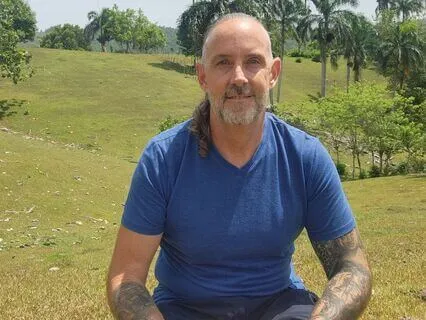
Welcome to Life Lessons and Laughter with your host,
Glenn Ambrose.
Hey there,
Welcome,
Welcome,
Welcome.
Here we go.
Here we go.
You know,
I tend to dive right in,
Which I hope is good.
I don't know,
What else am I supposed to do,
Sit here and talk with you guys?
You're not talking back to me,
So I don't know.
So yeah,
Let's dive in.
So why we're so hard on ourselves?
Have you ever noticed that?
Most people have.
I mean,
Most people are their own worst enemy.
Most people beat themselves up incessantly.
Most people,
If you point out that if anybody treated them the same way or talked to them the same way as they talk to themselves or treat themselves,
They'd probably kick their ass.
They wouldn't be in their lives anymore,
You know,
And most people can relate to that.
I mean,
It comes up fairly often in my work,
Of course,
And most people are aware of it.
You know,
Most people like,
Oh,
My God,
Yes,
You know,
Sometimes people aren't.
That does happen sometimes,
You know,
I'll bring it up and they're like,
No,
No.
You know,
There's a reason why I bring it up.
I'll bring it up because some behaviors are pointing towards that or it's an issue I see or something.
And sometimes people,
People in the beginning will be like,
No,
No,
You know,
Not work really hard on loving myself and no,
You know,
And then we'll get like,
Oh,
OK,
Then we'll get deeper in and.
After a few examples,
They're like,
Oh,
My God,
Like,
Yes,
I do beat myself up,
You know.
So.
So part of that,
Just just briefly,
Is.
We don't really pay attention to how we talk about ourselves,
Like even if we're aware of it,
Right?
Like,
You know,
I'm talking in general,
I'm talking about the people who are aware of it and the people who aren't aware of it.
In general,
One of the reasons why we do it is because we're not fully aware of how much we do it and and if we are do have the awareness that we're doing it,
We're not aware of the detrimental aspects to it.
Like we like most things,
We don't really slow down to look at it and question it and understand it.
So what happens is some silly,
Non-logical explanation will do if,
You know,
If nobody if you don't question yourself,
Silly reasons for your behavior will be good enough.
Right,
So so think about it like like a little very young child,
You know,
You can they can ask you a question about life and you can come up with you can say just about anything and they'll be like,
Oh,
OK,
That's,
You know,
They because they have no reference.
They don't and they usually they're looking to you for for information because you've been here longer.
So they trust you,
You know.
So my point is,
Is they don't really second guess it.
You know,
Sometimes you can be fooling around and you can give a little kid an answer and they'll be like,
Oh,
OK.
And you're like,
Oh,
Wait,
No,
No,
No.
I was just kidding.
Like,
It's not actually like,
You know,
Well,
This is kind of the same thing that happens to us because we don't question ourselves.
We don't dive in and look at it at our behaviors and what we're doing and what it means.
So because of that.
Will.
Well,
A lot of times when we dive in and question these things,
We see these answers that don't really make sense and they're kind of silly and and we're like,
Oh,
My God,
Like I believe that,
You know,
And so along those lines,
One of the reasons that we do this is because we don't go in looking deep enough.
What that looks like in this situation is.
We will.
Change our minds,
We'll say that's usually how we rationalize it.
We just say,
Well,
I changed my mind or I decided against it about things that we've made commitments to,
Like like we've decided to to make a commitment to do something to better ourselves in some way,
Shape or form,
And we'll not follow through with that.
And usually we just chalk that up to changing our minds,
Oh,
I didn't feel like it,
I changed my mind,
You know,
And it like it's inconsequential.
It's not really a big deal.
We're not letting anybody down because it's just us.
And this is kind of the foundation of one thing we have to realize if we're going to do this work is that.
You have to treat yourself with respect like the first relationship you have is with yourself.
If you have a bad relationship with yourself,
The relationships with other people are going to suffer because yours is the primary.
Now,
Granted,
In certain instances,
Like we treat ourselves so poorly that we would never treat somebody else as poorly as we treat ourselves.
So I'm not saying it necessarily mimics it.
What I'm saying is that it's going to affect our other relationships because we're not going to have the level of self-esteem and self-love that we need to have,
Which most people do not have.
So.
And this is a major reason why is because we don't respect ourselves,
We don't treat ourselves with respect.
So how can we respect ourselves?
We lie to ourselves and just say,
Rationalize that.
Oh,
I just changed my mind.
No,
You like you were very detailed when you made the commitment to yourself.
OK,
I'm going to start at the gym because my body's falling apart and I want it to to support me as I get older in life and I want to be healthy and be able to do things and and keep up with my kids and whatever.
You know,
Like so you have all this rational thought of why you're going to do it.
You set you set the goal,
You're going to do this.
And then when the time comes,
You just don't do it.
And you go up.
And if somebody asks you about it and it's like,
Well,
I changed my mind or oh,
It didn't work out or like we don't really have a good reason.
Now,
If we treated anybody else like that.
They wouldn't be in our lives very long,
But we do it to ourselves constantly and we think that there's no repercussions,
The repercussions is that we do not respect ourselves,
We do not value ourselves,
We do not love ourselves.
Why?
Because we don't treat ourselves with value.
We don't treat ourselves with respect.
We don't treat ourselves with love.
So where where would this self-love come from?
Do we think like self-esteem magically appears?
It's just self-love magically appears.
It's just,
Oh,
Well,
I just love myself because I'm me.
No,
Most people don't love themselves and most people are suffering from low self-esteem and causes major life problems.
So like why?
It's because we don't think that there are repercussions in the way that we treat ourselves.
OK,
So there are.
In order to love yourself,
You need to treat yourself with love.
In order to respect yourself,
You need to treat yourself with respect.
In order to value yourself,
You need to treat yourself with value.
And view yourself as valuable.
Right,
So very simple.
So this is kind of why we should look into this further,
Why we should understand it,
Why we should.
Figure out why do people treat themselves so poorly,
So poorly,
Where does this come from?
Right.
And really,
It's it's our training.
It's our conditioning,
Like most things are societal conditioning.
So in this instance,
Our societal conditioning,
And this is generations and generations,
Tens of thousands of years.
In history,
Going back,
What happens is we are in a society that.
I don't even know how to say this.
We act like we believe in punishment.
Through our behaviors now,
Intellectually,
Not everybody,
Not everybody knows this,
So I've said it many times,
They have proven scientifically that negative reinforcement does not change negative behavior.
Not permanently,
It can deter it.
It can slow it down,
But it does not actually change.
It doesn't affect the root cause of the negative behavior.
Therefore,
It never actually affects it long term.
OK,
So they've proven this through psychological testing and all this stuff.
So so we've come to that conclusion.
However.
Like most things,
Unless it we can figure out a way how to make it profitable,
Nobody's really interested in implementing it into society.
The fact that it works or doesn't work or that people could be happy and all that stuff is just inconsequential in our society,
Unfortunately.
So we still have a society,
Even though we know this,
We still have a society that is based on punishment,
Negative consequences,
Negative reinforcement for negative action.
That's how everything is run.
You know,
That's how parents raise their children through punishment.
So we get it from the day we're born.
We just about we get we get punishment for negative behavior.
Sometimes it's in the form of time out.
Sometimes it's in the form of.
Yelling,
Disapproval,
Withholding love,
Whatever.
So but there's some level of punishment.
That we incur,
Which is negative reinforcement.
And so we're trained to that.
And then as we start getting into society,
External society,
You know,
That's within the household.
But when we start getting into external society like schools,
It's the same thing.
You get in trouble.
You do something they don't like.
You get punished.
Same thing with in adults.
You know,
I mean,
Heck,
Even in the workforce,
Sometimes they have certain levels of punishment.
And it goes into,
You know,
Our criminal system,
Which is the jail system and court.
The legal system and all this stuff.
So even though we've proven that it doesn't work,
It's part of our society and it's highly profitable in the prison industry.
So we stick with it instead of exploring other ways.
So,
You know.
Now,
Most people have a problem with this because they think that punishment is the only possibility for consequences.
So when you say,
Well,
Punishment doesn't work,
They say,
OK,
Then you don't want to give consequences.
And that's ridiculous,
Which I would agree with.
No consequences is ridiculous.
Everybody would be running around doing all kinds of crazy stuff.
So but.
I'm here to say that you can actually give consequences without punishment.
It's two different energies.
Consequences are natural consequences.
You know,
This is how I raised my son.
I didn't punish my son.
And I never dealt out a punishment.
I explained to him that I was there are rules in life that you need to abide by.
There's things that you need to learn,
Like responsibility and things like this.
There's things that are expected of you as being part of my household.
And if you don't live up to those things,
Then there are natural consequences,
Just like in nature.
Just now,
This can kind of sound like punishment,
But like I said,
The energy is extremely different.
So I so I explained to him,
I said,
You know,
If if if a lion doesn't go hunting and it starts experiencing intense hunger,
That's not a punishment.
It's a natural consequence to say,
Hey,
You're heading in the wrong direction.
Not eating probably isn't good for your health.
And it might drive that line to go hunt.
Hopefully,
If it doesn't,
Then it's going to experience starvation and die again.
Not a punishment.
It's a natural consequence.
OK,
So now exactly how to implement this into society on every level.
I don't know.
Let's get that out of the way right now.
I don't know.
Like that's we're not at that.
Like even if I had it figured out,
You think anybody would implement it in the next.
Two years,
Five years,
10 years.
Right.
So like and that's not my job.
My job is explaining the dynamics of these things so you can enhance your personal individual life and you don't need society to change to enhance your personal life.
So.
So getting back to us beating ourselves up and being our being so hard on ourselves,
It's imprinted in us as we grow up to beat that,
That when we do something wrong,
If we experience enough negativity,
Then we'll change our behavior.
That so on an unconscious,
Subconscious,
Deep,
Deep,
Deep level,
That's our belief system.
Why?
Because we're trained from birth to believe that that is how things work on planet Earth.
We've all been trained like that.
So it's unconscious.
It's way down there.
It's belief systems and these belief systems that are on an unconscious,
Deep level.
That's what drives our thinking and our behavior.
So that's what actually determines what we do way more than any intellectual thinking would.
So this is a deep seated belief system.
So this is why we beat ourselves up so much and we're so hard on ourselves because we think that if on an unconscious,
Deep,
Deep,
Deep level.
If we give ourselves enough negative reinforcement,
Then we will feel miserable enough to go change our behavior.
And what's even more confusing is every once in a while it works.
That's the worst thing that can happen is something that is technically dynamically untrue.
So like we've proven dynamically that it's untrue.
We've proven that it doesn't change.
It doesn't change negative behavior long term,
Right?
That's not to say it's never,
Ever changed anybody's negative behavior ever long term.
Of course it has.
If people perceive it as a consequence and say,
I don't want to pay this consequence anymore,
Then yeah,
It can go deep enough.
Sometimes it's just the problem is it's not sustainable.
It doesn't work in most situations.
It works in very few.
So that's the problem.
But it makes it more confusing because every once in a while it works and we're like,
Oh,
Well,
Yeah,
But it works.
It's like,
No,
It works sometimes.
But so does everything.
Like anything can change somebody's behavior.
Like somebody could trip and fall when they're eight and decide to never,
Ever run ever again.
Like,
You know,
Like,
So what are we going to do?
Start implementing that because it worked once,
You know?
So.
We are deeply conditioned to do that.
So what happens is as as we get older,
You know,
And this happens in in other areas as well,
As we get older,
We become our own prison guards.
We create our own prison.
Because we drink the Kool-Aid and we we adopt the rules that we've been taught that we've been conditioned to believe in.
So as we're children and this happens over and over,
You know,
Through 12 years of school and then,
You know,
The rest of society is set up that way.
So even if you don't experience prison yourself,
You're aware that there is a prison system.
And if you break a law,
You could be going there.
So so that's your that that becomes your main deterrent,
Right?
Even if you're not out there breaking the law and interacting with the criminal system,
You know,
It exists and basically how it works.
So you're scared of it.
Which,
You know,
Again,
Can work sometimes.
It can curtail people's behavior sometimes.
But if people really want to do it,
This is why we have we have no like.
If the punishment system worked,
We would have less people.
In jail than we did before,
Right,
Because they would do something bad.
They would go to prison,
They would learn not to do it,
And then they would go back out into society and they wouldn't do it anymore.
But that's not what happens.
People break a law.
They go to jail and they beat themselves up.
Everybody else beats them up.
It's just negative reinforcement after negative reinforcement.
And I'm not talking physically beats them up mentally,
Emotionally beats them up.
And then when they get out,
They're carrying that stigma that,
You know,
Oh,
Go become a productive member of society.
But we're going to stamp felon on your record so nobody will hire you and you can't get a decent job.
We're going to hold you back from creating a new life,
But we want you to create a new life.
And then they end up turning,
Turning back to crime again.
And everybody's shocked,
You know,
Like,
Come on.
So so the prison system is a beautiful moneymaker.
So this system works in society.
And we're just building more prisons and there's more people in prison ever.
And there will it will continue going that way because that's how it's built.
Why?
Because it doesn't work.
That's it.
It doesn't it doesn't change negative behavior.
So why?
So why?
Why doesn't this negativity change negative behavior?
Right.
So,
Like,
If you.
If you think about.
Like,
Let's just tune into the energy of each option for a moment,
OK,
Because energy is a really easy way to to to to get down to the truth and just to see what really.
Things are about instead of using all these fancy words to describe it,
You just look at the energy.
The energy is just different.
So,
Like,
If I'm sitting there and I used to do this with with people at the gym,
You know,
When I was a personal trainer,
It's the same thing with personal training.
There's so much overlap with personal training and life coaching and stuff.
It's it's it's comical.
But so so people wouldn't follow through with going to the gym and like you can explain it to them and you go,
OK,
Well,
What's your self-talk like?
And you can see it in the gym,
Like on every level,
Our our self-talk is negative and like people would do my my clients would do a set and they'd put the weight down and they'd be like,
Oh,
My God,
That was horrible.
And I'd be like,
No,
No,
No,
No.
Do not give yourself negative reinforcement for positive behavior.
You just did something that was really good for your body.
That you came here to do to enhance your life and to enhance your strength and to feel better,
You just did something positive for yourself and now you're going to go,
Oh,
My God,
That was so horrible.
And then you wonder why you quit.
That's why you can't give yourself negative reinforcement for positive behavior or negative reinforcement for negative behavior.
It doesn't matter.
The point is,
Is we don't like getting punished.
It's unnatural.
It doesn't feel good.
And that includes if we're punishing ourselves.
So if you give yourself negative feedback for going to the gym,
You ever hear people talk about the gym?
Oh,
My God,
I got to go to the gym.
It sucks so bad.
I can't believe I have to go.
Oh,
My God,
I hate going to the gym.
And then you wonder why,
You know,
A couple of months later,
They're not going to the gym.
You literally talked yourself out of going.
Every time you went,
You told yourself how horrible it was going to be until you finally stopped.
That's the best way to quit something.
Make yourself hate it as much as possible and you probably won't want to do it,
You know.
This is how embedded it is into our behavior.
So if you look at the energy,
Right,
And you go like you're talking,
Let's just say you're talking to yourself.
I'm doing a little self talk and I go,
OK,
Well.
I said I was going to go to the gym.
Three times this week,
But I went one time.
Which is ridiculous,
And I'm such a loser,
I can't even believe that I can't make it to the gym three days.
That's a simple thing,
And I screwed it up.
Now,
If I pay attention to my energy,
Where is it?
It's it's low.
It's a low vibrating energy.
My voice is deep.
It's I'm not energized.
I don't feel good about myself.
I don't feel energized in any way.
I feel de-energized if that's a word.
I feel down.
Right now,
You look at it the other way and you go same situation.
OK,
I was supposed to go to the gym three times this week and I only went once.
OK,
Well,
That's a start.
I made it once.
Next week,
I'll make sure I make it at least twice.
I know I can go because I went once.
So,
Of course,
I can go.
I've proven that I can go because I went.
So now I just got to build on that and go again.
Now,
Pay attention to my energy.
My voice is up higher.
My energy is higher.
I feel good about myself.
I want to go do something to better myself.
And I'm starting to believe just talking positively that I could probably actually complete it.
And I probably will if I talk to myself like that.
Right?
So it's energy.
This is important because this is what we do to ourselves all the time.
We talk down to ourselves.
We beat ourselves up.
And in so doing,
Our self-esteem lowers.
Our hopefulness that the future will be different lowers.
You ever wonder why so many people are bitter when they get older?
This is why.
If this goes unchecked and we just beat ourselves up and put ourselves down every time we don't accomplish things and we talk negatively about ourselves,
We start thinking there's negativity everywhere.
And we start losing hope.
And we don't have the energy to do different.
This is what leads to depression.
We beat ourselves up and we put ourselves down and it lowers our energy so we have less energy to go out there and change things.
This is the problem with beating ourselves up is that it lowers our energy so we are less likely to go make the changes necessary because we don't even think we can because we're just too busy beating ourselves up and lowering our energy.
We don't have the self-talk.
We're not sitting there telling ourselves we'll do better and we can do better and tomorrow's another day and all this wonderful stuff.
And we don't build ourselves up.
Why is that even a term,
Build yourself up?
What does that mean?
It's a representation of what we're doing energetically internally.
We are building ourselves up.
We are lifting our energy.
We are raising our energy levels.
Why?
So we have the energy to go induce positive change.
This is why this negative self-talk is so detrimental.
Because it's not just,
You know,
It does two things that holds us back.
It lowers our energy and pushes us into this mindset of negativity and problems and bad and low self-esteem and not good enough.
And when you don't feel good enough,
You don't go make changes.
You don't go live your best life.
Because unconsciously deep within you,
You're like,
It's probably not going to work anyway.
Why?
Because you just talk negatively about yourself all the time.
You know,
And you can even zoom out and see how this plays out in society.
Like I've been through a lot of hard times.
I've been homeless.
I've collected food stamps.
I've,
You know,
Like I've lived some difficulties.
And it gives me a perspective that some people who haven't lived those circumstances don't have.
And like,
Well,
Plus I try not to be judgmental.
But a lot of people who haven't experienced some of the things that I experience,
They just kind of form an external opinion without really thinking too closely about things.
And they tend to judge people that are like three,
Four generation welfare recipients.
You know,
And these losers,
They don't go to work.
They just live off the government and all this stuff and their problem in society and all this.
And that's such an uninformed external view.
Like,
You know,
After I woke up,
I look into things so I can understand them.
Like,
Why?
Like,
Why would somebody live like that?
Right?
I mean,
I didn't live like that.
But I went through periods of my life where I was kind of there or pretty damn close.
So I don't have that judgment because I know life can kick pretty hard sometimes.
So then I go,
But I tune into it.
I go,
You know,
What happens there?
And really,
You can see symptoms of it with,
You know,
We've known for many years that like a lot of kids in the hood will become drug dealers because that's the only thing that they see as an outlier.
And some of them will play sports or get into music because it's the only thing that they've ever seen anybody transcend the hood from.
You know,
So they'll get into music or they'll get into sports.
And a lot of them,
You know,
If they're lucky,
But a lot of them get into drug dealing.
Why?
It's because the only person with money in that neighborhood is the drug dealer.
That's why.
The only person that has nice things and drives a nice car and has the pretty women is the drug dealer.
So they want to be a drug dealer.
Of course.
Makes perfect sense to me.
And people like,
Oh,
They shouldn't think like that.
Really?
Why don't you live in their neighborhood for a couple of years and understand the thought processes that are going on in the hood?
The thought processes that are going on there are there's no way of getting out.
You know,
Their school system sucks.
That it's the whole society sucks.
Racism running rampant.
Like they don't have a lot of opportunities.
And they've lived generationally in a scenario where they're like,
You know,
People believe what happens around them.
So if you're living in an area and generation after generation after generation,
Like people behave certain ways and are living certain ways and patterns form and are repeated over and over by the same people all around you.
You start thinking that's life because it's your environment.
It's all you're exposed to.
So,
Of course,
You think it's life.
You know,
And it's the same way with,
You know,
A lot of people that come from very rich families and neighborhoods and stuff like that.
It's just that they just assume that they're going to college.
And that they're going to go to a Ivy League school.
Why?
Well,
Because everybody does.
Everybody in their neighborhood does that.
Everybody in their family did that.
So,
Of course,
They're going to do that.
They just are.
You know,
Like,
So it works both ways.
We get conditioned.
But my point is,
Is in the hood,
It's negative.
And it's and it's there's no hope.
They have very little,
You know,
And like,
Oh,
Yeah,
They can watch TV and they can go on the Internet and stuff like that nowadays,
Which hopefully can help some.
But when you're inundated by people that generation after generation after generation have just felt stuck,
Whether they are or whether they're not is not important.
It's whether they feel stuck,
Whether they think they're stuck,
Whether they act like they're stuck.
If they do,
Then they're stuck.
And it just breeds generation to generation.
This is why hope and going and showing people and helping is is the best thing that we can do in any situation.
You know,
I live in the Dominican Republic and people are just they're just used to doing without.
And sometimes,
You know,
Like I have a particular outlook.
I mean,
I I created my own business.
So I have a particular outlook because I did that,
Because I experienced that.
I went from being homeless into.
Having a home and raising my son and having nice things and living a happy life,
So I know that the transition is possible.
And nobody helped me,
You know.
I mean,
I people weren't.
I mean,
Don't get me wrong.
I mean,
I did get.
Aspects of help from loved ones here and there.
I mean,
Absolutely.
But I mean,
As a like,
Nobody did my business for me.
Nobody gave me a bunch of money to start my business.
I even ran a crowdfunding thing for what I when I first started my business,
I needed like.
Personal training equipment and.
And a couch for people to sit on for life coaching and,
You know,
Stuff I needed stuff.
So,
You know,
So I held a crowdfunding.
Thing where and family and friends donated money,
You know,
And I think I made like fifteen hundred bucks or eighteen hundred bucks from friends and family.
And chairs for events and,
You know,
And I got all that stuff.
But I went out and learned how to create a crowdfunding thing and shared it and stuff,
You know,
So it wasn't that people were coming off the streets.
Just giving me things saying,
Yeah,
Go start your business.
You know,
When I talked to business experts,
They were like telling me that,
You know,
I had to wait.
Five years and save up thirty thousand dollars or something.
And I was like,
No,
I'm gonna find a way to do it now.
So.
My point is,
Self-talk.
Is perception.
Perception is our reality.
If we are.
If we are giving ourselves negative feedback.
You know this.
Well,
We are.
This is just what we're doing.
We're giving ourselves negative feedback,
Trying to change negative behaviors,
Trying to get the most.
It's funny when you say it out loud.
We're trying to motivate ourselves on an unconscious level because hopefully we're not doing this on a conscious level because it makes no freaking sense.
But on an unconscious level,
We are trying to make ourselves feel bad enough and lower our self-esteem and beat ourselves up and talk negatively to ourselves enough.
To where we'll go,
Have the energy to change our lives and become happy.
Which is ridiculousness,
Because as we beat ourselves up,
We feel we have less energy and we feel less capable of changing our lives.
So then that's how we stay stuck.
And then we have to start rationalizing because then years go by.
You know,
I was an alcoholic for 20 years.
So,
I mean,
20 years is a long time.
I spent 20 years not doing crap with my life.
You know,
I mean,
As a general rule,
I always had a job.
I went through little periods here and there,
But as a general rule,
I always had a job.
And I could keep a roof over my head until the end.
I became homeless.
And always had a car till the end.
But like,
You know,
For whatever,
18,
19 out of those 20 years,
I took care of myself by myself.
Somehow,
I always found a way.
But that was it.
It was like bare minimum,
Scraping by.
Like,
I didn't even make enough money to qualify for retirement.
Like,
You have to meet a certain threshold,
Which probably some people probably meet that in a few years.
Like,
You know,
Like,
It's just.
So,
I lived broke for many years,
Scraping by.
Not doing anything with my life.
Not fulfilling,
You know,
Doing anything fulfilling.
Not just maintaining.
Squeezing by,
Just.
Yeah,
Geez.
Thinking about it kind of makes me depressed.
But I lived like that,
Is my point.
I lived like that.
I lived beating myself up.
And after a while,
After a period of time goes by,
You have to start rationalizing why it's not your fault.
You know,
The older people are,
The more they rationalize.
Unless they dropped into that habit young.
But we rationalize more and more.
Well,
You know.
Like now,
I know.
Like,
People have called me lucky.
You know,
Because I live in the Dominican Republic,
In the mountains,
In this beautiful area.
And it's a peaceful environment.
And I have my own business.
And so,
They're like,
Oh,
Boy,
Glenn.
He's got the life.
He's got it made.
Lucky guy.
Yeah.
Like,
I didn't create this.
I didn't bust my butt.
I didn't go through 20 years of pain and struggling.
And then,
Even after I got sober and woke up spiritually,
Do you think that ended my struggles?
I was in family court for 12 years,
Trying to take care of my son.
And fighting for custody.
And fighting to just take him to my parents two and a half hours away for a long weekend.
And everything else that I wanted to do with him.
You know,
It was a lot.
I went through a lot,
Even after I woke up spiritually.
Doesn't mean our problems end.
Doesn't mean that life is all smooth.
It just means that we can handle it.
And we can actually be happy the majority of the time as we're navigating these difficulties.
You know,
It was hard,
Man.
It was hard.
It was really hard with all the family court and the fighting and the difficulty.
It was extremely hard.
But that was the most joyful time of my life.
Because I got to be a father to my son.
And to be there for all his soccer games and baseball games.
And just be there.
That's all I wanted to do.
Just be there with my son.
And I was capable of doing that.
Even though there was difficulty going on behind the scenes.
You know?
So it was all worth it.
But I made those changes.
When I first got sober and woke up,
I didn't have any hope.
I didn't think it was going to work.
But then I leaned in anyway.
Because I just couldn't live the way I was living anymore.
So all of a sudden I started having these little awakenings.
And all of a sudden I started feeling a little better.
And my perception started changing.
I started looking at things differently.
And hope sparked out of that.
And then I fed it.
And more hope came.
And God started doing for me what I couldn't do for myself.
And then all of a sudden I started believing.
And it was a process.
But we have to head in that direction.
And this is.
.
.
So to bring it all back to what.
.
.
The energy I'm talking about.
If we are talking negatively to ourselves.
If we are treating ourselves in negative ways.
And thinking it has no consequence.
By disrespecting ourselves.
Not treating ourselves lovingly.
Not being kind to ourselves.
And that negative self-talk.
And that self-punishment.
Because we built our own prison.
And we've now become the jailers.
Because once you become an adult.
You don't have parents to tell you what to do.
You don't have teachers to tell you what to do.
Sometimes you have bosses to some degree.
But they're not in your home life.
And if you're not running around breaking laws.
You don't have to worry about the police or judges telling you what to do.
So you don't really have anybody telling you what to do.
But you've been inundated through your societal conditioning.
To believe that negativity is what's going to get you to do what you're supposed to do.
So you do it to yourself on an unconscious level.
And it lowers your energy.
And it lowers your self-esteem.
And that self-talk.
You start believing it.
That you're not good enough.
And you can't do it.
And there is no hope.
And the rationalizations start taking root.
And you believe in them more.
And it's all a load of crap.
We can be whoever the hell we want to be.
One of the reasons that I've always been able to find hope.
Is whenever I look at other people doing things.
I know that I could do that.
Because they're just people.
People look at other people and they're like.
Oh my god.
They must be special or something.
See I'm the opposite.
I don't think anybody's more special than other people.
Or less special.
I don't think there are special people.
I mean sure there are some people that are capable of some things.
That other people aren't capable of.
Like maybe an athlete or something.
You know.
And in certain dynamics of intelligence.
Sure.
But to me writing a book is a good example.
I wrote a book.
And people like it.
And most people will talk themselves out of writing books.
They find out I wrote a book.
And they're like.
Oh my god you wrote a book.
How did you do that?
Just like well.
They're like wasn't it overwhelming?
I'm like yeah.
Like in the beginning I thought like.
Who the heck am I to write a book?
How could I write a book?
I don't know the first thing about writing a book.
And then I thought I'm like.
Okay well there are.
Hundreds of thousands of phenomenal authors.
And there are millions of people who've written books.
Over the years.
Probably tens of millions.
Maybe hundreds of millions of people have written books.
Over the years.
Since the beginning of time.
So like.
What did these people feel like before they wrote their first book?
They're like oh my god how could I possibly do this?
I don't know where to begin.
How could I do it?
Oh that's exactly what I'm thinking.
So we're the same.
Perfect.
Okay.
So what did they do that got them to write the book.
That others didn't do.
That didn't write a book.
They wrote it anyway.
Okay so the people who wrote a book.
And the people who wanted to write a book.
But didn't.
Both felt overwhelmed.
And like they didn't know what they were doing.
Before they wrote their first book.
And then the ones who wrote the book.
Did it anyway.
And the ones who didn't write the book.
Felt that that was a good reason not to do it.
Okay well I'm just going to go in the category of the people.
To do it anyway.
And I just did that.
And that's how I wrote my book.
It's not because I'm special.
Or I had any type of training or I knew what I was doing.
Or any of that.
It's just because I decided to be one of those people.
That wrote a book.
That's all.
So pay attention to this self-talk.
Understand that you are your own prison guard.
You built your own prison.
You drank the Kool-Aid.
And adopted this conditioning.
That society has trained you.
And it doesn't work.
So start feeding yourself different food.
You know different self-talk.
Treat yourself with respect.
Treat yourself with self-love.
And you know take a period of time.
Take three months.
Take six months.
Take a year.
Whatever the heck your situation.
Take two weeks.
I don't care.
Just make it a point to talk to yourself positively.
Talk to yourself respectfully.
And if you make a promise that you're going to do something.
Follow through.
So you don't let yourself down.
Because that's what you're doing.
So if you make a promise.
Take your commitment seriously.
The ones you make to yourself.
Not just the ones you make to other people.
You know implement this stuff.
Actually implement it into your life.
And I guarantee you.
You're going to see a change.
You're going to start feeling different.
You're going to start feeling more capable.
Just because you stop beating yourself up.
And start treating yourself with a little bit of respect.
You know.
So hopefully that helps.
That's going to do it for me.
So.
Peace out.
And.
Thanks for listening.
Watching.
And I think.
I think that's it.
Yeah.
All right.
Peace.