Hello beautiful people from around the world.
Thank you for joining me.
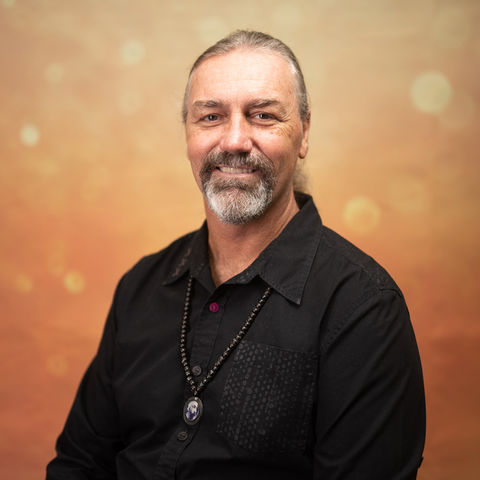
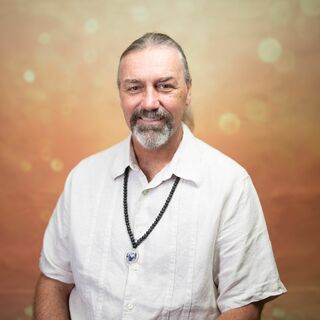
My name is Douglas Gromins and today I'm going to give you a deeper insight,
More information on how you should meditate.
Now it's a trick clause because everything that happens in meditation is a non-happening.
It's not something you can do.
It's not something you can practice.
It's just something you experience.
It's something that you are.
So when you're not thinking,
When you're not contemplating,
When you're not concentrating,
When you're absolutely doing nothing at all,
Then meditation happens.
You're creating a space though for it to happen.
And creating a space can be up to you how you do it,
But there are also some other things that you should keep in mind as you're creating this space.
There are all kinds of techniques you can use and we'll get into that in a second.
But here's one of the most important things is that you're not escaping from life.
Basically you are absorbing life.
You're absorbing existence when you meditate.
So what I mean by that is like if you sit down to meditate and then you maybe concentrate on your breath and you follow the breath with your eyes closed,
Follow it in and follow it out and just keep following the breath and using that tool to help get you to a center point where the mind is down to like one thought or just in the present moment of just thinking about breathing.
Then you can even drop the thinking about breathing and you just watch your breathing.
But as all this is going on,
You might hear a dog barking outside or a train going by on some railroad tracks.
I mean if you live in the city it gets loud.
And the beautiful thing about my methods of meditation and what I'm going to share with you is that you absorb that.
It becomes a part of you.
You don't let anything bother you.
You don't let it disturb your meditation by absorbing it and just saying,
Okay,
Let the dog bark.
Let the train go by.
You know,
It's not going to disturb my centering.
It won't pull me off of my center.
And that's what has to happen in life is that anytime you are centered and aware,
Then you're practicing meditation.
It is a part of you,
It is a part of your existence.
And being just aware and being conscious without thought,
That is meditation too.
And many people do it playing sports,
Riding bicycles,
Riding motorcycles,
Surfing,
Skateboarding,
Skydiving,
All these things.
Playing a musical instrument.
You can just get into the music and become the music without thinking.
And you just move your fingers and glide through life and glide through the music.
And it just turns out so beautiful when you're in the present moment,
On beat,
On time,
And everything's just beautiful.
I learned these things many years ago.
I started meditating probably about 24,
25 years ago.
And I came across one of Osho's books.
A friend gave it to me.
And in this book,
Osho is discussing how to absorb everything and how to be a part of life,
And not to escape from it.
Osho's whole teaching was basically to be a Buddha in the marketplace,
To be Zorba the Buddha.
Because you can spend your life escaping from it,
Going to the Himalayas and spending many years in a cave meditating.
And you'll obtain some sort of peace out there.
But as soon as you come back to the city,
That peace is gone.
That peace is dropped because you didn't learn how to center with the city going on around you,
With everything going on around you.
I mean,
Like I said,
We get into our cars and we drive and we sit in traffic.
And let the guy pass you if he's riding up your tail and he's flashing his lights and honking his horn.
And don't become a part of his world.
And I love what I learned in Aikido.
And Aikido is a Japanese martial art formed by Morhei Ueshiba around World War II.
And he started developing this art form where you don't absorb any negativity.
You don't absorb your opponent if somebody's attacking you.
You just work around it.
Let them go around you.
You create a space for them to go around you and you never ever directly absorb that negative energy.
And when you get into a fight with somebody,
If you study Aikido,
You never experience the other person's negativity.
And what happens is that if somebody strikes at you or punches at you,
You would basically just step out of the way and divert the energy.
And sometimes have to take the person down and hold them down until they stay calmed down or whatever.
But it's a beautiful art form and a beautiful way of living is to never absorb the energy.
So,
If that guy in traffic is giving you a heck of a time,
Move over,
Get him out of the way.
It's not a part of your world.
You can't let that disturb your center and pull you off your center.
And it is so easy to get pulled off your center,
Especially for children.
Children get pulled off their center very easily and that's why they cry very easily.
You pull them off their center and then you have to basically calm them down and get them back to breathing normal and just realizing it's not that bad,
It's not that bad,
You're going to get through it.
But there's better ways to deal with life.
There's better ways to grow and understand.
So you're probably asking yourself,
Well why do I need to meditate?
Certain things can happen in life.
Everything has cause and effect.
Even meditation basically has a cause and effect.
You create a space.
You create an emptiness and a void for your consciousness to exist beyond your mind.
And the effect of that is going to be that you're going to feel no stress and you're going to feel basically stress free in those moments of meditation.
But like I said,
You should never look for these things.
Don't make meditation a goal.
Let meditation happen.
Let the experience happen.
And that's the only way you'll feel the bliss of this emptiness is that you create a space.
And in that space,
It's kind of like this,
If you have the analogy of a dam.
Say your existence is dammed up by a big concrete wall holding all the water back.
And the water getting to your soul will actually be what nourishes you and keeps you healthy and keeps you sane.
Like in our pineal glands,
We have small amounts of what they call DMT,
Dimethyl triptyly.
And it releases those small amounts in a way that helps keep us calm and centered and stops us from freaking out all the time.
You think about it in life.
All these things like meditation or love or compassion,
Even laughter and crying,
All these things are like valve releases that get you to a point where you're able to sit and actually try to meditate.
But if your existence is all dammed up,
What meditation does is basically it takes out one brick at a time.
And slowly,
And it does take patience,
And you can't look forward to anything,
You can't make it a goal,
You just have to allow this to happen.
Slowly you take one brick away at a time and the water comes through a little bit more every time you meditate.
And eventually you drop meditation itself at a point because once you've meditated enough,
Then you become meditation.
And then you are meditation 24 hours a day.
You have found the center.
You moved from the periphery,
From the mind,
And now you're operating and controlling your life from the center.
And once the very last brick is removed,
Then the water just flows freely down into the valley and nourishes the fields and the animals and everything.
So that's the essence of what meditation is.
When I began meditating many years ago,
I read the book Snowboarding to Nirvana,
Or Surfing the Himalayas,
I guess one of those two books.
And in the beginning they expressed the blue sky technique.
Basically the blue sky technique is where you imagine yourself,
If you lay on the ground while you're meditating and just lie there,
And then close your eyes and imagine yourself floating up into the space,
Up into the air,
Up into the sky,
I should say,
Not space,
But up into the sky.
And you're envisioning yourself floating there and there's all these clouds all around you.
And then as these clouds are existing around you,
You imagine them slowly disappearing,
Slowly going away and going away and going away until nothing is left but blue sky.
And then you're just there in this blue sky,
In this emptiness,
Just floating there.
And then you use that as a launching point,
Whatever it takes to get you to a launching point,
But that's one tool you can use as a launching point.
It's just the same as following the breath,
It's just a different technique.
There's something mystical about the blue sky technique though,
It really works and it helps move things along faster.
It gets you to point B from point A much faster.
But you still have work to go because we haven't really even gotten into meditation yet.
We're just getting all these things in alignment so that you can meditate.
I recommend that you meditate in the beginning from at least 15 minutes.
You've got to give yourself that much dignity and that much allowance that you have at least 15 minutes to meditate.
Not much will happen in less than 15 minutes,
But if you only got five minutes,
That could be a blissful five minutes.
So you do what you can when you can.
But I also find that the best time to meditate,
Especially for me,
Is like 7pm.
And the reason for that is that the existence around you,
Everything around you,
From people going to work,
From people out driving into traffic and getting all stressed out,
All that starts to settle down around 6pm.
And then people eat their dinners and everything around 6.
30pm.
Around 7pm,
Everybody's kind of in a state where they're not being stressed out.
They're not thinking about work,
They're just digesting their food and relaxing,
Maybe watching TV or doing whatever they do.
But 7 o'clock seems to be like a magical hour,
A magical time to start meditating.
And it doesn't matter if it's with the time change that we have in America or not,
It has more to do with what everybody's essence is doing around you than the actual physical time.
So,
Yeah,
Like I said,
I meditate kind of more or less around 7.
So,
Like the other night I meditated and I didn't know my cat was in my room with me and I'm lying on the floor with the lights off.
And my cat just sits down on top of me in my lap and she just starts purring and everything.
And I didn't let it just disturb my meditation.
I just kept meditating.
I've had people come into my room and turn the light on and walk through the room and go outside.
You don't let it bother you.
You don't let it pull you from your center.
It's like,
Okay,
I am meditating.
This is my time.
I need this time to help my spirit ground and grow and flower eventually.
If you meditate enough,
Then you get into what we call flowering.
So yeah,
These breath methods,
There's the silver cord method where you envision a silver cord running down your spine all the way to the top of your crown of your head,
All the way down to your spine as you're sitting there meditating.
I recommend that you do sort of get some sort of posture,
But I would recommend also that you have a pillow underneath your lap.
Americans and maybe South Africans,
You know,
We're not designed and we didn't grow up in a culture where the sitting posture was just natural and something that you did whenever you ate dinner or whenever you worshiped or whatever,
You know,
We're not used to it.
And in yoga,
Patanjali basically says that the posture is very important.
But what Patanjali also says is that it has to be a comfortable posture.
If you're making an effort to meditate,
If you're doing something,
If you're forcing something,
Then that's more of a masculine energy.
And in meditation,
You kind of have to be more of a receptive energy.
So as you're sitting there or lying there,
And you have your eyes closed and you're getting into it,
Remember,
You are not the experiencer,
You are the witnesser.
You are the one that's watching all this happen.
You're watching the cat sit on your lap,
You're watching the traffic in the streets going by and everything.
It's just with your eyes closed.
It's just happening.
That's part of existence.
And you shouldn't try to escape from it.
I mean,
I've listened to people talk about these silent retreat camps that some Buddhist schools have.
And I'm like,
You're missing the whole point.
If you can't be centered around life,
Around everything,
Like this Buddha in the marketplace that Osho was talking about,
If you can't be centered that way,
Then it's not worth anything.
It's phony,
It's fake.
If somebody else can insult you and pull you off your center,
Then all that work is for nothing.
So you have to basically,
Like I said,
Accept all your surroundings,
Accept that you're in this life and meditation is not designed to be an escape from it.
It's to help you grow and move from the mind center,
From the periphery,
To your real center,
Where the hub of the wheel is.
And the hub of the wheel,
At the very center of every wheel is a hub.
The hub is unmoving.
And all of us have that inside of us.
Inside of us is that unmoving center.
It has to be there.
We couldn't even exist without an unmoving center.
We rotate around it and we rotate around it.
And I also feel that the Sufi dance,
The Sufi twirlers,
The ones that spin in circles,
The dervishes,
I think what happens is that somehow they match the rate of what your mind is spinning at as they're twirling.
And then they twirl and they twirl and there's a technique to it so they don't get super,
Super dizzy and they can keep twirling.
They learn how to move off the mind center and move to your real center as they're twirling.
And if you can do that,
Then you won't get all sick and throw up everywhere.
But I think what happens when they do that is they still their minds and they still their existence because they shifted from the mind center to the real center.
And they're able to do this.
And then after you twirl,
Then you lie down with your back on the ground and you just feel existence.
Feel what happened to you and try to find that new center.
Don't let it shift you back into your mind center.
You just find that center.
But anyway,
That's another subject for another day,
I guess.
But all this work,
All this action,
All these things we do,
Active meditations,
Dynamic meditations,
Breathing,
Focusing on all these things,
They're all tools to get you to a certain point.
Like I said before in the other audio track,
That you're using a thorn to get another thorn out of your foot.
But you don't leave the other thorn in the foot.
So all these experiences that you're experiencing going into meditation,
You have to drop them all.
You have to just become empty and be still.
And how you do that is different to every person.
If you're an insomniac,
If you can't sleep very well at all,
You can lie down and meditate and just be completely calm and get into a deep meditation without falling asleep.
But you might find that eventually,
If you keep meditating and you go to these moments where you're creating gaps of silence for more than like five or ten minutes,
You might find that you really don't need as much sleep as you used to because now you're doing something in meditation that happens at nighttime.
But here's the difference.
At nighttime,
When we go to sleep,
And doctors have recorded this brainwave activity on many subjects,
And what happens is for about seven or eight seconds,
There are no brainwave patterns for about seven or eight seconds every night.
And what the mystics kind of theorize that happens during the seven or eight seconds is that's the moment when God or existence comes into you and fills you up and recharges you for the next day.
The problem is that you have to be in deep sleep for the seven or eight seconds to happen.
And what happens in meditation is you're creating a big space for this existence to come in and fill you with bliss.
You're consciously doing it.
But like I said,
It has to be natural,
It has to be allowed,
And you have to be in a receptive frame of consciousness,
Not a frame of mind,
Because you're going beyond the mind.
The mind becomes completely still.
So don't be afraid of it.
Allow it to happen,
And experience the growth from this exercise,
This thing we call meditation.
So you have to look at meditation as like it's a trick,
Or a knack.
It's an art form.
It's not so much of a science,
But there's science in it.
There's scientific methods,
Like listening to music.
I love to listen to music while I meditate.
And I would definitely recommend,
If you guys have never heard of the guy named Deuter,
Deuter was one of Osho's top musicians,
But Deuter has made many meditations.
And on YouTube,
You can find Deuter's Not a Himalaya,
And Not a Himalaya 2.
If you listen to Not a Himalaya,
And just lie there,
Or sit there and listen to this music,
It calms your mind so fast.
It takes you to deeper levels really,
Really fast.
But don't get stuck in that essence of always wanting to listen to music when you meditate.
You should also go listen to the ocean.
There's all these tools,
These things that we can use,
Like I said,
To help get us centered,
And help us get into what meditation really is.
Because when you start experiencing moments and no gaps,
That's just like the first level of meditation,
The second level,
I would say,
Moments of peace,
Moments of silence.
And then what happens is in those moments of silence,
Meditation can happen.
And you'll feel it.
You'll feel an energy shift.
And it's beautiful.
And,
You know,
It might startle you a little bit,
But you'll feel this energy shift.
And sometimes you can meditate,
Especially in the beginning,
You might feel like six or seven energy shifts going on,
And no one else will experience it around you.
But you're moving your consciousness into higher levels.
You're moving your consciousness up and up and up and raising energy.
The law of levitation applies when it comes to meditation.
The law of gravity applies for most of your life,
And everything's pulling you down and weighing you down to the world.
But in meditation,
You can raise your energies and just expand your consciousness and just keep expanding.
And eventually you create enough space for the divine to come into you and bless you like never before.
But basically you've got to create the space.
You have to be empty.
You have to be calm,
Serene,
And just avoid.
Like I said,
You just remove those bricks one at a time,
One at a time,
One at a time,
Until all the bricks are gone.
And once the last brick is gone,
Then you'll experience godliness.
Okay,
Thank you guys for joining me.
I love talking about meditation.
It's one of my favorite things to do.
And I love sharing with all you folks from around the world.
Much love and namaste and aloha,
Because we love to surf too.
Take care of yourselves.
Namaste.