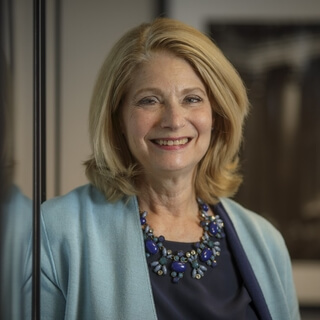
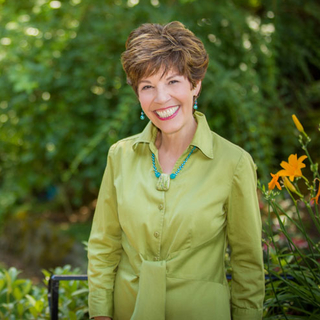
Welcome to the Everyday Mindfulness Show where we educate and inspire people to live fuller lives through mindful practices.
Let's get started with your host,
New York Times contributor,
Leadership advisor,
Sought after keynote speaker,
The author of the Amazon hot new release,
Everyday Mindfulness from chaos to calm in a crazy world,
She's smart,
Strong,
Sassy,
And a trendsetter in the field of mindful leadership.
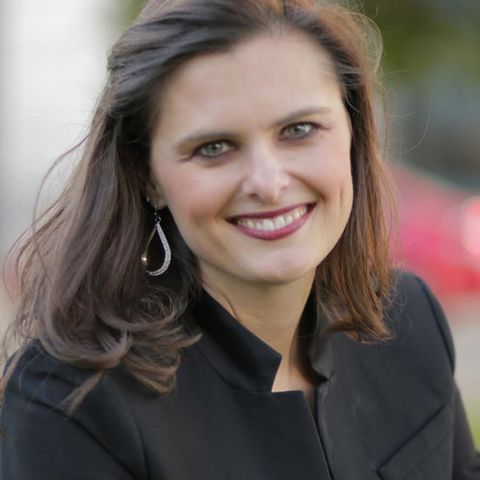
Your host,
Holly Duckworth.
Welcome to the Everyday Mindfulness Show.
It is so exciting to come together to have these powerful conversations about how we can use mindful practices to transform and grow.
And today I am bringing onto the show a very special guest,
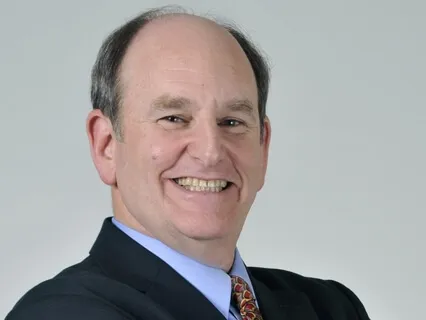
Steve Lushansky is the founder CEO of Optimize International,
And he is a strategic mentor and advisor to CIOs and CEOs.
Steve,
Thank you for saying yes to coming on the show.
Holly,
It's a pleasure to be with you always and to be on this show.
Well,
It's really exciting to have this conversation at this time because there's a lot about the work that you do that I know will be interesting to my audience.
I don't even know where to begin.
I think let's start by unpacking the word Optimize International.
Why do you pick that name?
And what does optimize mean?
We're in a world of interesting right now.
This is a great time for people to latch on to optimizing their professional experience and their work.
Well,
You know what?
It's really interesting because having worked on some branding and looking for what it was that I had in common with everybody I worked with over the years,
I've been doing this for 28 years after running businesses prior to that.
And my question is always,
How do we get to be the best we can be in a personal sense,
An interpersonal sense,
In an organizational sense?
And for me,
How do we get to be the best?
How do we optimize?
And that's literally,
It's what popped out.
It was almost organic.
The funny thing about optimize is it's mostly referring to electrical capacitors or online findability.
And I have nothing to do with either one of those things.
For me,
Optimizing is about how human beings make the most of what they've been given and what they can develop.
And again,
When you start to look at that,
I'll tell you what,
If it wasn't for mindfulness and meditation and the ability to be present,
I don't know how you do that otherwise.
For me,
It's a foundation.
It's one of the foundations.
It's critical.
We often hear about high performers using mindfulness,
NFL,
NBA.
It's a little less common with CEOs and executives,
But it is an emerging practice.
So I'm curious,
When did you start your mindfulness practice and how does it work for you?
Well,
That's interesting.
I've been at it for over 40 years.
So I started young,
You know,
I was always looking for where's the edge?
You know,
What makes people successful was one of those questions I started when I was young.
It doesn't seem to have anything to do with intelligence.
It doesn't seem to have anything to do with anything in particular.
And yet some people were super successful and some weren't.
And so my question in my pursuit,
You know,
You do something long enough,
You get good at it.
But one of the things that I've found is that the people who are most successful have a couple of characteristics that are similar.
Number one is they're always looking to get better.
Having worked with a lot of different people,
You know,
The quest to get better.
Some of the people I've worked with are the best in the world at what they do.
If somebody said,
Who would you look at for this particular skill or capability,
That would be the person.
And having worked closely with some of those folks,
They're the ones challenging themselves to get better and better.
So you start to look at when you're already one of the best at what you do,
What does it take to get better?
And for me,
One of the things I started to see that they had to know themselves better.
They had to be self aware.
And I think that's one of the real transformational differences between super smart,
Hardworking people and super successful fulfilled people.
And I asked the question,
What makes for a great life?
And for me,
I said the most personally effective people who have the best life are the ones who are most fulfilled.
What does that mean is that they're most congruent with who they are,
What they value,
And why they're here.
And in order to do that,
I mean,
You need to be able to be present with yourself.
It's so easy to get caught up with everybody else in the worlds we live in.
It's going faster and faster.
I just remember when I started in business,
We were doing 10 year plans.
I mean,
That would be an absolute joke today.
We can't even tell we're going to be in three years,
Much less three months right now.
But you know,
One of the things that they had in common was the desire to know themselves in a way that they could literally be with themselves,
Both with what makes them great,
What they're capable of improving,
And also to acknowledge some of the limitations that are built into the system.
And I don't mean that they can't be changed,
But you acknowledge you're only going to work on certain things.
It also led me to really think about leverage your strengths versus try and fix your limitations.
And I'll tell you what,
The most amazing people I've met are spending,
They're so good,
They're spending a lot of time on the things they're not good at,
Instead of stopping and going,
What am I good at?
What can I bring best to the world,
To other people,
To myself?
So all those kinds of quests result in the need to meditate to kind of sort all those things out.
And I was fortunate to find great meditation teachers.
And over time,
You know,
What a lot of my clients noticed is that in the midst of the frenzy of business,
Because I've been working with executives,
Either running my companies are doing this for 28 years now,
You know,
In the midst of the battle,
So to speak,
And I don't like that metaphor,
But they use it all the time.
I'm one of the calmest people.
I said,
You're one of the calmest type A's I've ever met.
And I go,
I know what to attribute it to.
It's meditation and self awareness.
It's being able to be present with what's going on and not,
You know,
Feeling like I'm in the middle of a racing stream.
And it's an extraordinary skill.
You know what I also noticed?
It was after 9-11 happened,
That all of a sudden,
People wanted to know,
What can we do to find center?
And I think it threw people for such a loop that people were saying,
What am I what can I find that I haven't looked at yet?
Because I think that was a turning point for from a corporate point of view,
And a business point of view,
People started saying,
What else can I use here?
What else can I learn?
What have I not paid attention to?
So already being into it for 25 years,
I had a little bit of a reservoir to share with them.
But that's a little bit of my history.
I think this is a really powerful time too,
Because so many of us,
I say have hit the control alt delete on some level,
There has been a reboot that it's a little,
My clients are often coming to me in this place of they're afraid to be with themselves.
They've had the chance to run,
Run,
Run,
Run,
Run,
Run,
Run that bigger,
Better,
Faster,
More,
You know,
On the subway in the car,
Taking the kids to school,
Like we've been able to run away from this for a long time.
What are you experiencing this too?
And how are you coaching your clients through that?
Well,
You know,
It's interesting,
I find a lot of people say they struggle with meditation,
With mindfulness with being present,
Because their mind won't stop.
And I go,
That's why you meditate.
Because the mind the nature of the mind is to create thoughts.
I mean,
It's doing what it's supposed to do.
But what happens is we get over involved in identifying with those thoughts.
And,
You know,
Part of in order to get space to reflect,
You got to get space.
I mean,
If somebody's got their nose up against a wall,
And you say,
Describe what's on this whole wall,
You can't see anything except what's directly in front of your eyes,
You need to get space to be able to reflect.
So if you don't have a practice to stop,
You don't have a practice to create some space between what's going on and where you are.
And it takes practice.
I mean,
It's called the practice.
I've been doing it for a long time,
And there's still,
You know,
Fairly frequently battles with the mind.
But most of the time,
I end up winning,
Because the mind knows that I'm going to come back to find that space to find that ability to observe what's going on.
And that's what's so precious about this,
When you start to do it,
All of a sudden,
You become the observer of all these thoughts,
And you begin to realize,
Wow,
Look at all this stuff that's getting created.
What do I get to choose to deal with,
To associate to?
And until you can create that kind of space where you've got enough space to reflect,
It's hard to get out of the swirling stream of activity.
But if you don't get out of the swirling stream of activity,
You're never going to get out of the swirling stream of activity.
And I think it's one of the most critical things every good leader I've,
And let's just talk about some basic practices,
Bill Gates goes away for a week to write and think and read every year.
I think it's two weeks,
Actually.
I mean,
It's just getting out of the stream.
And a meditation practice or mindfulness practice gives you a chance to do that regularly.
And I find the regularity of that practice is part of what creates the power of the practice,
Which allows me in any given moment to sort of stop,
Step back,
Look at what's going on,
And make better decisions.
So again,
It's partly learning to do it.
And I think the first time people sit down to meditate,
It's tough.
I mean,
The mind has been going for a long time.
But if you don't contend with it,
In a way to find practices,
A thousand practices to really get into a mindful state.
But if you don't have the ability to create that space of reflection,
I think you're limiting yourself massively in terms of your choices.
And what happens then is you become very reactive,
Reflexive,
Habitual.
And I think that's the last thing you want to be a creative leader,
Especially in this time.
So I've been bouncing this concept back and forth in my brain,
And I would love to bounce it off a colleague and see what you think.
One of the things I've become aware of as I've been working with my clients is I have some clients on the shelf that are like all data people.
Like keep all the numbers,
All the accountants,
All the finance,
All the data,
Data,
Data,
Data.
And right now,
I mean,
We can even see it's all about what days and how many days and what's going on and all of that.
And then I've got on my other spectrum,
My beautiful friends that are all spirit and energy and meditation.
And I think this time,
This 2020 year of clear vision invites us to turn some of these dials in such a way we can meet in the middle.
That a great decision maker is going to be able to find that mindful awareness point when they gather,
We're never gonna have all the data,
But enough data and utilize their own sense of intuition and mindfulness together to make the best decisions.
I'm curious,
Are you seeing that?
The people that are like really on both edges right now?
Yeah,
Well,
That's what I find.
People tend to go to their comfort place,
You know,
And some people feel better,
You know,
In a state of meditation,
Not dealing with the world.
And some people want to do all the data and not really think about what's missing.
So here's what I find.
It's like having a foot in each world.
You know,
It really reminds me of a story,
My meditation teacher,
The first thing I ever remember him saying,
Because I used to be,
I've got this very spiritual side of me,
I want to go off,
I want to have,
You know,
Hours of meditation,
I want to revel in that wonderful feeling of being connected to the universe.
On the other hand,
I love the world and I love the business side and I love creating things and I love being with people.
And usually what it was is either one or the other.
And I'll never forget this statement and it stuck with me.
I mean,
This is,
You were talking over 30 years ago.
And he said,
I never send anyone to a cave to find God.
Show me a place God doesn't exist.
And it was like bringing together both worlds,
That you can find that peace,
That spiritual aspect anywhere that you are.
And you can also find an understanding and a depth of clarity about how things are working at any time.
But to be able to do both together is the most extraordinary and powerful place to be in my experience.
So again,
It's like having a foot in each world,
But they both belong to your body and you're standing on them.
So I mean,
I love your perspective on that,
Holly,
And I think you can't try and avoid one.
We're on this planet because we need to be able to reconcile both sides of our being.
It's definitely an interesting time and we positioned ourselves with CEOs and executives that tend to lean,
Not all of them,
But tend to lean a little more towards the data side.
I think this focus on human health in 2020 and healing and all that and healing for the planet is inviting.
How do we bring both of those,
The numbers and the wisdom together to make better decisions?
You know what I've always said?
We're starting to teach people skills.
We're starting to teach them principles.
We're teaching them practices.
What I've always said is regardless of how powerful a specific practice or skill is,
The power and the greatest power really comes from the ability to integrate many of them.
So the more you can integrate,
The more effective,
The more powerful,
The more comprehensive your capability to deal with what's in front of you will be.
So it's not about do one thing well.
I mean,
You're going to do certain things better than others,
But the ability to integrate them to me is for many,
Many years I've been saying the power is in the integration and I still believe that.
I think more than ever,
That's what we're facing here.
And I think the other part of it is we've done everything we can do to accelerate the world as fast as it could possibly be and we still are running behind.
So I think going faster has proven itself to be of questionable value.
And I've always said it's not about going faster,
It's about going better and more effectively.
And the question needs to be a little different than how do we get there faster?
It's like,
Are we clear about where there is?
Does there have real value for you,
For your family,
For your business,
For the world?
Because I think that's a more important question than how do we move faster?
I love your nugget there about the speed to market in a time when we're all,
You know,
When's this going to end?
When's this going to end?
But I love even more this concept of integration.
And one of the things I've been playing with is,
So you're the team leader,
You're the CEO,
The CIO,
And you practice mindfulness.
How are you helping those folks to integrate mindfulness with their teams?
Right now,
A lot of people are transitioning to a new work environment,
Their teams are changing and will continue to change based on the dynamic of this 2020 life experience.
What are you doing to say to those mindful leaders,
You can integrate it with people who might be new to this?
That's a great question.
So here's the thing.
I don't think,
You know,
I've always said,
Don't try and save people don't want to be saved.
Don't try and teach people things that they don't have an openness or willingness or welcoming to be taught.
But I think what we can do is really start to ask people,
What would be more effective?
What would have greater impact and value?
And I think those are critical questions for every leader to be asking,
Is this the best we can do in terms of effectiveness,
Impact and value?
And if it's not,
Then we have to start taking apart,
What is it that's forcing us to think about something that's less effective,
Less impactful,
Less valuable?
And I think when you start to step back,
This process of creating space for reflection is analogous to what you do when you're meditating,
For instance.
So you know,
What I find with people is rather than saying,
Do you want to learn to meditate?
But it's rather,
Do you want to learn to have some ability to reflect?
And you know,
If that's purposeful,
And it's done well in a business sense,
You might find that there are things that you could do for yourself,
It would give you space for reflection,
Where you could actually be far more effective,
Have greater impact and value with less energy,
Less effort,
And less craziness,
Really,
Truly,
We're not talking about not working,
We're talking about being more effective and higher impact in your work.
And part of that is recognizing,
Where do I really want to be?
What's the high value impact?
What's the outcome that's worthy,
Rather than just going,
They said,
I need to be there,
Let's go as fast as we can,
Then you get there,
Wherever the there is,
And you realize,
That wasn't so great.
It really didn't do anything for us.
So for me,
It's really about in the book I'm writing,
It's really about decision making.
Are we asking the right questions at the right level,
Before we go into massive action?
Because what I see is very well meaning,
Talented,
Intelligent,
Hard working people,
Working like dogs,
Producing a fraction of what you would expect from them.
And part of it is because they're working so hard,
It's something that doesn't matter.
But they don't find that till after they put in massive amount of work,
Which to me is an incredible waste of human potential and talent.
So for me,
It's like learning to step back,
Learning to have a space of clarity of presence.
And presence doesn't mean that I don't think about the future.
But it's about thinking about it with a more well contained,
Well structured,
More fundamentally sound and stable position to observe it from,
Rather than the frenzy of the mind going crazy.
And I just do something because I want to feel better.
It's one of the basic axioms.
Motion creates emotion.
When people are upset,
Confused,
Don't know what to do,
They do something because they'll feel different.
And people don't know how to deal with their own feelings.
I mean,
If you can't be present with what you're feeling,
It's hard to deal with what you're feeling.
So instead,
They just do something and then they feel something different and they have to go through the process again.
So that was a long answer.
But what I really want to say is,
The ability to teach people to have presence and to make good decisions,
Which requires reflection on where you are,
Where you want to go,
And what's the gap,
Is very similar to what meditation is.
To be present,
To be able to be feeling what's going on,
And to be able to observe it so that you're not just impelled by the first thought that comes to mind,
But you can see all the possibilities and make better choices from a position of presence and mindfulness.
It's such an exciting time.
I have the opportunity to sit on a call with about 150 executives as we're navigating this new.
And many companies are looking at this on some level.
You're dividing your company up kind of into three teams.
You've got a team working on kind of the health stuff,
And you've got a team working on the now stuff,
And kind of a team working on business continuity.
Now we're all working for that same vision,
Mission,
Values of the organization.
But I'm really hopeful about the renewal of business on the other side of this,
And thinking about how can we integrate these mindfulness practices in a more accepted way on the other side.
You know,
You got me thinking about incorporate,
How do we reward this behavior of reflection?
How do we create spaces for that presence?
And honor this feeling thing.
I just did a live for the show earlier today on light and light.
But there's the light,
Like the light over our head,
But then there's that heavier lightness in our body.
And I think often that for me is also a mindfulness practice is if I'm making a decision,
Letting myself feel into it a little bit.
If I go this way,
Does that feel better or worse?
And I think some of these mindful practices that used to be woo woo are going to be what guide us through business change and business continuity into 2020 and beyond.
Well,
You know,
What's happening now is,
You know,
It's really funny as science is validating what the yogis and the spiritual teachers have been teaching for thousands of years.
So if you go back to the science and neurology,
One of my best friends growing up as professor neurology at an Ivy League school,
And he says,
We've learned more in the last 10 years,
We've learned 10 times more in the last 10 years,
About how the mind works than we've ever known.
We may know 10% of how it works.
And what they're discovering is that decision making lives at what you might call the three minds,
The head,
The heart and the gut.
And that's just neurologically sound today,
That when you have a disparity between those,
It's hard to trust your decisions.
But you can validate them intellectually,
Emotionally,
And what we might call gut feel.
And again,
When you have it all three levels,
Those are really trustworthy decisions in most cases.
And you find most of the bad decisions being made by our corporate executives today are being made because they're not honoring all three.
They're leaping to one that they prefer.
Might be a gut decision,
It might be a head decision.
But we need to figure out how do we integrate once again,
It's the integration that's the power.
How do we integrate what we know works neurologically,
Which also is actually validating what we know works spiritually,
To be present enough to feel our decisions at all those three levels.
It's neurologically sound.
So I think we need to teach people what does sound decision making look like.
The reason I chose to write this book next is because I think it's so critical.
We're in such a tenuous time in a lot of ways in the world.
We've got a disparity between the haves and the have nots.
And I'm looking for how do we create the greatest good,
Which doesn't mean taking from one to give to another,
But it means sharing the wealth that we have in decision making,
The capability to create and building out what a future could look like for a whole civilization.
And that requires our ability to be in touch with ourselves at all levels.
That requires our ability to make decisions that are congruent,
Coherent,
And well aligned,
Both for ourselves and for the people we serve.
And so I think what you're asking is like,
How do we start to teach people?
What are the basis of the best decisions and the best outcomes?
And we need to start practicing that.
We don't need to reinvent the wheel.
We need to recognize what works best.
And I think we're going to start to find is that the ability to be present,
To be mindful,
To be aware of the head,
Heart,
Gut of what's going on around us,
As well as what's going on in us,
Is where the best leaders operate from,
Where the best organizations thrive,
And where we need to start teaching people,
Hey,
Folks,
We're only saying this because it really works.
If you got something bad,
I've always said,
If you got something better,
Tell me,
I'm always looking for something better.
But that's the best I've ever found and continues to prove itself every place I go.
So you started meditating 40 years ago,
Your practice has evolved and changed and grown.
I'm curious.
Let's just take a chunk of time.
Since the beginning of 2020,
What's your practice looking like right now?
Well,
Every morning,
I mean,
This is my one thing I've started a long,
Long time ago.
It's been many years,
Every morning,
Meditation and 33 minutes just because I like the number.
And I played with 30,
I played with 25,
I played with 45.
And it seems to be the right amount of connection time for me.
So every morning,
33 minutes.
It's a great place to start.
And from that,
Then what I'm looking to do is I'm looking to move because that gets me in tune.
Now I want to move.
And then what I want to do is I want to use that creative energy that's been stirred in that physical energy that's been started to actually deal with what's really most important on my to do list.
And my to do list is really more of a what matters list.
I'm not interested in all the stuff I need to do.
I'm interested in all the stuff that really matters.
Where am I going to make the biggest impact today,
I want to start there.
It's not always easiest place to start,
But it's the best place to start.
And you know,
During the day,
Sometimes I find,
You know,
For whatever reason,
I might have eaten something less,
Less thrilling and supportive.
Or it's just it's been a very intense day.
But I'll often find myself taking a few minute break to meditate 5,
10,
15 minutes during the during the afternoon.
And it's like being shot with coffee.
I don't even drink coffee.
I've never drank coffee.
But I find that that kind of renewal is worth so much more than anything I could put in my body.
So and then sometimes,
I never have a problem going to sleep.
I think,
You know,
That the deep sleep state is very much related theta state of mind,
Which is very much what a good meditative state is.
So for me,
I'm almost instantaneously asleep,
Just because I'm so practiced at going to that state with meditation.
But I think what happens is it begins to pervade everything else that happens.
When things get crazy.
I'm able to be really still in the midst of it and observe what's happening.
It's just a practice.
I think we get better and better.
It's like working out at the gym.
This is just working out in the heart,
I would say.
That's really good,
Steve working out in the heart.
And you know,
I just I like to always remind people right now,
Especially if you didn't start with 33 minutes.
Maybe you start with three,
But it's that consistency just like the working out.
Right.
But in these transformative times,
If you want to optimize your performance,
Just try this for a few days.
Right.
See how how it fits and how you connect deeper to your own sense of self thus making you a more optimized leader no matter what you're working on.
Absolutely.
At this time.
I'll tell you,
You know what I always say better to do five minutes a day for seven days than two hours once a week.
Exactly.
Consistency is so much more powerful.
And for me,
I just found that's a good level.
And I like to do more,
But I'm usually pretty,
Pretty committed to a lot of other things during the day serving people a lot of ways.
But that's sort of my foundation.
I keep saying,
You know,
I've got a whole lot of affection for food and,
You know,
Work out and be with people.
But if the last thing I would give up is actually my meditation practice.
Yeah.
And right now,
I think it's it's kind of that metaphor you use.
Just get a little back from the wall,
The wall,
The wall being the doing this of the family and the home and the work to give yourself that gift of seeing,
Seeing the whole the whole picture and inviting that wisdom to come come through you for the good of yourself and the company that you serve.
The more you can see,
The easier it is to make a good decision about which direction you really want to go.
But if you can't see very far in front of your face,
You only got one direction.
And I love that.
A what matters list,
Not a to do list.
A what matters list.
That's great.
Yeah.
So Steve,
You've got a book coming up.
And we want to know how can we get access to your information now?
You do a great coaching and offer those services,
As well as all the other services.
And we want to get on the waiting list for that book when it comes out.
Well,
I'll tell you what,
If you simply send an email to info at optimize,
I n t l.
Com,
That's info at optimize,
I n t l for international,
But it's just I n t l.
Com.
You can just get on our you can take a look at our blogs,
You go to optimizing,
I n t l.
Com.
There's a lot of materials,
You can look up Steve Lushansky on YouTube,
There's about 100 videos that average about two to two and a half minutes with real nuggets that you can use immediately.
And so the best way optimize,
I n t l.
Com or info at optimize,
I n t l.
Com by email,
Just say I want to be on with your book.
And you might be surprised to get a gift of one of the early editions.
Wonderful.
Well,
Thank you so much for your yes to being on the show.
Yes,
To living your gifts into the world.
We look forward to having you on another episode again soon.
Holly,
Thank you so much.
It's always a delight to be with you.
Remember guests mindful matters and so do you look for this and many more episodes on the everydaymindfulnessshow.
Com and watch our live editions also available on everydaymindfulness.
Com and on YouTube.
Thank you for joining us for today's show.
For more mindfulness every day,
Visit everydaymindfulnessshow.
Com and download the three day challenge and experience the ABCs of mindfulness.