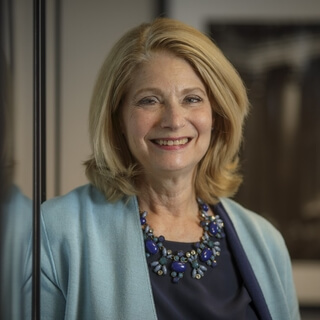
Welcome to the Everyday Mindfulness Show where we educate and inspire people to live fuller lives through mindful practices.
Let's get started with your host,
New York Times contributor,
Leadership advisor,
Sought after keynote speaker,
The author of the Amazon hot new release,
Everyday Mindfulness from chaos to calm in a crazy world,
She's smart,
Strong,
Sassy,
And a trendsetter in the field of mindful leadership.
Your host,
Holly Duckworth.
Hello and welcome to another episode of the Everyday Mindfulness Show.
Today we have a special guest with us.
He is known in the media.
He's written many books.
He is a member of the C-suite network thought council,
A long time friend that we have been growing a relationship long distance in this time of pandemic.
I'm so excited to introduce you to my friend,
Greg Williams.
He is the master negotiator and body language expert.
Greg,
Welcome to the show.
Why,
Thank you,
Holly.
And also it's been a pleasure developing our friendship over the length of time that we've been doing so.
You know,
This is a time of possibilities.
All my listeners know I don't call this a time of pandemic.
I'm calling it a time of possibilities.
I remember you,
I've never been told you this story.
We were at some breakout in NSA like 17 years ago,
You know,
Or seven,
It could have been,
Who knows?
It was a long time ago.
And I'm like,
That's Greg Williams over there.
Like this big super celebrity in the national speakers association.
And we haven't had a chance to really get to know each other.
And yet this time of possibility has let some friendships have dissolved and new friendships have evolved.
And I hope that our listeners are having that experience because I'm so grateful.
We've been able to grow deeper in friendship and conversation as a result of this time,
Even though you're all the way in New Jersey and I'm all the way in Denver.
Exactly.
And you know,
The time of possibility is a great mindfulness perspective from which to look at situations because we could get mired in the thought process of,
Oh my gosh,
There's a pandemic and we can't move around and yada,
Yada,
Yada.
And as you start thinking more about the negativity that you perceive as surrounding you,
More will surround you simply because that's what you're looking for.
And since you're looking for it,
You'll find it.
It's just an aspect of mindfulness that I discuss with people from time to time about being aware of what you're attracting by what it is that you're focusing on.
So I love that perspective that you mentioned.
And right now I smile and laugh.
Oh my gosh,
I get to speak with the master negotiator and we're going to break down both parts of this conversation,
But we're going to start with master negotiator because that's a word kind of like mindfulness that can be tricky for people to digest.
So as I was prepping for the show,
I'm like,
Let's go back to the basics.
Think about this master negotiator to obtain discussion.
Greg,
What are like your top two or three tips for people right now?
We are,
We're in this,
This new way of discussing via podcasts and the video where a new waves discussion about race,
Where new discussions about political experience,
The environment,
Global travel or local travel.
What are some tips from a master negotiator about how we can obtain discussion as a starting point?
Well,
First of all,
You need to understand what it is that someone is seeking from you.
And guess what?
That goes back to mindfulness because as you interact with individuals,
They send you verbal and nonverbal signals about their thoughts,
Their desires,
Their wants,
Their intent.
And if you're not literally paying attention to what it is that they're saying,
Along with how they're saying,
What it is that they're conveying to you,
You may miss part of the message.
And thus,
If you miss part of the message you may offer,
And let's call it a solution that's not as full as it otherwise could be.
So you have to be aware of exactly what is going on in the other person's mind.
And that comes from being mindful of how they are conveying their sentiments,
Number one.
Number two,
You have to then make sure that you can give them what you want if you can.
And I say,
If you can,
Because if you can't,
You need to be straight up as the younger generation used to say.
Let them know,
Hey,
This is why I can't give you what you want.
If you can give them half of what they want or a portion of what they want,
Let them know that you're willing to work with them.
And the overall arching point is by doing that,
You at least come out of a situation.
Even if it doesn't come to fruition,
Letting someone know that I'm here to try and work with you,
And I'm genuine about doing so.
And to the degree that I can help out,
I'm more than willing.
To the degree I can't,
Here's why I can't.
Always give someone a reason also,
If it concerns you enough to actually find with that person.
Because you want to make sure the two of you can come together from a perspective of seeing a situation from the perspective of oneness.
And once you're on that path,
That mindful path,
You then can understand exactly what the other person is seeking and how to give that person what she or he needs.
So let me see if I'm hearing this right.
It sounds to me like one way we could become better negotiators is by coming at a conversation from a place of oneness,
Of how can we come at this together.
Now that's an easy word for you and I.
I see your body language is going,
Yes,
Yes.
But we've got people that are listening,
And that is kind of a new word for people.
We've kind of fallen into this trap of we're all in this together.
Like how would you,
Greg,
And from your experience and expertise,
Frame up the concept of oneness for somebody?
Because it's a little more than just we're in this together.
Yes,
And that's an excellent question because we're in this together,
Which means what?
Depending upon the individual to whom you pose that question,
It could mean we're in this together as long as it takes me to get out of this.
Oh,
You?
Okay,
I hope you get out of it too.
So that's a different mindset that you are dealing with.
And thus,
It goes back to what I said a moment ago.
You have to understand the mindset of the individual with whom you are dealing.
There are some individuals that have the perspective of a win-lose point when they are negotiating.
It's a zero sum game for them.
The only way they can win is that you lose.
And if you're negotiating against someone of that ilk with that type of mindset,
You have to be willing to step your game up,
To challenge that individual,
To let that individual know,
Number one,
You're not going to push me around.
Number two,
Hey,
If you take the you win,
I lose perspective,
You're going to have a much more difficult time at winning.
Is that the route you really want to go down?
Let the person know.
If you take a you win,
I lose perspective,
Excuse the expression,
There will be hell to pay.
So now how about if we negotiate amicably and try to reach a mutual position whereby both of us are happy?
Is that agreeable to you?
I noticed the body language,
Holly,
You're leading with the body language in that case.
I said,
Yes.
Oh,
Anyway.
Well,
It was so fun because the listeners on the show know I ask the questions that sometimes they're not willing to ask.
And we know in mindfulness that there's underlying beliefs around that.
And this word negotiator might be a word that people go,
I'm not a good negotiator.
I don't even want to be a good negotiator.
Negotiation is for car salesman or I may or may not be speaking for myself in this.
What would you say to somebody who's now in this new recreation of their life?
We're going to go,
There is going to be a 2021.
And they say,
You know what?
My old life,
I wasn't a good negotiator.
I didn't want to be a good negotiator.
Negotiation was bad,
But now I've had this life reboot and I've got to renegotiate.
How am I going to go back to work?
If I'm going to go back to work,
Am I going to start my own business?
Am I going to write a book?
Am I going to take care of the kids?
Am I going to have kids?
Am I going to get married?
What would be some thoughts to move from maybe that mindset to a positive thought,
Belief and action around mind?
First,
Well,
I was going to say,
First of all,
I would tell them you have been negotiating from the time you were born when you were a baby.
If by chance you did not like your environment,
You would cry.
And that was a way to let your feelings be known.
And that's a negotiation.
My model is you're always negotiating.
That what you do today influences the opportunities or lack of that you'll have tomorrow.
And thus,
To the degree that you want to improve any aspect of your life,
You have to negotiate better.
And you're already negotiating in everyday activity anyway.
So if you say you don't like to negotiate,
You might want to re-examine that perspective that you have about negotiations because you are doing it.
You are engaged in it every single day of your life.
So why not get better at it to improve your life?
That's what I tell them,
Holly.
So see negotiation as an opportunity,
Not a challenge.
Yes.
Very good way to phrase that.
Definitely so.
Because that's what it is.
Every time you have the opportunity to exchange thoughts and ideas,
You have a chance,
An opportunity to embolden your life because you're getting greater insight and more information about what it is that you might be able to use to improve the plight of your life.
So don't look at negotiations as this nasty thing,
This dirty thing.
Oh,
I don't want to get grimy or things of that nature.
Look at it as the opportunity that it is,
The opportunity to exchange information,
The opportunity to enhance the overall aspect of your life.
So I love that.
We're going to go change the definition on Google of negotiation.
Obtain discussion becomes the opportunity to exchange thoughts and ideas and enhance our world.
And right now that is really where we're at.
We can watch the news or social media and go into fear and doubt and lack.
But what a tremendous opportunity for us now to talk about what worked in our world,
What didn't work in our world and how we can reemerge as a better human culture as a result of that.
Definitely so.
And you know,
Let me just tag off of the aspect of what worked and what didn't work.
I have this mindfulness that I try to exercise at all times that says everything I engage in works.
It works to a degree.
And thus what I have to do is uncover the degree of positivity that came out of a situation.
Thus I can make myself better as a result of having that experience.
And of course you're aware per mindfulness that the way we talk to ourselves also determine how we will interact with others because we're always concerned whether or not we'll admit it that,
Gosh,
I was just on a webinar and the individual that was speaking spoke about FOPO,
Fear of people's opinion.
And we all have it from time to time to the degree that we become self-contained for the mindfulness we have about our abilities and where it is that we want to go in life.
We can use the assistance of others to connect with us as we give to them what they need to connect in order that both units become a better entity.
Wow.
Lots to unpack in that.
And I'm thinking about,
You know,
Right now there's also a lot of like mindfulness and self care,
But we're not necessarily taking that to the next degree,
Which is the self care of our mindset.
I love that affirmation.
Everything I engage in works.
And we're going to air the show,
You know,
Mid 2020 and it's an evergreen statement,
But everything I engage in works.
And now how can we take that in the little things at work and the little things at home and literally order that up in the universe.
And isn't it true though?
Think about it for a moment.
No matter what you have engaged in in life,
If you term it a failure,
You look at it completely.
Completely differently than if you look at it from the perspective of,
Well,
You know,
There were some positive aspects that came out of that.
Okay.
So how about we focus on those positive aspects?
Failure is only a situation that occurs that you have allowed yourself to be viewed as not being successful at achieving whatever the goal was.
So modify your goal.
Some people say,
Oh Greg,
You play with your mind.
And it's like,
Okay,
If that's the case,
Don't we all play with our minds?
We see things as we choose to perceive them.
So why not choose to perceive them as things being positive?
And right now,
As I am re-imagining the show and my work and the council and getting to work with new guests on the show and new clients as well,
I'm starting to think about all the different ways we can iterate our life.
Right now we may be experiencing,
You know,
Some,
Sometimes the dimmer switch of life is going to open some things,
Maybe schools or office buildings.
And then maybe the dimmer switch is going to turn things down a little bit.
So that negotiating technique,
Fix me if I'm saying this wrong,
Of iteration could be a really great tool that we could take as growing our master negotiating skills.
How do we iterate to get closer and closer to the connection we want to have in business or at home?
Oh,
Definitely so.
And you're spot on actually,
Because again,
That what you do today influences tomorrow and thus every iteration of life's activity that you engage in prepares you for what is to follow.
And what is to follow is determined by what steps you take today in a particular direction.
If you go south,
Hey,
You'll miss what was held for you north.
If you go north,
You'll miss what was held for you had you gone south.
And thus you must be conscious,
Mindfully aware of where you're stepping today,
Because it leads to where you'll end up tomorrow.
So we're talking to Greg Williams,
The master negotiator and body language expert.
I want to take the second half of the show and dive into this idea of body language expert.
I happen to have had the opportunity to iterate my own body language experience.
A few years ago,
I got dared.
I've never,
I don't think I've told you this story.
I got dared by a friend.
I've come across a teacher that dialed my buttons.
I just didn't like the way this particular person taught and body language isn't important.
It's not a thing.
And so this particular person in my life dared me to go do her three day workshop or two day workshop.
I'm like,
Oh,
I'm never going to do that,
But I never miss the opportunity to iterate and learn.
And so I had the opportunity to iterate my own body language from,
You know,
Being a small person on the small screen to,
To really expanding,
You know,
My energy,
My light in the world.
And that,
That's not only the energy essence,
But you know how we use our hands,
How we use our feet.
And now in today's world,
How are we doing this on,
On video conferencing,
No matter what,
What platform you're on.
So I'm curious,
Greg,
How did you come to add this powerful skill of body language to compliment your work as a master negotiator?
Well,
When it comes to negotiating,
There are aspects that you have to be aware of.
I'll use the word mindful of again.
That is a curried at a subconscious level.
And what I mean by that is if someone were to say,
We can do this deal,
That's different than if someone said we could do this deal.
And the little nuances now that nonverbal expression that you saw tagging along with my words,
Conveyed a different sentiment.
And thus it's the body language gestures along with the verbiage that's uttered at a particular point in time.
And that allows you to understand more of the context of what someone really means for the content that they're actually giving you.
And thus over a period of time,
I began to realize how important reading body language was to the negotiation process.
Holly,
Quick story.
I have had client engagements whereby I appeared to be the note taker on a team that I was on.
And all I literally was doing was watching the body language of the other team to discern who was the real leader,
What it is that they were really seeking.
Because if someone made an offer of,
Okay,
You can have this for a hundred thousand dollars on the opposing team.
And someone on that team went,
It's like,
Okay,
I caught that gesture.
That person is not necessarily on board with that offer that his teammate actually made.
Well,
Is that the real leader?
What games are they getting ready to play next?
Are they going to back out of a deal that we might come to at the conclusion?
And those are the type of thoughts that one can gain insight into when you're negotiating about someone's body language.
And lastly,
I was a Fox News contributor for a while,
Talking about the body language gestures of those in the news and the negotiation strategies they were using.
Fox News was the one that actually branded me since I knew so much about body language.
As a body language expert,
I combined the two monikers and oops,
There it is.
That's what's so fun about the show is we get to talk to people who not only live lives they love and love their lives they live,
But they continue to grow and change and evolve and utilize all of their skills.
And so if people are thinking about all the stuff we just gave them on the word negotiation,
Developing the conversation piece,
What are some things,
Maybe introductory pieces in a video world that they could try to iterate their body language to become just a little more refined in it?
Well,
You mentioned that a moment ago when you spoke about how you used to be at times when you appear small.
When people appear small,
They are literally attempting to protect themselves.
And thus,
If you do not wish to convey that sentiment,
Express yourself with larger gestures,
Speak more majestically.
The way you carry yourself is the way that people will interpret your being.
And thus,
If you project yourself with confidence,
More people will perceive you as being a confident individual.
That's one thing.
Also,
When people speak,
Their gestures will come just slightly,
Ever so slightly ahead of their words.
And thus,
If you're watching someone when they're speaking and they say something along the lines of,
We can do this deal.
Now,
That gesture was momentarily delayed past the point of their words.
And that's something to just take note of because the level of sincerity might not be there to the degree that it should be had they said,
We can do this deal.
And the notices are so slight,
But therein lies how being able to decipher body language can give you not only a leg up in any situation,
But at the same time,
It allows you to advance the conversation because you understand more of what the intent of that person happens to be.
Oh,
One last thing to that point.
I'm sorry,
Real fast.
You always have to look at a cluster of actions too,
Because one gesture,
Somebody looking up and to the left doesn't necessarily mean that they're trying to recall something.
But if you see them looking up to the left several times and you've established that's what they do when they're trying to recall something,
Then if they look up to the right when they're supposed to be recalling something,
You flag that immediately in your mind and go,
Oh,
This guy is in the creation mode.
Some people call that lion mode.
So anyway.
Creation mode.
One of the things that I've enjoyed in my own work around body language too is it can be a powerful tool to go back to that mindful sense of oneness.
And in a world where we can't touch right now,
I feel like you can even sense it in our conversation of the bringing your voice down,
Leaning into the camera,
Leaning back from the camera.
We talked about oneness being a really important piece in conversation and in negotiation.
Are you finding that you're able to connect to people even on video by using that sense of oneness in your body language?
The answer to that is a definite yes,
Because not only can you connect in some cases better than let's say if you were talking to someone just on the telephone and speaking of which when you're talking on the telephone,
You listen to cues,
How fast someone speaks,
The word choices they use,
When they pause,
Et cetera.
Well,
You can do the exact same thing when you're speaking to someone via video,
But you get the added advantage of literally confirming what you're hearing by the gestures that you're seeing.
So when it comes to connecting with oneness in a case of making,
Well,
Let's put it like this.
When you want to connect with someone,
Because there are times when you just don't,
Especially in a negotiation,
You don't want to give the appearance that I want to be your buddy.
If someone has the perspective of,
I don't want a buddy,
You don't want to be their buddy.
So connecting with oneness even on that level can occur via the body language gesture that people emit and you can simulate that or choose not to,
Depending upon what your goal is.
One of the alignments that I see in negotiating and in body language and mindfulness is also that piece of non-judgment that there's not necessarily a right or wrong in either one of the things you're an expert in and there's not a right or wrong in mindfulness,
But there is that which is right for you and the outcomes that you are choosing to create as the experience at home,
At work,
And in the experience of your life.
Would you say that's true?
Oh,
Definitely so.
Each of us are individuals.
I mean,
That's a fact.
Obviously that's a fact.
We have our own special branded identity.
To the degree that we want to change who we are,
We can modify it to the degree that we don't want to,
But we have to be aware of the environment that we're in because others will be judging us and to the degree that we allow that to influence our actions,
Others will be able to influence our actions.
So being accord with one,
Depending upon even when you're talking to many means projecting to persona that allows others to see themselves in you to the degree that you want to bond with them and even more so when you're an influencer displaying mindfulness.
Well,
Greg,
We're so grateful that you were able to come on in this time when I know you're absolutely so busy educating,
Connecting,
Inspiring us to your work.
How can we get more access to your books,
To your media,
To your consulting,
And maybe some of your training services?
Well,
You can go to themasternegotiator.
Com.
That's T-H-E-M-A-S-T-E-R-N-E-G-O-T-I-A.
Com.
I can be reached at Greg at themasternegotiator.
Com.
And on my website,
There are tons of free information in the form of the blogs I've written,
The videos,
Et cetera,
Et cetera,
Et cetera.
I do so,
Give information away for free because my purpose in life is to enhance the lives of others.
So,
Holly,
I thank you for giving me the opportunity to speak on your platform today.
Well,
Thank you for your yes.
Stay safe out there.
Keep doing your great work and we'll look forward to having you back on another episode of the Everyday Mindfulness Show.
Thank you for joining us for today's show.
For more mindfulness every day,
Visit everydaymindfulnessshow.
Com and download the three-day challenge and experience the ABCs of mindfulness.