Welcome to the Everyday Mindfulness Show where we educate and inspire people to live fuller lives through mindful practices.
Let's get started with your host,
New York Times contributor,
Leadership advisor,
Sought after keynote speaker,
The author of the Amazon hot new release,
Everyday Mindfulness from chaos to calm in a crazy world,
She's smart,
Strong,
Sassy,
And a trendsetter in the field of mindful leadership.
Your host,
Holly Duckworth.
Welcome to another episode of the Everyday Mindfulness Show where we have fun,
Factual,
Challenging,
Exciting,
Enthusiastic conversations all across the board about how to live and lead mindfully.
And I am so excited to share with you this particular conversation because we often don't get to have two guests on the same show.
And we get to have a really beautiful conversation today with a father daughter duo that have written a book together,
Built a beautiful life together and continue to serve the world.
Today,
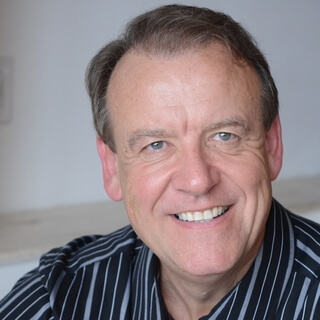
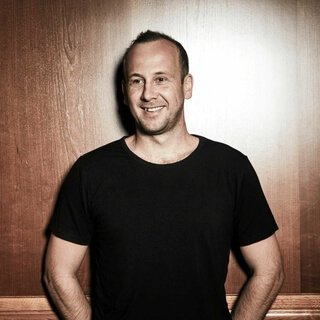
Our special conversation is with Richard and Charlie Jaffe.
And each of them individually,
We could have a whole show on,
So we're already inviting them back to the show.
That's how passionate I am about telling their story.
They wrote a book,
It's called,
It's called Turning Crisis Into Success.
And they wrote it way before this life change happened.
And they are committed to helping us understand how we can make choices that take these challenging,
Inevitable moments and make them positive in our life.
Welcome to the show,
You guys.
Thanks for having us.
Well,
I'm so grateful to have you.
Richard,
You have been an entrepreneur,
You've contributed to businesses and innovations around the world,
In basketball,
In healthcare,
Medical.
Charlie,
You have done your own beautiful work and you're turning in your thesis today.
You're going to have to tell people a little bit about what your thesis is on.
And then we're going to dive into the book.
Absolutely.
Sounds like fun.
So what was your thesis on?
Just so people know a little bit about you worked at Google,
You were a strategist at Google,
And then you've you've expanded your work from there.
Yeah,
I've definitely hopped around a variety of industries and spaces.
But at the moment,
My thesis is around positive psychology and suicide prevention,
Particularly looking at how storytelling can affect the suicide rate and how the way we tell stories can actually save lives.
So it's it's work I'm very,
Very passionate about and feel very,
Very lucky to do.
Well that's what's so,
So beautiful about your story is both of you as you walked your different journeys have found crisis and challenge along the way.
Richard,
As we were preparing for the show,
You said it was it your dad that said,
Crisis is go ahead,
Tell the story.
I didn't find crisis crisis found me.
My dad,
My first two businesses,
And he continued to create crisis for me.
And I asked him,
Dad,
Stop,
I can handle it.
He says,
No,
I'm only helping you.
So I said,
How are you helping me?
He said,
Remember,
Crisis is only change over a very short period of time.
So he says,
I'm helping you to change quickly.
And then today's environment.
We're all facing a crisis.
The question is,
Is it going to hold us back?
Or is it going to catapult our growth?
How do we deal with that?
And that's part of what we write about.
That's part of what we talk about.
So you had some some key themes in the book.
Why don't you maybe each rotate off and tell it tell a little bit about like,
What was your favorite theme or story that you believe helps people jump on that catapult?
Charlie,
Do you want to go first and then we'll have your dad dad go since,
You know,
We'll probably steal the good one.
Yeah,
He does.
He does have a tendency.
No,
We have a great working dynamic.
There's,
There's a number of themes in the book that I really just love digging into.
It's been such a joy to both go back and forth throughout it.
But I think one thing that really stood out to me is as we went through his story,
I found that every time he faced a big crisis,
Asking for help was actually a key part of getting out of it.
And oftentimes,
When we look at entrepreneurs,
Or even just ourselves in life,
We think that strength is being able to pull ourselves up by our bootstraps and just do it all on our own and get on out by ourselves.
But that really reframed it and and looking at it in a different way we see strength is actually the ability to get over our pride,
To get over our ego to take a risk and ask someone for help.
And so I think that reframe of what it means to be strong,
And the power of asking for help,
I found really beautiful and really inspiring.
And I think it really applies to all parts of life,
Business included.
Very true Charlie and asking for help when we asked for help.
I didn't realize it at the time.
I only realized it looking back.
I mean,
Charlie taught me so much about myself going through this journey.
But when we feel like we have to make the decisions ourselves,
What happens is we only have the choices we see.
When we ask for help,
We have many,
Many more alternatives.
So we make better decisions.
So I think it's really important that we learn that when we get in a crisis,
We have to learn how to respond,
Not react.
So normally we get in a crisis and we pick how do we get out right away.
But I always say,
Let's create the future.
Don't change the present.
Let's take a look at where we want to go,
What we need to go,
And then let's respond with the choices that we feel are right.
I have to smile because even as we were pre prepping the show,
One of the first questions you asked me was what was success going to be like for recording the show?
And I share that little behind the scenes moment with the listeners that the gift in interviewing so many folks is you live this message.
This isn't a book that you just just wrote because you could write it.
You lived each of these experiences and stories and that's living and leading mindfully for sure.
So a lot of people in this time right now,
We're going through different phases.
How can I help phase?
How can I help?
How can I help?
How can I help?
And I think a lot of us now are a little deer in the headlights about that.
I got any tips for us because if asking the question and asking for help is a catalyst for the catapult and we're a little deer in the headlights,
Any tips on how you might help people get over that?
Sure.
I think that firstly,
When we get into crisis,
The thing that tends to hold us back most is fear.
Okay?
We become afraid.
Now fear only exists in the future.
Fear is what might happen in the future.
So as we face crisis,
The first thing I would suggest we do is that we have to learn how to accept the things we can't change.
So by accepting that,
We can then focus on the things we can change and make a difference.
And the second thing is we've got to keep our thoughts in the present.
Okay?
In the present,
We don't have any fear.
Okay?
We're just taking steps.
Now we do have to define what success is and it's different for everybody.
We talked about this a little earlier.
So I can't tell you what success is with you.
When I got into the worst crisis in my business career and I had foreclosure notices,
Personal guarantees being called,
Charlie was six months,
Our son was three and a half years.
Okay?
And I got foreclosure notices and personal guarantees being called,
They owed $10 million.
I mean,
It was really,
Really serious.
What I did is I was jogging on the beach every morning.
Okay?
And I would do success into,
If I could get up tomorrow and see the waves crash on the beach,
That would be success.
I'll do the best I can today,
But take small steps in the right direction and over time we get to where we want to go.
Yeah,
Absolutely.
So I would say another way I kind of view that is in the context of hope because hope is actually the only positive emotion that requires negativity and uncertainty to exist.
And we have no shortage of negativity and uncertainty at the moment.
But when we talk about feeling like deer in the headlights frozen,
That fear and that uncertainty can kind of overwhelm us.
That's actually the first stage of how we move to hope and the actions that we have to take.
I was able to work with an incredible professor of mine on a book that's coming out called Learned Hopefulness and in that model,
That first step,
How we move from negativity and uncertainty towards hope is to actually just get an assessment of the situation.
What is going on?
And oftentimes when times when we're stuck in the future,
When we're feeling overwhelmed,
We're clouded and we can't actually see and assess the situation.
So becoming present is a thing that we do in mindfulness when we talk about like a mental state,
But it's also something that we can do with our assessments.
And sometimes we need to ask for help to do that.
Sometimes the overwhelm is so big that we can't actually see things.
And so being able to start with saying,
What's happening?
What's real?
What's what's real in this moment?
What are the resources that I have and who can I ask for help?
Those are those first really actionable steps that we can take,
Whether we're in a business crisis,
Whether we are having a family issue,
Whether whatever,
Whatever challenge that we're in,
Those same steps can apply throughout every aspect of our lives.
So I can hear that little inner voice in me saying,
Yeah,
But you know,
There's that old business adage,
Hope is not a strategy.
What do you say to those people?
Well,
Hope is not a strategy,
However.
Okay.
And you've got to have hope.
I mean,
Look,
One of the most important things in life is learn how to love yourself to become your own best friend.
So from there we build the confidence to be able to try whatever we want.
Okay.
So we have to learn how to love ourselves.
So there's nothing wrong with hoping for things,
But that's not the answer.
Part of it is that that's a support system,
But we have to define what we were talking before.
What is success?
Right.
We have to define it and it doesn't have to be perfect.
The imperfect solution to the perfect problem is better than the perfect solution to the wrong problem.
So we have to really pick on what do we really want?
We can hope all we want,
But we have to take actionable steps.
We have to do things.
We can't sit there and wait for it to happen to us.
We have to create it ourselves.
You have authors to our own destiny,
But hope helps our boat to float.
Well,
I would also add though,
Hope without action is not a strategy,
But hopeful action can actually be one of the most effective strategies that we can take.
And so it's one of,
It's a tool that allows us to get into a mental space where we can take action.
And when we talk about that model of learned hopefulness,
I had mentioned as we move up,
When we are taking those actions around resources and support,
One of the key things in being able to maintain motivation and continue moving forward is to be able to recalibrate our goals.
So rather than seeing hope as a mind state,
It's really a series of actions that allow us to thrive and adapt to whatever situation we're in.
So for example,
Right now,
If we're having the reality of the world we're in is throwing a lot of people's goals out the window.
If we can't adapt,
If we can't recalibrate,
We're going to find ourselves sort of devastated in a puddle if we're still trying to attach ourselves to a reality that isn't there.
And so one of the key pieces of hopeful action is being able to react to reality,
Recalibrate and ask,
What can I do?
So I totally agree that if we're,
If we see hope as a mental experience,
It's not a strategy.
But if we can expand our horizons of what hope means and look at how it can become infused into the different strategies and actions that we do take,
I think it's actually far more effective than many strategies that aim to just take human emotion out of the process altogether.
So when we were talking about this show conceptually,
I had talked to your publicist and I said,
I want to do a show on the dynamic of the father daughter relationship.
And there was,
There's so much more to unpack in this crisis,
Turning crisis into success.
But in that spirit of asking for help,
I trust there's really been some powerful times,
Both ways that,
You know,
Dads has had to ask daughter for help or daughters ask dad for help.
What's a great story of that?
Because I think if you can unpack that really vulnerable ask,
It's a model for those of us to be inspired,
You know,
It's a little easier to ask my boss for help if I can't ask my dad because we don't all have this relationship.
So what's a great story you remember of maybe Richard happened to ask your daughter for help on something?
Or advice for help?
Yeah.
Actually,
You go back to the beginning.
I was,
I started writing the book I shared with Charlie,
Okay.
And she said that you need my help.
Let me help you.
Okay.
I remember that story a little bit differently.
But the issue,
Holly,
That really comes up is that I didn't realize what I was getting into.
Okay.
It was like going to therapy for 45 years.
I mean,
And I think the thing that Charlie taught me most is she required that I learn how to be vulnerable.
And I'm not very vulnerable in life,
But she wanted to know the hardest lessons I've ever been been through.
And she would ask,
Not what I do or what happened.
She says,
But what'd you think?
How'd you feel?
What'd you say?
So the issue in the book,
It's story after story of two of the companies.
I started from scratch,
Almost went broke,
Took public and sold.
One that called Cola went to Kimberly Clark,
But they were just crisis after crisis.
And just the ability for me to be vulnerable.
And she drew it out of me like nobody else could have.
And I asked her,
I says,
Go ahead.
She said,
Can I ask you?
And I said,
Please ask me whatever you want.
And I didn't realize what that was giving her license to do,
But it taught me so much about myself.
So asking her to dig deep into my past was one of the most difficult things afterwards,
But one of the most rewarding and loving.
And we've had a great relationship our entire life.
And this has just brought us even closer and closer.
So while Carly's coming back on the line,
Carly,
You said you heard the story a little differently.
I did.
I did.
So when,
And apologies,
I had to jump in and adapt and get back on,
But if we're still talking about the story of starting the book.
So my dad had been writing an article and asked if my brother and I could do a little bit of editing support and with a big writing background,
I was happy to.
And so after that,
I started helping him with the early manuscript he was working on.
And at one point he appreciated my feedback as you may be able to tell,
We don't hold back with each other.
We're very,
Very open and honest.
And so I gave really strong,
Not strongly burdened,
But very open,
Critical,
Supportive feedback.
And he said,
Hey,
Do you want to do this thing?
I think he realized that while he had the experience and the life story,
Being able to translate that into words,
There were some skills that were missing there.
And he became an incredible,
You know,
Watching his writing expand throughout the years of working on the book was also a really,
Really beautiful one.
So it's either way we tease each other because everyone in our family agrees that my memory is accurate.
But either way,
It's just,
It's so much fun to be able to banter back and forth and to be able to share this experience and to have the fun sort of teasing relationship that we get to share together,
That playfulness.
Well,
Usually it's me against the rest of the family,
So this is nothing new.
But the issue is Charlie is such a good writer.
The book reads like a novel.
Okay.
I used to think I had a happy life till I read my own book,
Series after series,
But it was just really an incredible experience.
Well,
This show,
We like to interview folks and really apply mindful practices to business.
And you shared just briefly,
There was,
You know,
There was some vulnerability in starting these companies and then selling them and growing them.
What's some thoughts that you might have or encouragement for entrepreneurs and CEOs right now that may have a business that they're trying to recalibrate?
I would tell you from a business perspective.
So the book has two pillars.
The business pillar is,
Okay,
Wayne Gretzky said it best when they asked him how he,
A sports writer said,
Wayne,
You're not very big.
You're not,
You don't skate fast.
You don't have a hard stop shot.
How are you the best hockey player ever?
And he said,
I don't know.
I just skate to where the puck is going to be.
And in business,
That's a secret.
We need to skate to where the customer's going to be.
We need to find out what customers are going to need in the future and give it to them.
And I found one of the questions that I always like to ask my customers is what would you like to do today that you can't,
That would have the biggest impact on your business?
And they say my life and my business,
And I say both.
But if we can find out what the customer's biggest need is,
Even if we can't fill it ourselves,
We now know where they're coming from.
The customer has all of our answers.
So we've got to figure out what they're going to need and then give it to them ahead of time.
Now,
Charlie put a great line in there that said,
Henry Ford,
If he asked his customers what they wanted,
They would have said faster horses.
So you can't just listen to your customer.
But on the success side,
On the business side,
Everything starts from the customer works back.
So we have to ask our customers what they need.
On the personal happiness side,
It's really learning to become our own best friend and love ourselves.
No matter what we are,
Love the things about ourselves,
We can't change and try and make ourselves better every day.
So Carly,
Your work through your thesis has been working with folks who maybe haven't been in a place to love themselves and have gotten in some deep and challenging positions.
Just like your dad framed up a few questions or things for us to think about in business,
Do you maybe have a few questions or inspirations for folks on the personal side?
If you're going through some dark nights,
That might help us be finding that catapult of good.
Absolutely.
So I think there's a couple of different ones.
But if we're really going to go and lean into that really dark space,
A number of the people that I work with as a crisis counselor are people who actively want to die.
And my response oftentimes is,
Yes,
There is a part of you that needs to die.
But don't confuse a part of you needing to die with all of you.
And so sometimes if we try and give the feedback of just look on the bright side or just shifting to the positive,
That actually can push us further away in that direction.
So when we're in a dark place,
Being able to really lean into that and say,
OK,
What do I need to let go of?
What is allowed to remain in the past?
And sometimes there's things that we'd like to be able to get rid of in our lives,
Whether emotions are challenging logistical realities that we don't have the ability to,
We don't have the capacity to.
But we do have the ability to start to learn how to dance with it.
And there's a variety of ways that can be helpful with that.
But just as asking for help is important in business,
In the personal space,
Asking for help is just as if not more important.
And so no matter how isolating or how dark or scary what you're experiencing is,
Other people have been there.
And other people have learned how to dance through that and how to adjust to that and how to cope with it.
And so being able to see models of different ways that worked,
I think is an incredibly inspiring aspect of it.
The data and research also shows it's a hugely protective factor,
Being able to see those healthy coping examples.
But also we live in a culture oftentimes that likes to filter and skew reality and paint a picture that's just not real.
And so I think the more that we can correct that and allow ourselves to see the full picture and not just see the person at the end of the journey having a smiling snapshot,
But the entire way there,
Not just the top of the mountain top,
But the entire journey,
That gives us a model that we can follow.
And that's far more inspiring than just seeing the end.
So I would say those are a couple of my thoughts for people that are struggling in the more personal department with dark things at the moment.
Holly,
One other thing I just add on that,
When we come out of this,
Things are going to be different.
And it's really important.
Some people are not going to make it.
They're going to have to change.
But it's really important for people to separate their achievements from the self-worth.
That is for even when we struggle,
Even when we don't come out the other side the way we want,
If we separate our self-worth from our achievements,
We can continue on to the next one.
Every time a door closes,
A window opens.
So we've just got to really love ourselves.
We've got to realize we do the best we can and then we move on.
Carly,
You must walk around some days with just a journal notebook trying to get down all of this man's great wisdom and stories.
I'd appreciate it more now.
I think when you're 10 years old and someone says,
If you don't like the way you feel,
Change the way you think,
It doesn't sit quite the same way.
Yeah,
It definitely is a learning opportunity for many of us right now.
So where can people get the book?
Turning crisis into success.
I think you've got a few bonuses out there too if people want to get them.
We do.
Well,
The book is,
They can order on Amazon.
They also read it on Kindle.
And then we also put it onto audio books if they want to listen to it.
They want to learn about it,
They can go to our website,
Which is crisisintosuccess.
Com.
And on the website we talk about it as well as if your listeners have a question either about the book or about their own business,
We'll take questions and answer them.
We're here to help and be supportive and things like that.
But the book reads more like a novel,
As I said,
Reads very quickly and Charlie's an incredible writer.
So Carly,
I'm going to put Charlie,
I'm going to put you on the spot and you can bounce me back if I did a bad thing here,
But I doubt it.
So here's the,
Here's,
We framed up how to get the book.
And if you email through the website your questions,
That's a great way to ask for help and practice.
And you guys have made a commitment that you'll really,
You'll respond to people.
But we also want to frame up that personal side and it is a very vulnerable topic,
But right now we're seeing in the news,
More people are going to that dark spot of considering suicide.
Would you be willing to share perhaps the National Suicide Prevention Line or a resource that people could get to if they need that type of support as well?
Do you have to have that right there?
Yeah,
I can open up.
So I,
I happen to work with a hotline that's a little bit more specified,
So it's not just the general national number,
But I can pull up that national number very quickly.
And the other thing to note is that there's also texting available.
So sometimes people are intimidated and don't want to talk by phone.
So whether you can talk by phone,
Whether you can text,
That's available.
And also there's specialty ones.
So if you're someone who is a veteran or you're LGBTQ,
There are hotlines that are specifically designed for you.
So one suicide prevention lifeline is 1-800-273-8255.
So we're going to put the link to all of the books and your contact information.
We're going to put the link to suicide awareness and really make this the start of a powerful conversation about how we can turn this crisis into success.
Richard,
Carly,
Thank you so much,
Charlie,
For coming on the show.
We haven't done a book club yet in the Everyday Mindfulness show.
We're going to ask our customers,
If you guys want to do a book club,
Maybe we could,
You know,
This,
This fall,
Look at,
You know,
A couple of different times to read this book and explore it as a community,
Because now is our time to catapult to new levels of success.
Thank you so much for joining us on the Everyday Mindfulness show.
We look forward to seeing you again soon.
Thank you for joining us for today's show.
For more mindfulness every day,
Visit EverydayMindfulnessShow.
Com and download the three-day challenge and experience the ABCs of mindfulness.