So,
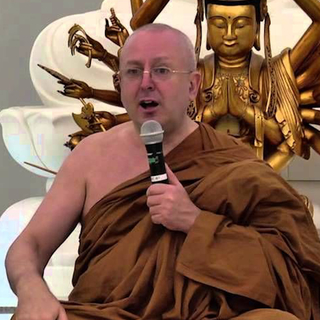
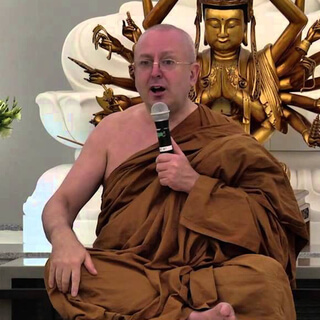
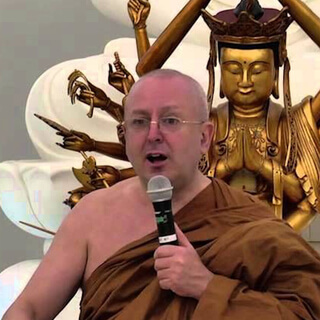
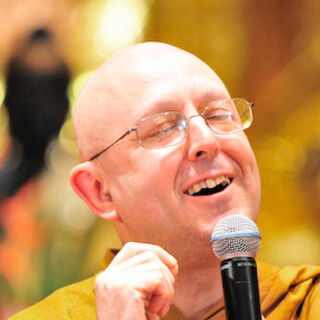
Welcome once again to happy hour at Dhammaloka Buddhist Center,
Where we can do some nice peaceful meditation.
And there's no happiness higher than peace,
Said the Buddha.
And for those of you who have been following me for years and years and years,
I always change the meditation around a little bit every couple of months,
Three months or so.
For this year I have been respecting all the work which people do in mindfulness training.
And I've been asking people to use some of those training,
But use it in a good way.
In other words,
I've asked a lot of people to be mindful of two things when you meditate.
In other words,
Mindfulness is being aware of something.
And there's so many things we can be aware of,
And the trick in meditation is being aware of the correct things.
And these two things you can be aware of are just really,
Really important.
And the first thing is just the state of your body,
How tense it is or how relaxed it is.
And this is,
I liken it to a dial on the dashboard of a car.
They all say speedometer,
So you know if you're going too fast or you're going too slow.
You can push your foot down on the accelerator,
You can feel it going faster because the dial moves,
You can release the pressure and then it sort of gets slower.
If you watch the speedometer,
That gives you the feedback on how much you should push on the speedometer,
How much you should loosen off.
And it's exactly the same with the way we use mindfulness,
First of all in our body.
So we can feel how tense it is and we can feel what we need to do to relax that tension.
What we need to do if we really want to tighten up,
Which is a silly thing to do,
But what actually tightens up the body.
And once you practice like that over a period of time,
You soon become very skilled in auto-relaxation.
By which I mean you can feel parts of the body which are irritated or tense and you can just by focusing on them and doing this right attitude,
Which I'm going to talk about in a moment,
You can learn just how to relax it all,
Let it go,
Make it peaceful.
And you can feel the body getting more relaxed because that mindfulness is focused on that.
It's like you see the dial go further and further and further and further towards relaxation.
Now there is important benefits to this.
First of all,
It's the health benefits.
You feel really happy,
Fit,
The body relaxes and health problems tend to sort of disappear because when the body is tense,
That's one of the great causes of health problems and even trauma in the body from bad experiences earlier this week.
Sometimes even emotional trauma is a tightness in the body and you can just relax that just almost at will.
So you have the health benefits and emotional benefits and learning how to relax.
And you all know if you get very tense physically,
You also lose your resilience.
Somebody hurts you or says something bad and you react.
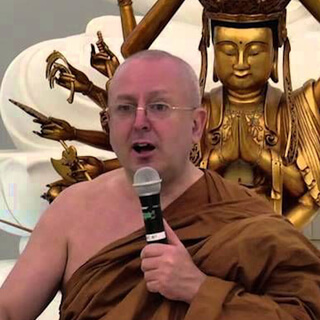
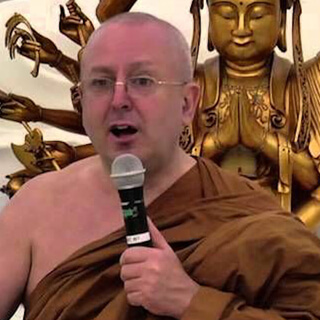
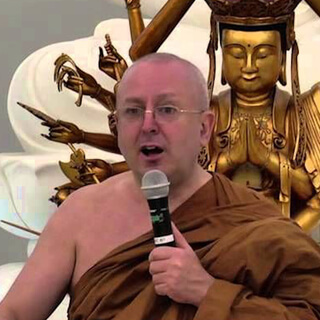
It's the difference between being like a sack of flour and you punch that and just nothing happens and you do the same force on one of the ceramic faces behind me.
One shatters,
The other one just hardly any effect.
One is really stiff and tense,
The other one is soft and malleable.
So that when we relax our body,
The body gets really healthy but also it feels delightful and pleasurable.
This is an important part of the meditation.
When I said this is happy hour,
I meant that if you know how to meditate.
I mean your body feels happy,
Delightful.
And I mentioned that also because last night there was a couple of these people,
Regular attendees on a Friday night who got stuck in Bali because of the ash cloud.
And they were three or four days late.
The parents were all frazzled but the kids thought this was marvelous,
Two or three extra days in Bali on holiday down the beach.
And I said what do you go there for?
To relax.
I said you don't need to go to Bali to relax.
You should come to this center every Saturday afternoon to relax.
But you see that when people do go on holiday and they relax,
They get this beautiful pleasant feeling in their body.
And for those of you who have just gone on some beach somewhere and just relaxed on the beach,
There is a pleasure of the body which you can feel.
Now that's really important because once you have that pleasure in the body,
The pleasure of the delight of relaxation,
You will find that you get even more relaxed.
It's like the perception of delight takes relaxation to another level.
It's interesting why.
But we've also learned that what we actually did to relax the body was this incredible thing called letting it be or letting go.
What's the difference between letting go and letting be?
We let go of trying to change,
Control and do things.
That's what we let go of,
All the activity which means we let this thing,
Whatever it is,
Be.
So it's how you look at things.
You let go of the changing,
The doing,
The controlling,
The getting rid of,
The trying to get somewhere.
That's what you let go of.
So when you do let go of all of that,
It's the same as letting this moment be.
And you know what this means because so often in meditation,
People come to me and say,
Yeah,
I know I should let go,
But how do I do it?
How do you let go?
And it's a waste of time just talking about it or writing a book about it or giving a sort of a video presentation of what letting go is.
You need to learn how to experience letting go.
And this is one of the greatest places that every human being very easily can learn by experience what letting go is.
Letting go is an attitude of mind which takes the body into deeper relaxation.
Whatever it was you did and the body relaxes,
That was letting go.
So not only are we relaxing our body and becoming healthier and experience the pleasure of meditation,
We are also learning from our own experience what this important word which everyone talks about letting go,
What it actually is.
You've just done it.
Well done.
You do that letting go many,
Many times,
Every Saturday afternoon or something,
And you learn what it is.
You know what it is.
You know,
You knew the word,
But you didn't know what it referred to.
Now you can recognize what that word letting go described.
It's an attitude of mind which allows the body just to relax and get loose.
It's like two people pulling the end of a rope and then when they let go,
The rope becomes loose.
It's not tense anymore.
That is letting go.
But you do that yourself and you feel it.
So when you train yourself to relax your body this way,
You're also learning what this letting go is.
So when we go to the next level of meditation,
Which is relaxing our mind.
I know people say I should focus on this.
You should concentrate.
And for those who have been listening to me for such a long time,
You know when anyone mentions that word,
Concentrate.
That's a big red flag comes up,
Alarm bells ring,
And I say please do not concentrate in meditation.
Concentration has screwed your life up for such a long time.
Too much effort,
Which means obviously your mind gets tense.
And if you could just be aware of not whether you're watching your breath or scanning your body or the other meditation of spreading loving kindness to the whole world.
No,
Don't be so aware of that.
Be aware of the state of your mind.
How peaceful are you?
How tense is your mind?
And if you can be aware of that and get to know by experience what that indicator,
That dial is,
Which shows you how relaxed your mind is,
How peaceful is your mind or how tense it is or how agitated it is,
Sometimes I call it,
Then you're going right to the heart of meditation.
You're seeing the most important thing.
Whether you watch your breath or scan your body or do loving kindness meditation or do mantras or whatever.
Yeah,
That's useful.
But what you're doing that for,
You're doing that for to try and increase the peace and relaxation in your mind,
Not to make it more tense.
And I've seen in all the years I've been teaching meditation,
It's about 46 years now.
It's about time I retire.
It's about time this Buddhist Society gave me a gold medal for all the years of teaching.
But do you ever get any long service leave here?
No.
More.
But anyway,
Let's go back to what I'm supposed to be talking about.
So all these years I've been teaching meditation.
You see sometimes people,
Yeah,
They're great.
They can do like breath meditation,
Watch the breath.
And I've seen them open my eyes and they're washing their hands,
Raising in,
Raising out,
Raising in,
Raising out.
I'm not going to lose any breath.
Then they can watch the whole breath for an hour and a half.
But are they relaxed?
No way.
They're as tense as anything.
Enough to get angry.
You made a noise during my meditation.
Don't you do that again or I'll call the meditation police and have you arrested.
See people like that.
Is that meditation?
It can't be.
But that is not what we're supposed to be doing.
It doesn't matter what we're watching as long as we're letting things be and your mind is getting more and more relaxed.
And after a while you can be very sensitive to how tense your mind is and how relaxed it is.
Because you can notice that dial and exactly the same thing you do to relax your body,
Just letting it go.
Taking away the tensions,
Taking away the pulling or pushing of your mind,
Which is what concentration makes you do.
You can learn how just to let your mind be.
Stop pushing it towards some goal in the future.
You want to be peaceful,
You want to be enlightened,
You want to see this,
You want to do that.
That's too much pushing.
Or sometimes we pull to the past because of something which you haven't resolved yet.
And you feel yourself being dragged.
This is big tension on your mind pulling you away.
And all that stuff,
That's tension,
That's not a relaxed mind.
So what do some people do?
Let go of the past.
Come on,
Let go of the past,
Past,
Let go.
It's more tension in the mind.
You can feel that because the mind,
If you're mindful not just of what you are watching in the sense of the breath or whatever,
But you're mindful of the state of peace in your mind.
Then you realize what you do wrong.
And you realize what is good meditation.
You learn how just to relax the mind.
And the feeling of peace in the mind grows and grows and grows.
It gets more peaceful.
And the reason why I've been,
One of the reasons I've been encouraging this is because so for many years people said,
Well,
The biggest problem in meditation,
I can't stop thinking,
Thinking,
Thinking.
And they try and stop the thinking through force.
They try and have all these other methods to try and stop the thinking,
Other little ways and means.
But look,
The underlying reason why you think so much is because the mind isn't peaceful.
It's agitated.
And that's why I think I said last night that it's,
The mind is like a lake and the waves on the surface of the lake,
That's the thoughts on the surface of your mind.
If the lake is agitated,
Of course there will be waves.
You can't stop them.
But if you can just focus not on the surface of the lake,
But underneath the lake and allow that to become still,
Then all the thoughts,
They vanish by themselves.
So as long as you're watching the peace of your mind and developing more and more peace,
As a byproduct,
As a maybe unexpected consequence,
You tend to think less and less and less and less and less.
But when those people have the idea that thinking is a problem,
You keep focusing on the thinking.
Whatever you focus on usually gets worse because you tend to control it.
So stop focusing on the thoughts.
Focus on what's underneath them.
The mind and how peaceful,
How agitated the mind is and see what we need to do to calm that underneath down.
And once you're underneath,
You can feel the peace becoming more and more peaceful,
More and more peaceful,
More and more peaceful.
Then you find all the other problems in meditation look after themselves.
You have peace of mind.
And you know that what leads to that peace of mind is the same thing called letting go.
So you're meditating and you feel your mind getting more peaceful.
You just let go.
Well done.
You feel it get more tense.
You've wanted,
Strived,
Done something.
And soon you see that and you can see the mistakes of meditation.
Every time I want something,
Do something,
Try and get rid of something,
Aim for something,
My mind gets tenser.
When I do this letting go,
Which if you watch that long enough,
You know exactly what it is,
Same as what let go,
What relaxes your body,
Relaxes your mind,
The mind gets more peaceful,
More open and you get deeper and deeper and deeper into peace.
And my goodness,
Where that goes will blow your mind.
Just so peaceful,
So incredibly still.
And just like with the body is what we call the delightful relaxation.
There's a delightful peace in the mind.
It gets to a degree of peacefulness and that's really delightful.
It feels great.
And because you're delighting in the peace,
The peace gets deeper and deeper.
Delight gets greater and greater.
And then you really blissing out in your meditation.
Not because you're seeking it,
Just because you're letting go.
So I've been using this for the last few months,
Really focusing on it full time,
Learning how to be aware of the peace of the mind.
There's a danger in this.
Sometimes people are just so dull and so tired.
They start just watching the peace of the mind.
Sometimes they're not really awake enough to notice it and they fall asleep.
But I don't really care about that because many of you,
You need a few extra minutes here and there.
So why not have it here when I pull this sensor snooze afternoon.
But that's only a temporary thing.
Usually if you are aware,
Aware,
Aware,
Really get into it week after week and know what I'm talking about to be mindful of your level of peace of mind,
You soon become aware.
And you soon get to know that state of mind.
And you can focus on it very easily.
You don't need to doubt what am I supposed to do?
What am I supposed to watch?
You can feel it.
And it soon does get delightful enough that you don't fall asleep.
You don't get distracted.
You're just having way too much fun.
And that takes you into the deepest states of meditation.
But if you do get into the really deep states,
Things like these lights which come up in the mind,
The nimittas or even deeper than that,
It doesn't matter what you're watching.
Just keep the awareness on how peaceful,
How still your mind is.
Because even with the light stage,
Any movement of the mind,
You can feel that light just get agitated.
That should give you feedback.
You've done the wrong thing.
But every time you just main focus is,
Let's see if I can make it more peaceful,
More peaceful,
And that light just starts to become very still and very powerful.
And you're really getting into delightful states now.
So that's mindfulness of peace of mind.
And see if you can get to know peace of mind in the very deepest of senses.
There we go.
Meditation instructions for today.
Now I've said it.
Now let's do it.
So sitting down,
As you all are,
I should make that announcement.
If there's anyone here for the introduction to meditation class,
That is in the room on my right.
This is the experts class.
It's not really experts,
But you know,
But those who can meditate for long periods of time.
If you can only meditate for five or ten minutes,
This is going to be like Guantanamo Bay sustained stress position and we'll get into trouble from the United Nations Human Rights Commission for torturing you.
We don't want to do that.
So as long as you're comfortable sitting for about 40,
45 minutes,
This is fine.
Okay so here we go.
So I'm going to lead you in the beginning for about 5,
10,
15 minutes and then you're on your own.
So you don't have to do what I say.
So you can do whatever you want.
But for those of you who are interested,
You can first of all become aware of your body.
First thing I always do after closing my eyes.
You can check that my body is comfortable.
Especially legs.
Legs,
Knees,
Feet,
They always give you problem if you don't look after them from the very beginning.
So the first minute or two I fidget.
Because I give myself time to find the comfortable position.
I've just moved,
I'm mindful of my body.
Is it enough?
It's not bad.
Now if you're checking my legs,
I need you to check my back.
My shoulders.
They don't these days but they used to be getting into pain when I was meditating.
I was just not putting them in a good position to begin with.
My hands.
And then my head.
Always try and make sure that the muscles around the eyes and around the mouth are relaxed.
I want them to become tense.
I'm not afraid of anything so I don't show fear on my face.
This is serious business so you're not just being flippant.
Feel the heat or the cold.
Hear the sounds of the air con and the birds and the cough.
I'm just centering.
Especially my body.
Just initial relaxation of my body.
And then by doing this I do start to become aware,
Mindful of the relaxation meter in my body.
To know how relaxed I am,
How tense I am.
And it's not just general for the body.
There is parts of my body which are pretty relaxed.
Parts which are tense.
So the parts which are tense I tend to focus on.
Once I focus on the part of the body which is tense.
Now I can learn how to relax it.
How do I relax that part of the body?
I just am aware of how that tension changes.
Sometimes it gets more tense.
Sometimes it gets less tense.
Because I'm watching that I become aware of what I did to make it more tense.
I become mindful of what I did to listen to things.
You play in that area long enough and you soon learn.
Like a child learns how to walk.
You learn from experience and awareness.
What you did to relax the body is called letting go.
And the more you notice that the easier it is to let go and relax the body.
You become amazed at how deeply you can relax parts of the body.
Even parts which are sick,
Irritated,
Itchy.
You can be aware of what makes that itch a little bit less.
You carry on doing that.
You become aware of how tense or relaxed your body is.
It's important not to become impatient and rush this.
Impatient skills meditation.
So to help you be patient remember that all you ever have,
The only time you have is this present moment just now.
This is where your future is being made right now.
The past is just a fantasy quite honestly.
If you care about your future,
Pour your attention in the place that's being made right now.
Present moment awareness is the antidote to impatience.
You're here just relaxing your body.
And hopefully you soon perceive how delightful it is to relax the body.
How good it feels.
Only a little bit at first.
That encourages you to be aware of any tight places.
Loosen them.
And loosen them.
Like you're going to a massage or a hot spa.
Where is there tightness in the body for your mindfulness there?
See what you need to do.
Just relax.
Parts of the body which is being pulled.
Both ends get let go.
And it becomes a bit easier.
Lots of pain surrounded by fear.
You let go of the fear.
And the pain has a chance to dissipate.
You're not controlling your body anymore.
You're not controlling your body anymore.
You're not controlling your body anymore.
You're not controlling your body anymore.
Can you notice just how delightful it is?
Just to be in the body which is more at ease,
More at peace than you probably felt all day.
When you relax the body you also relax and let go of the tensions of the past which keep bringing you back to the past.
You let go of the tightness for the anxiety for the future which also stops you going to the future.
Relaxing the body also helps you relax the mind.
When you are ready,
When the body is no problem,
Then you can go to your mental world.
Just lake with the waves on the surface.
Hold your thoughts.
Focus underneath the thoughts.
How peaceful or how agitated is your mind,
Your inner world?
Once you are mindful of that,
You will soon notice what agitates you and what creates a deeper sense of peace.
Control,
Wanting,
Fear,
All of that makes you more tense and that creates more waves on the surface.
Letting things be.
Opening the door of your heart to this moment.
You feel your mind becoming more at peace.
It's not so controlled by past and future,
By thoughts,
By ego.
You are mindful of how peaceful you are inside.
If that's what you are aware of,
You will soon notice the thoughts get less and less.
You will soon notice the mind get more and more aware.
You get to the delightful mind,
Like the delightful body.
It's just so happy to be at peace,
So liberating.
I'm now going to be quiet until a minute or two before reading the film.
Okay.
Okay.
Okay.
Okay.
Okay.
Okay.
Okay.
Okay.
Okay.
Okay.
Okay.
Okay.
Okay.
Okay.
Okay.
Okay.
Okay.
Okay.
Okay.
Okay.
Okay.
Okay.
Okay.
Okay.
Okay.
Okay.
Okay.
Okay.
Okay.
Okay.
Okay.
Okay.
Okay.
Okay.
Okay.
Okay.
Okay.
Okay.
Okay.
Okay.
Okay.
Okay.
Okay.
Okay.
Okay.
Okay.
Okay.
Okay.
Okay.
Okay.
Okay.
Okay.
Okay.
Okay.
Okay.
Okay.
Okay.
Okay.
Okay.
Okay.
Okay.
Okay.
Okay.
Okay.
Okay.
Okay.
Okay.
Okay.
Okay.
Okay.
Okay.
Okay.
Okay.
Okay.
Okay.
Okay.
Okay.
Okay.
Okay.
Okay.
Okay.
Okay.
Okay.
Okay.
Okay.
Okay.
Okay.
Okay.
Okay.
Okay.
Okay.
Okay.
Okay.
Okay.
Okay.
Okay.
Okay.
Okay.
Okay.
Okay.
Okay.
Okay.
Okay.
Okay.
Okay.
Okay.
Okay.
Okay.
Okay.
Okay.
Okay.
Okay.
Okay.
Okay.
Okay.
Okay.
Okay.
Okay.
Okay.
Okay.
Okay.
Okay.
Okay.
Okay.
Okay.
Okay.
Okay.
Okay.
Okay.
Okay.
Okay.
Okay.
Okay.
Okay.
Okay.
Okay.
Okay.
Very good.
So now we have questions and answers.
So you can bring them up,
René.
But is there any questions from people here?
Usually I have somebody who asks questions from overseas.
And because I never ask people here for what questions they had,
There was one meditator who very quickly on their mobile phones,
They sent a question by email because they said that's the only way they can get their questions answered.
And they were just sitting over there.
So any questions from people here first of all?
Okay,
There's only one question here today and it's from the Maldives.
What a wonderful place to live.
Okay,
Ha ha ha.
This is a technical question but it's the only one we have today.
They say 90% of people in Sri Lanka reject Jhana,
Referring to the Susima Sutta.
Can you explain what really tells in the Susima Sutta in the Samyutta Nikaya?
Okay,
In the Susima,
In the Samyutta Nikaya.
I think this is one of those sutas,
I may have this wrong now.
I'm getting old and sometimes I mix up my sutas.
But there's sometimes,
It was a technical thing saying there's two types of enlightenment.
And they say one is without,
They call the immaterial attainments.
Which are the,
These are the attainments of,
Which are beyond the jhanas,
Based on the fourth jhana.
And the other one with the four jhanas.
And sometimes people don't look carefully enough and see that both of those need the four jhanas.
And there's also now the Susima Sutta Samyutta Nikaya.
There was also,
That was where one of the ones said that they were enlightened but they didn't have psychic powers.
And they never said they didn't have jhanas.
And so it doesn't actually say anything,
Who put in even the Susima Sutta.
If you read it for yourself,
And you'll find that there's nothing there,
Which says that you can get enlightenment without these deep jhanas.
And instead,
From old eyes,
It says many,
Many times,
And look there's,
For those of you who know some of the sutas,
Some of you don't know,
This is the sort of deeper,
More academic ideas,
That the only way to get enlightened has always been what we call in Buddhism the eightfold path.
Eightfold path,
Eightfold path,
Eightfold path.
And that,
I don't know why they reject the jhanas,
Because they reject the jhanas,
You're rejecting the eightfold path.
Because the last factor of the eightfold path is called Samma Samadhi.
And that's always,
Every time,
Without exception,
Hundreds of times,
Explained as the four jhanas.
And so there we go.
Sometimes there was,
For those,
This is a person over in,
In Maldives,
He's a Sri Lankan man,
That I had a nice opportunity to visit this great Buddhist scholar,
Jnanapolnika,
Just before he passed away.
And sometimes,
To show just how Buddhist monks look after each other,
Jnanapolnika was really old,
I think in his 90s even.
And he was being looked after by Venerable Bhikkhu Bodhi,
The great scholar who did much of the translations.
And when I went there for a couple of days and saw just the way that Bhikkhu Bodhi looked after his teacher,
It was like a son looking after the father.
And he was doing everything for this Jnanapolnika.
And he wasn't doing it as a duty or as some impost.
You could see just how much love he was given into caring for this teacher.
And also just how much joy he was getting back from looking after somebody else.
Sometimes people think that all these monks are just scholars.
But you know,
We actually in our monasteries,
We practice a huge amount of compassion,
Looking after and caring for one another.
And it's a great deal of fun.
But in particular,
While I was there,
You know,
That I always remember something which Jnanapolnika told me personally.
This is a great scholar monk.
He said you should never interpret Buddhism just on one or two obscure suttas.
Because in the huge amount of teachings of the Buddha,
Some of the ones may be a little bit obscure,
Maybe can be read one or two ways.
They're sort of,
What's the word,
They're not very clear.
They can be read,
What's one or two ways?
The word,
Sorry,
Ambiguous,
Thank you,
Yes.
They're ambiguous.
But instead there's so many others,
Hundreds of other suttas,
Which are not ambiguous at all,
Which are clear.
So you should read the ambiguous suttas in the context of all the very clear suttas.
The eightfold path is just one of them.
It's so clear.
So you do need the jhanas to become enlightened.
And he always mentioned that.
He said don't ever just take one teaching which can be read one of two ways and just think that you can just focus on one sutra to forget the rest of the teachings of the Buddha.
Now when it comes to experience,
Now why is jhanas necessary for enlightenment?
Now this is my simile which I usually tell on retreats.
And that is the simile of the old tadpole and the frog.
Now once there was a tadpole who was born in a little lake in the monastery grounds.
And little tadpole,
She was really smart because in this little lake they had a school for tadpoles,
A primary school and a high school.
And little tadpole,
She studied chemistry.
And so she knew all about water,
H2O.
And in fact after graduating from high school in the pond,
She also went to university and she majored,
She became a professor of hydrology,
Of water.
And she even,
It's a very deep branch of Buddhism called Abhidhamma.
She even studied the Abhidhamma on water.
And she became the professor of water.
But how do you think a little tadpole can understand water even though it studied so much and taught other people about it?
A tadpole can't understand water no more than a fish can understand water because a fish was being born in the water,
Lived in the water all its life,
Know nothing else except water.
How can a fish understand what water is?
But there is a difference between a tadpole and a fish because one day the tadpole grows legs and arms and becomes a frog.
And once it becomes a frog,
Sometimes it doesn't know what it's doing.
It lets go of the pond.
It jumps out and it's standing on dry land.
And for a little frog,
That's the weirdest and strangest experience it's ever had.
It's on dry land,
Not in water anymore.
And now,
Only now,
It can understand what water is.
That strange stuff which is no longer there,
Which is missing.
Only through its absence can the tadpole,
Now a frog,
Understand the nature of water.
And that's the simile which I use to understand why it's important that these very deep meditations of jhanas are necessary for understanding.
Because in these jhanas,
Uphol from the Maldives,
Many things vanish.
In particular,
Your body and the five senses are no longer there.
You're so still,
You're so peaceful.
You can't even feel your body.
If someone hits you on the head,
You won't feel it.
You won't be able to hear any sound.
You'll be able to bang.
You wouldn't hear it.
Because the five senses are totally shut down.
But you're perfectly aware,
Super mindful.
But of the six sense,
Your mind.
Now you can understand what your body and five senses are.
How do you think you never understand what your body is?
You've had your body ever since you were born.
Even doctors,
Even pathologists who cut up bodies every day.
Do you think they understand what a body is when they've been born in one,
Lived all their life in one?
They can't understand the nature of the body no more than a fish can understand water.
But the meditator can leave their body.
No feelings,
No sensations.
The body's gone.
Now you can understand what this body is.
And you can go deeper,
Upal for the more dives.
Because that's only just the first China.
The body's gone.
You've just got the mind.
Now your mind gets very,
Very still.
So still,
It doesn't even move.
Super still.
Like a rock.
Like a diamond.
And in that state,
You notice something else has gone.
Something which has always been there for you.
But you've never noticed what it is because it's always there.
And this is where it gets freaky.
Your will.
This thing which you think is your friend.
Which you have been living in,
Surrounded by,
Ever since you were born.
Do you really imagine that you can understand your will?
When it's been there for you every moment of your life.
But in this second deep meditation called the second jhana,
There,
There's no will left.
It's gone.
It's finished.
You're like the tadpole who's now sitting on dry land.
And you now realize that something amazing has vanished.
Your will.
Now you know what craving is.
What wanting is.
And now you really understand why we let go.
Now you have the stuff,
Upol.
Really big new experiences which can let you see things that no fish can ever see.
Only frogs.
So if you want to be a frog,
Upol from the Maldives,
You have to get into deep meditation.
And you tell all those little tadpoles in Sri Lanka,
The 90% of tadpoles in Sri Lanka who reject dry land,
They don't know what they're talking about,
Literally.
But it doesn't matter.
One day all those 90% of people in Sri Lanka who reject the Buddha's teachings,
It says in there so many times,
That one day they will grow little legs and arms.
They will start meditating.
And they will find themselves standing on dry land.
They will find themselves in the frogs.
They've entered the jhana.
Now they'll understand how important it is.
And never again will they reject it.
That is my simile of the tadpole and the frog.
Nice simile.
And I like telling it.
I've told it many times.
Even if you don't understand it,
I don't care.
I enjoy telling it.
What about that?
Yes!
There is nothing at all.
Now this is where it gets really interesting.
Okay.
So the mind gets so incredibly still.
The deepest it gets at this particular stage is this fourth jhana.
Really still.
Nothing moving at all.
Now there's something which you've heard me say before.
When things don't move,
They vanish.
Just like,
And there's a modern simile now on your computer screen.
If you don't do anything,
After a while the screen turns off.
Goes blank.
That's so similar to the way that our mind works.
Especially our brain.
If there's a sound like the hum in the background.
And it's always there.
After a while you can't hear it anymore.
If there's a taste like the saliva in your throat.
Now you can feel it.
But after a few minutes,
It doesn't change.
So the brain turns off.
It doesn't notice it anymore.
That's so easy to understand with the five senses.
If you sit perfectly still,
Your body is relaxed.
There's no aches or pains there.
After a while your body vanishes.
You can't feel it anymore.
No sensations.
So by keeping still,
After a while the five senses vanish.
You can't see,
You can't hear,
Smell,
Taste,
Touch.
They're literally turned off.
Now the mind sense,
The sixth sense.
To keep that still,
It gets,
We have to stop this will thing which keeps on moving us.
Agitating us.
When it gets very still,
Then the mind starts to vanish.
And it vanishes little by little.
And those are the four immaterial jhanas.
The vanishing of the mind.
So in fourth you're very still but you're aware of that stillness.
An equanimity.
Incredible peace of mind.
But because that peace doesn't move,
It starts to vanish.
Like the peeling of the onion.
And you get these stages,
The four immaterial stages.
You get to the third stage,
Nothing,
There's nothing there.
But you're aware of nothing.
So you're still aware of something.
Of total emptiness,
Nothing there.
And then because that is so still,
That vanishes.
All you've got where is awareness.
Awareness of no awareness.
You might think that's really weird and strange.
Like some Zen Cohen.
But it really just depends on which side you look at this experience.
On one side you're turned off.
On the other side you're aware that the mind is turned off.
So little by little your awareness,
Your consciousness stops.
And then it comes back again,
Yeah.
Then it comes back on again.
So you turn on.
And you have to come back again but you realise that it's stopped.
And that's a very powerful thing to realise it is capable of ceasing.
That you,
Lawrence,
Are not always going to be here.
You are impermanent,
Subject to cessation.
Lawrence has an ending.
It's nice.
Many people want to keep on going.
Do you want to keep on going?
You've had enough already?
No,
I'm fine with that.
I'm fine with that one.
So anyway,
There we go.
Deep stuff.
Okay,
So what you got me into deep stuff.
Yes,
You got something?
It's out of silence.
It's out of silence,
Okay.
Very good.
Now that's a very deep question.
I don't think I can answer that one.
Okay,
So you got me into deep stuff today.
Don't usually do that.
But that's thanks from Uppal from the Maldives.
So again,
I mean it's changing.
Most people now,
They've read the suttas and they know what the Buddha said.
And they know that jhanas are important,
The necessary,
Part of the Eightfold Path,
For goodness sake.
Okay,
So let's now pay respects to the Buddha Dhammasandhana.
Okay.
Thank you.
Okay.