Happiness,
The ancient Greeks tell us,
Is the one aim that needs no justification.
It is the justification of all else.
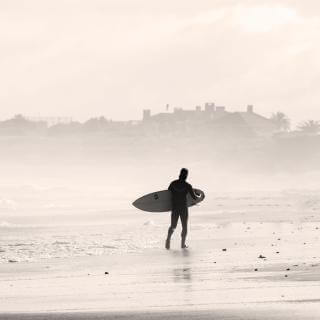
Just as a ship at sea keeps its course by its ultimate destination,
We navigate the decisions of our lives by a vision of our ultimate happiness,
The home port.
However muted this direction may be,
By obligation and our need to care for and protect others.
But as we age and transition into a new phase of life,
The vision that has served as our unspoken and perhaps even hidden guide may be lost.
Gone is its power and appeal,
Whether because we no longer have faith in it or because our new circumstances militate against it.
We have sold our business,
Retired from our position,
Ended our career.
And so,
Like the captain of a ship now directionless at sea,
We must find a new home port,
A new vision of happiness by which to guide our vessel.
A challenge for many of us in this transitional space between who we used to be and who we are yet to become is to accept that we do not yet know what happiness might mean.
For those of us who have dedicated our lives to being in control,
To mastering situations in ourselves,
Not knowing may bring with it an uncomfortable feeling.
And yet we may see,
Too,
That this desire to hold on to control is also derivative of that old vision of ultimate happiness.
If I can control my actions and my environments,
We might have believed,
If I can just know enough,
Do enough,
Then I'll be safe and I'll be happy.
If we can see this impulse,
See it as a remnant of our past way of being,
We may be able to accept and embrace a gentler way of being,
One marked by an existential freedom we may not have enjoyed,
Perhaps,
For decades.
The choices we made in our early adulthood,
Of job and career and family,
Necessarily brought obligations which may have made it difficult to see,
Let alone realize that vision of happiness.
Perhaps without even being fully aware of the consequences of our choices,
We found that the resulting obligations defined our lives,
Creating a very narrow lane in which to travel.
Few if any of us fully realized our early visions of happiness,
Even as we may have found other pleasures along the way,
And so we learned to live with compromise,
The frustrations and the joys that arise from our imperfect being,
This particular life.
But now,
As we move into this next phase of adulthood,
We may no longer be burdened by obligations to jobs and child rearing,
And so we may find that we have the freedom to invent ourselves anew.
What kind of life do I want to be living?
What might I really want?
Answers to these questions are unlikely to come through the rational mind.
As Kierkegaard said,
We understand life backwards,
But we live life forward.
We must wait then,
Be humble,
Try to embody silence,
Be patient,
And we must listen.
Eugene Gandlin,
The Austrian-American philosopher,
Coined the term felt sense to refer to the bodily knowing of the alignment of truth and action.
It comes only in the intricacies of thought when the mind quiets and our inner voice pauses.
Then,
The barrier to a deeper knowing cracks open.
We may feel a sense of rightness about a decision,
A word,
Or an image.
The details may remain unclear,
But we know at a bodily level that we are on the right track,
Right because it is in alignment with our ultimate destination,
Our happiness.
For many of us,
This may prove challenging,
Those of us who live by our minds,
Our reason,
To let go,
Pause the thinking,
And to listen with our bodies.
Let's take a few moments to reflect upon this calling for a new vision of happiness that might guide us in our latter phases of life,
How we may need to let go of prior visions,
And how humility in the face of not knowing presents both a challenge and an opportunity.
How do we feel about this need for a beginner's mind in the face of the meaning and purpose of our last years?
How do we feel about this need to open ourselves to a felt sense informing an understanding of happiness beyond our past experiences?
Let's take a few moments to reflect.
Thank you,
Friends.
I hope this reflection and brief meditation has been pleasant and helpful.
I'd love to hear your thoughts.
Be well.