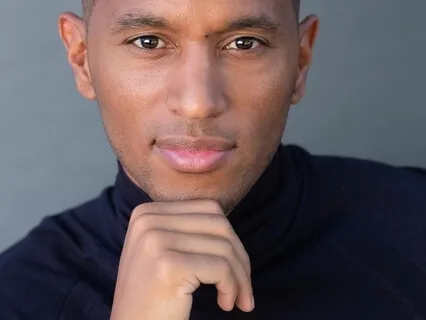
I'm Justin Michael Williams,
And welcome to the Kingdom.
This is Spiritual Church for everybody.
We begin each session with a prayer.
God,
Spirit,
Universe,
All that is,
All that has been,
And all that ever will be,
We say thank you.
May you open up our hearts and our minds to receive the message that we each individually and as a collective are meant to hear today,
And may we spread the feeling and the intention of this message out to everyone we touch today,
Everyone we come in contact with,
So that they may also be touched by this message,
Even if they're not here.
May we be unafraid to stand in the fullness and dignity that is our birthright as people,
As stewards of this beautiful planet that you have gifted us.
We thank you for giving us this life.
We thank you for giving us resilience to overcome.
We know that no matter what struggles we may be dealing with now,
What we might be going through,
That we can overcome,
That you,
Great Spirit,
Universe,
God,
All that is,
All that has been,
All that will ever be,
That you will guide us through into this next dawn of humanity.
Today give us the courage to forgive,
The courage to be strong,
And the courage to be a sanctuary.
Welcome everybody to the kingdom.
Let's begin our lesson for today.
I have a little story to tell you guys about this teaching that we're getting into today.
This is really important.
I was walking.
I'm here at Esalen in Big Sur,
Which is honestly,
Anybody who knows me knows this is my favorite place on planet earth.
It's a spiritual retreat center.
There's a beautiful garden here,
Just the most beautiful garden you've ever seen.
Yesterday I was walking in the garden and I saw this woman named Hannah who is working in the garden.
She's one of the gardeners,
Gardenesses.
And she was,
There were these beautiful marigold flowers and she was literally,
They were all so stunning,
Like hundreds and hundreds of these flowers.
And she's walking and I see her just picking the flowers off,
Just literally picking them off and starting to throw them away and throw them in a literally on the ground.
And I'm looking at her and I'm thinking,
Hannah,
What are you doing?
Why are you killing all those flowers?
I was thinking she was upset because she was literally just like,
Bah,
Bah,
Bah,
Just like flowers gone,
Gone,
Gone.
And I'm like,
What are you doing?
And so she turns to me and she said,
Well,
I'm taking off these flowers because when you take off the old flowers,
The plant can use its energy toward the new buds to make new life.
When you tear off the old flowers,
The flowers that are dying,
Even if they may be beautiful,
Then the flowers and the new buds that are trying to grow,
The plant can use its energy to make new life,
To make those new flowers bloom.
And so first of all,
Some of you guys who grew up in wilderness and stuff like that are probably like,
No shit,
Like duh.
I grew up in the city,
I didn't grow no flowers.
So I was kind of blown away by this.
I've never really thought critically about this.
And she said,
A plant,
The plant,
Even if it has multiple flowers has a limited amount of energy.
And so if you have all these flowers on it and they're nice,
They're not dead,
But there's all these little buds trying to bloom,
Then what happens is the plant has to spread its energy between all the different flowers and it's using all this energy to keep the old flowers alive.
And it's not putting the energy towards the new flowers that are trying to bloom.
And then what happens is you risk the new flowers not blooming at all or falling off and dying because the plant was trying to keep the old flowers alive.
So these were some of the flowers that she took off.
And it reminded me of what we have to do with ourselves.
And if we watch nature,
Obviously we learn so much about what we have to do in our own lives and in ourselves.
And what we have to do in our lives is get rid of the dying flowers,
Get rid of the things that somebody said here,
Brenda,
You got to prune yourself too.
Get rid of,
Even if it might look beautiful,
Get rid of the things in our life that are sucking and draining our energy.
Get rid of the things in our life that are complete,
Right?
Complete so that we can make space in the garden of our life for the new things that are trying to bloom.
So many of you are out there right now with ideas and relationships that you want to get in and business ideas and art projects,
And then we don't get into them because we have so much of our energy sucked up and drained going into these old flowers that are ready to go,
That are ready to be plucked off and honored and thanked and let go of.
And so I was thinking as I was preparing the lesson this week,
What's one of the most important things that we can do?
We got a lot of stuff because we got a lot of stuff to pluck,
Okay?
We've got a lot of stuff to pluck.
So what's one of the most important things that we can do to pluck first?
What was the most important lesson that we should learn to pluck?
And so the lesson today deals with one of the things I,
To be honest with you,
Think is the most important thing to pluck first,
Forgiveness.
Today's lesson is on the power of forgiveness.
And the reason why I chose this,
Even though there could have been so many things,
Is that I was blown away that,
And this is just a small list,
That as I was researching across religions,
Across divides,
Across everything,
Literally everything that you can find from Christianity to Catholicism to ancient African civilizations,
Hinduism,
Everything that you see on this list.
Forgiveness was a tenant that was a consistent thread,
A main thread through every single one of these things.
And I'm going to talk to you today about forgiveness in a way that you may not be used to hearing about it and give you some steps,
A five-step process on how you can actually get about the process of forgiving and not just premature forgiving of like,
Oh,
I let it go.
No,
Actually forgiving and how this process actually works from beginning to end so that by the end of this,
You may have somebody that you're ready to forgive and know exactly how to do it in a way that you can actually let go.
So what we're going to cover today is we're going to start with forgiving others,
And then we're going to get into forgiving yourself and learning how to forgive yourself for the moments that you haven't shown up for yourself in the way that you know you deserve to.
And I can't obviously talk about forgiveness without being clear about what is it.
My favorite quote on forgiveness of all time,
I shared this with my mom when I was at home a few months ago.
This is from Oprah.
Forgiveness is giving up the hope that the past could have been any different.
I want you to just take that in.
Forgiveness is giving up the hope that the past could have been any different than what it was.
And so what so many of us are doing when we're not forgiving is we're looking at something no matter how bad it was in our past,
And we're saying,
They should have done it like this.
This could have happened like that.
If they would have done it the way that I would have done it,
That's not what I would have done.
This could have and should have and would have and would have happened like that.
And the first step of forgiveness is to really accept what is,
Not what you wanted,
Not what you fantasized about,
Not what was right,
Not what should have happened,
But what did happen.
And so often we get ourselves lost and stuck in the story of what could have happened and what we thought should have happened and the drama of all of it,
Not even sometimes to hold a grudge,
But we do it because we're trying to protect ourselves from feeling the pain of the damage that was done to us.
The story,
The loop,
And the talking to all your friends about it,
And they should have done this,
And the gossip,
And blah,
Blah,
Blah,
All that,
Is trying to protect us from the pain that happened to us because we feel like we aren't strong enough sometimes to dive into it.
And I want to be very clear here about forgiveness.
This is a quote from me,
Is that most people think that forgiveness means saying that the wrong that was done to you was okay,
That you're condoning it,
But that's not the case at all.
The true purpose of forgiving someone is to stop letting whatever that person did to you affect how you live your life today.
So it's not saying,
I just want to be very clear,
Forgiving someone is not saying,
Oh,
That was okay,
That's all right,
I accept that,
That was the best you could do.
I think that's a big excuse that people say,
Oh,
They were doing the best they could.
Oh,
That was the best you could do?
No,
They messed up.
But what we're forgiving for is so that you can pluck these old flowers and make space in the garden of your life for the energy that is trying to come through you.
Let's talk about what forgiveness is not,
Because we get confused and we hold ourselves back from forgiving often because we're wondering,
We think forgiveness is all these things that forgiveness is not.
Forgiveness is not condoning,
Forgiveness is not forgetting,
Forgiveness is not excusing,
Forgiveness is not minimizing the hurt and pain that you've gone through,
Forgiveness is not even reconciliation.
This is an important point.
Forgiving someone has nothing to do with whether or not you choose to reestablish a relationship with them.
Forgiveness is not denying or suppressing anger.
Listen to me when I say that,
I'm coming at you all with this one,
Okay?
Forgiveness is not denying or suppressing anger,
Because sometimes,
Not sometimes,
Always,
Forgiveness involves us expressing and communicating in a vulnerable way the wrong that was done to us.
That doesn't mean forgiveness has to sound like,
Namaste,
I forgive you,
All timid and passive.
Sometimes,
Forgiveness is strong.
I'm going to tell you a story about that in a moment.
Forgiveness is not suppressing anger.
It's more about releasing resentment.
This is a huge one,
Especially right now with what's going on in the world.
Forgiveness is not ignoring accountability or justice.
Punishment and recompensation for the wrong that was done is completely independent of your choice to forgive,
Meaning you can forgive someone or not forgive them and still pursue punishment,
Or still pursue accountability,
Or still pursue being compensated for what was wrong.
So many times,
We lump up forgiveness with all this stuff,
And it prohibits us from our ability to actually dive in and forgive.
Again,
Forgiveness,
When we go back to that quote from Oprah,
Is letting go or giving up.
I'm saying it wrong.
We're giving up the hope,
That hope that we hold onto,
That we could change the past and that the past could have been any different than what it was.
We all have a story around this.
I can only tell this story to you guys today because I've forgiven.
My mom is here today.
I think my dad is here today.
Last week,
I talked with you guys about growing up in a home with domestic violence.
I shared with you guys some of my struggles with that and how it's affected my life as an adult ongoing and the work and therapy that I've had to do because of it.
We've all grown up with our own different traumas,
Whether it's domestic violence or alcoholism or this or that.
For me,
It was a unique cocktail of my mom being physically abused and emotionally abused by my stepdad,
By getting slapped in the face with the remote control,
Pushed up against the wall,
Choked up against the wall in front of us.
On the flip side,
My dad being violent as he was dealing with his alcoholism,
Which he's totally healed from in a beautiful way,
And him beating and abusing his wives and me having to see this as a kid.
What was happening to me as it relates to this,
And the reason why I'm sharing this story is that I had thought that I had let it go for years.
I let it go.
I live in LA.
I have this whole thing.
My life is different.
I'm better now.
I let it go.
I'm happy now.
I'm not paying attention to any of that stuff.
I forgave them.
It all kept showing up in my life in all these weird places where it doesn't belong.
This is what happens when we push stuff down in our lives.
It ends up showing up in places where it doesn't belong.
It showed up in my relationships,
Not just with my mom and dad,
Where,
For example,
With my mom,
I would be irritated with her for no reason or being smart with her or just being snappy with her for no reason,
And with my dad feeling like I was distant from him or disconnected from him or had a wall up to him for some reason.
But it also showed up with other people because what doesn't heal repeats.
So if we don't heal it,
If we don't fully heal it,
Then it keeps showing up in our lives in all these different ways so that we get the opportunity to heal it.
That's why we end up in relationships that are just like the relationships that we had with our parents.
We end up in relationships where we're just like we are with our bosses or our coworkers or these people or that,
Not just romantic,
That are similar to our siblings and this and that,
Because we have forgiving work to do.
And so this is how it affected me.
And I think what we are all looking for as we do this is we're looking for atonement,
Accountability,
Being heard and letting go.
And so I want to take you guys now through a little process that I put together for the five steps here of forgiveness that we're going to walk through.
So the first step,
And actually let me say this,
I'm walking you through this and this is my promise to you guys.
I will never ever get up here and preach to you guys something that I have not practiced or known.
I've had to walk into the fire of this.
And what I want to tell you is when you go through this process and you go through these steps on the other side of this,
My relationship with my mom and my dad are now beyond anything I could have dreamed of in my wildest dreams.
My mom and I,
A couple months ago when I was home,
Got to cuddle on her bed.
Like just the closeness has gone so deep just because of this forgiving.
So this works.
So the first step of forgiveness is often being heard.
And that's because a part of,
Listen carefully,
Okay,
A part of forgiving and forgiveness is fully expressing the hurt and the pain and what was wronged.
And this is the thing,
You don't get to skip that part.
You don't get to skip that part.
People think you can skip that part,
Right?
Like,
Oh,
I'm just going to,
This happened.
Okay,
I'm just going to forgive.
You lying.
That's when premature forgiveness happens,
Okay?
When you just say,
Oh,
I let it go.
But if you look at your life,
You didn't really let it go.
You're pushing it down.
You didn't really let it go.
So a part of this is being heard.
And what being heard means is saying how something affected you.
I want to be very clear about what I'm saying with that right now.
Being heard doesn't mean blaming and shaming the other person.
They did what they did and it was wrong.
It also doesn't mean not holding them accountable,
Like we said.
But what it means is you're turning the conversation onto how what they did affected you.
So when I showed up to have this conversation with my parents,
I said,
Dad,
Mom,
The actions that you had as an adult,
Me seeing this,
And I wasn't shy about it.
I said,
Me seeing,
You punch my stepmom in the face at the swimming pool and dragging her on the floor.
Me seeing this and this and this,
Saying it bluntly and forwardly,
But just stating the facts.
This is how it affected me.
It affected me because I've become afraid to stand up for what I believe in in my life.
It affected me because now I'm afraid to be somebody who shows anger because I think anger means aggression.
It affected me in my relationships.
It affected me in my self-confidence.
It affected me in all these ways.
And so what you're saying when you're being heard is how it affected you.
And this takes vulnerability because it's easy to just point the finger.
You did this,
You did this,
You did this.
You need to ask me for forgiveness.
It's about you being heard.
And if the person can't hear you,
They're gone or they're dead or you know that you're not in touch with them,
Writing a letter just to get that voice out is so important.
And then the next step,
And this is really important,
Is after you try to be heard is releasing control.
This was one of the biggest ones that I learned from my therapist.
And it's because so many of us,
What we do is we kind of manipulate the way that we share our forgiveness or what was wronged because we're trying to control the outcome of what the other person is going to do.
We're trying to control the response that they're going to have to what we're saying.
So we say it softer,
Oh,
It's okay.
No,
It's all right.
It wasn't that bad.
No,
This is messed up.
So you have to release control of how you thought they were going to respond.
So for example,
If my,
So I'll give you this.
When I did this with my dad and my mom,
My therapist that I was working with,
The shadow work guy that I was working with said,
Say it like it is because if you don't get it out,
Then you're going to still have stuff inside to heal.
Be honest,
Be raw,
Be real,
Be strong,
Be fierce,
But be loving.
And know that you're doing it with the intention to heal,
Not to call out,
Not to shame,
But to heal.
And so when I did this,
They said,
Okay,
When you send this letter,
I did it as a letter to my dad and talked to my mom,
You can't control what their response or their outcome is going to be.
My dad handled it very differently.
My mom cried and cried and went into shame.
I can't believe I did this to you guys.
How could I have you guys in a home like this for all those years?
I failed.
I did this.
I did that.
That was my mom's response.
My dad's response,
He flipped out.
Oh,
All right then.
You know,
I changed.
It's not like that.
Called everyone in my family talking about Justin.
Justin came for me.
Justin came and yelling,
Because I'm the one in the family who doesn't usually cause much trouble.
And so,
You know,
My dad was like shocked that I came at him,
Even though I came at him very lovingly.
And what I told him was,
Dad,
I'm not saying this to you to break us down.
I'm saying this to you to bring us closer,
Because if we don't do this,
We're not going to be able to be closer.
And I just want you to know my intention.
And so I had to let them,
I had to stop taking responsibility for how they felt.
I had to let them go on their own journey of healing.
Because if you hold back the truth,
You're taking away the other person's choice to step into the healing that they need to step into in their own way.
To understand that this release and control is super important.
It's not your job to take care of the other person.
And this is what my therapist said,
Because I'll be honest,
When my mom was feeling the way that she was feeling,
I felt terrible.
I said,
God,
She's been through so much.
How can I be hurting her like this?
And remember my therapist telling me,
Justin,
If this is your mom,
If this is your mother,
If this is her first time feeling deeply how much her actions hurt you for 10 years of you living in an abusive household,
Of all the thousands of dollars you spent on therapy,
Of all the pain you felt in relationships for your whole life,
If this is her first time feeling it,
Good.
Let her go through her own healing process.
Don't hold back her healing.
And the same thing for my dad.
If this is his first time having to feel the effects,
Good.
Let them feel it.
It's not your job to protect them.
And so you have to release control for how it goes once you express your message.
The next step,
And this is what I think we all really want.
When we're asking for forgiveness is accountability.
And what we're really wanting,
I think when we're being heard and asking for forgiveness is for the other person to be held accountable and for them to take accountability.
But you have to remember that you can't control whether or not the person takes accountability.
You can control whether you hold them accountable,
But you can't control whether or not they take accountability.
So my dad,
For example,
He flipped out,
Called the whole family.
Like I told you,
I had my aunts and uncles calling me,
Everyone texted me,
I can't believe you did this to dad.
And I just sat in it.
And I sat in it because I said,
I know that my intention is,
I know what my intention is.
I know that I said it with compassion.
I know that I said it with heart.
I know what I'm doing this for.
So I sat in that fire for two weeks until my dad finally called out of nowhere and said,
John,
I think we should talk.
And he had to go through his own journey for those two weeks that I wasn't responsible for.
Let it go.
Let him deal with what he had to do.
He talked to his dad and it opened up this cycle of healing for his father,
Between him and his father and what he dealt with.
And if I hadn't stepped in and fully gave it to him,
My dad and my grandpa would have never even probably had that healing that they needed to have.
That allowed my dad to heal within himself to show up differently for me.
And same for my mom in her own way.
And so I love this quote by Mark Nepo,
Who I had the absolute honor of presenting with at a seminar a couple,
God,
Almost a year ago.
We talked before about paradox,
Which is held in any moment where more than one thing is true.
Accountability and forgiveness form a paradox.
On the one side,
Accountability is always true.
People are accountable for what they do to each other.
And we do hurt each other.
And sometimes we don't own that and it hurts even further.
So people are accountable.
And when we don't own that,
It hurts worse.
But you can't control whether or not somebody chooses to take accountability.
And then the next step,
Step four,
Is atonement.
And atonement is a word that a lot of us don't know.
And we confuse forgiveness with atonement.
And I almost did a whole lesson on atonement.
And I think I will do one eventually.
I'm working on it for my next book,
Actually talking a little bit about having atonement be a huge part of it.
Because I think it's what's needed in our world right now as it pertains to social justice.
And Marianne Williamson has this beautiful quote about atonement that I love.
She says,
Atonement is the place where you yourself,
I'll start over.
Atonement is the place where you yourself acknowledge where you have been wrong and you ask for a correction of your own perception.
Where you acknowledge where you yourself have been wrong and ask for a correction.
Here's my version of this that I've been kind of working on.
Atonement is inner reconciliation.
It's realizing our wrongs,
Naming them,
Feeling them deeply,
And then asking for correction in our own hearts.
So forgiveness,
While forgiveness is often about what's happening with the other person,
Atonement is what happens within.
It's what I was hoping my mom and dad would do,
Accountability and atonement.
But atonement is what we even have to do when we're forgiving ourselves.
Atonement is that space within yourself where you admit and you go,
I messed up and it sucked.
And I wish I would have done that differently.
And please,
God,
Spirit,
Universe,
Lord,
All that is,
Please correct my heart so that I will never do that again.
I have wronged.
I have done wrong.
No matter how big or small it is,
This atonement part is essential.
And I think that is,
To be honest,
I think that's the wave that we're preparing to step into in our social justice work.
Black lives have been now,
Have been working for years to be heard.
And now white people for the first time in history are taking,
Starting to take accountability publicly.
And now that we've done that,
We're able to move into this next phase of healing,
Which is the atonement where people really claim and say,
Okay,
Now let me correct it.
I am sorry.
And then that moves us into the final stage,
Which is letting go.
And we try to jump to this stage.
Y'all,
We be trying to jump to the stage real quick.
Okay.
Letting go.
I let it go.
I let it go.
You didn't.
No,
You didn't.
You just stuffed it away and pushed it down.
And if you look around in your life,
You know that you haven't let stuff go because guess what?
The new,
You're stuck because the new,
You're stuck in the same cycles and the same patterns.
That's a hint that you have some flowers to pluck,
That you have some work to do,
Some forgiveness to do.
So that's forgiving others and letting go.
There's not a lot to talk about because once you've done that work,
Then you let it go.
And when you let it go,
You actually let it go.
You go,
Okay,
So now that I've let it go,
What's the new story?
How am I stepping forward?
What am I doing next?
That's letting go is really letting it go.
Giving up the hope that the past could have been any different.
Now forgiving ourself follows the same pathway.
And I'll just say this briefly because we went through it in detail.
It's forgiving ourselves follows the same path.
It starts with,
And when I'm saying forgiving yourself,
It's forgiving yourself for some time or some way that you didn't show up for yourself,
That you didn't meet your own expectations,
That you waited too long,
That you did something yourself that was wrong.
Okay.
I remember I had to forgive myself because my sister had invited me.
It was like one of my biggest regrets of my life.
My sister,
I was in LA,
My sister was in the Bay Area,
Literally giving birth to her first child.
And it was the middle of the night or it was going to be the middle of the night.
And I had the choice of whether or not I was going to stay in work on some work that I was doing on my book because I was on a deadline or if I was going to jump on a flight and go home to see the baby.
And we didn't know how long it was going to be until the baby came,
If I would get on the flight and not make it.
And I chose not to go.
And she had the baby in just the time that I would have made it.
And I remember I had to forgive myself for that.
So these are sometimes big things that we have to forgive ourselves for and small things that we have to forgive ourselves for.
And so being heard is the first step and then releasing control,
Accountability,
Atonement and letting go.
So when you're doing this for yourself,
I'll say this very quickly.
Being heard means there is a part of you,
A part of you that feels wronged,
That needs to be heard.
A part of you,
There's a part of you inside that higher self of who you are that is saying,
Hey,
Hear me.
You've wronged me inside of you,
This war,
These different parts of ourselves.
And that part of you needs to speak.
And so what I do is I write a letter to myself.
Journal,
Okay,
Part of you that is wronged,
What do you want to say?
You damn,
You messed up.
You chose work over your sister's birth,
Baby's birth.
You chose this,
You chose that.
How could you,
How could you?
Let it speak,
Let it speak.
And then you release control,
Which is releasing control is not controlling the emotion and not chaining yourself what comes up,
But letting yourself feel your process.
And then this is the part that's amazing.
When we're forgiving other,
When we're asked,
When we're forgiving other people,
We don't have a choice over whether they stay accountable or atone.
But when we're forgiving ourselves,
We can hold ourselves responsible for taking accountability and then atoning.
So this is when that other part of you,
So you have the first part of you that wants to be heard and needs to speak.
So you've got to write it.
Don't just think it,
Thinking it don't work because then you just get stuck in your thoughts.
Write it,
Say right now I'm letting this part of me be heard.
And then once you felt the emotions and done the thing,
Then you go to the accountability and atonement.
And in the atonement,
Then that other part of you is writing the letter.
You've gone from the part of you that wanted to be heard,
That was wronged writing.
Then you respond from that other side of you,
The other part of you who did the wrong that says,
I am so sorry.
I am so sorry that I did not show up to see my sister's first child be born when I could have been in that room.
I am so sorry that again in my life I have chose achievement and work over family.
I am so sorry for this lesson that I'm having to learn and I promise,
I promise next time I will do better.
Please God,
Help me do better.
Help me remember this.
I am so sorry.
Please forgive me.
Okay?
And then you got to let it go.
When you've done that in your heart,
Then you got to let it go because you can't go back and change the past.
You can't go back and do it differently.
But what you can do is show up differently now.
I can show up now as the best uncle that I can be.
I can show up now and make sure I'm there for birthday parties and family events because I felt that pain.
But if I didn't do the work,
If I didn't do that internal work on myself,
Then I would just keep repeating the cycle,
Keep not showing up,
Keep doing it.
Because what,
Like I said,
What doesn't heal repeats.
And so if you don't forgive,
You're going to keep bringing the same situation up and up and up into your life again,
Again and again so that it can be healed.
And so this is work that we're going to do.
And that's why,
Actually,
I'll just say this very briefly.
I already talked about social justice,
But what doesn't heal repeats.
We see these two images of then and now civil rights movement in today,
Same picture.
Why?
Because we let it go.
Oh,
Racism don't exist no more,
Blah,
Blah,
Blah.
We try to let it.
No,
We have not atoned.
We have not atoned.
We have not moved through the process,
But guess what?
We are the generation who gets to do it now.
Okay.
And lastly,
Forgiveness is a radical act of self-love.
When we forgive,
We are loving ourselves more fully than ever before because this is about you letting go.
What if you forgive someone and they keep doing the same thing?
How do you have the strength to go through the process over and over and over?
Well,
The Bible says a lot about forgiving someone over and over.
I agree that you have to keep forgiving and boundaries have to be set and held.
It is okay.
Remember what I said,
Forgiveness is not.
Forgiveness is not pardoning.
Forgiveness is not,
It's okay.
Forgiveness is not saying,
I want to be in this relationship again.
You can forgive somebody and completely cut them off for the rest of your life.
You can do both of those things.
Do you know what I mean?
This is why some people have a hard time with forgiveness because they think,
Well,
If I forgive this person,
Then I have to welcome them.
If I forgive them,
What they do is okay.
If they're still doing it,
Then they haven't learned a lesson and this is where you get the opportunity.
Again,
It comes back to you to set a new boundary.
We'll talk about boundaries in a couple of weeks,
I promise.
Especially setting boundaries with friends and family.
What I'd love for you guys to do right now very quickly is close your eyes,
Hands over the heart.
Take a deep breath in and a deep breath out.
Again,
A deep breath in and a deep breath out.
You got it.
It's okay.
There's nowhere to go.
There's nowhere to rush to.
You're here.
You are here.
You're allowed to be here.
You're allowed to take this time for you.
You're allowed to be here.
You're allowed to be present.
It's okay.
I know it's a lot.
You're allowed to take this time for you.
With your hands over your heart and your eyes closed,
I want you to first just think of one,
I call it here a power nugget,
But really it's a golden nugget.
I'll probably just start calling it a golden nugget.
If you could take one thing,
Just one thing that you have learned from this lesson today,
From this message,
What would be that one thing?
Just think of it in your mind.
It takes about 45 seconds to commit something into our long-term memory.
I want you to just think about this thing.
Think about it,
Think about it,
Whatever it is,
And say,
I'm going to remember this.
This is the one thing that no matter what I'm going to take away from today,
This is the one thing that I'm going to share with someone today that I love,
If you'd like.
It's a moment of silence to remember that thing.
Now open your eyes.
Our practice today is super easy.
It's going to take you a minute.
Grab your piece of paper,
And I want you to really write this down,
Whether it's on your phone or on a piece of paper.
Do not just do it in your mind.
The reason we ask you to write stuff down is there's actually science behind writing it down,
Makes you remember it more frequently,
And makes it 40% more likely that you'll do it if you write it.
True.
Actual science,
40%.
Write down one person you need to forgive and why you need to forgive them.
One thing you need to forgive yourself for and why.
The why often has to do with why it's sucking up the old energy.
Just take a moment,
Watch Ari's playing for us,
And do that.
Thank you all for your vulnerability here.
Then we're going to move into the power action right before we get into our song.
Our action for this week,
You already know what it is,
Is to go through the process with yourself and with somebody that you need to forgive.
Do it.
You don't have to rush it.
You don't have to rush it.
This takes a little time.
It's not going to be like,
Oh,
I did it.
Done by tomorrow.
Give yourself the time.
Write the letter.
The being heard part,
I love writing a letter because it gives me the ability to speak and not have to be afraid and be shifting myself based on how the other person's responding,
If they're crying,
If they're yelling,
Or if they're doing whatever.
Writing a letter makes me know that everything that I said is exactly the way that I want to say it.
That's my favorite way of being heard.
It can be an email,
A text message,
An actual letter,
And then go through the process.
If the other person doesn't want to make space to talk or listen,
This is really important.
We don't always get that opportunity.
That doesn't prohibit you from writing the letter and getting it out.
Write the letter.
You have to get it out of your system.
You can send it to them.
You can send it to releasing control.
It's completely releasing control.
It's completely releasing control of what happens after you try to be heard.
They can never read it.
They can never respond.
They can respond angrily.
They can respond nicely.
They can deny it.
They can do anything.
You have to release control of any of this happening with another person.
Then you move to the letting go.
This process can take some time.
It took a few weeks with me and my dad,
And then it unfolded for a while.
This is about you getting it out.
If they never respond,
That might be a moment when you write another letter.
Hey,
You haven't responded,
But sometimes we don't get the luxury.
Sometimes people that we need to forgive are dead or gone,
And so they can't respond.
Does that mean you're going to hold the grudge forever?
No,
It can't be.
This has to be.
They can't take accountability.
They can't atone because they're gone.
For example,
Social justice in this world,
A lot of the people who were slave owners,
Whatever,
They're not here.
How do we go through this process if we're reliant on the other person?
You've got to remember,
When you're forgiving yourself,
You can do this part.
When you're forgiving others,
You can't do this part.
You have to let that part happen on its own.
Now we're going to move into the final phase today.
I know we're just a few minutes over,
But I hope it was worth it for you guys today.
I try not to rush through this,
But I'll make the teachings a little bit shorter.
In closing,
Everybody,
I just want to remind you all that you have the power within you.
You have the power within you to pluck these flowers.
No matter how beautiful they may have once been,
No matter how beautiful you might think they are,
You have a limited amount of life force energy running through you.
This is our moment to step into the full power and dignity and soul fire that is our birthright.
We're going to do this together.
Here's our blessing.
May you be happy.
May you be free.
May we all,
All of us,
Across every divide,
Always find peace.
I love you.
Thank you.
This has been Justin Michael Williams,
Signing out.
And I'll meet you right here in this special place.
Bye for now.
I hope you enjoyed this session of the kingdom.
One of the best things that you can do right now is share this session with somebody that you love.
It is only by each of us sharing inspiration in the corners of the world that only we can reach,
That we will rise together.
Thank you so much for joining me for this session of the kingdom.
I'll see you in the next one.
This is your moment,
Baby.
Let it shine.
We are enough.