Resolve in the nature of moksha,
Which means liberation from the karmic wheel of suffering.
That's what moksha is all about.
And what exactly is the karmic wheel of suffering?
Is it something you can see?
Is it something that you can feel or experience?
What is the karmic wheel of suffering?
In ancient times,
The karmic wheel was known as the great wandering of samsara.
Going through lifetimes upon lifetimes,
Completely ignorant of who you are as this divine presence that can't be seen with your eyes but can be felt in your heart.
It can be felt in your heart,
This eternal presence.
But we spend most of our time,
Once we wake up in the morning,
Focused on our thoughts,
Focused on our circumstances,
Focused on whatever it is that we want to get to make us happy.
What will make us happy today?
What will make us happy in the future?
What will protect us from any kind of pain?
And when we set out on the spiritual journey,
We are looking for an end to pain,
Emotional pain,
Physical pain,
The pain of life,
Right?
We are looking for a solution.
But if you're not on the spiritual path and you're pursuing happiness in the world,
You have to hit a wall at some point.
You have to realize that nothing in the world that you've tried to make you happy,
You know,
Everything you've tried to do to make you happy has failed.
Relationships have failed to make you happy.
Power,
Sex,
Drugs,
None of it really made you happy.
And when you hit that wall,
That's usually when the spiritual search begins and you start to ask yourself,
What is my life really all about?
What is life?
What is the purpose of my life?
Why am I here?
And these deeper questions arise when you realize that everything you thought would make you happy failed.
Maybe you had moments of happiness,
Moments of bliss,
Moments of feeling free from the boredom of your life,
But these moments are fleeting,
They come and they go.
So the resolve of moksha is a kind of radical discipline,
A radical discipline.
And this means that you have to actually start to live the teaching on whatever path really resonates with you,
What really resonates with you.
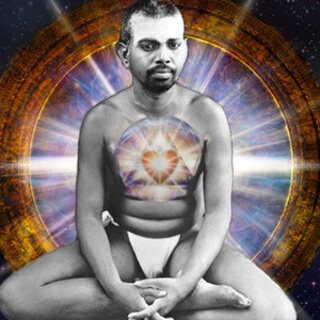
So the path of Ramana Maharshi is known as the mountain path.
And the reason it's called the mountain path is because Ramana's teacher was the mountain Arunachala Shiva.
Arunachala Shiva is a mountain in southern India that was his master,
His guide,
His teacher.
And when you think of a mountain,
Any mountain,
But specifically Arunachala Shiva,
What is it about the mountain?
What is it about this eternal presence that captivated Ramana Maharshi?
It captivated his attention.
It was the source of his devotion and his life was completely and totally given to the mountain.
And the mountain is the formless presence of God,
The formless presence of God.
And Ramana Maharshi surrendered his life to this formless presence of God.
And he was transformed in that deep and intimate relationship with the mountain Arunachala Shiva.
And in Ramana's case,
He had a natural resolve.
He was completely surrendered to the mountain at a very young age,
At the age of 16.
And through that surrender to the unseen presence of God,
He was completely and totally transformed by the mountain,
By the omniscience of God.
And you can be transformed by the mountain,
By the omniscience of God.
You can be transformed right now,
Right here,
In this moment.
But it takes a kind of radical acceptance that you are not in charge.
This is the radical discipline of actually applying the teaching.
It begins with recognizing that you cannot free yourself from ego and mind.
It is not possible for you to free yourself from the ego or your mind because it is genetically strong and infused with karmic tendencies that are completely unconscious to you.
They're the genetics of your body and the genetics of your brain.
Your brain is actually wired for suffering.
It's wired for protection.
It's wired for the fight,
For the seduction,
For the hiding,
For the running.
So you have to be willing to stop.
You have to be willing to recognize that you actually are not in charge of your life,
That your life is unfolding based on these unconscious tendencies,
Parabdha karma,
Which is the destiny of your physical body.
From the moment you were born,
Your body had a destiny.
There was a goal,
A purpose for your physical body that must be fulfilled as a consequence of former actions in other incarnations.
So the nature of moksha is to begin the process of awakening,
Which on the mountain path is the eternal natural way,
The eternal natural way,
Which has three basic elements to it.
And the first element of the teaching of Ramana Maharshi and his beloved mountain,
Arunachala Shiva is the law,
The law.
And this law is your own direct experience.
Without direct experience,
The teaching remains intellectual.
You might have had experiences of bliss and understand the instantaneous nature of the teaching of Sri,
Sri,
Sri,
Bhagavan,
Ramana Maharshi.
But these moments of bliss and direct realization fall away.
But those direct realizations of the bliss of your being are essential because they transcend intellectual understanding.
So we're not really talking about knowledge.
Certainly you can pick up a book and read about Ramana,
Read about his teaching and be done with that reading in just a few minutes because the essence of his teaching is simple.
But that simplicity does not translate into easy.
It is very,
Very challenging to be free of samsara,
The great wandering through lifetimes upon lifetimes.
This is a challenge of huge proportions because most of what you are suffering with is unconscious.
Ninety-five percent of the suffering you experience every single day,
Moments of sadness,
Anger,
Frustration,
Stress,
Anxiety,
All,
Most of that,
Ninety-five percent is unconscious.
So the mountain path is the path of surrender and actually every spiritual path is the path of surrender,
Whether you're following the Buddha,
Whether you're following Jesus or you're a Muslim and you're following the Quran.
This is true of all religion and all spiritual practice.
So to awaken from the great wandering,
The great illusion of samsara is simple and no easy task.
So it takes a very,
Very strong desire.
You must really feel it in your bones that you want to be free no matter what.
No matter what you want to be free.
And this is part of the radical discipline.
You must have that intense desire for freedom,
The intense desire for moksha,
The ultimate liberation.
And the mountain path is a joyful path,
A path of power,
The power of presence,
The infinite power of silence,
The silent power of the mantra.
It is the eternal natural way based on your direct experience or the law.
And the essence of this path is silence.
So if you think of a mountain,
It is silent,
It is unmoving.
It can be a rainy day and very cloudy and windy and the mountain is still.
It can be a sunny day with big puffy clouds floating by and the mountain is still.
The rain or shine or wind or storm has no impact on the unmoving presence of the mountain which is the formless presence of God alive in your heart right now.
Right now.
And it's that living eternal presence that is infinitely still.
It is so vast.
It is beyond comprehension.
And the practices of self-inquiry,
Meditation and the mantra turn your attention to the vast presence alive in your own heart.
And that presence is bliss.
It is not a state of bliss that comes and goes because it is bliss.
It is the stateless state of teria in your own heart.
Bliss is the bliss that never comes and never goes.
So when you experience bliss states,
When you go to a retreat or you're meditating or you're singing the mantra or you're with a particular guru or teacher,
Satsang teacher and you experience bliss that has this sense of euphoria associated with it.
You feel euphoric,
Joyful,
Free in those moments of bliss but they always vanish.
The retreat ends,
You go back to your life,
You go back to your job and the old patterns of suffering return.
And you've heard me talk about this many times,
The patterns of suffering which are deeply rooted in unconscious tendencies which are genetic,
Which are vasanas,
Which are karmic,
Which are gunas,
Which are deeply ingrained tendencies,
The tamasic tendency which is to fight.
All violence comes from the tamasic nature of the human body and we are wired for that fight.
Even if we don't physically fight,
Even if we don't go to war on the outside,
We're at war with ourselves on the inside and we're strategizing how to prove we're right and the other person is wrong.
So these tamasic tendencies are very,
Very strong.
And there's rajasic tendencies which is the pursuit of pleasure.
And however you perceive pleasure in the world,
Whether pleasure is power or pleasure is sex or pleasure is getting drunk or doing drugs or pleasure is doing ayahuasca to get a spiritual high or LSD to see into a different dimension,
Mind-altering psychedelics.
And this has a beginning,
A middle and an end,
A beginning,
Middle and end.
You can get drunk and feel euphoric when you're super drunk and you're staggering around,
But the next morning the alcohol is worn off,
You have a raging headache,
A hangover,
Right?
And the happiness that you experienced while you were drunk is gone.
And the same is true for drugs,
Especially hallucinogenic drugs,
Which alters the chemistry of your brain and that's why you see things.
You see reality melt before your eyes and you can have a good trip or you can have a hellish trip.
You can go into hell realms on hallucinogenic drugs,
But it also has a beginning,
Middle and end.
So the bliss that changes is actually not the bliss that Ramana points to.
He eternally points to the living eternal bliss that's alive in your heart,
But it is not a state that changes.
And it's really important to understand this and it's really important to understand that the bliss that comes and goes is not the bliss of moksha.
The bliss of moksha does not become permanent until you've earned it through radical discipline,
Which means the teaching becomes so important to you that it becomes part of your life.
It's no longer compartmentalized into moments when you're in a retreat or in the satsang hall listening to a satsang teacher.
It is integrated into your life,
Which means you actually sit down on the meditation cushion and meditate as an inquiry.
It means that you actually sing the mantra,
Om Bhur Bhur Vahas Vaha Tat Savitur Varenyam Bhargo Devasya Dheemahi,
Dhiyayo Nprityodaya Tuh.
You actually sing the mantra focused on the heart center,
Which is just to the right of your physical heart.
You actually apply the yoga,
The jnana yoga of Ramana's teaching and the essence of yoga is silence.
And all yoga with Ramana is to turn your attention to the source,
Whether you're meditating,
Whether you're singing the mantra or you're inquiring into or you're confronting the who,
Who is upset,
Who is angry,
Who is sad.
You're confronting reflective consciousness.
You're starting the process of seeing through the illusion of you to discover the vast indescribable bliss of you,
The state that never comes and the state that never goes,
The eternal presence that is never touched by death.
So there's the law,
The essence and the nature of the mountain path and it is a beautiful path,
It is an organic natural evolution and it is beautiful and filled,
Infused with the magic and mystery of Arunachala Shiva,
The ancient and eternal presence of Shiva,
The formless presence of God and it is that formless presence,
The unseen that has the power to address the unconscious tendencies and that's why the mountain path is the ultimate surrender.
It is the ultimate surrender to the unseen and through the radical discipline of applying the teaching,
You become aligned with the presence and the presence burns all of these unconscious tendencies,
The karma,
The vasanas,
The gunas,
Which are the rajasic tendencies to pursue pleasure,
The tamasic tendencies to fight and the sattvic tendencies to constantly seek the answer to happiness in the world.
So all three need to be overcome.
All the unconscious tendencies must be burned through,
You must see through the illusion of reflective consciousness which is the visceral feeling that you are your body and that you can do it,
That you can meditate,
That you can sing the mantra,
That you can inquire,
That you are the one who frees yourself from samsara.
But you see it's impossible for you to free yourself from you because you are literally trapped by the idea of you which is reflective consciousness.
So it takes an intense desire from oksha and the maturity to face yourself,
To face all the lies you've been telling yourself,
To face the deeply ingrained tendency to pursue pleasure,
The tendency to fight,
The tendency to hide and run away,
To face all of the things about yourself that you'd really rather not see.
What is sadness anyway?
What is anger?
Where does it come from?
Is it really your circumstances,
The events in your life that are causing you to be angry or frustrated or stressed?
Or are you creating that?
And this is the inquiry,
Right,
To see how you suffer,
Not why you suffer.
Most people spend their whole lives telling the story of why,
Why this happened or why that happened or why you're upset now.
And it's that one three-letter word that leads to eons and eons of suffering,
Right?
Why am I upset?
Why am I angry?
Why am I frustrated?
This just leads to a huge story and the mind is incessantly weaving stories about whatever you've experienced in your life.
So the teaching helps you to transcend the suffering nature of life by removing the unconscious tendencies that create patterns of suffering.
And patterns of suffering are things that just constantly repeat like you're always sad.
You're happy for a little while and something triggers you and you find yourself crying in your pillow again,
Sad.
Or your tendency is to be really angry so you're constantly raging online.
You're constantly fighting at work or with your colleagues or with your family members.
It's always a fight.
It's always a struggle.
So the mountain path is not a struggle.
It is the deepest relaxation,
The end of the struggle,
The end of the fight,
The end of the pursuit of happiness,
The pursuit of bliss states that come and go and a deep relaxation into the bliss of your being that never comes and never goes.
So when you apply meditation,
When you integrate it into your life and you start waking up every day at three or four in the morning and doing a pranava practice which is focusing on the source of the sound om which is ah,
Oo,
Mm,
Right.
And you can do that for 10 minutes,
15 minutes,
20 minutes,
An hour,
An hour and a half,
Two hours.
The time extends in correlation with your willingness to actually do the practice,
Right.
You can't talk about the practice or think about the practice.
You actually have to sit down,
Be still,
Be quiet and inquire through meditation,
Through the mantra,
Through the sound of silence.
That's what the mantra is,
Is the vibratory sound of silence which literally rewires your brain and develops the skill to stay present and focused on the source which is free of everything in the world.
All the ups and downs,
Good moments,
Bad moments,
The presence of the unseen within you is free of all of it and it is always in bliss as bliss,
Transcendent of time and space.
So you have to have this intense desire but you also have to have the resolve,
Right.
The resolve is I'm going to stay on the mountain path with Ramana Maharshi no matter what,
No matter how many times I stumble and fall,
No matter how many times I get tricked or trapped by my mind or the ego,
I'm going to continue on.
It's not a goal,
The mountain path,
It's not like we're climbing the mountain to reach the top or we're not climbing the mountain to attain moksha.
Moksha is already here and you can know that intellectually but not experience the bliss of being because the bliss of being is earned through your practice,
Through the integration of that practice into your life.
So the eternal natural way is a way of life,
The law,
The essence and the nature of this path is moksha which is the ultimate release,
The ultimate release.
But you really have to want it with all your heart,
All your mind,
All your soul and all your strength.
As Ramana said,
You have to be like a drowning person,
Right,
You're drowning,
You're under the surface of the water and you're trying to reach the surface for one little gasp of fresh air,
Right.
And it begins wherever you are,
The moment you awaken to the truth with who you really are,
Deeper than your name,
Deeper than your form,
Deeper than your past and your future,
Who you really are is the bliss of being,
The bliss of being.
So resolve means you just never give up,
Never give up.
It's a challenging path,
It's easy to get on the mountain path because with Ramana you can awaken instantly,
You can awaken right now to the living eternal truth that the consciousness shining through your face in this moment is who you are,
Conscious awareness.
Really you can awaken to this living truth.
But to abide as that,
To be free of the incessant reactions to life and the incessant movement of your mind,
This takes practice,
Right,
To burn through the unconscious tendencies but also to develop the skill to focus on the eternal unseen presence alive in your heart and all around you.
You are that presence and deep within you,
You have the natural resolve to stay on the mountain path which is surrender to the unseen,
Learning to trust the intelligence,
The indescribable intelligence of the omniscience that you can't see,
Trusting that over anything that arises in your mind,
Anything that arises in your mind,
Even enlightened thoughts.
Enlightened thoughts are the most dangerous thoughts because it keeps you trapped in trance states,
Bliss states that come and go.
So enlightened thoughts in many ways are far more dangerous than mundane thoughts,
The pursuit of pleasure or lying to protect yourself or fighting with your neighbor.
So the resolve is the surrender,
Right,
Surrendering to the unseen,
Trusting the unseen.
This is the nature of faith,
Is trusting in the unseen and knowing.
And if you don't know,
This podcast is revealing the intelligence of the omniscience with the power to remove all unconscious tendencies.
The moment you are willing to surrender,
Which is to let go and relax in the omniscience,
Let the omniscience do the work,
Like you're floating down a beautiful pristine river.
You're floating,
You're not trying to swim upstream,
You're not trying to climb the mountain.
As you walk on the mountain path,
You become the mountain,
The mountain that was always already there.
The omniscience of God,
The living truth that you are,
You are that.
Om Shanti,
Shanti,
Shanti Om.
Shanti,
Shanti,
Shanti.