Welcome to Episode 59 of Bite-Sized Blessings.
Episodes 59 and 60 are companion episodes.
I get to interview husband and wife,
Andrea and Cheth Rowe.
They are remarkable human beings with remarkable stories.
In Episode 59,
However,
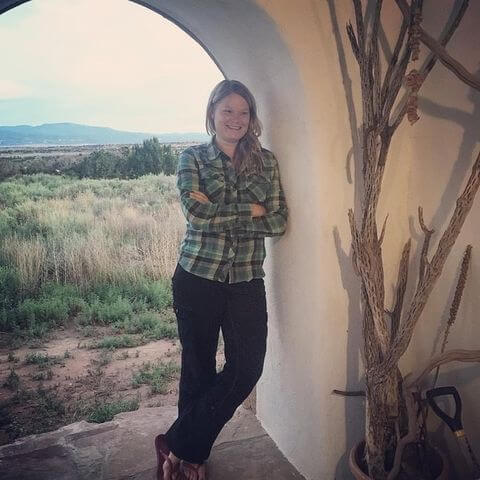
I have the great honor of interviewing Andrea Rowe,
Who quite literally has a singing voice that would make the gods sit up and take notice.
In this episode,
I use four of her songs.
To hear more of her music,
Please go to the Bite-Sized Blessings website at bitesizedblessings.
Com and click on the link under her episode's notes.
I do want to announce that there is a trigger warning for this episode,
However.
Rape,
Sexual assault,
Human trafficking,
And abuse are discussed,
So please,
Please take care.
If you suspect someone is the victim of rape,
Please call the National Sexual Assault Hotline at 1-800-656-4673.
Or if you suspect that someone is being trafficked,
Please call the National Human Trafficking Hotline at 1-888-373-7888.
And now,
Episode 59 of Bite-Sized Blessings.
It was a miracle that I survived it,
Actually.
He took me to Las Vegas.
I was,
He beat me,
He got me on heroin.
All of those things that are cliché actually happened to the daughter of an ex-cop.
Nobody talked to me about it,
Though.
They pretended like that wasn't happening,
I think.
He certainly never mentioned it,
My dad.
Even though I went back home a couple times,
I'd been beaten so badly I couldn't walk.
I was in a wheelchair.
This man had beaten me so badly.
My dad let me go back,
Though.
I have been a singer all my life.
I'm a communicator.
That's it.
My voice is everything to me.
Ever since I was a tiny kid,
I was a little,
What we call a give-a-show,
Which is that I would be in the middle of the living room doing my show.
I love Shirley Temple.
This coincides a little bit with another question,
But I went to Catholic school.
I was singing Latin as a little kid for the masses and stuff.
So that gave me this little miraculous thing.
It's all intertwined.
You know,
You can't really separate your life and miracles because,
You know,
I'm here.
It gave me a basis for classical music that I did later.
I studied opera and things like that after I did a lot of rock and roll.
But that's another story.
I was sitting in my room staring at the candle.
It was my only illumination.
My whole family is gregarious.
My father's nickname was Blab.
And as he was dying of cancer of the tongue and mouth,
Right,
Never smoked,
But lived with two women,
You know,
Wives that smoked.
He said,
You are now Blab Jr.
That's what he said to me,
Which means he left out my brothers,
My two older brothers,
But I was now Blab Jr.
,
Probably because I was a performer.
They were not.
I started singing professionally very young,
16,
17,
In the Bay Area.
I was brought up in Oakland.
And I'm 67,
So this was during the heyday in the Bay Area.
You had all of that music.
I was a very young protester of the Vietnam War also,
Like,
You know,
13 on the campus out in Berkeley,
Protesting with everybody else,
You know,
Getting billy clubbed and tear gassed and fighting against a very prejudiced father who had been an Oakland police officer.
And there's a lot there that I won't go into.
But I was fighting almost all my life against prejudice and war.
And I was the only girl,
The youngest of the family,
And I was always fighting for what I thought was right.
And so my mouth,
My communicator mouth got me in a lot of trouble with my parents,
But I couldn't help it.
And I've always been that way.
And I will not back down.
I never have.
I really never have.
It sounds like from a very,
Very young age,
You knew who you were.
You know,
My father said I was playing with a little girl from my kindergarten who was Black.
And my father forbade me to do that.
And I was like,
What?
I mean,
You know,
I couldn't talk back then at five,
Six years old,
Whatever that was,
But it hurt me.
And then as I got older and I kept seeing injustices,
Like in school and things like that,
I would get physically ill.
And that's what was happening.
And until I learned to speak,
That's when I became a weller.
Is weller a word?
No.
But I became better,
Feeling better about my life because then I could say,
No,
That's wrong.
The fights at the dinner table.
I mean,
I'll never forget that.
And as a,
You know,
Teenager-ish,
Pretty young one then,
That was that was pretty forbidden.
You know,
My dad was first generation American from Croatian family.
And the Croats,
They're the same kind of patriarchal thing,
You know.
And so I have,
Man,
It's hard to talk about.
But he and I,
We fought.
We fought,
We fought,
We fought,
We fought,
We fought.
And I don't think it helped me in the long run sometimes,
Because sometimes I think I would do things just to rebel.
But I was like,
Fuck this.
I can't live how you're telling me to live because I will die if I have to live like that.
What I think is so interesting about this is when your father was dying,
He gave you or bequeathed upon you this nickname Lab Jr.
For me,
What's really powerful about that is your father also sounds like a very strong individual.
Very powerful.
Very,
Like,
Says what he wants to say is,
You know,
Kind of super gregarious.
And it sounds like you are exactly the same old as him.
I believe that's true.
I do.
He was a big man,
6'2",
Big,
Big man.
You know,
He played basketball and football and all of that.
Had a scholarship to BYU,
But had to stay home because it was during the Depression and he had a job.
I know that he had a lot of bitterness in his life anyway,
But that wasn't my fault.
And so I wasn't going to suffer under it.
I think I saw my mom suffer under it.
Well,
I know I did.
And that was enough.
I mean,
That's a song I'd like you to share.
It's called I Cannot Be Like You.
And I wrote that and I played it for my father.
And I played it the first time I was hosting an open mic in Cannon Beach,
Oregon,
Where I lived.
And I played it for him.
And that was the first time I'd played it for anybody.
And he was right there.
And how I did that,
I don't know.
I see you at the kitchen table A cigarette in your hand Cup of black coffee at your elbow Twist and turn your wedding band Staring into space Wondering what it is you've lost You've let your life slip by Tell me,
Was it worth the cost?
I cannot be like you I cannot be like you You've got to get the dinner done now Get it on the table by six Make sure the house is neat and tidy Make sure there's nothing left to fix Except your broken heart that lies in pieces inside you But you won't take the time There's always something more important to do I cannot be like you But it was about her having to have the dinner on the table at six,
You know,
The whole thing that we were at that time fighting out of,
Right?
This was the burn your bra,
The whole thing time.
I just said,
I mean,
I made the statement,
I cannot be like you.
She died at 55.
I was 18.
I'm writing a book right now.
The book is called Hand Over Mouth.
My father thought it was beautiful.
He said,
You captured her.
You really did.
And that meant so much to me because it's not really all that flattering.
It wasn't really flattering to him even,
But he got it.
I'm really appreciating about your story is,
You know,
Your mother had dreams that were unfulfilled.
Your father also could have gone to play basketball and he had to stay behind because he had a job as so many people did not.
Yet you completely,
It sounds like,
Have lived into who and how you've wanted to be in this world.
And I think that is an incredible,
Incredible just statement on,
Of course,
Who you are,
How you're willing to brave recrimination to do and be who you are authentically.
Well,
I've had quite a fight after my mom died.
I mean,
I blamed myself for her death because I was,
I had just started college.
I fell for this beautiful man who was learning photography at the college and he was Black.
And my mother and I had a huge fight and I walked away from her and she had a stroke and died the next morning.
This was after dinner.
We were doing the dishes.
And nobody talked to me about it.
Nobody said,
It's not your fault.
I have two older brothers.
I know everybody was in shock because she was only 55 years old and she was a fantastic person and a life of the party as well.
I learned so much at her knee with music,
With classical music and with musicals and her taking me to the King and I and things.
I mean,
She was a beautiful person.
But because of this,
I thought my family hated me,
Which part of them still do,
Apparently.
I went away with this man and he ended up putting me on the street.
He took me down to L.
A.
I was hoping for more.
I thought,
Well,
Maybe my music,
Something like that.
I said,
Well,
We're running out of money.
And he said,
Well,
Now you're going to make it.
And just go sit on the bus stop and someone will come around and want to pick you up.
And I did it.
I did it because I thought I'd killed my mom and I did it because I believed I deserved that punishment.
It was a miracle that I survived it,
Actually.
He took me to Las Vegas.
I was,
He beat me.
He got me on heroin.
All of those things that are cliché actually happened to me.
The daughter of an ex-cop,
Nobody talked to me about it,
Though.
They pretended like that wasn't happening,
I think.
But he certainly never mentioned it,
My dad,
Even though I went back home a couple times.
I'd been beaten so badly I couldn't walk.
I was in a wheelchair.
This man had beaten me so badly.
My dad let me go back,
Though.
One of my miracles,
If I can go to that right now,
Just because we're in this,
I'm in this thread at this moment,
You know,
I was taken out to the desert.
I was raped with a gun pointed at my head.
And I thought I was going to die.
I thought,
I'm going to get shot.
I mean,
This was going through my head while this whole thing's happening.
I'm going to get shot.
He's going to bury me in the desert.
And the miracle was that he didn't,
And he took me home.
It wasn't until someone said,
They heard me sing.
Someone heard me sing and said,
What are you doing here?
Why are you here?
I was singing Gladys Knight,
In fact,
Like Midnight Train to Georgia.
And they did,
They heard me singing.
And they're like,
Why are you here?
This is not where you should be.
You should be singing.
I gave it all up as a punishment.
And I worked my way out of there.
So talk about a miracle.
Yeah,
That saved my life.
My bumper sticker is art saves lives.
It's the truth.
I would have died.
I would have died.
I'm so sorry.
It's OK,
Because it's made me who I am.
And I am really grateful for who I am.
I did hide it for a very long time.
Did your family have the,
Did they go to church every week,
Or?
No.
The kids,
We kids did.
My mother was Lutheran.
And my father hated that church.
And he was Catholic.
The Croats are Catholic,
Mostly.
He hated that church.
And I think I know why,
Because I hated going there.
I felt creepy,
Rotten,
Awful.
And going to mass,
I would actually get sick to my stomach.
I spent a lot of time on the bench outside of the church.
I went because I was supposed to sing with the choir and all that kind of thing.
I mean,
I'm an empath.
And I'm very intuitive.
Later,
I found out about the two abusing priests that were there while I was in school.
And I'm like,
Oh,
That explains so much.
One of them,
I would go to confession.
He was my confessor.
And when I found this out,
That he'd actually been named.
These two priests,
Especially my,
I call him my abuser,
Because I feel like he was doing a lot in that confessional besides sitting there.
If you know what I,
If you get my drift.
Oh,
My God.
That's a tough one.
That is a tough one.
If I had not had a husband who worked in computers,
I probably never would have been on a computer.
I probably never would have found out this information.
Because I was in Oregon when all of this happened.
But we went down to San Francisco,
Back to San Francisco Bay Area,
My husband,
To get his art degree.
And it was in the news down there.
I never heard any of this up in Oregon.
I was so angry because I believed just through watching them and hearing what they were saying,
But doing the opposite.
I could just see through it all,
Except this other part that,
I mean,
I wasn't,
I was an abused kid.
I was like a target.
I had like a something on my back.
When I learned that this was a legitimate thing,
It wasn't just me going,
God,
These people are terrible.
Oh,
Wow.
It made me so happy to know that my intuition was right.
And it made me sick.
Now,
What I believe is that my dad,
Because he'd been a cop,
I think they knew what was going on.
But they couldn't do anything about it.
And I think that's why he only stepped into that church that I can remember,
Like maybe for my confirmation.
I don't remember him going there.
I'm just so curious,
Where do you stand now with the divine?
Or how do you define that energy?
Or does it have a place in your life?
You know what I credit?
My voice,
Part of it.
That's not much,
I suppose,
But that's about what I credit that with.
And a good education.
Because I did get whacked on my knuckles for cheating.
We were all supposed to recite our adverbs.
We were supposed to memorize them.
I had written the adverbs out on the Safeway paper bag.
You know,
That's how we would cover our books with the paper bags from the grocery store.
So I had written my adverbs very carefully on that.
And I got up to recite them.
And I was,
You know,
Looking cockeyed down at my book.
And I got busted big time.
And that nun whacked me with the ruler.
And I paid homage to her on one Halloween.
I dressed up as Sister Mary Sadistica for one Halloween.
But anyway,
After that whacking,
Though.
I really did get serious about language and about,
You know,
The English language.
And I did my work,
We'll just say.
That,
You know,
Led me to be able to write my own music.
And I'm writing now.
And so,
Yeah,
That and singing Latin.
I studied opera for a little while there.
And so I just had an ability to do the Italian.
Because of singing all that Latin music for church.
And it also gave me stage presence.
I got to do a thing for visiting bishop.
And I did from the Singing Nun,
This movie,
The Singing Nun.
I did Dominica,
Nica,
Nica,
Son la li.
And I,
You know,
Lip synced while I sang it.
But I pretended I was playing the guitar.
Maybe I sang it to the record,
I don't know.
But I was dressed up in my little nun outfit that I used to wear.
Because I wanted to be a nun.
Oh,
My God.
So,
You know,
What can you say?
I believe in nature.
I'm sort of like a pagan in that way.
In that I'm very reverent of the mother earth and the universe.
And all of those things that provide.
And the great spirit.
And,
Of course,
I say God because I know that word.
But I don't believe in the man with the beard up in heaven judging me.
I don't believe that.
But one of my miracles,
It's not like a religious-ish miracle.
But on St.
Patrick's Day,
I went out with friends.
And to celebrate in Seattle.
And I was new to the area.
And I didn't have a boyfriend.
So I was like the seventh wheel.
There were a couple,
You know,
Three couples and me.
And so we proceeded to,
You know,
Party.
And I drank Guinness for the first time in my life.
And I was plowed.
And we ended up in a blues bar in downtown Seattle.
That doesn't exist in Pioneer Square.
Called Hibble and Hides.
And there was a great band playing blues.
And they all got up to go dance.
And left me sitting there.
And I'm like.
And I was just wee.
This Guinness was something else.
And I had been at work all day.
And I hadn't had a chance to eat dinner.
So I was like flying a little bit.
And I looked over at this guy.
Sitting across the way.
And he,
You know,
He had very long hair and a beard.
Like,
Ah,
What the hell.
I said,
Do you want to dance?
He goes,
Okay.
He comes over to the,
You know,
Side of my table.
And I get up.
And I fell flat on my ass.
And I said.
I looked up at him.
And I said,
I dance better than I walk.
And we danced the whole night.
And we even slow danced.
And because I had been through this terrible abuse,
Right.
All of this sexual and physical violence.
That was the first time I had done that in many,
Many years.
I let him dance,
Slow dance with me.
And we have been together almost 43 years.
And so I consider that the luck of the Irish.
And I don't have an Irish bone in my body.
Yeah,
That to me has been a big miracle in my life.
And he's also a very magical person.
And when I first went over to his house.
He asked me,
Would you like to throw the I Ching?
And I didn't know what that was.
So he talked to me all about it.
Which was really confusing.
And I'm like,
Okay,
Okay,
I want to make a good impression.
I'm like,
Oh,
Yeah,
I follow all of this.
He had these three Chinese coins that I threw.
He said,
Oh,
Well,
This makes this hexagram here and blah,
Blah,
Blah.
He says,
But when you throw the coins,
You have to think of a question.
Because it's a divination tool.
And I'm like,
Okay,
Well,
I had not been doing music.
I had not gotten back to being in a band where I was writing my own music,
Which is what I was doing,
You know,
Shortly before my mom died.
And so I said,
My question was,
Will I have a career in music?
And the word that came up was perseverance.
And that's me.
Hi,
I am perseverance.
He and I started a band.
This man,
I lost my heart to him when he took me down into the basement where he had this old funky piano that had been a player piano.
Then it had the roller taken out,
Right?
So it wasn't a player piano anymore.
And he sat there and played the blues for me.
And improvised the blues.
And I sang for him.
And it was,
Oh,
My God,
I'm just going to get emotional.
Oh,
Crap.
It was a miracle,
Okay?
It just was.
It was like I'd gone this very circuitous route,
Like from Las Vegas to Sun Valley,
Idaho,
Where my brother was,
Who,
You know,
Helped me get out of that shitty situation,
Terrible,
Awful situation.
And then I went over to Washington,
To the Seattle area.
And I never would have found this man,
My husband,
Chef,
If it hadn't been for everything I'd gone through.
And so here we are.
We make this band.
We did this band for five years.
We toured out of Seattle.
And it was hard rock.
And I was the front person with five,
I mean,
Four guys behind me.
I just got exhausted from that lifestyle and said,
Because I started to drink again.
I mean,
I had been through all of the drugs,
ABCDEFG,
HIJKL.
I had been through everything.
We sort of vowed,
You know,
To stop doing drugs,
My husband and I.
But doing the band,
I was starting to drink again.
And I had been,
Because of being a prostitute and all of this other stuff and having my heart broken and just,
I had PTSD and didn't know it.
But anyway,
Doing the band,
I started to drink again and smoking cigarettes.
And I just said,
You know,
I don't think I can do this anymore.
After five years,
So I went back to college.
That's when I studied classical music and found that I could sing opera,
And I studied acting as well.
I am blessed with a,
My husband calls it a world-class voice.
I'm blessed with a voice.
We went down to Cannon Beach for a trip.
I think it was our anniversary,
Wedding anniversary.
We fell in love with it and went back home,
Fixed the house,
And put it on the market and sold it and moved to Cannon Beach.
I mean,
I found theater.
I could do theater.
I was doing musical theater,
And all of this world opened up for me.
Life is so weird.
Here you want to talk about miracles.
The fact that I got to do,
Like,
Some of the most amazing musicals,
My Fair Lady and The Music Man and Into the Woods and The Man of La Mancha and The King and I that I'd seen as a little kid,
Right,
With my mom,
And that was amazing.
But this other thing happened for me during that time period.
As a night owl that I'd always been,
Even,
You know,
Doing the band,
Going to bed at 3,
4 in the morning,
Blah,
Blah,
Blah.
I liked daytime TV.
I liked Oprah.
And Oprah and I had shared some things together,
Which was being abused sexually,
Et cetera,
Et cetera,
Weight,
Blah,
Blah,
Blah.
And on her show,
She had this woman who had started Women for Women International,
Who were helping victims of war,
Women,
Victims of war,
And they were giving them microloans to help them live and feed their families,
Et cetera,
Et cetera.
And she was talking about Bosnia.
Now,
I am Balkan blood,
Blooded,
But I really didn't know that much about Bosnia.
But she was talking about,
You know,
These women being put in rape camps,
Children being put in rape camps,
Some of them raped to death during this conflict.
And it was,
You know,
It was kind of against Muslims.
Because in Bosnia,
The Turkish had come through and said,
If you don't become Muslim,
We will take your property.
We'll kill you or whatever.
A lot of people that look like me and you,
Became Muslim.
So they were being targeted.
It was an othering,
Othering campaign.
You know,
It was not even all that talked about,
Really.
I mean,
A lot of people were like,
Where's Bosnia?
Jesus,
You know,
Bosnia,
Herzegovina,
What the?
But anyway,
She was talking about all of this on Oprah's show.
And I'm just like,
Pew,
Pew,
Pew,
Pew,
Pew,
Pew,
Pew,
Talk about a freaking aha moment.
My hair curled tighter than it already was.
I'm like,
I got on the phone the next day to Washington,
D.
C.
Women for Women International Headquarters in Washington,
D.
C.
I said,
I have Croatian roots.
I want to go and do concerts for the women over there.
And they hooked me up with the people in Bosnia.
Saida Saric was the head there in Sarajevo.
And I,
My husband and I took our equipment,
Our little,
You know,
I got my guitar and he had his accordion.
And we went to Sarajevo,
We went to Croatia first,
And we drove through to Sarajevo.
And I've never seen anything like that in my life.
People were living in the other parts of their bombed out houses.
People were trying to scratch out a little food from their gardens and being blown up by landmines.
I mean,
We're driving through this absolutely beautiful country and just seeing devastation over and over and over and over.
And we went to Sarajevo and met these people.
And she asked me,
Saida,
Why did you want to come and do this?
And I told her about my past.
And I told her about being nearly raped to death.
I mean,
Literally,
With a gun to your head.
And that my biggest and best voice,
I mean,
Best gift was my voice.
And so we went,
She says,
Well,
We're not going to do this right in the heart of Sarajevo.
I'm taking you out to a village that was really hard hit.
And we'll be playing for,
You know,
Widows and their children and just all kinds of different people.
And so we went to this building.
It was a community building that hadn't been opened in years and years and years.
And it had a hammer and sickle.
Because,
You know,
Yugoslavia had been under communist rule,
Right?
This building hadn't even been opened for years and years.
And they had decorated it with the beautiful artwork that these women were doing in the Women for Women.
Because that's what they were teaching them,
Right?
They were teaching them how to live again with being widows.
Teaching them to build furniture.
Teaching them all of these skills that were traditional and beautiful.
Embroidery and tapestries,
All of this stuff.
On the walls of this funky ass old building.
But there was a stage,
You know.
It was a theater.
And we started to play.
And,
I mean,
My heart was in my throat.
This is not Andy playing to some big stadium,
Right?
I never got that far,
Right?
Because of my shame and still feeling I wasn't worthy of having that kind of success.
And here I was,
Playing for these people who had suffered so much.
And it was the best day of my life.
We always look upon that as one of the miracles.
Because it taught us so much.
We did it the next year as well.
And we had had 9-11 in between that time.
And here were these people.
From a different village this time.
And they're all saying,
We're so sorry for you.
We feel so terrible for you.
And they had so much love and compassion for us.
And we're still in this beautiful city of Sarajevo.
It's just a gorgeous city.
Where you have a synagogue and a mosque.
And a Catholic church and a Serbian church.
All on the same,
You know,
One on each corner practically.
It's a place where all of these people had lived together.
And it's still these just gigantic bombed out buildings.
And they're telling us that,
Right?
We're sorry for you.
I went home and I created a show that I wrote all the songs for.
And I wrote all the,
You know,
I talked to the audience about it.
And I talked about othering.
And I talked about compassion and prejudice.
And,
You know,
That was something that was really important to me.
It was really important to me.
A lot of people really appreciated it.
A lot of people went,
Why is she,
You know,
Getting into politics?
She should just shut up and sing.
I do have to say that it's very interesting to me that,
You know,
You just said a lot of people were saying,
Why is she getting into politics?
She should just sing.
Which is eerily reminiscent of what your father felt when you were younger.
And still you went ahead and did it.
Yes.
Hearing and listening to these stories that you've been telling,
There are two things that really stand out to me.
One,
Obviously your voice.
And your voice is a miracle.
And not only to entertain and be on a stage and sing,
But also your voice to fight injustice and prejudice and hate.
And so you've used your voice in so many different ways.
I think it's really fabulous.
And for me,
That's you truly,
Truly using a gift that spirit gave you.
And then the other miracle is just meeting your husband.
I mean,
Honestly,
I just love that you were the seventh wheel,
First of all.
And I would be so curious out of those three couples that you went out with,
Did anybody get married?
Yes.
Yes.
In fact,
My husband married them.
But I have to tell you one other thing about the Bosnia thing.
I gave out my CDs,
Which are called Hold Your Vision.
And Sajda Saric,
The woman who headed Women for Women in Bosnia there,
She said,
We played your song,
Hold Your Vision,
For a gathering that we did.
She said we all sang it together.
We tried to sing it.
We couldn't sing it like you.
And that just floored me.
It was actually the second time that we did the concert there,
Did a concert there.
I was singing the song,
And I look out.
You know,
We'd given the albums out the year before.
And all of the ladies are there singing Hold Your Vision with me.
And I lost them.
I just started to cry.
I couldn't even get through.
I couldn't get through it very well.
But I did.
And so,
Yeah,
You know,
Okay.
I didn't have a big career,
But I've had a full career.
And that I could touch somebody like that is everything.
It's everything.
And it sounds like you did some serious healing for them with your voice.
Yes.
Which,
You know,
I believe that people are given gifts when they come to this planet.
And it's all of our duties to live into those gifts so that we can make life bearable or better for others.
I mean,
I do think that we're all called to be of service.
Yes,
I absolutely.
That's what my husband and I have tried to do.
And sad to say,
But,
Like,
It's coming up on four years that he was diagnosed with stage four cancer.
And he's doing okay.
He has medicine that keeps him alive.
Without that medicine,
He wouldn't be here.
And we've still continued to do music together.
We've still tried to be in service.
You meet people in this life who are radiant.
And I think those are the people who are walking the path that they're supposed to be walking.
They're real.
They're here in this moment,
And they're unapologetic.
And I think that's completely you.
Oh,
Wow.
Thank you so much.
I particularly like the unapologetic part.
I've had to learn to be unapologetic.
I have had to learn that it's legit.
It's legit.
Thank you so much for listening to Episode 59 of Bite-Sized Blessings,
The podcast all about the magic and spirit that surrounds us if only we open our eyes to it.
I need to thank my guest today,
Andrea Rowe,
For sharing all of her stories with me.
I think her resilience,
Her bravery,
Her courage,
And her willingness to keep going despite adversity is a lesson we should all take notice of.
I'm sure you've noticed by now that there is no Bite-Sized episode for this Episode 59.
And that's because,
Honestly,
There is no way that I could distill the miracle that is Andrea's life into a five- or ten-minute clip.
I need to thank the creators of the music used in this episode,
Music Elle Files,
Alexander Nakarada,
Tim Kulik,
Winnie the Moog,
And,
Of course,
Andrea Rowe.
I used her songs,
I Cannot Be Like You,
Moth to a Flame,
Just Like Us,
And Hold Your Vision in this episode.
Please find more of her music under her episode's show notes on the Bite-Sized Blessings website.
Thank you for listening,
And here's my one request.
Be like Andrea.
What are your gifts?
How can you use those gifts to make this world a better place?
How can you inspire others to be better?
Figure out your gifts,
And then take them to the world.
Together,
We'll be able to make this world even better and brighter than we could ever imagine.
Don't give it up.
No,
No,
Don't.
Don't give it up.
Give it up.
You've got to trust your decision.
Don't let anyone.
Don't let anyone.
My husband has been this beautiful silver gray for a very long time,
And that was his thing,
And mine was this,
Like,
Big curly-headed— I was a big curly-headed girl,
You know?
So we were quite a pair.
And the funny thing is that my band that played,
My guitar player has lovely gray hair,
My husband has gray hair,
And I was like the chocolate in the center of the vanilla cookie kind of like,
You know,
The brown-haired girl with the two silver-headed men.
So I thought,
Well,
That's cool,
Right?
That's all right.
I could handle that.
And now it won't be that way.
We're going to have to change our— it's Andrea Rotrio,
But it's Art,
Right?
A-R-T.
Andrea Rotrio.
So anyway,
We're going to have to change our name now to the Geriatrics or something.
I don't know.