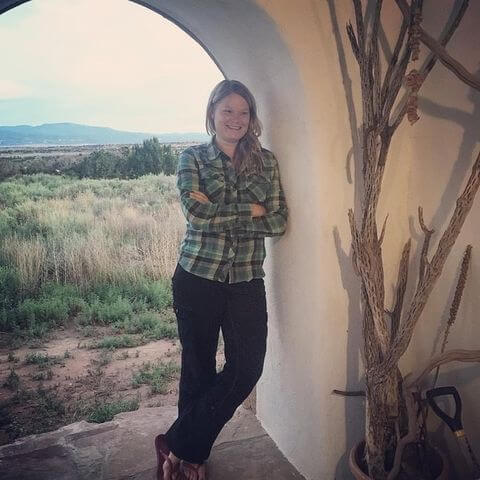
I don't normally say anything at the beginning of my episodes,
But this is a big one.
It's episode 50,
And I have a lot of thanks to make.
First,
I need to express my gratitude for all those who trusted me enough to appear as guests,
Because that involves a lot of trust.
As a guest,
You're putting your voice in my hands,
And I think,
And I hope,
That all of you feel that I've expressed your thoughts and your words with integrity and with respect.
I also need to thank my listeners.
This has been such a journey.
I started knowing nothing about how to produce a podcast,
Hence some cringe-worthy moments in season one.
But as with all things,
I've gotten a bit better over the last year.
This podcast has been such a joy to produce and such a joy to promote,
And I'm grateful to those of you who have listened all the way through,
And of course,
Very grateful for my new listeners.
I have some seriously fun guests coming up in future seasons.
I started this project to bring some hope and grace into the world.
COVID was happening,
And I wanted to remind people that there is joy even amongst sorrow.
There's hope amongst scarcity,
And there's the universe,
Or God,
Or spirit,
However you define that ineffable presence,
Who always has our backs.
It began as a podcast to lift others up,
But unexpectedly,
It has lifted my spirit up as well.
Which brings us to episode 50.
I had the distinct pleasure and honor to interview Ron Halfkin,
A force in his own right,
Who had the fortunate blessing to be Shel Silverstein's friend for over 50 years.
Ron's story is filled with miracles.
Besides the miracle of his friendship with Shel,
He accomplished many,
Many amazing things.
So without further delay,
Here's episode 50 of Bite Sized Blessings.
And all of a sudden,
Bill says,
Oh,
There's Shel.
And Shel was walking,
And he said,
Let's go say hi.
I mean,
As we pull up to the curb.
The last thing in the world I wanted was Shel Silverstein,
Because Bill had said,
Maybe he'll want to go with us.
Last thing in the world I wanted was Shel Silverstein to be in that car with two girls and Bill and myself going up to Provincetown for the weekend.
I did not have a fantastically wonderful childhood.
So that's a short story.
I just didn't.
I did contract polio when I was 12,
And it paralyzed me for more than a year.
I ended up at the Warm Springs Polio Foundation,
Which was Roosevelt,
President Roosevelt's.
He had started it a number of years before I ended up there for a year.
So I saw a lot of pain and a lot of suffering by young people,
Children and some adults and some teenagers,
But a lot of three and four year olds,
Iron lungs,
All that kind of stuff,
Which is today why I am very intense about vaccine,
Because I got polio just before the vaccine,
Which ended polio pretty much.
I have,
As I said,
Very strong feelings about anti-vaccine people.
They haven't suffered enough to really know what it's like.
So,
Yeah,
But I got through that.
I recovered eventually.
There was a time frame that you would not have known that I had been sick,
But of course I couldn't run or anything like that.
But just seeing me walking,
You would have known.
So that's how most of my life went.
But then about 20 years ago,
It's what they call post-polio syndrome.
So now I walk all that very well.
You know,
Like everything else in life,
I believe that acceptance is a very important attitude to have.
You accept what you can accept.
I remember after I got polio,
For a while,
When I was 15 or 16,
I became very hyper-contriable.
I was worried about every kind of illness.
And my mother one day looked at me and said,
She was a very pragmatic,
Tough cookie.
And she said,
Well,
Ronnie,
What I can tell you is this.
Once you find out something is not going to kill you,
Forget about it and go on about your life.
And it struck me.
I mean,
It was a very pragmatic viewpoint and I tried to live that way.
Once I had I got bullied down in Warm Springs at the polio foundation,
But I was bullied by the southern kids who are older than I was.
They were in high school and they were paralyzed,
But they were wheelchairs.
And they bullied me because I was a kid from New York with my accent and I had never been in the South before.
So I got bullied there.
And I remember promising myself even back then,
Never again.
So after that experience,
I don't think I was ever afraid of anything or anybody after that.
And I think that that helped me throughout my life.
You know,
When people say,
Well,
You know,
That polio was a rough thing.
Actually,
I think it was one of the better things that happened because it strengthened me in a way that I never would have imagined,
Because once you experience something like that,
You watch all these children in the iron lungs and surgeries and all that kind of stuff.
It teaches you something or it should maybe.
Now,
I don't walk very well,
But,
You know,
So what if I were to croak tomorrow,
I wouldn't have one complaint at all.
And if I did and I was almost choking and I started complaining,
Somebody should shoot me.
The show once said to me,
I said we were talking about living and dying.
And I said to Shell,
I said,
You know,
Why do you want to live any longer?
What is it that you want out of life now?
You've lived it all.
He looked at me and said.
More of the same,
Just more of the same.
I mean,
You know,
His life was an incredible,
Incredible life.
I mean,
From he lived in so many worlds and so many different universes and each of those worlds of which I was fortunate enough to be part of.
But they all believed that he was theirs,
Whether it was Nashville with the songwriting,
Whether it was the theater area in New York and off Broadway,
Whether it was,
Oh,
You name it,
Film,
Whatever.
And he was part of all those worlds.
And each of those worlds considered him theirs.
But he really wasn't.
He was all of theirs.
And I was lucky enough because my friendship with him to be part of all of that.
So I experienced all of that.
I think also I never asked anything of him,
Meaning he invited me to the Playboy Mansion.
I can't tell you how many times I was working.
You know,
I had a group and a band and I wasn't all that interested in going.
And I think that's sort of impressive because everybody else was begging to get them to the Friday night party,
To the Sunday movie,
To all that stuff.
And I didn't really care.
I mean,
I went a number of times because he and I were working on a song or something and we would sit out past his back backyard,
If you want to call it that,
With peacocks walking around,
God knows,
Elephants and stuff,
You know,
And we'd be,
You know,
Working on on a song or this or that.
But I wasn't really someone who was desperate to go there.
And I think that that impressed me that I was living my own life,
My own world.
I was in the music business.
I was having a great time and I was recording a lot of Shell's songs.
So I was having a great time with him and I was having a great time with one of my bands,
Which is a group called Dr.
Hook.
Back in those days,
The group became very,
Very big out of the United States.
Shell never wanted to go.
I wanted to drag him with us on one of our tours overseas.
And we were going to Denmark and Norway,
Sweden.
Shell didn't want to go,
But I finally convinced him to go.
He came to one of the shows and one of the members of the band,
Lead singer,
Said to the audience,
We have someone very special with us here today.
We've been special in our lives.
And the audience guessed who it was.
He said,
Shell Solsten.
And that audience tore the place down.
In high school in Brooklyn,
New York,
And there were two friends I had,
Stephen Lloyd and we were how old back then,
Maybe 16,
Something like that.
Steve had a brother who had a car and Steve,
Although we were kids,
Decided he was going to ask his brother to borrow the car.
Well,
Steve didn't have a license,
But his brother let him take the car.
So the three of us piled in the car.
We were going to drive to Key West,
Which we did.
Now,
I had a little bit of money because I had been working a little bit in the summers,
You know,
So on and so forth.
And the other guys also had some money too.
Not a lot,
But a little bit.
Got down to Key West and we discovered that there was a DC3 that used to fly to Havana,
Cuba.
We looked at each other and said,
Can we afford to go to Havana,
Cuba?
We decided,
Well,
Yeah.
Now at that time,
Castro was still in the mountains.
It was the year.
If you saw Godfather II,
It was the year that Castro came out of the mountains and they got rid of Batista,
Who was the president of Cuba at the time.
We ended up in Cuba that year.
And in the movie Godfather,
It's the year you see it's Christmas time and it's,
Oh hell is breaking loose and Castro's coming out of the mountains and Batista's running out of the country.
And so,
So that's when we were there.
And that's how I ended up there.
And I think that that was pretty much the beginning of my adventures,
Because after that,
I moved to Mexico.
See,
Because of the polio,
My parents were a little more lenient with me.
Let me do things that I think because of the fact that I had been paralyzed and so on and so forth.
So they let me do things that they probably ordinarily might not have.
When I went off to college to Bucknell,
I had been there for two years.
It was summertime and I met the older woman who at the time was 27 years old.
And I was like 17 maybe.
And in Greenwich Village,
She was a folk singer and she was a queen bee in Greenwich Village.
She had a Lambrinim motor scooter and long blonde hair.
And here I was this kid and here's the older woman.
And she was going to Mexico.
So I decided she's going to Mexico.
I'm going with it,
Which I did.
And when I got to Mexico and that was 1959,
I absolutely loved it.
But I went wild and she got fed up with that.
And she went back to the States and I stayed.
And I made a lot of friends.
There were a lot of GIs that were going to school on the GI Bill in Mexico because it was inexpensive for them to be living in Mexico.
So I made a lot of friends who were a lot older than I was.
These were guys who were 25,
26,
24 and made a lot of friends.
And back in those days,
People that were now everybody travels everywhere.
Back in those days,
People that were coming from Europe,
From France,
From Italy and so on and so forth,
Young people were adventurous because that's who in the 60s,
50s,
Late 50s,
That's who was traveling,
Wasn't everybody.
So there were some very fascinating,
Interesting,
Fun people that you became friends with and Mexico at that time,
Mexico City only had four million people.
Now it's got 20 million.
So it was a wonderful place to be.
Very,
Very exciting.
I stayed for three years.
I'm so curious,
You've talked earlier in this conversation about being in a band and writing music and and working in that artistic area.
When you were a kid,
Were you drawn to music?
Were you drawn to writing music,
Writing songs?
No.
As a matter of fact,
My mother tried to get me to play the clarinet,
At which point I refused to practice.
She was a tough cookie.
She was a schoolteacher,
Tough.
Even back in those days,
She was a feminist.
She took the clarinet,
Which was because I refused to practice.
She took the clarinet and threw it out the window.
It was a buffet clarinet and it was a closed window.
And she called me a bastard or a son of a bitch or something.
And she threw the clarinet out the window.
So I didn't have any interest at all until much,
Much later on.
Living in the village,
There was a place in Greenwich Village called the Finjan,
Which was more a Syrian-Israeli kind of place.
Actually,
It was the only place where Arabs and Jews would get together because the music was so similar,
Oud and Kannun and,
You know,
Doonbeg and so on and so forth.
And all of us used to hang out down there,
Shell,
Myself.
And that's when I really developed my excitement about music.
I met Bob Dylan there.
I met Bob through Shell initially.
One of the most exciting musical experiences I have ever had in my entire life.
I was having lunch on Shell's barge in Sausalito.
All of a sudden,
There's a knock on the door.
Shell gets up from the table and the barge that he lived on was funky,
Just like all his places were sort of like his drawings.
Everything was a little out of whack,
Which is wonderful.
All his little homes in Key West,
In Martha's Vineyard,
Sausalito in New York.
All the places looked a little like his cartoons.
It's all a little off kilter.
So anyway,
It's knock on the door and Shell goes to the door,
Opens it.
And there's Bob Dylan.
So he says,
Hey,
Man.
Shell says,
Hey,
Bobby,
Come on in.
So Bob Dylan comes in and he and Shell spend the next two hours playing each other songs.
I am sitting on the bed listening with my jaw hitting the ground until Dylan looks at Shell and said,
Shell,
You win,
Man.
What he meant was Bob Dylan,
Of course,
Knew what a great writer he himself was.
But Shell's writing was so clever and interesting as well.
And they had been doing a lot of humor songs.
And when Dylan said,
Hey,
Man,
You win,
It was it was really something.
But for me,
That experience of a couple of hours with the two of them and being a fly on the wall was probably the most exciting musical experience of my life.
My family's Jewish,
My parents,
My mother was an atheist.
My father was a semi.
He was religious twice a year,
OK,
Because he probably felt guilty about stuff.
OK,
But that was it.
Culturally,
I was very aware of the heritage,
Jewish heritage.
I mean,
Talking about society,
The group of people who have been on the planet six thousand years or more,
That has a very deep and rich and at times miserable history.
As far as being religious,
No,
No.
Like I said,
You know,
The high holy days would go and,
You know,
Family would have dinner or what have you,
But it was not a religious song.
I've always believed,
Hey,
I've got no answers about that kind of stuff.
Certain things make more sense to me than others.
I know you go to the planetarium and to me it makes me realize how ridiculous we really are.
We have no bearing on anything that goes on in the universe.
It doesn't matter my opinion.
OK,
My opinion is probably worth what anybody is paying for.
You know,
It's worth nothing.
I remember even as a child,
I was never spiritually or religiously inclined.
It didn't make sense to me and it still does.
I certainly don't understand the universe.
I don't think anybody else does.
I think whatever it is all about has nothing to do with some kind of personal God that is conscious of who I or anybody else is or for that matter would even care.
The way humans behave,
What humans say and write and the way they behave is very contradictory to what religion seems to be.
There was a rabbi,
Ancient rabbi,
Maybe not that ancient,
Who said all religion is the golden rule.
Everything else is commentary and that makes sense to me.
It seems like,
I mean,
I think one of the most beautiful,
Of course,
I don't know the whole story of your whole life,
But this really beautiful running theme through it is your friendship with Shell.
And I think the word that comes to me is just you two must have been huge gifts to each other and your friendship must have been such a huge gift to him because you weren't so attracted by all the glitz and the glamour.
You were kind of someone who could keep his feet on the ground.
And I think it really sounds like you two really complimented each other.
Well,
In a way,
You are right.
As I told you earlier,
I think the three most impactful things in my life were polio,
Was meeting Shell and was meeting my life.
Those are the three most important,
Impactful things that have happened to me in my life.
And I'd like to think that I realized the opportunities that each of those things afforded me and that I utilize them to the best of my ability.
You know,
Shell,
As I say,
Was a very fascinating character.
He could also be a monumental pain in the neck because he,
You know,
There was a child living inside of him as well.
And a lot of the stuff he did,
Well,
I can describe it this way.
One evening we were going to go out for dinner and I showed up at his place.
And this was in Greenwich Village in New York.
Shell had a lot of childishness in him.
And I remember one time we had been friends for a couple of years.
I had lived in Mexico from 1959 to 1961.
And I had just come back to the States and I had met Shell and we became friends.
However,
I had not seen him do what he did as an artist for a couple of years.
I mean,
We spent all day together into the evening because I had nothing to do.
And Shell would be traveling around the world for Playboy and he would draw his stuff coming back on the plane from wherever he was.
And then he had nothing to do all day.
So we spent days and evenings together for a number of years in the very beginning.
I hadn't seen for a couple of years,
I had never seen him do what he did,
Which was his books and his,
You know,
A lot of people don't know how many plays you had written,
Short plays,
Songs,
Everything.
Well,
One night we were going to go out and have dinner and I showed up at his place.
He was working.
It was a fabulous looking apartment,
But he was working at a loft bed and he had a big wooden desk under his loft bed and he was working.
And he said to me,
He said,
Do you mind if I continue on for a while?
You know,
Probably about 15 minutes of work or something.
And it was on where the sidewalk is.
I was sitting catty corner and I was watching him.
Now,
As I said,
I had never seen him do what he did,
What he was known for all over the world.
And what I observed was he would sit and all of a sudden you would hear a giggle.
And then it would go quiet.
And then you would hear a little burst of laughter and then it would go quiet again.
And then it was another giggle.
And I'm watching this process and he had these long bony fingers and you could see it,
The angle I was,
You could see his hand moving as he was drawing or writing.
And it was fascinating to watch.
And as I listened to him giggle and stop and laugh and stop,
I realized this guy is not doing this for the public.
He's doing it for himself.
The child in him is what is happening here.
And it was a fascinating observation to be able to observe that creative process.
And in my entire life,
I have never,
I had never known before or known after a mind like that.
And based on my life and my career,
I've known a lot of very famous people and never met anyone quite like Shel Wurst.
It was such a powerful presence when you walk into a room that everything,
Everything would stop and it would be even the biggest stars in the world.
People like Sinatra,
Those kinds of people back in the day,
When he would meet them,
They would defer to him,
Which always fascinated me.
Here were some of the biggest stars in the world and they were all Shel.
What a pleasure to meet you.
I wanted to meet you my whole life.
And I once asked him,
We were walking down the street and I asked him,
I said,
You know,
I observe,
Shel,
That these folks that you meet who are possibly more famous than you are always defer to you.
And I wonder why that is.
He said,
I'll tell you why.
He said,
I get to the thing that is most precious to them,
Their children.
He said,
I think that is part of it.
And over the years,
I mean,
We were friends.
He was my best friend for more than 50 years.
So I consider myself very,
Very,
Very fortunate to have had that association because it changed my life forever.
Totally changed it,
Turned it around and afforded me the opportunity to meet people,
To experience things that I never in a billion years would have imagined my life would turn into.
He was fascinated by the fact that I had lived in Mexico.
I just picked up.
I was a young guy.
I had been to University of Bucknell University for a couple of years up in the States.
And then I decided just to pick up.
I went on down to Mexico.
I eventually ended up finishing school down in Mexico.
But he was fascinated by that.
That was interesting to him that I had just picked up and I've been living in Mexico for three years and I just come back.
And so the connection was was interesting.
And he wants certain people.
Do you remember you're very young,
But do you remember Lenny Bruce?
You know,
Lenny Bruce was a comedian.
Yeah,
Lenny over to my apartment once.
And Lenny,
I expected to be a real wild man.
But instead he was very quiet and he was fascinated by Mexico and wanted to know all about what Mexico was like and living down here was like.
Through Shell,
I got to meet so many fascinating people.
I think I mentioned to you one of our very brief conversations to try to set this up about Tennessee.
Right.
I was sitting at the table of Key West with Shell and Tennessee,
And I'm thinking to myself,
What am I doing here?
I mean,
Here I am,
Some kid from Brooklyn,
New York,
And I'm sitting here with Shell Silverstein and Tennessee Williams.
And that happened so many times with so many different people that it almost started to become a natural course of events.
Now,
This is a little bit of an interesting story which tells you a little bit about Shell's philosophy of living.
We were walking down Fifth Avenue in New York,
In lower Fifth Avenue in Greenwich Village,
Coming the other direction towards us was Roy Scheider.
You know what I'm talking about?
We talk about Jaws and so on,
So a great actor.
And with Roy was this young fellow.
So as we they were coming towards us and we were walking towards them,
You know,
Shell and Roy saw each other and hey,
Shell,
Hey,
Roy,
Blah,
Blah,
Blah.
So we stood there for a bit and Shell kept talking to this young fellow that Roy was with.
It lasted maybe five or ten minutes,
Whatever.
Then we parted ways and we continue walking.
And I said to Shell,
I said,
You know,
I noticed something,
Shell.
I mean,
You spent an awful lot of time talking to that young guy.
And Shell looked at me,
Said,
You know,
He said,
Always pay attention to the person who needs the attention.
He said,
Roy doesn't need the attention.
He's a world famous movie actor.
This young fellow,
Just a friend of his.
And he's the one that would probably appreciate the attention more than Roy needs.
And it was just it struck me as an interesting observation of his and attitude of his.
That's fascinating because I mean,
I think over the long course of your friendship,
Those 50 years,
I'm sure you two had many,
Many opportunities to affect each other and influence each other.
I think that that story is really beautiful.
Yeah,
It was a it was a very warm,
Close,
Very close friendship.
I once told him,
I said,
Shell,
You know,
I know you better than your mother.
He said,
You're right.
But at the same time,
As I said,
Shell could be a monumental.
He could be monumentally difficult at times.
OK,
But for the most part,
It was always fascinating being around him.
And because we had,
You know,
Serendipity,
We had the chance to spend so much time together because when he wasn't working,
He he was free and I wasn't doing anything.
So I was free.
So it just turned out to be a very fortunate thing because it changed my life completely.
You know,
I think one of the best reasons to get up in the morning every day is you never know who you're going to meet.
That's right.
Walking out your front door.
And so I'm sure the day you met Shell,
You were not planning on meeting someone who was going to be so such a large presence in your life.
It's great that you mentioned that,
Kirsten,
Because it's an interesting story.
But I did not want to meet him.
I did not want to know him.
And the way that happened was a friend of mine,
This fellow Bill in Greenwich Village.
I was low man on a toting pole in Greenwich Village because I had just come back from Mexico.
I didn't know anybody.
I wasn't doing anything.
I was just wandering around trying to find a place to land.
But I had this one friend.
However,
I had the advantage.
I had a car,
A beat up old ship.
And Bill,
This friend of mine,
Bill,
Who was a character around Greenwich Village,
Said to me,
He said,
Let's go to Provincetown.
He said,
I know two girls and they will go with us and we'll spend the weekend.
We'll have a wonderful time up in Provincetown.
I said,
Sure.
On top of which,
I wasn't in a position to say no to anything because I was low man on the toting pole in Greenwich Village at that time.
We were driving up Seventh Avenue in Manhattan and about to leave town.
And all of a sudden,
Bill says,
Oh,
There's Shell.
And Shell was walking and he said,
Let's go say hi.
I mean,
As we pull up to the curb,
The last thing in the world I wanted was Shell Silverstein.
Because Bill had said maybe he'll want to go with us.
The last thing in the world I wanted was Shell Silverstein to be in that car with two girls and Bill and myself going up to Provincetown for the weekend.
So we pull up,
Bill says,
Hey,
Shell,
How you doing?
Shell,
Hey,
Bill,
How you doing?
He knew the two girls.
One was Kiki,
I forget the other girl's name.
Shell said,
What are you doing?
What are you doing?
And Bill said,
We're going up to Provincetown.
He said,
You want to go?
Shell says,
Nah,
I don't want to go.
The last thing I wanted,
As I said,
Was Shell Silverstein in the car going up to Provincetown with two girls,
Bill and myself.
It was the last thing I wanted.
So I am trying to figure out a way not to get this guy,
Shell Silverstein,
Into the car to go to Provincetown.
So I turn around,
Shell says,
Nah,
I don't want to go.
So I said,
Figuring I'll put a damper on the whole thing.
I said,
Yeah,
Man,
All we're going to do is go up there,
Just stay on the beach for a couple of days and come back.
Shell says,
That sounds good.
Take me home.
I'm going to go.
So we drove to Hudson Street,
To his apartment,
To walk up,
Which I eventually took over,
And Shell goes upstairs.
There was a walk up and Shell goes upstairs.
And a minute later,
He comes down with a bathing suit in one hand and a box of Ritz crackers in the other.
I said,
I got to love this guy.
So he gets in the backseat with the two girls and we go off to Provincetown.
For whatever reason,
He befriended me.
There was a connection.
I think some of it had to do with the fact that I had been living in Mexico.
And and we connected and I'm thinking to myself,
Here is Shell Silverstein,
One of the most popular guys in Greenwich Village,
If not in the world.
And for some reason,
He has befriended me.
As I said earlier,
I mean,
It absolutely changed the course of my entire life.
I am not a great fan of us as human beings.
I don't think we are one of the finest species on the planet.
I don't think we ever have been.
We've been killing each other since we've been on the planet.
We've been killing everything in sight since we've been on the planet.
So to me,
And we haven't even been on the planet that long.
Comparatively speaking,
We've been here a couple of hundred thousand years.
About a social year for hundreds of millions of years.
And here we are destroying everything around us.
And at some point we will probably destroy ourselves.
The planet will eventually rejuvenate itself.
People talk about,
Oh,
We've got to save the planet.
Stop worrying about saving the planet.
Save yourself,
Because the planet is going to go on when you're not here any longer.
And humanity is not here any longer.
The planet will be.
And it will be for a whole lot longer than we have ever imagined being here.
And we will long be long,
Long gone.
The sad thing is,
Is that the children always pay the price for the stupidity of the parents.
It's gone on since mankind has been on the planet.
The children always pay the price.
And this time,
I think it's going to be no different.
I was going to say,
I think that's what's really powerful about what you said earlier,
Shell had this this ability to channel and be his be childlike even as an adult.
We need more adults like that who are able to access being funny,
Being able to play,
Being able to talk to children,
Being able to relate to the world,
You know,
With wonder and excitement and every day when we wake up.
And that might probably will make the world a better place.
Shell never,
Ever had his books in paperback ever.
Now you're talking about books.
His hardcover of Where the Sidewalk Ends was on the New York Times bestseller list,
Not in the not in the children's section in a New York,
Longer than at the time,
Longer than any book in history,
Except about Where the Sidewalk Ends.
Yeah.
Now,
So he never had his books in paperback.
And I got a call from public radio at one point wanting to discuss Shell.
And I did.
And they wanted to know how come his books were never in paperback.
And I said,
It's an interesting story because I went to a meeting with Shell at Harper and Row before it was Harper Collins.
He just asked me to go along,
You know,
As a friend,
I was a fly on the wall,
Going to go have lunch afterwards.
It was a boardroom and they had all these executives sitting there and they are trying to convince Shell to have his books released in paperback.
And they are saying to him,
Well,
Shell,
You know,
If we could do that,
We will give you standalone racks in every bookstore in the world that carries the books.
Standalone racks will make you make millions and millions of dollars.
Plus,
It'll be access to so many more.
So I said,
No,
Just like that.
No.
And they said,
But Shell,
You know,
No,
But now we're going for a little bit until they realize this ain't going to happen.
Well,
When we left,
I said to Shell,
I said,
Why did you tell him no?
I mean,
They're making you all kinds of offers to do.
You would have more people buying.
He said,
I'll tell you why.
He said,
When I was a kid,
I was a very lonely kid in Kenosha,
Wisconsin.
And he said,
I would go out at night,
I'd walk around and I would make up stories and poems and I would go home and I would write my little stories and my little poems.
And also,
The best thing anybody could do for me when it would happen is if somebody would take me to a bookstore that had old books.
And he said,
I fell in love with the smell of them and the feel of them.
And I would hug them because I was a lonely kid and they were sort of like my friends.
He said,
And you don't get that with a paperback.
And I wanted children to enjoy my books the way I enjoyed those books.
But I would tell anybody,
Never feel bad for Shell Silverstein.
This guy has lived a life that incorporated five lifetimes.
He died too young.
It's a sad fact because who knows?
And,
You know,
He really didn't have to die.
And what I mean by that is,
Had he gone to a doctor?
I hadn't seen him for a while because I got angry with him for a couple of years and I refused to talk to him.
And then he finally called me and I was headed on down.
He said he was going to he was in Martha's Vineyard and he was going either to Milwaukee or he was going to go to Key West or to Sausalito.
And I said,
Shell look,
When you decide where you're going to go,
When you get there,
Call me and I'll make a reservation.
And we hadn't talked for a long time.
And I said,
I'll come down.
He ended up he was in Key West.
I made a reservation to go down the following week.
I got a call three days later that she died of a massive coronary.
Now,
The sad thing is that Shell was afraid of doctors,
But he was a little bit of a hypochondriac,
Not much,
A little bit.
And I got down there because over the years,
If if he wasn't feeling well and it sounded like it might be something,
I would say,
Come on,
We'll go to the doctor,
Hold your head.
It's not going to be anything.
And we would do that over many years,
You know,
Whenever something like that happened.
But this time and had I gotten down there,
Had he waited one more week to die,
I probably would have gotten him to go to the doctor.
They would have seen whatever block just were going on and done surgery and he probably would have lived a lot longer.
So who knows what we missed out because of that?
You know,
The world missed out on that talent that he still had a lot of.
The reason I keep bringing him up is that he was such an important and impactful human being in my life,
Not just as he has been in so many millions of lives,
But in a different way.
And that in itself gives me a feeling of having been so incredibly lucky,
Lucky.
But I understood that in the very beginning as well.
I knew that I was lucky that this guy had befriended me and I wasn't going to let it go.
And that is episode 50 of Bite Sized Blessings,
The podcast all about the magic and spirit that surrounds us.
If only we open our eyes to it.
You'll notice by now that there's no bite sized episode for 50.
And that's because there is absolutely no way for me to distill Ron's life down into five or 10 minutes.
The entire interview is a huge blessing to everyone who listens to it.
I need to thank Ron for being such a gracious and expansive guest for this episode.
And I need to thank the creators of the music used,
Without which every episode would be very boring.
Frank Schroeder,
Taiga Sound Productions,
Brian Holt's music,
Lilo Sound,
Chilled Music,
Raphael Crux and Agniese Falmagia.
For complete attribution,
Please see the Bite Sized Blessings website at BiteSizedBlessings.
Com.
On the website,
You'll find links to other episodes,
Artists,
Art and music I think will lift and inspire you.
On the website,
You can also grab your very own podcast T-shirt.
You can see both designs worn by guests of the show.
Pick the one you like.
Send me your information.
And the T-shirt is yours.
Thank you for listening.
And here's my one request.
Be like Ron.
Be grateful,
Be grateful,
Be grateful for all that life gives you,
Both the sweet and the sour,
There are hidden lessons and gifts in all of it.
It is your life after all.
So enjoy it.
It's yours.
It's your life.