Welcome to Episode 73 of Bite-Sized Blessings.
In this episode,
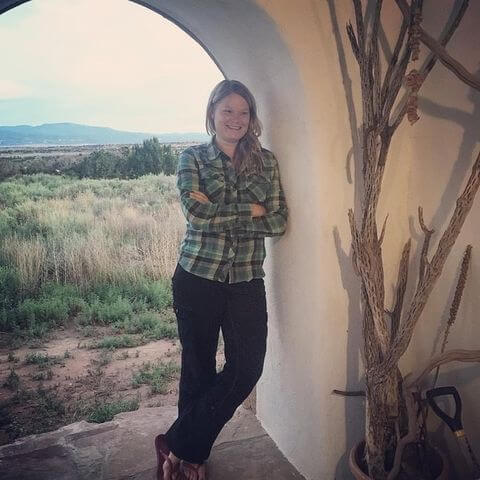
I get to interview my very good friend,
Courtney Ondar.
As with all humans,
It is very,
Very difficult to summarize someone in just a sentence or two,
So I'm going to take a couple sentences from the Santa Fe Art Institute's website.
As an activist,
Social justice educator,
And former infantry service member in the National Guard,
Courtney has trained hundreds of men and women on violence prevention,
Pro-feminism,
And environmental justice.
At the University of Missouri-Columbia,
Courtney co-advised a male ally program and sexual violence prevention student organization,
And assisted with implementing a comprehensive bystander intervention program.
He's the former board vice president of the international peace organization Veterans for Peace.
He's worked as an office administrator for the Center for Social Justice,
And he led the People of Color Caucus with the Fertile Ground Institute.
And of course,
He's done many,
Many other amazing things.
He's all of these things,
And also my good friend.
And so,
It was really wonderful to have this conversation,
To just sit down and talk,
Hear more about his story,
More about his childhood,
More about what has shaped and formed him into the person he is now.
I think you'll find our conversation interesting and hopefully inspiring.
And now,
Episode 73 of Bite-Sized Blessings.
One of the first things I always think of is my mom.
You know,
I was,
I think I was like 10 or 11 years old.
I was closer to 11 when my younger brother,
Shug,
Was born.
And my mom,
Very soon after,
Had a brain aneurysm following the birth.
I can't remember how much longer.
I think it might have been like,
I don't know,
Like two or three weeks after the birth.
The birth went fine,
And you know,
Shug's a huge kid.
I mean,
He's enormous.
He's,
You know,
He's always been bigger than me,
Starting at like age,
You know,
I don't know,
13 or something.
He was bigger than all of us.
But then,
My mom got sick,
And she ended up having an aneurysm,
A bursting of blood vessels.
A brain aneurysm can be deadly.
I mean,
You can die.
A lot of people die.
Probably most people die from brain aneurysms.
But at the time,
You know,
In like the late 90s,
That,
You know,
That was like,
That seemed like a miracle to us.
Who are you as a human being?
If you were to go to a party and meet new people or introduce yourself to a group,
How do you self-describe?
Good question.
It is.
I love this question.
I'll start by saying we're kind of on the same wavelength because in the Emerging Leaders program that I'm a member of,
That's actually,
This is one of the questions that we present during our facilitations.
We actually ask it as who am I,
Who am I really,
And who am I really,
Really?
Actually,
The funny thing is I've answered this question a lot,
So I feel,
I do feel prepared.
But I would say who am I?
I think I identify myself very strongly a few different ways.
I identify very strongly as a Black person,
An African-American.
That's a strong part of my identity.
I identify,
Of course,
As kind of like a family person.
Family has been very central to my life for a very long time,
And I've stayed in close contact with a lot of my family as a husband,
As a brother.
I'm a twin brother.
I've come from a large family,
So that's something that I tell people a lot.
I've got five siblings.
I've got three sets of parents.
I've got three sets of grandparents.
I've got like endless family.
Our family is an army.
We're huge.
We basically never end.
We just keep going.
That's how my family is.
We're just like eventually connected to everyone because there's just aunts and uncles and great aunts and cousins and step cousins and by marriage and just by friendship.
I mean,
We're endless.
I also identify very keenly as an activist,
As someone who is leftist,
Progressive,
Radical.
I use those terms to describe myself,
So I identify with the left.
I identify with liberation and freedom struggles.
I've had a lot of exposure and experience in pro-feminist movements,
So I identify as a pro-feminist,
Anti-sexist man.
Finally,
I identify very strongly as a Buddhist,
As someone who follows Buddhist principles,
Maybe more closely,
I should say,
An aspiring Buddhist because it's not an easy path by – I mean,
It's supposed to be.
It's supposed to be easy and that's kind of the philosophy,
But it's actually not easy.
It's pretty difficult and it takes a lot of internal reflection a lot more regularly than we can be accustomed to without the practice.
Buddhism is a kind of a discipline for me,
But it's also a really interesting philosophical exploration for me as well in my life.
I mean,
Activism for me is just engaging in actions towards equality,
So principles of equality towards goals of equality and liberation and freedom for oppressed peoples.
I think black families in the United States,
There is kind of a default mode of awareness because of the daily struggles that we have,
And my family is a prime example.
My mom is a former police officer in Springfield,
Illinois,
Experienced gross levels of discrimination and racism and sexism and sued the city of Springfield,
Illinois for that,
And that story actually made national news at one point,
But it made local news quite a bit,
And it led to several changes in the Springfield Police Department,
Including the creation of a review board as well as other changes,
And it was featured in many publications.
So that case kind of turned our family into a family that went from generally understanding that the struggles of black people to intimately experiencing what it means to struggle against powerful forces,
Racist powerful forces.
That definitely galvanized me,
And that happened right before I started college,
Essentially.
It was the years before I went into college,
And then,
So then going into college at the University of Missouri,
I suddenly found myself exposed to more organized forms of activism and protest.
And something,
See,
Everything is just so like serendipitous for me in my experience because like it seems like things started falling into place.
Like for instance,
The University of Missouri was a hotbed for progressive communities,
And there were several struggles going on on campus at the same time.
I became a peer educator in the anti-sexual assault movement on campus,
And then there were anti-racist struggles on campus as well.
And then there were a whole bunch of anarchists on campus that I started organizing with as well because I started learning the history of the United States and started taking all these college courses and started just kind of synthesizing everything I understood about the world and power and the way it works.
And that's how I ended up really starting to identify very strongly as an activist.
And again,
That started mostly with anti-racism,
Anti-sexism,
Anti-sexual assault,
But then kind of morphed into other forms of activism,
Critiquing capitalism,
Critiquing government,
Just government in general,
Critiquing power and power of relationships,
Hierarchy,
Subordination and domination,
Things like that.
There's a lot to say about it because that was also tied into my exploration of religion at the time.
I was moving away from Christianity,
Which is of course the Black Christian church that I grew up with very intimately,
And then moving into atheism and then starting to explore Buddhism.
I was going to say,
Your mother sounds pretty fierce.
I can't imagine at the time what it must have been like to be a police officer in Springfield as a woman,
Let alone as an African-American woman,
And then to take on that structural and very cultural,
Very ingrained,
It's Southern Illinois,
Right?
That racism,
You know?
It's Southern Illinois.
So she sounds like she must be formidable.
It was a learning experience for her,
That's for sure.
Still being a young woman herself and raising kids and being married while she was going through that experience.
And then again,
It's funny how things happen because her dad,
His name is Jerry Donegan,
I think I may have told you this before,
He's a former Black Panther,
And of course worked with the Chicago chapter of the Black Panther party alongside Fred Hampton,
Who of course was assassinated by the Chicago Police Department and the FBI.
My mom actually had some exposure to that hardcore activism,
Hardcore Black Panther militant armed struggle in Chicago.
I don't know if she was ever in any of those situations herself.
She was a young,
You know,
She was really young,
She was a young girl when my grandfather was active in the party,
But then he ended up,
Of course,
Committing a crime and running away and then coming back and being apprehended and spending 40 years in prison.
So he was just released from prison,
I think it was last year,
Actually,
Earlier.
No,
It was 2020,
Summer of 2020,
He was released from prison.
And so after 40 years,
Right,
Spent 40 years in prison.
And so my mom had some experience with what it took to take on power,
To take on power structures.
She had some kind of inherited,
You know,
DNA for that,
But she just,
You know,
Was determined not to be falsely accused and to have her take the fall for the faults of the department and the fact that they,
I mean,
The whole thing,
Even before she was hired as a police officer,
The city was already undergoing scrutiny and in a lawsuit because of their hiring practices,
Because they failed to meet proper numbers for minority recruitment and employment.
And there was a whole thing going on even before she came on,
And she inherited a lot of that nonsense and ended up,
Essentially,
They tried to make her take the fall for that and she refused.
You know,
She fought them and won.
It's always been a mixture of knowing that we have a responsibility to forward principles of equality because of our experience,
But then also just our own survival,
You know,
Just our own survival as a family.
You know,
We were intimately tied to different versions of the overall Black church,
Right?
The Black American church,
The Black American church community.
And of course,
In the Protestant tradition of the Black American church,
There is a number of different denominations that are most popular among Black people.
That includes non-denominational,
Which is most of what I grew up with,
The non-denominational experience.
But then there's also Church of God in Christ,
Which we abbreviate as COGIC.
There's also Jehovah's Witness.
I had a lot of friends who were Jehovah's Witness and apostolic or Pentecostal as well and Southern Baptist,
Of course.
And then there is the sort of evangelical umbrella,
Which my great grandmother,
Who is still alive,
My great grandmother,
Fulton.
Yeah,
My great grandmother is still alive.
She just turned 95 in December.
She was actually a world traveler as an evangelist.
She traveled to like Africa and like Europe and South America.
All throughout her younger years,
She traveled the world as a missionary and an evangelist.
So my family was very,
Very closely integrated in the Black church.
You know,
We would,
I tell people all the time,
We would go to church at least twice a week.
We would go to Wednesday Bible study.
We would go to Sunday,
Sunday school in the morning and then worship service and sermon in the afternoons.
And we would easily be at church between six or seven or eight hours at a,
You know,
On Sunday between Sunday school and worship service,
Sermon,
And then whatever happens after church.
Right.
Because again,
In the Black church,
We often serve meals after church.
You know,
There's usually something like that.
If it's not a big meal,
Then it's some snacks that they hand out to kids and things like that.
And then one of the other things that I tell people,
My experience in the Black church,
I went to one of the larger Protestant churches in town in Springfield,
Illinois.
The church that we went to was,
Was,
Was larger for sure.
For instance,
We had a full-size basketball court with a gymnasium and bleachers in the back of the church.
So our church would actually host basketball tournaments.
We would hold concerts in our sanctuary because our sanctuary could hold like 1500 people.
So we would,
We have concerts in the church.
We have all kinds of activities.
We had alternative activities for every holiday.
So we had a hallelujah party instead of a Halloween party,
Which included,
You know,
We would set up video games and we would play music on the speaker system in the gym and we would have like the inflatable sumo wrestling suits for kids.
And we would do,
We would have a bonfire in the back of the church.
We would have a pond,
A private pond with fish in it that you could,
You could fish every once in a while.
I think they probably were farmed,
But don't quote me on that.
And we had a,
We had a baseball diamond in the back of the church as well.
I mean,
Don't get me wrong,
Like some Sundays we would wake up and be like,
I don't want to go to church.
You know,
I don't want to go this morning,
But my mom would make us go.
At least it wasn't like it wasn't super boring.
You know,
We had a pretty interesting experience.
So,
Yeah,
It was fun.
Six to eight hours of church,
The food better be good.
Yeah.
Luckily it was.
Yeah,
Totally.
I think one of the things that appealed to me about Buddhism,
The Buddhist faith in terms of its non-reliance on a creator God.
So,
You know,
And again,
This is,
It's different with different sets in Buddhism,
The different branches kind of approach this question in different ways.
But generally speaking,
The general Buddhist sense is non-theist.
I mean,
Not a lot of Buddhists would say I'm a full on atheist,
Right?
Like most Buddhists won't necessarily say full on,
We're atheists,
We don't believe in God.
A lot of Buddhists would say the idea of a personal universal creator God,
It's not applicable to the Buddhist path.
The Buddhist path is a path more dependent on self effort.
You know,
What you put into the daily experience on the path,
On the practice,
And that actually,
Even if there is a creator God,
Because like one of the stories in Buddhism is the Buddha visited Brahma,
The so-called creator God visited Brahma,
And even Brahma admitted that he has his own shortfalls and he's fallen short of perfection,
And that he was actually also striving towards enlightenment,
Just like the Buddha.
I can't say that that story is true anymore than the stories I grew up with in the Bible necessarily.
But what I can say is at the very least,
I love the idea of even when you feel like you've reached some kind of sainthood,
The work still doesn't end.
It doesn't end there.
So I think a part of what appealed to me in Buddhism and studying it in college,
And I came to Buddhism through meditation,
Because as a student activist,
Our facilitators would lead us through meditation practice to help us balance our energy and what we were doing with the activist work,
Which was really daunting with sexual assault and anti-racism and like violence,
Anti-violence,
You know,
We were dealing with pretty heavy things on campus.
We were marching and protesting and sitting in and doing all of that.
So we would do meditation to kind of balance our energy.
And so I got interested in meditation and I wanted to know where I was from.
And I was identifying as an atheist at the time,
But I just was also just really interested in learning and philosophy and knowledge.
And I wanted to know the nature of knowledge.
Like,
How do we know things?
Buddhism was one of those rigorous philosophies.
Like the Buddhist scripture is ridiculously rigorous.
It's amazingly rigorous.
And it's this weird kind of like coming together of science and practice and observation,
Like the Buddha and his disciples observed phenomenon.
They watched things happen and then based the faith on what they saw happen.
So for instance,
They were like,
You can't fight hatred with hatred.
You can only fight hatred with love.
You know,
That's one of the verses in the Dhammapada.
And I was really interested in that,
What they saw was when the Buddha came back from this enlightenment experience,
His countryside was in war.
He came back from being enlightened after sitting under the tree for several months,
Came back and his neighbors were fighting each other.
After having this blissful experience of love and opening,
Seeing his heart burst wide open,
You know,
And his brain burst wide open,
Came back and had to figure out what to do with his loved ones fighting each other,
You know,
Literally in war.
He came from a warrior clan.
So he was fully expected to like support that.
And here he comes back preaching nonviolence.
So I just fell in love with that philosophy.
What are the versions of magic or miracles that have occurred in my life?
And,
You know,
There's a mix of thinking because generally speaking,
I wouldn't call anything that's happened to me magic or a miracle.
What I would say is I've noticed the power of people coming together to make something happen.
And so,
For instance,
One of the first things I always think of is my mom,
You know,
I was,
I think I was like 10 or 11 years old.
I was closer to 11 when my younger brother,
Shug,
Was born.
Shug is the last of us to be born.
He was born in 98,
January 98.
And my mom very soon after had a brain aneurysm following the birth.
I can't remember how much longer.
I think it might have been like,
I don't know,
Like two or three weeks after the birth.
The birth went fine.
And,
You know,
Shug's a huge kid.
I mean,
He's enormous.
He's,
You know,
He's always been bigger than me.
And starting at like age,
You know,
I don't know,
13 or something was bigger than all of us.
But then my mom got sick and she ended up having an aneurysm,
Bursting a blood vessel and going to the hospital was extremely painful.
Of course,
We saw our mom in excruciating pain.
You know,
We had to witness her suffering.
A brain aneurysm can be deadly.
I mean,
You can die.
A lot of people die,
Probably most people die from brain aneurysms.
People do survive.
There is,
You know,
Science that has allowed treatment,
Quick,
Fast treatment to help people survive.
And there are more stories like that,
Luckily.
But at the time,
You know,
In like the late 90s,
That,
You know,
That was like,
That seemed like a miracle to us.
She wasn't an old person.
You know,
She was still fairly young,
Even though she,
You know,
By that time she had had four kids.
It was really rough.
She was in the hospital for a certain amount of time.
And,
You know,
There was a moment we were really afraid that she was going to die.
We were,
We always felt like that was like divine intervention for my mom to survive that and to walk out of the hospital of her own accord.
She wasn't in a wheelchair.
You know,
She wasn't paralyzed.
She wasn't,
She didn't have to relearn how to do things,
You know,
Things like that.
There was a short time of treatment that she had to be helped with,
With certain things.
But like for the most part,
She came through that like a champ.
It was amazing.
You know,
I always feel like it's magical when protest movements yield positive results.
Like I thought it pretty magical when the police officers who killed George Floyd were convicted.
You know,
I find things like that to be pretty rare.
You know,
I mean,
That's,
That's a pretty amazing for,
For the mobilization to yield the victory.
And then of course,
There have been more recent examples of success as well in that regard.
I find those things miraculous,
You know,
Because it's so hard to get people to agree on anything.
It's so hard to mobilize.
It's so hard to find resources.
It's so hard to get people on the same page to achieve results like that.
You know,
I grew up with a,
With a strong religious belief in magic and miracles.
You know,
We believed in good and evil.
We believe that there were evil forces.
We believed in demons and angels.
We thought they were real.
We,
We thought we had stories where we had seen them.
You know,
When I was eight or nine,
I probably would tell you,
Yeah,
I've seen it goes.
Yeah,
I've seen an angel or yeah,
I've seen a demon.
It was scary.
You know,
I probably believe that when I was a kid,
I think I'll say,
I don't believe that anymore.
Now I don't discount my own family's experiences or anyone else's experience for that matter.
That's not something I'll debate with anyone is whether or not they saw an angel or they saw a demon or they saw magic or they saw a miracle.
I absolutely will not debate anybody on their own experience in that regard.
I will say that for me,
In my experience,
I think it's just been more enriching to observe phenomena that we can all agree on.
And I also think it's important to hold onto a process where we can all arrive at a similar belief and result.
And that is actually what I'm afraid of.
And that's part of what makes me nervous about the idea of magic and miracles is that it kind of gives,
You know,
In a way it gives individuals license to talk about phenomena and material reality from a subjective experience.
But we need a world that works objectively.
So even though in my mind,
I'm like in Buddhist,
Buddhist,
We have our angels,
We call them bodhisattvas,
Right?
In Buddhism,
We have the Buddhas who are celestial beings in some sense,
But maybe they went beyond celestial beings.
I don't know,
Like,
You know,
You kind of have to look into it a different way.
But like we have our demons,
You know,
You can go to the hell realm in Buddhism.
There's hell realms,
There's more than one hell realm,
You know,
There's more than one heavenly realm,
Right?
And then there's nirvana.
There's the whole pantheon in Buddhism as well.
And I am a Buddhist,
I meditate,
I go to the Zendo,
You know,
Before the lockdown anyway,
I was going to the Zendo,
I did the bows,
I would pray to the bodhisattvas,
You know,
We did all of that,
We did all of that.
And still,
The Buddhist teachings bring us back to the present moment,
The here and the now.
So you can have a belief in the bodhisattvas and the Buddhas and the demons and the devils,
You know,
We call them the prajyakas,
You know,
The hungry ghosts,
You can believe in them,
The hell realms.
But the Buddha said,
You still have to come back to the present moment.
You still have to observe your breath,
Meditate and sit and observe your breathing.
You know,
You still have to practice loving kindness,
Generosity,
Equanimity,
And sympathetic joy,
Which are the four Brahma Vaharas,
The four heavenly abodes.
He said,
When you exist in loving kindness,
Equanimity,
Sympathetic joy and compassion,
You are in heaven.
In this life right now,
You are in heaven,
That's heaven.
The four divine abodes in the here and now.
And so even though there is this whole pantheon,
The Buddha always says come back to this present moment.
That's what's most important.
Heaven is not even the end.
You can go to heaven and then come right back to earth and then go to hell in the very next life,
You know.
Like you can have all this past karma come and then determine,
You know,
It's like this whole thing.
So the Buddha's like,
Don't get stuck in heaven.
Don't get stuck in hell.
Don't get stuck in any realm that will end in itself.
Try to find the endless,
What doesn't end,
Which is nirvana,
Which is the bliss of enlightenment.
You know,
The Buddha would turn down a request to show miracles and magic.
Sometimes he would do it and sometimes he wouldn't.
He'd just be like,
No,
I'm not going to perform a miracle.
What we're going to do is zazen.
We're going to do zazen right now.
This present moment is the miracle.
This present moment is the magic.
I actually,
Interestingly enough,
Just read an article.
They said,
You know,
Some scientists,
Philosophers,
Scientific philosophers have decided that there is no such thing as objective reality,
And it's impossible for that to exist.
And so I think I read that and I was like,
Good God.
I mean,
What does this mean?
It's like,
Oh my God.
But I think I mean,
That's right.
That's the challenge.
Yeah.
Yeah.
So I think that's the challenge.
Yeah.
So we will see if humanity can overcome it in next week's episode of does subjective know does objective reality exist.
That's,
That's one hell of a cliffhanger,
Isn't it?
Yeah,
I mean,
I think that's the challenge.
Does objective reality exist.
Yeah.
And that's it.
Episode 73 of bite sized blessings.
I need to thank my inspiring and articulate guest Courtney on our for agreeing to appear on the show.
I also need to thank the creators of the music used Alex productions tiger sound productions,
Winnie the Moog,
Sasha and Frank Schroeder and Brian Holt's music for complete attribution please see the bite sized blessings website at bite sized blessings.
Com I'd like to take a moment here to ask all those who like the show to consider leaving a rating and a review ratings and reviews help others find us.
Also,
Don't forget to share the podcast with your friends,
And don't forget to subscribe.
Thank you for listening.
And here's my one request.
Be like Courtney live in the present moment,
And then the next present moment,
And the next hopefully in that present moment,
You'll find the peace and the bliss,
You're looking for.
You're looking for.