The kitchen is has been a place of oppression,
But it's also a very safe space.
I'm not that great at boundary setting in real life.
But I'm like,
No,
You can't cook with me or you can't come into my kitchen.
And even in professional settings where I've worked in kitchens,
I've kicked people out of the kitchen.
And I'm like,
Can you get out?
So one thing that my grandfather,
My dad's side left us was a hundred,
Like he gave us the recipe book that he wrote and it's like a hundred of his recipes.
So I reprinted a few of them.
There's maybe,
Maybe 20 recipes that I,
That I printed.
And the way I reprinted them,
Because the way he wrote it,
It was like,
He was leaving it,
Not just for his family,
But for somebody to be like other than us.
But his note at the beginning,
Like he,
He wrote in really big letters,
Cheap butter in freezer at all time.
It just really big letters.
And I thought that was hilarious.
And in his recipe book,
He,
He also has stories in there.
They're not just recipes.
Like he talks about a time where,
Cause he was a veteran of Korea and he talks about how they went for two weeks,
Like they had to run out of rations and they didn't have any food,
They hardly eat,
Like they'd skip a few days and then they'd eat something.
And that they went through this one clearing and there,
There was a bread truck that was giving out bread to the troops and there was the French bread and they're each allowed,
I think it was like a loaf or like two loaves.
And cause he put them in his pocket.
So I think it was two.
He put the loaves in his back pocket and he ate like half of it there.
And,
And that,
You know,
That was such a powerful source to me of like that.
He,
He related because he'd always talk about the war.
Like he was one of the grandfathers that you come in and he's talking about the war,
But he would,
He would talk to my dad about it.
So he never shared these food stories with him.
And so it was,
It was important to have this food memory of that with him,
Where he's like,
That was one of the happiest moments of his life where he didn't have any food.
And he was in this terrible situation where,
Yes,
He,
He volunteered to go and he went very young as soon as he could sign up because like he,
He would help pick spinach,
You know,
They're migrant workers and he worked at grocery stores.
He'd work at wherever he could find work.
So as soon as he could,
He went into the war because they had better benefits.
If they were promised Mexican kids,
Mexican American boys,
They'd be able to come back and they'd have a house and they could go to school if they wanted,
You know?
And,
And so that's what,
That's why he was there.
To hear stories,
My grandfather,
When he worked at grocery store,
Like the snack that they all ate at the grocery store was crackers,
Anchovies,
Cheese,
And mustard.
And that was like their dinner.
So all these food memories are also associated like with groups of people.
So that one,
He,
He talks about the boys that he worked with at the grocery store and he talks about the military story of the men that were with him in that group.
Like it's,
It was a communal experience.
Talks about him and my grandmother arguing about the recipes,
About his recipes were better.
He's like,
My recipes are better than yours.
You don't add enough butter.
I think it's also,
It's also good to understand like that there's sometimes contention in the kitchen,
Even with people that you love.
There was a time when I moved to Denver and I was away from my community in San Antonio and I had his recipes with me.
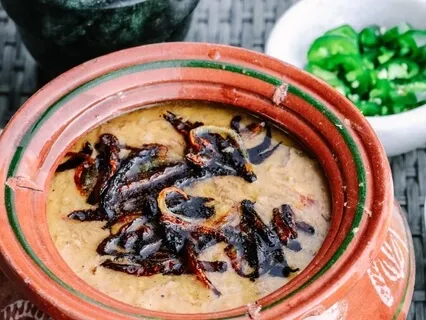
So I'd make specific like enchilada salsa that he made and put it,
You know,
For anybody.
And to have him in my kitchen when he's not,
He's no longer alive,
But able to have his food there and have that connection with home.
It was very special.
So I think when we think of sacred,
I think we think like it always has to be happy and always has to be a super positive space.
But sometimes it's also very dark and I always have been attracted to the very sad and probably some Catholics,
Very sad parts of the spirituality.
But in that sadness,
Like God's still there,
That that's still spirit.
I mean,
You will,
You will see me in my work kitchen crying while I'm washing dishes or chopping vegetables.
I'm always crying.
And it's not about the work.
It's about childhood traumas that come up while you're cooking.
And I kind of just acknowledge them and I've been able to work through stuff in the kitchen.
And that's also how I see it as sacred because it's like,
Was that a positive experience?
No.
But did it yield really good fruit?
Yes.
Specifically when I was an undergrad and I was taking religion,
Theology classes,
I had a teacher who was like,
You can't write about other people's experiences.
You have to write about your own experiences.
And while I agree with that,
I think that we have to have space for inherited stories.
So like,
No,
We shouldn't be speaking for a community that's not our own.
But these people are my community and I'm not speaking for them,
But I'm speaking with them.
There's something about when we talk about like inherited trauma,
Like,
Yes,
I heard these stories,
But there's also before I heard it,
I inherited physically their stories.
And people often say,
Like,
No,
When you hear a story,
You'll be hearing a story.
You already have it in your DNA.
Which is a very interesting way to think about it,
But it feels true.
Like when I hear a story,
I'm like,
I feel like I've heard this before,
Even if I never have.
A lot of folks,
A lot of us spiritual folk are trying to recreate community on a massive scale.
And so we'll see,
Obviously.
10 minutes of freedom in your day for the longer interviews.
We're grateful you're here.
I need to thank Elvia Rendon for sharing her story today,
As well as the creators of the music used.
Taiga Sound Productions,
Music L.
Files,
Brian Holtz Music,
Raphael Crux,
Sasha End,
Rommel Pro,
Frank Schroeder,
And Shield Music.
For complete attribution,
Please see the Bite Sized Blessings website at bite-sized-blessings.
Com.
On the website,
You can find links to other episodes as well as to books,
People,
And music I think will lighten and brighten your day.
Thanks for listening.
And here's my one request.
Be like Elvia.
Find your sacred space and then create love and community within it.