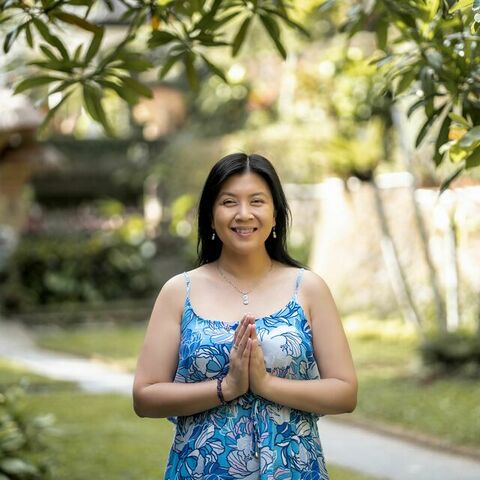
Welcome,
Leonie.
It's been a long time.
How are you?
I'm good,
Alan.
How are you?
I'm very well,
Thanks.
Finally,
I've been trying to chase you for months on end on this and finally we've had an opportunity to sit down and talk about a very important topic that is close to both our hearts and that is on mental health.
Note that Leonie is not a mental health professional.
She is sharing her personal journey with us and the strategies that helped her manage her challenges.
So welcome and let me do a quick introduction on my good friend Leonie.
I've known you for over 20 years and seen her progress through her career.
She runs a business called My Focus and just celebrated 15 years in business.
One thing that I like about Leonie is that she is always trying to improve.
She is always in my ear about personal development and especially in the last five years she's helped me with meditation,
In particular mindfulness meditation.
So Leonie,
Tell us a little bit more about what is mindfulness meditation.
I will get there in a second.
I just wanted to say thank you first for having me on your podcast and yes you have been chasing me for a while because I was nervous to share my story.
So hence it's taken me a bit of time to come up with the courage to share my story.
So I really appreciate the opportunity and your patience in waiting for me to be here.
So what is mindfulness?
Mindfulness is,
In my own words,
Is simply to pay attention,
Be aware of what is happening right here,
Right now.
Our minds have a tendency to think about the past and think about the future and it's running from past,
Present,
Future,
Back and forth,
Back and forth.
So mindfulness is really the awareness of paying attention in the present moment.
That's how I would describe what mindfulness is.
Awareness is another word to use.
Does that make sense?
Yes.
So why mindfulness?
Yes,
The why is actually really important.
When things go wrong in your life,
That's when you need mindfulness more than anything else.
Some kind of practice and we'll talk about mindfulness practices later.
Let's say you're driving and someone hits you in the back or in the car by yourself and someone is in their car and they hit into you.
When you are mindful,
You can see what's happening right now that someone's hit into your car and you can notice your body sensations are arising.
So you can feel that tension in the body,
You feel possibly frustration and sometimes straight away you feel anger.
So mindfulness is about being aware of your body sensations in those few seconds and when you are aware that you are feeling these sensations,
Then you have the opportunity to choose your reaction.
Now you can get out of your car and get really angry at the person who hit into you,
Or you can get out of your car and calmly,
Because you choose to calmly respond to that person.
So you get out of the car and you go over and you approach them.
They hit into you,
Hopefully they know they're at fault and you are able to navigate that conversation as calmly as possible.
But if you didn't have a mindfulness practice of any kind,
You get out of that car and you have no awareness of your anger,
Your frustration,
You come out and you're angry,
Right?
You might be rushing somewhere,
They're hitting to you,
You're running late and all these things and you react to that person and then things go really wrong and that's when you start seeing,
You know,
Arguments and so forth and people calling the police and so forth.
So that's how,
Why I see mindfulness is important is that when things go wrong in your life,
That's when you need the practice to help you simply take a pause for a few seconds,
Gives you that chance to choose how you respond to that situation.
Does that make sense?
Yeah,
So if you're learning to be more calm,
In a sense.
You're learning to be more calm,
You're learning to be more aware of all your senses,
What's going on in this present moment.
Sometimes something goes wrong and it activates a past memory and then you remember what's happened in the past and then you bring that information in the past into the present moment and then you make an assessment of what's going on right now and it's actually not what's happening right now.
It's actually past events coming into the moment.
So it's really good to actually see clearly what is happening.
So you go back to that example,
Someone hitting to you,
It's just someone hit into your car,
That's it.
But sometimes if you have a moment where that car accident triggers the memory of the very first car accident you had back in the day and that memory comes back into the present moment and that's when you need to have a mindfulness practice to go,
What's happening right now?
Someone just hit into you and keep it,
Keeping your mind right here,
Right now,
As opposed to bringing those stories we have in the past into the present moment.
Yeah,
So it sort of does help you deal with situations better.
By far,
By far,
Definitely,
Yeah.
How you respond to your partner,
Your kids,
Your clients,
Something going wrong,
You just take those few seconds to just pause for a second before responding to that person.
Yeah,
Very interesting.
Sorry,
Lady,
I forgot to talk a little bit about your background,
But you come from a very corporate background,
Being a careers advisor and then being a speaker.
How did you stumble across this mindfulness practice?
Surely,
You have an interesting story.
So,
I am a career coach and I've been in my business,
As you mentioned,
For 15 years.
Certainly,
As a coach,
You work with people who have situations such as their roles have been made redundant in the workplace.
They go through that period where they are in shock and then they have various range of emotions,
Such as anger,
Frustration,
Shame that they've lost their job.
So,
I started using mindfulness in my work to help my clients understand what's going on for them and help them manage their emotions as they transition into a new role.
So,
From that angle,
It's the career coaching side,
It's using mindfulness to manage your emotions and transitioning into a new role.
In terms of personally,
Mindfulness practice,
I've meditated for many,
Many years.
I've probably lost count.
Probably,
Officially,
I remember studying and learning about meditation in 2008 when I was working at Westpac back in the day.
But I've been consistently meditating for a very long time,
Since 2010.
Mindfulness practices is something that I've probably gained more recent experience in the last,
Say,
Five years,
As I've been following a tradition,
A Buddhist community where we all practice mindfulness every week.
So,
I learned a lot from that tradition and it's led by our teacher,
Zen Master Thich Nhat Hanh.
He's a monk and he has led his creative mindfulness centers all over the world.
That tradition I've been following for many recent years and it's changed my life,
Alan.
It's really changed my life,
Knowing about the mindfulness practices.
Wow.
I know you are a silent warrior and you've had your own mental health challenges over the years.
Would you like to share some of that?
Yes.
This is why I'm nervous.
For the last year,
I wanted to share this with you and the audience.
Thank you first for acknowledging I'm a silent warrior.
I think it was a few months ago when we had a phone conversation and I shared with you what was happening in my life.
Then you said to me,
Leone,
You're really a silent warrior.
I thought about it and then it inspired me,
Okay,
I'm ready now to talk about it.
My personal challenges,
To begin with,
I just wanted to let you know and most importantly,
The audience know that a bit about my personal background.
You can see what happened to me and then I would share with you how I handled it and so forth.
Personal background,
As you said,
I'm self-employed.
I work on my own.
I work with individuals and organizations,
But in my home office,
I don't have a team to work with.
Essentially,
Being a sole trader,
You're on your own a lot.
I also live by myself.
I've been living by myself since 2018 and so therefore,
I'm constantly alone quite a bit.
Very lucky throughout COVID,
I was able to maintain very good,
I call it mental wellbeing,
To be able to take care of myself and manage my energy and my emotions,
Et cetera.
That's just personal background in living by myself,
Working by myself.
The first time I experienced depression was in April 2024 and what caused it was I was burnt out from work.
One of the other jobs I have is conducting job interviews and working with companies as an external consultant and I conduct job interviews.
I think during that time,
I probably conducted over a hundred interviews in a very short period of time.
I was really run down from conducting many,
Many job interviews and meeting so many people.
Then you had deadlines and so I was burning out.
That was one factor that caused the depression.
Then the other factor was I was trying a diet,
A new diet to try and eat more,
Be more of a vegetarian and that didn't work very well.
It really impacted my health.
I think it was during that long weekend,
During Easter,
I had experienced both anxiety and depression and I fell apart.
It was a long weekend.
Everybody was actually away and stuff and it was really hard to reach out to your friends.
I went home and I went home to see my mum.
I sat on the lounge with her and I sat right next to her and I just held her hand and I said,
Mum,
I need to tell you something.
I said to my mum,
I'm depressed.
I know I'm depressed and I just cried.
I held her hand,
First time in my life,
Holding my mum's hand and just crying to her to tell her that I'm not well and I needed comfort.
I literally broke down.
That's what happened in April 2024.
I did get help.
I got some counselling,
Had some support definitely from family and friends to help me get through that period.
By the end of April that year,
I then decided to go to the monastery and stayed at the monastery for a few days.
To be honest,
I was thinking when I went to the monastery,
I saw it as rehab.
This is the last resort.
I'm going to the monastery because I thought,
Well,
If I don't do this,
Then I might have to take medication because I was just mentally falling apart.
I reduced my hours of work and not many people knew I was actually going through this during that month.
I went to the monastery and I learned practices,
Mindfulness practices that helped me connect with how I feel and what's going on and how I can manage these sensations.
Luckily,
Because I had attended the monastery for a few days,
Stayed overnight,
Talked to the sisters at the monastery,
They gave me some wonderful practices to help me get through the tough times.
During those few months,
I got out of it,
But I'll share another part to this story in a moment because I relapsed this year.
Can you relate to what I've shared so far around being depressed?
Definitely.
I think that depression happens to a lot of people.
In fact,
Recent stats that I read somewhere was I heard one in five Australians suffer from a mental health issue.
It is a very hard topic to talk about,
Let alone share.
I have to commend you for having the courage to share this experience.
I'm sure a lot of people can relate to it.
I had my personal journey of depression.
The first thing is to be able to recognize it.
I think a lot of people are so not blinded but emotionally affected because it's like just one emotion over the other sort of coming all at you at once.
Sometimes you don't know that you're depressed.
What I wanted to ask,
Sorry for drawing off topic,
Is how did you know that you were depressed?
That's a really good question.
Because I practice every day and meditate,
I could feel something wasn't right.
I was feeling thoughts of,
I can't be bothered at that point in time.
One of the signs I noticed is I would lose my appetite.
There's something that's not right.
I felt emotional.
Initially,
As I said to you before,
I had anxiety first.
Anxiety was for a few days and then the depression was happening at the same time.
The feeling of anxiety,
And then just so everyone knows,
My experience is only at a foundational level.
Some people have anxiety and depression over many years.
Go back to your question,
How do I know?
I could just feel it in my body.
Something wasn't wrong.
I could feel it.
When I did have that moment of anxiety,
I was feeling so scared.
So scared that I felt like if anyone who has experienced anxiety 10 times,
The feeling I had,
I can see why people can't handle the feeling.
They just will consider suicide because it's such intense feeling in the body.
I'm not sure if you had a panic attack before,
But it feels so strong that you just feel like something's not right.
You just know it in the body.
With mindfulness practice,
You will know.
But if you don't practice,
You don't know.
You just think,
Well,
Something's wrong.
You have no idea.
When I went to the monastery,
The sister there said to me,
It's really good that you recognized because if you could see it,
Then you can treat it.
But if you can't see it,
Then you can have it for months and years and so forth.
I'm lucky I can see because after many years of meditating and practice,
You feel it in the body.
You feel this shift in your well-being that you're like,
Something's not right.
Something's wrong.
Mindfulness meditation not only helps you deal with it,
It's the recognition of that condition that you have.
Physical,
Emotional,
Mental.
What you described there is a lot stronger than mine and I'm sure other people have the worst.
Mine was nothing to that level.
But for a lot of people that I talked to,
Especially some friends,
Male,
Who have experienced more severe depression,
Is they have this feeling of self-worth and fear,
Anxiety.
What makes it harder is they didn't have anyone to talk to or they just didn't want to talk to and so I feel that a lot of men especially,
It's a very hard topic to bring up.
Definitely.
What sort of advice do you give people who have experienced similar challenges?
I'd love to answer that question.
I'm just wondering,
Is it okay if I share with you how I relapsed and then we can get to that question?
Yeah,
Sure.
Yeah,
Because the time I experienced the depression again,
Second time,
Which was around the 31st of August 2025.
I had recovered from last year after a couple of months.
I was really proud of myself that I recovered and so I thought,
I'll be fine.
Then around that time in August,
I gained work burnout and I went to the doctors.
I discovered afterwards I was low on vitamin D.
I was low on iron.
All of these factors really impacted my mental well-being.
I fell again.
I felt a little bit of anxiety.
I felt the depression.
The biggest lesson I learned from the first time I experienced depression in 2024 was I needed to ask for help earlier and not later.
I felt like the first time I experienced,
I didn't really ask for that much help early.
I left it for a few weeks before I reached out.
For example,
Going to the monastery,
I left it till like week four of my experience.
If I had gone in week one,
Then I would have learned those practices and applied them earlier and not let the mind and the body deteriorate so quickly.
I actually remembered when I relapsed,
I'm like,
What worked last time?
Then I guess this is answering your question.
What worked last time was I got help earlier.
As soon as I felt the symptoms of depression and anxiety,
I immediately called friends to get support.
Then within a week,
I called the sister.
Actually,
I messaged a sister at the monastery and said,
Hello,
I miss you.
Then she said,
Oh,
Why don't you come and stay?
It was an invitation to go see her.
As soon as I got to the monastery and meditated for a few days,
Then I could see clearly what was going on.
What was really interesting about both times when I experienced depression was out of all these strange thoughts and going back to what you mentioned before,
Having the feelings of not feeling worthy.
I've got some notes here and I'll just refer to it.
I actually said to myself that when I discovered through meditation what was going on in my mind,
I actually said,
I am not important.
No one values me,
So why should I value myself?
No one cares about me,
So why should I care about myself?
These are the things,
The stories I was playing nonstop in my head.
Yes,
I was thinking this.
What happens to depression is you start thinking things that you don't normally think about.
Your mind spirals and all of this noise gets.
.
.
You're playing this song over and over and over.
Mindfulness practices help you see it.
When you meditate,
You see the mind and go,
What are you saying to yourself over and over and over again?
The practice,
When I follow Thay Thich Nhat Hanh,
He talks about,
You're playing a song on a CD.
If it's not a good song,
What do you do?
You stop.
You take the CD out and replay it.
That's back in the day when you talked about it.
Spotify,
You don't like the song,
You pass it.
The same with our thinking.
If we're able to catch ourselves thinking,
What are we saying to ourselves?
Is it unkind messages?
Then stop it and play the right messages.
But if you don't practice,
You won't see clearly.
Once I saw that I was saying this,
I was to myself,
I'm like,
Why am I saying these things?
Then I was thinking,
I had to really investigate and look deeply in my mind,
Why am I saying these things?
Once I did that,
Then I was able to change the music I was playing to say that I value myself and I am worthy.
I need to take care of myself first.
I need to value myself first before people will value me.
It was just bizarre that I was thinking this because naturally,
You know me,
I do normally value myself and I do know who I am.
I do feel confident.
But when I wasn't well,
Alan,
I was a complete wreck.
I had all of this thinking and you lose yourself.
You lose your identity.
You lose your purpose.
You forget who you are.
It's bizarre how it works,
But you do.
In both times I experienced depression,
Those things happened to me.
I even last year called one of my colleagues,
Associates I work with,
And she's also a career coach,
Executive career coach.
I said to her,
I don't want to be a coach anymore.
I just lost myself.
The body and the mind can get to that point where you just lose yourself in the process.
I was talking to you earlier about depression outside of this podcast is that it's actually a natural thing.
The body breaks down.
We're aging and the body and the mind breaks down.
That's why you hear people say midlife crisis and things change and so forth.
When this happens,
It's about recognizing that you're not well.
We talk about physical health,
But when it comes to mental wellbeing or mental health,
People think,
Well,
Because it's in the mind,
People don't actually pay attention to it.
It's like,
No,
Well,
You're not physically well.
You go see a doctor,
You get diagnosed and you get treatment.
But when it comes to the mind,
It's like,
Well,
Why do we need to investigate?
We need to go within and look at why are we suffering?
What's going on?
Why am I thinking this way?
It's bizarre,
Right?
Yeah.
May I ask,
When people are depressed,
The typical course of treatment was they go see a doctor and they just be given some antidepressants.
Is that the main?
There's a few different ways.
The first thing is what I did in one of the times in last year,
Recently,
I knew I wasn't right.
As soon as I wasn't right,
I went to see my doctor and I got onto a mental health care plan.
Through Medicare,
You get,
I think it's five,
Yeah,
Five free sessions.
Then after you finish the five,
Then you're entitled to another five free sessions.
I went to my doctor,
They go through this test and they ask you a series of questions.
They then put you on a plan and you would get referred to a psychologist or counselor.
I went through that and I got help straight away.
Within the first week that I felt the depression,
I had booked in two or three counseling sessions immediately because that was the biggest lesson I learned from the first time was that get help early.
Because imagine you're falling down a cliff,
Right?
If you fall down the cliff and you got help early,
Then you can get up really quickly.
But if you're falling and falling and falling,
You're nearly at the rock bottom,
It's a bit too late.
You got to ask for help early.
Leaders,
True leaders know the power of asking for help earlier.
Don't leave it too late.
Because you leave it too late,
You're already experiencing so much more.
Therefore,
Try and get help earlier.
Yeah.
Why don't people get help?
Most people,
For me,
Not most people,
There's many people I'd say.
For me personally,
A little bit proud.
I like to say I'm quite independent.
I prefer to manage it myself and not rely on others.
It's like you said earlier on when we had a coffee earlier today,
It's hard to talk about these things.
It's hard to tell people that you're not well.
That's why you have the Are You Okay Day once a year to celebrate that,
To check in,
To ask people,
Are you okay?
But really,
It's really hard to talk about,
Especially when people are strong,
And I'm perceived in my network,
In my family and friends as a strong person.
It's actually hard to admit that you're not well.
It's hard to admit to yourself that you're not well because you perceive yourself as a strong person.
That's why it's hard to actually reach out.
One question I have is,
Do you at any stage during this process feel that this is just like a cold or something I can get over myself?
Eventually it will pass.
Does that work?
Just let it pass?
When you're in that state of depression,
You don't know how long it would go for.
I had the fear of,
Oh my goodness,
Is this going to stay?
How long is it going to stay for?
One of the symptoms I experienced was sleeping for very long hours,
Like 10 to 12 hours,
And I'll be depressed where I'll be in bed for that long.
I'll sleep for 10 to 12 hours.
When I wake up in the morning,
I would sit in bed,
Lie in bed for one,
Two,
Up to three hours.
I had months feeling this way.
I'm like,
How do I get out of this?
It was so difficult.
Sometimes you feel like you don't know when it's going to end,
But if you keep practicing,
Getting help,
Support from your family,
Friends,
And exercise is your best friend.
I did four last year for four weeks,
And I said to myself,
That's it.
I need to exercise.
Since the 1st of October until now,
Five to six days a week,
I exercise most days because I don't want to allow my body and mind to get to that state again.
It's been so helpful for me to just maintain that.
Yeah,
That's awesome.
You've given some really good tips.
I think that even though I had gone through depression,
Maybe I was lucky.
I'm very lucky to have family and friends around me,
And naturally,
I just talk about it.
I can relate to other men.
You're right.
It's about pride and ego.
For a lot of men who have families,
Who have kids,
They're always the breadwinner.
When something at work affects them or they've lost their job,
It's a sense of pride.
Sometimes they feel that no one can really help me.
I can deal with this myself.
The pressure,
The financial pressure,
The pressure from their family,
Their loved ones to perform.
It affects so many men,
Unfortunately.
Something close to my heart that I want to continue advocating and still trying to find answers.
Thanks for sharing.
The next question that I have is,
How about some simple mindfulness practices?
What would you recommend?
Simple mindfulness practices,
Just in general or in relation to managing depression and anxiety?
How about both?
Firstly,
I guess mindfulness meditation is a way of helping release the depression.
You obviously champion this because you've gone through it and done it.
You're offering your Mindful Wednesdays at our workshop for the last six months,
Which we'll go through a little bit later.
Just in general first,
How does mindfulness help in their well-being in general,
And specifically for when you're in that state of depression?
Okay.
Let's start with something simple and fun so we can quickly apply some basic techniques in the day-to-day.
I remember I delivered a talk on mindfulness about March last year,
And I had someone in the audience ask me,
When I'm in complete chaos,
Leonie,
Complete chaos,
I find it really hard to meditate.
Is there any kind of practice that can help me calm down as quickly as possible?
I thought it was a really good question.
It's definitely the practice that I refer to in the Buddhist community I'm part of.
We call it walking meditation.
It is essentially just going for a walk.
We've done it here in this community center.
Take a section,
10,
15 steps,
And you just walk very slowly.
Pay attention to your body as you walk,
Noticing your body sensations,
Noticing your feet touching the ground.
It's definitely better if you have walking around barefoot,
Whether it's on grass or in a home,
Just to feel the sensations of your feet touching the ground.
For that,
It might be a one-minute walk or a five-minute walk,
And you're walking just very,
Very slowly,
Paying attention to the body,
Noticing how the body is feeling as you take one step at a time.
That's a simple walking meditation.
That's really helpful because when you get really overwhelmed with strong emotions,
You're operating from the mind.
It's very active.
What you want to do is calm the body,
And by walking,
You're bringing that energy that's all in the mind,
Bring it down to the body,
Bring it down to the heart,
And you'll notice a big shift in your body when you practice walking meditation.
Ideally,
In nature,
It would always be amazing because you really connect with the nature.
It's a wonderful grounding practice.
That's one simple practice,
One minute,
Two minutes,
Three minutes.
You've got to remember to try and practice that when things go wrong,
But if you do it every day as part of your,
During lunchtime,
Just have a break to go for a few minutes,
Just very,
Very slow walking.
That's a walking meditation.
Thoughts?
I forgot to mention that you have an app,
Mindfulness in Meditation Practices,
That you publish.
Yes,
I forgot to mention that too.
There's an app called Insight Timer.
Insight Timer,
I think they're close to 30 million members globally.
I'm a meditation teacher on this app.
I've published about at least 10 meditations.
I do have one especially on managing strong emotions.
That's really good to listen to because when you experience strong emotions like anger,
Frustration,
Loneliness,
Guilt,
All sorts of strong emotions,
You can use that meditation to really practice with recognizing how you feel,
Accepting the feeling,
And letting it go.
That's on the app.
If you go onto Insight Timer,
It's free to access.
You can just press play.
You can join as a guest.
Normally,
When you join Insight Timer,
They will ask you to join as a member.
Just bypass that and join as a guest.
You can access those medications for free.
I also have one particular meditation on working with difficult people.
We either have a family or friend or work colleague or manager at work where it's a really difficult person to work with.
You can listen to that to help you guide you through.
It's about five,
10 minutes to guide you through managing how you feel about that difficult person,
Which I used it recently because someone upset me.
I'll use it to practice.
I listen to my own voice.
I'm like,
Oh,
Wow,
This is good,
Amazing,
A really good reset to just make you feel better about the situation.
Wow.
Well,
Thank you,
Leonie.
Over the years,
You've always tapped me on the shoulder and remind me how important your health is.
Meditation is such a great way.
I know that with my busy life,
I'm always running around with the kids.
It's just nonstop.
You really have to make time for yourself.
I have to thank you for reminding me how important it is to just take time out and love yourself and work on yourself.
Is there any other advice that you'd like to mention to our listeners?
It's very important to take care of yourself first before taking care of other people.
You get on the plane and in emergency situations,
You take care of yourself first.
Put on your mask.
Make sure you're protected so you can help other people.
In our day-to-day life,
We tend to put other people first and say yes to everything and put yourself last.
Many people,
I call it a happiness tank.
If you're driving and it feels empty,
Obviously,
You're driving on an empty tank.
It doesn't work.
It's really important to be operating where you're driving,
Your tank is full of fuel.
Make sure that you value yourself.
Make sure you do things that make you happy,
Do things that bring you joy.
Your happiness tank is full.
It's only when your happiness tank is full that you get the capacity to go out there and help people and do things for others.
If you're on low,
You have got no capacity,
When you try to help people,
You're even drained even more.
You're not really being 100% there for the other person if you haven't got much to give.
My final message would be that you really need to put some time in the week,
Schedule it in your calendar,
Time for the gym or whatever it is that you need to do to nourish yourself.
Make it a priority,
Schedule it in and set that appointment time in and make it a task that you must do every week so you can take care of yourself so you can go out there and support other people at work,
Family,
Etc.
So that's my message.
That's a great message,
Thank you Leonie.
I would definitely take that advice on because sometimes you forget how important you are to other people but if you're not well yourself then you won't be able to help other people.
So thanks for sharing your story and I'll put in the short show notes the Insight Tomer app,
At least for those people who wanted to do some mindfulness meditation themselves.
But if they can't and they struggle,
There's always a community here.
We do Mindful Wednesdays once a month.
Is that right Leonie?
Yes,
It's once a month.
So Mindful Wednesday,
It's usually on at 7pm on a Wednesday and we practice together.
We've got some regular members.
We go through deaf ear meditation and some mindfulness practices and you'll know at the end of the hour,
Time flies and everyone walks out feeling happier,
Energized,
More relaxed and I've asked participants what's the quality of your sleep like after you attend and they all say they sleep very well after the 10 Mindful Wednesdays.
That's wonderful.
I personally experienced this myself and it has done myself wonders.
We're looking forward to working with you and sharing our journey with the rest of the group.
So thank you Leonie.
Thanks for coming on the show.
Thank you Alan.
Thank you for the opportunity.
Thank you everyone who's listening as well.
Thank you.
For those who are experiencing depression,
We just want you to know that you're not alone.
People experience depression at some stage of their life when they're under a lot of pressure,
Stress or all sorts of things happen in life.
But just know that it's not the end.
You can always seek help.
I'll put in the show notes some of the helplines and their phone numbers and you can always reach out to us if you need any sort of help or wanted to chat.
So just wanted to share that.