Hello everyone and welcome to another edition of the Mahamudra Center podcast.
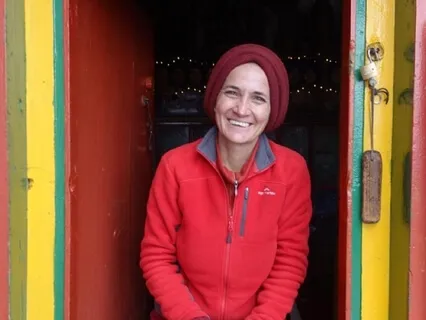
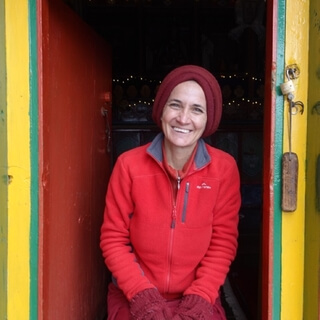
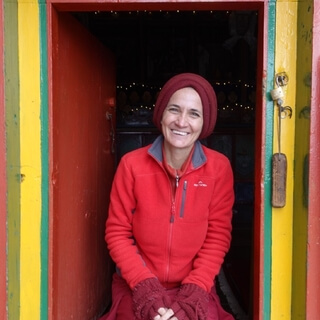
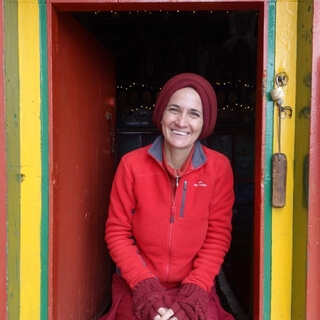
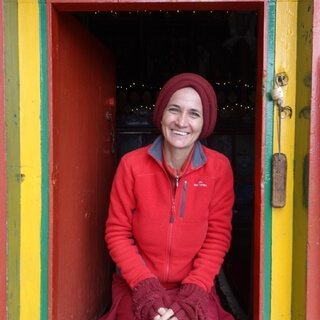
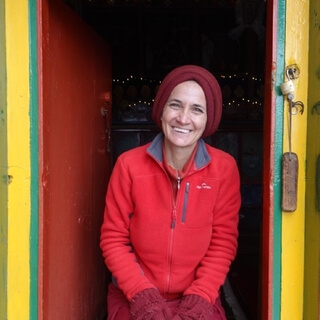
My name is Julia and I'm here with Venerable Cardrow who is a teacher in residence here and I have come armed with a set of questions which have come from listeners based on the topic questions for a Tibetan Buddhist Western nun.
So welcome.
Hi,
Hi everyone.
Hi Julia.
And the first question I have here is why did you decide to become a nun?
Because it is quite an unusual choice for a Westerner.
Yeah,
Yeah it's quite unusual.
My family would agree to that.
Yeah,
So why did I decide to become a nun?
Yeah,
It was a very gradual decision.
It took me some years from the moment that I was exposed to Buddhism to actually make that step.
So I guess through my path,
Through my Buddhist path that started 17 years ago,
There was a point like yeah a very deep kind of space within myself,
Within my journey,
My spiritual journey,
That I was just so inspired by my teacher,
Kebje Lama Zopa Rinpoche,
That I just I just wanted to become just like him.
So in Tibetan Buddhism,
The main training is to train your mind and mind and heart are synonymous.
So Tibetan Buddhism is all about psychology really and it's a training of the mind through study,
Rigorous study,
Contemplation and meditation.
And the meditations are to develop concentration and also to develop insights through using reasonings and logic and reasoning.
So Tibetan Buddhism is quite a sophisticated system for the development,
Developing the mind and it's very scientific because it also taps into not only psychology but into reality.
So this mind training is actually to cultivate altruistic qualities such as loving kindness and compassion and wisdom and is to abandon all the negative states of mind.
So it's all about what to cultivate and what to abandon.
So interestingly enough,
Through that process of abandoning what needs to be abandoned and cultivated what needs to be cultivated,
You gain some sort of inner happiness and contentment and meaning and joy because the main aspiration in Tibetan Buddhism is that you do all that so you can benefit others because our happiness is very much interdependent and interrelated with happiness of others.
So you see my teacher,
He embodies all these altruistic amazing qualities.
He is so wise and so selfless and always thinking of others,
Always helping others.
And so another huge source of inspiration for me,
Of course it was and still is,
He is the 14th Dalai Lama.
His mere presence is just luminous and radiant and loving and compassionate.
Whenever he teaches 500,
000 people turn up and it's because of the power of his major message,
Not just through his vocal message,
But the power of the decisions that he has taken and the obstacles that he overcome through that decision of leaving Tibet and taking refuge in India and still benefiting thousands of beings.
So these huge sources of inspiration for me,
I guess these were the deciding factors that I just wanted to practice like they did because they are just a product of thorough training and I wanted to give that a go.
I understand this life is really fragile,
The time is very short and I just didn't want it to waste my life just with meaningless affairs.
And so I really wanted to practice wholeheartedly and purely and devote my life to try to be a better person.
Of course if I could just be like them would be great but I have so much work to do,
To achieve that.
So I really wanted to devote my life to try to be a better person,
To heal my heart from all the things that needed to be healed,
To transform my mind,
To try to transform my mind and to try to give the best of myself,
The best service that I could to others,
To our communities,
To sentient beings,
To the world,
To our environment.
So and these,
Yeah this inspiration that my teachers gave me to train,
It has a very long term goal.
So these qualities that in Tibetan Buddhism we try to cultivate and enhance,
They are not only based to benefit beings in this life but it has a very long term goal which is enlightenment.
It's enlightenment.
We want to achieve enlightenment,
Okay,
So that we can be of the best,
Most efficient benefit and service to others.
So this mind of wanting to achieve enlightenment for the benefit of others is what we call in Tibetan Buddhism,
Purichitta.
And so this extremely altruistic mind of wanting to achieve enlightenment,
Yeah I guess is my kind of my,
Like my third inspiration my teachers comes first and then this is my,
Yeah it's,
It is a very long term goal that it requires a lot of training in this life and all future lives but I guess for me it's like well what are the most meaningful thing I could do in this in all my future lifetimes.
So I just wanted to really give it a go and and yeah I really use this life in in the most meaningful way that I could.
Well that's beautiful,
Very inspiring.
And what brings the most benefit from being a nun and actually can you clarify what it actually means to be a nun?
Yeah,
Yeah yeah of course.
So,
So I think you said what brings you the most benefit from being a nun.
I guess you partly answered that in the first question.
Probably,
But yeah being a nun it has a lot of benefits and and one of the most beneficial ones is that you take vows and vows are really there to protect you,
Not to affixate you and they're there to protect you not necessarily from external external factors but really they're there to protect you from yourself,
From your own detrimental and negative mental habits and patterns.
So the vows really help you to live in pure morality and ethics.
So for example some of the vows that we take is like not killing and not stealing and not lying just basically not harming others not taking intoxicants and not engaging in kind of just a little bit more mundane things.
But they're really there to to help you to restrain from harming others.
So yeah,
So what does it mean to be a nun?
Or what is a nun,
Right?
What does it mean to be a nun?
Or what is a nun?
Or a monk?
Well monks and nuns we take as I said we take vows and they fulfill a certain function that I just explained.
So being a nun or monk,
Yeah it's very similar to being a renunciate.
Other people call it a monastic or and or celibate.
Some people also call it celibate.
So what does it mean?
You take vows,
You change your way of presenting yourself.
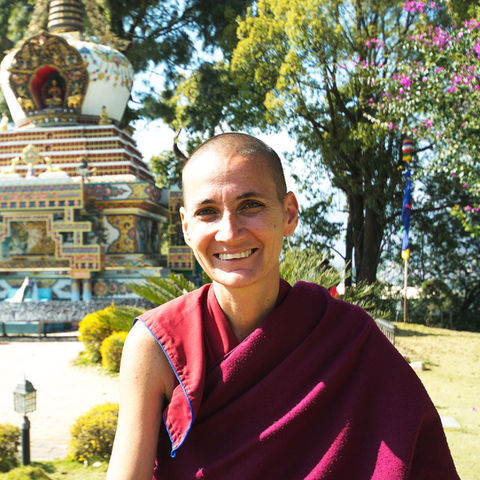
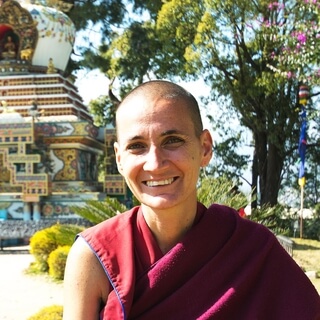
We in Tibetan Buddhism we shave our heads,
We don't have hair.
We start wearing robes.
Yeah probably those are the most obvious changes in your appearances.
So what these do is that they're really making a statement.
It's a statement you make into the world of who you are and really you know who you are in Tibetan Buddhism is when you when you take vows when you become a nun or monk is that you become someone that is more concerned in developing inner beauty,
Inner good qualities like patience and unkindness and respect and concentration and wisdom,
Atristic states of mind so so you can benefit others and you are more concerned in developing this inner beauty,
Your inner transformation of your mind and your heart rather than outer beauty.
So you're not that concerned of how you look.
It's like that so it kind of fulfills a few functions.
It's changing Europeans.
It's a statement that you do to the world but it's also a statement that you do to yourself.
Every time you put your robes on different parts of the robes represent different aspects of the path towards enlightenment.
So when you put your robes on is that you are reminding yourself what you are and what your aspiration is and who do you want to become.
So it's a daily reminder that you want to become a Buddha every day because actually it was Shakyamuni Buddha,
The historical Buddha that started the monastic tradition,
The monastic lineage.
He's the one that you know 2500 years ago he studied ordaining monks and then nuts.
So when you take ordination you take ordination from your teacher after having the permission and the perspective training.
So when you take ordination you are given a particular Tibetan name for this tradition but the most important thing is that you're giving these vows from these unbroken and pure lineage from Shakyamuni Buddha all the way to your teachers,
Teachers to your teacher and to yourself.
And that's quite a honor.
So every time you put your robes on you remind yourself of it's like a bloodline you know that you carry within your mental continuum that is manifesting through your appearance.
Does that make sense?
Sounds very powerful.
It is and it also it brings a lot of responsibility with it.
So because you're not it is every time you put your robes on you become something bigger than yourself.
You are just you're embodying the lineage and the results you want to obtain which is enlightenment.
And so that you have to do it with a lot of respect and care.
What is the purpose of relinquishing everything the world has to offer in order to train the mind?
I guess that question has to do with the vows and I think there's a bit of misunderstanding I think of what a monk is and that's why I explained.
So when you take vows you're not taking vows to actually relinquish the world right?
Because we're part of the world so how can you relinquish it?
So it's not that you relinquish the world what you do is that you actually change your relationship with it.
So what does it mean?
What does it mean that you change your relationship with it?
Instead of being highly amused and distracted by the external constant stimulus that the world just provides and it just happens and and allow it to affect you in such a way that you're always outwardly engaged right?
What we do is that we we see that the world is not only external there is of course an external world but when you become a nun what you do is you start joining the internal world okay?
So the outer world is still there but what you do is that you change your relationship to it instead of allowing it to affect you and stimulate you and make you feel like sent a ways yeah because the media or just just the general marketing or whatever it is just I guess just modern societies they're bombarding us continuously with ideas that they want us to believe that we need to get certain things to be happy that we need certain things to be safe and well and so with Buddhism you start training with with mindfulness and realizing that these are just based on commerce on just yeah it's just part of a very how do you say that it's part of a system that is quite ignorant and really what are the inner causes of happiness just you know I mean so instead of yourself being continuously persuaded magnetized by these external messages of what really you know or what or what you should do about your life you practice mindfulness and you realize that that the inner world that transformation of your inner world is what it will give you the tools to find that happiness so just see what I mean am I being clear yeah so yeah we can't depend upon happiness based on an external source no because if that would be the case the richest people in the world will be the happiest and that you can see that even the richest people you know people become you know just become depressed and kill themselves right so I think that it's not about that you relinquish the world but your relationship with it so you start really training and trying to abandon ignorance trying to abandon you know like what reality is about and your right relationship with reality you try to have a really good understanding of what attachment is what an aversion is of you know you you start abandoning what we call the eight worldly concerns or what is called the eight worldly damage and these eight are and these eight are and like they're they're they come in pairs and they're about having just fear about just you know fear of not having enough and anxiety you know of having a lot so it's about gain and loss and then you know you have your fear of you know not having enough pleasure or so it's is about they are worthy concerns they're really just superficial concerns that you are just just motivated by fame and and status and image and praise and you're scared about create just criticism so we abandon those and we just go deeper we don't leave things you know to the surface which is really trying to go deeper into the inner world we're trying to become inner beings in doing that is there anything that you struggle with when it does get hard how do you sustain motivation yeah I guess yeah being being a nano I renounce it yeah you could yeah I mean of course you can struggle with things particularly more in the West because of course and nuns amongst that they you know trying in Nepal or India that they that they come from Buddhist you know Buddhist culture or Buddhist background the whole society understands what they doing you know who they are so it's easier and their communities support them it's kind of it's normal but yeah being always done and I think one of the things that I struggle the most is when I'm kind of out there right in the world and and that people they don't know what I am and they yeah I think it's I think the looks that people give me a little bit and some of the looks yeah they can be very kind and probably they think I'm a weirdo you know this kind of red thing with no hair oh by the way she's a girl so that yeah I guess but you know I'm quite sure of who I am and why I'm doing it and so when I get this looks I just tried to smile bad and yeah then people really flip out because this weird thing that also smiles I just tried to respond with kindness and compassion and I know in my heart I'm telling them I'm doing this for you so but you're so I guess at the beginning it was harder and when I was nearly ordained because it's also new and you're so vulnerable and you are learning to you know to walk the path but now I think I just got used to it and yeah it's you just you just you know over the years you get more comfortable under your own skin yeah I didn't how do you sustain the motivation when it gets hard I guess with what I was talking about a weight body cheetah mmm inspiration yeah an inspiration I just of course my teachers are always there always in my heart yeah but yeah I mean I think that because when you're a monastic you know you devote yourself to a life of study contemplation and meditation and practice and service for me my service just doing this kind of things and the courses that I gave and the meditation training that I gave and all that just you know they they keep me going so it's a combination of my teachers plus for the cheetah which is inspiration like why I'm doing it is for the benefit of others you know what it's like what are the option do I have you know I just I just didn't want it to leave a life like a hollow life or just you know just get a partner and just have all these dramas and more dramas and and have or maybe not have babies and I don't know it's just and then just getting all and dying of course there's a lot of benefits of being a lay practitioner as well right yeah but but for me these life goes beyond you know it just goes beyond yeah any sort of things that have to do with my own with with my own pleasure short-term happiness yeah of short-term happiness I think that's a good way of putting it you know because happiness you know like if you only focus on short-term happiness you know it comes and goes and it's very unstable but yeah I mean enlightenment is a is a state of mind worries like you know it's a piece of permanent happiness and and there's so much suffering you know there's so much suffering in the world that I'm more I guess nowadays with this pandemic that I just I just felt that having a life only to fulfill my own pleasures and gains I was actually a bit selfish I felt selfish and I just I just couldn't do that anymore so you know what I mean it's like yeah it could have it it's hard bits but whether what options did what other options did I have you know it's just having that life that I saw it a little bit hollow and not with a vast vision and not taking into consideration other sufferings or this one this is I guess it's a personal choice and I'm I'm I'm up I'm up for all the hardships and challenges that that will bring and that's a challenge that I'm happy to take amazingly altruistic thank you are you allowed to sing so there's a difference okay yeah no one of the vows is not not singing and just out of like my own pleasure singing like that but of course we are allowed to chant which is different as a distinction so no I'm not allowed to sing like Lady Gaga no but we but we are yeah encouraged to chant and so we chant prayers and we chant mantras and and what's the difference between doing a prayer just mentally and not vocalizing rather than vocalizing it is that it that other beings can hear those prayers or those mantras and you know and it can benefit them so with mantras in Tibetan Buddhism we we use a lot of mantras and and what we do is that we we chant them aloud and mostly also for for animals and insects you know to to hear them and and hopefully you know to to mantras have a very high vibrational resonance that can affect the mental continuum of other beings so so by chanting mantras and to better Buddhism we believe that you know other beings can hear them and can benefit them and that can help them in their yeah in the path so I think that one of the projects that we have at Maha Mudra is that we will put some mantras in here in one of the podcasts so people can learn how to chant and yeah might be nicer to sometimes to chant altruistically even just yeah it gives your voice meaning what advice would you give to yourself if you could go back to when you first ordained and would you do anything differently I'm gonna answer the second one for you if I would do anything differently no no I was very ready when I took vows I was absolutely sure that that's what I wanted to do and I'm still am and I wouldn't give my vows back for anything it's one of the best decisions that I have taken in my whole life I recommend it to everyone yeah becoming vegetarian vegan was also a pretty good decision so what advice would I give to myself if I could go back to when I first was ordained I don't think I having it that's a good sign yeah I see a little confidence in I did because I thought of maybe telling myself don't be afraid but I wasn't mmm or just you know you can do it but I was sure I was thinking no maybe if somebody asked me what sort of I advice I would give to someone that is thinking of ordaining I would just say oh for it is worth it it's like ever okay next question what has changed for you in the time you've been ordained for example has your practice born fruit oh yeah so what has changed for you maybe notice noticeable changes yeah you've experienced since I've got ordained yeah yeah yeah I was huge profound transformation yeah as I was explaining before not only the physical pattern which was a big change and yeah also for my family to get you started but yeah I think they just say the internal transformation because the thing is that it's a bit like that just to give you an idea you know my prolly you know you'll you'll have jobs all our listeners yeah they they have or had or jobs and you always had a job description right and that is really good because it makes it really clear what your responsibilities are and what sort of functions you are to perform effectively hopefully so yeah being a nun is like that your your job description is to achieve enlightenment right so it's like that and and in Tibetan Buddhism it's quite incredible because the lineage that I follow is called the galuk lineage which is the same lineage as his own and still I llama and yeah it's a very intellectual lineage we do a lot of study and this lineage provides a very clean and clear and precise gradual steps for mind training and mind transformation which is called the Lamrim the graduate the graduated path towards enlightenment so so we study those and we contemplate those and we meditate on those topics and so being a nun and it gives me the lifestyle to do that right so so I combine my life with that and also with service all the workshops that I give and the courses and the retreats and all that the online courses and so I think the biggest transformation has been that is that I have yeah the time the time and the lifestyle to do that every day without distractions see what I mean because everything can be dedicated for that purpose exactly it becomes very your intention becomes really clear because you have this very cheetah very very clearly you have a very strong ethical platform to hold you you have the vows to protect you you have the ropes to make that statement and so and you normally monks and nuns in in Western monks and nuns we live in meditation centers or retreat centers and that's why I live here at my heart motor center in New Zealand which is a quite secluded and remote Center so that also gives me the conducive environment to go deeply inside into those practices of the Lamrim so then when I go out and I give the service I can do it from that really experiential experiential deep level so so that is quite yeah that is I just feel myself extremely fortunate and for some people it might look like like a simple maybe a simple lifestyle but you're such a very complex you know like training your mind it's it's hard work and then and then creating safe kind respectful environments for people to can to come and do that work while you're guiding them that's that's hard work too but it's so joyful so it's like so it's like um yeah it's like everything about being a nun it just has this very clear intention that you know that you just that you understand that you understand that you can't change the world of course but you can transform your mind thoroughly and and you give that message out of a very personal experience and perspective yeah I think but it's also it also had changed you know a relationship within myself my relationship with others the relationship that I have with others there's no time for superficialities anymore mm-hmm so you make really deep connections with people that are also allowing themselves to open up and going to the vulnerabilities and accept them and work with them and you are supporting them in that process mm-hmm so people might think that it's maybe a very isolated you know life and all that but it's not you're always surrounded by like-minded people that are in the same journey so yeah it's huge it's a huge yeah it's huge change and yeah talking about my practice yeah yeah yeah it's just it's a gradual progress but yeah because you're doing it every day in such a disciplined manner whatever you practice you become really good at it right hmm I'm not saying that really getting really good at it but it's it's just the broad the practice in itself is evolving hmm and the more you do it the less effort you see what I mean is the more you do this so yeah yeah okay what will you do when you become really old and here's praying you do we get really old well what will I do and yeah hopefully I have created the courses on conditions to still live in a monastic environment or in a meditation center something like that I mean I don't know I don't know what out without what you know who knows what I will do but hopefully I will just become like like an old grandma for for younger nuns and become like a big grandma mama and I can take care of the little ones and yeah and just kind of just pick yeah become become old with grace and and and hopefully die peacefully because we die as we lived right so who knows I could take tomorrow too right so but yeah I mean if you ask me what is my vision of becoming older and aging yeah I mean if I can just be a supportive elder senior great for us do you have any non heroines who me look up to I did at the beginning yeah when I when I started when I was a baby baby and I was just reading just books you know normal kind of Buddhist books the first first book that I read about was the Dalai Lama's I always had a very strong connection with his son and Dalai Lama and the second book that I read was cave in the snow from Jitsuma tensing palm yeah remarkable Western English nun Tibetan Buddhist nun from the Kagu lineage and she was incredibly inspiring to me because she was doing what I wanted to do and not only that but she had lived in a cave for 12 years and I've always had this very strong yeah yeah very strong dream is to yeah to do retreat and mostly in a cave and so yeah she she was my hearing at that time and some years later I went to India and I met her and I talked to her and and then some years later I was living in India and working in a meditation center in India in Bulgaria called cold root Institute and I had the honor to invite her and to give courses so we started working together in that way so that was great and then some years later then my teacher that was a very fresh air who is a reincarnation of a llama from the Himalayan region in Nepal and called a lot of llama and the Lauda llama used to live in a cave and to retreat and practice there so my teacher some years later told me yeah good for you to go to Lauda to that cave and do a retreat so so it was great so yeah I think she saw my husband with me all this time yeah yeah she's very inspired yeah yeah well thank you so much that's the end of the questions that we have thank you so much for dedicating your time I only hope so I only hope so it inspires others not to be afraid to just being themselves in in whatever way and particularly regarding their spiritual path and aspirations just just do it yeah well thank you and if anyone is interested in learning more about mineral cadre or the upcoming courses and retreats we have here at Mahamudra Center which she'll be leading you can head to our website it's mahamudra.
Org.
Nz and you'll find all the information there thank you for listening thank you