Hello,
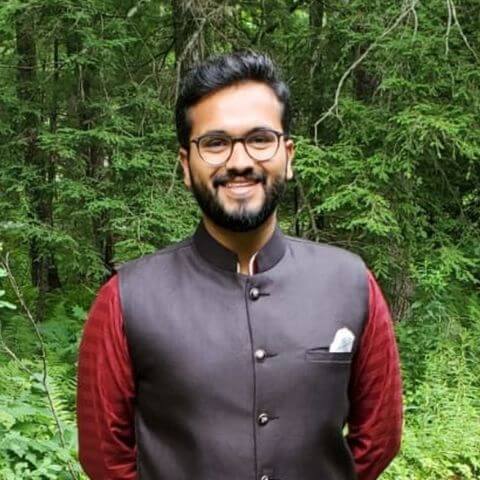
Welcome to Mindfulness with Mahib.
Today we are going to do a small meditation that will incorporate the variable of decent brain into our practice.
In my guidance I will define few terms and also give directions on how to implement them.
But before doing that,
Let's take a position that's most comfortable.
If you're sitting,
Make sure your back is straight and put all your distracting things away and close your eyes.
If that's comfortable for you,
Now take a long breath in,
Hold for a second and breathe out.
We'll continue to breathe and maintain the attention on to the sensations of breath.
Be fully aware of the in-breath,
The expansion of your lungs and stomach and the out-breath that shrinks lungs and stomach back to their original place.
Take a breath in again,
Notice the expansion,
Notice the sensations and breathe out.
What we experience in our day-to-day life or while you are meditating,
Such as the thoughts that may arise,
The body sensations that may arise,
Your emotions that may arise in the field of your consciousness.
This inner experience keeps happening all the time.
Your ability to perceive them from a psychological distance,
From a point of a witness is called de-sheltering.
So while you are observing or being aware of your thought processes or your body sensations,
Like in this meditation,
We are focusing more on our breathing,
The sensations of breath on the body.
We are de-centered and are witnessing the changes that are happening in our inner experience.
Meditation has meta-awareness as its primary variable,
As another subscale,
Which is very similar to what de-centering is.
It's the ability to be aware of what is happening,
Such as feeling,
Emotions or thoughts.
So if you're aware that I am feeling something,
If you are aware that I am thinking something,
You are in a state of meta-awareness.
So not fully absorbed in the thought,
But simply at a point of awareness that thoughts are coming and going,
Feelings are coming and going.
Another variable of de-centering is dis-identification.
If you have a thought that I am anxious,
In this thought you identify with anxious as if it's your sense of self.
We are so immersed with the emotion or state of anxiety and we call it as if it's me,
As if I am anxiety.
So that is a state of identification.
The variable that we are talking about in today's practice is dis-identification,
The opposite of identifying with inner experience.
So we acknowledge that thoughts are arising,
Emotions are arising in the consciousness,
But I am not these thoughts,
I am not these emotions.
My sense of self is different or separate from the thoughts or emotions.
Instead of saying I am anxious or I am angry,
We come to a realization of saying anger is happening right now or anxiety is happening in the body.
The third variable of de-centering is non-reactivity.
When thought arises in consciousness,
Our tendency is usually to react and have more thoughts or react and get into a spiral of feelings and then emotions and memories and keep going on and on,
Non-stop.
With longer meditation practice,
We cultivate an ability to not react to a thought or emotion or feeling and simply just be with it when it arises and let it go without going into those spirals.
The ability to not react comes later or with a longer practice.
So now that we know what de-centering is along with the three sub-scales of meta-awareness,
Dis-identification and non-reactivity to inner experience,
We can practice our meditation with more focus onto these variables with a clear understanding of what we are doing or what abilities we are trying to develop.
If you meditate using these tiny incorporates to your practice,
Your likelihood to experience self-transcendence go up,
You are more likely to get to a state of transcending the self.
So keep paying attention to the inner experience without immersing yourself into it by maintaining a psychological distance from the inner experience and by trying your best not to react to the experiences with more thoughts or emotions.
I hope these definitions and these different kind of applications into the meditation practice today were helpful and I hope you get to practice them in your daily meditation sit.
If you have any questions or comments please feel free to leave them for me and I'll respond as soon as I can.
And I hope you have a wonderful rest of your day and I will see you next time.