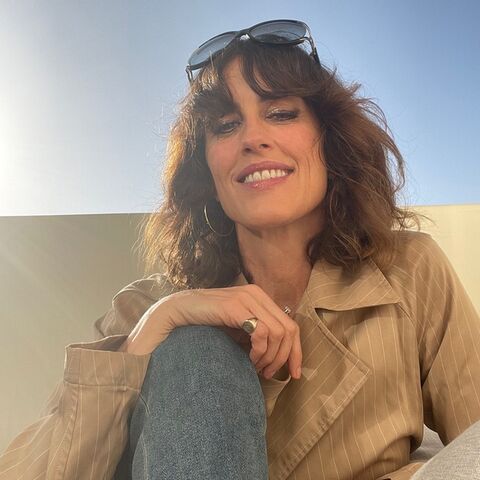
You are listening to Designed to be Awake with Mick Kubiak.
In this eponymous debut of Designed to be Awake,
I make my argument for the very premise of the show that we humans are made for enlightenment.
And I kind of go into the stories of two of my favorite teachers,
Eckhart Tolle and Byron Katie.
Again,
It's not for someone else,
Somewhere else,
Doing something else.
It's for you.
It's here.
It's now.
Welcome.
I am your host,
Mick Kubiak.
I have decided that the first few episodes,
Maybe the first sort of 10 to 12 episode season of the podcast,
I will be doing solo just to sketch out who I am and where I'm coming from and who you are,
My listeners.
And I come to this recording as a friend,
A spiritual friend.
And I see potential listeners,
My clients,
The very same way.
We are all here in this incredible circumstance called life on earth.
Truly,
Truly something.
A lot of times it's really awesome and other times it's very nearly unbearable.
And if that resonates,
This is probably going to be a good podcast for you because I'm not going to shy away from that.
What I am going to do is talk about practices,
Ways that we can be here fully and not shy away from the fact that there are times it feels unbearable.
And in those times,
There are things that we can do to make it bearable.
It may not be much more than bearable for a little while,
But when things turn around again,
And they always,
Always do,
You're still here and you haven't lost anything.
In fact,
You've probably gained something.
Although gain and loss are somewhat questionable concepts in the realm of spirit,
But they're not questionable concepts in the realm of playing the game of life.
But I am really interested in enlightenment and I always have been.
I would say my whole life in some ways has revolved around or intersected with over and over and over again,
This idea that there is a way to live that is free of suffering,
That is expanded and expansive,
That is infinitely loving.
And who wouldn't want that?
There are people who will say that's impossible.
I've been one of those people sometimes buying into the idea that it's not possible,
Like it's not a real thing.
I have this amazing book of beautiful Tibetan paintings.
And on the back of the book,
It says,
Enlightenment is possible in this lifetime.
And I would look at the book and I was still at the time that I had first read that.
I was still in that mindset of like,
Oh,
That'll take a lot of time and hardly anybody is enlightened and it's very rare.
And more and more over the past decade,
I'd say I am very much disabused of that idea and feel that we don't realize and don't understand that we're actually wired for it.
Human beings are wired to wake up,
To be highly conscious,
To be radiant and infinitely sourced so that we can infinitely give.
And that is news you can use,
Right?
One of the things that I deeply love about this time in life on Earth is how much access we have.
Now,
It can be a real bastard if you're going down the wrong rabbit holes.
There's way too much really stupid information out there as well.
Really like time wasters.
I'll probably challenge myself for even saying that,
Calling something stupid or a time waster,
Because I'm just not sure that's how it is.
But what I will say is that if you know what you're looking for and you benefit from it,
There's a lot of it out there.
We have unprecedented access to people who would have only been able to reach a few hundred,
Few thousand people in the past.
And now you can watch hours and hours of videos of enlightened people actually speaking and teaching.
Two people in my life who really inspired me were Eckhart Tolle and Byron Katie.
I have explored every nook and cranny of everything they have to offer.
I have exhausted everything that they have given.
And I have had my own series of what I would call awakenings.
This is one of the things that I find fascinating about Eckhart Tolle and Byron Katie is that both of them went from complete immersion in egoic illusion,
Her in particular,
I mean,
Just a very impressively lurid degree,
Sleeping with a gun under her pillow,
Demanding sweets and cigarettes from her beleaguered husband,
Locked in her bedroom,
Refusing to come out,
Just absolute descent into what we would colloquially refer to as madness.
And somehow in an instant,
She just woke up.
And to such a degree that she really didn't have much of a grasp on who she was before.
But what was amazing was that she was in that state that we call enlightenment.
There was nothing but love.
She had nothing but love,
Nothing but amazement and wonder.
She did have a moment where she could see her pattern start to return in the form of thoughts.
And this is how she developed her great gift to the world,
Which is called The Work,
Which anyone can get for free and start practicing right now.
And that's what I did for many,
Many times over and over and over.
And I would hit a wall with it where I would be like,
Hmm,
I just can't get past this one.
But I got past a lot using that tool.
It's a fantastic tool.
But to go back to it,
You know,
It was just one day she was no longer the person she had been before.
She was awake and she never,
Never lost that again.
She developed The Work because she could feel it coming back,
Right?
There's something about being in the world,
Being among other people,
Having a past,
All of that,
That just it started to crowd in on her again.
And that's when she found this way of writing her thoughts down on paper,
Questioning them very thoroughly,
Turning them around to see if maybe the opposite of that thought might also be equally true,
Or if there might even be something more true in the opposite of what she was thinking.
All of this kind of what we would call inquiry,
Inquiry practice,
Which is ancient.
She wasn't the first to do it,
But her particular method is wonderfully accessible,
Simple and straightforward,
And just really fantastic.
Eckhart Tolle was really like so deeply depressed that he was on the verge of killing himself.
And he just,
In fact,
Was in a horrible state of despair as he was falling asleep one night.
And he thought to himself,
He just thought,
I cannot live with myself anymore.
I cannot live with myself anymore.
And then somehow it occurred to him in that thought,
What does that mean?
Are there two of me?
What does that mean?
I can't live with myself.
Wait.
And just that Zen Cohen,
Like I can't answer that question,
Blew open his mind.
And he passed out.
This is as I understand it.
Went to sleep,
Passed out.
And when he woke up,
The world was just a light,
You know,
Just filled with light.
He heard a bird,
And it was like the most beautiful thing he had ever heard.
And so that was it.
He just moved into the world in a new way.
He gave up everything.
I was going to say he lost everything.
I don't know if lost or gave up.
If either of those verbs actually come anywhere close to what occurred,
He became different.
He was a teacher.
I believe he taught math.
I believe he studied at Oxford.
So,
You know,
He had a life.
And Katie did,
Too.
I mean,
Yes,
She had descended into a state of madness.
But prior to that,
She had owned and operated multiple successful businesses.
She had been married several times.
She had children.
She had a nice house,
You know.
So they were both coming from these positions of having something to lose,
To be honest,
And then having these awakenings and just all of that just dropped away for them.
There was no further identification with whatever that all was.
And I just can't imagine the shock of that,
Even though I have longed for it my whole life.
I'm also very grateful that for myself that my path has been much more sort of gentle and slow awakenings.
It took decades for me to be where I am now,
And I don't know what where I am now means.
I know I'm in a really different place than I've ever been before,
And it's really fucking awesome.
So that's part of why I want to start this podcast and start sharing my story with people.
And there's so much to share and so much to hear.
I want to hear what other people are experiencing,
And I do actually every day,
Pretty much every day.
You know,
Four days a week I'm solidly working with clients one-on-one or one-on-two.
And as a therapist,
I work with clients a lot who are in this position where they can see what they're doing,
And they will talk about it like,
Oh,
I said this,
Or I got so angry,
Or why am I like this?
And they'll describe what they're like.
And to me,
Right there,
The fact that there is enough of a gap between this identity that they've formed,
This personality that they've formed throughout their life,
There's enough of a gap between that and the person who's talking to me that they can describe it.
That right there is the gap you need to widen.
You widen that gap between your perceived sense of self and this witnessing consciousness that's sitting here talking about this behavior,
These thoughts,
These emotions,
These patterns.
You've already got the main message right there.
You know that you're separate from that.
That was one of the things that I always think is the first thing that I finally got from meditation,
And it took a few years of practice for me.
I have thoughts,
But I am not my thoughts.
That's not what I am.
I just have them.
And it's so beautiful because we all really have this ability to see ourselves,
To put some space between our thoughts and emotions and then who we really are.
So this is one of the first things I think that meditation tries to teach,
The forms of meditation I studied.
First,
I studied Zen.
Then I got really immersed in the lineage of Tibetan Buddhism,
And I actually took refuge in that school.
I feel that that's such a gorgeous approach.
I'm not recommending you go join anything.
I'm really not.
That is not necessary to join a religion or a cult or a club or anything.
And in fact,
In some ways,
I just say like,
Don't.
For so long,
We've been taught to find someone who's enlightened and follow them and become a disciple or a student or a monk or a mendicant or any number of ways of following someone else based on their level of consciousness.
And I believe we are now in a period of time where we don't need to do that anymore.
The call for awakening is coming from inside the house,
And we need to pick up the phone and take the call.
But what I love so much about what I learned there,
And one of the first things you're learning is to have thoughts without attaching to them.
You're sitting still.
You're rooted in your body on the spot on the earth where you are sitting,
And you are breathing and watching your breath.
And at first,
It's insane.
Like,
I remember the first time I sat Zen,
I was like 22.
My mind was absolutely racing.
I could barely sit still.
And the guy who was next to me was like,
Wow,
That was weird.
That was intense to sit next to you.
And I thought I had been doing a good job.
I mean,
I was doing my best to sit still.
But I was just a young pup.
I had no control.
I don't know what I was doing.
I didn't think I was like twitching or anything.
But highly sensitive people can feel the insides of your mind going,
You know,
Like highly sensitive people,
Which you become if you meditate a lot.
You can feel the energy.
So anyway,
That's just a fun story.
And then I did a couple years of real immersion in Tibetan Buddhism and just really sitting and drawing my attention away from my thinking and towards onto my breath,
Onto my breathing,
Into my physical sensations,
Just being and allowing there to be this space between me and my thoughts and me and my emotions,
Which are like,
Boy,
Do those those two dance together,
Huh?
The thoughts and the emotions,
The stories and the feelings fuel each other.
And I learned so much from that experience.
And I still didn't get it.
Right.
And what I mean by get it,
It's like I still went on to get married and divorced and just make so many mistakes,
Mistakes and quotes.
Right.
Let's say I went on to allow my thoughts and emotions to rule me again and again.
I had to do it quite a few more times before I was ready to say this is really not working for me.
And I know there's another way and I'm going to keep trying.
I just kept going back,
Going back,
Going back,
Not just to meditation,
But,
You know,
To listening,
Like I was saying,
Listening to Eckhart Tolle,
Reading Eckhart Tolle.
I remember my husband at the time gave it to me.
I don't even know if we were married yet,
But it's like probably one of my most precious things that I have in the world is that book and and the inscription in the front of it.
I was doing a yoga teacher training at the time.
Really,
What a beautiful time in my life.
And he gave me that book and it just glowed for me.
I loved it.
I loved his story.
I loved his way of describing what happened to him.
I loved his way of talking about the human condition.
And I felt so close to what he was,
What he was vibrating,
What he was emanating when I was reading it and all around that moment of reading it.
And then there was still this real split for me.
Like then I was Mick Kubiak being Mick Kubiak in the world.
And the two didn't quite connect yet.
Not too long after that,
That I stumbled across Byron Katie and the work.
I had my baby.
I did the presence process,
Which is another really kind of amazing work by an Australian South African teacher called Michael Brown.
He's very obscure now.
He doesn't have any kind of social media imprint.
He did his book and he was like,
This is what I'm saying.
And it's a great process that he sorted out and put out there as something that people could practice at home on their own.
And he was very clear,
Like,
I don't want to form a group or a community.
I don't want to teach classes.
I don't think you should do this together.
You know,
And I think that's such an important piece for me is it's very powerful to do on your own and not to get too caught up in these communities of people.
But my point is really just to encourage those who want to find it in themselves on their own.
That was really,
Really important for me because so much of what I needed to unlearn was codependency and the story that I'm not enough on my own and I'll never make it and I need other people to approve of me and validate me and like me or else.
We all know the experience of being completely identified with our thinking where we barely get a break from it.
It's just running us.
It's telling us stories from the minute we wake up to the minute we fall into sleep and then we start dreaming.
And there's little rest for the being inside of us.
The being inside of us is different from this mental madness,
This monkey mind that tends to run the show.
Yeah,
That was what the first 10 years of meditation really helped me to get.
I have thoughts,
But I am not my thoughts.
I'm also,
I have emotions,
But I am not my emotions.
So what's left?
I do things.
I take actions,
But I am not my actions.
And the more that I can sit and take up residence in what's left.
And what I was noticing the other day was that one of the things that was left was listening.
I had a voice kind of going pretty loudly and intensely in my head and I was aware of it,
But I was also sort of caught up in it.
It was,
You know what I mean?
I was really engaged in the story it was telling.
And then I noticed,
Of course,
That I was separate from it.
And I kind of backed away from it a little bit and just let it keep talking.
But I dropped into the part of my brain that was a listening part.
It's almost like I could feel my brain change when I just listened.
And there was this settling down that occurred for me.
And what I found was at first,
When I was super engaged with the stories and the voice that was talking,
Like there was this feeling like,
Oh my God,
I got to do something.
Something's going to happen.
What do I have to do?
And then as I dropped back and just started almost enjoying the show,
Actually,
And just listening,
I just felt so much more relaxed.
Everything kind of dropped.
I could really see this aspect of myself as having not that much to do with me,
The true self of me,
The eternal being residing in this body,
In this human experience.
So where I'm at right now,
I would say there's a lot of space between me and my thoughts.
There's a lot of space between me and my,
I want to say my emotions,
But I think maybe the better way to say it is that my emotions just flow through me without resistance.
I find myself in a very peaceful and loving state.
There are many,
Many things that move towards me.
I can feel myself going in a direction.
I can feel like,
Ooh,
I could get really freaked out about that.
But it's like,
As soon as I feel that,
This greater energy inside me is like,
Eh,
Let's not do that.
We don't need to do that.
And then I just kind of observe the thought or the emotion and it dissolves.
And I'm also experiencing that emotions that used to be just all day long at a six out of 10,
You know,
Just very intense,
Now I'll feel it,
But it's sort of,
It comes at a two and then that's very manageable actually,
A two out of 10,
You know,
I'm like,
Okay,
That's okay.
And then just drop into my body,
My breath and the present moment,
Stillness,
This vast being-ness that we're all in together,
But that our thoughts and emotions and formed identities,
You know,
The formed identity is,
Is about like getting ahead and what am I eating?
And have I lost those five pounds?
Where's the man of my dreams?
And why isn't my husband different?
Why am I not different?
All of these things,
Right?
Our formed identities are definitely not interested in this.
You may find yourself being bored with this podcast.
It's not interested in dropping all that.
And when we do start to get interested in dropping all that,
It's usually because the suffering has become intolerable.
The pain of wanting and never getting,
The pain of having and then losing someone or something.
Oh,
You know what else?
Hurting other people,
Lashing out at other people,
Clinging to other people against their will,
Pushing people away against their will.
How many times do you want to be so confused that you're angry at your child for something or yelling at your child for something?
For me,
I had just really had enough of those experiences.
And yeah,
Those are the things that really helped me break the addiction to drama.
And for me,
This capacity certainly came in no small part from 30 years of meditation and observing my thoughts without following them or attaching to them.
But again,
I think what I want to say here is that you don't have to do a bunch of meditation.
You can,
And we will talk about that in other episodes,
But you can also just do it now.
Just do it right now.
Like,
What are you thinking while you're listening to this?
And what impact is that having on your body?
What are your emotions?
What feelings are coming up?
And can you kind of lean back and let the emotions just be?
Can you just witness them?
Can you witness your thinking,
Your opinions,
Your judgments,
Your excitement,
Your fear,
Your anger?
And once you're able to do that,
Even for just a little bit of time,
You're really all the way there in so many ways.
All the way there to this thing we call enlightenment.
I should probably do a whole separate episode defining enlightenment,
But I do believe it is a common enough concept with a common enough agreed-upon definition that for the purposes of this episode,
I'm just gonna let it be enlightenment.
And in my own experience of residing in the part of myself that witnesses and not in the part of myself that thinks and feels and emotes,
Like,
The more I can do that,
Then the longer I can do it.
I'm able to increase the amount of time I'm in a space of observation and surrender and experiencing.
And it's not that I don't then speak,
And it's not that I don't move about in the world or take actions.
It's just that all of it comes from a different place than these thoughts,
These emotions,
These patterns,
Really.
You know,
In yoga,
We call it the samskaras.
And in computer programming,
Right,
It's like,
In some cases,
I think of it as malware,
You know,
Something that gets into your computer and just takes over and starts doing all this stuff.
I think about a lot of times our learned coping strategies from childhood are like that.
And when you are able to let them just be,
Let them do their things and just watch them,
They will often sort of dissolve.
And sometimes there's something to be done there.
Sometimes there's something to be done with a thought or a pattern,
An old self,
An inner child.
In shamanism,
There's a thing called soul retrieval.
And you journey back to find these lost parts of yourself that got cut off when something happened.
They got kind of left behind by the psyche.
And in this state of sort of grounded,
Centered,
Neutral observation,
You become a very safe presence,
Actually.
That's one of the interesting things about it.
And even in the context of your own psyche,
If something ugly comes up,
The impulse is not to like hate yourself or beat that thing down.
It's really just to witness it.
And while you are observing emotion rather than allowing it to take you,
Love is very present.
And I really understand more and more why they say love is not an emotion.
Love is a state of consciousness.
It is an ingredient that is fundamental to this self at the center of our being.
And so when these things arise,
You know,
We could call them memories or we could call them coping strategies.
And they're just witnessed and held in the consciousness of love.
There's so much safety there.
Everything really just settles down.
And it's quite beautiful.
And if you're listening to this podcast,
I don't have any doubt that you can start to have that experience.
Or if you're already having that experience or have had that experience,
That you can have it a lot more.
And sometimes I think we don't know what we're looking for,
What we're supposed to do.
Like,
How do we wake up?
How do we become more conscious?
And there are many answers to that.
But this is the one that is helping me right now,
Or is part of my experience of waking up and not excusing myself by imagining that enlightenment is for other people and not for me,
Because I don't believe that.
And I feel that the way the world is going now,
It's really essential that individuals take responsibility for their own awakening.
That's how it's going to happen.
It's going to happen within the individual.
I hope that this episode is inspiring to you.
And I hope that you practice with these ideas and that you really open up to the idea that you are designed to awaken.
You're designed for it.
The human being is designed to wake up.
I think I'm nearing the end of episode one.
It's a lot to sit in your room by yourself and talk.
But I'm into it.
I'm into it.
And I hope you're into it too.
And please,
If you like it,
Let me know.
Drop me a line on whatever platform you're hearing this on.
And you can always submit questions or thoughts.
Maybe I'll incorporate it into an episode.
And that's it for today.
I just leave you.
I'm sitting here imagining you,
All the people you might be driving in traffic in Los Angeles,
Maybe on a walk in New York,
Maybe lying in bed,
Maybe doing the dishes,
Fully present,
Playing the game,
Living this life.
And I'm just feeling love for all of us here.
And with that,
I will say goodbye and see you next time.
Thank you so much for listening today.
This episode and every episode would be impossible without my amazing team.
The brilliant Chase Coughlin,
Who not only edits every episode,
But also composed the music for the show.
Georgina Vasquez,
As well as Maya Young.
If you enjoyed listening,
Please leave us a review.
Thank you so much for listening,
And I will see you next time.