Well,
Hello my friends,
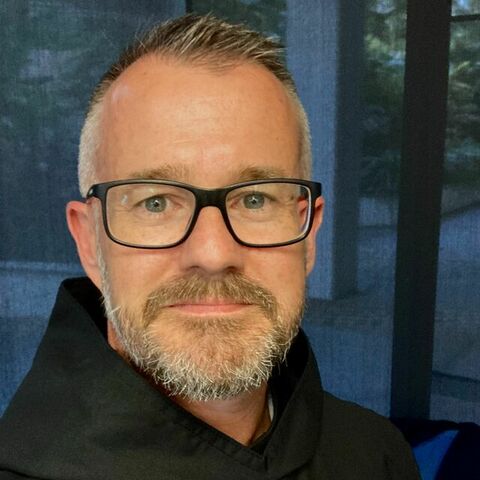
This is Mark Gludman,
Also known as Brother Frederick James,
Your friendly neighbourhood monk in docks.
And in this special teaching audio,
I'd like to talk to you about growth on the spiritual path.
I want to talk about it in language that's very different.
So rather than talking about reaching out and setting goals and going higher and growing bigger,
In this talk today,
I'm going to talk a little bit about sinking,
And a bit about letting things go and a bit about getting out of the way and a bit about shaking the dust off your feet.
But I pray that this is super encouraging for you,
And actually perhaps even offers,
I was going to say a better way,
But it's probably less or more humble for me to say a third way or a middle way to becoming everything that God wants you to become.
So that's where we're heading today.
And I want to start just by reading to you from Matthew,
Chapter 10,
Where Jesus is sending out the disciples to minister.
And I'll just read some selected verses from here.
He says,
As you go,
Preach this message,
The kingdom of heaven is near,
Heal the sick,
Raise the dead,
Cleanse those who have leprosy,
Drive out demons freely,
You have received freely give.
Don't take any gold or silver or copper in your belts,
Take no bag for the journey or extra tunic or sandals or a staff for the worker is worth his keep.
Whatever town or village you enter,
Search for some worthy person there and stay at his house until you leave.
As you enter the home,
Give it your greeting.
If the home is deserving,
Let your peace rest on it.
And if it is not,
Let your peace return to you.
If anyone will not welcome you or listen to your words,
Shake the dust off your feet when you leave that home or that town.
So with 2023 upon us,
Or about to be upon us,
I wanted to set you up for a great new year.
And as I mentioned,
It's normally that time of year when everyone starts to set new year's resolutions.
But did you ever notice that our resolutions and the resolutions that we make often come back to comparisons that we make with others or ourselves?
Our resolutions at their core are about the other person.
Our resolutions at their core usually come from a place of who am I in relation to this person.
Now,
I've got a great friend who's also a spiritual director and a great writer who lives in Brisbane just close to me,
And his name is Dr.
Patrick Oliver.
And he talks about this part of us that talks about who am I in relation to X,
Y,
Or Z.
And he talks about that person that we have as being the me.
He talks about this,
The me and the I.
And a lot of the things I'm going to share with you today have been drawn from Patrick's wisdom.
And he's such a really,
Really beautiful,
Beautiful writer and man.
And what I'm sharing with you today has really helped me to emerge,
To allow my true self to emerge.
And I really hope you can see this in what he's talking about.
So Patrick talks about the me and the I.
Now,
The me is a construction.
The me is a false sense of identity that we hope others believe about us,
That we would like to believe of ourselves.
And whether it's positive or negative,
The me doesn't actually exist in reality,
It's simply created in our mind.
Now,
It doesn't mean that we may not be some of these things that are in the me,
But the fact that we lift them up to a place of some sort of preeminence or prominence in our lives,
That's a false construction.
He says this about the me,
And I'm quoting Patrick now,
He says,
It believes the feelings it experiences at any particular moment describe who it is.
And it's the feelings that become the criteria of whether or not I'm going to see myself as okay,
Or not okay.
Now,
I think you can start to understand what we're talking about here when we're talking about the me.
The problem is that the goalposts for okay are always changing,
Aren't they?
I mean,
When you're okay as a kid,
That doesn't really cut it as okay when you're an adult.
Some things still might,
But a lot of things change as we grow older.
Okay,
10 years ago,
Still doesn't cut it today,
Even though we're still adults.
Life changes things shift.
Okay in that country might not cut it here in this one.
You might be in some place and have lots and you might be somewhere else and don't have much and so suddenly you think,
Well,
I'm not okay.
So we often find that the goalposts for what we think is okay or not okay in our lives in our world are always changing.
And because of that,
We seek happiness,
But we never actually find joy.
And we seek pleasure,
But we never actually find any peace.
We keep asking the question,
Am I all right?
Am I secure?
Am I successful?
Am I lovable?
Am I enough?
The problem is that living from the me enslaves us to a facade.
I mean,
Think of a time when you felt that you couldn't do without something.
Could be a person,
Could be a thing,
Could be an experience that you wanted to have and that you couldn't do without it.
And let's say for some reason,
You did have to go without it,
Her,
Him,
Them,
Whatever.
All right.
You didn't have the money or you didn't have the opportunity or they just went there for you or whatever it was.
You wanted this thing and it never happened.
And at the time you felt,
If I don't have this thing,
This person,
Whatever,
That I'm not going to be able to survive.
I'm not going to be able to live without that.
The very fact that you're alive today and didn't get that thing means that you did it.
You went without that thing and you survived,
Which means that you probably really didn't need it in the first place.
Now,
During that,
I need it phase when you couldn't have it,
But you kept telling yourself you need it.
Remember how you felt and remember how miserable you were,
Which means it wasn't not having it that made you miserable.
Otherwise you'd still be miserable now.
It was the hanging onto that thing,
Onto the something or whatever it was.
It's the hanging onto it,
The clinging to it,
The desiring for it.
That's what made you miserable.
And worse,
You didn't actually need it,
Which means you were hanging onto something you didn't actually need and making yourself miserable for absolutely no reason.
I mean,
I know we can laugh a little bit when we look at it in hindsight.
I mean,
When we're in the moment,
Of course,
We were so rolled up in it and we don't know if we're going to survive.
But the fact is,
Is that you're here now.
You don't have it.
You didn't need it.
And so it's understanding what it is that makes us miserable here.
We're not miserable because we don't have it.
We're miserable because of the feeling,
The need,
The clinging to,
The wanting to have it.
It's the hanging on,
Right,
That causes the anguish.
The me clings on and makes us think that if we feel certain things,
Then that must be true.
At the time of wanting that thing,
You felt you would be without,
You felt you couldn't survive,
You felt that everything would be down the hole.
But that wasn't true.
You might have felt that way.
I'm not denying your feelings.
I'm saying the reality is that that wasn't necessarily true.
But it's this,
This is conditional,
Isn't it?
It's all conditional.
Patrick Oliver says again,
We will never be unconditionally happy when we hitch our happiness to conditions.
How good is that?
Let me say that again.
We will never be unconditionally happy unconditionally happy when we hitch our happiness to conditions.
And while it's true that we must identify our feelings,
It is not true that we must identify with our feelings.
Whoa,
How good is that?
Right?
That's wisdom.
Now,
Beyond the me,
There's this other thing that Patrick Oliver refers to as the I.
So you got the me and you got the I.
Now the I has no need to change,
To conform,
To comply,
To rebel,
To react,
To cling.
And it has no need to do those things because the I is indestructible.
And it is indestructible because its identity is embedded within God who is indestructible.
Now,
The I doesn't depend on your mood and the I doesn't depend on other people's opinion.
It has nothing to defend and it has no one to attack.
The I knows that God is enough and it cannot be hurt and it cannot be torn down because it is already in God.
So you've got the me,
Which is based on conditions.
It's based on the stuff that it's holding on to that it finds its identity in.
Then you've got the I.
And the I has no need to defend itself or react or anything else because the I is already in God.
And because God is fully satisfied with what is,
And because God is indestructible,
The I finds itself truly satisfied with what is and is indestructible as well.
So how do we know the difference?
How do we know if we're moving from the me or from the I?
Well,
Patrick Oliver says that the me is often felt in our bodies.
And if you think about it,
This is really,
Really true.
Think about a time when you found yourself in a position where you were defending something that comes from the me.
You were defending some opinion you had of yourself or you were defending,
I don't know,
Something about you that isn't really embedded in the I,
It's embedded in the me.
You literally feel it in your bodies.
I mean,
Our hackles go up,
Don't they?
Or our fists clench when we start to feel like we have to defend.
Or our teeth grind,
Or our jaw tightens.
When the me comes under threat,
It feels the need to defend itself,
To stand its ground,
To call the shield maidens,
To encircle,
If you're a fan of Vikings,
All right?
Get the shield maidens,
And the shield maidens all come in and they put the shields up and encircle you.
The me feels the need to snap back with some sort of sarcastic remark or retort.
All right,
So we often feel when we're living out of the me,
We often feel it right there in our physical self.
And that's a really good indicator.
What's interesting is the I,
On the other hand,
Emerges when we stop trying to defend ourselves.
When we literally let go of the need to defend.
When we let go of the need to retort.
When we let go of the need to attack back.
When we let go of the need to cling to the images that we have of ourselves.
When we release our grip and allow ourselves to fall back into God and let the flow of God take us wherever the flow happens to be going.
I mean,
There's a lot to take in just there,
Right?
With thinking about who this me is and thinking about who this I is.
But the goal of the spiritual life is to move out of the me,
Which we've often set up for ourselves simply because we're trying to find our way in the world.
I think the me is not necessarily bad because we're trying to find our identity,
Right?
So when we're growing up,
We create this me.
We look at people around us,
People that we emulate,
People that we want to be like,
People who we aspire to be like.
Famous people,
Sports people,
Music people,
Actors,
Famous lawyers,
Teachers,
Doctors,
Nurses,
Whatever it is that we think we want to be.
And we see people in those spheres and we think,
Oh,
I'd love to be like that person.
Even if you're someone who's been brought up around the saints,
Right?
You look at the saints.
And this is why many people will have icons or statues or pictures of saints in their homes because these people are people that they want to emulate to be like,
To pick up their characteristics.
And so we have these things around us.
And out of all those things,
We construct this me.
And then as we enter into the world,
We start to present this me to people around us.
And we're carrying this me that we're hoping other people will see because this is what we want to be like.
Or we may have already started to be like that.
But we hold those things up as being the things that identify who we are.
So this is the me and this is the thing that I'm showing to you as to the me that I am.
And that's okay for a while.
But when we start to see that the foundation on which the me is built can be hit and crumble and it can start to fall away,
That's when we start to get this ego thing,
This me thing,
Starting to really try and prop itself up.
And all our energy and time is spent in trying to create this me,
This thing,
This ego,
If you like,
That is trying to be the epitome of who we are.
And if that was all to go,
Then we'd be completely lost and nothing would exist of us.
That's the me.
And the spiritual journey is about moving from that me,
Which we have created,
Which again,
Isn't necessarily bad.
I hope that you could do worse than decide that you want to become like the best nurse that you know,
Or that you want to aspire to live a life like St.
Francis of Assisi,
For instance,
Or that you want to play music as well as,
You know,
Whatever instrument you play.
Is it cello?
You want to be like Yo-Yo Ma,
You want to be able to play.
That's beautiful.
It gives us something to aspire to.
But what you've done is you've built a thing of this is what you are.
This is who you are.
I'm a great cello player.
Well,
What happens when one day you can't play,
If one day you can't play cello anymore?
Does that mean your whole world comes crumbling down?
Or if someone says to you,
You're actually not that good a cello player at all.
And that's when it really hits us hard.
And this is why the me is so fragile.
And this is why the me is so dangerous to hold on to long term,
Or to place all our identity in the me.
And the spiritual journey is about taking our identity away from the me and start to move it towards the I.
So how do we make that shift?
How do we move from the me to the I?
Well,
What most people try and do is they realize this,
They realize they've got this identity that might be exactly who they are,
But they know that that's not where their identity should be.
It should be over here in the I.
And so what they do is they say,
Well,
I'm not going to give up on my identity.
I'm just going to dump it.
I'm just going to drop it.
I'm just going to renounce them.
The problem is,
Did you ever notice that when you let something go like that and renounce it and try and push it out of your life,
That there's a tendency for it to get a greater hold on you than before you started to surrender it?
Have you noticed that?
So you're in a really a relationship that you know the relationship is bad.
And so you break up with that someone,
Even though you love them,
That you know the relationship is toxic,
And you just say,
I'm just going to put them away.
But now you start seeing their face everywhere.
Or you go,
All right,
I need to eat more healthy.
I'm going to swear off these certain foods.
And now,
Every time you walk through the mall,
Guess what you're smelling?
Guess what you're seeing in the display cases in all the restaurants and cafes and things,
Right?
It's not the salads,
And it's the donuts and the pies and all those things that you want to try and steer clear of.
Or you decide,
I'm going to live simply now.
I'm not going to spend a lot of money on stuff.
I'm actually going to live more simply.
And now what happens?
Well,
The catalogs arrive in your mailbox,
And you start to flip through them.
And you go,
Oh,
I need that.
I need that.
I need that.
And you find this fighting within yourself starting to come up.
And so when you do this,
You're not quite moving on from it as you thought you were going to be able to,
Right?
Now,
Bradley Jersack notes,
And I love the way he puts this,
He says,
Some exorcisms aren't quite complete.
Some traumas not quite healed.
And he says,
Well,
I'm not quite healed.
And some excuses,
Sorry,
Some exorcises drag a lot of baggage.
He says,
Even my marginalization can become an appetite,
And the reactions I create a craving.
Normal ego stuff,
Truly.
So we need to continue to do the work necessary for a deeper freedom,
And that's a really,
Really good quote.
I love that image of the Exodus,
You know,
Leaving Egypt,
Moving on,
But wanting to bring all this extra stuff with you.
And that's what we quite often do when we try and move from the me to the I.
We go,
I'm going to dump all this and move on,
But they still sort of cling on to us.
They still sort of cling on to us.
And so we need to be able to move from the I to the I.
And that's what we need to do.
And I think that's what we need to do.
And I think that's what we need to do.
And I think that's what we need to do.
And I think that's what we need to do.
And I think that's what we need to do.
And I think that's what we need to do.
And I think that's what we need to do.
And I think that's what we need to do.
And I think that's what we need to do.
And I think that's what we need to do.
And I think that's what we need to do.
And I think that's what we need to do.
And I think that's what we need to do.
And I think that's what we need to do.
And I think that's what we need to do.
And I think that's what we need to do.
And I think that's what we need to do.
And I think that's what we need to do.
And I think that's what we need to do.
And I think that's what we need to do.
And I think that's what we need to do.
And I think that's what we need to do.
And I think that's what we need to do.
And I think that's what we need to do.
And I think that's what we need to do.
And I think that's what we need to do.
And I think that's what we need to do.
And I think that's what we need to do.
And I think that's what we need to do.
And I think that's what we need to do.
And I think that's what we need to do.
And I think that's what we need to do.
And I think that's what we need to do.
And I think that's what we need to do.
And I think that's what we need to do.
And I think that's what we need to do.
And I think that's what we need to do.
And I think that's what we need to do.
And I think that's what we need to do.
And I think that's what we need to do.
And I think that's what we need to do.
And I think that's what we need to do.
And I think that's what we need to do.
And I think that's what we need to do.
And I think that's what we need to do.
And I think that's what we need to do.
And I think that's what we need to do.
And I think that's what we need to do.
And I think that's what we need to do.
And I think that's what we need to do.
And I think that's what we need to do.
And I think that's what we need to do.
And I think that's what we need to do.
And I think that's what we need to do.
And I think that's what we need to do.
And I think that's what we need to do.
And I think that's what we need to do.
And I think that's what we need to do.
And I think that's what we need to do.
And I think that's what we need to do.
And I think that's what we need to do.
And I think that's what we need to do.
And I think that's what we need to do.
And I think that's what we need to do.
And I think that's what we need to do.
And I think that's what we need to do.
And I think that's what we need to do.
And I think that's what we need to do.
And I think that's what we need to do.
And I think that's what we need to do.
And I think that's what we need to do.
And I think that's what we need to do.
And I think that's what we need to do.
And I think that's what we need to do.
And I think that's what we need to do.
And I think that's what we need to do.
And I think that's what we need to do.
And I think that's what we need to do.
And I think that's what we need to do.
And I think that's what we need to do.
And I think that's what we need to do.
And I think that's what we need to do.
And I think that's what we need to do.
And I think that's what we need to do.
And I think that's what we need to do.
And I think that's what we need to do.
And I think that's what we need to do.
And I think that's what we need to do.
And I think that's what we need to do.
And I think that's what we need to do.
And I think that's what we need to do.
And I think that's what we need to do.
And I think that's what we need to do.
And I think that's what we need to do.
And I think that's what we need to do.
And I think that's what we need to do.
And I think that's what we need to do.
And I think that's what we need to do.
And I think that's what we need to do.
And I think that's what we need to do.
And I think that's what we need to do.
And I think that's what we need to do.
And I think that's what we need to do.
And I think that's what we need to do.
And I think that's what we need to do.
And I think that's what we need to do.
And I think that's what we need to do.
And I think that's what we need to do.
And I think that's what we need to do.
And I think that's what we need to do.
And I think that's what we need to do.
And I think that's what we need to do.
And I think that's what we need to do.
And I think that's what we need to do.
And I think that's what we need to do.
And I think that's what we need to do.
And I think that's what we need to do.
And I think that's what we need to do.
And I think that's what we need to do.
And I think that's what we need to do.
And I think that's what we need to do.
And I think that's what we need to do.
And I think that's what we need to do.
And I think that's what we need to do.
And I think that's what we need to do.
And I think that's what we need to do.
And I think that's what we need to do.
And I think that's what we need to do.
And I think that's what we need to do.
And I think that's what we need to do.
And I think that's what we need to do.
And I think that's what we need to do.
And I think that's what we need to do.
And I think that's what we need to do.
And I think that's what we need to do.
And I think that's what we need to do.
And I think that's what we need to do.
And I think that's what we need to do.
And I think that's what we need to do.
And I think that's what we need to do.
And I think that's what we need to do.
And I think that's what we need to do.
And I think that's what we need to do.
And I think that's what we need to do.
And I think that's what we need to do.
And I think that's what we need to do.
And I think that's what we need to do.
And I think that's what we need to do.
And I think that's what we need to do.
And I think that's what we need to do.
And I think that's what we need to do.
And I think that's what we need to do.
And I think that's what we need to do.
And I think that's what we need to do.
And I think that's what we need to do.
And I think that's what we need to do.
And I think that's what we need to do.
And I think that's what we need to do.
And I think that's what we need to do.
And I think that's what we need to do.
And I think that's what we need to do.
And I think that's what we need to do.
And I think that's what we need to do.
And I think that's what we need to do.
And I think that's what we need to do.
And I think that's what we need to do.
And I think that's what we need to do.
And I think that's what we need to do.
And I think that's what we need to do.
And I think that's what we need to do.
And I think that's what we need to do.
And I think that's what we need to do.
And I think that's what we need to do.
And I think that's what we need to do.
And I think that's what we need to do.
And I think that's what we need to do.
And I think that's what we need to do.
And I think that's what we need to do.
And I think that's what we need to do.
And I think that's what we need to do.
And I think that's what we need to do.
And I think that's what we need to do.
And I think that's what we need to do.
And I think that's what we need to do.
And I think that's what we need to do.
And I think that's what we need to do.
And I think that's what we need to do.
And I think that's what we need to do.
And I think that's what we need to do.
And I think that's what we need to do.
And I think that's what we need to do.
And I think that's what we need to do.
And I think that's what we need to do.
And I think that's what we need to do.
And I think that's what we need to do.
And I think that's what we need to do.
And I think that's what we need to do.
And I think that's what we need to do.
And I think that's what we need to do.
And I think that's what we need to do.
And I think that's what we need to do.
And I think that's what we need to do.
And I think that's what we need to do.
And I think that's what we need to do.
And I think that's what we need to do.
And I think that's what we need to do.
And I think that's what we need to do.
And I think that's what we need to do.
And I think that's what we need to do.
And I think that's what we need to do.
And I think that's what we need to do.
And I think that's what we need to do.
And we realize that when you love,
You love from the eye.
And so in the act of loving,
You are recognizing that you are already in God and that God is already in you.
And this should be a really encouraging thing.
Because even if you're struggling with the me stuff,
If you are living in a way that is demonstrating love to others,
Right,
Then at the core of that is someone who recognizes God and recognizes that they are already in God and that God is already in them.
Or when Paul speaks about how there's a tendency or a temptation to obey the rules,
When he talks about law,
Right,
He's talking about this thing in us that feels like it has to do everything that's set out so that we can say that we are the person who obeys all the rules and does everything that's set out,
Which is so much in the me arena,
Right?
And this should really hit home for many of us who have been Christian for some time and who in the past,
Or maybe even in the present,
Have found our identity in what we do.
I go to church every Sunday.
I go to Bible study on a Wednesday night.
I pray three times a day.
I say my rosary.
I'm trying to pick up things from a whole bunch of different traditions.
I've got Catholic,
I've got Protestant,
I've got,
You know,
Monastic,
Episcopal in there,
Whatever it is.
We put all these things out there to say this is who I am and I've obeyed these things and I've done all these things.
A big argument at the moment going on social media about whether churches should have had services or not had services on Christmas Day and some people going to the point of saying you are being completely disobedient to God if you do not have your service on the Sunday,
Which is also Christmas Day.
This idea that by obeying everything and keeping all the rules,
I mean,
This is exactly what Jesus was trying to show the Pharisees and the Sadducees about all the time.
There's that wonderful,
Wonderful part of the scripture where,
And if you don't understand this,
You may not understand this rather,
Because we don't understand the context.
So Jesus says,
Woe to you,
Scribes and Pharisees,
Who tithe mint,
Dill and cumin,
But don't hold the greater precepts of the law,
Love,
Justice and mercy.
The comment about mint,
Dill and cumin,
What was happening was,
I mean,
When Jesus is saying this,
He's in the city,
Right,
When no one has farms.
Now,
Of course,
One of the Jewish laws is to bring a tenth of your harvest.
And so what many of the scribes and the Pharisees apparently were doing,
As I understand it,
Is they were keeping little planter boxes in the windows of their homes and they were growing mint,
Dill,
Cumin,
They were growing herbs,
Right?
And what they were doing is when it came time for the herb to come up,
They were going to their little window box gardens and they were taking a tenth of the leaves of the harvest of their mint,
Dill and cumin and other herbs.
And they were taking those to the temple so they could offer them as their harvest tithe,
Their harvest sacrifice of 10 percent.
This is how ingrained in them it was that I must keep all the law to the point where I've got to have a little window box so I can say I have kept the law about tithing a tenth of my harvest.
So the rules were the thing that was the me.
All this keeping of the law was completely in the me arena because it was about look at what I have done.
See this,
I've kept the law.
But this is why Paul writes consistently over a number of places that the law is dead because of Christ.
What he's trying to help us to see is that we can't keep the law fully.
It's just not possible.
And if that's true,
Then the me has no life that lasts because if I can't keep a garden in my window or if I can't grow a crop and I can't give my tenth,
Then I can't fulfill the law and then I've got no me in me.
But that's the point.
This is what Paul is saying.
When the me dies,
The I comes alive.
This is why the law needs to be done away with.
Not that it shouldn't be kept per se,
But that we can't find our identity in keeping it.
And because we can't keep it fully and therefore can't find our identity in keeping it,
All we've got left is the I that comes alive in Christ because the me has died.
And that's literally resurrection.
When the me dies,
The I comes alive.
Life,
Death,
Life.
That's really what this is all about.
This is resurrection life.
Or when Jesus says,
And this is an interesting one,
Rejoice and be glad for your reward in heaven will be great.
This verse,
A lot of people have grabbed this and said,
See,
This is about martyrdom.
I need to go out and get persecuted so I can,
You know,
Again,
This is kind of going back to what I was just saying about law.
A lot of people grab it and say,
Oh,
I've got to go out and get persecuted and then I can say that I fulfilled one of the beatitudes.
No,
No,
Come on.
This isn't about martyrdom.
I'm not saying that there are some people in some places who are legitimately being persecuted.
Prelude to what I'm about to say.
However,
When I hear most people in my country,
Australia,
Or in the US or other Western countries,
When I hear most of those people talk about being persecuted,
Seriously,
It is completely from me language.
It's about look at what I have done.
I have,
The me has been persecuted.
Me,
Me,
Me.
All right.
Look at that.
This is my identity in this persecution.
But through the lens of me and I,
Jesus is saying here that we can rejoice when we suffer a defeat because it's the me that gets crushed.
And when the me gets crushed,
We get a reminder that the image of the me is not the true image of who we are,
The image of the I,
That our only indestructible identity is in the I that is hidden in Christ.
And so when Jesus is talking about being persecuted,
When you're being attacked,
You are being attacked for these things that are out there.
Let them go.
Let them be attacked.
Let them be defeated.
Because when you let those things get crushed and put out of the way,
We start to realize that what we have is our I that cannot be defeated,
That cannot be crushed,
That is indestructible because it is right there in God.
The good news is simply a blueprint,
An awakening of what happens when we surrender to the journey of moving from the me to the I.
Brad Jersack talks about this process as being what Jesus meant by shaking the dust off your feet.
And if you go back to that passage,
You'll see that Jesus is basically saying to his disciples,
Look,
You're going to come into this place,
You're going to share with them all these things that I'm asking you to share with them.
And some people are going to slam you for it and reject you for it and tell you you're an idiot and whatever else and not respect you or treat you right,
Whatever it is.
And when they do,
Shake the dust off your feet.
I love that image.
He's saying,
Just shake the dust off,
Let it fall where it falls and keep on walking.
And this is exactly the same thing that we can use as an analogy to understand how we can move from the me to the I.
Because it's a process.
You're not going to crush and see the whole me disintegrate right before your eyes in one swift movement.
You'll be out sometime and you'll say something,
Be in a conversation with someone and they will say something and you'll feel your fists clenched.
You'll feel your hackles go up.
You'll feel the sarcastic retort start to move down the end of your tongue.
And you'll suddenly stop yourself and go,
No,
This is a part of the me.
I need to let it go.
Just shake the dust off,
Like right off,
Like let the dust fall to the ground and then keep walking.
Let the dust fall where it falls and keep moving towards the I.
Let go of that thing.
And maybe if you imagine the analogy of holding on,
Clinging to the side of a big hole and you've got your fist clenched.
Maybe each movement is like letting one little finger go and you're holding on with three fingers and a thumb and then another finger comes out a month later.
And you've got two fingers left and your grip slowly loosens on this thing until you finally let that part of your me go and can continue to move more fully towards the I.
And this,
My friends,
Is how I think many of us need to move into 2023.
We need to slowly but surely let go of the me and fall into the I.
And that's not easy because when we let go,
It moves away from us and it might be something we've held on to for some time.
It might be something to which we've grown quite attached.
It might be something to which we have legitimately or illegitimately,
But certainly for a season,
Have hedged our whole existence upon.
Maybe we've thought there's no way I can survive without this part of what I've created in the me.
And now we need to let it go.
I think one of the most beautiful,
Beautiful lectures I ever sat in,
And I wish I could find out whether this was recorded.
This was back in the early 2000s,
Maybe 2001 or 2002 or maybe even just a little bit before that.
And Dr.
David Benner,
B-E-N-N-E-R,
Who is a Christian psychotherapist from Canada,
He came out to Australia.
And Dr.
Benner has written some amazing books on spiritual direction,
Spiritual journeying.
And at the time,
For context,
I was the youth pastor in a Pentecostal and evangelical church.
And I was the chaplain in the school that was connected to that church.
So a very different frame of mind in terms of understanding spirituality in the world than what I am now,
A long way off.
What's interesting as I think about it right this very second is this was all,
I went and saw this lecture at a point where I would have been starting my deconstruction journey.
And so this is really interesting for me,
And I'm literally reflecting on this right now as I'm speaking to you,
That yes,
I would have seen this talked about by Dr.
Benner at this point where I either had started or was just about to start my deconstruction phase.
But Dr.
Benner talked about this spiraling and this freefall as being part of the spiritual journey,
That the root of the spiritual journey is always going to be one of descent,
Not one of ascent.
It makes us ask the question,
Or should make us ask the question,
As we become more like Christ,
How do we become more similar or more unique than the person that we used to be?
And there's always going to be traveling through the wilderness on this journey.
It's always going to be hard and treacherous and dangerous.
And we're going to be alone sometimes.
And it's going to be hot and it's going to be steep and it's going to be treacherous.
And think of the number of times when Jesus actually discouraged some people from following him or tried to discourage people from following him,
Basically trying to help them see that this is not going to be an easy path because it's going to require you to move from this me to the I.
And Dr.
Benner talked about,
He said,
There's this spiral and then there's this freefall.
And so he talked about imagining that you're in this hole in the ground and you're literally clutching on for dear life to the side of the hole.
And you look down and all you can see is darkness,
But there's no way you're going to be able to climb up.
And deep down,
You know that God is there with you.
But when you look down or when you look up,
You can't see God up and you can't see God down.
Looking down disappears to the darkness.
Looking up just disappears to the sky.
He said the only thing that you can do is let go.
And he said it's not going to be easy.
He said it's going to be quite difficult.
But when you let go,
Two things happen.
The first thing that's going to happen is you're going to start to go around in circles.
He called this the spiral.
And I remember thinking at the time that if you,
For instance,
Have a look at the book of maps in the Bible.
So go to the back of your Bible and open up a book of the maps and have a look at the journey that Israel took through from Egypt to the promised land.
As they're walking along the way,
They literally go around in circles.
They go out into the wilderness and the journey wasn't about going from one place to another.
If it was,
They would have been there in six days,
Which is apparently how long it takes to walk from Egypt to Jerusalem.
But instead,
What you have is this journey that goes around and around and around and around this area for 40 odd years.
But as they go,
It's not about them reaching their destination.
It's about a change that happens to them along the way.
It's about the transformation that takes place as they move from all these attachments and things that they had clung to simply because they had to survive in Egypt.
But in order for them to come and to move into the promised land,
They need to move away from the me and start to embrace the I.
To move away from the constructs and the things that they have put up and put in place to give themselves identity and protection and to make sure that they feel OK about who they were.
To let go of all that and put their complete trust and hope in God.
It's not about the travel.
It's about the transformation.
And I really encourage you,
If you're ever reading Exodus,
Leviticus,
Numbers,
Deuteronomy,
Read it through that lens.
Read it through the lens of this is a group of people who are having to be transformed,
Restructured,
Reframed,
If you like.
Their paradigm has to be shifted.
They have to move from the me to the I in order to get to the place where they can truly be who it is that God has called them to be.
So there's this spiral as that transformation happens.
And then there's a free fall.
Where suddenly we feel like there's nothing out for us.
We let go and there's nothing underneath us and there's nothing there to catch us.
But what we need to recognize is that it just belongs beyond the darkness.
Because while we can still see,
That's still me.
If we can still come up with a plan as we look down,
Oh yeah,
There's another tuft of grass along the side of the hole there.
If I let go and I push myself off this way,
I should be able to.
That's still me stuff.
What we need to do is to let go completely and to fall and to trust that the I needs to trust that just beyond the darkness,
The hands of God are there to catch us.
And it's then and only then that we'll realize that God is there.
And in learning not to rely on our strength,
We'll meet God in new and beautiful ways.
So heading into 2023,
Shaking the dust off your feet,
Getting out of the way,
Letting go,
Spiraling,
Maybe free falling and falling into the hands of God.
As you move from the me to the I that is indestructible and the identity that is hidden with Christ in God.
So as you enter into 2023,
May you find the space to do the work,
To get out of the way and let the I,
The real you emerge,
The one who is already embedded in God.
May you find the courage to shake the dust off your feet and to move from the me to the I.
May you find the confidence to let go,
To spiral,
To free fall,
To allow that transformation journey from the me to the I to start doing its work in your life.
Trusting that just beyond the darkness as you fall,
The hands of God are there to catch you.
And may grace,
Peace and love go with you this day and every day of 2023.
Praise to you,
My friend.
God bless you.