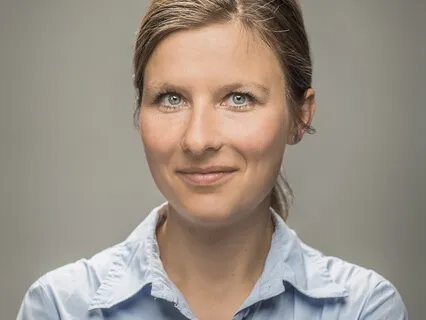
Welcome to Brain Observations,
The podcast where we talk about brain health and what you can do to maintain and improve yours.
Here we are extra curious about the why.
Why does meditation have so many positive effects?
Why is sleep important?
Why should you be aware of your thought patterns?
Why should you focus on your brain health at all?
To answer these questions,
I set out to find and talk to some of the most knowledgeable people out there.
And at the end of each episode,
I sum up what we've learned from today's guest.
Me,
I'm Maria Sandel,
A clinical neurologist,
And with this podcast,
I hope to make scientific evidence on wellbeing and brain health more easily available.
And my wish is to inspire you to learn more and find ways to improve your own life.
The human brain is not only capable of change.
It was built to change.
And you have more control and opportunity to create the life experience you want than you might think.
I also want to mention that even though I am a medical doctor,
This is a personal project and not affiliated with my hospital.
The information in this podcast is meant to educate and inspire and should not be taken as medical advice.
I advise you to discuss any potential changes to your lifestyle with your own personal doctor.
This is even more important if you are experiencing trouble with your mental health.
Today's guest Olga Klimetsky is prominent within the field of social emotions.
She is a trained psychologist and neuroscientist with her doctoral research focused on emotional plasticity and understanding the brain's ability to train empathy and compassion through meditation based techniques.
She is also working on mental training for healthy aging and the role of emotions in conflict resolution.
She's based in Geneva,
Switzerland and currently also a guest professor in psychology at the Technical University of Dresden,
Germany.
She has been practicing meditation herself for many years and is a mindfulness meditation teacher in training.
In this episode we sit down and talk about empathy and compassion.
What is the difference between the two?
And why should we cultivate compassion and not only empathy?
Can empathy become harmful to us?
And what can we do to avoid this?
There's a lot of interesting things to talk about,
So let's dive straight in.
Hi Olga and welcome to Brain Observations.
Really excited to have you here today.
I'm Maria.
So if we talk a little bit about sympathy,
Empathy and compassion,
How would you describe these things?
Yeah,
And I think before I start describing them,
I will start with a huge disclaimer because in my research field,
Which is psychology mainly,
Everyone uses these terms differently.
And so it's really important to get that sorted out in the beginning like you do with me now.
So for me and for many researchers in my field,
Empathy is the capacity to share another person's emotions and to feel the same quality of emotion.
So when you,
For instance,
Are happy,
I can share your happiness and then I feel empathy because my happiness was not induced by an event on my side,
But your happiness.
And similarly with sadness,
If you feel sad,
I can also share your sadness by feeling sad myself.
So I have the same quality of feeling.
So that for me is empathy,
Our capacity to share another person's emotion.
Sympathy and compassion is also used interchangeably by different researchers.
I think overall these terms can denote a feeling of pity.
Sympathy sometimes is connotated with pity,
Sorrow for someone else's misfortune.
But sympathy can also mean for some researchers a feeling of care,
Which for me goes more into the direction of the term compassion that I use quite often in my work.
Compassion is often defined as a feeling of concern and care for another person associated with the motivation to help this person.
And it's really specific for suffering.
Both sympathy and compassion are specific for suffering,
Whereas empathy can be for any emotion.
The way I understood it is that sympathy and pity is more that you intellectually understand the emotion that the other person have and you care about it.
And then when you go into empathy,
You're actually feeling what they are experiencing yourself.
So you go from just thinking and sort of observing it to actually feeling it.
And then when you move into compassion,
You've not only experienced their emotion,
But also having a willingness to relieve their suffering.
So I totally agree for the empathy and compassion part.
And for the first part,
I think it's really a question of terminology.
And there are many researchers who would speak of also perspective taking or something like cognitive empathy.
When you think about the emotions of another person.
So there are many,
Many terms.
But I think what you are also alluding to is that there are two routes to understanding others.
There's more a felt sense,
A really embodied emotion that we feel in our bodies.
When I can empathize with your sadness,
For instance,
I might have tears in my eyes,
Even though a sad event happened to another person and not to me.
But the more cognitive route is more to understand it intellectually.
And I think both routes play an important role and the terminologies differ.
So that's why I tend to get confused in articles.
And I always like it when people write what they mean with a term.
I think there's a lot of congruence and a lot of misunderstandings in the field.
For instance,
There was this huge debate,
Is empathy bad for you that Paul Bloom fueled based on an article we wrote.
And I wouldn't go as far as saying empathy is bad and something else is good only.
But it really depends on how you define these terms and then how you work with them.
So yeah,
It's good to look into the details.
And do you need empathy in order to feel compassion?
Is empathy the basis for compassion?
Or are they connected in that way?
I think they are connected in a way that compassion denotes more a felt sense.
And in compassion,
You share the suffering of another person to a degree.
So you also have negative emotions yourself.
But compassion is special for me.
And I love compassion because compassion adds this huge amount of positive ethic of care,
Of affiliation that is so unique to compassion.
And whereas when we go too much into empathy and just share the negative feeling,
We can also go into empathic distress or feelings of almost burnout because we can get overwhelmed by the negative emotions of another person when we don't have that capacity for warm-heartedness,
For care.
That is protective against burnout.
And I think this is something that matters a lot to us these days when we are faced with a lot of suffering due to the pandemic.
And even if we ourselves are not currently affected,
There are many people working in hospitals or having relatives or close friends who are suffering a lot from the COVID situation,
Be it because of health reasons or because of psychological reasons.
And I think there's a huge risk of going into burnout if we share the suffering of others too much.
So I think compassion here can be protective.
So could you talk a little bit about empathic distress and what that is?
So when we are faced with the suffering of another person,
We can also feel a degree of empathy that causes us to stress ourselves.
So we can be overwhelmed by the suffering of others.
And this feeling of being overwhelmed usually activates in us a mechanism that is protective.
Really exciting research from the 80s by Dan Batson and colleagues has shown that people who get into empathic distress,
When they are faced with the suffering of another person and they have the option to help the other person or to leave the situation,
Then they prefer to leave the situation.
However,
If they don't have the option to leave the situation and to stop witnessing the suffering,
Then these people with empathic distress help.
So they then engage in pro-social behavior.
So when I feel there's too much suffering in another person,
It's overwhelming for me.
A protective side in me will tell me to get out of the situation if I can.
So we're no longer capable of providing care or compassion or support to someone else.
So I think empathic distress is related to burnout in helping professions.
So we know that people who are overly distressed by what they witness at work tend to get burnout much more easy.
So I think compassion is a good antidote to empathic distress because it protects us from being overwhelmed by another person's suffering.
And also empathic distress is associated with less helping behavior because of this need to protect ourselves and to withdraw ourselves from the situation.
And so this is what you did your research on.
You looked at the empathy and the compassion part to see how you can actually adapt these responses in the brain.
Because throughout time,
Most of the research on plasticity has been around motor skills or cognitive skills,
Right?
Where you have either things like playing the piano or doing basketball free throws or memory tasks,
Attention tasks.
This is the things that we have looked at when we're thinking about the brain being able to change and modify itself and grow and expand and evolve.
But you started looking at this when it comes to social emotions,
Which I think is really awesome and exciting.
So could you tell us a little bit about the research that you've done?
So the notion of plasticity and brain plasticity goes back to Ramón y Cajal,
Who was a medical doctor and he had this notion that things in the brain,
That the connections in the brain will change when we learn new things.
And it was only a hundred years later that we scientists had the tools to actually look at that and to track it in human beings.
So before I started my work,
There was really pioneering research showing that when we learn motor skills like juggling or when we learn for exams,
The brain structure changes in specific parts of the brain that are important for coordinating our hand movements or for memorizing moves or memorizing other skills like learning for an exam at university.
But what was new about my research is on the one hand that I focused on brain function and seeing how brain function can change.
But on the other hand,
I focused on training emotions and particularly social emotions.
And I think it's so important because when I started studying the notion or also in my life,
This notion that when you're an adult,
Basically the way you are is the way you are was really predominant.
And I think it's so important to know that even as adults and even when we only engage in certain things for a short time,
So my trainings were relatively short,
They were less than a week,
So one full day and followed by evening gatherings for a few days,
Even this short amount of training was capable to change our brain function in a consistent manner,
But also the way we relate to suffering and the way we engage with others socially.
So it increased pro-social behavior.
I think that's a powerful message.
At least it was a powerful message to me telling me I may perceive myself as a solid being,
But I can really change every day.
I can be a different person every day.
And I can cultivate certain skills intentionally.
And I think that's also a very powerful message.
It's an amazing message.
And do you think that's why it took so long to start doing this type of research also on affect and emotional plasticity?
Because we tend to look at these things as fixed traits.
This is part of who I am as a human.
I am either kind or I am not.
I am either neurotic or I am not.
And there's no need to look into it because we just assume that that is fixed.
Yes,
Yes.
I think it's a huge notion that it was extremely prevalent in psychology.
So when I studied psychology,
It was clear there are these personality traits and personality traits are fixed.
That was the very definition of a personality trait.
And today this definition is challenged and it's seriously challenged because we understand that personality traits,
While they are relatively stable over time,
They also change.
So you can become less neurotic over time or more agreeable or it's really plastic.
And I think in a way it's also ironic because we've had psychotherapy and other interventions around for a long time and meditation based interventions and also spiritual interventions around for thousands of years.
And people knew it did something to them,
But this notion was just not yet in research.
And I think things are coming together now between what we live and what we find in research.
Could you tell us something about the studies that you did?
How did you look at this?
Yeah.
So I was interested at the time,
Especially in how we relate to others,
Suffering,
Motivated by the medical domain where there is a lot of burnout.
And so my main interest was in finding interventions that can decrease this empathic distress.
And when I looked at different kinds of interventions,
What I found really exciting at the time was meditation because it's really old.
It has been around for thousands of years and people use it and have been using it all that time.
So it seems a powerful method.
And there has been research before me,
Of course,
Showing beneficial effects of meditation on emotions,
Showing how it can promote positive feelings.
And so I also tried out the method myself and I thought,
Yeah,
For me it works.
So let's see whether it also works for an average person and whether we can generalize these effects and whether we can really observe changes.
So what we did is we trained groups of,
At the time we only did it with females,
But now we're expanding and a lot of research has shown it works for males and females.
So we trained participants,
Volunteers in meditation and in a certain kind of meditation.
So there are families of meditation,
There are many different techniques we can engage in.
But what I was particularly interested in is the cultivation of kindness and care towards ourselves and towards others with the notion that this can increase our capacities also to deal with suffering.
And so the training technique I used is based on something that's called metameditation or loving kindness meditation,
Where we think of other people.
We started with a benefactor,
Someone who's a really dear person to us,
Who's given us a lot of care in our lives ideally.
And we can also work with close friends or animals or children.
I traditionally work with my grandmother.
So whenever I think of my grandmother,
I feel how my heart is warming up and I feel her love and radiance and it's a natural person for me to work with.
But everyone has,
Of course,
A different person that they can identify for an animal.
And when we start with that person,
We imagine this person and then we can connect with that person also in a felt sense,
In an embodied sense and feel in our bodies,
How does it feel like to just imagine the presence of the person?
And then we can wish this person well,
So we can wish this person,
May you be happy,
May you be safe,
May you be free of suffering.
And we can also imagine how this person,
This benefactor sends us these wishes.
So I would imagine my grandmother saying to me,
May you be well,
May you be safe,
May you be free of suffering.
And then we move on to ourselves.
And this is a step that's unique to the West because in Asian cultures,
People started with themselves.
They have a much closer connection to working with themselves in a loving and kind way.
And I think that's a part of our Western problem is that we don't find it easy in general.
So that's why we start with a benefactor.
But then the next person,
And I think the most important person is ourselves.
And we wish ourselves,
May I be happy,
May I be safe,
May I be free of suffering.
And we really connect to felt sense.
What does it do in our bodies?
How does it feel like?
And then we can move on to a series of people,
A friend,
A neutral person,
For instance,
Or the person in our favorite coffee shop or the mailman.
And then we can move on to a difficult person.
And that's,
I think,
A field that I find super interesting.
And usually we don't start with the most difficult person in our lives,
But we start with someone who's a bit difficult.
And we can also send these feelings of wishing well to that person and not meaning that,
Yeah,
May you continue to harm me in the way you do,
But meaning that I really wish your freedom from whatever suffering you have.
And I really wish you to be happy.
So we can do this step and then we can expand this feeling of care,
Kindness,
Benevolence to the entire realm of humanity,
To even all creatures that are alive on this planet.
So I more and more find it easier to not only include animals,
But also plants and everything.
For me,
Every plant is in a way a creature,
But it takes practice.
And I had no idea how the practice of meditation will connect me to every little ant that I see.
But it really opened my heart up to ants and all sorts of small animals that are around.
And I find it quite amazing how it changed my perception of the world.
It's really powerful.
And do you do all of these things within the same session?
Yes and no.
So there are some different ways of doing that.
And in some of the trainings,
So in the trainings that I did in the beginning,
We did all of that in one session.
So first on a whole day and then in like a one hour meditation in the evening.
You could even do a very short one and you can,
I think you could fit it in 10 minutes.
I think five minutes would be too short,
But I think you could reduce it to 10 minutes.
But there's also different kinds of practices.
So for instance,
I wanted a whole weekend retreat where I only focused on myself and cultivating these feelings for myself and no other person.
So I did that for three days.
And some people do it for just one target for years.
You can play with it and see whatever fits you best in your current situation.
So is there a reason that you did the study only on female subjects?
So we know from previous research that there are differences between women and men.
And there are differences on the one hand in reporting.
So women tend to report more emotions.
We don't know whether they really feel more emotions.
It may be,
But it may be just cultural that it's easier for them to talk about their emotions because it's more accepted in the culture.
And it also seems that women respond a bit more to meditation training than men.
And that they also have different brain activations in response to social stimuli.
But these differences are really small.
So a difference between two women is usually larger than a difference between a woman and a man.
And even though we find these average differences,
It doesn't mean that women in general are all this way and men are in general all that way.
But individual differences measure more.
And so you did also fMRI,
Meaning that you looked at the connectivity of actual brain regions with these studies as well.
Can you tell me a little bit about what you found there?
Yeah.
So with fMRI,
What we measure is brain function.
So the activation difference between cells.
And we know that when cells communicate with each other,
They basically need more blood.
And then we can measure the differences in blood flow to certain regions by the magnetic properties of the blood.
And this is amazing.
Like when I learned about fMRI,
I was really like,
Wow,
We can measure brain activations without cutting the skull open.
We can just do it without hurting someone.
So this is what we do.
We can measure changes in brain activity in people who are just lying in the scanner.
And so what we did is people were lying in a scanner and it's a really narrow tube and they are not allowed to move.
So it's difficult to recreate a real social situation in the scanner.
So what we did at the time is we showed participant videos of other people who are suffering or in everyday life situations.
And we did that repeatedly.
So the videos are taken either from archives of the Swiss television or from documentaries.
So it's depicting real material and they are really short.
So 10 to 18 seconds roughly.
And we measure how brain activations change when people see others suffering.
And we don't show the same videos,
But parallel sets of videos so that people don't go thinking,
Oh,
Did I see this person already?
And then I go into this kind of train of thought.
What did you see then?
Are there different parts of the brain that sort of lit up depending on what type of emotions you're having?
Yeah,
Exactly.
So what I find really amazing is that we were able at the time to see changes depending on the training.
So we had one group train in compassion and one group,
For instance,
Train in memory.
So an active control group,
A cognitive technique,
Totally unrelated to social emotions.
And what we found is that the compassion training group had higher activations after the training when they saw others suffering in areas that are usually associated with feelings of love,
Affiliation,
Reward,
Of integrating emotions and action,
Like medial optic frontal cortex and the striatum,
Which encompasses many more regions like the putamen and so on,
And nucleus accumbens,
Which is really known for its important role in reward and learning.
And to me,
The fact that brain activations in these areas changed is really promising because it shows that A,
There is something going on in the brain,
Okay,
But also there's something going on in regions that are really specific for affiliation,
For reward,
For positive emotions.
And I'm a psychologist and a neuroscientist at the same time,
And to me it's important also to complement self-reports with more objective measures because we saw in self-reports that participants reported feeling more positive emotions when they saw others suffering after the training.
But it's not clear in how far that's just based on,
Oh,
They wanted to please those researchers or they thought that's what the training should do.
But the brain activations are really hard to influence voluntarily.
So we have a biological marker and it corresponds to the felt sense of participants of feeling more warm and more care when they see others suffering.
And what I also found interesting in my studies is that negative emotions never decreased through the training.
So participants shared,
They had the same degree of,
Let's call it empathic sharing of the suffering.
And it's really different than other strategies that people learn in,
For instance,
Medical professions of down-regulating their negative emotions or suppressing them,
Which we know is not adaptive because when we try to suppress emotions,
The body reacts in an even stronger way by emitting stress response.
So it's allowing the negative emotions and the suffering to be there,
But holding it with care and compassion,
Which is reflected in the felt sense of participants,
But also in their brain activation,
In higher activations in areas related to affiliation,
Reward,
And feelings of love as well.
So what you're saying is that when people then had the emphatic distress,
Feeling the negative emotions,
You could see activation in certain brain regions dealing with these emotions and people would feel distressed.
And versus that you have other brain regions where you create positive emotions and in compassion you have both of these activated at the same time and they're counterbalancing each other,
Or do you have one or the other?
So I think a basic thing about brain functions is that the brain is always active and the entire brain is always active.
And that's why we neuroscientists work with contrast.
So when I want to know what is more active in a given situation,
I have to subtract something else from that.
So,
Because otherwise the whole brain lights up all the time,
Which is a good news.
It's that we are very integrated and holistic beings.
So yes,
So of course,
Parts of the brain where we share the suffering,
Like anterior insula,
Where we feel our own pain,
But we also basically relate to the pain of others.
And this is a very important region for sharing suffering and pain.
That's lighting up as well.
And this is a brain area really known for empathy for pain,
Together with the anterior cingulate cortex.
And different and independent meta-analyses have shown that empathy for pain lights up these two areas consistently.
What I found also interesting in my study,
So I did another study where participants first trained in empathy for pain.
And only after we measured them before the training and after this empathy for pain training,
Only then did they engage in the compassion training.
And then we measured them a third time.
And I think this study is really exciting because it showed that after the empathy for pain training,
Negative emotions went up when they saw the suffering of others.
So it was like an empathic distress response.
And also brain activations went up in these areas related to empathy for pain.
So in anterior insula and anterior mid-cingulate cortex.
And this was reversed by the compassion training,
Where then we had more activation in the straight and in the mid-orbital cortex.
So really differences in these patterns.
And so they managed to increase the empathy,
They managed to increase the emphatic suffering,
And then you went on to train them in compassion after that.
And so what did you see then?
Yeah.
So the negative emotions that had been increased by the empathy for pain training decreased back to the baseline level.
So participants still shared the negative emotions of others,
But in the same way that they did before the first training.
So that's really important for me because compassion does not mean ignoring the pain response of someone else.
It means we connect to it in a felt sense.
And as in the other compassion trainings,
Positive emotions went up,
But specifically after the compassion training.
So while participants still connected to the negative feelings of others,
They had more positive emotions in addition to the negative emotions.
And on the brain level,
We had these increases after the compassion training,
Again in straight and mid-orbital cortex.
And I think this is really powerful because it tells us there's something consistent in there.
And we know from so many other studies that the striatum,
Particularly areas of nuclear succumbents,
And also together with medial orbital frontal cortex are important regions with positive affect for affiliation and love.
So I think what is a little bit difficult to maybe wrap our head around,
Especially in the Western society,
At least I feel like I was taught that empathy is a good thing and empathy means that you can feel the suffering of others and that you care about the suffering of others.
But compassion adds this layer of positive emotions next to the negative emotions.
And in a way,
I think that can feel a little bit weird as in,
But then I'm having positive emotions and someone is suffering like we're not supposed to,
We're supposed to feel bad.
I totally get what you mean and this has been something that many people have been asking me about.
And I think the positive emotions are not a kind of malicious joy,
Yeah,
I rejoice in your suffering,
It's so good you're suffering,
But it's really this quality of warmth,
Of care,
Of benevolence that's so innate that we have been born with.
And that I think we can reactivate through the compassion trainings.
And I think this commiserating in an excessive way is something that is also shaped by our society.
And of course it's important to commiserate and to share the pain of others,
But not to a degree where we get thrown out of our window of tolerance,
Of our feeling of security and not in a way that overwhelms us.
So I think compassion training for me offers a good way to balance the positive and the negative.
And when we actually also had participants write down the quality of their feelings after the trainings and then we could track it,
We could track that it was not a positive feeling like,
Oh,
I rejoice in your suffering,
Not at all,
But it was really when they self-described their feelings,
We had that qualitative data,
We really saw it was a feeling of warmth,
Care of benevolence,
All of these things that are really so important,
Especially to caring professions,
To healthcare professions,
Mental health care,
But to our everyday interactions as well,
Because we are always constantly going to be faced with other suffering be due to small or big things.
Children are falling down,
Hurting their knees,
And we can,
Of course we have to commiserate with them,
But we also can offer as parents,
The sense of warmth,
It's okay,
It's going to be okay,
I care for you,
I'm here,
You can feel safe while your knee is bleeding.
So the positive emotions,
It's a form of love and care that is there to relieve the suffering of the other person.
And somehow that also expands our own mind to make ourselves feel better.
Because it's not at the expense of yourself that you're draining yourself of positive emotions and using them to help someone else,
But it actually builds up your own positive feelings as well,
Right?
You could see that empathy can have a negative effect if it becomes too much,
Both on the person that is experiencing it,
But also on the person that is actually suffering because you withdraw from that situation,
Whilst compassion changes your behaviour in a different way,
Right?
Exactly.
And I think in addition,
For me,
It also builds resilience,
Because we know that resilience is built when we can meet aversive effects,
Also with positive emotions.
And I think this notion of including positive emotions in aversive events is building resilience for us so that when we are faced with the suffering of others,
It doesn't get overwhelming,
It doesn't traumatise us,
But we can be present,
Integrate these events,
Acknowledging the negative part of them,
Acknowledging the suffering,
Sharing the suffering,
But at the same time having this warm,
Benevolent safety.
And yeah,
That can carry us through these events.
How do you see the implications for society if this is something that we would be better at or train as a skill?
I think it can have huge implications for society.
I think it can have huge implications on our mental health because it will help us to cope with aversive situations in a more resilient way.
And we also know that mental health and physical health are related,
Right?
So I think through that we can also probably improve our physical health.
And there are some studies showing beneficial effects of compassion training,
For instance,
Physiological markers or meditation training on physiological markers.
So I think that is very promising.
And I would not restrict it to healthcare professions,
But really to everyone because as we know,
We are always going to be faced with events that include the suffering of others,
That include our own suffering.
And how we deal with these events is really crucial in promoting our capacities to be resilient beings,
To be present,
Loving,
Caring for ourselves and for others.
And I would even go further and my interest in social psychology has been sparked in 2013 when I realized also the implications it could have for our social interactions in the context of intergroup relations.
I think when we can connect to people from other groups in a more caring way and when we can bring more understanding to these situations,
It could also help to resolve conflicts and potentially even violent conflicts.
But there is still a far,
Far way to go to get there.
But I have this vision that we can build a more compassionate,
Caring society in the long run by engaging in these practices.
Have you seen anything?
Did you look on how it affects social behavior in your studies?
Yeah.
So for social behavior,
There is old research.
So there are even meta-analyses in the 1980s and meta-analyses being analyses that combine knowledge from different studies and check whether the effects of the different studies really go into the same direction,
Whether it's reliable and stable.
And these meta-analyses from the 80s already point to a beneficial impact mostly of empathy,
But mainly if you look at the quality of empathy,
It's mainly compassion on prosocial behavior.
So beings that tend to be more compassionate are also more prosocial.
And there are also studies finding that beings who are more caring and compassionate,
Let's call it that way,
Even though it wasn't called that way at the time,
Are less antisocial,
Are less aggressive.
And currently,
This is being expanded to meditation training and there are recent meta-analyses just from one or two years ago showing that when we combine the knowledge from different studies done in different labs,
We find that consistently meditation training increases prosocial behavior and it also has the capacity to a less degree,
But still it has the capacity to decrease aggressive behavior.
And I think it's so powerful and applying this knowledge to the societal level and really training ourselves to become more compassionate,
I think can have powerful implications.
While at the same time,
I think I want to insert a word of caution here,
Being compassionate in really challenging situations does not mean giving everyone the permission to do whatever they want to do,
Right?
Being compassionate also means taking action when there's unfairness,
Saying there is a limit here,
Self-protecting,
Protecting others,
That it doesn't mutually exclude each other.
So compassion can also be fierce in that protective regard.
So it's not accepting the negative behavior of others if that is what's causing the suffering.
It's not saying like,
No,
It's okay,
We're just going to be happy about it.
I think maybe it's more seeing the nature of things that people that have negative or aggressive behavior,
That that is coming from a place of suffering in themselves and acknowledging this and trying to not follow that train of negativity with more sort of violence on your own part,
But try to balance that with love,
With kindness,
With the knowledge of what is actually sort of the truth of human nature maybe.
But still you can counteract it.
You can still hinder someone from doing something.
You can still protest things.
You can still say that this is unacceptable behavior,
But without following in the aggression yourself.
Yeah,
I could have put it in better terms.
That's beautiful how you said it.
And I think maybe that's a little bit how the difference when you raise a child,
The difference between punishing them when they are misbehaving and trying to teach them,
You're still not saying like you cannot,
I'm sorry,
You cannot eat this cookie right now because that's just the way it is.
And if they take the cookie instead of getting upset with them and punishing them and building on that bad behavior with your own bad behavior,
You just show them that,
No,
This was wrong.
This is not how we do it.
And you try to correct the behavior,
But in a more loving way.
And that is something that we need more in society at large.
Yeah.
And I find your notions so beautiful because I think what it transports is not transmitting to others,
You're a bad person.
I think every person has a very unique way of being,
And sometimes it's been difficult for us the way these people behave,
But still seeing that there's some beauty and something sacred about every person while at the same time setting clear boundaries.
And it's not an easy task.
It's a really difficult task,
But yeah,
Really reducing the hatred.
And hatred is really this notion of someone else is bad and they will never change.
I think there's a lot of potential in compassion training of seeing others in a more nuanced way.
Also seeing good sides of other people and seeing that there is the potential to change.
And maybe the change has to be in us and we have to set clear boundaries and so on.
But to see this capacity for change as something human.
Yeah.
It's amazing and it's so fascinating.
And could you tell me a bit,
What are you working on now?
What are you excited about right now?
So currently and in the past few years,
I've been really excited about two topics.
So one is healthy aging because we live in a society that's aging and with aging come of course a lot of processes.
So there's a lot of wisdom that comes with aging and a lot of positive emotions,
Which is great.
But there's also higher risk of dementia with aging.
And there are currently no real pharmacological treatments against dementia.
So the big hope is that we can find non-pharmacological interventions that can promote healthy aging or can promote resilience in the face of illness,
Dementia and other adversities in healthy aging.
And so we have been training,
I have to say now because we finished these studies,
But we have been training participants in meditation or other techniques like health education or language learning or nothing at all to see how these different interventions that are not pharmacological at all impact wellbeing,
Impact physical health,
Mental health,
Our social relations,
Our social behavior,
Brain function,
Biological function.
So we did a whole battery of tests and part of the tests that we did was or part of the interventions was actually the longest meditation training ever studied today,
Which was an 18 month training.
So participants trained meditation almost daily for one and a half years,
Older participants.
So it's very exciting.
We published some of these results already.
And I think for me,
The big takeaway is yes,
Meditation training is really useful and at the same time other interventions can be really useful as well.
So we find huge beneficial effects of health education training.
Yeah,
I think it's also socially engaging with people and learning about how to promote your health,
How to have a more active lifestyle,
A more balanced lifestyle,
How to eat healthier.
This is important as well.
And social community builds social bonds and builds positive emotions and so on as well.
And we also find beneficial effects,
For instance,
Of language training.
So engaging with other people,
Learning a foreign language for one and a half years is also beneficial.
And for me,
The takeaway so far of our studies is yes,
Meditation training is really great.
And at the same time,
We can also train other things in order to improve our health and our well-being in older age.
So this is one part of the things that I'm currently excited about.
And the other part is really related to conflict resolution and to social interactions,
Both on the inter-individual level,
So between two people,
But also on the group level.
And this relates back to the notion that we discussed that cultivating compassion can be so important for our society potentially and for our individual interactions,
Because we tend to see the other person in a more nuanced way.
We tend to see more options in how we can interact with them.
We have more strength,
More resilience to deal with things.
And so we're currently studying how meditation training and other interventions as well can promote interpersonal behavior and promote pro-social behavior with other people or can change our feelings towards other people.
So we,
For instance,
Recently showed that training meditation can increase the closeness towards a difficult person,
Our feelings of closeness and can reduce our feelings of sharp and foiled or malicious joy towards a person we perceive as difficult,
Which is a lot.
And we did a very short training here as well of only five weeks.
And just the five-week training could change how we relate to a difficult person.
And we know that if we have a difficult person in our own life,
It's not just difficult for the difficult person,
But it tends to be difficult for us.
So reducing the stress that we have due to another person or due to our relation to another person,
I think that's already a very powerful thing that we can do that.
We can get a more positive relation to that person,
But also to life itself.
And we're also applying this to other contexts,
To international conflicts.
And here we're still working on that topic,
So that's work in progress.
But we do see,
And I think I can say that already,
We do see some positive effects of meditation training,
Even in protracted conflicts like the Israel-Palestinian conflict.
But we need to understand also the nature of the conflict better and we're conducting currently more research,
Particularly because each society is different and we also need to understand how emotions and feelings work in different societies.
But I think there's so much potential in different interventions,
So meditation training being one that I'm particularly interested in,
But also health education,
Language learning,
Mediation is something I'm interested in as well.
So there are many techniques that can be offered to people to change and I think this also offers us the opportunities to choose a technique that suits us in a given moment.
And maybe meditation training is not the right thing to engage in in a given moment and maybe there are other options and other interventions or techniques that we find more fun engaging in that suit us better and they can be beneficial as well.
And the big takeaway being that social emotions are skills in the brain that you can actually develop,
You can actually work on them and change them into something new.
Yeah,
Yeah.
And I think the powerful thing is that while in the beginning I thought more of cultivating skills today,
I think more of it as a deconditioning,
Learning the unhealthy habits that have been shaped by our societies,
By our families,
Just undoing all this unnecessary conditioning and coming back to who we really are,
To our true nature.
And I think this change of notion for me,
It also had an impact on my practice because I no longer feel that I'm deficient and I have to learn something new,
But I can feel I'm actually returning to who I really am.
And this path is so much easier.
Yeah,
I mean when you look at little tiny babies and you can just see that they just radiate love and peace and they live in the moment and they're just these sort of happy little creatures if it's under the right circumstances of course.
And they just seem to have this innate knowledge of what peace and love is.
And so maybe that's what happens when we grow up,
We decondition that.
We work away this natural happiness that we have because of social constructs and interactions with other people and that maybe it is more to go back to that sort of inner child in a way and finding our own more true nature.
That's a really beautiful way to look at it.
And I think what's interesting when it comes to conflict resolution and dealing with other people that often when we feel that another person is wrong,
We want to correct them or we want to punish them or we somehow want to change them into whatever view we have.
And I think if you're going to have any chance of changing another person,
It's not through negative emotions.
I think the only person you can change really for sure is yourself.
You can work with your own response,
You can work with your own self.
But I think love and kindness is one of the interactions you can have with other people that can actually change them because it does something to us when we interact with other people in that way.
And I've had many,
Many experiences in my own path,
In my own trainings,
I many times encountered that a relation of kindness is a path to transformation.
So for instance,
I've been doing yoga for over 20 years now and I know many of my yoga teachers have sometimes been frustrated for me because certain postures are just difficult for me and they would try to push me into these postures and pull me and it just would not work.
And I've had one yoga teacher which once said,
Yeah,
When you do the next posture,
You just go as far as you want.
And I completely,
I had this feeling like I'll try and I know I never get there,
But I'll just try.
And all of a sudden I was in that posture completely.
I was like,
Oh my God.
It was just by letting go of that notion that I have to do this,
I have to be a certain way and just allowing however far I got and all.
And since that time I can do it,
Which is really amazing.
And I've had similar experiences in meditation practice where when I try to get to a certain state,
It almost always,
Or I would say actually always blocked me from attaining a certain state.
So for instance,
Practice,
I try to forgive a certain person in my life and I really tried and it completely took me off track.
And when my teacher at the time that was doing a long six week retreat said,
But does it really increase your presence in the moment?
Does it make you feel more balanced?
And my answer was,
No,
It doesn't.
And she said,
Just drop it,
Just drop it.
Don't try to get there.
Just don't strive.
And I could let go.
And I just practiced with the intention to forgive that person one day.
And it took me many years and every now and then I had this intention to come up,
Oh,
May I forgive this person?
And all of a sudden it was done.
It was done.
One day I was like,
I don't even have to have this intention anymore.
It's done.
It just happened.
And I don't know when exactly it happened,
But over the years it naturally grew.
And I think that for me was a very powerful teaching.
Not to strive too much also in relation to what we expect from ourselves,
But more to allow things to unfold in their own time with their own kind of more organic nature.
Yeah.
That's a wonderful notion.
If you could give one advice on brain health to our audience,
What would that be?
So for brain health,
And I think that relates to my research in healthy aging,
I would say engage in the activities that you feel are good for you.
So if you feel it's really good to meet your friends and play cards with them,
Then do that.
I mean,
Of course,
In times of the pandemic,
We have to find other ways of relating,
But maybe play cards with your friends over Zoom.
Maybe do the things that you feel are good for yourself.
If you like jogging,
Go jogging.
If you feel yoga is good for you,
Do yoga.
If meditation is good for you,
Do meditation.
And if you feel someday,
It's not so good today,
Don't do it on that day.
Trust your own inner compass.
And I think it evolves also with more trust and with more trying out.
We can develop a real sense of what's good for us and engage in that.
Engage in things that your body tells you these things are good for you.
That's really great advice.
And where can people learn more about the research you're involved in?
And is there a way to contribute to it if people are excited about it?
So I try to give updates on my research regularly on my webpage,
So over at kimetski.
Com.
And you can contribute to it through discussion,
Through talking with your friends about it if you find it exciting,
Through really reflecting on whether or not it makes sense and giving the scientific community,
Including myself,
Feedback on it.
And if you're really interested in this kind of research,
Of course,
Participating if we do online surveys,
Which we sometimes do,
Or if you're located in any of the locations where we currently try out different interventions,
Participate in our interventions if that's of interest to you,
And knowing that you can leave our studies at any time point always.
It's entirely voluntary.
But yeah,
Just I think just talk about it.
Try to see whether it fits or not,
But with a critical mind.
Thank you so much.
This was an amazing talk,
And I could go on for hours and hours more.
So thank you so much for joining us on this podcast.
It was great fun for me to talk to you as well.
Thank you so much,
Maria.
Thank you.
So let's do a little recap on today's episode.
We have learned that empathy is the capacity to share another person's emotions and feel the same quality of emotion.
So for example,
Joy or sadness.
Empathic distress describes a situation where one can become overwhelmed by the sharing of suffering.
And this triggers a self-preservation mechanism in us where we want to remove ourselves from the situation.
This in turn is associated with less helping behavior because of this need to protect ourselves and withdraw from the suffering person.
So this empathic distress can be related to burnout in helping professions.
Compassion then is empathy paired with the feeling of concern and care for another person and the motivation to help.
Compassion therefore functions as a form of antidote to empathic distress and is protective against burnout.
We talk a lot about plasticity.
And this is a term to describe your brain's ability to adapt and change as a result of how you use it and what you're exposed to.
In the studies we discussed,
They could see that relatively short training in loving kindness meditation had a measurable effect on strengthening compassion and helping behavior in response to suffering.
Participants described feeling more positive emotions and researchers could also find objective measures on brain scans showing increased activity in areas related to love,
Affiliation and reward in addition to the shared negative emotions.
In the case of empathic distress,
Training in compassion reduces empathy for pain down to baseline level,
Thereby reducing the distress but maintaining the empathy.
I find this to be wonderfully encouraging.
We can change and consciously work on becoming kinder,
More loving and more accepting.
And for every person who strengthens their kindness and compassion,
The world becomes a happier place.
I would like to thank you for your time and attention and hope you enjoyed this talk with Olga Klimetsky as much as I did.
In our upcoming episode,
We will look at psychological well-being and how it can be seen as a set of skills that we can develop through training.
I hope to see you then as well and if you like the material,
Please subscribe to the show.