Welcome to Untangled,
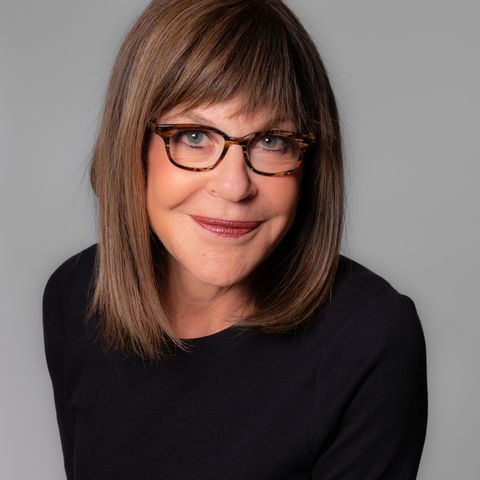
I'm Patricia Karpus.
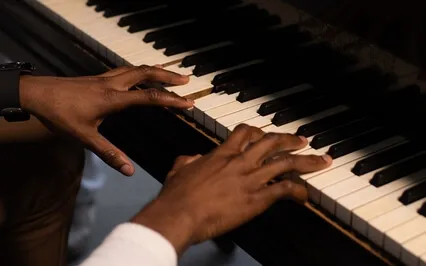
Today's guest is musician Chad Lawson.
I was recently introduced to his music and have been listening to it daily now.
Chad crafts his music with an emotional pulse that dials into the heart of the listener.
I've personally felt this,
So I wanted to share it here.
At the end of the interview,
We've included a beautiful solo piano piece from his album.
I hope you enjoy it.
I really loved hearing about his life and his inspiration.
Now,
Here's Chad.
Chad,
It's really great to be here with you on Untangled today.
Thanks for being with us.
Thank you so much,
Patricia.
I really appreciate this.
Yeah.
So I had the opportunity while I was preparing for this interview to listen to your music,
And I have to say,
Oh my God,
It is so beautiful.
I've been listening to it for the last couple of days in the background when I wake up in the morning,
And I'm just so happy to be introduced to it.
That means a lot.
It really does.
It's so beautiful.
I was telling somebody about it last night,
And we started talking about the difference between music with lyrics that inspires you and instrumental music like yours,
Which is piano,
That you actually feel physically and emotionally moved by it.
I want to know more about you and your background and what inspired you to,
First of all,
Choose the piano,
And second of all,
Create this kind of music.
Thank you very much.
Those words are not lost on me.
When I was five years old,
So we're talking about 40 years ago,
There used to be a show on television called Shanana.
And so Shanana was like a doo-wop band that had a television show.
And so each week as a family,
We would sit around and we would watch Shanana together.
I wasn't raised in a musical environment.
My parents didn't play an instrument.
My brother didn't play an instrument.
But there's one thing that I think it was just simple,
Fun entertainment.
And there was a guy doing something on one of the instruments,
And he was having the time of his life.
It was unbelievable.
I mean,
It's like his smile was just so infectious.
And I just remember at the age of five,
I remember just looking and just being like,
I want to do that.
He's just having the time of his life.
That's what I want to do.
Fast forward a little bit,
My parents rented a piano,
Because who's going to believe a five-year-old.
And I started taking lessons then.
And 40 years later,
I'm still taking piano lessons.
I will until my fingers no longer move,
God forbid,
Or I'm in the ground.
So there's something about always wanting to explore and go further with your craft.
And that excites me.
So I was brought up very traditional as far as classical was concerned.
And so I did the whole classical thing.
And then I did start exploring different types of music,
Not just classical.
And I really got into jazz very heavily.
And the thing that I love so much about being brought up with jazz and classical is that there's one key thing,
And you hit the nail on the head in the introduction just a second ago,
And that's melody.
You have to have a songbird in music.
That's why people love lyrics so much,
Because that's the songbird.
That's something that they can sing when they're not near the radio.
So those lyrics,
They just get into your ear,
And then all of a sudden,
They find their way into your heart.
And that's why we're so moved by music.
It's because of the melody and the lyric together.
And I think what's so fascinating about instrumental music is when you remove that lyrical content,
You still have the melody.
But at that point,
You're allowing the listener to create their own lyric,
Because it's so interesting.
With each song that I do,
I try not to over-exaggerate when I'm speaking to people about what the piece is about,
Because a lot of times what I've found is it may be completely different for the listener.
And it could be two different listeners,
And they could hear the same song,
And they could say,
Well,
I was envisioning this,
Or I was envisioning this.
A lot of music,
Particularly your favorite songs,
You have to go back and say,
Why is that my favorite song?
And a lot of times,
You look at it,
And you'll say,
I was going through this season of my life.
This is a song that I first met someone with,
And so that song has just really meant a lot emotionally and relationally.
And so I think the core part of music that I've always been drawn to in this 40 years of studying is melody.
How can you craft something that really just dials into the heart of the listener,
And then you bring them to that point,
And then you allow them to carry on from there?
They pick up that torch,
If you will,
And take it on with them through whatever life situations they're experiencing.
Yeah,
It reminds me of how I feel when we look at a piece of art.
We don't really know the intention of the artist necessarily,
But it holds certain meaning for us.
And I wanted to ask you,
So you have this beautifully meaningful music,
And you seem to be,
From what I've ascertained so far,
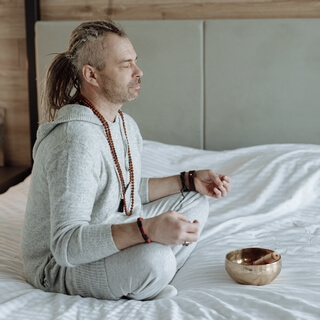
Deeply passionate about meditation.
When did that start in your life?
When did you begin to meditate?
Why did you gravitate towards meditation?
And then how did that intersect with your music?
I love it.
Thank you.
A number of years ago,
Let's say around 10 or so,
I began to have some health issues.
And so I found a Chinese reflexologist who just completely turned my world upside down in the best of ways.
And at that point,
It was a very simple thing.
I walk in and he says,
Oh,
It's this.
Let's fix your chi.
And he did.
I was like,
Wait,
What?
And it's two parts.
And so at that point,
I really became very interested in holistic food and the holistic lifestyle.
And where does that fall in place?
And how is it that we're not made so aware of it,
At least here in the States?
And so there was a balance.
I mean,
I've grown up in church since I was knee high.
And so there's that area of prayer that has always been a part of my life.
But I knew that there are other parts as well.
So it's specifically once you start speaking about your wellness and your overall health.
And so I knew that there was a marriage somewhere in between.
And so I tried different forms of meditation using just various apps and various YouTube channels and this and that.
And just really wasn't getting where I wanted to go.
And then I remember on a flight,
I was traveling somewhere.
And I was in one of the bookstores at the airport.
And I saw a book by David Lynch.
And I was like,
Oh,
This is really interesting.
And he is huge into Transcendental Meditation.
He actually has a foundation,
David Lynch Foundation for Transcendental Meditation.
And so I picked up this book and I was like,
This is fascinating.
And so I read the book,
The entire thing during the flight.
And I was like,
I need to find out more about this as far as Transcendental Meditation.
And so this was only a couple of years ago,
To be honest,
As far as like Transcendental Meditation.
And once I started doing that,
Because the process behind it is you go and it's a five day course,
You study with someone.
And so it's not something you dive into.
You're actually taught how to do it,
Which is just tremendous.
It's been unbelievable.
So I do it once in the morning and once in the evening,
It's 20 minutes each time.
And the most interesting thing is,
During those five days,
And I went ahead and took a week off of everything that I was doing,
I didn't want to do anything work related or business related or even music related.
I didn't even touch the piano during those seven days,
Because I wanted to see if there would be an effect at the end of it all.
So after the five day course,
And then a day at front and the day at the end,
I sat down at the piano,
And I played with a freedom that I've never had in my life,
As far as playing piano.
I know it's cliche,
And I know it's okay,
Whatever,
It's placebo.
But honestly,
What I was able to do is I was able to shed those ideas of expectation.
And I think that's so insanely powerful.
And I think that's really a core of how I view many things now.
It's just,
I am going to offer my best in everything that I do.
But I'm also not going to go in with a preconceived idea of,
I want this to be the result.
Because sometimes when that happens,
There's two things.
We try to manipulate what is going on to make that end result.
And while doing that,
It loses its authenticity,
And it has no relevance to the listener.
And the other thing is,
You limit it.
If I walk in,
If I say,
Hey,
Last night's show in Amsterdam was amazing.
So we're gonna do the exact same set list,
I'm gonna do the exact same improvisational period here and there.
And it's going to be unbelievable tonight here in Paris,
It's not going to happen.
Because it wasn't meant to.
The music that was heard in Amsterdam by those people,
Those people,
They needed to hear what was being played.
And if I tried to bring that to people in Paris,
They may be in a different place where that's not what they need to hear.
And so Transcendental Meditation has been really very freeing for me,
Not only musically speaking,
But also relationally speaking.
Because what I found personally,
It's allowed me to clear my mind,
It's allowed me to clear my head of just the noise,
And just being able to center in and to focus on conversation,
Or a task that I'm doing.
It really is just astounding.
Now I will say,
And I'm sorry to go off on this so much,
Because I just enjoy it.
And so I love talking about it.
I will say the new album you finally knew was actually recorded at Abbey Road.
So I was so excited because I was going to be able to do some of my Transcendental Meditation at Abbey Road.
I'm like,
Oh my gosh,
This is gonna be perfect.
What better place?
The Beatles,
For people that don't know,
The Beatles studied Transcendental Meditation,
Paul McCartney in particular,
Correct?
Is that right?
Yeah.
It was one of the most mind-blowing experiences I've ever had in my entire life.
And I'm not really trying to hype it up to the point where I emailed my instructor,
And I didn't tell her where I was.
I just said,
Are locations sometime privy to different experiences?
And she goes,
Actually,
Yes,
They can be on occasion.
It really depends on the history of the place,
Who has been there,
And this and that.
And then I responded,
Well,
This is what I'm doing.
This is exactly what happened.
And I wrote note for note what my experience was.
And she's like,
That's amazing.
And she goes,
It doesn't surprise me by any stretch of the imagination.
So I think it's just fascinating.
I just think it's so bizarre that we have to retrain ourselves how to be emotionally free.
And I'm really hoping that this year of 2020,
With all the chaos,
Of taking this word,
Isolation,
And turning it into introspection.
So replacing isolation with introspection,
And really taking that in.
I'm just saying,
Okay,
What did I shed this year?
Because I had to,
With lockdown and quarantine and what have you.
And once this is all done,
Can I still leave those things in the past?
Did I really need them?
Did I need to put my efforts,
My attention,
And my focus on those things that I'm not doing right now?
And I really hope that when we come out of this,
Everyone that has found something new that's life-giving,
Be it yoga,
Be it meditation,
Be it running,
Or what have you.
I really hope that when this season passes,
And it will,
It's not forgotten,
That people will continue to do yoga.
Because it's like,
It's not meant just for time and stress.
It's meant for every day.
So I just think it's fascinating that we've come to a culture where we have to be trained how to be clear-headed again.
But what I love about it,
Though,
Is that we also have a culture now that's bringing more awareness,
Exactly what you are doing,
Thank you so much,
Bringing more awareness to the conversation about this.
I gravitate to that as well.
I really like that you're replacing the word isolation with introspection,
Because I do think language fuels how we think about things.
And so that's a really lovely invitation.
Speaking of invitations,
I love this quote that you have in your release about you finally knew.
I'm also really hearing in you that your inspiration encompasses personal growth,
Story,
Prayer,
Music,
And meditation,
Which is such an intensely beautiful batch of inspiration.
It's lovely.
And so this quote is,
You finally knew is an invitation of self-reflection,
Beckoning us to pause and look inside ourselves to see what makes each of us uniquely us.
It is becoming increasingly difficult to be honest with ourselves as we unintentionally set aside even the smallest life-giving activities to address our everyday obligations.
The album,
Whose title comes from the first line of a Mary Oliver poem,
Hence the poetry comment,
And she is also my favorite poet,
Aims to help reclaim that honesty,
And I would say also authenticity.
Tell us a little bit about that invitation to be more self-reflective.
Being self-reflective is beautiful.
It's a beautiful step,
But it's also a very difficult step.
And it's something that I've really come to learn in the last couple of years just by some friends of mine that I've just noticed how self-reflective they were in their lives.
And I just thought,
That's really interesting.
It's really amazing.
They have this whole idea of,
And I've learned it from one friend in particular,
Who every night they would say at the end of the day,
They would lay in bed and say,
Okay,
What did I do today that I would change?
And what did I do today that I'm really grateful for?
It sounds so cliche,
But like how often do we ask that of ourselves?
Can I look at myself in an honest way and say,
Hey,
You know what?
I bet I could work on that.
The reason why I find this so interesting is because I think this year,
Particularly 2020,
Has been a year where people,
They just want honesty,
They want transparency.
And I think we're seeing that more and more and more and more to get to the grit of life together and say,
Hey,
You know what?
I'm really struggling with this and I really need help.
But we're not going to be able to do that until we actually look at ourselves and say,
What am I struggling with right now?
And what do I need to ask for help with?
And then how do I turn that around and then extend to somebody else the same thing?
Because I think what we've fallen into a trap of is the rating game of seeing social media and seeing the highlights.
And I know this is a tired conversation that we've all heard before,
But it's so valid.
Because if we were to sit down and if we were to draw a line and on the left end of that line put zero and on the right end of that line put 99,
Where would you rate yourself in that line?
Where would you put yourself?
And then if you were to do that again and then put the line underneath to the exact same line and then rate where you think your friends would put you,
Where do you fall in that?
But when we look at that piece of paper with those two lines,
You have to recognize on whose rating system.
There's no such thing.
There's no such thing as a rating system in place because there's no definition for it.
And so we have to shed this idea of I have to be like X,
Y,
Z,
As far as I have to go after that Instagram lifestyle that person has,
Be it the best abs or the best Cinnabons,
Whatever you follow.
If we get rid of that idea and that's where self-reflection comes in.
And it is not easy because if we're really honest with ourselves,
We look at ourselves each day and we say,
Okay,
What did I do today that maybe I can improve on?
I waited tables for 15 years.
As a musician,
That's kind of the plight.
You have a steak in one hand and you have a promo pack in the other.
And what I learned for me personally,
As far as the music is concerned,
The best thing that ever happened to me was waiting tables.
And that sounds so bizarre,
But it taught me how to serve.
It taught me how to anticipate people's needs.
It taught me how to,
When you're waiting tables,
You have maybe five tables and you have anywhere from two to 10 people at that table.
And so you have so many different conversations and needs and just personalities.
My takeaway from it was I'm trying to learn why that person is the way they are,
Because I want to look at their life from their shoes,
From their eye,
From their point of view,
Which is I'm an extreme empath by nature.
So it just makes sense.
And so the idea of self-reflection,
I think it's going to really blow people's minds if we just sit down and write down one or two things of,
Even if it's somewhat like a friend,
Like what I saw on my friend,
I really liked this part about them.
How do I do that?
And when I asked,
I was like,
Okay,
That's what this person does.
So I wrote it down and I tried to make a practice of it.
I've just basically just being more aware of how I am not only verbalizing,
But also just interacting with people.
It was a huge eye-opener for me.
I still have these days where I just constantly reminded myself,
Okay,
What can I work on?
I hear you on that one.
I interviewed someone who talked about,
I like what you're saying about at the end of the day,
Looking at how you look at your day to be more self-aware.
And this person had suggested every morning his practice when he wakes up is to say,
How can I be the best version of myself today?
And what does that mean to me?
And I thought that was also a lovely practice.
Yeah.
The thing is,
You have to be honest with yourself.
Otherwise,
What's the point?
What I personally found is in my doing that,
In my doing this self-reflection and taking those moments of learning what I worked on,
I'm then able to,
If someone irritates me,
Or if someone does say something that I think is rather cheeky,
If you will,
It doesn't affect me so much anymore.
I'm just allowing myself to say,
Hey,
You know what?
I may not agree with that.
And that's what that person is thinking.
Maybe they're just in a different place than I am right now.
And being okay with that,
Which is so difficult,
I think,
Right now for this season,
Especially if you go into social media,
If you see someone's point of view,
And underneath that you have eight different ones being like,
No,
You're wrong,
To where certain things,
Especially socially right now,
The social climate,
I think we do need to call people out.
And I do think we need to be more vocal about things.
But I think when it comes to little things that are a nuisance,
That is where it's,
Hey,
You know what?
That person's walking through something right now that you probably did a year ago.
And just being okay with that and giving grace.
Yeah.
Well,
I think that's also really important for an empath personality,
Because as an empath,
We take things very personally,
Or we can,
And we're feeling what's happening with another person very quickly.
And so I think these are really great tools for having a little bit of separation with love and kindness,
But having a little bit of separation between another person and what they might be going through and what you're feeling.
I wanted to talk about your podcast,
Because I do feel like that was the next step in terms of you having a platform and using your voice and your music to help raise awareness around wellness and mental health.
And as I went through some of the different podcasts,
Your podcast is called Calm It Down,
And they're short with music,
Which is really lovely.
I think one of your goals was to really speak openly about struggles and setbacks,
And you have one that you talk about suicide.
And what's your inspiration for doing this podcast,
And how do you see it as a maybe natural or other extension of the music that you're creating?
Yeah.
Thanks so much for bringing this up.
Honestly,
The podcast came out of the fact that I'm not able to travel.
So right now,
2020,
No flights.
I mean,
Because a lot of my stuff is international.
And during all of this,
It wasn't like a,
Okay,
Well,
What's a quick fix,
But actually quite the opposite.
During this year in particular,
I receive emails all the time,
Pre-COVID,
Of,
Hey,
I'm going through a difficult time in my life,
And your music is really helping me out.
I just went through a divorce or what have you,
This and that.
And now with 2020,
It's just only been so incredibly heightened to where not a day is going by where I'm not receiving a direct message or an email of the same thing.
And so what's been really fascinating to me is everyone saying,
Your music is helping me through the most difficult time in my life right now.
One lady wrote,
I'm listening to your song,
And the tempo matches the breathing of my husband as I sit and watch him take his last few breaths.
People are just going through such heavy times right now.
And being the empath,
I said,
There has to be a way that I can connect further with these people.
Because if music was really the thing that brought the attention,
That means music is playing the role of healing.
And I tell you,
This year,
I just wanted to get into the grit.
I mean,
That really is,
I keep saying that,
But that's the word that comes to mind,
Grit.
I just want to get next to someone and say,
I want to walk through this with you.
And so for me personally,
The podcast was the very first thing that came to mind.
And I want to keep it short,
And I want to actually keep it relatively positive.
I wanted this to be very light,
And I wanted it to be very encouraging and just saying,
Hey,
You know what,
We're really in a sticky place right now.
Let's just try to help each other out.
And so that's really where the podcast came from.
And so September was Suicide Awareness Month.
That's why I did the episode on suicide.
And that is the,
I'm about to do it right now,
That is the only episode where I actually broke down crying,
Because it's so important.
Because right now,
People are just going through so much.
And it's just,
Okay,
What do we need to do?
How do we do this?
And so the podcast has actually been really good for me,
Not only in my learning,
And I have a huge interest in emotional health.
Anyway,
I've been studying the history and the science of the marriage of music and mental health and mental wellness for two years now.
And so I just had to have that opportunity to actually build something around it.
I just could not be more excited about.
And it's funny,
Because I'm not a spotlight person.
I would prefer much to be behind the scenes.
I don't like attention.
I don't like the focus.
And so with music,
It's very difficult for me to talk about music,
Because I'm just not a look at me kind of person.
But the podcast,
I'm just like,
Let's talk.
Because I can see where it will immediately help someone.
And the emails that I've been receiving already from the 14 or so episodes that I've done with the podcast,
Have just been God-wrenching,
Particularly the suicide one.
There was one,
On the suicide one,
I tweeted about it.
And someone sent me a tweet and said,
Today is my 13th year anniversary of my attempt.
And I cannot believe that my favorite artist is bringing this conversation to the awareness.
Please keep doing what you're doing.
And at that point,
You're just like,
Okay,
This is amazing.
You're like,
I'm in.
This is the right thing.
Exactly.
And that's the thing.
It all came from music.
It all came from music.
There was a study out of the Oxford Press saying listening to music or calming music for three to five minutes just completely lowers the anxiety.
It's called BDNF levels and such.
There's a science behind it.
There's reasoning behind it.
But I'm trying to keep the podcast not heady and not geek and scientific and keep it to where applicable,
Where there are little short stories,
Planes,
Trains,
Automobiles,
And just like little takeaways that people,
They can just remember.
Actually,
This past week,
I so appreciate you bringing this up,
This past week,
About regret,
Breaking it down to regrets,
Breaking it down to just the simple idea of looking at regret.
And someone posted on Instagram about this and said,
I've never looked at regret this way.
But if we reframe the idea of regret,
And it was at a time that was then,
But now you know differently.
And that's really how you have to look at regret.
I didn't know,
And now I do.
And so you just take that idea of,
Instead of just carrying that regret around with you everywhere you go,
Of just saying,
Hey,
You know what,
That was at a time that I didn't know.
And now I know better.
And I'm going to make sure it doesn't happen again.
And so if we can just take the idea of reframing things and just looking at them in a self-reflective way,
Then I think it's really going to help people.
I know you said you don't want to go all geek on your podcast,
But you can go geek on my podcast.
Will you go geek for a second and talk about what you've been studying for the last couple of years about the science around music,
Meditation,
And mental health?
That really is just the core of it.
I mean,
This is how the BDNF level,
So there's this happy hormone that we have in our body.
And so I was going to do a blog about this.
Ways to increase BDNF,
Which is this happy hormone,
If you will,
Are things like sitting with a friend and having coffee.
Well,
We can't really do that right now.
Or exercising.
And a lot of people are going to gyms.
And so it's just like,
Okay,
So maybe go run.
Or being out in nature,
Which is great.
So these things are active things that you can be doing to increase this BDNF,
If you will,
Or this happy hormone.
But what I found most interesting was that music was the most passive one of all of these.
Like everything,
Such as being with a friend or exercising or what have you,
They were all very active.
You have to be in that moment to experience this.
And yoga,
What have you,
You feel amazing afterwards.
But you do have to take that time and dedicate it to it.
Whereas with music,
You literally can have it on in the background.
If I look at my numbers,
If I look at my streaming stats,
Now I'm an analytics kind of freak,
Sunday through Thursday,
My numbers are sky high.
They're way up there as far as streaming,
As far as what people listen to.
And come Friday,
They drop like a rock because nobody wants to listen to this on the weekend,
Because everybody wants to let their hair out and have a great time,
Which I don't blame you,
I do the same.
But come Sunday afternoon or evening,
All of a sudden,
They just skyrocket again.
Because what I found is that that's when people are studying,
Or they're reading,
Or they're doing a task that they just want to have on in the background and relax with.
And so this one study out of Oxford Press was basically targeting that.
And they were looking at this,
They were saying,
Okay,
What types of music,
And what they found,
Obviously,
It was calming music to be able to do this.
Now,
There is a double edged sword with this,
To where music has such an impact that we both know.
But if you go through a breakup,
If you're going through a difficult time in your life,
Just as easily as calming music is going to be able to elevate your mood and your spirit,
You have to also realize that there are songs,
There are artists,
There's music that's going to bring you down.
And even further,
If you allow it to,
As far as depressing music,
As far as like something that you just go to because of a breakup.
And so you do have to be aware of that science behind it.
Like this actually is legit,
This is studied,
This is proved.
But I think what's so tremendous is that we are seeing where the impact of music is really coming into place right now with science and to where people are saying,
Okay,
There actually is something to this,
Rather than just saying,
Let's get you on prescriptive medication.
We have CBT,
We have talk therapy,
We have things that are an addition to medicine.
And medicine is great.
I'm not saying anything negative at all about medicine.
I'm just saying if we can look at everything in a manner of saying,
Can we start with music first and see what it is?
And it's just been fascinating to learn.
Yeah,
It's a beautiful lens to see the world through,
For sure.
I wanted to just have you tell us,
I think it was your first podcast was about,
I'm not sure if this is exactly right,
But was it called Life Lessons from a Snow Globe?
Yeah,
Exactly.
So I started thinking about that this morning when I was walking my dog.
Will you tell us how you use a snow globe as a metaphor?
Absolutely.
So when I was young,
My parents,
They gave me a Snoopy snow globe.
And so anything we think of Snoopy,
You think of him laying on his house,
Just looking up.
And that's exactly what this is.
And the snow globe,
If you take the snow globe,
And if you just shake it super hard,
You're obviously going to get the effect of what a snow globe is supposed to do.
And you're supposed to see snow just swirling around like crazy,
Crazy,
Crazy,
Crazy.
And Snoopy is just laying there.
He's got all this snow going around him.
And that's what our thoughts are.
Our every single day is like someone has put us into a snow globe.
It's like a seven year old has just shaken it to pieces.
Now we have all of these thoughts that are just whirlwinds around our head.
And it's like,
How do we get to that point of saying,
You know what,
I'm not going to focus on all of those crazy thoughts.
There are things that I want to be able to focus on.
But how do we get to that point of calming the mind,
Of quieting the noise?
And that really does come with meditation.
And it also just comes just by being aware.
I'm just saying,
I don't need to be worrying about x,
Y,
And z right now,
Because it doesn't really mean anything.
And then sitting down and actually taking these ideas,
Taking these thoughts and writing them down and saying,
Why am I giving attention to this?
Because the interesting thing is,
Is we have two parts of our brain.
We have the emotional brain and the rational brain.
And the emotional brain is always going away.
It's just not.
Just when I drive by that donut place and I'm like,
Oh my God,
This smells so good.
I'm going to go get a donut.
Whereas if I were to like actually write this down and saying,
Should I stop and get a donut?
No,
I probably shouldn't.
That's my rational side of thinking of saying,
Hey,
Don't do that.
And so getting to that mindset of the snow globe to where you have all of these flakes,
Who says we have to look at every single flake and give it attention and give it time?
And so that's what the episode was about,
Of just being able to close your eyes and just realizing you have all these thoughts.
And the interesting thing about Transcendental Meditation is when they teach you this,
They teach you meditation.
They say,
You know,
You're closing your eyes and they give you this one mantra,
If you will,
One thing to focus on.
But the interesting thing is when you have a distracting thought come into play,
You're trying to focus on this mantra or this word,
What have you,
And you have the most random of thoughts come in.
And it could have been like a memory from 10 years ago.
My question was,
Do you just force it out?
She's like,
No,
Stop thinking about that.
And my instructor was like,
Actually,
It's quite the opposite.
You notice the thought,
You acknowledge that it's there,
But then you just let it pass on.
You don't give any more attention to it.
And I thought that was so profound,
Because we get into this point where we've seen so many snowflakes,
And we're trying to give attention to so many snowflakes.
Whereas,
Usually,
If we could actually say,
Oh my gosh,
That right there,
That snowflake,
That's beautiful.
I'm going to stare at that snowflake for a little bit.
And you still have all of these other snowflakes swirling around your mind,
Or the snow globe,
But you're not paying attention to them.
And that's the whole purpose of trying to do meditation,
Is you're acknowledging that you have 100 thoughts going on in your mind right now.
You don't have to focus on all of them,
Just focus on one,
Maybe two.
And when those thoughts do come in,
You're just like,
Oh,
Okay,
I see you.
But then going back,
Returning back to that one initial thought.
And the interesting thing is,
I think that's why they plan it out in a five-day course,
Because they really do break down the history and the science behind it.
But with more practice,
Obviously,
More ability of being able to take those distractions and push them aside.
It's so interesting.
A couple of episodes ago,
I did one on insomnia.
I was just going to ask you about that,
Because it's called Two Tips We've Never Heard.
So I was going to have you tell us about that.
Perfect.
Yeah,
Exactly.
So to tag into the whole snow globe idea,
I have found personally,
When I lay down at night,
My mind just will not stop.
And I have to be careful.
I can't do a meditation too quickly before bed,
Because for me personally,
TM,
Transcendental Meditation,
Actually rejuvenates me.
It actually gets me almost like a kick-sap.
And so I can't do it right before bed,
Because now I'll never go to sleep.
But what I have found is,
When I do have those nights where I can't fall asleep,
Where I wake up in the middle of the night and I can't fall back to sleep,
I actually just go to my mantra.
And I just focus on that mantra.
And then when I was doing research for this insomnia episode,
There was a study going on where they were saying,
That's exactly it.
So you have this part of your brain where,
I'm just going to keep it super simple,
Active and passive.
Your active mind is just like thinking one thing,
And then passive is just like whatever comes to mind.
And that's exactly where we are.
When we can't fall asleep,
We have all these thoughts.
Did I do this?
Did I do this?
Did I do this today?
Just random thoughts that don't make any sense at all.
You're like,
Why am I thinking this right now?
I wish they would stop,
And I just want to go to sleep.
And so I found in my practice that I would just go to my mantra.
And within like 30 seconds,
I would always fall asleep,
Because I had that one thing to focus on.
I wasn't wondering if I locked the door,
Or if I fed the dog,
Or did I say something that I shouldn't have had?
Those thoughts,
They'll come,
But I just kept going back to my mantra.
And so I am doing this study,
That's where the whole counting sheet comes from.
It's just like you give one thing for your mind to focus on.
And so actually,
It's been so revealing.
I think I'm doing the podcast more for myself anymore than anybody else,
Is because I found where I will actually count back now from 70.
Some people count backwards from 100 or 50 or whatever.
I thought 70 was a safe bet.
I thought 100 was way too far,
And 50,
I may not fall asleep by the time I get down to zero,
But I thought 70 was a safe bet.
And so what I do is actually I slowly,
I say to my mind mentally,
70,
And I'm envisioning 70 in my head.
And then I envision 68,
And then 67,
66.
And it's so funny,
Because I was putting my wife and I,
We have two young boys,
One age 10 and one age seven,
And I was putting my seven-year-old to bed the other night.
And he was saying he was really having a hard time falling asleep.
And I was like,
Great,
Let's try this.
I was so excited to try this on him.
And so we started,
And I said,
I'm going to whisper the number,
I'm going to do it backwards,
And just say it to yourself in your mind.
And I started at 50 with this one.
So by the time I got to 38,
I was falling asleep.
I'm like,
That's not right.
So if you are having a hard time with insomnia,
That's a really tremendous place to start.
It's like finding one thing for your mind to focus on,
Because here's what's going to happen.
Your mind is going to get bored of thinking of that one thing,
And you're going to fall asleep most of the time,
At least I have found.
So I think it's tremendous.
The other takeaway from that episode,
And this is a really interesting,
There's some amazing research going on at the Center in London,
Where they say,
Make your room your room.
Make your bedroom only your bedroom.
Don't work out of it,
If possible.
I know it's hard this year.
Don't watch TV in it.
Don't go read a book in it.
Make that room a designated space.
So when you walk into there,
Your mind and your body are saying,
Oh,
It's time to sleep.
Because what happens is we get into the habit of getting into that room and looking at a magazine or watching television.
And so our mind is confused of not having that place of consistency,
Of being able to go into a certain space and say,
This is specifically meant for sleep and for nookie,
To be honest.
But those are the only two things that that room should really be designated for.
And I thought that was really powerful,
Actually.
And the other thing is,
Really quick,
I'm sorry,
There's no bedtime.
They said in this study that what they decided to do is not dictate when a person should go to bed,
Because not everyone's going to need the same amount of hours.
And so what they did say,
Though,
Is you have to wake up at the same time every day.
So you can go to bed at 10 p.
M.
Or 1 a.
M.
,
But if you need to be up at 7 a.
M.
,
Make sure you get up at 7 a.
M.
No matter what.
And eventually,
Through this practice,
Your body is going to tell you when it needs to go to sleep.
So if you're getting up at the exact same time every single day,
Your body is going to say,
Hey,
You know what?
I really need six hours to sleep.
So we can go to bed at 1 a.
M.
,
But you have to get up at 7 a.
M.
,
What have you.
And I thought that was fascinating.
I thought it was really tremendous.
Yeah,
Excellent advice.
So speaking of advice,
Talk to us,
And we're going to close soon,
But my last question for you is,
What is your hope for 2021?
Grace,
I really hope that we come out of this and we look at people like we've never looked at them before,
And we say,
I'm sorry.
I'm sorry for the things I may have said.
I'm sorry for the things I may have represented by not saying anything.
I'm sorry for what you've gone through,
And I don't want to relive that year again.
That's what I hope.
I hope we all get to the point where we can shed the crap of our own selfishness and just look and say,
How can I serve you?
That's what I really hope.
Because I think at that point,
When that happens,
And I know it's a pipe dream,
But I think right now this year has put us in that position where we're all ready for it,
To where I'm really hoping that 2021 is the year that we just look at each other and say,
Man,
That was really crummy,
And I'm sorry that you went through those things you did.
It's beautiful.
I love the word grace.
Yeah,
I think that's a beautiful way to look at the world.
I'm hoping that we can see new meaning in our lives and that whatever we've learned from this year stays with us in our hearts and in our relationships,
Because I do think that we've all learned so much,
And that boost in our own self-reflection.
I hope we don't get too busy next year.
I hope we come back,
But I hope we never look at being busy as a badge of honor.
It's so good.
Chad,
I'm going to go listen to your music now.
I'm going to invite everyone else to do the same.
I've been listening to it on both Alexa and Spotify,
But I'm sure it's available anywhere,
And we'll talk about that after the show.
Thank you so much for being with us today.
I'm so happy to get to know you.
I love your work.
You're so kind.
This has been so fun for me.
Thank you so much for bringing the awareness of this conversation,
Not the awareness of Chad Lawson or my music,
But just the awareness of wellness.
Thank you very much.
And now for an incredibly special treat,
Here is Stay by Chad Lawson from his album,
If You Finally Knew.
Thanks to Chad for being with us today and for allowing us to play that beautiful piece.
Wishing you a great week.
We will see you next time.