Welcome.
We are a few minutes early to allow people to enter the zoom room and live stream.
Allow yourself to make yourself comfortable and enjoy a wonderful song by the big men's family.
I hope I'm saying their name correctly.
That's what I'm God willing.
It is full of hope and that's where we're headed.
So I'm going to go ahead and allow you to listen to that before we begin.
Give me one minute,
Please.
So I enter folks into the room.
Welcome,
Allow yourself to become situated,
Enjoy a wonderful song that will be the theme of our teaching and practice today from my favorites.
Ohio based US band right now known as the big sons B and G.
So and as a wonderful couple.
So we'll just hear a little bit of that as it's going to go.
We'll be ready to begin in about a minute.
Welcome.
The song you're hearing in the background is from this wonderful small family band of Abigail and Sean big sons and I hope I'm saying their name correctly.
The Zatoshan B,
E,
N,
G,
S,
O,
N,
S are based out of Ohio and they write songs of hope and passion and the theme of joy.
The sense of we need to keep going.
It's just the keep going song.
And this is the same with us here.
We keep going practice.
We keep going daily most our mindfulness practice.
Shalom.
Welcome.
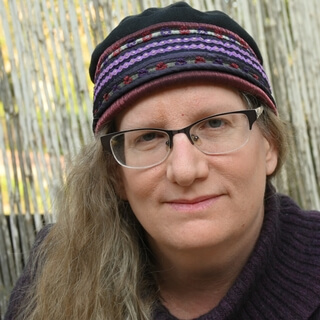
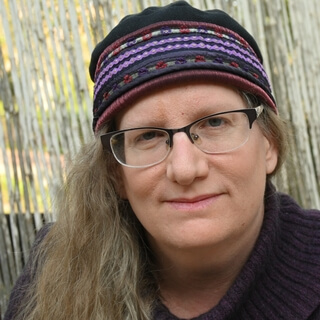
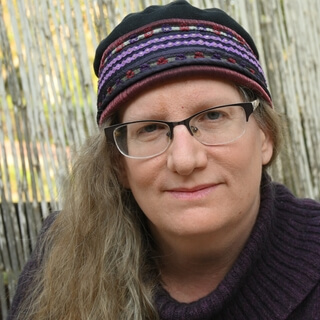
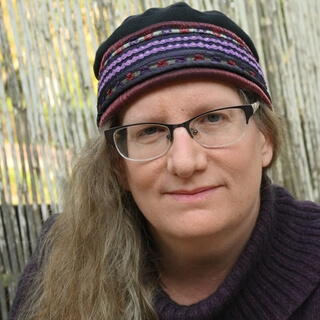
I am a rabbi.
The founding director,
Spiritual leader of the institute for holiness in the community here in the galil in Israel.
We open this live on zoom and live stream to welcome everyone from all over the world.
All are welcome.
And we are in the middle of our 40 days a little practice where you may think to yourself,
Well,
We're not in a low anymore,
Which is the Jewish Hebrew month that just passed.
We're in Tishrei now.
Once we entered the Jewish New Year Rosh Hashanah rentee,
Shrei,
The 40 day practice began on Rosh Chodesh.
Elul went on for normally 30 days.
It was 29 this year.
And then we have the 10 days between Rosh Hashanah and Yom Kippur known traditionally as the 10 days of repentance.
And as you know,
We've been deeply engaged in the daily practice of self care,
Of spending this half hour together and sacred community,
Taking refuge so that we can both work on self forgiveness and forgiveness of others,
And really to open our hearts and to let go of anything that we are really clinging to or stuck from the past year,
So that we really can be here and present.
So I am delighted to have you here.
Welcome.
We always begin with our kavanot with our intentions.
So I'm going to go ahead and pull those up on my screen.
I asked for your patience.
Thank you.
All right,
You should see before you.
So this is considered an act of self care to spend this half hour together.
And it's also one that you are doing with the mindfulness that you are doing it to be of service to others and God later.
Okay,
That's part of our sitting practice is to give us hisuk strength.
So we say together the first kavanah,
The first intention,
This is something I am doing to strengthen my own soul,
In order to be a benefit to others in the future.
And then our second one,
This is something I'm doing to strengthen my relationship to others.
All this forgiveness,
Self forgiveness,
Forgiving others,
So that we can move past the forgiveness to be deeper in relationship to come to actual joy and presence.
So that I can be a better conduit of God's good to others when they need me.
And finally,
The last one,
We're doing this practice,
This engaging in the sacred community and what we call vad,
Or kahila,
Or even sangha,
To strengthen our relationship with the divine.
So this is something I'm doing to strengthen my relationship with the Creator,
So that I can be a better conduit of God's good to others when they need me.
We're going to carry and hold on to those kavanah,
Those intentions as we move into practice.
But I want you to recall the teaching that we began with when we first started this,
Almost what now what is it 38 days ago.
Just wonderful to be together.
I hope that my joy extends to yours.
I hope that in this freewill offering that we are offering from the Institute of holiness really enters your life and strengthens you and that together we basically really build ourselves better and a better world.
So the teaching as you might recall was all about kavod,
The mida of kavod,
Which is honor.
And if you recall,
It's kaf,
Kaf bet,
Dalit,
Okay,
It means it has a sense of heaviness,
Kavod.
And it means that you're taking something with integrity and interest.
And there's a seriousness seriousness to it,
It has a weight for you.
And and it's a self honor,
Because you are created in the image of God.
And so is everyone else,
Even the people that bother us or that we haven't forgiven yet.
They too have that spark of holiness in them.
They have that kavadeness that heaviness,
Right?
It's a,
It's the soul that shines through even here on live stream or zoom.
So I want you to recall that teaching.
Because there's something there's a levity there as much as we talked about heaviness,
To actually internalize as a spiritual practice,
That you are created in the image of God,
Whatever that might mean to you,
Just the sense that you have been born and created,
You you weren't the cause of it,
You,
It was like a gift.
It's what we call,
You know,
Shefa,
This grace,
This khen coming down,
And bringing you into this world full of you to offer your purpose and your gifts.
That alone can lift us in our darkest times.
And you may recall from the teaching yesterday of looking at the parshah that we looked at,
The tavim have also shuv into shuvan returning this happening over and over again,
And all the pesukim and all the verses that this returning this sense of transformation is ongoing.
And with it,
It can be something that we see as a gift,
Not as something that's a burden,
Something that we need to push away or avoid.
So I'll just share very briefly,
A little bit about transformation again from our beloved teacher,
Rabbi Alan Liu,
May his memory be for a blessing from his safe fair his book,
This is real and you are completely unprepared.
I'm on page 154,
Where he talks about transformation,
Transformation.
He says that God is depicted as the one who's doing the pushing here,
Meaning pushing us during this time,
Pushing this all the time to grow,
Right?
We can feel that sometimes.
And that we are in this predicament that's brought to the point of transformation during this time that it's God that has driven us.
And this predicament is part of the process.
It's a gift.
It's the agent of our turning of that shuv to shuvan.
And so it's also showing during the same this time that transformation is not something that happens once or for all time.
Okay,
It is something of a blessing,
Something that we continuously return to continue to turn in the future.
And he said goes on to say it doesn't have a beginning,
A middle or an end.
We never reached the end of to shuva like any spiritual discipline,
There really is no end,
It's a journey.
We take it one day at a time.
So it's always going on when we are awake to the moment.
And then we fall asleep again,
Because we're human,
Just like we move away from the breath and get lost in our thoughts,
We get lost in the tissue of a process sometimes.
So to show that seems to proceed.
And every step in the way,
As much as we move away,
In some ways,
It's also a step home,
Because the minute we become awake,
This is part of this practice is teaching us to come back awake to return.
And then we return home again.
So it in for you,
Those of you who are sitting here and had been sitting for the past 38 days,
If you're like,
I don't feel something yet,
I haven't noticed any opening or change,
I haven't forgiven,
I still feel the tightness,
The clinging,
Whatever it might be,
For you.
You can trust and over time in this process,
It will.
And I say that I don't mean it lightly.
I know this as someone who's been practicing most are mindfulness for over 20 years.
And so it is the case in the realm of spiritual practice that it takes a long time to manifest in our lives.
And that this is just the beginning.
May it be that you continue in community with us and continue practicing with us even after Yom Kippur.
This is where the real work is,
Correct?
It's not as if we're done.
Once you keep or once the Eli happens,
The gates closed,
And we're supposedly all better,
Right or not.
So that's a short teaching for us today,
I want to move into practice.
Because that's where we really over time,
Move into this.
So we're going to keep our song that was given to us at the beginning,
The keep going song,
The keep going,
Keep going,
Keep going on song.
Hopefully,
We will play some of that at the end,
If we have time,
We are going to engage in a joy meditation today,
I will guide you,
Please come to a comfortable upright position.
If you're sitting,
If you need to stand,
Please do so.
Keep your eyes open.
If you're standing,
If you want to engage in a walking meditation,
If you are advanced enough,
Please do so.
If you need to lie down,
Keep your eyes open,
So that you're awake and alert.
I want you to root your feet into the ground.
If you are joining us sitting,
Whether it's on if you're sitting in a chair,
Then make sure to root your feet,
I want you really feeling held by the earth.
You're between heaven and earth.
If you're sitting on a zafu on a meditation cushion,
Just feel the weight of yourself really in your sit bones that you're held and come to a position where you feel comfortable,
Yet alert,
Full of dignity as a child created in the image of God.
And shut your eyes if you feel safe.
Otherwise,
Lower your gaze.
We're really aware and mindfulness practice of the senses and the sense aware.
And so by shutting the eyes,
Or lowering the eyes,
We essentially shut out one sense so that we can be more present with the embodied felt sense of the experience right here right now.
So that is the reason why we shut our eyes.
Allow your hands to lower into your lap.
Take three deep cleansing breaths.
My deep kavanah my deep intention of moving us into a joy practice is to show you how delightful it really is to be engaging in the gift of forgiveness and to shova it doesn't have to be all heavy in the sense of no joy essentially that through our practice we're cultivating this natural well being and we recognize as a gift from God that joy is dwelling within and we're going to use today our mindful attention to directing experience of the live mess of this well being of this joy and our body mind and heart as we connect with the goodness inside and outside in the world around us.
So to access our joy as a practice of most or mindfulness we don't merely know we are feeling good we actually feel what it's like to feel joy to feel good.
So without effort,
Meaning we're not going to force or try to make something happen.
We're going to gently invite well being and joy right now by simply inclining our mind in that direction.
And we connect with the good that is already here and us and around us,
That which brings us to light and appreciation.
Let's our mind relax into what is here right now in this present moment.
So take a minute and silence and really reflect what is your felt experience right here in this moment.
Our own well being and joy can be a gift to others as it awakens those qualities.
And those around us,
It is part of bringing God's good to others.
Allow a gentle scan of your whole soul yourself right now.
If you notice any sensations of the body,
Or any emotions,
Or thoughts that are pulling you away or perhaps are a negative state,
Know too that they will pass.
Know too that we can with intention bring more joy.
As you move through this awareness of your body,
Invite each area to soften if there is any tension.
Allow your face to soften your forehead,
Your eyes and your jaw.
Soften down through your neck,
Your shoulders and your arms.
Continue down through your torso,
Softening your chest and belly down through your pelvic region and hips.
Continue down through your legs,
Your thighs,
Your knees,
Your lower legs,
Through to your ankles and your feet and your toes.
How often we take for granted our feet when they carry us so much,
So many miles,
So many kilometers a day.
Allow your whole body to relax and be at ease.
Allow a smile,
Even a half smile to form on your face with a slight occurring up curling of your lips.
Notice if this practice has any effect on your mind right now.
No need to tell yourself a story or a narrative if you don't have a felt experience of smiling.
But if you do,
If you notice any change in your mind or well-being,
Just note it to recognize and allow whatever arises.
Knowing that we,
As Dorothy Hunt says,
The amazing poet,
We have the heart space to hold all of this.
Take a few deeper breaths,
Bringing a calming energy to your body with each in-breath.
Breathe in calm,
Inviting further relaxation as you exhale.
Breathing out calm.
Breathe in joy.
Breathing out well-being.
Allow your breath to find its own natural rhythm.
There's no need to control or make anything happen.
Simply relax and receive the breath as the gift that it is.
Knowing well in Hebrew,
In the Jewish practice,
That the breathing,
The neshamah,
Is tied to the same shorash,
The same root as neshamah,
As our soul.
There is a deep relationship.
Hashem breathes into us life,
And each breath is a gift.
Now I want you with full intention and kavanah to bring to mind something that brings you joy.
Maybe it's even a sensation in your body,
A felt sense,
A feeling of contentment,
Well-being.
Perhaps your mind is going to you being out in nature at a forest or a lake.
For some of you,
Maybe you're dancing or being with a loved one or a pet.
Recall a time when you experience joy and well-being.
Maybe you are experiencing it live in the present moment right now.
Without telling yourself a story or making anything happen,
Enjoy this embodiment.
Enjoy this memory.
Notice how it feels in your body as you recall this experience.
Notice how it feels in your heart.
Now I want you to bring to mind some blessing in your life.
It could be taking refuge with us in this practice.
It could be someone or something that you are grateful for.
It could be gratitude for the ability to forgive,
For forgiveness itself,
And the letting go of any burden that comes with that,
That means holding on and not forgiving.
As you think of this blessing before Yom Kippur,
As we hang between this life and death of despair and hope,
Bring an image to your mind of this person,
Perhaps even one of the people that you forgave during this 40 days Elul practice,
Someone you're grateful for because they allowed you to practice,
They allowed you to grow.
Simply give a silent thank you right from your heart to that person.
It's such a release when someone forgives us too.
Not all of us are granted that gift.
We may seek forgiveness and it may not be given.
So we still have to find a way to forgive and let go.
Or we may be waiting for someone to request forgiveness and it may never happen.
So when it does happen,
When we do forgive,
Or when someone forgives us,
Relax on that joyful feeling of gratitude,
Of relief,
Of well-being as it pervades your body right now.
Bring to mind another blessing.
Again,
This could be your second or third person during our 40 days Elul practice,
Someone close to you that you have an easy relationship.
Perhaps it was the neutral person,
The acquaintance,
Or perhaps it's that person that we have the most challenging relationship with.
Someone that you're grateful for,
Bring their image to mind and give a silent thank you from your heart.
Allow yourself to feel this in your body.
Finally,
Bring to mind a third blessing.
Call out this image of this person or even a life situation or experience that you've had.
Give yourself an inner bow,
Even maybe a blessing of gratitude to yourself in your own practice and give a silent thank you.
What is your felt experience right now?
Not what you're thinking about it,
But your actual sensations in the body and your lived experience.
Open that you are alive.
You are here right now in this moment.
We are awakening to the good and giving thanks.
Allow my offering to you to flow through you and flow out back as a gift to all who are with us.
Prepare that your breath sustains you and keeps you alive.
Receive life and the gifts of it as it moves through you right now.
Allow yourself to simply enjoy the fact that you are here right now in this present moment.
We will spend the next moment too in silence and I will ring the bell when we are to come out and join together in this sacred circle.
When you hear me ring the bells,
You will gently and slowly open your eyes.
Take into your surroundings and the goodness inside and all around you with appreciation and joy.
Gently open your eyes.
Join us back in this amazing space either on Zoom or live stream on YouTube,
Facebook or LinkedIn.
Thank you.
Thank you for your practice.
Thank you for attempting to really come to engage in this practice of most our mindfulness to grow,
To gain awareness and wisdom,
To be kinder,
Full of compassion.
We always close with our forgiveness prayer.
I'm going to share screen with you.
As I've said before,
We Jews traditionally say this forgiveness prayer before we go to bed at night,
Before we engage in the Shema,
Which is the central Jewish prayer of recognizing God as one.
And we say this that we really do let go and forgive if we are holding on to anything.
And traditionally,
It's one of the reasons it's said is for fear that you may pass in the middle of the night,
And you wouldn't want to die holding on to any of that burden,
Any of that anger or not letting go.
And for us today,
We can understand on a deeply spiritual level,
That we are always dancing,
And we're all going to die eventually.
We're well aware of this during the Japan days,
We also know how freeing it is,
It's such a liberation to forgive.
And really let go,
Because it's only hurting ourselves when we don't.
So please say with me now here we have in the English and the Hebrew,
You will find all this on our website,
Where we also list on our blog,
All the text,
All the sources that we use during this practice,
We say together now please,
I hereby forgive anyone who has angered or provoked me,
Or sinned against me physically or financially,
Or by failing to give me due respect,
Or in any other matter relating to me,
Involuntarily or willingly,
Inadvertently or deliberately,
Whether in word or deed,
Let no one incur punishment because of me.
May I forgive,
May they forgive,
May we all really let go.
So I always announce where we are,
We are in the seventh day of Tishrei,
Very close to Yom Pippur,
Which starts in two nights.
I say it with joy.
So we've come a long way,
It'll start on Wednesday evening.
It's all Jewish holidays,
And observance start in the evening.
And we will meet one more time tomorrow at our regular scheduled time,
Which is 8.
30 pm Israel time,
Or 1.
30 pm Eastern Standard Time,
Or 10.
30 am Pacific Standard Time.
And I want you to come tomorrow with who you are and where you are in your practice.
We'll share some 5-10 minutes at the end to share together.
I'll be able to answer any questions you have or comments so that we can really bring this 40-day Elul practice to closure in such a beautiful sacred way together.
So I invite you to join me tomorrow to honor the community and your practice,
Take refuge in God together.
And basically all of it together.
So may all beings be safe and healthy.
May you also thank you for joining us.
I look forward to practicing and being with you tomorrow.
Wherever you are,
Enjoy the rest of your day or lie that off.
Good night.
Take care.