Shalom,
Baruchim Habaim,
Welcome to Awakening Torah,
Musar Mindfulness.
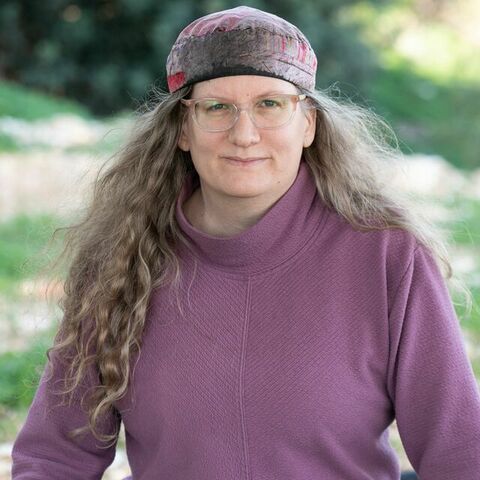
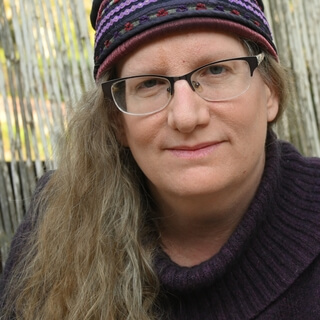
I am Rabbi Chassi Oriel Steinbauer,
The founder and director of the Institute for Holiness,
Hamachon Lekadushat,
Kehillat Musar Mindfulness.
The Musar Mindfulness community,
All the practitioners from all over the world,
Are combining their love of the daily practice of Musar in Judaism and of mindfulness in the Dharma of Theravada Buddhism to be informed by these ancient wisdom traditions to guide us on the path towards holiness,
To guide us towards insight,
Wisdom,
And liberation.
Delighted that you've joined us today,
Or will be watching later or listening to audio or podcast.
Today is Sunday,
September 24th.
Here in Israel,
It is 2.
39 p.
M.
Before Erev Yom Kippur,
Before Kol Nidre.
We will be covering the Torah portion that we read in synagogues and minyanim throughout the whole world yesterday on the Jewish Sabbath,
On Shabbat,
Which was on the 23rd of September.
And that,
If you're following along in the Hebrew calendar,
Was the eighth day of Tishrei.
And now we're in the ninth day of Tishrei,
Of the Hebrew month of Tishrei,
Which leads us to Yom Kippur on the 10th.
And so we're not only at the end,
If you've been practicing with the Institute,
The 40 Days Elul Musar Mindfulness Practice,
Where we practice from the new moon of the Hebrew month of Elul,
All the way through to Yom Kippur,
To essentially prepare ourselves for cheshbon hanefesh,
An accounting of the soul,
To be able to forgive ourselves and forgive others,
And to really enter this whole high holiday season with a sense of joy and cleanliness and a sense of purity and a sense of really celebrating,
To be honest with you,
The work that we do daily in our Musar Mindfulness Practice each day for 365 days a year.
So the 40 days is just essentially almost a celebration of what we have accomplished the 325 days of the year to really look back and reflect on our cheshbon hanefesh.
So I encourage you,
If this is exciting to you,
If you're not a practitioner yet and you're interested,
Always reach out to us and we'd be happy to begin and welcome you in to begin your journey in this practice in a group here with us.
So what is it that we're going to do today?
What is it that we always do together?
So before we jump in,
We cover our kavanot,
Our intentions for today's session,
Which are always the same each week.
I'm going to go ahead and share screen with you if you have vision or are watching by video.
Otherwise,
I will read them out loud if you are listening by audio or will listen by podcast later.
So we see this time together.
This is about 45 minutes where we engage in this public offering of service,
Of awakening Torah Musar mindfulness as a radical gift of caring for the self.
So we say that we're doing this to care for ourselves because we want to strengthen our own soul in order to be a benefit to others in the future.
We're also doing this to strengthen our relationship to others so that we can be a better conduit of God's good to others when they need us.
And the final kavanot,
The final intention for today's session,
Is that we strengthen our relationship with the divine,
That we really want to be on a daily basis,
In particular in these 45 minutes together,
To strengthen our relationship with the Creator.
Why,
Again?
So we can be a better conduit of God's good to others when they need us.
So may we merit that right now,
Just with your kavanot and with your intention,
Even keep in mind or bring to mind who is it that you maybe share underneath your roof or who is in your community that is in need of you bringing God's good to them,
Either today or over Yom Kippur or heading even into building the Sukkot,
The different Sukkots and different houses,
Whatever you're heading towards,
To keep the other in mind.
All right?
So stopping to share screen,
If you were watching,
And we're going to jump in with Ha'azinos.
So the Hebrew date,
As I said,
Was the 8th.
The 8th is 8,
The number 8 of Tishrei.
We are in the new year,
5784.
So I'm going to give a brief summary,
And then we're going to jump in with what we want to pay attention to today.
So most of Ha'azino is a shirah,
Which we could translate as a poem,
A song.
And this is delivered by Moshe Lebrenu,
Our beloved Moses,
Our teacher,
To Bnei Yisrael,
To our ancestors.
And Moshe actually starts off his shirah,
His poem or song,
As asking the heavens and earth to listen to his words,
To bear witness,
Which is,
I find,
Quite moving and beautiful.
Because in our practice,
We tend to be aware of all sentient beings,
Aware that we want to bring good to all,
Not just human beings.
And so it's quite lovely that he's bringing into relationship the heavens and the earth.
And he prays that his words will be as sweet as rain.
This is quite profound,
And I want you to keep this in mind,
Because this is the first time we're witnessing Moshe Lebrenu,
Our beloved teacher and leader,
As one praying that his words have a certain intention and that they fall a certain way,
That they're received a certain way.
So he's trying a lot of wise speech with wise efforts.
And this is really a spiritual practice for him.
If you pay attention to what he's doing,
He is calling on the heavens and earth to resource,
To be witnesses,
To strengthen him.
We all need to do this in our own daily practice.
Who do we need to call upon to strengthen us and be with us that day?
Maybe it's God.
Maybe it is the heavens and the earth.
Maybe it's your cat or dog,
You know,
Whoever it might be.
And then he prays,
He prays that his words,
His practice,
What he's going to share,
The shirach,
Will be as sweet as rain.
Look how beautiful that is.
Sweet as rain.
Most moderns don't think of rain as sweet.
But when you live,
For instance,
Where I live in the Middle East,
If we don't receive rain,
Not only is there a problem with the crops,
Eventually they'll turn into famine.
So you,
There's something very sweet.
There's sweet about receiving it.
There's sweet,
But there's also just a sweetness.
You have to experience it.
It's one of those things,
It's experiential.
So let's pay attention to how Moshe begins practicing,
Okay?
What he's really using and doing.
But it's the first time where he's praying that his words land a certain way,
That he's aware that his words will or could land a certain way.
We've never seen this intention or awareness in Moshe Rabbeinu,
All throughout the Torah up until now.
There's no awareness of how his words are going to land.
If anything,
There's a lack of awareness of his speech,
And then how it's going to land.
So in more of a summary,
God is described as a sur,
As a rock,
With perfect actions.
And throughout time,
Many Israel must learn about their past from the elders,
From the elders who are with them and from their ancestors,
Drawing on the ancient wisdom.
So the Shira,
The poem that Moshe Rabbeinu is sharing,
Or the song,
It tells a story.
And God finds B'nai Israel in the wild lands and cares for all their needs with kindness and affection.
However,
B'nai Israel forget about God and they worship idols.
God punishes B'nai Israel with many bad things,
Famine,
Plague,
Beast,
War,
But God will also punish the enemies of B'nai Israel and ultimately save the children of Israel.
This is the story.
The story,
The poem,
The Shira,
The song,
Concludes that the Torah is the life force of the children of Israel.
Then God tells Moshe,
It's time to go up to the top of Har Nevo,
To look at Eretz Israel before he is going to join the ancestors,
Before he's going to pass and die.
So that is essentially a summary of what goes on here.
Okay.
And we see a huge shift that actually Cantor Chazanit Hanin Beker,
From the Nusar Torah commentary on page 331,
Decides to look at the midah,
The soul trait,
The personality trait of Anava,
Of humility of Moshe Rabbeinu.
And what is already balanced in humility and kind of new for Moshe,
As I pointed out,
Is not only is he calling for the earth and the heavens to bear witness and asking,
Asking,
That he is having intention,
Having a wise effort,
Wise speech,
That his Shira,
His poem will land as sweet as rain.
That's already an awareness of others around him and how they will receive his words,
Which are very important.
And that is already reflecting a balanced humility.
He's not taking up too much space.
It's not just about him.
He knows his place,
That these people need to hear the Shira and poem a certain way to be received,
To be able to memorize it,
To be able to be on their own mouths and future generation.
We're talking about an oral tradition.
Things were not written down for a majority of people,
Certainly not for mass consumption or being read.
So this had to be something that would fall sweet on people's lips.
Even if part of the story is unpleasant,
It would be one that they could memorize and share later.
And as part of the oral tradition.
So Moshe,
So what is a Kazanit Cantor,
Hanin Becker point out is she knows that she notices that Moshe,
That he,
She really wants to emphasize that when he's choosing a Shira,
A poem or a song,
And that he hasn't sung,
He hasn't broke out in the song as since the parting of the sea of reeds,
Since they had escaped,
Have been saved and taken out of the institution of slavery out of Egypt by God.
And,
And that's a long time.
That means 40 years.
We don't hear in the Torah that there's any song or any poem for Moshe.
I just want you to pause and hold that and feel that for a moment because we know the importance of beauty and art and song and poem and what that does to cultivate sympathetic joy,
Right?
Mudita.
This is,
This is key in life,
But as you,
As you've been with me on this journey through the Midbar,
Through the wilderness with our ancestors,
You know that there is hardly any song or poem in that 40 years for anyone.
So he is,
He's showing us through his practice and she's pointing out here too,
That he chooses song instead of prose,
Because he understands the need for this transcendence of this moment,
For people to be able to memorize it more easily for it to have an effect here.
That's much stronger than just hearing prose.
And there's something quite beautiful about it,
That he's considering so much how the message will be delivered,
How it will be received.
What is the likelihood that people will be able to internalize it as a practice so that they can then repeat it later in their teachings.
This is a tradition that passes on its teachings in the lay led in the,
In the householder,
Right?
In the households from parents to children,
We are commanded to teach our children.
So this is very key that these words be internalized and persists as she says here,
And the significant role.
So we're noticing this humility,
This balanced Anava of Moshe,
Of really considering in a way we've never witnessed before,
His wise speech,
His practice,
Right?
So it's,
It's profound.
It's a profound way to watch his wisdom and have him share it.
He also has great Kavanah intention that,
That obviously this poem,
This song will be sweet is rain,
That it won't be harsh because there are harsh chastisements in this poem,
In this song,
But he wants them to be able to be received.
And this is,
This is a delicate dance.
This is a very powerful thing for any of us on this path and practice of when we need,
What's called Tokah,
When we need a rebuttal,
When we need to be able to hear that we've gone off the path,
Whether it's our own internal voice,
God's or our Sanga,
Our Vod,
Our Kahila,
Our community,
Those that we practice with have spiritual friendship,
Maybe a learning partner that they be able to reflect on us that no,
Your behavior actually is not okay.
You've gone off the derrick.
You've gone off the path here.
Let me help you back.
So this is what he is wanting his wise effort and his wise speech to really sustain the people and help them thrive,
To be able to listen and hear where they're headed and where they can go potentially wrong.
Okay.
So I just think it's quite beautiful that we're witnessing such humility and we're not witnessing it by accident.
And this is where I want us to really delve in here into the text.
We know in the Musa tradition,
That most of the body of Musa literature,
Including all the teachings passed down to us in the oral tradition,
Which is very strong.
Otherwise we wouldn't have a daily practice.
Most of the literature associates unbalanced humility,
Meaning not someone who is aware of how much space they take up and make sure that they don't take up more than is necessary and their place.
Also,
This is someone who usually leans towards arrogance.
If we have that continuum of humility,
We have arrogance over here or pride.
When over here,
We have the low self-esteem,
And then this is the balanced humility in the middle.
Most of the body of Musa literature will say that it is anger,
Kaf ayin samech,
Right?
Kaas is the root,
The shoresh in Hebrew,
Of what is essentially the sign that someone is not balanced in humility.
It is the sign that they are prioritizing the self before God and other.
It is almost like a form of idol worship.
We know this from our practice that when we all enter reactivity with anger and we lose insight,
We end up causing harm and often suffering to others and even to ourselves.
There is no space between the match and the fuse.
So,
Why is it so important that Moshe Senle is really balanced and on a bond of humility and really aware of his space and his place,
How much he is going to say,
What he is going to say,
How he is going to say it,
How he is going to deliver it.
That he wants it to be something,
His whole intention is,
Are the people ready to hear this?
And how can it be delivered and practiced in such a way that they can hear it and be ready for it?
It is a total awareness of the other,
Which is so much about wise speech and all of our traditions and Musar and mindfulness.
It is about that we don't say things so we know the person is ready to hear them,
That they will benefit from the speech.
It has nothing to do with Moshe at this point.
Moshe knows that he is going to go to the ancestors.
So,
Here is this beautiful humility and it is there for a reason because in the message that he has to deliver,
And we rarely see this in the Torah portion,
So first of all,
Get ready for this.
There are four times the verb,
Rav Ayin Samech,
Anger is used in our Torah portion.
That is unprecedented.
First of all,
You don't even find this root in Shoresh and any of the other books,
The five books of Moshe,
You only find it in Deuteronomy.
The other text,
It is not as if you don't have anger in the other text,
But it is a very different verb.
It is this rage that shows up,
This redness in the nose.
It is usually talking about God.
Not always.
It is also talking about Moshe and others.
But here,
We suddenly have a shift where it is about anger.
If you are following along and have studied HaAzino,
Then you probably noticed this in the song,
In the poem.
The four times,
First we have Mi Ka'as,
Which is showing up for us in chapter 32,
Hazuk,
Verse 19.
Let's go to it together.
It says here,
Vayar Adonai Vehiin Atz Mi Ka'as Vehiin Atz Mi Ka'as B'nav Uv Notav The Lord saw,
Hashem saw,
This is big,
You know Hashem needs to see before Hashem responds or reacts.
It is a big thing that Hashem has taught us as part of our practice.
We must go out and witness.
We must see.
Hashem went out and saw and spurned God's sons and daughters.
The spurned here is God angered.
That doesn't work in English.
God caused something with his anger.
We say spurned.
God caused something with his anger towards his sons and daughters.
It starts off by saying,
You neglected the rock.
This is why they have not fulfilled their breath,
Their relationship with God.
You neglected the rock that begot you,
Forgot the God who brought you forth.
It is like a take it for granted-ness.
Which happens when we fall asleep in our practice.
It happens when we are not balanced in humility.
When we lean towards arrogance.
We forget who is the creator and everything that sustains us and holds us.
God sees this.
God saw.
They neglected and forgot God.
Forgot the past.
God is angry here.
Acts out with their anger.
Spurns them.
We will talk about what it means to spurn.
When you spurn someone.
Before we go to the next.
What is the reactivity?
We might say the response.
We cannot know the wisdom of Hashem.
It goes on to say,
I will hide my consonants from them.
What does that mean?
I will hide my face.
I will hide my face from them.
When you hide your face somebody in anger.
You want to spurn them.
It is humans.
We feel it is a form of punishing.
For some people,
It is consequence.
It is consequence for your behavior.
If you end up forgetting me and neglecting me.
The consequence is you will not have access to me.
I will turn my face away from you.
It can go either way.
Is this a positive boundary lane?
Or is this reactivity and anger?
It is complicated.
Let's hold this both.
God says,
I will hide my face from them.
I will hide my face from them.
See how they fare in the end.
That is very interesting.
It is like,
It is almost like,
It is God's trusting behavior.
There will be consequences.
For their forgetting and neglecting.
And,
That God is going to sit and witness it and watch it.
God's face,
Of turning towards them is not present.
If we think about this today,
It is very loaded.
In our daily practice,
We know when we act poorly,
When we sin,
When we are off the mark,
Whatever it might be,
That,
In the form of neglect and forgetting,
There are consequences.
There is a sense of our own face.
It affects those that we are in a relationship with.
That is verse 19.
Then we go to 21.
In the same chapter,
Chapter 32.
In this section,
We have a lot here.
Let me find them.
We have,
As part of the word.
Then we have,
We have that twice.
Interesting.
The whole jealousy and the anger are tied together here.
Then we have,
Later we will go to verse 27.
What happens in 21?
It goes on to say in this poem,
They are a treacherous breed.
Children with no loyalty in them.
Now we are witnessing,
There is a neglect,
There is a forgetting,
And there is no loyalty.
These are key verbs.
Key ideas.
They innocence me with no gods.
Him keen on me below.
Which really means,
They cause me jealousy with no gods.
They cause me jealousy with idols.
Think about that.
Think about jealousy with idols.
Think about in your own personal relationships,
Either relationship with yourself,
Or with others,
That when we feel they have neglected,
Forgotten,
Turned away,
When they have no loyalty,
We all know,
The hindrance of ill will,
Which is part of jealousy.
It is part of craving also.
The whole veiling factors.
Those can arise and cause us not to have the space to practice with awareness,
With mindfulness,
With an appropriate response.
Then we end up feeling this anger from jealousy that is arising here even in this poem.
They cause me jealousy,
With no god.
I love this.
Below ill.
Here is our verb.
Such a great line.
They cause me anger.
They vex me with their futilities.
It is not even a breath.
They vex me.
They totally cause me anger with their nothingness.
They prefer nothingness.
They have so gone off the path.
They practice and went towards nothingness instead of the wise,
Upright,
Wholesome choice.
It is to be in this relationship.
It goes on to say,
Let's see if we can find the verb here.
It goes on and on.
But for fear of the taunts of the foe,
Their enemy who might misjudge.
Just to understand this poem and understand almost like I would say the biblical ancient Near East mind,
There is this sense of God or the human understanding of God in the Torah that God is not going to cause the consequence for Bnei Israel's behavior or even future behavior to be so much such that they are erased from the earth.
Instead,
It is this sense of because if God were to do that,
Then the enemy who actually even is in worse relationship with God,
The enemy of the children of Israel will be able to say,
We caused this.
We caused Bnei Israel to fall off the face of the earth.
God is recognizing that God,
The reactivity,
God's jealousy,
God's anger can be taken so far.
It is a really mindful jealousy and anger in some sense.
It is like I am not going to take this too far because of what the potential is.
In this use of the verb right here,
It says,
God forbid,
But for the fear of the taunts of the foe.
I don't really fear here.
What is going on?
The translation is a lot of,
But for the anger,
The anger of the taunts of the foe.
What could God possibly be saying here?
Vexation,
Maybe we could translate it in English.
The sense that it would vex God,
The anger of God,
That the enemy could falsely claim credit for this.
This is so important.
This is a beautiful poem,
Song that is meant to be taken and accepted as sweet as the dew or the rain.
For us to be able to hear it and memorize it and internalize it,
We are dealing with four different verbs telling us of anger.
Vexation,
Reactivity,
Maybe wise boundary laying setting for God and relationship to say that because you have forgotten and neglected and had no loyalty,
Then I hide my face.
It is almost like this is the consequence.
If you hear dropping by the way,
There is a leaking of an air conditioner.
Please forgive me if that is the case.
I don't know if you can hear it.
Why is this important?
I said we had Moshe here with such strong balance and humility and that is what is needed to counteract what is happening.
Here comes the balance in order to deal with this anger in the poem and the song.
In order to be able to receive such a message,
The messenger must come with a practice.
An open heart of compassion,
Of wise effort,
Of wise speech,
Considering who is listening,
Are they listening?
This is very profound.
What we are witnessing is a real awareness of the spiritual practice that we need to be very considerate how we deliver what needs to be delivered,
When it needs to be done,
What form it is in,
Does it need to be prose or does it need to be a poem,
A song?
What is the difference between Moshe's humility and God's anger in the poem?
That we couldn't accept or hear or even memorize God's anger had it not been delivered with such sweetness as rain.
So we are going to move into a guided mindfulness meditation on compassion,
On self-compassion and on self-discipline.
Because as we enter the next 25 hours and the week following where we continue to practice as we build our Sukkot getting ready for the most happiest and joyful of holidays on the Jewish calendar,
Where we dwell in the festival of booths,
This is the work,
This is the joy,
This is the joy of mindfulness practice.
You know,
We purposely cultivated joy when we celebrated the New Year and really knew that we were on this path and could wish everyone a happy and sweet New Year.
So before we close with goodbye messages,
We are entering our meditation now.
I invite you to take a moment to sit down and lie down,
Whatever is needed and works for you,
Of course.
I invite you,
Of course,
To assume whatever posture is what you need,
That you bring your deepest aspiration right now for this practice together,
And that we're going to enter with this wise practice,
Delving into an exploration of reactivity,
Right,
To all that comes before us,
Making sure that we're not just having automatic reactions,
Whether it be fear or ill will or resentment or blame,
That we can really practice and cultivate these as a way of being unshakable in a sense,
And it was a way of being able to face and respond,
Right?
So unlike Hashem's turning or hiding the face away,
We could turn and face all.
We can be with it,
And if we can,
Then we can lay healthy boundaries when it's necessary.
I think we have both models here,
Both from God and Moshe.
So assume your posture,
Invite it,
And inhalation and exhalation.
We move into recognizing the particular ways that we can be harsh on ourselves.
You are welcome to close your eyes if you feel safe and you have vision and you wish to,
Otherwise just lower your gaze.
Cultivating this practice of compassion for ourselves.
So in the practice of compassion for ourselves,
We find the insights of Kristin Neff and Chris Germer to be extremely helpful.
They identify three dimensions of self-compassion that we are going to practice right now in our seated meditation.
The first is the recognition and acknowledgement of the suffering that all of us experience.
The recognition and acknowledgement of the suffering that all of us experience.
And the second is recognizing the universal nature of suffering,
Meaning it is part of common humanity.
Contrary to what we usually feel when we're suffering,
Which we think it's only part of common humanity,
It unites us with others rather than divides us.
And finally,
They teach in number three that practicing the Kavanah,
The intention to meet the suffering with kindness,
We do so with compassion.
Treating ourselves as our own best friend,
What will we say to our best friend?
And that is finding a posture that feels supportive,
That feels comfortable,
That feels grounding.
If you're seated like me,
Really allow your feet to be held by Mother Earth,
Allow your sit bones to really become planted in the chair,
Settling into a sense of the body sitting or standing here or lying down and feeling the energy that has been challenged upon life,
Settling into the sensitivity of this body,
Feeling how that sensitivity can be supported by a sense of grounding,
Real valuing the contact with that which is steadying for us,
The anchors of the body.
Give a sense of support and support.
Feet on the floor,
Feet on the chair,
Hands resting on the lap.
Sometimes the most compassionate response to suffering is simply to move between the hands resting in the lap and the simple movements of breathing.
In-breath and out-breath,
Allowing the breath,
Allowing the breathing to be an anchor where you can return to,
A place of steadying,
A place of resource.
Moshe Rabbeinu really wanted that poem,
That song to be an anchor that we could return to for steadying and resourcing,
Where we could be open to the sensitivity of the body and the heart,
To feel the tenderness that is impinged upon us by life.
Maybe in this moment or even during the 40 days,
A little practice,
That there was a difficulty or there is a difficulty,
A stuckness,
Either a pain in the body or in your heart and mind,
Seeing if it is possible just to allow and breathe with that.
You might simply wish to practice with what is already here.
If you feel that way,
That you are resourced in this moment,
You might choose to bring to mind some current difficulty in your life.
The suggestion is not to bring that which is most difficult,
But what is manageable,
So you do not feel overwhelmed by the suffering associated with it.
As we stay contacted with the ground,
Opening up to it,
This recalling,
This remembering,
This turning toward affects the heart and the body.
Notice if there is contraction,
Tightening,
Change in tone or texture or mood or feel.
Breathing with this,
Allowing this.
You may gently wish to place a hand on the heart or the belly,
If there is some part that is in pain.
If there is some part that is in pain,
To show an attitude of kindness and care.
We begin by acknowledging the suffering.
Simply recognize the presence of suffering.
You can imagine Moshe Rabbeinu as someone who so had craving to cross over and reside in Israel.
How that sat with him,
How he felt that in the body,
How he felt that in the heart,
How he felt that in the mind.
With that.
And somehow he managed to still show up and not make it about him or his pain or suffering.
He was able to turn towards and offer a wise response.
So for us to be able to even walk in Moshe's shoes,
Sandals,
Bare feet,
We must begin with recognizing that this is suffering.
This is difficult.
This hurts.
You might even whisper to yourself,
Ouch,
This hurts.
Allowing ourselves to feel and breathe with this,
Allowing ourselves to be present.
And if at this stage it feels too much,
Too overwhelming,
We can take our attention to our places of support and breathing.
Places of steadying in the midst of this difficulty.
Of course,
The message had to be delivered by a poem and a song.
Because only in a song and a poem can one steady in the midst of the difficulty.
And then we move to recognizing that we are not alone in the suffering.
Other people are experiencing this sitting together.
Although the stories may be different,
The sense,
The flavor of suffering may be very similar.
Just acknowledging how suffering connects us with others,
Even when we feel very alone.
Other people are experiencing this.
Suffering and vulnerability are something that we can support.
We can resource in the face of the heart's contraction.
Indeed,
I feel that this is Moshe's greatest gift to us,
This greatest act of humility.
Is this the ability to turn and recognize the suffering of all of B'nai Israel,
Everything they've gone through and what they will go through.
To be human is to recognize suffering,
Contraction,
Sadness,
Loss,
Illness,
And eventually death.
And we move to bringing care and kindness to the suffering.
We embody the intention to relate to ourselves with kindness in the midst of this.
Whispering to ourselves,
I care about the suffering.
May I hold the suffering like the sweetness of rain.
Breathing with that.
Sensing to the extent that it feels possible.
The meaning of suffering in this moment with care,
With tenderness,
With compassion.
It is so important in our cultivation of humility,
Of compassion,
To keep sensing what resources us.
What resources we have.
To keep in touch with the sense of the ground,
The sense of uprightness,
The sense of nourishment of the body breathing.
Moshe knew that Shirah song and poem nourishes our deepest motivation as we befriend ourselves,
As we fully turn towards ourselves,
That we don't hide from ourselves.
Is that we shift from our own pain and suffering to empathetic listening to knowing and including all beings.
That's what we witness with Moshe Shirah as he shifts from his own pain and suffering to all.
Winding our circle of concern which was his,
We hold them all.
And we whisper to ourselves,
May you find healing in the midst of this.
May you find peace in the midst of this.
May you find courage in the midst of this.
We appreciate the size of the cloths of distress.
Not all can be fixed as we even witness with Moshe in the Torah,
But all can be embraced with empathetic listening,
Even listening to the Torah.
And you engage in any of those prayers,
Where we're taking responsibility for all the pain and suffering that all of us have caused.
We practice empathetic listening inside and of others.
And we recognize if you could just pause in that prayer and gently whisper like an act of loving kindness,
Turning your attention to that prayer.
Holding everyone who are struggling with aging and dying and illness.
Everyone in that room will be praying or struggling with fear or caught in spirals of hatred or ill will.
Maybe struggling with loneliness,
Sense of being apart and divided.
All those who are hungry in stomach and spirit or suffering.
And we'll offer our compassion to self and others.
Take this practice with you.
Whisper to everyone.
May we find healing in the midst of this.
May we find courage in the midst of this.
May we find peace in the midst of this.
We will remain with one minute of silent meditation before I ring the bells.
If your eyes are closed,
Gently and slowly open them,
Allowing the light to filter in.
As you practice giving yourself a deep bow that you have arrived,
Joined,
And taking refuge in this practice together in community.
We bow and thank Hashem,
God,
For today to be the day before the day of atonement.
May this practice serve you to bring God's good to others,
Yourself.
That is my covenant,
My intention.
So grateful for today that we're able to carry it all in practice together.
God willing,
We will meet in the next few days.
We don't return to Maybach here.
The festival of Sukkot here in Israel is next Shabbat.
So I'll either join you Mautzei Shabbat after the hagg.
Or on Sunday,
But no,
It will be in Mautzei Shabbat.
Maybe we'll have some teachings on Sukkot together and the festival of booths.
And then the following Shabbat is Shemina Tzeretz in Katora here in Israel.
And I can meet you Mautzei Shabbat to cover some material there in the beginning.
So Delvin,
Really be present for each moment if you can.
It's the only place to be.
I wish you all the best,
Health,
Well-being,
Deep love,
Real expansion.
And God bless you all.
May Hashem be with all of us in the upcoming festivals and days coming our way.
May you be sealed in the book of life liberation and Chag Sukkot Sameach,
A beautiful,
Wonderful festival of Sukkot coming up at the end of the week.
Take care.