Welcome to the mindfulness meditation podcast.
I'm your host,
Dawn Eshelman.
Every Wednesday at the Rubin Museum of Art in Chelsea,
We present a meditation session led by a prominent meditation teacher from the New York area.
This podcast is a recording of our weekly practice.
If you would like to join us in person,
Please visit our website at rubinmuseum.
Org slash meditation.
We are proud to be partnering with Sharon Salzberg and teachers from the New York Insight Meditation Center.
The series is supported in part by the Hemera Foundation.
In the description for each episode,
You will find information about the theme for that week's session,
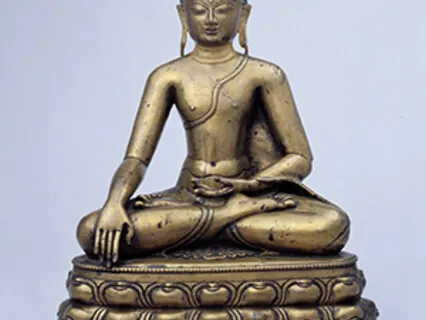
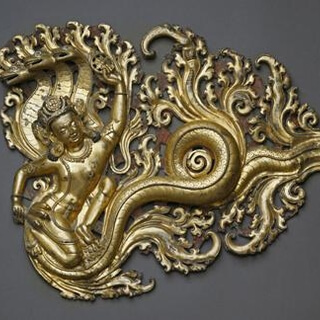
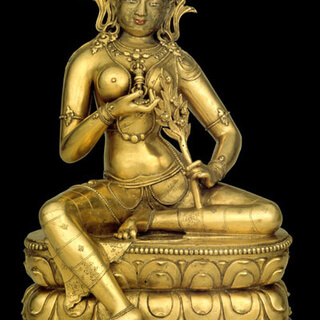
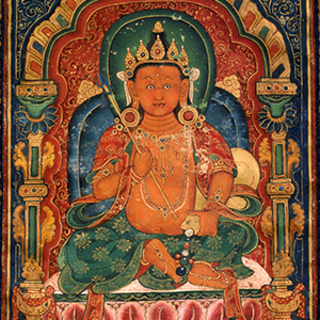
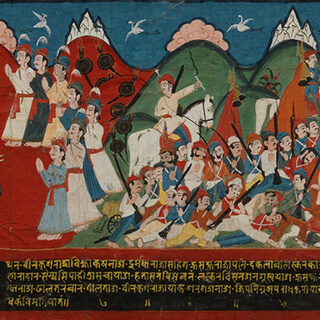
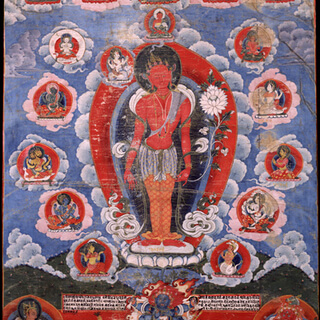
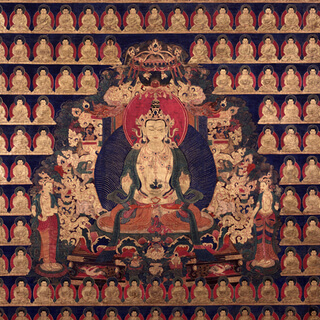
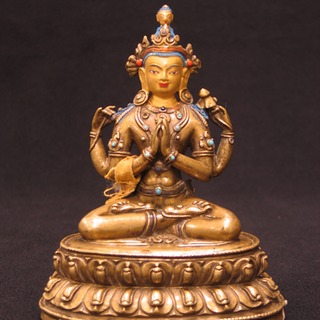
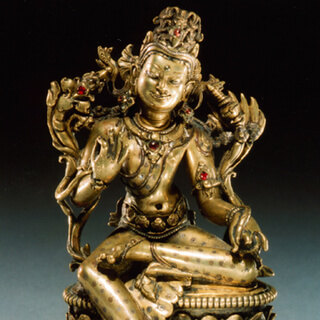
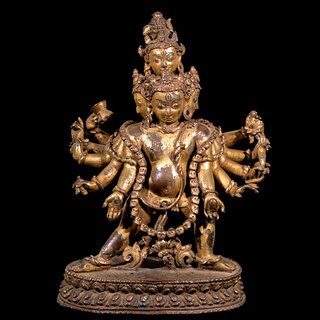
Including an image of a related artwork chosen from the Rubin Museum's permanent collection.
And now,
Please enjoy your practice.
Once upon a time,
About 2,
500 years ago,
In fact,
In a land far,
Far away,
Actually it was in Nepal,
On the border of Nepal and India in an area called Lumbini,
Lived a young prince named Siddhartha.
And when this prince was born to this king and queen,
It was prophesized that he would either become a great king himself or a spiritual leader.
Now,
Being parents with ambition for their child,
These parents decided that the king option was the way to go.
So they groomed their young son to become the leader of their community and kind of shunned any directions towards the spiritual path.
And they surrounded their young son with all of the pleasures of life,
With best intentions,
Really trying to give him everything that was wonderful about royal life,
Amazing food and luxuries and all kinds of things.
And so this young man grew up knowing nothing of the suffering in the world around him until one day,
As all good young people do,
He escaped.
He ventured forth into the town around his castle.
And he saw things he had never seen before.
He saw a person who was old and ailing.
He saw someone who was sick.
He saw,
In fact,
A person who had died.
And it shook him to his core,
Particularly when he realized that this would happen to him and to everyone he loved.
This was his own personal discovery of suffering and the fact that suffering is generally a part of life.
And he had a very difficult time coming to terms with this,
Having never seen it before.
Then and there he decided that he would abandon his royal life and seek an end to suffering,
Seek kind of a meaning and a purpose around all of this suffering.
And that is what he did.
He gave everything up,
His family,
His wealth.
And he went on a big journey and tried out all kinds of spiritual paths and even to the extremes of the aesthetic life and giving up food and nourishment,
Really to be able to focus on his spiritual practice.
So he did this for a number of years until he decided that by actually saying yes to an offer of generosity from a woman who was passing by who saw him meditating and really struggling in his non-nourished state.
And she offered him some rice milk or rice pudding,
Some say.
And in fact,
He took it.
It was right around that time that he was kind of battling in his mind the forces of Mara,
This demon who was trying to distract him with all kinds of things.
And in fact,
He meditated through the night with the strength that he had from this nourishment.
And as the sun was rising in the morning,
He kind of in honor of and support of this focus,
This concentration that he had.
He made the gesture of touching the earth and kind of asking the earth to witness him.
And in that moment,
He became enlightened.
And that is the story of the Buddha.
So we are talking about story this month.
Story in a few different senses,
But in terms of Tibetan Buddhist culture,
Story and narrative paintings and oral history are hugely important and were ways and still are that are really emphasized in terms of passing down of wisdom from one generation to the next in terms of really carrying on stories,
The spirit of stories,
Histories.
And the Lamamani,
This kind of figure or role that some would play in communities was this revered storyteller who would pass through often with narrative paintings as props that they would unroll on the tankas or the scrolls,
Scrolled paintings,
And be able to point out different scenes of the stories and really share and educate people through these memes.
So story,
I think,
Is something that we can consider as something that's important in perhaps modern day New York City life just as equally.
And it's an interesting one because I think it can sometime from a meditation point of view through that lens,
Through that framework is something that if we feel we are too attached to a particular story about ourselves can perhaps get in our way in terms of meditation or spiritual practice.
It's also something that really helps us create who we are and change who we are throughout our time.
We'll be talking about story this month.
So happy to have Sharon Salzberg back here with us.
And Sharon is the co-founder of the Insight Meditation Society in Barre,
Massachusetts.
She is a beloved teacher and author.
And her most recent book is Real Love.
You can find that and many others upstairs in the shop.
So delighted to have her back.
Please welcome her,
Sharon Salzberg.
Hello.
It's summer in New York City.
I just got back from Los Angeles,
Well from Barre,
Massachusetts,
Santa Fe and then Los Angeles.
It's been a long trip.
Here I am.
Hey.
It's so great and so delightful to have this particular image up because this is actually my favorite story.
It's my favorite story within the Buddhist tradition.
It's my favorite story altogether,
I think.
Because it is,
Just as Dawn was saying,
It's the story of the Buddha's enlightenment.
And especially that moment,
There is this kind of legendary figure called Mara,
Who's sort of the satanic figure in Buddhist teaching.
He's also,
He's like a heavenly being.
He's a celestial being.
So the Buddha then known as the Bodhisattva,
Or someone aspiring to enlightenment,
As somehow,
You know,
If this guy gets enlightened,
He's outside of my sway.
He's sort of beyond me.
I can't let that happen.
So as she said,
The Bodhisattva went and sat under a tree with a determination not to get up until he was completely free of conditioning,
Of habit,
Of constraint in terms of,
You know,
Delusion and those limitations we have that are just kind of manufactured.
So he wasn't going to get up from under that tree until he was completely free.
And then Mara tried to distract him and make him get up basically.
And so through the night,
As Mara was like taunting him and creating like hailstorms and rainstorms and ghoulish sounds and these incredibly seductive figures trying to lure him away,
And the Bodhisattva would always just sit there undeterred.
And so the last attack of Mara,
It said,
Is basically one of self-doubt.
He said to the Bodhisattva,
Especially if he'd been from New York,
He said,
Who do you think you are?
You know,
Like,
Who do you think you are to even imagine you could get free?
Who do you think you are?
To think you can sit under this tree and go right through all those delusions and all those limitations and all those assumptions about life and come into harmony with how things are,
Who do you think you are?
And that's when the Bodhisattva made that gesture.
He reached over his knee and he touched the earth.
He asked the earth itself to bear witness to the many lifetimes,
It would be said,
That he had practiced generosity and kindness and morality,
All kinds of qualities that in a way had created the moral force that swept him right up to that moment in time at the base of that tree.
So he was saying,
Yeah,
I have a right to dream that big or have that high an aspiration.
I actually,
I do have that right.
So he touched the earth.
The earth shook in response.
That was the way the earth were witness.
And Mara,
Feeling that,
Realized he was vanquished and he fled into the night.
The Bodhisattva was enlightened with the appearance of the first morning star.
And so here we are in Chelsea,
You know,
Like 2,
600 years later,
Telling that story or a version of that story to ourselves and out loud to one another.
It's a story of possibility,
Right?
It's a story of what do you do with those voices that come at you internally or externally that say,
Who do you think you are?
You can't do it.
You can't.
You know,
Maybe you can do like a fraction of that.
You can't really do that.
What do you do when you face all of that,
The fear and the desire and the confusion and the doubt?
And look at that.
We can keep sitting there.
We have a right to be sitting there.
We don't have to think,
Oh,
You know,
Not me or oh,
How correct you are.
I can't do anything or whatever it might be.
We touch the earth all the time.
It's almost reflected in what is actually on my,
I don't know if it's still on my website.
It was on my original website.
I had a very early website.
And when friends wanted to do it over,
They would say to me,
Oh,
This is like a legacy website.
You know,
It was like a list.
So part of the list of my original website was Sharon's favorite sutra.
Sutra is the word for like Buddhist text in Pali,
Or sutra in Sanskrit.
And it turns out my favorite sutra,
Which it is,
It's not a whole sutra,
It's a passage,
Comes from the Buddha,
Where he says,
Abandon that which is unskillful.
Skillful and unskillful are kind of the poles in Buddhist psychology.
When we look at our own emotions,
We look at the forces that arise within us.
We look at anger,
Joy,
Jealousy,
Generosity.
We look at all these different things that arise.
We don't really call them good and bad or right and wrong.
We call them skillful,
That which leads to the end of suffering,
Or unskillful,
That which leads to more and more suffering.
So that's a different approach right there.
So the Buddha is saying abandon that which is unskillful,
That which is going to cause suffering for yourself and for others.
You can abandon the unskillful.
If it were not possible,
I would not ask you to do it.
But because,
Now you know why it's my favorite passage,
But because it is possible,
I say,
Abandon the unskillful.
Then he goes on to say,
If abandoning the unskillful would cause harm,
I would not ask you to do it,
But because it connects us or reconnects us to a greater sense of possibility and openness and our own potential for love and compassion,
Etc.
,
That's why he asks us to do it.
And then the suta goes on to say cultivate the good.
That's like the skillful,
That which does have us feel more connected and understanding rather than sort of being in a very reactive state and really having insight into the nature of our experience.
Cultivate the good.
You can cultivate the good.
If it were not possible,
I would not ask you to do it,
But because it is possible,
Then I say cultivate the good.
I really just love that.
You know,
The Buddha thinks I can do it.
Look at that,
Which actually was a very meaningful thing for me,
Right?
We have every day,
You know,
Many times a day,
We have these moments where we can say,
Yeah,
You know,
I'll just do this again or whatever,
Not taking the time to realize that caused a lot of pain last time I did it.
That was just yesterday,
You know,
Let's try another approach and then cultivate the good.
You know,
Sometimes it feels like a risk to be kind or to be present in some way.
But how about undertaking that as an experiment?
It's a very different story about our lives all together and really using all of our day,
All of our life as our own kind of creative medium,
Because here we are,
You know,
All these moments.
We're going to go here or we're going to go there.
So let's sit together.
So presence is the basis of even being able to see what's going on in our minds.
And we deepen and help establish presence,
Usually through awareness of something like the feeling of the breath.
It's just a way of steadying our attention.
So even if we get distracted over time,
It's not for as long.
We can come back more and more gracefully.
So see if you can settle your attention on the feeling of the breath,
Just the normal natural breath.
You don't have to try to make it deeper or different,
Wherever you feel it most distinctly,
Nostrils,
Chest or abdomen,
Wherever.
Find that place,
Bring your attention there and just rest.
See if you can feel one breath.
If you like,
You can use a quiet mental notation like in,
Out,
Or rising,
Falling to help support the awareness of the breath,
But very quiet.
So your attention's really go to feeling the breath one breath at a time.
Yes.
.
.
We let go and we begin again.
.
.
.
.
.
.
.
.
.
.
.
.
.
.
.
.
.