You are listening to The Adventures of Saraputa and Mogulana.
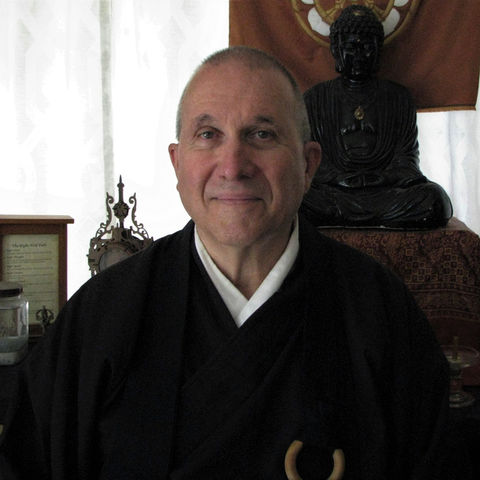
I'm your host,
Morris Sullivan.
Today I'm going to share with you a talk I gave at White Sands Buddhist Center about the importance of compassion in Buddhist practice.
First I'll tell you about a significant act of compassion from Mogulana.
Both he and Saraputa were highly compassionate teachers,
But the Buddha once compared Mogulana to a nursemaid who raises a child all the way to adulthood.
This nurturing personality of Mogulana is reflected,
I think,
In one of the most significant teachings associated with him,
The Ulambana Sutra.
This discourse provides the framework for the Buddhist Ancestor Memorial,
Which is a big festival and religious event in Mahayana countries.
And I chose this particular story for this week because Ulambana Day is coming up this month.
I hope that you'll have a chance to visit a temple for this special service or observe it at home in some way.
The Buddha and Mogulana were staying at the same monastery,
And Mogulana's mother had recently passed away.
So while he was meditating,
Mogulana realized that she had been reborn a hungry ghost.
He made an offering of rice for her,
But when she tried to eat it,
It turned into burning coals.
Mogulana was so moved by his compassion for his mother's suffering that he went to the Buddha in tears,
Asking wasn't there something he could do to help her.
The Buddha said that the roots of his mother's past negative karma went very deep,
And so he wouldn't be able to help her on his own.
But he could ask for help from other monks,
And he could call on all the heavenly bodhisattvas and other great beings from the ten directions.
Well,
During the rainy season in India,
Monks would find out where the Buddha was staying,
And they'd go congregate there.
And the Buddha said that during this time,
On about the 15th day of the seventh lunar month when all the monks would be practicing together,
He should make an offering on behalf of his ancestors.
He said for the sake of seven generations of ancestors,
Your current parents,
And those in distress,
You should gather food of every flavor,
Different varieties of fruit,
And requisites like washbasins,
Candles,
And bedding.
Offer these to the assembled monks and those of great virtue throughout the ten directions.
He said that once this was done,
Mogulana's ancestors would be able to move about as if they were humans,
Freed from life as ghosts.
So Mogulana did as the Buddha advised,
And indeed his mother was released from existence as a hungry ghost.
He was so moved by this that he asked the Buddha if other followers could do the same.
The Buddha said yes,
If monastic and lay followers would make offerings like this at this time of year on behalf of their ancestors,
Then their parents,
If living,
Would live long,
Happy lives.
Their departed ancestors would transcend their existence as hungry ghosts and be reborn among the deities.
So at one time there was a monk who came to see the Buddha,
And he told him that he felt like he had learned enough about the Dharma that he could leave the monastery for a while and go off and teach and help spread the word.
And so the Buddha spent some time talking with him,
And he asked him,
So where are you going?
Where do you think you're going to go live?
And the monk said that there was a country down south where the people had a reputation for being kind of unruly.
And so the Buddha said,
Oh,
Those people down there,
I know who you're talking about,
They're very fierce.
He said,
If they insult you and ridicule you,
What will you think?
And the monk said,
Well,
If they insult me and ridicule me,
I will think these people are very civilized,
So civilized in that they don't hit me with their fists.
And the Buddha said,
Well,
What if they hit you with their fists?
What will you think then?
And he said,
Well,
I will think,
Oh,
These people are very civilized,
That they don't throw clods of dirt at me.
And the Buddha said,
Well,
What if they throw clods of dirt at you?
And he said,
Oh,
These people are very civilized,
They don't hit me with sticks.
Well,
It goes on like this for quite a while,
With sticks and stones and saws and knives and all kinds of things.
And so finally the Buddha says,
Oh,
Okay,
I think you're good to go.
And so he gives the monk leave.
And sure enough,
This monk ended up with a thousand followers down there,
And he became fully enlightened.
So the Buddha wanted to make sure that this monk was really committed to compassion,
Even when his own well-being and security was threatened by people who were pretty deliberately not compassionate.
So all major religions,
I think,
Value compassion,
And it's a cornerstone of Buddhist practice.
When you start looking at the core teachings the Buddha gave,
There's not really a lot of direct mentions of it,
Actually.
It's not one of the seven factors of enlightenment.
It's not one of the six paramitas,
The virtues to be perfected.
It's not one of the four foundations of mindfulness,
Things like that.
But Buddhist ethics and Buddhist practice is still really compassionate as an integral part of it.
And along with wisdom and purity of mind,
It's considered one of the three virtues that characterize the Buddha himself.
So once he was awakened,
He decided that he would teach the Dharma,
And he made that decision out of compassion for all the suffering beings that he found around him.
So Buddhism attributes stress and suffering mainly to the three poisons,
The states of greed,
Animosity,
And delusion.
And we can counter those with the four divine states,
The Brahma-viharas.
Those of you who were here for Buddha's birthday,
Venerable Kaitin Abbot talked about those.
Compassion is the second of those divine mental states.
It's very closely related to the first one,
Metta.
We recite the metta sutra every Sunday here.
It basically means goodwill,
The intention,
May you be happy and well.
That's metta.
Compassion is what results when a mindset on goodwill encounters suffering.
The intention turns to may you be free from suffering.
This is not just an idea.
Compassion is a virtue that uproots the desire to harm others.
It makes you sensitive to the suffering of others so that you don't want to do things to increase it,
And you want it to lessen.
There's a difference between compassion and pity.
We were talking about that.
I have a sort of a Zoom study group that meets once a week,
And we were reading something,
And the translation kind of confused compassion and pity,
And somebody objected to that.
And understandably,
If you pity someone,
You're sort of setting yourself above them as if you're somehow better or more fortunate than looking down on them.
But with compassion,
You're aware of your own pain and stress,
And you recognize the pain of stress in others in that.
And so you recognize the shared suffering.
Ideally,
With compassion,
We come to see suffering in the context of interdependence.
In seeing stress within the web of interdependence,
We discover really this imperative to be kind and compassionate to one another.
And this is not just a Buddhist thing.
Right before the pandemic shut everything down,
We had a festival here.
We called it a Compassion Festival,
And we read the Charter of Compassion,
Which was formulated by Karen Armstrong,
Who is a former Catholic nun and author of books on comparative religion.
And there are people all over the world who are,
As institutions,
Adopting the Charter of Compassion,
Which defines it as,
It says,
Compassion impels us to work to alleviate the suffering of our fellow creatures and to dethrone ourselves from the center of our world and honor the sanctity of everyone,
Treating everyone with justice,
Equity,
And respect.
So that's what compassion is.
And that sounds good,
But why is it important?
Why does it matter?
Do we really need to have compassion for everybody?
Should we even try to be like that monk who vowed to have compassion for people even if they were physically abusing him?
So those of you who are just meeting me for the first time,
I go to a state correctional institution once a week.
And we have a guy in our group where we used to,
He's graduated,
Gone on to other things,
Went there nicely.
But he was a regular for a long time,
And I'll call him Franklin.
And when I met him,
He was doing quite a long sentence for drug dealing and related charges.
And he was not an easy guy to like.
He was opinionated.
He was argumentative.
He was arrogant.
He was sure he was right about everything and all of that kind of stuff.
And one day,
As our meeting was wrapping up,
Another member came up,
And he sort of gestured to him,
And he said,
Do I really have to have compassion for that guy?
And it's a legitimate question.
It's difficult to have compassion for difficult people.
It's pretty easy to have compassion for people we like.
And if that's all we had to do,
Then we could have compassion for the victims of crime,
But not for criminals.
We could have compassion for kids who get bullied,
But not for bullies,
And so on.
And you think,
Well,
What's so bad about that?
The guy who was asking me this question was clearly angry.
And his anger was understandable and even justifiable,
Probably.
And I said,
No,
You don't have to have compassion for him.
You don't have to do anything.
But do you want peace of mind?
And that's really as far as that conversation had to go,
Because he recognized right away that his anger wasn't Franklin's fault.
It was a product of the way his mind was engaging with what was going on.
There was a well-known Southeast Asian monk called Ah John Mun.
And one day,
Someone asked him for a victory protection of some kind.
People often ask for blessings and protections and things like that.
So Ah John Mun thought about this for a minute,
And then he said,
OK,
Here's a victory protection.
Conquer anger with non-anger.
Well for anybody hoping to achieve victory,
He said,
That idea is the most important thing to practice.
All beings share a common desire for happiness and a dislike for stress and suffering.
And the most effective deterrents long-term to hatred are love and kindness.
So compassion is kind of like a solvent that can soften anger's hold on our consciousness.
So to practice it is to free ourselves from some of the attachments that maintain this delusion of separateness.
It keeps us stuck in kind of the cycles of stress for ourselves.
But to conquer anger with non-anger is not easy.
It's not as easy as just not getting mad.
It requires wisdom.
In fact,
We talk about wisdom and compassion as two key components of the Buddhist practice.
But the more I think about it,
The more I really think they're the same thing.
With discernment comes compassion.
When you understand others,
I think compassion naturally arises.
And with compassion,
With understanding comes discernment.
So you can't,
Wisdom and compassion I think are inseparable.
So someone's annoying behavior is simply the form his or her suffering takes.
And once you recognize that,
I think you get a little closer to understanding your own suffering and being careful and mindful about how you deal with it when it arises.
Unfortunately being compassionate is not just a matter of deciding one day,
Well now I'm going to be compassionate from now on.
It really takes practice and there are meditation techniques and things like that.
But I think it's helpful to see compassion first as a way to live rather than just a state of mind.
In fact,
When the Buddha would introduce his practices to new people,
He didn't start off saying,
Okay,
Here's how you meditate.
Instead he taught compassionate action through a combination of generosity and restraint.
So if you want to cultivate compassion,
First thing to do is to be kind and generous to people that you can help.
And you can give money to charities and things like that if you're in a position to do that.
But you can also be generous with your time and generous with your attention.
When we go for refuge,
When we take the formal step of becoming a Buddhist,
We take precepts and the precepts are basically commitments to living in a compassionate way.
We vow to restrain our actions so that they're more skillful.
Just like when we meditate,
We're restraining the mind so that it moves more skillfully.
When you meditate,
You keep your mind,
Your mental actions from following impulses that lead to stress and harm.
And when you take the precepts,
You're applying that concentration to your daily life so that your acts of body and speech don't lead to harm and stress for yourself or others.
You don't have to feel loving towards someone to practice that kind of compassion for them.
You just have to restrain what you do.
And so when you think,
How can I have compassion for this difficult person over there?
Well,
Just don't do anything harmful.
Avoid physical harm,
But also in the process,
Try to avoid causing harm to your own mind by refraining from cultivating angry thoughts.
Angry thoughts might arise,
But you don't have to nurture them.
So let's say you've decided you're going to practice compassion and you start to develop more of it.
So what do you do with it?
For a lot of people,
Compassion can turn into things like kindness toward troublesome people.
For some,
It can motivate activism.
I talked about this once at a church and someone came up to me afterward and said,
Is it really a good idea to have compassion for everybody?
And they were angry about some injustice that had been done.
And they were worried that if they were too compassionate,
They might not be motivated to do something about the injustice.
Or maybe they'd be hurt instead of hurting the unjust person who perhaps deserves to be punished or whatever.
And so it reminded me of this story.
You ask me a question like this,
You're probably going to get a story.
So I told them this one.
So the Buddha often stayed and taught at a monastery at a deer preserve,
Which had been established many years earlier by a king who had really loved venison.
He liked venison so much that he wanted it every day.
And so his servants had to go out and hunt a couple of times a week.
And they started getting tired of this.
It's very time consuming.
So they decided that they would build an enclosure and they would drive all the deer into it and this would make it easier to catch them and so on.
It didn't work out too well for the deer though.
So whenever the servants would come,
The deer would all try to escape and in the struggle,
Usually there would be several deer that would get hurt in the process.
Well there were two herds of deer.
Each group had its own leader.
And these leaders were really majestic animals.
And the king had seen them and he was so impressed with how majestic they were that he exempted them from being slaughtered.
He said,
Don't touch those deer.
So these two leaders kind of got together and they decided that since one deer was going to die,
You know,
No matter what,
That the herds would take turns randomly selecting one of their own to be slaughtered.
So there was a stake in this enclosure and the butcher would tie whatever captured deer to that.
And so they would choose a deer at random that would go and wait calmly by the stake.
And that way at least the rest of the deer wouldn't get hurt.
Well one day the lot was drawn or whatever it was that they did to choose and it came up that it would be a pregnant female who would go and stand by the stake.
Well she went to her leader and she asked for a reprieve.
She said,
I understand the fair thing to do is for me to be killed and I'm willing to do what's fair.
But can't we wait until the next round after my offspring is born?
Well unfortunately no one else in the herd was willing to be a substitute for her.
And so she went to the other leader and asked for his help.
And he was so moved by compassion for her that he went and stood by the stake in her place.
So when the royal butcher came and saw this majestic deer standing there,
He didn't know what to do,
That deer was forbidden to kill him.
And so he went to the king and he said,
I don't know what to do.
And the king came to see him for himself and he was so amazed that this animal could be so noble that he pardoned all the deer forever and always in that preserve.
So that deer didn't do what he did because he thought he would go to heaven for it.
He wasn't acting out of anger.
He didn't even think his actions would end up stopping the king's desire to feast on venison.
He just did what was right out of compassion.
And that selfless act earned freedom from oppression for all the deer.
Now obviously not all of our compassion stories will have happy endings like that.
But our compassion doesn't usually call on us to give our lives for something either.
Mostly we have to just sacrifice a little bit of our ego.
And as counterintuitive as that might be,
We end up happier for it.
The more we encourage the practice of compassion,
The more our world will benefit from that.
Compassion has the power to break down the boundaries between people and it can break down political and ideological boundaries too when we really understand each other.
So when he gave that victory protection,
Conquer anger with non-anger,
Ajahn Mun was pointing out that anger can destroy a society.
But as long as living beings act out of love and kindness and have that in their hearts as a chance,
That their desire for happiness and safety will be fulfilled.
But without that,
Even if we had all the material comforts in the world,
Our lives will ultimately be devoid of genuine peace and happiness.
So I hope that this has helped you with your practice.
Thank you for your attention.
Thank you for listening to episode 20 of the Adventures of Saraputa and Moggallana.
My next episode will feature an interview with Dr.
Debbie Jaffe Ellis,
Noted authority on rational emotive behavior therapy,
And we'll discuss the intersection of Buddhism and REBT.
So I hope you'll get to observe Ulaanbaana this month,
And I hope today's talk on compassion was helpful to you.
Now go save the world!