Hello everyone,
You're listening to The Adventures of Seraputa and Mogollana.
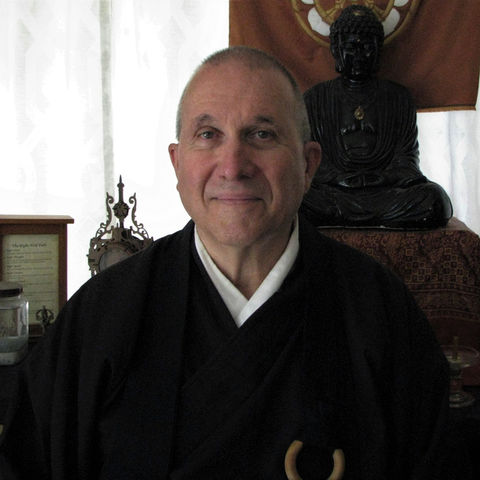
I'm your host,
Morris Sullivan.
The first Buddhist temple where I did any significant practice and study was Wat Florida Dhammaram,
Which is not far from Disney World.
It's a Thai temple,
So it's Theravada Buddhism.
When you go into the meditation hall,
There's a big golden Buddha up front.
You're kneeling to either side of him are two smaller golden figures.
These two monks were the Buddha's chief disciples,
Seraputa on his right,
Mogollana on his left.
They're often depicted that way in Thai temples.
These are important figures in Buddhism with their dedication to the holy life and their great compassion.
They did much to help Buddhism spread,
And so I see Seraputa and Mogollana as spiritual superheroes.
They took the teachings offered by the Buddha to the highest level,
And they did it in a way that benefited countless others.
Like any good superheroes,
Their story starts out with a moment of transformation.
It's maybe a little less dramatic than the origin stories from the comic universes.
There's no crazy science experiments gone wrong or mysterious objects falling from outer space.
Their story starts at a festival in Rajgir,
Which is a hilly area in northern India,
Not too far from where the Buddha preached his first sermon.
And these two young men were Brahmins.
They were born into the priest caste,
The highest social caste in India.
Their families had been associated for seven generations,
So they were close companions growing up.
They were wealthy and well-educated.
By the time they were in their 20s,
Each had hundreds of friends and followers in his retinue.
Every year there was a festival in Rajgir that lasted several days,
And one year,
While attending the festival,
Watching the performance of music and acrobatics,
They simultaneously had the same thought.
What is there to see here?
Before many decades have passed,
These people will have all come to their end.
Well,
They talked about this and about impermanence and death,
And they decided that rather than spend their time enjoying entertainments,
They should be looking for a way out of the cycle of coming and going.
Well,
There's a famous ascetic named Sanjaya staying nearby,
And so they went to him and became his students.
But they soon realized Sanjaya's teachings didn't lead to the kind of liberation they were after.
They decided to split up and go seek other teachers and agreed that if one of them found the real deal,
He'd go find the other one and tell them about it.
Not long afterward,
Saraputa encountered one of the five ascetics who had been the Buddhist companions during the several years leading to his awakening.
He was among the first then to hear his teachings and to become a Buddhist monk.
So Saraputa asked him for a teaching,
And by the time he had spoken only a few sentences,
Saraputa had reached stream entry,
The first stage of enlightenment.
So he went to find his friend Moggallana,
And as he was telling him what he had heard,
Moggallana also became a stream editor,
So Saraputa must have had a heck of a memory.
So let me take a little sidebar here and explain stream entry.
The Buddha said there were different stages on the path,
And stream entry is the first.
At that stage,
One has entered the stream flowing inexorably toward enlightenment,
Although it may take several lifetimes.
Here are three other stages.
A once-returner may be reborn a human one more time.
A non-returner will be reborn,
But in one of the Pure Land realms.
And finally,
An arahant is fully released and will not be reborn.
After death,
He crosses over into Nirvana.
Well,
Because of their previous good karma and because of their commitment to living the holy life,
These two new disciples entered the first stage of the path almost as soon as they were exposed to the first Buddhist teaching.
Well,
They wanted to share what they had learned with their original teacher so that he could experience what they had found also.
So they went to where Sanjaya was staying and they invited them to come with them to meet the Buddha.
He refused.
Sanjaya enjoyed life as a famous teacher.
He wasn't willing to become a student again.
He said,
Having been a teacher to so many,
For me to become a student again would be like a water tank becoming a drinking cup.
He said,
Besides,
Only a few people are wise.
Most are foolish.
Let the wise ones go to the Buddha.
Let the foolish ones come to me.
Well,
They were disappointed by this,
But Saraputa and Mogulana and about 250 of their closest friends left him behind to go see the Buddha.
And he ordained them and both of them became arahants within a matter of weeks.
Well,
When Saraputa and Mogulana told the Buddha about their original teacher and his decision to stay where he was and teach fools rather than to come with them and become wise himself,
Here's what the Buddha said,
Believing the unimportant to be important and the important to be unimportant,
Such persons who hold wrong views can never awaken.
Awakening is for those with right views who know what is important and what is not.
The Buddha was commenting on Sanjaya's clinging to status and wealth.
He was unwilling to let go of the material comforts and the ego boosts that come from being a famous teacher.
With his decision not to follow Saraputa and Mogulana,
He was forsaking the greater reward that would have come from transcending those desires.
Like him,
Most of us look for happiness in forms that don't really lead to happiness.
I talked about that one Sunday morning recently at White Sands Buddhist Center and I'll share that talk with you now.
There's an essay by the Dalai Lama on his website that says,
I believe the purpose of life is to be happy.
From the moment of birth,
Every human being wants happiness and does not want suffering.
Neither social conditioning nor education nor ideology affect this.
So obviously it's important in Buddhism to think about happiness,
But about 15 years ago or so,
A long time Buddhist who had come to the US from China visited one of my meetings in Dolan.
I was talking that evening about metta bhavana,
Cultivating goodwill,
Like we do in the metta prayer,
May I be happy and well,
You know,
That stuff.
This visitor was having some difficulty with this idea.
He said,
You know,
In my culture,
We say it's selfish to want to be happy.
We value harmony instead.
That thought intrigued me.
So on a surface level,
At least I knew this.
This is why Mahayana Buddhism emphasizes the bodhisattva ideal rather than encouraging everyone to become an arahant.
When Buddhism got to China from India,
There was that emphasis in China on community,
On the sort of common good,
Rather than on the individual.
But it hadn't really occurred to me until that point when that man said that,
That this meant that you wouldn't concern yourself with the pursuit of happiness.
And I was fascinated by this idea,
Especially since from what I could tell from talking to him,
That he was a pretty happy person,
Maybe happier than most of the people that I met.
So it made me wonder,
What's the relationship between valuing happiness and actually experiencing happiness?
And I thought about my own experience with seeking happiness.
I'll be honest,
For much of my life,
I would not have described myself as a happy person.
I won't go into details,
But between some of the circumstances in my life and genetic hard wiring and that kind of thing,
Happiness just really was not easy for me to come by.
But these days,
I'd say I'm pretty happy.
I might even say I'm very happy.
And so I started thinking,
Like,
Why is that?
How did that happen?
How did I get to be happy?
And so I started looking at some of the things that I'd done and books that I'd read and things like that.
There's some books that I have on my bookshelves at home that I've had since I was a college student the first time around.
It was a long time ago.
And I have several about the Dalai Lama,
Including The Art of Happiness,
Where he talks about why happiness is important and how to be happy.
And then there's Bertrand Russell's The Conquest of Happiness,
Where he goes into great detail about various forms of unhappiness.
And several of Albert Ellis's books,
He's one of my heroes,
Intellectual mentors,
Discuss the importance of seeking happiness and how to stop making ourselves miserable.
But none of these books define fairly,
Very clearly what it means by the word happiness.
And I figure if you're trying to figure out how to get happiness,
You want to know what it is when you see it,
Right?
So it occurred to me that it might be useful to define for ourselves what we mean when we say happy and then see if that definition can help us find our way there.
So I looked in the dictionary,
By the way.
My dictionary defines happiness as the state of being happy,
Which is not particularly helpful.
But then when you look up happy,
It goes into a lot of synonyms,
Like talks about pleasure,
Contentment,
Satisfaction,
Cheerfulness,
Merriment,
Joviality,
All these kinds of things.
And those are fine emotions and characteristics,
But I don't know that they equate to what we generally think of as happiness.
They tend to be short-term,
Passing,
Pleasurable emotions.
Or they describe states that I think we'd say are part of happiness,
But not necessarily the full experience.
I think when someone says,
I want to be happy,
They're generally talking about something that's sort of global and ongoing condition.
So in Buddhism,
True happiness is defined as a state of total liberation.
So spiritual happiness in a completely transcendent way.
And most of us are not going to experience that in one lifetime.
And the Buddha said that there were intermediate but legitimate states of happiness that were worth seeking.
So I think that we could define happiness in terms of something that's generally pleasurable and pleasant in a way that's sustainable,
That's renewable,
Even self-promoting.
In other words,
Happiness should be resilient.
It should rebound after difficulties,
After periods of trouble.
And it should lead to more happiness.
It should feel good emotionally and physically,
But it should also be good for us.
So not just individually,
But it should be healthy for the circumstances in which we live.
So it should support our family life,
Our social life,
And even our community,
Because that's the context in which we're either going to thrive and have well-being or we're not.
So I was talking about happiness at a meeting once.
And I mentioned that people tend to think of happiness as a condition that we experience.
But the happiness that is deeper,
That comes from things like engagement and living a meaningful life is actually an active process.
And when I said that,
This woman in the group had this big epiphany.
You could just see it in her face.
She smiled really big and she said,
So next time someone asks me if I am happy,
I'm going to say no,
I do happy.
And that made me really happy.
So let's consider how to do happiness.
The Dalai Lama in his essay on happiness,
Which I mentioned earlier,
Points out that pleasure and suffering fall into two main categories,
Mental and physical.
And he says of the two,
It's the mind that exerts the greatest influence on us.
So it makes sense then that we should concern ourselves with developing the mental causes for happiness above physical external ones.
Getting pleasure is fine,
But it's actually a small part of happiness.
Scientists have studied this now and verify what the Buddha said a long time ago when he pointed out that pleasure is fleeting and ultimately stressful.
If something is not,
Then it's not really.
And ultimately stressful.
If something is good,
But it doesn't last,
It eventually becomes stressful.
So therefore you should seek that which is enduring.
So that doesn't mean that there's anything wrong with enjoying physical pleasure.
Reasonably and responsibly,
Physical pleasure is fine.
But when we cling to them thinking that they're a source for happiness,
They're going to ultimately end up causing us pain.
Rather than cultivating positive feelings that come from externals,
We should cultivate those that come from the mind,
Because that's always with us.
So we tend to think of good feelings as something that results from happy conditions.
If we're happy,
We're going to feel joyful.
But it turns out that positive emotions are more like a cause for happiness than an effect of happiness.
So emotions result from how we use our mind in response to things that happen.
They're not things that result because of things that happen.
They're the result of how our mind engages with what happens.
So you can cultivate positive,
Pleasant emotions by training the mind to interact in positive ways.
And when you do that,
You're going to be happier.
For example,
Somebody emailed me not too long ago,
And they were talking about how they develop,
How they're working on developing compassion and goodwill.
And so when they see themselves getting angry at someone,
Instead of going with the story all about the anger and why they should have done that thing that they did that you're angry about and all that stuff,
They just switch,
Try to switch that off and switch instead to wishing them well.
So that's a difficult thing to do.
That's a real challenging practice,
But it's worthwhile.
As a result,
This particular person is getting angry less often.
And when anger does arise,
Because we can't prevent the arising of feelings,
Feelings arise.
When it does arise,
Then they won't nurture it as much,
So it won't last as long.
And another good one to cultivate is gratitude.
And you cultivate gratitude by paying attention to the good things that come your way.
You can cultivate serenity through meditation and learning acceptance,
Cultivate love and goodwill and things like that by making a habit of wanting others to be happy.
It's pretty simple,
Really,
When you think about it,
To do this.
It's not easy,
But it's simple.
It takes some effort and some practice.
So in Buddhism,
A lot of times we don't talk about feelings and thoughts in terms of being positive or negative.
We talk about them in terms of being skillful or unskillful.
Skillful thoughts,
Skillful attitudes,
Skillful ideas tend to make us feel better and cause less stress for ourselves and for others and to generally have us live in a more productive and engaged way.
And unskillful thoughts and feelings and things like that have the opposite effect.
So part of cultivating skillful states like gratitude involves letting go of unskillful ones like fear and hatred,
Resentment,
Things like that.
So if you put them together,
Cultivating skillful emotions and letting go of unskillful emotions and thoughts,
As the sutras say things like restraining the ego will lead to a more positive outlook on life.
So by the way,
The Buddha would say when he talked about things like cultivating metta that this leads to a long happy life.
And it turns out again that modern research kind of bears this out,
That cultivating gratitude and goodwill actually over a long period of time can reverse some of the physical effects of stress and as we know the physical effects of stress will shorten your life and make you less happy,
Healthy.
So you know Zen is all about living in a really intimately engaged way with life and that intimate engagement with life also creates happiness.
If you can really lose the self in what you're doing,
You actually experience a heightened calmer state of mind.
Musicians experience this if you.
.
.
Nothing.
Yeah,
When you're really absorbed into something you're playing you forget yourself altogether and you forget the differences between yourself and the audience.
Those things don't exist anymore.
It's just the music happening,
Right?
I experience that when I'm doing tai chi,
When I'm actually paying attention to it.
I really lose myself in it and you get really kind of absorbed into the feeling of what you're doing being a part of nature and that kind of stuff.
So losing yourself in favor of social interactions also leads to happiness.
So what are the three jewels?
The Buddha,
The enlightened one,
The enlightened teachings and the Sangha,
The community,
Right?
So that's one of the reasons the three jewels.
.
.
The reason one of the three jewels of Sangha,
The spiritual community,
Is because of this social engagement leads to greater more meaningful deeper forms of happiness.
And people with good social networks and strong ties to family and things like that links to a spiritual religious community tend to be happier.
Social networking is only one good reason to go to the temple though.
This is where we develop a framework for living a purposeful life.
Sometimes people see religion as a place to go to be told the meaning of life.
You used to see these cartoons all the time of someone climbing to the top of a mountain and there would be a holy man sitting there and you would ask what is the meaning of life and you know and the the holy man's answer was always a punch line of some kind.
I don't remember any of them.
But the meaning of life is to climb to the top of the mountain.
To climb to the top of the mountain and then to keep climbing.
If you can go higher go higher or climb another mountain.
It's the the purpose of life is the living of the life.
It's out there on the ground somewhere.
Every step of the journey is the journey.
Right?
The destination is not the journey.
The journey is the journey.
So religion is or should be at least where you go to create a meaningful life not where you go to be told what to think.
So people who value harmony,
Who value relationships and community tend to be happier than people who think that life is about wealth or whatever.
So you come here or wherever you practice your faith normally to live and experience that harmony.
And this reminds me actually of what something that I read in one of those books that I have had on my bookshelf long a long long time in Bertrand Russell's Conquest of Happiness.
He explains how he had gone from a generally unhappy person to a generally happy one and he said very largely it is due to a diminishing preoccupation with myself.
Gradually I learned to be indifferent to myself.
I came to center my intention increasingly upon the state of the world,
Various branches of knowledge and individuals for whom I felt affection.
Dogen says in one of the most famous Zen scriptures of all time the Shobo Genzo he says to study the Buddha way is to study the self.
To study the self is to forget the self.
So that is what we come here for,
To forget the self.
So thinking back to that visitor from China and his views on happiness versus harmony,
You know what would harmony mean?
It means we place a high value on relationships and community,
A higher value on that than on our own ego.
So ironically if you value harmony you are more likely to be happy than if you value happiness.
I think that is interesting.
And the Dalai Lama said something else in that essay that is relevant to this.
He said the need for love and compassion lies at the very foundation of human existence.
Not only higher forms of life but also even the smallest insects are social beings who without any religion,
Any law,
Any education,
Any ideology survive by mutual cooperation based on an innate recognition of their interdependence.
So we come here to study oneness,
To realize oneness,
To realize our interdependence just like the ants do.
So when we share this recognition then it is possible to feel that everybody we meet in whatever circumstances is a brother or a sister.
The Dalai Lama says,
I try to greet whoever I meet as an old friend and that gives me a genuine feeling of happiness.
So if you want yourself to be happy,
Forget about happiness.
Just live your life in a really deep engaged way and try to realize your interdependence with all creation.
So thank you for your attention.
I hope you enjoyed hearing a little bit about these two dharma superheroes,
Saraputa and Mogulana,
And I hope you found something useful in today's Dharma Talk.
I want to again thank Edward Simon for sharing his music with us and thank everyone at White Sands Buddhist Center which is where I gave the talk on happiness for their kindness.
If you want to learn more about Buddhism,
You want to live a more engaged life,
To explore gratitude,
Meaning and purpose,
Or just to cope better with stress,
I hope you will subscribe.
Thank you for your attention.
Now go save the world.