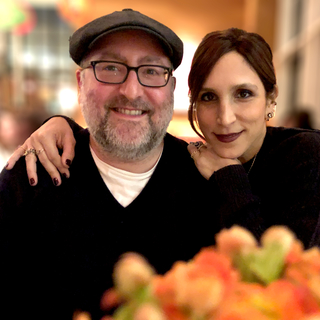
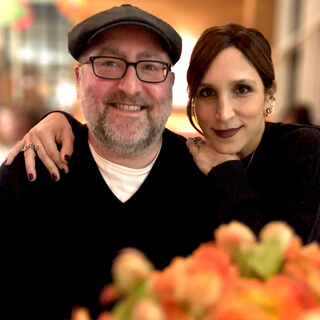
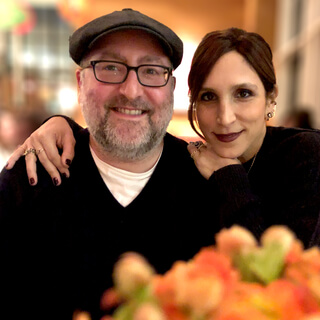
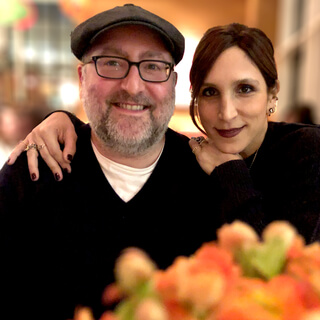
Welcome to the spiritually hungry podcast episode 63.
Today we're going to talk about lies.
No we're not.
Yes we are.
Stop lying.
Which I'm really excited about.
Let's just go on a little journey here.
Yes,
I love journeys.
Psychologist Bella DiPaolo conducted a study of 147 people between the ages of 18 and 71.
They were instructed to keep a diary of all the untruths they told over the course of a week.
According to the research findings most people lie once or twice a day.
In reality most people probably lie more because it's reasonable to assume that people lied about how often they lie in a study about lies.
Right,
But you would guess that people on average lie more unless you're really conscious and you're really trying to evolve and change.
I'd say there's probably more.
Yeah and also I think when I think about lies it's not just,
You asked me,
The sky blue and it's in the sky is black,
Right?
That's an obvious lie.
But the other,
Which I think is maybe even more insidious type of lies,
Are the things that we tell ourselves.
Right,
So I'll read a story a little bit later.
I feel like you're like jumping way in.
Okay well no,
No,
Because I'm saying because you asked the question how many times people lie.
I think we live a lot of lies.
Yes,
We also tell lies but we also live a lot of lies.
For sure,
And I think that's a lot of the work that we do with people.
It's actually bringing to focus the ways they lie to themselves or the truths that they think they believe that are also lies.
Like I had a conversation with somebody today and the whole thing,
The whole conversation,
She was so confused because on some level she recognized that she was lying to herself.
On the other hand,
That was a familiar place for her.
So we'll get to all of that.
I think it's a fascinating topic because there are many wildly divergent views and we can go in many directions and we will.
Some people believe it's never okay to lie ever,
Others hold some pretty complicated parameters for when it's okay to lie.
Well where do you think?
Do you think it's ever okay to lie?
Absolutely,
And I think the question is speaking with consciousness,
Right?
So for,
Give a simple example,
And this is also born out in sort of ancient biblical law that let's say somebody tells you,
Asks you you're driving a car and you're driving north and he or she says,
You know,
I need a ride.
Are you driving south?
So if you say no,
If you say no but I'll give you a ride,
They'll feel bad.
So you can say,
Yeah,
Actually I'm driving south,
I can give you a ride.
So therefore they're not,
They don't feel bad.
So nobody's harmed,
As a matter of fact,
Somebody is actually helped by a lie.
So absolutely there are times where it's not only okay to lie,
I think it's actually the preferable thing to do.
So I don't think lying is an absolute no.
I think there are certainly times,
And again without going too much detail about that living lies,
Being okay with lying,
That's where the danger comes in.
Yes,
I agree that there are times.
So you're basically saying if you lie to help somebody or if it's like for the sake of being kind,
You could say to somebody like,
No,
But honestly spending more time with you or being with you or do it.
Like,
People eventually take for granted,
Like I don't see,
Yes,
There are times to lie and I'm going to share one time where we did that recently a little bit later,
But I just think for the most part,
A lot of things can be said in truth,
But we opt to lie for various reasons,
Including the example you just gave.
And even Sages disagree on this topic.
First,
We have the Kotzko Rebbe,
Who was born in Poland in 1787.
I like to bring up content from long,
Long ago.
The Kotzko Rebbe is described as a man who was a champion for truth.
He said,
If you say something,
You don't truly believe you are guilty of perjury.
And I never regretted telling the truth.
So that sounds kind of extreme.
And perhaps he had a very small circle of friends.
Maybe some of his friends regretted him telling the truth.
As a matter of fact,
I think that's actually true.
Really?
Yeah.
He was a very tough teacher,
I would put it that way.
And for some people that works and for some people that doesn't.
I always have an aversion.
That's interesting.
Well,
Your father,
The Rav was like that.
Yeah,
He was also like that.
Which I do,
And not everybody can stomach that,
That's for sure.
But if you do,
If you do and you wait it out,
You're always grateful for that level of truth.
I think,
Again,
If you are signed up for living your life in that way,
It's just a different way of living.
On the other hand,
I do think that there are times that people sort of have in their mind,
I'm going to tell everybody the truth.
That's coming from somewhere else.
Yes.
And that often is the absolute wrong thing to do.
Right?
I mean,
I mean,
The sitcoms about this.
I mean,
This is sort of a,
You know,
Oh,
No,
I hate that shirt.
No,
Your haircut is terrible.
Right?
I mean,
These all could be true.
But but what's the purpose?
Seinfeld.
Yeah,
What's the purpose?
In the Torah,
It says you shall not deal deceitfully or falsely,
One with the other.
Perhaps the most dire warning comes from the book of P.
Kerevos.
It says one of the pillars of which the world stands is a pillar of truth.
So anyone who tells lies is regarded as if he's removed the foundation of the world.
So that sounds really heavy and intense.
But I think that it's important to understand that lying and living a life where lying is a consistent part of it doesn't just damage your close relationships,
But actually does affect our entire world.
Also,
In Pirkei Avot,
In the tale of Aaron,
He was the high priest,
And he was also known as a lover of peace.
Aaron would tell one person in a disagreement with someone else that the other person apologized and wants to reconcile,
Even though they hadn't said that at all.
I'm really happy to bring this up actually because I kind of have an issue with this.
So that's a lie,
Right?
When they heard this lie,
They would express an interest in reconciling.
Aaron would then go to the other person and tell them this fact,
At which point everybody would make up.
So you think that kind of lying is okay?
Absolutely.
So tell me about that because I think it's deceitful and a little sneaky and,
You know,
It's being a lover of peace but not a lover of truth.
The question has to be what's the ultimate goal of anything that we do?
And if you have a person that has a choice,
Right,
To put it very starkly,
Between lying and therefore making two people make up and have friendship and love between them,
Or saying,
No,
I won't lie for that,
So let them stay angry and enemies of each other.
For me,
That's a very clear decision.
Of course,
You tell the lies in order to bring love and peace between people.
But what's the other choice?
I don't know.
Maybe there is one.
I don't see any other.
Those are the two choices,
Right?
Like I said before.
So I think that has to be the framing of it,
Right?
If there's no other option,
There's no other way.
I think often it's the easier way,
It's the more comfortable way,
But if two people won't make up and they wouldn't connect unless somebody lied to create that peace.
But it has to be on those terms.
Of course,
Yeah.
Again,
One has to be careful not to become a liar,
Right?
Not to live a lie.
Especially since,
Again,
Everything you said,
And it's certainly foundational to a spiritual understanding that living in truth is,
Like you said,
The foundation.
The Tsar refers to truth as the sort of the signature of the Creator.
And therefore,
That's why the Kabbalists teach that every person is a liar.
Meaning he's a person who willfully and purposely lies,
Not in the instances that we spoke of where it brings benefit to others,
But simply a liar,
As unfortunately many of us are often,
Then the light to the Creator cannot rest within them.
Because two opposite realities can exist with the other.
So if a person is a person of falsehood and lies,
And we know that the light to the Creator is,
From which come all blessings and beneficence and goodness is truth,
Then a person who's full with lies cannot abide,
Cannot reside,
Cannot have a connection to the light to the Creator.
So absolutely,
That's the starting point.
But after that,
I think there definitely are times when telling untruths is the right thing to do.
Absolutely.
So to your point,
There's a parable that supports white lies.
I thought this was really cute.
So 200 years ago,
In a small Eastern European town,
A Kabbalist and a student went to a small inn for dinner.
The owner of the inn asked them how they liked their soup.
The Kabbalists lied and said it was delicious.
His students said this,
The soup tastes okay,
It would taste much better if it had salt in it.
The manager thanked him and went into the kitchen and fired the cook for her incompetence.
The teacher was furious with the student.
The student didn't understand why.
He said he asked me for my honest opinion.
So I told him the truth.
What's the problem?
The Kabbalists explained that the cook was a widow who had children to support.
She was having a rough day and forgot to add salt to the soup.
The teacher explained that the student,
By carelessly speaking,
His truth caused this woman to go into poverty.
Mercy and unity are higher spiritual oils than truth.
Right.
The truth is we never really know anybody's story,
Right?
And I think almost truth telling only,
Right,
Can almost be like a righteous pursuit.
In righteous you mean in a negative way?
Yes.
Right.
I think because I think that the real place to start.
.
.
Because it's not truth above all.
And it's not.
.
.
Yeah,
I mean there's,
There's a,
There is a true way,
I guess,
Where lying can exist.
Absolutely.
I think that the place to really start being,
If there were a self-righteous or righteous,
In uncovering the lies is first to go inside.
You know,
Until we have honestly and deeply dealt with the lies that we tell ourselves and the lies that we live with,
Then I think trying to fix the world's lies is secondary to that.
Again,
To be very clear,
To be a deeply spiritual person,
One must be based on truth.
I would just say that the way I would start the truth telling and the truth search would be internal first,
External second.
And I would err more on the side of kindness rather than truth as opposed to truth above all.
So let me give you an example.
Okay,
So Abigail,
This is a few weeks ago,
And I think we were traveling in the summer and somebody cooked something for her.
And I knew she didn't like it.
It's something she would have never eaten anyway,
Right?
But she was being adventurous because her friend was eating it,
We were in a different place,
It was a meal cooked for her.
So the person asked,
You know,
Did you like the food?
And I could see she was struggling because she didn't want to lie.
She's a very honest person.
She didn't want to hurt the person.
She's like,
Yeah,
You know,
I'm just,
I'm just not hungry,
You know,
And this that.
So after as I pulled her aside,
I said,
You know,
I think that it's important to always be able to say the truth.
And of course,
You can say it in a way that's kind,
You could say,
It's really good,
It's just not my taste,
Or it's really good,
But it's just not for me.
Because I do think it's important to teach that at an early age and to say it in a way that's not hurtful,
Because it's not,
It's like rejection,
Right?
People feel like anytime you're rejected,
It's,
It's not what you're offering is amazing.
It's just not for the person you're trying to give it to.
I think that there's a place to be able to still be kind and to hold space for truth.
I do.
I guess the question for me,
I don't disagree with everything.
Now,
Like,
Honestly,
When we even if we were at a store the other day,
And this woman was trying to help her pick out clothes for school,
And now they didn't like any of the suggestions,
Right?
So,
So she's like,
Do you like this?
Which like,
You know,
I'm all right,
Actually,
I'm good.
And we thought it was so sweet and kind,
Like,
The woman knew Abigail didn't like it.
I knew it.
Abigail knew it.
She knew we all knew it.
But it didn't have to be said,
But she also didn't have to lie.
Right,
Right.
So I think it's just a matter of being conscious,
Right?
So using the store sounds to me like a very obvious choice,
Because these clothes were not made by the salesperson.
She was just trying to be helpful.
The salesperson ordered them,
Michael,
To that store.
It's different than some.
Again,
None of these are absolutes.
Yeah.
It's different to somebody who cooked a meal for you.
And then what's the benefit?
Like I said,
What's the upside,
Right?
In this store,
In this situation.
Because I didn't want Abigail to feel like she needs to lie to make other people feel okay.
And I think that's a really valid and important point.
But it's a balance because,
But you also don't want to teach her to hurt other people.
No,
And she- As a matter of fact,
I think the lesson should be,
Again,
I think these are two very good examples to balance off each other.
In this case,
She had not eaten the food.
So the decision of whether she was going to eat the food,
Right?
It's different than saying,
I'm going to eat the food,
Even though I hate it because I don't want to hurt your feelings,
Right?
Here,
She was not going to eat the food.
The question was- Well,
It could lead to that.
Anything- 1,
000%.
Go ahead.
I believe that,
But go ahead.
And I want you to challenge me.
And I think it's- I'm not challenging you.
I'm just saying that- No,
I think it's okay that we're seeing this differently.
I think you would always err on the side of- Kindness.
Hey,
No,
It's not about being kind though.
I think that- This is my point.
I think sometimes when people put other people's feelings in front of their own,
They stop being kind to themselves.
It's possible.
And those kinds of things day in and day out,
If she feels like she can't express what she thinks or how she feels because she's always putting- And it's not always right away.
It's not always at eight.
But when you get the feedback,
If I had said to her,
Yes,
Say you like it because you don't want to hurt somebody's feelings,
Then 9,
10,
15,
20,
Then what does that lead to?
But that was the only conversation you ever had with her.
But then you have the other conversation with her at the store.
Say,
Abigail,
I'm so proud of you that you let the sales lady know that you weren't interested in those clothes.
Oh,
Mommy,
I'm so confused because remember when I had that meal and you told me to say that I liked it?
Right.
So let me think,
Abigail,
That there are times when people put effort into making things and you don't want to hurt their feelings,
So you say,
Yeah,
It was fine or it was good.
And there are times when you need to stand up for yourself.
And in life,
There are no absolutes.
There is no- That person's going to know you were lying anyway because you didn't eat it.
Okay.
Again,
I don't think either one of these situations is absolutely one way or the other.
I do think it is important,
Again,
If we're talking about Abigail,
We're talking about it for ourselves,
We're talking for our listeners,
For a person to say,
No,
There are times that I should tell the truth,
That there are times that it's okay for me to shade the truth or not tell the truth.
I think the guiding force should be what makes me okay and what is kind towards me and what is kind towards other people.
And which goes first?
Well,
I think kind to yourself comes first often.
Although there are many stories of,
As a matter of fact,
There's a story of one of the great Cabellers who came with his students to a meal and he started eating the food and before anybody knew it,
He had finished all the food that was on the table.
And the students asked,
Why did you do it?
That's not a kind thing to do,
Right?
He said,
When I tasted the food,
I realized it was really cooked poorly.
And then if anybody else tasted of it,
They would have all had said terrible things to the cook.
So I finished it all quickly.
I like it.
I never heard that story.
So that the cook doesn't get hurt.
So life is ambiguous.
This topic of truth and lies is ambiguous.
I think it's important,
Whether it's to our children or to ourselves,
To accept that.
That there is no absolute time for me to always be truthful or always not be truthful.
I think kindness is the direct thought.
Like you said,
I think it is important and certainly people do fall to that,
Where they're not being kind to themselves.
I mean,
Even just,
You know,
I don't know if you got a chance to see this.
This is right now in the United States,
The big story about this girl that was murdered by her.
What's her name?
Gabby Petito,
If I'm not mistaken.
And there's a very,
Very sad and disturbing video of,
There was an altercation.
Obviously,
This guy,
Again,
Allegedly,
Right,
Was an abusive fiance,
Boyfriend.
And so there was a report of her being,
Somebody called the police and said that this girl was beat up.
She saw her boyfriend slap her.
The police come and for like an hour,
This is probably just a few days before he allegedly murdered her,
Right?
Oh,
No,
This is proven yet,
Right?
Right.
She's murdered,
But they don't have proof that it was the familiar name.
But the point is,
So for like an hour,
The police are talking to him and talking to her,
Talking to him,
Talking to her.
And it's all on their cameras.
And you can tell that she's obviously going in a In duress.
In duress.
But she's making up lies,
Because in this we know what happens when people are abused,
They often will tell lies to themselves and maybe even believe them or at least say them outwardly.
And obviously,
This whole thing is terribly sad.
But the fact that,
Had the police seen that she was lying,
Or at least should they have noticed that she was probably lying about him not being abusive,
They could have maybe saved her life.
But I think more important as it relates to our conversation here,
Absolutely.
And I think often in abusive relationships,
This is almost always the case where people tell themselves lies.
They either believe them or at least tell it to themselves or tell them outwardly,
For whatever reason,
Right?
So we have to go.
.
.
Well,
The more you lie,
The more it becomes part of who you are,
You can't really then differentiate.
And it also changes your relationship with yourself and your relationship with everybody else.
How you allow them to treat you.
Everything is based on.
.
.
Yeah,
If I can,
There's an interesting book called The Lies That We Tell Ourselves.
And it's a story that he brings,
And it's a little bit long,
But I think exactly to this point,
And I think to something you often speak about,
The fact that we have to first be honest with ourselves.
And that taking care of ourselves should come often,
Certainly in some situations before others.
So he's a therapist,
And he's telling the story of a woman who sat down in his office.
And she said,
I don't know what to do about my marriage.
My husband keeps having affairs.
We've been in couples therapy,
But it hasn't done any good.
He feels guilty,
Or at least that's what he says.
But every time he promises to be faithful,
He gets involved with another woman.
His name is Phil Enderer.
I should leave,
But it's easier to stay in the marriage than to divorce.
He promises to be faithful,
But then he gets involved with other women.
I replied,
Yes.
Would it be fair to say that you stay with the man who promises and try to forget the man who has affairs?
Which I think is an interesting question.
Would it be fair to say,
The therapist asks her,
That you stay with the man who promises and try to forget the man who has affairs?
So she's lying to herself.
She's saying,
This is the person I want to say.
But I can't forget,
She says.
You can't forget the facts,
But it sounds like you have been marrying his promises.
That's harsh.
It's not my intent to be harsh.
Have your husband's affairs been harsh to your wish for faith?
Have you been harsh for faithfulness?
He asks her,
Yes.
And if you believe his words instead of his deeds,
Will believing his words be hard on you?
I see what you mean.
If I see you hurting yourself,
Ignoring behavior you need to see,
Do I have your permission to point that out so we can bring your suffering to an end?
I think this is again,
This is.
Shine a light.
You meet so often so many people.
This is around relationships and cheating.
But in so many areas of our lives,
We actively believe lies.
Because we are scared of the truth.
And I think that's where it has to start.
The question is,
Are these lies or living,
Accepting these lies benefiting me?
Really?
Really?
When you put it that way,
It makes sense.
But we don't sleep together anymore.
I understand you don't sleep with him anymore.
But since you are still with him,
Is it possible you are living with his lies?
Her eyes filled with tears.
How do I leave him?
You don't need to.
The faithful husband already left.
Would you like me to help you stop waiting for him to come back?
I thought that was so powerful.
This woman hoped her faith would make her husband faithful,
But it didn't.
Why did she lie to herself?
Why do all of us lie to ourselves?
It's easier to embrace our wish than what is here.
Because then we're met with disappointment.
And that's harder.
That's a harder pill to swallow.
Yeah,
You have to,
A person would have to accept the disappointment.
As the woman's therapist,
I wouldn't find out in this session,
Why she embraced her husband's lies.
And I might not find out why in the next session either,
Since meanings unfold over time.
No matter how much we learn about someone,
That person will always be a mystery.
So if a person is a mystery,
Psychotherapy is a mystery meeting a mystery,
Which I thought was interesting.
But that line I thought was so instructive,
So instructive that we people,
All of us,
And to certain degrees in certain situations,
We hold on to lies.
Maybe because accepting the truth,
We think is more painful,
But in reality.
Most people don't know that they're lying to themselves every day.
I'm telling you over and over every day,
The meetings that I have with people,
It's like I'm just pointing out to them,
Is this really true?
Let's talk about this.
Where is this really coming from?
And most of the angst that people experience in life is because they've lied to themselves.
They believe the lie to be true.
And usually it's not a kind sentiment.
And then they hold on to that.
So it's like,
Okay,
The next okay,
Then if that's a lie,
What is truth?
And they don't know what it is.
So it's easier to hold on to that,
Like false understanding,
False narrative,
Because it's what they've always done.
And in fact,
Did you know that we start lying at an early age?
What age if I had to ask you,
Do you think that people start lying?
I'm assuming once we start talking,
Age three,
That's three,
I thought it would be less,
Right?
They become versed in the art of fibbing.
Lies begin when we gain awareness of the power of language to change our circumstances.
So I'll give you an example.
The child asks,
Mom,
Can I have a cookie?
The mom replies,
How many have you had already?
The child telling the truth says four.
The mom says,
I think you've had enough cookies for today.
Now,
Example two,
The child asks,
Mom,
Can I have a cookie?
Mom asks,
How many have you had today?
I haven't had any cookies today.
So the mom says,
Okay,
You can have a cookie.
So this kind of lying isn't spiteful.
It's rather a means for a child to explore how the power of words can change their environment and enhance their situation.
Now,
Obviously,
Lying,
But a cookie is not the end of the world.
But when you lie about things,
Because you realize that you then can change the outcome or the circumstance,
It gives you some sense of power.
And then as you get older,
The lies become bigger,
The stakes are higher,
And then we really get into trouble.
Interesting.
Interesting.
But I think it's funny as we were.
.
.
And by the way,
How do they learn to lie?
They learn by watching us.
That's the truth too.
A lot of parents do lie to their children,
Or they teach them to lie because of social,
Like the example I gave before,
Right?
Let's say a child says,
Oh,
You know,
Aunt Mildred has hair in her ears.
You say,
Oh,
You should never say that.
And of course,
You're doing that to protect.
But if you give the feedback,
And that was back to the Abigail example,
Over and over again,
That you need to be lying,
Or you're going to affect things in some way or people,
It's a very fine line.
And if we don't have experience with that,
With truth telling or being honest with ourselves,
It's very hard to raise the next generation to do so.
Absolutely.
I would only add,
You were saying that,
You know,
We learn to lie from our parents.
I'm sure that's also true.
Not solely.
But I think it's important to realize,
You know,
That one of my,
I don't want to say,
Favorite teachings,
But it's a phrase that I speak about often,
That it says that in the story of creation,
It says there were different,
They're called angels,
But really it's energies that were in the process of creation.
And the energy of kindness said,
Mankind should be created because they will do kindness to each other.
Truth said,
You can't create human mankind because they are full of lies.
And it says that in the process of creation,
Truth was thrown down into the earth,
Into the dirt.
And then that allowed the process of creation.
My point is that we are actually born with the direction of lies.
The Kabbalists refer to this world as the world of lies.
And yes,
Our parents and our environment often helps us learn to lie,
But we have to understand that there's actually something internal.
And we often refer to it,
Not our soul,
Not the real part of us,
But that other part of us,
That our opponent,
As we'll call it,
That we all have inside,
Is intent on not only having us lie outwardly,
But to continue to live lies.
This woman,
For example,
From the book,
The lies that we tell ourselves,
It's not simply that she's conscious of the fact that if she faced the truth,
And the truth is that her husband has been a cheater,
Probably will remain a cheater,
That it's not simply that she's chosen to believe the lie because the truth is more painful,
Or at least she thinks it might be more painful.
There's actually a current,
A force within her that gravitates,
That tries to push her towards lies.
And that's true within every single one of us.
And the purpose of that is?
Well,
The purpose of that is the work,
Right?
The work is,
I won't believe the lies,
I will uncover the truth.
That's really what we're in this world.
So even if you think about ourselves,
Right?
So the biggest lie that we tell ourselves,
And that of course manifests many different ways,
It matters what anybody else thinks of me.
That's the biggest lie.
That's the truth.
Is it?
And so much,
And this is really the most painful thing about ourselves,
About people we meet,
How much we steal from ourselves,
How much we deprive ourselves of goodness,
Of joy,
By living,
By believing that lie.
So,
And the purpose,
It has a purpose.
The purpose is that my life's work needs to be,
How do I separate from that lie and all lies and come to know me in the truest sense and live my life in its truest sense.
But it's important,
I think,
To know that this isn't just something that we learned from our parents or surroundings.
There's a force within us.
But when you said truth was thrown into the dirt,
I'm not really following that.
Meaning it was discarded and said,
Yeah,
In order for humankind to be created,
The force of truth has to be diminished because they're all liars.
We are all liars.
And in order to earn.
.
.
To discover the truth.
We have to discover truth.
We have to earn that.
We're born into a world of lies,
Right?
Which is why we probably take them so seriously.
Yes,
Yes.
And that's the point.
The point is,
Because the question would be,
Well,
Lies obviously do not benefit us,
Right?
Almost always to our detriment.
Why is it such a pervasive and powerful force?
We're born in this whole world is based upon lies.
And our opponent,
Our internal opponent,
Is also a force of lies.
So we're surrounded externally and internally by a force that's pushing us towards lies.
And it's our life's work to discover those lies.
And like I said,
I think probably the most important thing is to discover the truth.
And like I said,
I think probably the biggest lie and the one that pervades so much of the rest of the falsehoods that we live and speak and do is this idea that it is important for in any way what people think about us.
And actually what I would like to ask our listeners right now,
And I'd like to ask you and I'll think for myself if you want me to answer this as well.
Think of one falsehood that you're living.
One falsehood that you're living.
So for our listeners,
I think because obviously the purpose of this podcast isn't just to share wisdom but to really hopefully create a facilitated process of transformation.
And I think it's important to really take the time and think,
Okay,
What are the parts of my life or what is the thing that I do or the thing that I believe that I'm going to do that is absolutely not true?
Or at least I'm starting to see that it's not true.
I think for me,
And I always go to this,
But it's really something that I believe very deeply,
That whenever I feel that I'm doing,
Either what is a lot or enough or as much as I need to be doing in my personal spiritual growth or in what I'm trying to do and bring into this world wisdom,
That I'm doing a lot or enough.
And reality is,
I can say for myself and I believe for many of us,
Most of us,
There's so much more that we have to find the way.
And then in believing that falsehood,
Right,
Which is I'm doing enough or I'm doing a lot.
I'm doing a lot to not necessarily lie,
But I'm doing enough.
I think that's a very big pervasive lie that I always try to fight.
So this is an invitation for me to push you more?
Absolutely.
I think mine would be,
Because it's interesting,
It's a lie,
I think,
That's based on a truth and that's why it's tricky.
So by the way,
The Zora says every lie has a part of truth in it.
That's why I'm struggling.
So my lie is you have to be busy doing,
Exhausted,
Nonstop,
Can't sit still,
Or you won't be given enough days.
The lie obviously is it's not a healthy state of existence.
And then I get physically,
Like the injury I have now,
Like I'm forced to absolutely stop that way of existing.
The truth though is that each day is meant to be lived.
And so to find that balance.
I think the word that you use there,
Which I think is,
Again,
Obviously I'm a witness to a lot of this,
And you're absolutely right,
Is the exhaustion piece.
Right?
I think it's all right.
You want to push yourself to do more,
To do more.
But when it starts either physically damaging you or other ways.
And I think that the,
Again,
Connected to the falsehood is connected to my father.
Seeing a life that wasn't,
It was pursued like that earlier in his life.
He was very much that person.
And then he got so disillusioned,
I think,
By the lies that he stopped.
Right?
And so then I saw that other extreme opposite and it's,
It's scared me enough to live like this,
I guess.
So,
Yeah.
If I can add to that,
I would say though that certainly seeing your father's process in life added to this,
But we all have our own correction with which we come into this world.
And that's why I think it's important.
I don't think it's a coincidence that he was my father,
By the way,
To see all of that.
And clearly,
By the way,
My other sisters didn't have this experience.
Exactly.
These are not thoughts that we all saw the same man.
We saw the same man throughout our lives and different stages of who he was.
It affected me like this because this is something that's ingrained in me.
Even before.
That I need to fix.
And that's why it's even more terrifying because I saw what that,
What it looks like.
And everything's a choice,
Right?
So,
And to your point,
The lies of,
You know,
That we say because we want to be liked,
It goes back to anthropology,
Really.
It's being liked meant more secure place to live,
Being socially accepted.
If you were liked more,
You'd have more opportunities to act,
Do,
Perform,
Eat,
Live.
It was just a better life.
And that still is hardwired in our brain.
And so we think at all costs,
You know,
No matter what,
People must like us or will die.
And I think that that lie just stems back again.
You know,
We talk about past lives.
We talk about what I came into the world with this thing I just shared.
And it's the same thing here.
That's why we all have it to different degrees.
It's upon us to really decide to erase it and get rid of it.
Absolutely.
And I think it's so important,
Again,
Something we touched upon before,
But really to ask ourselves how much of what we say,
How we say it,
Where we say it,
What we do,
How we do it,
Where we do it is an effect of other of the lie that it is important to me that other people like me or think positively about me.
And what would I be saying or not saying?
What would I be doing or not doing if I really didn't care?
I think that's why on some level when I speak publicly,
I often show or speak of my struggles or my process or flaws because I don't want to fall prey to that again of caring what people think and doing it for the wrong reasons of wanting to be liked.
And also,
Like,
I don't want to surprise people.
Like,
I'm a human being having human experiences.
I like when you surprise me.
And so I don't want people to put me somewhere,
You know,
This is it.
I'm working really hard to grow and be different and better,
But I never want to live in that space again because I lived there for a really long time.
We did speak about the danger of lies.
I do want to add this one thing from Professor Markman's article.
It's called What Lies Affect Your Behavior.
I thought this was really interesting.
You know,
It was like a little science.
So his research indicates that white lies aren't simply a form of social grease that we apply to make our social interactions go more smoothly.
We really do recognize them as being lies.
And as a result,
We need to be quite careful about how these lies affect our future behavior towards the people we have lied to.
So he's talking about how it affects our relationships.
The outcome,
According to Markman's research,
Is that we treat people that we've deceived differently.
Research subjects behaved in a way that indicated they were trying to make up for telling a lie in the first place.
We end up piling lies on top of lies,
Perpetuating a strained or unfulfilling relationship rather than being truthful about its shortcomings.
So I think,
Like,
Just we're not aware about how our lies,
How far they go.
And you remember the mom and the kid,
Right,
With the cookie?
How children learn the power of words to change the reality.
When you lie,
Even a white lie,
You're exerting power and changing someone's else's perception of reality.
And that's really powerful.
And I don't think it should be taken lightly.
You know,
We talked about how words have power.
We talk about our effect on the world and the universe.
I think that,
And that,
I mean,
This was all very personal to now,
But I think just,
You know,
When we do lie to people,
Especially the ones we love the most,
We're going to love the most.
It changes more than we think.
Well,
For the long term.
Absolutely.
And that's why I think,
You know,
If we look at circles where lies shouldn't exist,
Right?
So to ourselves,
There should be zero lies.
To those that we really love and care about,
There should be almost no lies.
But when you accept the lies of others,
Like the example you gave of the cheating husband,
It forced her to lie to herself,
Right?
So it's this ripple effect is what I'm saying.
Right.
But my point,
Just bringing it back to where we started,
Which is that I do think that there is on the outside circle,
There are,
You know,
So I think as we're doing this internal work of saying,
Okay,
I want to live a life of truth.
Well,
The first place to start is the center,
Which is I need to make sure that I am not lying.
Where I'm,
Forget about,
I need to make sure,
Okay,
Let me find out where I'm lying to myself.
And then the people who I really love,
My husband,
My wife,
My children,
They're going to be almost any lies.
Yeah,
If your kid asks you,
Do you like this haircut,
You know,
But,
You know,
Sort of,
We've all lied to our kids and spouses about different things and things.
Anyway,
My point is,
As you take that second… Spouses?
Yes,
Yes,
Yes.
What was it?
I was trying to go the other day,
A mirror mask,
I'm trying to remember what it was,
We were going out,
And then she asked me about an article of clothing that she had bought or was wearing.
And then I always ask myself to be honest.
So I told her that I didn't really like it.
The whole rest of the day,
She was like really disturbed.
What I don't like that you've done to me is you don't say anything until after we've gone out and we come home.
I thought that was the kind thing.
Did you really like that?
And I was like,
You know what,
Yeah,
And that's why I put it on.
And by the way,
I've been out for like five hours at an event that I actually wanted to look good.
Things for either say it before or don't say it ever.
Exactly.
Yeah.
So lie?
No,
Just say it.
I would rather you say it when I have a choice.
Yes.
So in the center,
There should be zero lies.
As you keep going further out,
My point is there also should be 99% truth.
And then,
Yes,
On the outskirts of people,
Acquaintances,
People you run into,
I think it's okay to have lies of kindness,
We'll call it.
But I think the most important point is that to yourself,
Uproot as many lies as possible because we're all living in a world of lies and we're all living lies.
And our work is to discover the truth and it begins with uncovering the lies that we are constantly telling ourselves.
So the moral of the podcast is next time somebody asks you a question that you don't really want to answer,
You say,
Ask me no questions and I'll tell you no lies.
You like that?
I did.
All right,
Michael,
Read us something.
Yes,
I'll read a letter from one of our listeners.
And again,
As we always remind our listeners,
We really are inspired and really enjoy getting the letters,
Emails really,
From our listeners.
So please keep them coming with questions and comments and stories.
This is from one of our listeners,
Sylvie.
Dear Monica and Michael,
I'm extremely grateful for your sharing of Kabbalistic wisdom.
It has quite literally saved my life time and again.
This is not hyperbole.
There have been times over the last couple of years where I've felt that it is pointless to go on.
I have done my best,
But I cannot become the person I meant to.
The negative voice can be so strong sometimes.
It is only through constant immersive repetition of the tools like the Spiritually Hungry Podcast,
Sacred texts,
And seeking out every opportunity to share that saves me.
Michael once said,
Realize that if you have even one drop of light,
You have everything.
This is huge.
Michael also said,
How much consciousness and appreciation one has for the light in each moment is in direct relation to how much light you will experience.
Sometimes the concepts can seem grand and it's difficult to apply them practically,
But you both do an amazing job of breaking them down and helping me and I am sure many others to apply them in daily life.
My desire to reveal light in order to fulfill my soul's purpose in this lifetime is growing stronger.
Sometimes it is so painful and sometimes it is glorious.
It helps me at times to look at it like I am.
It helps me at times to look at it like it's a game.
Some days I win and some days I struggle to move forward.
But with your help,
I have learned that both are good.
I am grateful for your desire to share and just wanted you both to know you have made a huge difference in my life.
I admire the love you not only have for the world,
But for each other.
Warmly,
Sylvie.
And that be the truth.
Thank you,
Sylvie,
For sharing that with us and with our listeners.
And to our listeners,
Please make sure you do everything you can to share this podcast with all the people you know.
Apple Podcasts,
Five star reviews,
Write reviews so that other people can read them and be inspired to listen and continue to send us your questions,
Comments,
Stories,
Inspirations to MonicaAndMichaelAtKabala.
Com.
They inspire and give us joy as I hope we give you joy.
So in return,
You can give us joy by sharing your stories and your inspirations.
And it also helps share it with all of our listeners.
And as always,
I hope you enjoyed listening to this podcast as much as we enjoyed recording it.
Bye.