This meditation is sometimes called a breathing through meditation,
Which is to really cultivate compassion for the healing of ourselves and for the world.
If you feel comfortable you can close your eyes,
But otherwise you can just look for a space to cast your gaze to a place.
You can begin by just feeling that you are fully arriving here,
That you're setting aside all of the preoccupations of your day,
And you're feeding yourself this time.
Just feel safe in this space,
And coming into contact with sensations which often are imperceptible to us during the day.
The first of the sensation of the breath.
These very simple,
Basic sensations of the body breathing.
Perhaps you can feel the breath as it rises from your abdomen,
Or perhaps as the chest expands,
Or even more gently you can feel the breath as it passes through your nostrils.
Sensing the lungs as they fill with air,
The rising and falling of the chest.
Tending sensitive to the breath in just an easy,
Alert way.
The breath should be one way or another,
But just a gentle mindfulness of the breath.
A recognition that all of this happens by itself,
Without your permission,
Without checking with you.
It is the body breathing itself,
And feeling the breath not only coming and going from your body,
But all other beings on the planet,
All breathing together.
Whether these are other beings walking on the earth,
Whether they're four-legged beings,
Two-legged beings.
Thinking of all the beings flying through the air,
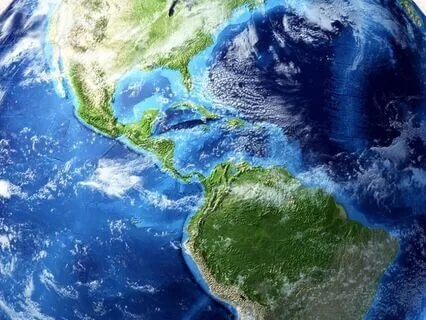
And those swimming in the seas of this beautiful blue planet.
That we're all breathing together.
Sensing that your breath is part of this vast web of living things at this moment.
What's in our minds with the rhythm of the breath,
And particularly what is hard right now.
Looking to the world for what's difficult right now.
It might be conflict,
Or hunger,
Or natural disasters,
Or any other sufferings.
Just having those images arise,
Of closing down,
Or turning away.
Just relaxing and opening.
Breathing them through you.
You can imagine a stream of air,
A ribbon of air.
It's traveling through your mouth,
Into your lungs,
Through your heart.
Breathing through these images of turmoil or pain,
Wherever they may be.
They all move through this ribbon without clinging to them.
Not holding on to our grief,
But letting it flow through you.
Whatever images are most powerful for you right now,
Just letting them flow through this healing web of life,
Of all creatures breathing together.
Maybe there are no images there as you breathe in.
If you feel some emptiness or numbness,
Then breathing that through also.
Breathing numbness through your heart,
Because it's a part of this world.
There could be some suffering in your own life,
And you breathe that truth through your body,
Through your heart,
And then out.
It can bring some sense of discomfort or tension within the body.
But just feel that heaviness,
And remember your heart will just allow to travel through you,
Back out.
Allow the beautiful images,
Too,
Of the world to travel through you.
The power of the goodness of other beings.
You can breathe through that,
Too.
Feeling how intimately we belong to each other,
And how close we are connected in this great breathing web of life,
Stretching out from one end of the world to the other.
You can place a hand on your heart space,
In the center of your chest,
And you're able to feel a vibration there as you breathe out.
And I invite you together,
As you breathe out,
You can breathe out with a sound of a hum,
Or an ohm,
Or a home.
And just dropping from your head to your heart space,
And feeling your whole body vibrate,
And feel this relaxation,
This balance with this sound wave of connectedness.
So together,
Breathing in from your belly,
Feeling your chest expand,
And as you breathe out,
Adding this sound together.
And again,
When you're ready,
Breathing in,
Expanding the chest,
And breathing out.
One more time,
A soft belly,
Opening throughout your whole body,
Breathing in,
And then out.
You can let your breath return to a natural rhythm,
Allowing yourself to feel more spacious.
And as you're ready,
You can come gently back.
In your own time,
You can open your eyes,
You can welcome the visual field back in.
About 10 years ago,
In my meditation teacher training out in California,
With Jack Cornfield and Tara Brock,
There were several other instructors who joined them,
And one in particular stood out.
She was far older than any of the other instructors at that time.
She was in her late 80s.
She had a somewhat frail voice,
Just a small stature,
Deep wrinkles in her face,
But from the moment she spoke,
You could feel this energy fill the room.
She was on fire,
With her passion,
With her authenticity,
With her wisdom.
You felt like jumping to your feet as you're listening to her speak.
And I honestly never heard anything like it from a meditation teacher.
That woman was Joanna Macy,
And she died last month at the age of 96,
And was teaching almost up until then.
And so tonight I'd like to dedicate our session together to her,
To Joanna,
And provide for you some of her teachings which have really deeply influenced me,
And also give you a taste of some of the sort of meditations that she would lead.
She grew up in a Christian household.
As a young person,
She felt that God and Jesus were very much alive for her.
She had decided that she wanted to give her life to service in the church.
She was thinking of being a missionary in some distant land,
But as she began to study Christian doctrine,
She was struck by its sense of exclusivity.
That some people were on the inside,
Some people were on the outside,
And she could not abide by this.
She felt that she eventually had to leave the church and find her own way.
So she gets married,
Goes to college,
She gets married.
In 1956 she travels with her husband to Germany,
Where he's working for Radio Free Europe,
And then one day in Germany she wanders into a bookstore,
And she sees a small book of poems,
And she opens the book.
It's the Book of Hours by Rainer Maria Rilke.
And her eyes fell on the second poem,
Eight short lines,
And they are as follows.
I live my life in widening circles that reach out across the world.
I may not complete this last one,
But I give myself to it.
I circle around God,
Around the primordial tower I've been circling for thousands of years,
And I still don't know.
Am I a falcon,
A storm,
Or a great stone?
And she later describes this encounter with this poem this way.
She says,
Something in the poem immediately rearranged the furniture of my mind.
I identified completely with it.
I had been wishing that I were on a spiritual path,
And the constrictions of my culture had made,
The constrictions of my culture that had been made of the sacred just fell away like dry crusts,
And I felt an excitement about being alive because my world was sacred.
And maybe I'll read the poem just once more,
Too.
I live my life in widening circles that reach out across the world.
I may not complete this last one,
But I give myself to it.
I circle around God,
Around the primordial tower I've been circling for thousands of years,
And I still don't know.
Am I a falcon,
A storm,
Or a great song?
She goes on to be a translator of Rilke into English,
And you can still find her translations.
They're quite popular,
Published to this day.
So the 1960s,
She moves to India this time with her husband who now works for the Peace Corps,
And there she spent her time helping the Buddhist monks who were fleeing Tibet into India during that period,
And they struck her.
She said what was most notable was how calm and radiant and unstoppable they were,
Living there in very harsh circumstances at the footholds of the Himalayas,
And after suffering great privations and sickness,
Making their escape across the peaks from Tibet,
But still loving life in a very open-hearted way,
And I wanted to know what helps them to be like that.
They teach her meditation,
And she begins to study Buddhism,
And she goes on to get a PhD in Buddhism and in systems theory,
That interconnection between systems in the world and answering the question of what allows us to change.
Fast forward again,
The 1970s.
She's living in Boston,
And she goes to a symposium that was organized by the Cousteau Society,
Jacques Cousteau,
If you remember back,
The underworld,
The underworld of Jacques Cousteau,
The underworld sea,
The sea,
I can't remember the name of it.
Thank you,
Okay.
Anyway,
So it is,
I think,
At the Coliseum in Boston,
And it's filled with exhibits,
One after another,
And talks and information on all of the threats to the planet.
This was really the beginning of the environmental movement in the United States,
And she's heading home from,
On the train from this day,
And she bursts into tears,
And she withdraws from family and friends,
And rejects all efforts to cheer her up.
She's inconsolable with what's happening to the earth.
And she goes to a psychiatrist for help.
I think he was a Freudian,
Who responded that she had a problem with her libido,
And focus in particular,
She was recounting a film she had seen about these bulldozers destroying a forest.
And so he commented to her that he,
He thought that the bulldozer indicated a problem with her sexual drive.
So soon after this experience,
She begins to lead workshops in what she calls despair work,
That allows participants to explore and feel this anxiety about what's happening to the earth,
The fate of the earth,
And to find ways to positively channel this energy.
And this really lays the groundwork for what becomes her life work,
Which is to integrate Buddhist teachings to chart a path through this crisis that she feels so deeply.
The Work That Reconnects,
This becomes the title of her great projects.
And she basically spends the next 40 years teaching the Work That Reconnects,
Writing and organizing.
And I'll just pause to say that,
You know,
This is for me,
As a student of Buddhism myself,
It's really so fascinating how Buddhism has come to the West and enculturated itself here with us,
And in so many different,
Diverse,
Creative,
Engaged ways.
The British historian Alfred Toynbee remarked that one of the most important events of the 20th century was Buddhism's encounter with the West.
And I think we just continue to see this with so many different Buddhist teachers,
You know,
Exploring what these teachings mean for us.
So I'm going to give you a little bit of a sample of the Work That Reconnects,
Sort of what this was that she taught.
And then after the talk,
I'll circulate a lot of materials also for you online that you could explore if you're interested.
First step,
Opening to gratitude.
So this is all from Joanna Macy.
How rare it is that there's life on this planet,
Where we are in the universe,
That what are the chances,
They're like one in a trillion,
That a planet has life on it,
And that this planet is so beautiful.
How did we manage that,
She asks.
And more than that,
That we're born into this incredible ecosystem that supports life,
Supports each one of us in this very interconnected way on our planet,
Starting with the air that we breathe that's provided by the trees and plants,
And then the air that we exhale is used for them to live.
And that it's all connected,
And not in some sort of mystical schmistical way that we're all connected,
But we're actually connected,
Literally connected in the way in that we live.
She liked to recite this short poem by the Zen master Thich Nhat Hanh,
Being rock,
Being gas,
Being mist,
Being mind,
Being atoms,
Traveling among galaxies at the speed of light,
You come here,
My beloved,
You have manifest yourself as trees,
Grass,
Butterflies,
Single-celled beings,
And chrysanthemums.
So on top of that,
She says,
We are self-conscious beings,
Unlike other creatures,
We are self-conscious.
And that this awareness that we have is not limited by our skin,
That allows us to connect with other people in this very direct way,
Experiencing emotions,
Experiencing empathy,
Experiencing anger,
Experiencing compassion with other people in the world.
And then on top of that,
If that's not enough,
She says that Buddhism teaches that the human form is far superior than any other,
Because only humans can actually change karma,
Which I'll talk about a little bit later.
So that means that the ability to reflect,
And to choose,
And make decisions,
And to change course,
This is something that humans can do,
And only humans.
So she says in this great,
In this great work that reconnects,
That action does not arise from desperation or anger,
But it arises from thankfulness for life.
Quoting her,
The great open secret of gratitude is that it's not dependent on external circumstances.
It's a channel that we can switch on at any moment,
No matter what's around,
It builds on a sense of sufficiency in the world that is quite subversive to the consumer economy.
Sufficiency.
And she has these two central metaphors.
One is world as lover.
That you simply fall in love with this world of ours.
And it also rejects the idea that in order to do this work,
That you have to be enlightened first before you can go out and act.
And that in fact,
The two things happen together.
That action is teamed with this awakening.
Awakened mind is teamed with awakened action.
The two require each other.
And the second metaphor,
World as self.
That,
She says,
Lovers seek union.
And so we find that we belong to the earth that is as close as our own body.
Second step.
Honoring our pain for the world.
Another quote,
Between the beauty of this world and the knowledge of what we are doing to it comes a luminous and almost unbearable grief.
This knowledge of the warming planet or the rising oceans,
The fires,
The floods.
And she says,
What's our reaction?
She says,
Outrage and pain.
Because she says that you're tapping into this sense of a protector.
That this wild love for the world motivates you to go out and protect it.
She counsels,
It's gonna hurt like hell,
But without driving you crazy.
And she criticizes environmental organizations,
Because she says they often try to scare people into action.
And they often have the opposite effect.
She says,
You need to hear the voice from within,
This interconnectivity with the earth that is hurting.
And she also quotes Thich Nhat Hanh again,
Who liked to say,
When asked what we should do about the ecological crisis,
What we most need to do is hear within us the sound of the earth crying.
She would often quote from Rilke again,
Quiet friend who has come so far.
Feel how your breathing makes more space around you.
Let this darkness be a bell tower,
And you a bell.
As you ring,
What batters you becomes your strength.
And she does focus on this idea of karma,
Which in Buddhism,
I think is often misunderstood to be sort of a determinism,
That everything has its causes,
Its conditions,
Anything that happens,
You can trace back to a bunch of things that happened before that.
But that in its true sense,
Is really the opposite,
That the future is open to us in that we create it,
We have the power,
We have the authority as these conscious beings to change through our action or inaction,
The course of the future.
Next step,
Seeing with new eyes.
So she says this is not trying to make people think they're going to sacrifice or be nicer to each other,
But rather to protect and care for this living thing,
The earth of which we're a part.
And one of the exercises she uses is something we'll try together.
Very simple.
And if you feel comfortable,
You can close your eyes.
This is a short one.
You can just close your eyes for a moment.
And you can just breathe just a couple cleansing breaths.
Center yourself.
And then imagine that your your parents are standing behind you.
And their parents behind them.
And your great grandparents are standing behind them.
And watch these generations grow.
As you get to seven generations,
There are 200 people standing behind you.
And you get to 10 generations.
And now there are 2000 people standing behind you.
And then you to the dawn of time,
And all generations that your life depends on.
Extending further to all species,
All beings.
Everything has interacted to allow this world to thrive and support you over four and a half billion years.
And all the living beings that have together made this world as you know,
Impossible.
And you,
As part of this beautiful process that created you.
And before you,
You can imagine your child or child you love,
Standing in front of you.
And you can see their child,
Their grandchildren,
In front of them.
Extending out seven generations in front of you,
And then beyond.
So we are the inflection point between all that ever was,
All that will be.
What we can do,
We do for those who come next.
You might imagine that we are the generation that turns things around in the future generations,
Looking back in admiration for what we did.
Seeing with new eyes.
And the last,
The work that reconnects is going forth.
She says that another world is possible.
In fact,
You can see it,
You can already see it taking place.
And she says it has three parts.
One,
Holding actions,
This activism to stop the harm that's going on.
And then second,
Structural change.
And then third,
Shift in consciousness.
And here's one more poem by Rilke that she often recited in this regard.
God speaks to each of us as God makes us,
And then walks us silently out of the night.
These are the words we dimly hear.
We send out beyond your recall,
Go to the limits of your longing.
To the limits of your longing.
So before the final meditation,
I'll just add one other piece,
Which is from her root teacher in Tibet,
Who she kept throughout the rest of her life.
He,
After hearing about her work in the ecological crisis,
Told her of something that's called the Shambhala warrior prophecy.
And Shambhala in the Tibetan culture was this mythical realm of harmony or well-being.
You can sort of Shangri-La.
So this mythical realm.
And so the prophecy she was given is this.
There comes a time where life on earth is in great danger,
And the kingdom of Shambhala emerges.
It's not a place you can go,
But something that exists in the hearts and minds of Shambhala warriors.
The time comes when great courage is required of Shambhala warriors,
Loyal courage and physical courage,
Because they're going into the heart of the barbarian powers to dismantle their power,
Dismantle their weapons of destruction.
No,
These weapons can be dismantled because they are made by the human mind.
They're created by our relationships,
Our habits,
Our choices.
So now is the time for Shambhala warriors to go into training.
They train with the use of two implements or tools.
One is insight into the radical interdependence of all phenomena.
And the other is compassion,
Because it provides the fuel to move you on,
To do what you need to do.
Not being afraid of the suffering of your world.
This is not a battle between good people and bad people.
You know that we are all interwoven.
But even our smallest acts have repercussions that ripple through the web of life beyond our capacity to discern.
So I'd like to do a final meditation with you.
And this will also kind of set the stage for our discussion.
And so we can do this if you're comfortable with eyes closed,
Or again,
Find a neutral place to gaze.
For the prompts for this,
So what we'll do is we'll do the meditation.
Afterwards,
I'll have some time where you can actually write to recollect what your reaction is.
I brought some,
Some pads and pens for those who don't have a phone to take notes on them.
And to take some notes for yourself.
But so don't worry,
Don't worry about sort of trying to capture all this because I'll have some prompts afterwards.
So right now,
You can just kind of,
Again,
Relax into this meditation.
You can close your eyes if you feel comfortable doing so.
And what I'd like you to do is to think for yourself what it would look like if this work that reconnects were to be wildly successful.
If there were a fundamental shift in consciousness regarding how we live on this earth with each other.
Can we imagine what a different world would look like?
You begin feeling into your body,
Feeling your feet on the floor.
You can feel the earth supporting the building on which your feet rest.
And then you can zoom out to look over the world of the oceans and continents.
Viewing the world from space and then coming back to where you live to your home.
What does it feel like in this different world to wake up in the morning?
What foods are you eating?
Who else lives with you and around you?
How do you relate?
What is your neighborhood look like?
How do children,
Elders relate?
What kind of work are you doing in this just and life-sustaining world?
What does it feel like to do this work?
What's your place,
Your role in your community?
What is creativity,
Celebration look like in your community?
What makes life beautiful?
And how do you enjoy each other in your company?
Now,
Looking to the broader community,
Your city,
Your state,
How do people relate to one another here?
How do they interact?
How are their needs met for food,
For clothing,
For transportation?
How are people of different races,
Ages,
Genders,
Abilities,
Treated?
How do people relate to nature,
To the plants,
The soils,
The water?
How do others justly and sustainably meet their needs?
How do you resolve conflict?
Zooming out further,
How do you know love and think of people beyond the borders of your country?
How does it feel to live in this world?
And what do the people of this world regard as progress?
So there's no right or wrong way to feel.
Just taking your own individual journey.
And as you get ready,
You can come gently back.
So if you don't want to take notes on your phone.