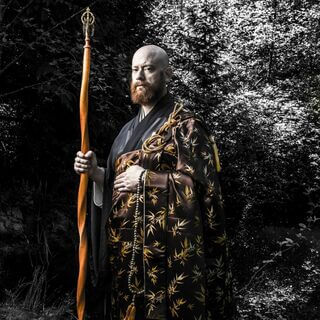
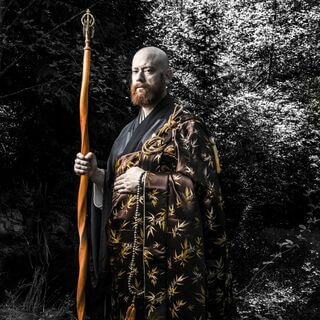
So what's with all this form?
What's with all the black clothes and the shaved heads?
What's with all that?
For those of you that have been coming for a few weeks,
I'm just going to be sort of picking up.
And for those of you who are brand new,
I think you all look smart enough to keep up.
So we'll just continue on.
One of the things that I often talk about when we come to practice is grasping an understanding,
Grasping an experience of both sides of this experience,
Both sides of this activity of the universe,
The unfolding Dharma activity.
For most of us,
When we walk through our lives,
When we walk through this world,
We look at things in terms of subject and object.
I am me,
And me is all of these things that I take to be inside of this body.
This collection of thoughts and emotions,
Feelings and sensations,
And beliefs and ideas and preferences and aversions,
And all of the things that we bind up together and we call me.
The things that we define as who I am.
And we place this in opposition to everything else in this vast universe,
Everything else around us.
So we have this difference between what's in here and what's out there.
And that's how we go through our lives.
That's how we perceive things.
That's how we look at things.
Now Buddhism teaches us that this perspective is okay.
This is the one side of things.
This is how we come to know the difference between helpful and unhelpful,
Skillful and unskillful.
How we know the difference between a flower and a tree and a mountain and an ocean.
It's helpful.
But if we take this as being the complete picture of the universe,
We find that we place ourselves in a position which is bound to create anguish,
Suffering.
Because when we take this mass,
This collection of thoughts and ideas,
This thing that we call a self,
And we define it,
We limit it,
We encapsulate it and call it me,
Then necessarily we find that this me is incomplete.
We can look from this position of I am at things around us and we can say,
Oh,
If only I just had a little bit of that.
And in fact,
We live in this wonderful world where we're constantly being told all of the things that we just need to have a little bit of to be that much more complete.
This sensation of being cut off,
This practice of naming ourselves and putting ourselves in this container that we call I,
Is the source of this feeling of emptiness.
And not Buddhist emptiness I'm talking about.
Here I'm talking about this feeling of incompleteness or lack.
Poverty.
So Buddhism teaches us that there is this other side,
That there is this other side of this experience of the universe,
This experience of the activity of the Dharma,
Which is somewhat different.
By letting go of these ideas,
These emotions,
These habits,
By letting go of this concept that we have of ourself as being fundamentally separate and outside of this world,
Of this universe,
We can come to not only know,
Not only grasp this concept,
But to experience completion,
True completion,
Unification.
In Buddhism it's called all kinds of great things.
You can come to experience the origin,
Shunyata,
Emptiness,
Unconditional love.
Some people even might call this experience God.
But in this manifestation of unconditional completeness,
Zero,
As one of my teachers called it,
There is nobody to call it anything.
There is nothing to be called anything.
Just this.
So how is it that we realize this?
How is it that we experience this?
How is it that we arrive in this manifestation of unconditioned love?
Well,
We've got to practice.
What we don't acknowledge,
What we don't recognize,
Is that this holding up of self,
This unconditional acceptance of the existence of the fixed and permanent and separate self,
Is not something that we come by just naturally.
It's something that actually we practice.
From the very moment that we are born,
We begin to practice this identification,
This diversification,
This bifurcation into things that we find pleasant and comfortable,
And things that we find unpleasant,
Uncomfortable.
The things that we want to go towards,
Thinking that it will make us more,
And the things that we want to avoid,
Thinking that somehow they will make us less.
These practices that we engage in,
Everything that we do in Zen practice,
Is aimed at unlearning,
Is aimed at undoing,
Is aimed at opening this hand that grasps the self,
That hangs on to this idea of a self that is separate,
That is cut off,
That is distinct from everything else in this universe.
We manifest this in all kinds of different ways.
The way that we walk into a room,
We find that some people who want to practice,
They get put off.
We say,
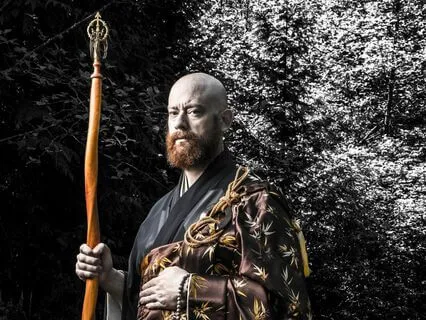
The first thing you have to do if you come to the Victoria Zen Center,
Is you have to get yourself this set of black pajamas that everybody's wearing.
Some people say,
Oh,
I'm not going anywhere,
I have to wear that kind of stuff.
Why?
In order to put on this gi,
In order to put on this nondescript black uniform,
We have to let go of a whole bunch of ourselves.
We have to recognize that throughout our lives we have defined our style,
How we like to dress,
The kind of jewelry that we like to wear,
The kind of perfumes,
Scents,
Haircuts,
All this kind of stuff,
That we use to more and more clarify,
More and more define me,
I.
So from the very moment that we begin practice,
This simple stepping back,
This simple opening our hand and letting go of this division,
This idea of me,
Has to start to take place.
This resistance,
This fixation with the self comes up over and over and over again in Zen practice.
It's almost as if Zen,
The form of Zen practice,
Was designed intentionally,
On purpose,
To grind us up against this fixation with self over and over and over and over again.
It drives people crazy how many times we find this sharp corner where,
I don't want to do that,
That makes me uncomfortable.
And the truth is,
That's exactly how the practice was designed.
That's exactly how the practice evolved over time.
More and more ways of finding the sticking point,
The place where we grasp on out of fear and desperation,
Where we hang on to the self and we say,
Ah!
I don't want to die!
And the form encourages us over and over and over again to let go.
One of the first disciples of the Buddha,
In the first discourse that the Buddha gave,
Had a great realization and he expressed this realization very simply.
He said,
That which is of the nature to be born,
Is of the nature to die.
Very simple.
Seems obvious.
But we can grasp this conceptually.
We can understand this in our minds.
We can even look around us and see the people,
The plants,
The animals,
The buildings,
The mountains.
Ah,
Yes!
That which is of the nature to be born,
Is of the nature to die.
But,
Somehow,
We so often give ourselves this get-out-of-death-free card,
At least mentally.
This thing that we call a self,
We somehow assume or turn a blind eye to the fact that it is also subject to being born,
Arising,
Existing for a time,
Declining,
Dissolving altogether.
This practice that we engage in is to embrace this activity,
To become aware of this activity in each moment.
We're instructed right from the beginning to pay attention to the breath.
And this breath is nothing other than this activity of arising,
Being born,
Existing for a time,
Turning,
Dissolving,
Disappearing,
Turning,
Being born,
Arising,
Existing,
Dissolving,
Disappearing.
When it comes time to chant,
We again experience this resistance,
The arising of the distinct self that wants itself,
That wants to hold itself apart from the activity of this moment.
I don't want to chant.
How do I sound?
What will people think of me?
What's this nonsense I'm chanting anyway?
And we find that when we embrace this distance,
It's very difficult to chant.
Something is happening in this moment,
And we can't be a part of it.
But in a single moment,
When we let go of that grip on who it is that we think we are,
We find that without effort,
We can meet the activity that we're engaged in.
We become the chanting.
When it comes time to bow,
Again,
Subjective self arises and says,
What is this bowing?
I don't know if I want to do that.
And it becomes a strange and unwieldy thing.
And then,
Letting go,
We find we are able to slip in like a gold medal diver without making a splash into the activity that we're engaged in.
Walking meditation,
Walking in step,
Close behind,
Making relationship with the complete activity of this universe,
Manifesting as the activity of walking.
When we fixate ourselves and hold ourselves apart from,
It's very difficult to stay in step,
Very difficult to stay connected with the person in front of us.
Letting go.
Without effort,
We are able to make relationship,
To manifest as the activity of this universe,
Walking.
The practice is not about being perfect the entire time.
It's not about always just walking when we're walking,
Or just breathing as we're breathing,
Just chanting as we're chanting.
Developing awareness as we continue practice,
We become aware of the activity of plus and minus.
We become aware of the manifestation of self arising,
Distance,
Separation,
Distinction arising.
We become aware of this distance dissolving,
Of subject and object embracing,
Unifying,
Becoming one.
Then again,
Subject and object are born.
Over and over again,
This practice allows us to witness this activity.
What creates suffering,
What creates difficulty for us,
Is that no matter who we are,
We are always looking for this place of rest.
We're looking for this place of stopping.
We're looking for an object,
Whether that's a self,
Or whether that's a career,
Or whether that's a relationship.
We're looking for a solid,
Fixed object that we can hold on to,
Where we can say,
Ah,
Done.
No matter where we look for it,
We cannot find it.
What we're doing when we engage in this practice is witnessing that this experience that we call life,
That the activity of the Dharma,
Is first and foremost activity.
There is no resting place.
When we become aware of our thoughts,
When we become aware of our activities and relationships,
We can become more and more aware of this seeking for the resting place.
And as we continue to practice,
What we are practicing is letting go,
Letting go of the idea of the stopping point.
We let go into the activity of this universe unfolding before us in this very moment.