This is SD Hudson Magic.
Jane Eyre.
Chapter Four.
From my discourse with Mr.
Lloyd,
And from the above-reported conference between Bessie and Abbott,
I gathered enough of hope to suffice as a motive for wishing to get well.
A change seemed near.
I desired and waited it in silence.
It tarried,
However.
Days and weeks passed.
I had regained my normal state of health,
But no new illusion was made to the subject over which I brooded.
Mrs.
Reed surveyed me at times with a severe eye,
But seldom addressed me.
Since my illness,
She had drawn a more marked line of separation than ever between me and her own children,
Appointing me a small closet to sleep in by myself,
Condemning me to take my meals alone and pass all my time in the nursery,
While my cousins were constantly in the drawing room.
Not a hint,
However,
Did she drop about sending me to school.
Still,
I felt an instinctive certainty that she would not long endure me under the same roof with her,
For her glance,
Now more than ever when turned on me,
Expressed an insupportable and rooted aversion.
Eliza in Georgiana,
Evidently acting according to orders,
Spoke to me as little as possible.
John thrust his tongue in his cheek whenever he saw me,
And once attempted chastisement,
But as I instantly turned against him,
Roused by the same sentiment of deep ire and desperate revolt which had stirred my corruption before,
He thought it better to desist,
And ran from me uttering execrations and vowing I had burst his nose.
I had indeed levelled at that prominent feature as hard a blow as my knuckles could inflict,
And when I saw that either that or my look daunted him,
I had the greatest inclination to follow up my advantage to purpose.
But he was already with his mama.
I heard him in a blubbering tone commence the tale of how that nasty Jane Eyre had flown at him like a mad cat.
He was stopped rather harshly.
Don't talk to me about her,
John.
I told you not to go near her.
She is not worthy of notice.
I do not choose that either you or your sisters should associate with her.
Here,
Leaning over the banister,
I cried out suddenly and without at all deliberating on my words,
They are not fit to associate with me.
Mrs.
Reed was rather a stout woman,
But on hearing this strange and audacious declaration,
She ran nimbly up the stair,
Swept me like a whirlwind into the nursery,
And crushing me down on the edge of my crib,
Dared me in an emphatic voice to rise from that place or utter one syllable during the remainder of the day.
What would Uncle Reed say to you if he were alive,
Was my scarcely voluntary demand.
I say scarcely voluntary,
For it seemed as if my tongue pronounced words without my will,
Consenting to their utterance.
Something spoke out of me which I had no control.
What?
Said Mrs.
Reed under her breath.
Her usually cold,
Composed grey eye became troubled with a look like fear.
She took her hand from my arm and gazed at me as if she really did not know whether I were a child or a fiend.
I was now in for it.
My Uncle Reed is in heaven and can see all you do and think.
And so can Papa and Mama.
They know how you shut me up all day long and how you wish me dead.
Mrs.
Reed soon rallied her spirit.
She shook me most soundly,
She boxed both my ears,
And then left me without a word.
Bessie supplied the hiatus by a homily of an hour's length,
In which she proved beyond a doubt that I was a most wicked and abandoned child ever reared under a roof.
I half believed her,
For I felt indeed only bad feelings surging in my breast.
November,
December and half of January passed away.
Christmas and the New Year had been celebrated at Gateshead with a usual festive cheer.
Presents had been interchanged,
Dinners and evening parties given.
From every enjoyment I was,
Of course,
Excluded.
My share of the gaiety consisted in witnessing the daily apparelling of Eliza and Georgiana,
And seeing them descend to the drawing room,
Dressed out in thin muslin frocks and scarlet sashes,
With hair elaborately ringleted.
And afterwards in listening to the sound of the piano or the harp played below,
To the passing to and fro of the butler and footman,
To the jingling of glass and china as refreshments were handed,
To the broken hum of conversation as the drawing-room doors opened and closed.
When tired of this occupation,
I would retire from the stairhead to the solitary and silent nursery.
There,
Though somewhat sad,
I was not miserable.
To speak truth,
I had not the least wish to go into company,
For in company I was very rarely noticed,
And if Bessie had but been kind and companionable,
I should have deemed it a treat to spend the evening quietly with her,
Instead of passing them under the formidable eye of Mrs.
Reed in a room full of ladies and gentlemen.
But Bessie,
As soon as she had dressed her young ladies,
Used to take herself off to the lively regions of the kitchen and housekeeper's room,
Generally bearing the candle along with her.
I then sat with my doll on my knee till the fire got low,
Glancing round occasionally to make sure nothing worse than myself haunted the shadowy room.
And when the embers sank to a dull red,
I undressed hastily,
Tugging at knots and strings as best I might,
And sought shelter from cold and darkness in my crib.
To this crib I always took my doll.
Human beings must love something,
And in the dearth of worthy objects of affection,
I contrive to find a pleasure in loving and cherishing a faded,
Graven image,
Shabby as a miniature scarecrow.
It puzzles me now to remember with what absurd sincerity I doted on this little toy,
Half fancing it alive and capable of sensation.
I could not sleep unless it was folded in my nightgown,
And when it lay there safe and warm,
I was comparatively happy,
Believing it to be happy likewise.
Long did the hour seem while I waited the departure of the company,
And listened for the sound of Bessie's step on the stairs.
Sometimes she would come up in the interval to seek her thimble or her scissors,
Or perhaps to bring me something by way of supper,
A bun or a cheesecake.
Then she would sit on the bed while I ate it,
And when I had finished she would tuck the clothes around me and twice she kissed me and said,
Good night Miss Jane.
When thus gentle,
Bessie seemed to me the best,
Prettiest,
Kindest being in the world,
And I wish most intensely she would always be so pleasant and amiable,
And never push me about or scold or task me unreasonably as she was too often wont to do.
Bessie Lee must,
I think,
Have been a girl of good natural capacity,
For she was as smart as anything she did,
And had a remarkable knack of narrative.
So at least I judge from the impression made on me by her nursery tales.
She was pretty too,
If my recollections of her face and person are correct.
I remember her as a slim young woman,
With black hair,
Dark eyes,
Very nice features and good clear complexion.
But she had a capricious and hasty temper,
And indifferent ideas of principle or justice.
Still,
Such as she was,
I preferred her to anyone else at Gateshead Hall.
It was the 15th of January,
About nine o'clock in the morning.
Bessie was gone down to breakfast.
My cousins had not yet been summoned to their mama.
Eliza was putting on her bonnet and warm garden coat to go and feed her poultry,
An occupation of which she was fond,
And not less so of selling the eggs to the housekeeper and hoarding up the money she thus obtained.
She had a turn for traffic,
And a marked propensity for saving,
Shown not only in the vending of eggs and chickens,
But also in driving hard bargains with a gardener about flower roots,
Seeds and slips of plants.
That functionary having orders from Mrs.
Reed to buy of his young lady all the products of her parterre she wished to sell.
And Eliza would have sold the hair off her head if she could have made a handsome profit thereby.
As to her money,
She first secreted it in odd corners,
Wrapped in a rag or an old coal paper.
But some of these hoards,
Having been discovered by the housemaid,
Eliza,
Fearful of one day losing her valued treasure,
Consented to entrust it to her mother,
At an assurious rate of interest,
Fifty or sixty percent,
Which interest she exacted every quarter,
Keeping her accounts in a little book,
With anxious accuracy.
Georgiana sat on a high stall,
Dressing her hair at the glass,
And interweaving her curls with artificial flowers and faded feathers,
Of which she had found a store in a drawer in the attic.
I was making my bed,
Having received strict orders from Bessie to get it arranged before she returned,
For Bessie now frequently employed me as a sort of under-nursery maid,
To tidy the room,
Dust the chairs,
Etc.
Having spread the quilt and folded my night-dress,
I went to the window-seat to put in order some picture-books and doll's-house furniture scattered there,
An abrupt command from Georgiana to let her play things alone,
For the tiny chairs and mirrors,
The fairy plates and cups,
Were her property,
Stopping my proceedings.
And then,
For lack of other occupation,
I fell to breathing on the frost-flowers with which the window was fretted,
And thus clearing a space in the glass,
Through which I might look out to the grounds,
Where all was still and petrified under the influence of a hard frost.
From this window were visible the porter's lodge and the carriage road,
And just as I had dissolved so much of the silver-white foliage veiling the panes,
As left room to look out,
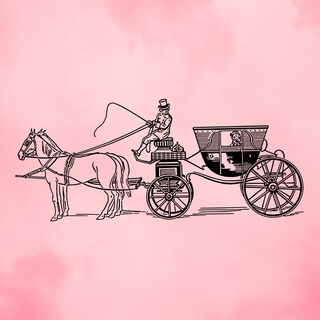
I saw the gates thrown open,
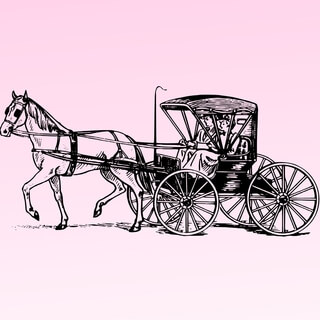
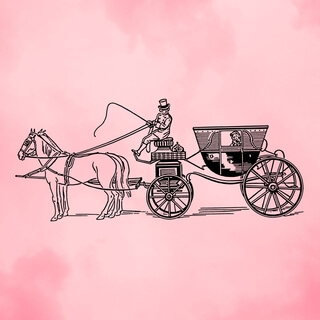
And a carriage roll through.
I watched it ascending the drive with indifference.
Carriages often came to Gateshead,
But none ever brought visitors in whom I was interested.
It stopped in front of the house.
The door-bell rang loudly,
The newcomer was admitted.
All this being nothing to me,
My vacant attention soon found lively attraction in the spectacle of a little hungry robin,
Which came and chirruped on the twigs of the leafless cherry tree,
Nailed against the wall near the casement.
The remains of my breakfast and bread and milk stood on the table,
And having crumbled a morsel of roll,
I was tugging at the sash to put out the crumbs on the windowsill,
When Bessie came running upstairs into the nursery.
Miss Jane,
Take off your pinafore.
What are you doing there?
Have you washed your hands and face this morning?
I gave another tug before I answered,
For I wanted the bird to be secure of its bread.
The sash yielded,
I scattered the crumbs,
Some on the stone sill,
Some on the cherry tree bough.
Then closing the window,
I replied.
No,
Bessie,
I've only just finished dusting.
Troublesome,
Careless child!
And what are you doing now?
You look quite red as if you've been out for some mischief.
What were you opening the window for?
I was spared the trouble of answering,
For Bessie seemed in too great a hurry to listen to explanations.
She hauled me to the washstand,
Inflicted a merciless but happily brief scrub on my face and hands with soap,
Water and a coarse towel,
Disciplined my head with a bristly brush,
Denuded me of my pinafore and then hurrying me to the top of the stairs,
Bid me go down directly,
As I was wanted in the breakfast room.
I would have asked who wanted me.
I would have demanded if Mrs Reed was there.
But Bessie was already gone and had closed the nursery door upon me.
I slowly descended.
For nearly three months I had never been called to Mrs Reed's presence.
Restricted so long to the nursery,
The breakfast,
Dining and drawing rooms would become for me an awful region on which she dismayed me to intrude.
I now stood in the empty hall.
Before me was the breakfast room door and I stopped,
Intimidated and trembling.
What a miserable little poltroon had fear,
Engendered of unjust punishment,
Made of me in those days.
I feared to return to the nursery,
I feared to go forward to the parlour.
Ten minutes I stood in agitated hesitation.
The vehement ringing of the breakfast room bell decided me.
I must enter.
Who could want me?
I asked inwardly,
As with both hands I turned the stiff door handle,
Which for a second or two resisted my efforts.
What should I see besides Aunt Reed in the apartment?
A man or a woman?
The handle turned,
The door unclosed,
And passing through and curtsying low,
I looked up.
A black pillar.
Such at least appeared to me at first sight.
The straight,
Narrow,
Sable-clad shape,
Standing erect on the rug.
The grim face at the top was like a carved mask,
Placed over the shaft by way of capital.
Mrs Reed occupied her usual seat by the fireside.
She made a signal to me to approach.
I did so,
And she introduced me to the stony stranger with the words,
This is the little girl respecting whom I applied to you.