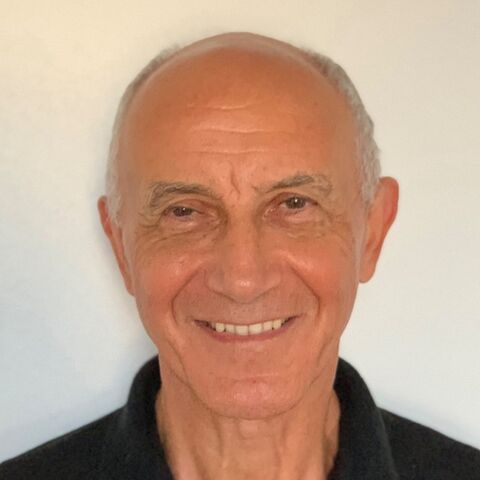
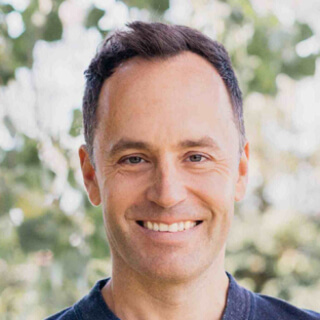
Hi,
Kristen.
Hi,
How are you?
Good,
Good.
So today we're going to be talking about fear.
And to the outside eye,
Somebody who knows your biography,
At least the early years,
It would seem you're just about the least qualified person to talk about fear.
Ha ha,
Least qualified.
I assume that you're being facetious.
I'm being facetious in the sense that you have been described as the best extreme skier,
The best extreme sports person.
And that would be,
At least in ordinary language,
In ordinary perception,
The ability to not feel fear.
And yet here you are talking about embracing fear.
Yes.
I would say that my background and what gives me the right to talk about fear is a few things,
Three things.
First of all,
That I used to be called fearless,
That I was a professional big mountain extremes skier,
Best in the world for 12 years,
Was considered fearless by the outdoor industry,
All that,
For a decade and a half.
And then the second thing is I spent 15 years studying with a Zen master since I retired in 2003.
So I guess that would be 14 years.
And I have been just dissecting and unraveling my experience with fear during my professional skiing career,
But also just dissecting it in my own life in general.
And then with,
And this is the third credential,
Thousands and thousands of clients.
I've facilitated so many people just helping them have a more healthy,
Conscious relationship with fear.
And so I have a lot of experience since retiring as an athlete,
Just exploring around this huge subject.
Yeah.
Yeah.
So the big topic is actually that it's not about having no fear,
But having a different relationship with fear.
Yeah.
It's not possible to have no fear.
Even people that don't feel afraid,
Definitely fears there.
They just don't realize it.
It's coming out in ways that are not obvious to them or to those around them.
And so would you maybe describe some of the things you've done under the sense of having no fear and then realizing there was fear.
And one thing I have in mind that in reading your book was a moment where a photographer dared you in Squaw Valley to do something that seemed absolutely impossible.
And it's very interesting to describe,
Maybe to share some of what happened inside during and afterwards.
What you're referring to is one of my many cliff jumps.
And I made a living,
Of course,
Risking my life on skis for 15 years.
And I jumped off a lot of cliffs.
And that's not necessarily a threat to your life.
It's definitely a daring feat.
And people that jump off cliffs on skis,
We've all seen the videos.
They look like they don't have any fear.
They definitely seem stoic about it.
They seem like they're having a really good time.
Really what they're doing is they really enjoy feeling fear.
And I would say that the more dangerous things that I did,
Though,
Were skiing you fall,
You die descents.
Like,
I definitely put my neck out like skiing the first descent of the Grand Teton,
Where if you fall,
You die.
And,
You know,
Keep in mind,
We're skiing on like 55 degree icy slopes,
And it's really hard not to fall,
You know?
And I don't think that people really understand in extreme sports the level of risk that we take,
Where the consequences of failure is death.
And so I have this long history of having to make the right decisions with regard to fear or else I was going to die.
And what I felt back then was I just didn't feel any fear.
I felt very stoic and totally in control of that part of my,
That emotional part of my life.
And what I didn't realize was beneath all this was fear of not being special,
Fear of being invisible,
Fear of not being loved.
I mean,
That's the whole reason why I was doing these things.
And then the other thing that I realize now and reflecting back on my ski career is that the fear was the draw.
Like that was the reward.
The reason why I went and did all these cliff jumps and you fall,
You die descents is because I was absolutely addicted to fear.
And the middle part though where I just didn't really feel the fear,
That was where the trouble lay.
I was repressing fear.
And you know the language,
Like everybody when they talk about fear,
They talk about wanting to overcome,
Conquer it,
Let it go,
Not let it get the better of you.
A lot of people teach how to rationalize it away.
I was exceptional at that.
And it was that middle part that caused a lot of problems for me,
You know,
The repression of fear and slowly over time you can usually get away with it like I did for about 10 years and then things started to go south and it really,
That effort really started messing up my life in a huge way.
So that's a lot of things in there and I want to maybe take a moment to highlight some of them.
So obviously the things you did are things that most of us would not be able to do and many of us would not describe themselves as addicted to fear.
However it's not a reason to ignore this because in a way what you're describing is that the fear that was driving you was actually a fear about something else.
The fear underlying the experience of fear was the fear of being rejected,
The fear of not being special.
And that is something that all of us can experience.
You also highlight that behind the appearance of fearlessness there was a repression of fear and that obviously is where all the problems start to accrue.
And it is also something that all of us can experience.
Yeah,
Underneath any successful person that's doing cool things there's some sort of drive motivation that probably more than likely comes from fear.
Like we think oh well we want to be the best we can be,
We want to make our mark,
Yeah great,
But it's the fear of not making our mark or the fear of not being the best we can be that actually is one of our greatest motivators.
So fear,
That's one of my favorite things about fear is it motivates us and it's totally under our radar,
We don't know that it's happening.
And also people that do big things they do them not despite the fear,
They do them because of the fear.
It's like they are drawn to feeling fear.
And so I was no different and that's why I was so successful.
The people though that are held back by their fear are unwilling to feel their fear.
It's really that simple.
The ones who are motivated by their fear are willing to feel it,
The ones that are held back are in resistance to the fear.
And that's why fear of failure can motivate somebody tremendously or it can cripple somebody tremendously.
It depends on your… So that's a very very,
That's a very major distinction.
And that's the exact opposite as you keep pointing out in everything you do and write that actually the standard advice,
The generally accepted wisdom is totally wrong in that sense that running away from the fear,
Avoiding the fear,
Trying to reason with the fear is not going to work.
It's not and like if you blame fear for holding you back,
That's the wrong language.
You shouldn't be blaming fear.
It's your unwillingness to feel fear that's holding you back.
It's like you got to take ownership of that and that can be very empowering.
Like it's not fear's fault,
It's my fault.
And the way that I have a relationship with fear which is a resistant relationship.
And then you also talk about the repression of fear.
Because then when we actually do get off the couch and we go do something cool,
Then there tends to be a lot of fear involved depending on the level of you know,
Like if you're stepping way out of your comfort zone there's a lot of fear.
If you're just stepping a little bit out of your comfort zone there's not a lot of fear,
It's just a little bit.
So when you step,
You know I was stepping way out of my comfort zone on a regular basis and so I was dealing with a tremendous amount of fear.
I was then repressing it,
Is my word,
But you know everybody calls it conquering,
Overcoming fear,
The thing that we value in society that every single spiritual teacher teaches about psychologists support,
Drug companies help you do.
Like we're on like a worldwide slander campaign against fear and learning ways to fight it and overcome it,
But it's like it's such a huge primary part of your life experience.
It's now you're trying to overcome life itself or you're trying to fight yourself at your primary level you know.
And that's where the problem is too.
Not just the resistance of the fear and unwillingness to feel it,
But then we also then try to fight it.
So that's a very,
It seems like a very,
Very central piece.
And in your book you mentioned this anecdote or legend of two climbers,
An older one and a younger one and starting a difficult mountain and the younger one about halfway stops exhausted and the older one continues and the difference is that the younger one was fighting with the mountain and the older one was actually living out the relationship with the mountain and being supported by you know the experience of climbing.
And so similarly when you talk about conquering fear,
It's you know the experience of trying to conquer fear is trying to fight and conquer the unconquerable as opposed to finding a way to dance with it and be sustained by it.
Right.
And actually the language I use in that story is more that the young guy is just racing up the mountain and he's looking to conquer the mountain.
Like we always talk about we want to conquer Everest.
It's just bad language.
You know if you're trying to conquer fear and that's why my book is why conquering fear won't work and what to do instead.
It's like you can't conquer fear.
Fear is way stronger than you.
It's been around for billions and billions of years and you know I'm only 50 years old.
I'm not smarter than fear.
I'm not going to be able to get rid of it.
You know we think that if we let fear go it just kind of goes out into the atmosphere and it's just gone.
You know it actually gets kind of pushed down and repressed in our body and it's now operating what I call from the basement and we think that we've gotten rid of it but it's actually now covertly running our lives in ways that are either really obvious like as excessive fear now it will not be denied and anxiety.
You know it feels really anxious and upset that you have ignored it or it will come out in ways that don't feel like fear at all.
It'll come out as anger or depression is a big one.
Insomnia you know whenever your guard is dropped it will take advantage of that moment and just come out and keep you awake.
It's just such a bad idea to repress fear or conquer or try to overcome it or rationalize it away and this book basically seeks to challenge existing norms about how to do that,
Why to do that,
All of that in a big big way.
So very clearly you know it's impossible to eliminate fear and when we do we suffer the consequences in so many different ways.
Let me stop you for a second.
It's not impossible.
What we do is like let's say fear is like a nagging child and you turn away from it like I don't want to deal with this.
It's uncomfortable.
It's annoying right.
I wish you would shut the hell up right.
Fear goes away.
So it seems possible you know like the child goes away.
Doesn't nag,
Doesn't whine but it's a temporary solution and so we think oh well that worked.
You know that's how I should be dealing with fear all the time but anybody that has children knows that if you ignore a whining child you know yeah it gives you temporary relief but next time the child comes back it's whining louder and he's more upset.
So I really like when you do this visual of putting the hand here of you know the hand being the fear talking and the looking away from it.
And so this you know implicitly calls for the corrective which is that actually they're facing the fear and starting a relationship and starting to have the dialogue.
Right.
It's like see this as a child what would a good parent do?
A good parent wouldn't just turn away from it its whole life and ignore it.
It's like you're abusing this child of yours and this child is just going to become more and more weird and twisted and irrational and immature and messed up over time until you know 10,
20,
30 years later that child is now screaming trying to get your attention as excessive fear,
Excessive anxiety,
Angst,
Insomnia,
Depression,
PTSD on and on.
But what would a good parent do?
A good parent would finally you know even if you do that after 30 years of this it's amazing if you turn towards the whining child and just give it what everybody wants.
I mean 7.
5 billion people on the planet what do they all want?
They just want love and attention and acceptance and consideration and to be heard like you give fear the same consideration that you would give yourself that you would give other people like what is it you're trying to say?
Why are you so upset?
And that relationship immediately starts to heal,
Depression goes away,
Anxiety goes away,
Insomnia,
PTSD it all goes away and now you can have a healthy loving kind of relationship.
Yeah so you're describing the process of actually turning back,
Instead of turning away from the fear of engaging with it and starting to talk about it with curiosity and some kind of a loving attention as opposed to shame or embarrassment or fear of it.
Yes and it's hard to do for some people especially if they spent their whole lives doing this and whenever you make your life about fighting some primary part of you it can become all consuming and it literally will take over somebody's life.
They'll spend their whole lives just trying to block out or ignore fear and so if that is what they're invested in I see it like okay I've put a dollar a day into investing in avoiding fear.
I'm 50 years old.
At this point you have a lot of money,
You have a lot of investment in that effort and what I'm asking people to do in this book is throw away that jar of money away,
Throw away that investment.
That's not going to get you the life that you want,
That's not going to make your anxiety or fear or anger or depression or PTSD or insomnia.
None of that is going to go away so long as you continue that route but because you've made such progress and you're so invested in that people may just continue down the road even after reading my book.
But I'm here to argue that if you actually throw away that jar of money,
Start over again and turn towards the fear and start investing in making this a healthy,
Loving relationship of consideration,
Respect,
All of that,
Then you'll get the results that you want almost immediately.
I've worked with people sometimes for just six hours to engage them in this process and a lifelong depression that they've had for 20,
30,
40 years is just gone after six hours.
I mean,
It really doesn't,
I mean,
This is exhausting,
It takes away your whole life.
This is simple and it gives you the results that you want.
But like I said,
It's counterintuitive.
So the beauty of it is that you actually don't even have to throw away the whole jar of money,
The lifetime savings to experiment and to see what might accrue from it.
And so what's interesting is you can just,
You're suggesting that why don't you people start instead of turning away,
Turn toward the fear and start a dialogue and see what happens.
And maybe what kinds of things start to happen when you do that?
Well let me just take you first through the steps that it would be involved in doing that.
First of all,
You have to acknowledge your pattern around fear.
Like am I avoiding it?
Some people fight the fear.
Like fear is supposed to inspire fight or flight action,
Like running away from something or standing your ground.
But now we're fighting or fleeing the fear itself.
It's like the fear is the bigger issue than a snake.
So you've got to start by seeing your pattern.
Am I trying to fight fear?
Or am I trying to run away from fear and not do anything scary,
That sort of thing?
So you first have to see your pattern.
And then you have to ask yourself,
Have I been denying fear its rightful place in my life?
And then ask yourself,
Well how can I repair this relationship?
And for everybody it's going to be different.
Ask yourself how would a good parent parent?
Or you could see this as an employee of yours.
Like how would a good manager manage this incredibly important employee?
The other thing is am I spending a lot of time thinking about fear?
Or am I feeling fear?
Like get to know that pattern.
Because if you're thinking about fear,
That's not the same as feeling fear,
Which is why I say fire your shrink,
Right?
Like talking and thinking about fear is not going to help you have a more healthy relationship with it.
What is going to help you have a more healthy relationship with it is if you locate the sensation of discomfort,
The feeling in your body and be willing to feel it.
Like spend some time feeling it.
Like all of these things are great for repairing your relationship with fear.
Like the bottom line is how can I merge with fear?
And not only will that end my problems,
But then how can I have this enhance my life?
And this is kind of a turning point in our conversation.
And you asked about what can you expect if you do this with fear,
Do this thing.
Not only either the complete resolution of your problem in a very short period of time or maybe have a partial dissolvement of your problem.
I mean I've done this process.
I'm a facilitator.
I don't lecture about fear.
I actually help people understand what their relationship is with fear through a facilitated dialogue that I engage them in.
And it's always so different for everyone,
But I've just seen so many problems be resolved that are bizarre,
Like lower back pain.
Like somebody has severe lower back pain and they thought well maybe the repression of fear has something to do with it and we do this dialogue for a little bit.
Lower back pain goes away.
Maybe a series of injuries that seem unrelated,
But why do I keep getting injured?
Maybe somebody that gets sick all the time.
Or maybe there's not going to be necessarily a complete resolution of physical illness,
But there'll be a partial resolution of illness by doing this.
I mean it is just so useful for so many different things.
I mean the amount of tension that you have to hold in your body to not deal with your fear makes you really rigid.
And what do we know about rigid trees?
Like they break,
Right?
If you back up the flow of your emotions in particular fear,
Then what do we know about backed up water?
It becomes stagnant pools of bacteria,
You know,
They're like cesspools that then leach out to your system and make you sick.
In order to not deal with your fear,
You may eat,
You know,
Instead of dealing with the fear.
Next thing you know you're not as hungry and people lose weight.
It's remarkable the amount of resolution that you have towards problems once you find a way to have a conscious loving considerate curious relationship with fear.
That's just the first part.
And then the second part is then it sets you free from those problems and that energy leak and I mean how much energy do we spend avoiding fear,
Right?
All of a sudden you have the energy and I talked about motivation.
You have all these different possibilities.
Creativity starts to blossom.
Whole mind thinking starts to blossom.
Access to flow states,
The zone and on and on.
Aliveness.
You feel more alive.
You feel more focused.
You are present all of that.
So essentially what you're talking about is all of the symptoms that are the woes of modern life from headache to back pain to depression to anxiety.
We in fact have to welcome as symptoms and not that the symptom by itself is pleasant,
But the symptom alerts us to the fact that there is an underlying condition that we're not dealing with and that we spend a lot of our time and energy avoiding which in turn has its own consequences and actually thinking of this as symptoms allows us to face the problem and deal with it and feel freer and have a fuller life.
I have an equation in my book that kind of summarizes this whole thing and the equation is suffering equals discomfort times resistance.
Fear is a very uncomfortable feeling.
It's a feeling of discomfort in your body and when we resist it,
Let's say the level of discomfort is a 10.
We're going to feel fear,
But when we resist it to also a level 10,
What's 10 times 10?
Well that's 100.
So our suffering is 100.
We can't get rid of the discomfort very easily.
Not for very long at least.
So let's say again the discomfort is a level 10 which grows and grows the more you resist it,
But our resistance is something where we have wiggle room.
Let's say we only resist it to a level 1,
10 times 1 equals 10 and the suffering is much less.
So what this book seeks to do is help people kind of address the resistance and the problem in our society is that every single therapist,
Spiritual teacher,
Advisor,
Even books on emotional intelligence which seek to help you rationalize fear away,
It's just all seeking to enhance your resistance and that leads to greater suffering.
Maybe not in the short term,
But definitely in the long term.
I want to just take exception when you say every single therapist.
Actually,
That's- If you could say many,
Many I would feel more comfortable.
Let me outline that.
Okay.
Most people just flat out say you've got to fight this war.
It's something to be conquered,
Overcome,
False evidence appearing real.
You've got to get rid of fear.
There's also kind of a new group and I don't want to say absolutes,
Right?
But I got to say we're kind of still in this absolute place.
Because the second group of people that are saying,
Hey,
Fear is natural.
You want to feel it.
You don't want to repress it.
They'll say that,
But then in their next sentence they'll say,
Okay,
But now we need to control it.
And so it just contradicts what they just said.
It's kind of like,
Oh,
A child is a blessing.
Now let's beat him,
Right?
It's a step in the right direction.
But I have not seen anyone that goes all the way until now.
I am definitely the biggest PR director for fear out there.
I have yet to meet somebody that says a child is a blessing,
Period,
And that's it.
I'm drawing myself into this because I am a therapist and I have many colleagues who actually whose approach to fear is you could say the notion of control is not controlling it by trying to have will,
But actually control in the sense of understanding,
Going with it,
Very much in the sense of dancing with it and being informed by it.
And I think that's very similar to what you're talking about,
Which is that trying to control it the old fashioned way is totally self-defeating and self-aggravating.
But you actually gain greater control in a paradoxical way by dancing with it and understanding it and paying attention to it.
So I do agree with you that maybe a majority,
A classical understanding of many spiritual leaders and therapists is to essentially ignore it,
Conquer it,
Avoid it.
But I just wanted to take issue with all.
Well let me show you the difference.
You just said something that was disrespectful to fear and you don't realize it and nobody does because we're so headed in the right direction with regard to fear and I definitely want to acknowledge that.
But listen to the language,
Like maybe the old school would be like,
Okay,
I want,
Like let's say this is my fear.
I want nothing to do with you,
Go away.
You're an embarrassment to me.
You suck.
You're ruining my life,
Right?
That's level one.
The second level is like,
Okay,
I know you're natural.
I know you're meant to be here.
And keep in mind this is an individual.
Let's call fear an individual that's maybe your roommate or your wife or something,
Your best friend or your friend,
Not your best friend,
Your enemy.
You hate,
Right?
And the second level is like,
Okay,
I know you're supposed to be here.
I know you're part of life.
It's something,
You're something to be tolerated.
I know that if I just let you stand here next to me,
Then eventually you'll go away.
Like that's second level.
And the third level is,
Which is kind of what you were just bringing up,
It's like,
Okay,
I'm willing to be with you.
I understand that you're a natural part of life and this is,
You know,
I'm okay with you and I'm doing this just because I'm hoping that by doing this,
I can control you and then you'll eventually go away,
Right?
So can you see that that's still disrespectful?
I,
I,
What you,
I think I probably said something like that and that's not what I meant,
But I totally agree that what you said is actually disrespectful of fear.
Right,
Right.
What I,
What I meant by the,
The paradox,
You know,
I didn't use,
I mean,
My sense is using control as a paradox,
You know,
Because it's not control in a traditional sense,
But it's engaging in a dialogue and in a dialogue,
You both gain control and lose control because instead of one person,
One party trying to assert its will on the other,
It becomes the two are peers.
And so the two voices have equal say.
So it's about a dialogue where say I,
You know,
Am interested in hearing what fear has to say and both of us are going to define what's happening.
So I think there's both a loss and a gain of control in that sense.
So it's not control in a traditional sense where,
You know,
One person overpowers the other and quote,
Takes control of the situation.
Yeah.
And maybe we should do a dialogue and,
Uh,
But let me just,
Well,
Before I,
Let's just do a dialogue and then I'll go to level four,
Which is what's in my book.
So talk to me like I'm your fear and let's see what comes up.
Like start your sentences with you.
I'm your fear.
I'm in your life.
How do you talk to me?
At the gut level until I tried to put mindfulness into it.
My first reaction is go away.
I don't want to see you.
Right.
You're,
You're bad.
You're scary.
You're limiting me.
You're making me,
Uh,
I mean all the terrible things I do.
I want to do everything to,
To bury you under,
You know,
Six feet or 10 feet or whatever and never ever,
Ever see you again.
Right.
And that's how most people talk to fear.
Talk to me.
Yeah.
So what I tried to do is to say,
Um,
I'm afraid of you.
Uh,
I have great difficulty even facing you.
Um,
I,
It's,
It's a,
It's an acquired taste to try and,
Uh,
Control the movement where I am trying to go away from you,
Uh,
And to pay attention to you.
If I start to turn toward you and even look at you,
Uh,
It's with great difficulty because I don't just see you,
But I see all the images I have about how terrible it is.
So it's a,
It's a bit of a,
You know,
Of,
Of work to kind of stay in contact with you.
But what I've noticed through repeated experience is that actually when I make,
I go through that effort,
Which is not always obvious and not always easy.
I actually more often than not gain some kind of a piece and some kind of a stability and some kind of a better understanding of what to do.
Gorgeous.
So that's level,
I would say between two and three.
Okay.
Okay.
Uh,
Can you imagine what level four looks like?
So I'm very curious for you.
I'd be happy to try and do it,
But,
Uh,
I'd be very happy to,
To,
To actually have you do it.
Okay.
Level four and you're my fear.
So Hey fear,
Uh,
You have been my favorite play partner.
I adore you.
I think we've had a really cool life.
Thanks to no,
In no small part to you.
Like we're a really good match.
We're like Batman and Robin.
We're like peanut butter and jelly.
You know,
Better together than apart.
And I'm sorry that I've used you when I was younger,
When I was a professional skier,
Um,
You didn't deserve that.
You were like there for me,
Solid,
Keeping me safe and making things exciting and keeping me focused.
And,
And there was a part of me that just was really abusive towards you.
And I apologize to that.
In fact,
The whole reason I,
I wrote the art of fear is to apologize to you because you didn't deserve that.
And I will spend the rest of my life making it up to you because you're one of the greatest parts,
Not only of,
But of everyone's life.
And I just want to make sure that people understand that.
And I'm devoting my life to healing people's relationship with you so that they can be the most magnificent they can be.
That's level four.
And do you see the intimacy?
It even involves intimacy.
It's very rare that I find athletes,
Professional athletes who have level four relationship with fear.
I've only met five.
A single one of those individuals are the absolute best in the world at their sport.
Most athletes are at level one where they repress fear like I did back in the day to do what they wanted to do.
But do you see how,
I mean,
There's so many different levels.
It's very,
Very rare to find somebody that has a message like what I have around fear.
Do you get what I've been trying to say?
So you know,
What comes very clearly is that this is a relationship that comes as a result of experience,
Say in a way,
Say in a human relationship where relationship gets better with time.
And through the trial and error and the various sufferings and the willingness to form the relationship comes the ability to actually get to that level.
Yes,
It does take time,
But it's amazing.
You know,
At whatever level we start repressing fear.
The first time mom says,
You know,
When you say afraid,
I'm afraid,
There's nothing to be afraid of,
Although well intended,
That's the first moment that a child starts to repress fear.
And so oftentimes the only fear that we know is either,
Let's say the first time you say,
I feel afraid,
Mom says there's nothing to be afraid of.
I call it fear shaming.
It tells you a distinct message that I shouldn't be feeling this.
This is irrational.
It's not meant to be.
It's something to be embarrassed about.
I'm going to make mom happier if I don't express this.
You know,
You put it in the basement and it now only operates at a four year old level.
That's the level to which it's developed.
And then if you also repress it,
Then it comes out in a angry,
Hostile way or however a child would be if you lock it in the basement for,
You know,
30,
40,
50 years.
You take it out of the cage in the basement,
You show it some love and respect,
Immediately that relationship starts to heal.
Your problems resolve and very quickly fear becomes more and more mature and healthy,
Natural part of your life.
And that's why I say that,
You know,
First level is your problems resolve,
Second level is that you and fear then become greater and greater and more and more powerful like superheroes working together like Batman and Robin.
Like that's kind of what you can expect and it happens very,
Very quickly.
It doesn't take a long time to nurture and cultivate a healthy relationship with fear.
It can happen just in a matter of a few hours and then everything in your life is going to be different.
So this sounds like a wonderful place to conclude,
But do you want to add something else or is it good to leave it at that?
When I talk to you as my fear,
You know,
This work has profoundly changed my life.
Like in the middle of the night,
If I wake up and I have monkey mind,
Like I know exactly what to do.
I don't turn away from the fear like we're taught.
I turn towards the fear and I'm back to sleep in seconds.
You know,
I had just horrible relationships with men and now I have a healthy loving relationship with my husband.
I mean,
It's like if you have any problem in your life,
Be it relationship or underperforming at work,
Like if you're burnt out,
You know,
There's and all the ones that I had described too.
If you have a problem in life,
The repression of fear has something to do with it,
Maybe even everything to do with it.
I just so encourage people to have a conscious relationship with fear,
Get to know their patterns,
See if that could be made better.
I actually want to just conclude by saying your relationship with fear is the most important relationship of your life because it's the relationship that you have with your primary self.
And if you don't have a healthy relationship,
If you're trying to get rid of it,
If you have some sort of dialogue with fear that is really combative or hostile or dismissive or controlling or,
You know,
Anything like this,
I cannot encourage somebody enough to make that their primary practice for at least a little while and just watch how things transform from there.
This recording is part of the podcast at POSFULLY.
Com.