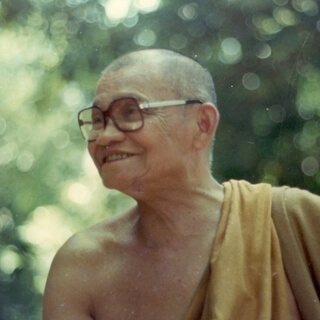
In line with the program we now have a session for your Dhamma questions.
And many of you have written down various questions.
So I'll endeavor to read them,
Translate them,
Listen to the answer in Thai,
For those of you who speak Thai,
And then translate back into English.
So you need some patience while you're listening to the language if you don't understand.
Just quietly meditate.
I'm sure Jan's words of wisdom will help us all.
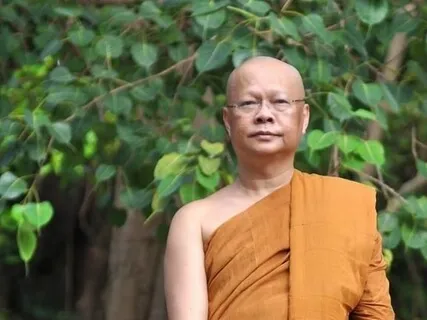
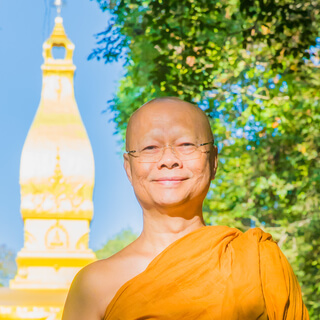
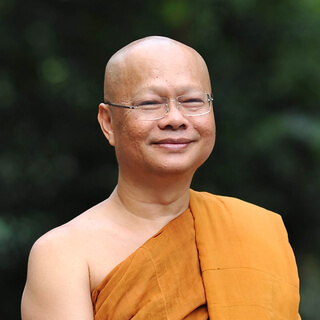
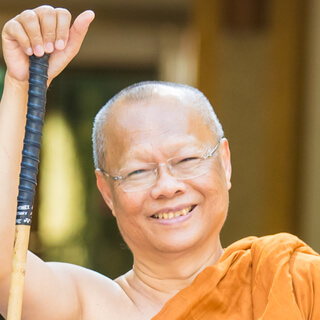
So Tanajan was responding to a question asking him to talk about himself,
Where he's from,
How he came to become a monk,
And how he practiced at that time when he first decided to ordain as a monk.
So Tanajan was answering.
When he was young,
A student,
His home was fairly near to a very new branch monastery of Ajahn Chahs.
They were establishing in central Thailand,
A forest monastery.
So he had contact with monks,
Seeing forest monks walking quietly on alms round regularly,
Sometimes putting food in their bowls.
And he also started to have his own questions,
And his own mind started to inquire into the purpose of life,
And why we're here,
What it's all about.
He remembers one experience when he was a student.
He had a teacher who,
Like most teachers,
Sometimes would find the job frustrating,
And the students might say or do things which would tempt the teacher to become angry.
But he could see this teacher,
Even though he could see he was tempted to become angry by different situations that would arise in the classroom,
He always managed to control himself.
He could never actually get angry or give in to his anger.
He could do this very well,
Which gave rise to interest from Anjana Nan.
Why can he do that?
What method is he using to control anger in different situations?
So he asked the teacher when he had the time,
And the teacher said he practiced meditation,
Anupana sati,
Using that method,
Breathing meditation.
So Anjana Nan became interested as a student to follow along,
To try practicing some meditation,
And he found he got some peace from practicing mindfulness of breathing.
He experienced quite peaceful states where the body became very light,
The mind became light.
He also had other questions arising in his mind,
Like many of us.
Why are we born?
What's the purpose of life?
Why are we here?
When we die,
What happens?
Where do we go?
What happens after death?
And so on.
So this was an ongoing interest for him,
Interested in his own mind and the state of human mind and what is peace,
True peace and happiness,
And the question of how he should live his life to achieve that and find that.
Later on he graduated and got a job at the Siam Cement Company,
A very large company in central Thailand,
Not far from his home,
And also again close by to this branch monastery of Ajahn Chath.
And he noticed as he was working,
His mind was sometimes not particularly peaceful with the stress of work and different situations arising.
He noticed he might have agitated and disturbed states of mind,
And he thought back to that time when he was a student practicing meditation,
And thought maybe he should practice meditation again,
Because now his mind is not so peaceful.
So this led him to go back to that branch monastery of Ajahn Chath nearby and to start studying meditation,
Practicing it again,
Sometimes staying there,
Keeping the eight precepts,
Just as you all are today,
Listening to Dhamma.
And he could see that this practice was beneficial for him.
He also got to find out a lot more about the Dhamma practice from the monks in that monastery.
They told him about many of the great meditation masters living in Thailand,
Particularly northeast Thailand,
Disciples of Phenubwajam Man,
And he would go and visit them as well to listen to Dhamma.
So little by little his faith was becoming firmer and firmer,
So he decided to keep the five precepts on a daily basis.
And then on the Buddha day,
Every seven or eight days in the lunar cycle,
He would go,
Like other Buddhists,
To the monastery and keep the eight precepts and spend his time in meditation.
He wouldn't eat in the evening,
So he had more time available for meditation on those days.
And one time he was in the monastery and he listened to a talk from the monk,
A teacher there,
Explaining how everything in this world deludes us because we get attached to the conventional reality,
What we call samutisacca,
The conventional reality where we label everything.
We say,
This is a house,
This is a tree,
We give labels,
Names to everything,
And we're always caught up in the labels that we give to things.
Whereas any object or experience in this world is just what it is,
It doesn't really know that it's a tree,
Doesn't know it's a tree,
A house doesn't know it's a house,
These are just labels that human beings put on.
Listening to this talk,
It made great sense to him,
So his mind gathered together in samadhi,
Became very peaceful,
And he was contemplating in this peaceful state the meaning of the teaching that he was listening to.
And his view of things started to change at that point,
And he started to see that really physical phenomena and mental phenomena are impermanent,
Unsatisfactory,
Not self,
Without an owner.
What we say is anicca,
Duca,
Anatta.
And he could have different reflections arising,
Different nimittas and experiences arising at that time when his samadhi gathered together,
His mind was very peaceful.
For instance,
He had one very clear vision of just seeing all the people around in the town,
Going to work,
Going here,
Going there,
Going shopping and so on,
But as if all just walking towards their death,
Towards their grave,
Because that's the experience of human beings,
We can't stop the process of aging,
We can't stop our gradual march towards death at the end of our life.
We can't do anything about that.
So there's a very deep insight into the impermanent nature of this life that we have,
This body,
This mind.
Another one he could see that it's as if everybody is trapped in a house that's on fire.
This body that we have here,
It traps us and brings us a lot of suffering.
But most people are not even trying to escape from this house that's on fire.
They're actually staying in it without realizing it's going to bring them suffering.
He had many different reflections like this which brought great states of joy and peace and equanimity in his mind for many days.
And he had the feeling he just wanted to leave the world.
He could see that there's no real true lasting happiness to be found in this world because the nature of this world is impermanent,
Unsatisfactory and not self.
He wanted to find something beyond that,
Something that was,
You might say,
A lasting or true happiness.
And he could see that it's impossible to really achieve that just with the things of this world,
Trying to find satisfaction in this world.
So that led him on to really keep wanting to practice the Buddhist path,
Listen to the teachings,
Put them into practice as a way out of suffering.
So after several days of having very states of deep peace arising from both samadhi and contemplating the Dhamma,
He finally resigned from his job and decided to go forth,
To go to the monastery,
To train,
To take ordination.
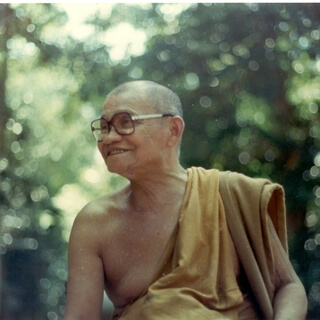
And he ordained with Ajahn Chah in Wat Gopong,
In North East Thailand,
Who was his teacher,
And started to practice in the way of a forest monk,
A forest bhikkhu,
Following the strict observances,
Keeping the Vinaya,
And keeping many of the what we call the Tuthonga vattas,
The ascetic practices.
So eating in the bowl,
The alms bowl,
Putting all the food together in the bowl,
Whatever the food is,
Whether it's sweet or curry,
Fruit,
Whatever,
All goes into the bowl mixed up.
Eating just one meal a day,
Living very simply,
Practicing contentment with little,
And living in quiet,
Secluded places,
Practicing the teachings that Ajahn Chah gave,
Spending time in cremation grounds or lonely forests and so on,
And little by little his understanding of the Dhamma grew from that time.
Another question is,
We normally like to dream future events.
Is there any method to dream now so that we can live in the present time?
Please explain a way to stop dreaming about the future,
Daydreaming,
Meaning daydreaming.
So Tannajahn recommended that if you have the tendency to dream a lot,
Whether it's daydreaming or in your sleep,
Practice mindfulness.
So before you go to sleep at night,
Try to prepare yourself with mindfulness.
You might bow three times to the Buddha,
Dhamma,
Sangha,
Then do some chanting,
The qualities of the Buddha chanting those,
Or any of the other chants that we do,
As a way of establishing mindfulness in the present moment,
Focusing on that which is very wholesome,
To bring out faith.
And then contemplate your life a little bit,
To see the true nature of things,
To see how impermanent your life is.
Say as you're just preparing to go to sleep,
You think,
Well maybe during the night something might happen,
This might be the very last night of my life,
Maybe I won't wake up in the morning.
It's not that you're wishing that to happen,
You're just contemplating to see that's possible.
We really don't know which will be the last night of our life,
It's uncertain.
When you contemplate in this way,
It helps to let go of that tendency towards daydreaming,
What we call mental proliferation,
About the future,
About things that hasn't happened yet,
And so on.
So it brings your mind back to the present moment.
Then spread thoughts of kindness,
Loving kindness,
Metta,
To all beings,
So that your mind is relaxed and happy.
And then keep practicing mindfulness until you fall asleep.
So mindfulness on the breath,
Or reciting butho.
People do find they have sometimes very clear dreams,
Say telling them about events that are going to happen,
Especially people who meditate.
But the important thing is to keep practicing sati mindfulness,
Keep it on its object,
On the breath,
On butho.
Are there disadvantages in following the breath from the tip of the nose to the abdomen and back?
Do you advise to keep mindfulness on the tip of the nose?
When we're beginning the practice of mindfulness of breathing and of panasati,
It's okay to follow the whole passage of the breath.
You can follow it from as it enters at the tip of the nose,
Down to the chest,
To the abdomen,
Follow it back up again to the chest and then out at the tip of the nostrils.
That's fine.
The important thing is to have mindfulness and be aware as the breath is going in,
To be aware.
And now the breath is coming in.
As the breath leaves,
To be aware of that.
And to keep bringing your mindfulness up with the sensation of the breathing.
Please explain to me why I often feel warm,
Heat,
While in meditation.
Is it good?
Or is it a sign that the body is sick,
I believe?
Not clear,
The question.
This is very normal for people meditating as their mind gathers together as you're focusing on a meditation object and your concentration improves.
There's this quality of the mind gathering together and sometimes this is accompanied by a sense of the body warming up.
Or for other people it's actually the opposite and they feel like the body is cooling down.
Either can happen or you might not notice any particular change in the body temperature.
That's also possible.
But whatever these kind of feelings are,
One doesn't have to worry about them.
They don't have any.
.
.
They won't bring us any harm.
It's not a sign that the body is sick or anything like that.
It's just because the mind is settling down and unifying in the course of the practice.
He says when the weather is cold like at the moment then if you're feeling a bit warmer from your meditation it's probably a good thing.
He says many changes start to happen as we practice meditation regularly to the body and the mind.
This person has asked about the feeling of the body warming up.
Others have this feeling the body is cooling down,
As he said.
And obviously if it was cold weather like today and you're also feeling the cold weather outside and then also inside you actually have a feeling as though your body is becoming very cool from the meditation.
That could be quite challenging.
Alternatively if you were in a hot country like say Thailand or Sri Lanka,
It's very hot.
But when your mind gathers in samadhi you feel very cool.
It's like you have your own air conditioning unit and that's very pleasant.
He says that feeling of coolness can come up and last a long time.
At first it might just be a few moments or a few seconds or minutes.
But as you meditate maybe that feeling of coolness will come up.
It can last a whole month as if you have your own cool air conditioning unit going the whole time.
Your body and mind feel very light,
Very happy.
And these sort of changes come up in the course of meditation.
Usually it's gradually.
So he says when you meditate maybe you try very hard doing your formal meditation sitting and walking.
And maybe you just experience a few moments of peace only when you're meditating.
But for someone meditating regularly and maybe for many years and becoming more experienced,
Perhaps not even just when they're sitting meditation or walking meditation,
Just doing any other activity like talking or eating,
This sense of inner peace and coolness can be coming up quite naturally all the time.
Next question.
Please tell me is it unwholesome karma to be a non-vegetarian?
If you buy and eat meat without harming animals,
Is this still participating in the killing of animals?
How many people eat vegetarian normally?
How many people end up vegetarian?