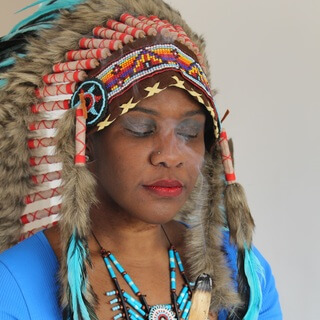
Welcome back to soft talks where we discuss the hardest topics with the softest approach.
I'm Alonia and this is the series where we face the hard stuff honestly and then find gentle ways to move through it.
Today we're talking about something deeply painful that many abuse survivors carry in silence.
Hating your body after what was done to you.
If you hate your body because of what happened to it,
If you can't look at yourself in the mirror,
If you punish your body through restriction or harm,
If you feel like your body betrayed you,
You're not alone and this hatred isn't your fault.
Today on soft talks we're discussing body hatred after abuse.
The disgust,
The shame,
The feeling that your body is ruined,
Dirty,
Or wrong.
We're going to talk about why abuse creates this hatred,
Why your body is not your enemy and I'm going to give you five soft ways to begin coming back into your body.
Because the hatred you feel it's not about your body,
It's about what was done to your body and there's a path back to peace.
Let's start by naming what body hatred after abuse actually looks like.
You might avoid mirrors,
You can't look at your reflection without feeling disgust,
Shame,
Or dissociation.
Or maybe you punish your body through restriction,
Over exercise,
Self-harm,
Or neglect.
You feel like your body deserves to suffer.
Or maybe you disconnect from your body,
You live entirely in your head,
Your body feels like a shell you're trapped in,
Not something that's you.
You can even feel contaminated,
Like your body is dirty,
Ruined,
Or permanently marked by what happened.
You can blame your body for the abuse.
If my body looked different this would not have happened,
My body attracted the abuse,
My body betrayed me by responding.
Or maybe you can't tolerate being touched,
Even safe consensual touch feels violating or triggering.
You can even nom yourself through food,
Substances,
Staying busy,
Anything to not feel what's in your body.
You can fantasize about having a different body,
Wishing you could escape the body that carries the memory of abuse.
This hatred is excruciating and it's one of the most misunderstood parts of trauma.
People who have not been abused say things like,
Just love yourself,
Your body is beautiful,
Practice body positivity.
But this isn't about body image,
This is about trauma.
You don't hate your body because of how it looks,
You hate your body because of what was done to it.
Let me explain why this happens.
When you're abused,
Especially especially when you're physically or sexually abused,
Your body becomes the site of violation.
Your body is where the trauma happened,
Your body is where the pain lives in your brain.
Trying to make sense of what happened often comes to these conclusions,
Such as my body caused this,
Your brain thinks if my body looked different this wouldn't have happened,
My body attracted the abuse,
My body is the problem.
This is especially common after sexual abuse.
You might believe your body asked for it or that something about your body made you a target,
But here's the truth.
Your body did not cause the abuse,
The abuser caused the abuse.
Your body was just there,
Existing,
Being human,
In a human moment and someone chose to violate it.
They chose to violate your body,
Let that sink in,
It is not your fault.
Your body did not betray you.
If your body had any kind of physical response during the abuse,
Such as arousal,
Pleasure,
Freezing instead of fighting,
You might feel like your body betrayed you as well.
You think that my body responded,
Does this mean I wanted it,
Does that mean I'm disgusting?
But here's the truth,
Physical responses are involuntary,
They don't mean consent,
They don't mean you wanted it.
Your body was trying to survive,
Arousal,
Freezing,
Even dissociating,
These are survival mechanisms.
Your body was doing its job.
My body is contaminated.
We often feel that our bodies are contaminated,
But after abuse,
Many survivors feel like their body is dirty,
Ruined,
Or permanently marked.
You think I'm damaged goods,
My body is disgusting now,
I can never be clean again.
After coming to grips with my abuse,
I went through a intense ritual of taking showers.
I would wake up and take a shower,
A couple hours later I would take another shower,
Lunchtime I would take another shower.
Every time a intrusive thought,
Which is covered in another soft talk,
Would enter my mind,
I would feel dirty and as a result of that I would go and take a shower.
The shower made me feel better,
It made me feel relaxed,
The shower made me feel clean,
It made me feel grounded and protected.
But here's the truth of that,
You are not contaminated,
You are not ruined,
Your body is still yours.
What happened to your body does not define your body,
You are not what was done to you.
The hatred you feel isn't really about your body,
It's about the violation,
It's about the powerlessness,
It's about the fact that your body,
The home you live in,
Was used against your will and that's unbearable for a lot of us.
So the hatred protects you from feeling the deeper pain underneath,
The grief,
The violation and the loss of safety.
I want to validate something really important,
It makes completely sense that you hate your body.
After what happened,
After what your body had to endure,
After the violation,
Hating your body is a logical response.
Your body became the site of trauma,
Of course you don't want to be in it and here's what else I want you to know,
Your body is not your enemy,
Your body is the one that survived,
Your body kept you alive through the abuse,
Your body held the trauma when your mind could not,
Your body has been carrying you every single day,
Even when you have hated it.
The really angry at your body,
You're angry at what was done to your body,
At the person who violated you,
At the lack of safety,
At the loss of innocence,
But anger at the abuser and anger at the system feels too big,
It feels too dangerous,
So it gets directed at your body instead,
Your body becomes the scapegoat for pain that has nowhere else to go.
You're not bad for hating your body,
You're hurt and now let's talk about soft ways to begin healing that relationship with your body.
Tip number one is start with neutrality,
Not love.
I know that's what everybody tells you,
Love your body,
Body positivity,
But if you hate your body,
Jumping to love is,
It's impossible and it makes you feel like you're failing,
So instead start with neutrality.
The goal isn't I love my body,
The goal is my body is here,
It's neutral,
It's doing its job.
Practice neutral statements such as my body is breathing right now,
My body is holding me up,
My body is digesting food,
My body is keeping me alive.
No judgment,
No love,
Just neutral observation.
This is how you begin to stop seeing your body as the enemy and start seeing it as just the body.
Doing body things over time,
Neutrality can shift to appreciation towards your body and maybe eventually to love toward your body.
I love my goddess temple,
You know,
For a long time I was so stuck in fight-or-flight dissociation.
I was not connected to her at all and I just love her so much and I carry so much deep appreciation for everything that I have gone through.
She has carried me through the trauma,
The abuse,
The overwork,
The burnout,
All of it.
She was there for that and,
You know,
Coming into alignment with my body,
Honoring for her for the goddess that she is,
Definitely allowed me to reconnect with her,
Experience a profound shift in healing,
Physical healing,
Because we had to come to some sort of agreement,
Right?
Like,
Hey,
I signed up to come here.
Yes,
We all know we signed up to come here and to go through certain challenges,
Certain experiences,
But we also have these beautiful bodies that carry the spirit.
So we're both was sent on a mission,
So we have to figure out and find out what each other needs in order for you to even live out your mission.
So,
You know,
Being disembodied,
Dissociated for a long period of time is not going to be supportive for or sustainable when it comes to living out your purpose.
At some point,
You have to re-engage with your body,
Become more embodied,
And embodiment practices help that.
But,
You know,
It's just a process that you have to do day by day,
Every single day,
Something that you have to be mindful and aware of,
But you genuinely can work toward loving your beautiful,
Beautiful body.
But you don't have to start there with the love.
You can always start with being neutral toward your body.
So tip,
That leads to tip number two,
Which is thank your body for surviving.
And this one might feel hard,
But I want you to try it.
Your body got you through the abuse.
Your body survived,
Even if your body froze,
Even if your body responded in ways you didn't want,
Even if your body shut down.
You,
Your body,
Did what it had to do to keep you alive.
So practice this.
Thank you,
Body,
For surviving.
Thank you for getting me through that.
Thank you for keeping me alive.
You don't have to mean it at first.
You don't have to feel gratitude yet.
Just say the words.
Let your body hear them.
Your body has been hated and punished and blamed for so long.
It needs to hear that it did a good job.
Even if you can't fully believe it yet,
Say it anyway.
Thank you for carrying me.
Thank you for holding the trauma when my mind could not.
Thank you for not giving up on me,
Even when I gave up on you.
Because the reality of it is,
When we're so stuck in our heads or so consumed by the trauma,
We forget that we're even a living human being.
You know,
We're just operating and walking around in the world,
And we could feel so detached and like aliens in that world.
And even through the midst of it all,
Our bodies are keeping us alive,
And they never give up on us.
This practice begins to shift the relationship from hatred to acknowledgement.
You're recognizing that your body is not the villain.
It is actually the survivor.
Tip number three,
Do gentle reclaiming movement.
After abuse,
Many survivors either disconnect from their bodies entirely or punish them through extreme exercise.
But there is a third option,
Gentle reclaiming movement.
This is movement that's about being in your body,
Not escaping it or punishing it.
Gentle movement practices can be things such as trauma-informed yoga,
Slow mindful with permission to modify or stop any time.
This helps you reconnect to your body on your terms.
Restorative yoga,
Yin yoga,
These embodiment practices helped me so much on my journey to reconnecting with my goddess temple.
Shaking,
Literally shaking your body.
This releases stored trauma and helps you feel your body from the inside.
You can shake,
Dance,
Use instruments.
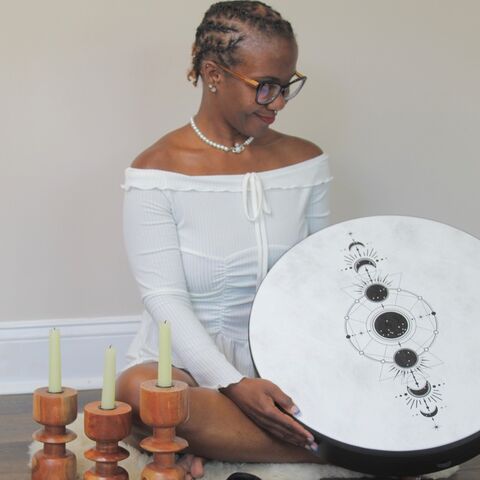
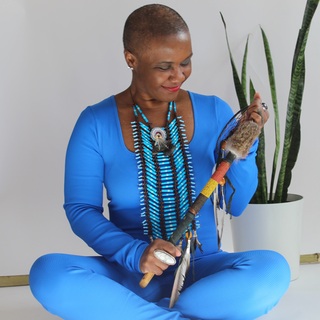
I love to use instruments,
Rattles,
Drum,
Shake,
Dance it out to get out all of that energy.
Walking in nature,
Feeling your feet on the ground,
Noticing your body moving through space.
Walking barefoot on the ground,
Right?
Sitting down on the ground for 5,
10,
15 minutes and meditating.
Sitting on the ground in silence can help you ground and reset with mother nature.
Dancing alone,
Put on music and moving however your body wants to move.
No rules,
No performance.
Stretching,
Gentle slow stretches that help you feel the edges of your body and release tension.
Again,
Yin yoga which is an active,
It's more of a passive type of yoga and if you're working too hard it's definitely not yin yoga.
It's made to stretch out the fascia and the tissue in the body versus working the muscles like more energetic forms of yoga can be.
Restorative yoga where you use props and you rest in those poses for 5,
10,
15,
Sometimes 20 minutes.
These practices allow you to become more embodied and become more into yourself so you're alone more with your thoughts.
Swimming or water movement.
Water can feel soothing and supportive.
Many abuse survivors find water healing.
I love water,
That is my element,
You know,
Melonia water.
The key to this is this,
You're not exercising to punish or change your body.
You're moving to reconnect with your body.
So ask your body,
What do you need to move right now and then listen.
Let your body lead.
This is about reclaiming your body as yours.
Not the abuser's,
Not society's,
But yours.
Movement done gently and with intention helps you remember this body is mine.
I get to decide what happens to it now.
Tip number four,
Create a body honoring ritual at your altar.
If you have been following me,
Reading about me,
I am a big advocate for altar work.
I love my altar,
Connecting at my altar.
That's where I meet my spirit guides,
My ancestors,
My team,
Enlightened beings.
That's where I release it all.
That is the lifeblood of my spirituality.
So I believe in creating rituals at your altar space.
Your altar should be your foundation for everything.
If you have an altar,
Create a ritual specifically to honor your body.
And here's how to do that.
Set up your altar with items that represent the body.
It can be photos of yourself as a child before the abuse,
If you have those type of images.
Natural elements like flowers,
Stones,
Water,
Soft fabrics,
Candles,
Light a candle and just sit at your altar and speak to your body directly.
Body,
I'm sorry I have hated you.
I'm sorry I have blamed you for what happened.
It was not your fault.
You were just existing and someone hurt you.
Thank you for surviving.
Thank you for carrying me through.
Thank you for not giving up.
I'm learning to see you differently.
I'm learning to be gentle with you.
You can also do this,
You know,
You can place your hands on your body,
Wherever feels safe for you.
Maybe your legs,
Maybe your arms,
Your belly and say,
This is my body.
This belongs to me.
What happened was not my fault.
This body is not contaminated.
This body is mine.
If touch feels too activating,
You can skip that part and just speak to your body out loud.
The ritual creates a sacred container for beginning to shift your relationship with your body.
You're acknowledging the pain,
Releasing the guilt,
Releasing the blame and starting to reclaim ownership.
Do this ritual as often as you need to,
Weekly,
Monthly,
Whenever the body hatred is overwhelming.
Tip number five,
Work with a somatic therapist.
Here's the softest,
Most important tip.
You don't have to heal your relationship with your body alone.
Body hatred after abuse is complex.
It's layered.
It's deeply rooted in trauma.
If you're struggling,
Please work with a somatic therapist.
Somatic therapy focuses on the body,
Not just the mind.
It helps you release trauma stored in your body,
Reconnect to your body in safe ways,
Process what happened through the body,
Not just through talking,
Learning to feel safe in your body again.
Modalities that help what body hatred after abuse,
Such as somatic experiencing or SE.
This helps release trauma from the nervous system through body awareness and gentle movement.
Sensory motor psychotherapy integrates talk therapy with body-based processing.
EMDR helps reprocess traumatic memories,
Which can reduce body hatred.
Trauma sensitive yoga therapy,
Specifically designed for trauma survivors.
It helps you reconnect with your body safely.
Dance movement therapy uses movement to process trauma and reclaim the body.
Body hatred after abuse is not something you can just think your way out of.
You have to work through it in your body with support.
You deserve support.
You deserve a guide who understands why you hate your body and can help you find your way back.
Soft tip number five is reach out.
Get help.
You don't have to carry this alone.
If you hate your body because of what was done to it and if you can't look at yourself.
If you punish yourself,
If you feel contaminated,
Please hear me out.
Your body is not your enemy.
Your body is not what's wrong.
Your body is the one that survived.
The hatred you feel is misplaced pain.
It's rage at the abuser.
Grief for what was taken.
Fear of what happened.
But your body,
Your body kept you alive and is still carrying you.
The five soft ways to begin healing your relationship with your body are to start with neutrality,
Not love.
Just thank your body for surviving.
Do gentle reclaiming movement.
Create a body honoring ritual at your altar.
Work with a somatic therapist.
You don't have to love your body tomorrow.
You don't have to forgive it.
You just have to stop hating it long enough to see it was never the enemy.
If you need support with body healing and trauma,
I hold space for this in my circles and in my soft hearts society.
Your body is welcome here,
Exactly as it is.
Thank you for being here.
Thank you for facing the hard stuff with me.
This is Soft Talks.
I'll see you in the next episode.
And until then,
May you find gentleness toward the body that carried you through.