So,
Warm welcome.
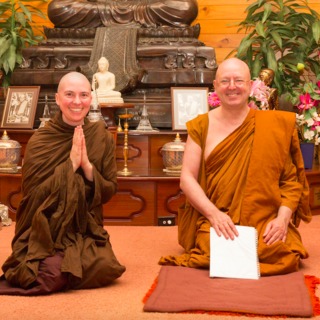
It's the first time that both of us are teaching here,
I think.
As Ali said,
Ajahn Brahm was studying here and he's done a few public talks here,
But we thought it'd be nice for us also to come here.
And then I can tell him that we also did come to Cambridge,
Because at the moment I'm in Oxford and the Bihar is in Oxford,
So anytime things are difficult,
He said,
Well,
You know,
If you'd have been in Cambridge,
You'd have been fine.
But,
You know,
You can't blame the city,
You can't blame the weather,
You can't blame anything really.
If you want to blame anything,
You can probably blame life.
I don't know.
But even that is sometimes more wise to blame our unrealistic expectations,
I think,
Of what life can really offer.
So,
Today the topic is the wisdom of forgiveness.
And obviously,
I hope it's obvious that it's a wise thing to do,
To forgive,
To forgive ourselves,
To forgive others,
To forgive sometimes the situations in our life that come together through too many causes and conditions to really comprehend,
And certainly too many to have much control over.
But also,
How wisdom helps us forgive.
So,
Of course,
Being a Buddhist retreat,
We're going to look at the Buddha's direct teachings on that and some various angles we can maybe use in our practice to help us to start this process of forgiveness.
Because like with everything in the Buddhist path,
It is a process,
It is a training,
It's not something that's so much a kind of imperative,
But a verb and an ongoing journey of forgiveness.
And I think it's in,
I can't say this word,
Platonic or plutonic,
No,
Platonic,
Platonic justice,
That they use the word forgivingness,
Which is quite interesting because it also further removes us from any imperative that we must forgive to seeing it as a process,
Which I think is really lovely.
So,
I wanted to start off by talking a little bit about what forgiveness is.
And I just did a quick Google,
I have to admit that,
Not just now,
But yes,
A few days ago,
To see what some of the definitions were,
Because to me it looks like an interesting word,
Forgive.
So,
I thought,
Okay,
It's about giving,
But the for part to me suggests a kind of unconditional giving,
You know,
Giving even though somebody might not seem to deserve it or maybe hasn't apologized or acknowledged the harm that they caused.
And I don't know,
I didn't find this in any of my searches,
But I kind of think of the word forgive as maybe needing to do it first,
You know,
Or maybe needing to put it in the foreground,
Because sometimes somebody's not going to acknowledge their mistake,
But maybe we can forgive them anyway,
We can give to them first,
To try to break that cycle of resentment and of hurt and of all those kind of,
All the baggage that we keep in our hearts that weighs us down in life.
So,
I had a look at some of these definitions and in Latin the word is perdonare,
That's the root of the word forgiveness,
Which means to give completely,
Or to give without reservation.
Another word for that that was there was liberation,
Which is wonderful,
Isn't it?
It's very close to those ways of letting go that the Buddha teaches,
Liberating ourselves from suffering,
Liberating ourselves from the baggage that we lug about with us in our lives.
Then in Old English the word is forgafen,
Which means I can barely read because I'm getting old,
Or sorry,
I am old,
According to my very kind guests,
They like to rub it in.
If I'm old,
I don't know.
Anyway,
48 is the new young.
It means to give,
Grant,
Allow or pardon,
Or give up the power to punish.
So,
Giving is also about giving up,
Giving away,
Letting things go again.
And then Greek has two really nice words,
I won't be able to say it properly,
Chardizomai,
Which means grace or free unconditional forgiveness.
And they have another word,
Aphemi,
Which means letting go or release,
Again,
Releasing others from our anger,
Releasing others from taking over our mind,
Right?
Because we carry people in our mind.
Often the people aren't actually there in present,
But they're in our mind,
They're in our inner world.
And the interesting thing is,
And Ajahn Brahmali made this point,
Is that sometimes we can't completely forgive actually until we see non-self.
And that's a deep point to make straight away.
But one of the reasons it's hard to forgive ourselves or others is because of this sense that people could have done things differently,
Or we could have done things differently,
And therefore we feel a sense of guilt and blame and judgment.
But when you actually understand things like non-self,
Or even start to get a feel for that,
We start to see that whatever we do doesn't really come from a sense of a person doing it intentionally.
We're very much programmed by our conditionings,
By our cultures,
By our societies,
Our privilege or lack of privilege,
Our opportunities in life.
We're very much conditioned by this.
And most of all,
The Buddha said,
Of course,
By our friends,
By the company we keep.
It's a massive influence.
To the extent that he said,
You know,
The spiritual friendship is the whole of the holy life,
Because we need the input of the wise and of somebody who's actually seen these deeper truths.
To help us to start looking in a different direction.
Because the problem with any kind of view is that we think we're right.
And we're not going to hold views that we don't think are the right view,
Right?
And yet,
Our views are often very different from what the Buddha termed as right view.
And part of that is that we are conditioned,
We are not these fixed entities,
Which gives,
Of course,
Tremendous hope,
Right?
If we were fixed,
There'd be nothing we could do about the situation.
But as it is,
We can influence,
We can influence the conditions that we may meet.
So forgiveness also takes a lot of understanding,
You know,
And I'm hinting at this already with the idea of non-self.
And there's a lovely little clip I saw on YouTube a few years ago,
And it was a very moving story,
Tragic story,
Because it started off with a murder in America.
A Muslim man's son was a pizza delivery driver.
Some of you might have heard it,
I don't know.
And he was delivering a very simple job,
Right?
Just going out on his evening round and he was stabbed to death by a gang of youths.
And this was taken to court,
Of course,
And it was quite a high profile case,
Because the father of the murdered son stood up in court and he basically offered forgiveness.
He said,
I forgive you completely.
You're my nephew.
And he said it looking into this young man's eyes.
You're my nephew.
And he said,
I don't blame you.
I blame the devil.
Which is interesting,
Because we might not have the idea of the devil in Buddhism,
But we do have the idea of the untamed,
I don't like the word defilement,
But the negative influences on our minds,
The afflictive emotions.
And it's these things that if we want to put blame anywhere,
It's these things that are the cause rather than a person intentionally doing something wrong.
And I looked a bit further into this to see if it was just a sort of publicity stunt or something.
But this man is actually like a leader of his religious community,
I think in Thailand,
And he was born in Burma,
Interestingly,
So in a Buddhist country.
And he further pointed to the causality to explain why he completely forgave.
And he said,
Well,
It's because this person was involved with drugs and alcohol.
And it's also because of bad friends.
He came from a really good family,
But he had bad friends.
And in Buddhism,
There's a lovely sutta called,
I think it's the Avijja Sutta,
So it means like delusion or ignorance.
And it talks about all kinds of causality,
But it basically says that the whole path starts with good friendship.
And it's as a result of not having good friends,
That we then obviously don't hear the Dhamma.
So we don't even start on the path of Dhamma.
And that leads to reckless behavior.
So it leads to breaking of the precepts,
You know,
Things as heinous as killing another being.
So even though he was right to an extent,
He didn't make the causal link,
Because in Buddhism,
We would say that the cause for,
You know,
Doing these things is actually bad friendship at the root.
So he got in with the wrong crowd.
And it was so beautiful,
Because in this court scene,
The person who murdered this person's son came up to him in the court,
And they gave him a huge hug.
They hugged each other.
And everybody started crying,
The family started sobbing,
And it was really quite loud.
And then the whole family came up to this Muslim man who was granting forgiveness,
And they did this huge group hug in the courtroom.
And I think later,
The young man who'd murdered this person said,
You know,
It really takes a very powerful man to give forgiveness like that.
I just can't imagine the hurt that I've caused.
And I'm sorry,
You know,
And thank you for your forgiveness.
And it was just such a powerful story,
The complete opposite of what you'd expect,
Which gives a lot of hope.
And surely that is made easier because of the acknowledgement.
There was another situation in Australia,
And I'm sure all over the world,
But this was in 2008.
There was a Labour politician,
Kevin Rudd,
And for the first time,
He did a proper investigation into what had happened to the indigenous population of that country,
And the Torres Island,
Torres Strait Islanders as well,
Who were the indigenous people of that part of the country.
And tried to look into what had happened to this stolen generation,
In other words,
The indigenous people that were taken away from their parents,
You know,
Families that were split apart,
Mothers who were searching for their sons or daughters for their entire life,
And unable to find them because of the way they were treated,
Just,
You know,
Not even as human beings.
And for the first time,
It's not that long ago,
He made an apology.
They did a proper inquiry and investigation into what happened and made this apology.
And people said,
Okay,
Well,
Of course,
It's not enough,
But it's the first step in the healing process.
And it helps to show respect.
And it helps those people to regain some sense of dignity.
But then the second part of what I wanted to touch on this morning is just what do we do if we don't get that acknowledgement,
Right?
Like,
What do we do when somebody's hurt us?
Or maybe we've hurt someone else,
And we don't,
We're not able to,
To apologise,
We haven't yet been able to even admit that what we did was wrong.
And that's very difficult.
And it actually happened to me.
In my life,
I had a very close friend,
Who I ordained with in the beginning.
And I'm sure I've told this story before,
Because like everybody,
You only have a certain repertoire of events in your life.
And hopefully,
I won't have another one like this.
But it was quite traumatic,
Because I trusted this person very much and helped her,
I think a lot,
Mutual support,
But very much compassion and sense of looking out for her well-being and also spiritual progress.
And this person turned violent towards me in a very shocking way.
And for a while,
I was actually waiting for her to accept that she'd done something and to just say,
I'm so sorry,
Gosh,
I can't believe it,
What came over me,
You know,
I'm going to do something about this,
Maybe I'm going to go and address the underlying issues,
Or I'm going to trace back my practice and see what went wrong.
But as far as I know,
That never happened.
And it was very,
Very difficult at that time.
And I think for me,
The key was realising that by starting a process of forgiveness,
Intending to forgive,
Even without waiting for that apology,
Was a gift to myself rather than a gift to her.
You know,
It isn't for the other,
And it doesn't excuse the other,
But it does free our own hearts and minds.
And at that time,
I did have to take some space in the beginning,
Even to the point of not sending her Metta,
Because she was like,
Just send Metta,
Everything will be fine.
But when you've been really harmed,
The last thing you want to do is bring the perpetrator to mind.
And I think the teachings of Buddhism,
If idealised to that extent,
Where we have to immediately confront things that are difficult,
Is actually a little bit harmful.
And the Buddha did include ourselves in the process,
He said,
We have to be compassionate with ourselves.
I didn't directly say that,
But this is my understanding,
That first we need to address the hurt and look toward the conditions that might enable ourselves to heal.
So I decided to just practice Metta in general,
Loving kindness meditation in general,
Because,
You know,
I needed to heal.
And there were plenty of people I could easily have a sense of gratitude and love and forgiveness towards.
There was myself and my own hurt feelings that needed a lot of compassion as well.
But after some time,
And this is why the process does take time,
Without any obvious intention on my part,
This person just entered my mind,
While I had a lot of Metta and a very big,
Wide open heart of resourcefulness,
Resourceness.
And there was no impact for the first time.
And after that,
It was quite extraordinary to me,
Because normally it would cause an impact,
It would sort of be a little bit agitating or retraumatizing.
But at that time,
It didn't,
Because I was so resourced.
And from then on,
I could think about this person without any sense of she owes me this or she owes me that,
Or this was so wrong.
And I realized that to some extent,
I'd kind of forgiven my life,
I'd forgiven the situation.
And I think that's also a lovely way to see it,
You know,
That it's not always about forgiving a person,
But it can be about forgiving a situation in which both people were somehow so-called victims,
Or both people were hurt,
They were hurting.
And it came from suffering,
People don't do things to one another that are so obviously hurtful,
Unless they're going through a great deal of pain.
So I think the key in this is really being kind and gentle with ourselves,
Not trying to rush the process,
Not trying to force forgiveness,
You know,
Whether towards another or trying to elicit apologies and remorse from another,
Because we're all on our own paths.
And it takes us all different time.
Maybe she's doing the work on her own in her own way.
And I really hope that for her,
You know,
For me,
It's like,
I wish her well,
The same way I always did.
But Ajahn Brahm has a nice phrase,
He says,
Sometimes you just have to love the tiger from a distance.
You acknowledge,
You know,
That,
Okay,
This hurts,
And it could have the potential of biting again.
It's not wise to go and kind of stick your hand in a tiger's mouth.
So we can allow ourselves that,
And to be very,
Very kind and gentle,
And to trust in our intention to forgive.
So what I really want to bring over today,
More than anything,
Is that it's a process,
And that we can perhaps together consolidate our own intentions to find forgiveness towards ourselves,
Towards others,
And look at different ways to do that.
So one of the ways I wanted to talk about today,
This morning,
And Venerable Upaka will talk about the other side of it this afternoon,
Is the significance of forgiveness on the Buddhist path,
Particularly in terms of ways to overcome resentment.
Because resentment is something like solidified,
Crusty,
Concretized anger that's gone deep inside the mind,
And it forms this kind of very hard and rocky layer that really stops us living fully,
And stops us feeling the full range of emotions that are available to the human being.
And in the afternoon,
Venerable Upaka will look from the other angle and talk about ways we can bring up beautiful states of mind,
But some of it overlaps of course,
Because we can't keep holding on to these things,
You know.
If we do that,
We're just burdening ourselves unnecessarily,
And preventing ourselves from experiencing the deep states of peace in meditation.
There's this funny little story from my dad,
He said that he's really sweet and very sensitive,
And he was probably very shy as a boy,
And you used to get these school dinners,
I'm sure somewhere you still get school dinners,
Hopefully better than in those days,
But they were quite yucky really,
With some boiled cabbage,
And some kind of sloppy gooey gravy,
And maybe some processed sausages or something.
But he'd feel a bit embarrassed because he wouldn't be able to finish the plate,
And then he'd take some of the mashed potatoes and the cabbage,
And just put it in his pocket.
And he'd walk around with it in his pocket,
You know,
Because he didn't want to tell the dinner lady that he couldn't finish his meal.
So it was a kind of guilt,
Wasn't it,
I suppose,
And afraid of being,
You know,
Kind of told off.
And this is kind of what we do,
We feel ashamed of something,
We shove it in our pocket,
Even if it's sloppy,
And you know,
Has the potential to ferment or to rot,
And we hope that no one will notice,
But then it starts kind of seeping down the chairs,
It starts to smell,
And people think,
Hmm,
Something's up with this person,
They need a wash.
So we don't want to do that,
We want to learn ways of gently approaching our own feelings,
And overcoming these resentments in our minds.
So before we get on to those,
Actually,
There's another very obvious significance of forgiveness on the path,
Which is,
I've again alluded to already,
About generosity,
About this idea of giving,
You know,
In a sense,
Taking the higher ground,
But not in some snotty kind of I'm better than you type of superior way,
But just understanding that somebody somewhere has to break the cycle of harm.
And maybe we can be that generous one,
You know,
We have heard the teachings,
We do have the dhamma,
Maybe we have spiritual friends who can give our our self support,
Enough to be standing in a place of safety,
And able to offer that person,
At least mentally,
Some generosity of thought.
You know,
Sometimes it doesn't have to be complete forgiveness,
But we can at least see that there's another side to the person,
You know.
For example,
Maybe some of us have feel that we had controlling parents,
Or parents who pushed us very hard to do well at school,
And you know,
Maybe as a result that gave you the impression that you could never do well enough,
You were never quite good enough.
But maybe from the parent's perspective,
They just really genuinely wanted you to be well off in life,
To,
You know,
To be safe,
To be happy.
And that's the way they understood the route to that happiness and safety.
So there's always another way to look at things.
You know,
We were saying in our Zoom group recently that,
Does anyone really have unconditional love?
You know,
Parents love doesn't always seem as unconditional as it really is.
But then someone said,
They kind of threw a curveball,
Because it's nice to get a different perspective.
She said,
Maybe it is.
And maybe we don't see it that way,
Because we have our own areas of kind of hang up,
Or inferiority,
Or whatever.
So maybe there's more love there than we can recognize sometimes,
Because we are already wounded,
You know,
Inside.
So that generosity is a very beautiful thing,
And it helps the letting go.
In Buddhism,
This is called chaga.
It's a kind of giving up,
And it's also giving away of something,
Giving away of this kind of narrowness of heart.
And then in the six ways of overcoming resentment,
The first one is,
Surprise,
Surprise,
The beautiful,
Wonderful loving kindness,
Which is just,
If that was all you ever practiced on the Buddhist path,
I think it would take you the whole way.
Because it would lead to wisdom,
It would overcome,
You know,
Anger and ill will,
It would clear the mind of hindrances and enable you to find that peace and genuine joy inside.
So the loving kindness is the kind of love that a mother has for a child.
And that love imparts an enormous sense of patience.
I see it in my own dear friends,
One of whom's here today,
Who doesn't realize how patient she is,
But I see it,
You know,
I see it in the love of a mother,
The real unconditional love,
And how that brings a natural sense of forgiveness as well.
Because if you're patient,
You give people time to grow,
To make mistakes,
To fall over,
To get up.
You don't say,
Come on,
You're two now,
You should be swallowing and chewing your own food,
I'm fed up with feeding you.
You don't do that as a mother.
They drop it,
They make a mess,
You just wipe them up again,
Try again,
Put some more food in their mouth and give them a lot of compliments along the way,
You know.
It imparts enormous patience and a sense of forgiveness.
So I think that loving kindness is really key.
And as I said,
Was the real key ingredient in helping me heal from what had happened to me.
It really shook my whole world,
You know.
It was like the world didn't feel the same,
It didn't feel like a safe place anymore.
And at the time I resented that,
But later I realized perhaps that's actually true.
Perhaps I've grown from that and I am more realistic about life.
I've adjusted my expectations of life.
I can perhaps see the dangers in things like not heeding my intuition or not having enough emotional boundaries.
So now I can learn from that and put them in place to protect myself and the other.
And I do think when I look back,
I've grown enormously from this,
You know.
I'm a little bit more fragile,
But it also makes me a bit more open and strong enough to show my vulnerabilities.
Whereas before,
Maybe I was a little bit like,
Yeah,
I can do anything,
I can handle it,
I can help this person,
You know,
I've got it sorted.
Very subtly,
A little bit more arrogance there.
So this metta is very healing.
And of course,
The second one,
Maybe not of course,
But the second one is compassion,
Because it's so related to metta.
But the compassion is even deeper in the sense it's connected to suffering and it's a response to suffering in particular.
The suffering in oneself,
In others or in life in general.
And to me,
It's the opposite of judgment.
Does that make sense?
I'll try and fill in the link.
But for me,
The judgment comes about when we don't understand what a person has experienced in their life.
We don't understand why they are the way they are or do what they do.
And judgment is something that divides.
It's something that makes us feel different from them,
That I would never do it the way that they did,
You know.
But compassion is more something that tries to put ourselves in another's shoes and have empathy for the situation.
It's something tries to understand.
And it brings us together,
It unites us in our common humanity.
It makes us realize that perhaps in their situation,
We would have acted the same.
How do we know we wouldn't?
How do we know if we'd have had the same friends as this person I mentioned in the beginning?
If we'd have had the same friends,
If we'd have had the same background,
If somebody'd come up with that idea and we were in some kind of deluded mood that night,
How do we know that we wouldn't have done the same?
Actually,
The more I think this way,
The more I think we actually would.
Because there's actually nothing the Buddha could point to in a human being that is essential and that is essentially us.
We're basically completely conditioned.
So what we're really seeing when we look at life is a process of cause and effect.
I can see it sometimes in my own.
.
.
I grant myself forgiveness quite often because I realize that sometimes in what I'm doing with establishing a monastery,
I'm under a lot of strain and stress and I'm interacting with so many people and really want to give my best and it's impossible to give the same best that I could give to two or three people to two or three hundred people.
So from the outside,
Maybe sometimes I think,
Gosh,
I'm more agitated or I've got less capacity.
But how can you compare two completely different situations?
If you put me in that situation 10 years ago,
I wouldn't have even gone near to it.
So sometimes a person's challenges are so much greater than we can imagine.
So,
You know,
Relative to the challenges they face,
They might be doing really,
Really well,
Not to actually be shouting at somebody or not to be breaking sealer,
For example.
And I say this to people who've gone through trauma,
You know,
Sometimes you might think you're really not coping,
You know,
You might think you're broken inside.
But if you're still managing to live a virtuous life,
You're doing really,
Really well.
Right.
And count it up when you do do a virtuous act.
Don't count the times you fail,
Count up all the lovely things you're still able to do,
The way you're able to think about others,
The way you're able to,
You know,
Give them a smile,
Even if you're feeling terrible inside.
We had this taxi driver yesterday.
Was it only yesterday?
From Oxford.
We've done a lot since yesterday.
And he came to the house and he was in such a good mood and he looked straight at Shell,
Who was standing outside of Ihara.
And he's just,
He's just,
He's just,
He's just,
He's just,
He's just,
He's just,
He's just,
He's just,
He's just,
He's just,
He's just,
He's just,
He's just,
He's just,
He's just,
He's just,
He's just,
He's just,
He's just,
He's just,
He's just,
He's just,
He's just,
He's just,
He's just,
He's just,
He's just,
He's just,
He's just,
He's just,
He's just,
He's just,
He's just,
He's just,
He's just,
He's just,
He's just,
He's just,
He's just,
He's just,
He's just,
He's just,
He's just,
He's just,
He's just,
He's just,
He's just,
He's just,
He's just,
He's just,
He's just,
He's just,
He's just,
He's just,
He's just,
He's just,
He's just,
He's just,
He just,
He's just,
He's just,
He's just,
He's just,
He's just,
He's just,
He's just,
He's just,
He's just,
He's just,
He's just,
He's just,
He's just,
He's just,
He's just,
He's just,
He's just,
He's just,
He's just,
He's just,
He's just,
He's just,
He's just,
He's just,
He's just,
He's just,
He's just,
He's just,
He's just,
He's just,
He's just,
He's just,
He's just,
He's just,
He's just,
He's just,
He's just,
He's just,
He's just,
He's just,
He's just,
He's just,
He's just,
He's just,
He's just,
He's just,
He's just,
He's just,
He's just,
He's just,
He's just,
He's just,
He's just,
He's just,
He's just he's just,
He's just,
He's just,
He's just,
He's just,
He's just,
He's just,
He's just,
He's just,
He's just,
He's just,
He's just,
He's just,
He's just,
He's just,
He's just,
He's just,
He's just,
He's just,
He's just,
He's just,
He's just,
He's just,
He's just,
He's just,
He's just,
He's just,
He's just,
He's just,
He's just,
He's just,
He's just,
He's just,
He's just,
He's just,
He's just,
He's just,
He's just,
He's just,
He's just,
He's just,
He's just,
He's just,
He's just,
He's just,
He's just,
He's just,
He's just,
He's just,
He's just,
He's just,
He's just,
He's just,
He's just,
He's just,
He just,
He's just,
He's just,
He's just,
He's just,
He's just,
He's just,
He's just,
He's just,
He's just,
He's just,
He's just,
He's just,
He's just,
He's just,
He's just,
He's just,
He's just,
He's just,
He's just,
He's just,
He's just,
He's just,
He's just,
He's just,
He's just,
He's just,
He's just,
He's just,
He's just,
He's just,
He's just,
He's just,
He's just,
He's just,
He's just,
He's just,
He's just,
He's just,
He's just,
He's just,
He's just,
He's just,
He's just,
He's just,
He's just,
He's just,
He's just,
He's just,
He's just,
He's just,
He's just,
He's just,
He's just,
He's just,
He's just Right?
And it's that equanimity that keeps us balanced in the face of these ups and downs.
Equanimity again is not this indifference kind of snotty aloofness.
It's actually a sense of spaciousness,
A sense of contentment with the way things are that also includes a lot of wisdom.
And one way that can be helpful to look at equanimity is to see people again,
Not just as conditioned processes,
Which sounds a bit weird and technical,
But to understand that we're essentially made of various elements.
We're made of the body,
Materiality.
There's also feelings,
Pleasure and pain in between.
There are perceptions,
Which change at the speed of light,
And are usually completely delusory.
There are reactions,
The reactive or the willing,
Controlling aspect of the mind.
And there's consciousness.
And these are what the Buddha called the five khandhas that comprise a human being or comprise any being,
Most beings.
Plants and things only,
I think,
Have one or two khandhas.
I think they have the feeling and the materiality,
But they probably don't have perception.
But who knows,
They do respond to touch.
But I really love plants.
I've got right into them since Karim gave me some lovely plants and they've multiplied.
So when we see that all we're really reacting to is the five khandhas in another person that manifest in a particular way at that particular time,
You can ask yourself,
Well,
Which khandha,
Which aspect of that person can I not forgive?
Is it their perception that upsets me?
Is it their will that upsets me?
Is it their feelings?
Because their feelings,
Their will,
Their perceptions have changed.
Many,
Many times,
Billions of times since they did that thing that hurt you so much.
And the same for us.
We're in a flux.
We're in a flow.
We have one perception,
One moment of a person and a completely different perception the next.
And everybody in this room will have a different perception of me,
Which is based on your limited knowledge of this thing that looks like this.
Sometimes you only know it's me because I look sort of like I looked a while ago,
Right?
But imagine if our bodies kept changing their appearance.
You wouldn't have a clue who anyone was.
You'd be like,
Oh,
They sound a bit like this.
They sort of speak in the same kind of ways that that person spoke,
But they looked like completely different.
So really,
I mean,
It's only because we sort of recognize our form that we think it's the same person.
But actually it's not.
So we can really reflect like this and it's helpful because it's close to the truth.
Another one,
Which is a bit cheeky,
But I'll say it anyway,
Is to apply the law of karma to the person that,
Well,
Whatever a person does,
Whatever we do,
The results of what we have to experience,
We will experience the fruit of whatever we do for good or for worse.
And while we can encourage people to be on the right path and to perform wholesome actions,
We can't actually control what they do.
So we do our best,
But ultimately a person has to suffer the consequences or enjoy the consequences of their own actions.
So Ajahn Brahm has this little phrase,
He says,
You don't have to seek revenge because karma will get the mm-mm anyway.
Which is really naughty and it was never meant to be published.
So I didn't say that word that wasn't meant to be published today,
But you can imagine.
So yeah,
But I mean,
There's a lot of truth in that,
Right?
We don't really need to punish.
At least we don't need to punish ourselves.
You might have to kind of seek some kind of justice and there's nothing wrong with that if you can go about it with a really compassionate intention and know where your boundaries are.
Check that it's even going to be fruitful,
First of all,
Before you waste many years of your life.
Because if you are obsessing about something,
It's difficult to get on with the rest of your life and to see the bigger picture.
And then the last one,
Which I've hinted at before,
Is also to ignore.
This is straight from the Suttas,
Right?
The six ways of overcoming resentment.
Anguttara,
Six something,
49 possibly.
So the Buddha actually gives that as an option to ignore.
So you could think of that as ignoring the person's faults,
Focusing on the good.
Or you could think of it as actually allowing them to disappear from your mind or from your life.
Having that sense of departure.
It's not going to work anymore for us to be in relationship.
Because really,
If we're serious on the path,
We have to look for conditions that help us cultivate the practice and that support us in developing wholesome states.
And if in a certain relationship that is just really difficult,
Then it's not serving anyone very well.
Even though divorce and things like that are very undesirable,
You make a commitment and you make it for life.
If it's not serving each person and if it's somehow even preventing you from moving forward on the path,
Then it might be the best thing to part and go separate ways.
And it's possible to do that without resentment.
I can't say that from experience.
Although I have had breakups,
A couple,
Because I didn't ever have many partners.
And I think the last was when I was 25.
Ha!
Freedom!
But you know,
We were on very good terms.
And my last partner was a meditator.
He was Nepalese.
And he gave me my first set of robes.
Yeah.
He offered me my set of robes.
I went back to Nepal before going to Burma.
And he offered me the robes.
I've still got them.
I've given the others all away so that other Burmese nuns can use them.
But I've still got that set of robes.
It's lovely.
So,
Yeah.
It's much,
Much better to be a nun.
So,
I don't have any resentment for that.
So,
We can do that.
We can move on.
And just briefly,
Because as usual,
Time kind of disappears,
I wanted to touch on some of the obstacles for forgiveness,
To forgiveness,
Which are kind of obvious.
And one I've said already,
Which is the sense of self.
You know,
It's the sense of feeling guilty.
I would imagine that many people in this room find it easier to forgive others than to forgive themselves.
It's a guess.
Is it true?
I don't know.
Any nods?
For little things,
Like not speaking to your mum that nicely when you were a teenager.
Did anyone speak to their mum as nicely as they wished when they were a teenager?
No.
Amazing.
Me too.
Of course,
At the time,
I sometimes thought I was really restraining myself,
But it wasn't that kind.
And I'm sure it caused hurt.
But I've forgiven myself,
Actually.
I hope she has forgiven me,
Too.
And I've forgiven them,
Too,
Because whatever's happened in our lives,
We've come to this place now,
Right?
It's pretty good.
We've done pretty well.
So without some suffering in life,
We might not actually embark upon a path.
So this sense of self and the sense of guilt,
You know,
That we're bound to have to some extent until we are stream winners,
It's par for the course.
And we can at least start to undermine it by trying not to believe in it so much,
Trying to alter our perceptions.
And then the second one is like giving up our expectations.
This is what I've made up,
Right?
It's totally made up by me.
But it's what I've seen for myself to kind of be an obstacle is,
Well,
The need to give up our expectations of how the world should be.
Yeah.
Because it's hard to forgive things when we think that just shouldn't happen.
In this case,
Friends don't strangle you.
They don't do that.
That's impossible.
It can never happen.
Because they'd actually told me they'd done that before to someone else and that they felt inside themselves they could kill someone,
Which is a pretty strong thing to say,
But probably we all still have the potential to do that.
And I just said,
No,
That's impossible.
That's impossible.
Friends can't do that ever.
You know,
It was just beyond the realm of my experience.
But the reality is they can.
The reality is people rape,
People abuse,
People take youngsters from their parents.
People do incredible things.
People get enlightened.
It's nothing much more incredible than that.
And sometimes,
You know,
It's this lack of forgiveness is not wanting to accept that the world is like that.
You know,
It's kind of it's keeping us protected from the reality of samsara.
We don't want to accept that this is life.
This is a situation we're dealing here with,
Like greed,
Hate and delusion.
These really strong forces in the mind.
So I think when we can shift our expectations,
You know,
Of how things should be and actually start to align ourselves with how things really are,
Then we can start to find ways to soften to that and to try to nudge things in a more wholesome direction for ourselves and hope that that spreads outward into the world.
And then the last one,
Which I thought was interesting,
Is sometimes we don't want to forgive because,
Believe it or not,
We're attached to our suffering.
Does anyone recognize that?
Yeah.
It's like it's a safe place.
We're used to suffering.
We're not used to feeling happy.
It's scary to feel happy and content and relaxed because I don't know,
I have to be on my guard.
Something might happen.
It's a scary place to be.
It might not last,
Right?
And I might get used to it.
And then I won't be able to cope with things that are difficult.
So we don't remember to savor the moment and to enjoy the peace and quiet just of simply being in a place like this.
Pretty simple.
Not that difficult and really quite easeful,
Hopefully.
You've got pretty good chairs and if they're not comfy enough,
I advise you to get as comfy as you can and just enjoy the moment.
You don't even have to make yourself forgive anyone.
That's not the aim of the day.
It's just to bring up that idea in your mind and to,
Like I say,
Consolidate that intention a little bit.
To see the beauty of these qualities of heart.
Patience,
Forgiveness,
Giving things time,
Understanding life,
Forgiving situations,
Conditions,
Understanding we are conditioned and how to put in those positive conditions as well.
So in meditation,
Which we're going to get into very shortly,
One of the really nice ways to start is to create a feeling of a safe space.
Just a feeling of being somewhere that you are accepted and unjudged.
That you can relax,
That you are with spiritual friends.
No one's going to come in from the street and hopefully not take away the flapjacks from the kitchen.
We just have this day for ourselves and we create this safe space so that we can start to see what's there.
And then we can contact those feelings inside of hurt or shame or blame as well as whatever positive feelings are there and just give them a little bit of space.
And I think the important thing when we do contact feelings that are difficult or any feelings at all is to hold them in the light of compassion.
It means you embrace them with this sense of really warm,
Kind,
Tender care.
So it's not just being mindful in a kind of you're there,
I'm here.
I'm sort of aware of you,
I don't really like you,
I'll be with you if you go kind of thing or like a slight resistance.
It's more like you really open up to them and you give them warmth.
You give them care.
Maybe you ask them,
What is it you need to tell me?
Maybe you hear the story of what you can't forgive and you just listen.
Okay,
This is the story.
This is how I feel.
You acknowledge the hurt,
You acknowledge the pain.
And then you ask yourself,
What is it I need from myself?
What is it I need to hear?
I sometimes do that when I can't get in touch with my teacher.
I think,
Well,
What would I like them to say to me or what would they say?
How would they give me advice in this situation?
And then one really nice piece of advice or kind of comforting word that I imagined my teacher saying was,
Oh,
It's quite understandable that you'd be feeling that way.
Anyone would be feeling that way in the same situation.
And that was so lovely.
It was so loving,
You know,
Just to have that acknowledgement,
That respect and that lack of judgment there.
So we can do that for ourselves.
We can hear our stories,
But,
You know,
Learn to relate to them wisely and kindly.
And then,
Like I said,
Venerable Pekka is going to talk in the afternoon a bit about turning the mind in another direction towards something really beautiful inside.
We can turn our mind to our goodness,
To our generosity,
To anything we've done that's wholesome and skillful and bring up feelings of loving kindness as well.
So I think that's plenty for this morning and we're going to have some meditation now,
Guided by Venerable Pekka.
And that will go on until about 11.
15.
So I don't know how people are feeling.
Have you traveled a long way?
People have traveled a little bit.
If you need a quick toilet break,
That's okay.
Otherwise,
Maybe just stand,
Have a stretch if you need to.
And we'll get right into the meditation until about 11.
20 and then we'll have some walking as well.
All right.