Hello everyone!
I hope that you're doing amazing wherever you are in the world.
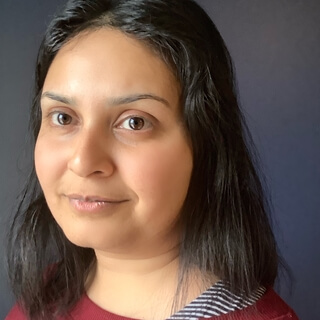
My name is Bhujika and I welcome you to my channel.
As always I'm so grateful that you're listening,
Subscribing and commenting.
I really appreciate the support.
It's a nice day today so I decided to do a video about,
Funnily enough,
Death.
You might be thinking I'm doing way too many videos on death and that's probably because I've been reading a book about death.
The classic book on death by the Tibetan Buddhism culture by Sogyal Rinpoche.
I hope that's how you pronounce his name.
It's called the Tibetan book of living and dying.
If you haven't read it and if you are a connoisseur,
Well not,
I shouldn't say that.
If you are interested in death,
Learning about death,
About the phases of death,
About how to deal properly with death and about afterlife,
Then I do recommend this book.
Highly recommend this book to anyone who's interested in that.
It has changed my perspective in so many different ways and I'm guessing that a lot of the videos I'll be doing over the next few weeks,
Depending on how far ahead I get in the book is because it's pretty long,
Will be based on this book and the learnings that I've gained from it.
One of the main topics or one of the main ideas that I've been reading about till now has been about Bardo.
B-A-R-D-O,
Bardo.
If you have been into Buddhism at all or if you've been reading anything about it,
You know what a Bardo is.
But for those who don't,
I'll just give a brief explanation.
Now,
I'm not an expert,
Of course,
So this is just my interpretation of what I think it is.
Basically,
A Bardo is a time in between.
It could be a time in between life and death,
Or it could be a time between death and the afterlife,
Or it could be a time between death and then the next life.
A lot of times when the Western culture looks at Bardo,
They think of that,
That phase in between lives.
Once you die,
You go into this Bardo phase,
People say,
And you're in this,
I guess,
Holding phase,
You would call it,
But not really a holding phase because a lot happens after you die.
You're given lessons,
You're taught what you did,
What you didn't do,
What kind of lessons do you want in the next life.
There's a lot that happens in the afterlife in between the death and between your next life.
If you believe in reincarnation only,
Is this going to make sense to you,
The Bardo phase in between lives?
But the beautiful thing about Bardo that I really loved how Sogyal said it,
Was that we're constantly going through Bardo's in our lifetime as well.
That is,
We're not only going through Bardo when we die,
But it's actually happening all the time throughout our lifetimes because there's constantly death happening throughout our lifetimes.
Not only just the death of beings,
But the death of situations,
The death of a job,
The death of a particular thing you were doing,
The death of a particular relationship,
The death of a particular part of you.
We're constantly growing,
We're constantly renewing ourselves,
Rejuvenating ourselves,
Changing ourselves,
Moving on from different parts of ourselves,
Leaving our old selves behind,
Leaving our old jobs behind,
Leaving our old relationships behind.
A lot of that old and new phase has a Bardo phase in between,
Or it should at least have a Bardo phase in between,
Because that kind of holding phase or that kind of period where you can take a little bit of a break and you can step back a little bit from yourself,
From your situation,
Where you can take a little bit of a contemplation period is extremely important.
Because with human beings,
With all of us,
We're so impatient to get to the next phase.
We're so impatient to be like,
All right,
Fine,
Cool,
I'm done with this part of my life,
Whatever it might be,
And we're so eager to get to the next part.
A lot of us are in Bardo right now,
Actually,
With the pandemic and the lockdown,
And everyone's extremely impatient because they're thinking to themselves,
Okay,
Cool,
Yeah,
I've been in this phase for a while now,
When can we move on?
And nature's like,
Obviously,
You haven't learned your lesson yet,
So not yet.
But what we do as human beings,
And obviously children are impatient,
But adults are impatient too.
So it's like,
All right,
I'm done with that relationship,
So let me go out and party and sleep around and find a new person to be with.
Now,
I'm not saying that's necessarily a bad thing.
Of course,
Go out and find a new person to be with or a new situation to be in.
But do take a few moments,
Hopefully a few minutes,
Hopefully even a few hours or a few days would be perfect,
To actually contemplate what was your lesson from that particular phase of your life.
What did you learn,
And how can you apply it and use it in your next phase of life?
And I think the reason why we keep on repeating the mistakes of our lives,
Why we keep on repeating the same patterns over and over again in our lives,
And you've probably noticed in your life that you do that.
I have definitely noticed that in my life.
I definitely repeat patterns over and over and over again,
And then I think to myself,
I am 37.
I'm still repeating the same things I did when I was in my 20s.
I'm still doing the same things I did when I was in my teens.
When am I going to learn?
And that's because I haven't taken the time to properly contemplate,
Properly understand,
And properly integrate the lessons that that particular phase of my life dictated.
And until I integrate those lessons,
I can't move on from past it.
I can't move past it.
I'll be stuck in it.
I might be doing different things,
But I'll be repeating the same patterns.
I'll be repeating the same ways of behaving because I haven't learned anything new.
I haven't actually applied what I've learned,
Or I haven't changed myself to apply what I've learned,
And so I keep on doing the same thing over and over again.
And you might actually notice that in the history of humanity,
Not even just your lifetime,
But the history of humanity that,
You know,
Why does history repeat itself?
Why do we keep on making the same mistakes over and over again?
Why do we keep on hiring the same foolish politicians over and over again?
Why do we keep on making the same,
You know,
Political mistakes or health care mistakes or social welfare mistakes?
Why do we keep on doing the same thing over and over again?
It's because we don't learn.
Even though now we have books that have documented history,
That have told us exactly what's happened in the past,
Again,
It has been manipulated,
Obviously,
As well,
So you don't really know exactly what happened,
But we still don't learn.
We don't go back and read history books and say,
Okay,
Cool,
So this is what we did in the past,
This is how our governments behaved in 1997,
So hopefully I don't want to repeat in 2027,
You know,
Like,
We don't go back and do these kind of things,
Obviously,
As a nation or as a people,
But we don't even do that in our own lives.
You might imagine,
You might say,
You know,
It's difficult to do it as a nation.
Yeah,
It is,
But if you could start doing it at your level,
At an individual level,
Maybe it would kind of eventually ripple out into the entire world,
But even people don't do that.
We have these barrio phases,
As I said,
One prime example of a barrio that we're in right now,
And a lot of people are just impatient and eager to get out of it.
They're not like,
All right,
Cool,
So let's just step back a bit and let's take inventory and let's figure out,
Okay,
What is the lesson here?
Why did this happen?
How can we prevent it from happening in the future?
What can I do in order to protect myself if it does happen in the future again?
But no,
We're not asking questions like that.
We're blaming people,
We're blaming the government,
We're blaming people in China,
We're blaming the Chinese government,
Or we're blaming the World Health Organization,
Or,
You know,
We're doing all these blaming things,
But we're not taking accountability or responsibility and saying,
Okay,
Cool,
All right,
I don't know what's happening in the world,
But I obviously am in this barrio phase right now.
What can I learn from it?
So that if it does happen again in the future and scientists are saying that pandemics are going to become more and more common in the future,
What can I do in order to ensure that I'm protected in the future?
Or if not protected,
At least I am prepared for it in the future,
Right?
And so these barrio phases,
As I said,
Are very important,
Extremely important for us to take inventory,
For us to step back and take the lesson that has been presented to us.
Because what happens with life,
Life is so beautiful,
What happens with life is that if you don't take the lesson the first time around,
You know,
The universe will beat it down to your door a little bit harder.
And if you don't take it again,
They'll beat it down your door even harder until it breaks the whole door down.
And if you even still don't take it,
Then the universe will break your entire house to get the message to you.
And at that point,
You're going to be thinking,
Oh my God,
I should have listened the first time around.
I've done that many times.
Any case,
We are in a barrio right now,
But I'm not saying this so that,
You know,
I can be like,
Oh,
Oh my God,
We're in a barrio.
No,
It's about taking inventory.
It's about learning from it.
It's about stepping back and realizing,
OK,
I'm in a barrio right now.
Not only that,
But if a relationship ends before rushing off into a new one,
You kind of have to,
It's a good idea to step back a little bit and go through that barrio phase and figure out what happened exactly.
What did you do to cause the failure of the relationship?
What was your responsibility in it?
How can you change in the future?
And then the same thing with the job that you might,
That a barrio of a job that might have ended,
Or the barrio of one phase to another.
You know,
You leave university and you're done with that phase of your life.
And then you move on to a job situation,
You know,
Into a corporate job or into a business,
Whatever you're doing with your life.
So that's another barrio that you could be thinking about.
What did I learn from my university days?
How do I want to apply to my life?
And things like that.
Right.
I mean,
If you're pregnant,
Obviously that's another barrio.
Like once you have a child to when you are,
When your child is older or when they're out of the house or when you're retired,
There's so many barros going on in our lives all the time.
And it's not just so that the universe can torture us,
Although sometimes it feels like that,
But so that we can learn from it.
So we can kind of gauge what's going on,
What lessons should I have learned from it?
Did I learn that lesson?
If I didn't,
How can I learn in the future and how can I improve myself so I don't repeat the same mistakes over and over again?
Yeah,
I hope this makes sense.
Again,
As I said,
The book is brilliant.
It's called the Tibetan Book of Living and Dying.
It's by Sogyal Rinpoche.
I think that's how you say his name.
And it's brilliant,
Extremely poignant and extremely useful,
Actually,
For this point in my life,
For sure.
Because obviously I'm dealing with the old age of my parents and so,
You know,
They're always thinking about their own deaths.
And so actually I've been sitting down reading the book with my parents.
So we read a chapter together and then we talk about it.
And so it's been really useful to them,
At least because it's bringing up all of these questions and ideas that they never thought about before,
Ever.
And so it's very enlightening,
At least for them,
I notice.
Their viewpoint about life and death and the afterlife is changing immensely.
Again,
If you have questions,
Obviously,
Please comment below and I shall do a follow up video.
Again,
I'm really grateful for you and for your support.
And I shall see you the next time around.
Bye for now.