Welcome to part one in basic yoga breathing.
This first breathing lesson or meditation is designed to help you get in touch with your body,
What's happening with your breath,
Where it sits in your body,
The timing of your breath,
The quality of your breath.
So it's really actually not about changing anything.
It's about understanding what your breath is doing just naturally when you're not thinking about it.
So to begin,
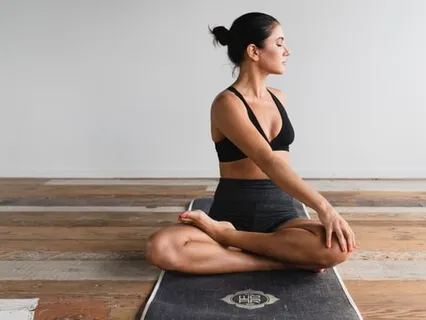
Find a comfortable seated position.
If sitting ends up not being very comfortable for you,
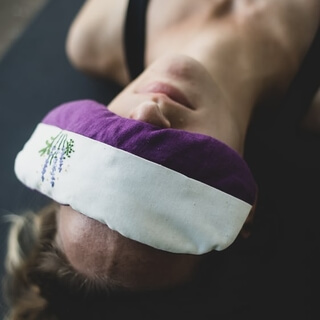
You can also do this lying down.
But you're going to sit and lie down comfortably where your spine feels tall,
Maybe supported by the back of a chair,
Maybe sitting upright,
Maybe laying on your back with your knees bent and your feet flat on the floor.
Either way,
You're going to close your eyes and just begin to tune in to the sensations of your body.
Noticing if you feel any pain anywhere,
Any tension,
Any discomfort.
But also taking a moment to notice where you feel good,
Where your body feels relaxed,
Feels light.
And as you find this deeper internal awareness,
Start to now bring your attention to what's going on with your breath.
You can either breathe comfortably in and out through your nose,
Or if it feels more natural to breathe in through the nose and out through the mouth,
That's fine too.
The first thing we're going to do is we're going to locate how the breath is moving in our body.
So just take a moment here and notice as you breathe,
What happens?
Is your chest rising and falling,
Your belly,
Your rib cage?
Where's the movement happening?
It might help to take your hands and place them on different places like your chest,
Your ribs,
Your belly,
Your back,
To try and really feel where the breath is sitting in your body.
And with this first lesson,
We're not worrying about changing anything.
We're just noticing what the breath naturally does.
And then the second thing we're going to explore about the breath is the timing of our breath.
So take a moment now to just tune in to your inhales and your exhales.
And just notice how long it takes to inhale,
How long it takes to exhale.
Are they even?
Is one longer than the other?
And maybe even bringing your awareness to that space between the inhales and the exhales,
That little moment where the breath switches over.
We're not holding our breath.
And again,
We're not consciously changing the breath in any way.
We're just noticing how does that timing naturally play out in your body.
And then the last thing you want to tune into is the quality of your breath.
So if you were going to give your breath an adjective,
How would you describe it?
Does it feel choppy and rough?
Does it feel smooth?
Sometimes imagery can be helpful here.
If you imagine if your breath were a body of water,
What would the waves look like?
Would they be gentle,
Lulling waves?
Would they be big,
Kind of ocean waves?
Would they be chaotic?
Would they be soft and smooth?
Or any other images or words that come to mind that you could use to describe your breath.
Bringing our awareness to these three parts of our breath,
The location,
The space where we feel it in our body,
The timing or the rhythm of our breath,
And those qualities of breathing is a great place to begin with to better understand how we're naturally breathing throughout our day.
And as you increase your awareness of your breath,
Maybe taking a moment too to notice how that affects your emotional state,
How it affects your mental state.
And again,
We haven't really changed anything.
We've just drawn attention to it.
That maybe by the simple process of drawing our attention to our breathing,
Drawing our attention to that internal world,
It can have a calming effect.
It can make us feel more at ease,
More relaxed,
Maybe even a little happier.
And if you want to take this one step further,
You can look to my next meditation or breathing practice in this breathing series,
Which will be on cultivating a natural diaphragmatic or relaxed breath.